Palgrave Macmillan, 2003. 201 p.
With the end of the Cold War, the hitherto concealed existence of a
great many other conflicts, relatively small in scale, long-lived,
ethnic in character and intrarather than inter-state has been
revealed. The dramatic changes in the distribution of world power,
along with the removal of some previously resolute forms of
centralised restraint, have resulted in the re-emergence of older,
historical ethnic quarrels, many of which either became violent and
warlike or teetered, and
continue to teeter, on the brink of violence. For these reasons,
ethnic conflicts and consequent violence are likely to have the
greatest impact on world affairs during the next period of
history.
This new series examines a range of issues related to ethnic and
intercommunity conflict. Each book concentrates on a well-defined
aspect of ethnic and intercommunity conflict and approaches it from
a comparative and inteational standpoint.
Rather than focus on the macrolevel, that is on the grand and
substantive matters of states and empires, this series argues that
the fundamental causes of ethnic conflict are often to be found in
the hidden roots and tangled social infrastructuresof the opposing
separated groups. It is through the understanding of these
foundations and the working out of their implications for policy
and practical activity that may lead to ameliorative processes and
the construction of transforming social mechanisms and programmes
calculated to produce longterm peace.
Introduction: Why Memories in Conflict? Ed Cais and M?che?l D.
Roe
A Theoretical Overview of Memory and Conflict. Patrick
Devine-Wright
Memories of Aboriginal Pasts and Current Conflicts
Reconciliation between Black and White Australia: the Role of
Social Memory. David Mellor and Di Bretherton
Cowlitz Indian Ethnic Identity, Social Memories and Years of
Conflict with the United States Govement. M?che?l D. Roe
Conflicting Memories and Time
Collective Memory of Physical Violence: its Contribution to the
Culture of Violence. Daniel Bar-Tal
Will the Germans Ever Be Forgiven? Memories of the Second World War
Four Generations Later.
Louis Oppenheimer and Ilse Hakvoort
Conflicting Memories and Conflict Resolution
History Teaching and the Perpetuation of Memories: the Northe
Ireland Experience. Keith C. Barton and Alan McCully
Memories of Recent Conflict and Forgiveness in Northe Ireland.
Frances McLeon, Ed Cais, Christopher Alan Lewis and Miles
Hewstone
Symbolic Closure through Memory, Reparation and Revenge in
post-Conflict Societies. Brandon Hamber and Richard A. Wilson
Memories in Conflict: Review and a Look to the Future. M?che?l D.
Roe and Ed Cais

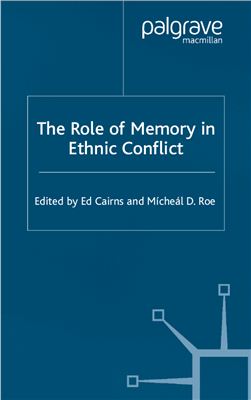
Cairns Ed, Roe Micheal D. The Role of Memory in Ethnic Conflict
Похожие разделы
Смотрите также
Rosenberg Marshall B. Speak Peace In a World of Conflict. What You Say Next Will Change Your World
PuddleDancer Press, 2005. 186 p. In every interaction, every conversation and in every thought, you have a choice — to promote peace or perpetuate violence. International peacemaker, mediator and healer, Dr. Marshall B. Rosenberg shows you how the language you use is the key to enriching life. Take the first step to reduce violence, heal pain, resolve conflicts and spread peace on our planet — by developing an internal consciousness of peace ro...