
Gupta S.P. (ed.) Ion Channels and Their Inhibitors
Подождите немного. Документ загружается.

of K
v
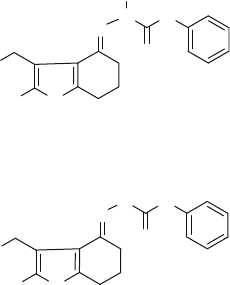
1.5 blockers based on tetrahydroindolone framework. However, only a
few compounds showed inhibitor y effects against K
v
1.5. The in vivo assay of
tetrahydroindolone-derived semicarbazones 6 (IC
50
¼ 0.13 mM) showed an
increase in right AERP by 18% at a dose of 30 mg/kg without increase in VERP
[46]. To broaden the diversity of tetrahydroindolone-derived compounds, Fluxe
et al. prepared isosteric tetrahydroindolone-derived carbamates. The most potent
analogues, compound 7 (IC
50
¼ 0.07 mM) showed over 450-fold selectivity against
L-type calcium channel and hERG channel (IC
50
> 30 mM), in the meanwhile the
interestingly low activities against calcium and hERG channels were also consistent
throughout the class [47].
N
H
N
N
H
N
CH
3
O
H
3
C
H
3
C
6
N
H
N
O
H
N
O
H
3
C
H
3
C
7
3.3.3 Aryl Sulfonamido Indane Derivatives
Aryl Sulfonamido Indanes and Tetrahydronaphthyls
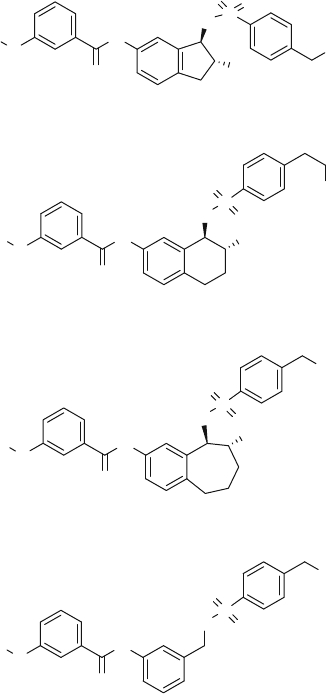
Icagen and BMS reported a collection of aryl sulfonamido inda nes and tetra-
hydronaphthyls with dif ferent amido region-isomers to determine the K
v
1.5
pharmacophore [48–52]. It was reported that the (1R, 2R) conformation of com-
pound 8 has a selectively high IC
50
of 0.03 mM against K
v
1.5 with high selectivity
over hERG (inhibitory ratio: 37% at 10 mM), while the K
v
1.5 inhibitory IC
50
value
of (1S, 2S) conformation was only 0.76 mM. Aryl sulfonamido tetrahydronaphthyl
compound 9 (IC
50
¼ 0.44 mM) also showed good inhibitory effect against K
v
1.5
channel. The modification of tetrahydronaphthyl scaffold lead to compound 10
(IC
50
¼ 0.20 mM) and 11 (IC
50
¼ 0.24 mM), which underlies the replaceable of
rigid ring scaffold. However, the clinical trials of these compounds were suspended
due to the poor aqueous solubility and low oral bioavailability. In this series, the
chiral sulfonamide side chain was introduced, suggesting an asymmetry feature of
126 Q. You et al.
hydrogen bond acceptor in the binding site. On the contrary, they could provide
evidences for the specification of the pharmacophore profiles.
HN
S
OH
O
O
CH
3
H
N
O
H
3
C
O
8
HN
S
H
N
O
O
O
CH
3
OH
O
H
3
C
9
HN
S
H
N
O
O
O
CH
3
OH
O
H
3
C
10
HN
S
H
N
O
O
O
CH
3
O
H
3
C
11
Benzopyran Sulfonamides
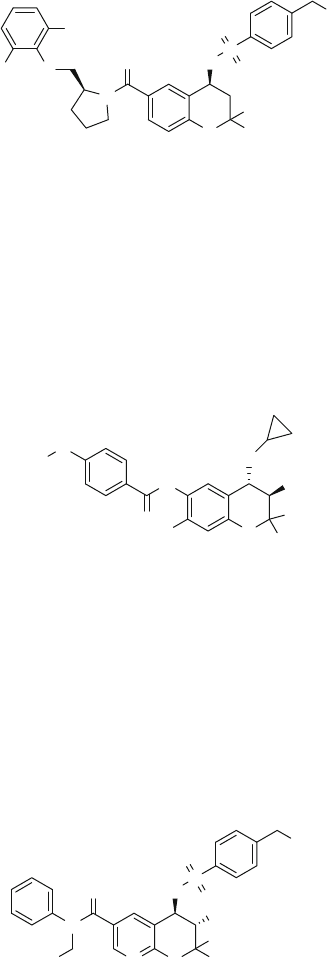
Considering that indane could be replaced by benzopyran, Lloyd and his
co-workers suggested the benzopyran core as an acceptable scaffold for potent
K
v
1.5 blockers (compound 12,IC
50
¼ 0.11 mM). They explored different substitu-
ent in this scaffold, such as the amide at the 6-position of benzopyrane, the
substituent on the phenyl ring of the phenyl sulfonamide, and modifications of
the amino alcohol template, to discover several compounds with good potency of
Potassium Channel Blockers as Antiarrhythmic Agents 127
K
v
1.5 blocking and good selectivity over hERG. The further modifications of the
benzopyran derivatives are still ongoing [53].
O
HN
S
N
HNH
3
C
CH
3
O
O
CH
3
CH
3
O
CH
3
12
NIP-142 (13), a novel benzopyran derivative developed by Nissan, was able to
moderately block hK
v
1.5 current (IC
50
¼ 4.75 mM) in a frequenc y-independent and
dose-dependent manner [54]. Electrophysiological evaluation showed that NIP-142
decreased phase I notch and increased the height of phase II plateau without making
any changes in APD [55]. Furthermore, NIP-142 coul d prolong AERP and APD
through blockade of I
KACh
[56]. Briefly, NIP-142 has distinct pharmacological
properties from other classical antiarrhythmic agents, the overall biological features
may possibly contribute to its antiarrhythmic profiles as a promising agent for the
treatment of supraventricular arrhythmia [57].
H
N
O
O
O
2
N
OH
HN
O
H
3
C
CH
3
CH
3
NIP-142 (13)
Pyrano-[2,3b]-Pyridines
Based on the above results, Finlay reported a series of pyrano-[2,3b]-pyridine
compounds. However, the SARs of these compounds are differed from benzopyran
series, and the activities of pyrano-[2,3b]-pyridine s are generally lower than
benzopyran compounds due to the introduction of polar groups. Among these
compounds, only 14 (IC
50
¼ 0.39 mM) showed moderate inhibitory effect against
K
v
1.5 channel [58].
N O
HN
OH
S
CH
3
CH
3
N
H
3
C
O
O
O
CH
3
14
128 Q. You et al.
3.3.4 Quinoline or Isoquinoline Derivatives
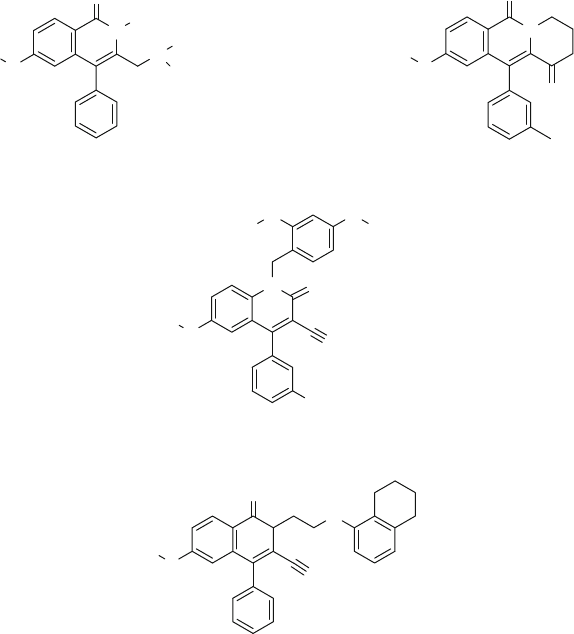
In 2005, Merck laboratories announced the patents of the quinoline and isoquinoline
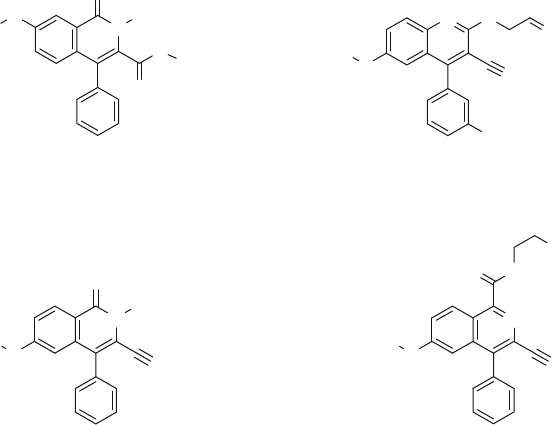
derivatives (compounds 15 to 20)asK
v
1.5 blockers [59–67]. ISQ-1 (15), obtained
by high-throughout screening approaches, was considered as lead compound [68].
The replacement of the dimethylaminomethyl moiety of ISQ-1 with a cyano group
could neutralize the alkalinity of amine and increase its selectivity over hERG
potassium channel (21,IC
50
¼ 0.07 mM). Then the optimization was continued
to discover the ethanol amide compound 22, an improv ed potent K
v
1.5 blocker
(IC
50
¼ 0.06 mM) with excellent selectivity over hERG (over 500-folds) and good
pharmacokinetic properties (clearance 12 mL/min/kg; V
d
0.8 L/kg; oral bioavail-
ability 21%). When being evaluated in an in vivo canine electrophysiological model
in which I
Kur
current is prominent in atrial repolarization [69], compound 22
(IC
50
¼ 0.06 mM) exhibited atrial refractory period (ARP) prolongation without
concomitant ventricular refractory period (VRP) prolongation. In consistent with
these evidences, injection of compound 22 to anesthetized dogs leads to selective
prolongation of AERP without side effect on VERP at any dose. Therefor e, the
reasonable combination of pharmacokinetic properties and in vivo effects solidified
compound 22 as a promising atrial-selective agent for further investigation.
N
O
CH
3
N
O
H
3
C
CH
3
CH
3
ISQ-1(15)
N
O
O
F
O
H
3
C
16
N
N
F
O
H
3
C
OO
O
CH
3
H
3
C
17
O
O
H
3
C
H
N
N
18
Potassium Channel Blockers as Antiarrhythmic Agents 129
N
O
CH
3
O
H
3
C
O
O
CH
3
19
N O
CH
2
O
H
3
C
F
N
20
N
O
H
3
C
O
CH
3
N
21
N
O
H
3
C
N
NH
OH
O
22
3.3.5 1, 1
0
-Disubstituted Biph enyl Compounds
Earlier in this century, Aventis started the rational design studies of selective
K
v
1.5 blockers. After analyzing the structural feature of reported K
v
1.5 blockers
including the above-mentioned aryl sulfonamido indanes and tetrahydronaphthyls,
benzopyrans, thiazolidines, and quinolines, they concluded that the key structure
features for effective K
v
1.5 blocker were two to three appropriate hydrophobic
points and flexible linkers between them. Then Peukert and collaborators launched
the 2D similarity search using aryl sulfonamido indanes as template to obtain a
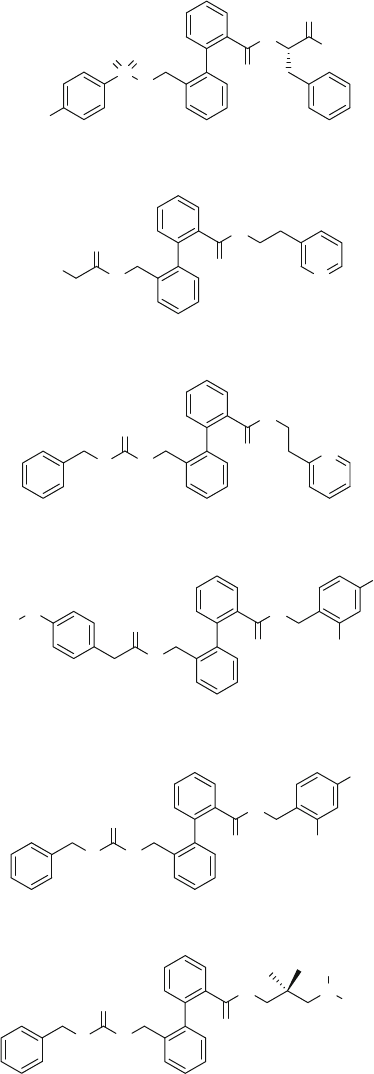
1,8-disubstituted naphthalene scaffold (23,IC
50
¼ 4.8 mM). After chemical modi-
fication by replacing the framework with biphenyls, potent compounds AVE0118
(24,IC
50
¼ 1.1 mM), S9947 (25,IC
50
¼ 0.4 mM), S20951 (26,IC
50
¼ 1.2 mM),
and other analogues were obtained for further investigation. The SAR analysis of
this kind of K
v
1.5 blockers showed some interesting results: first, the introduction of
pyridyl group in the side chains obtained higher activity than that of the phenyl ring,
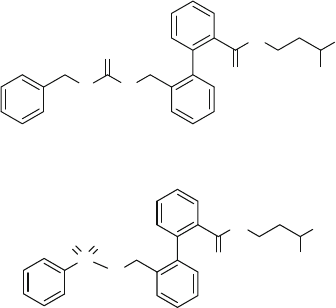
aliphatic amine or hydrophobic chains (27–29,IC
50
¼ 1.2 mM, 2.2 mM, 3.3 mM,
respectively); on the contrary, the substitution of amide group with sulfamid e group
that generally existed in the antiarrhythmic agents had slight influence on the
inhibitory effect (30,IC
50
¼ 2.6 mM) [70, 71].
130 Q. You et al.
H
N
O
NH
2
N
H
S
F
3
C
O
O
O
23
H
N
O
N
H
H
3
C
O
N
AVE-0118 (24)
H
N
O
N
H
O
O
N
S9947 (25)
H
N
O
N
H
O
F
F
O
H
3
C
S20951 (26)
H
N
O
N
H
O
O
F
F
(27)
H
N
O
N
H
O
O
N
CH
3
CH
3
28
Potassium Channel Blockers as Antiarrhythmic Agents 131
H
N
O
N
H
O
O
CH
3
CH
3
29
H
N
O
N
H
S
CH
3
CH
3
O O
30
Among these series K
v
1.5 blockers, AVE0118 (24 ) was able to decrease
the steady-state hK
v
1.5 current and prolong APD to enhance atrial contractility
[72, 73]. Besides it can also prolong the atrial effective refractory period (AERP) in
anesthetized pigs and conscious goats without any change on the QT interval of the
ECG and any possibility of inducing TdP [74–76]. Recently, the micropuncture
studies of atrial human tissues in chronic AF patients exhibited that AVE0118 could
increase the plateau potential and prolong the APD by 20 ms at a concentration of
6 mM[77].
Another interesting compound, S9947 (25), could block the cloned human
K
v
1.5 channel curr ent e xp res se d in Xenopus oocytes and CHO cells with IC
50
values of 0.6 mMand0.4mM, respectively [78]. Moreover, at a concentration
of 3 mM, S9947 is served as sodium channel i nhibitor since no influence on the
upstroke of the action potential was observed [79]. S9947 could also prolonged
rat ventricular action potential at both slow- and fast-pacing rates without any
influence on hERG channels. Being considered as multiple i on channel blockers,
S9947 and S20951 (26) are t hought to be prior to current available class III anti-
arrhythmic agents as their maximal APD prolongation at slow rates and minimal
effects during tachycardia. Therefore, this series of blockers might have a supe-
rior antiarrhythmic profile in human atrial cells and could bear a promising
strategy against AF [80].
3.3.6 Anthranilic Amide Derivatives
Researchers in Aventis establ ished a three-hydrophobic-point pharmacophore
model (Fig. 3) based on the biphenyl compounds 31 (IC
50
¼ 0.2 mM) and 32
(IC
50
¼ 2.8 mM). After 3D similarity search on Aventis in-house compound col-
lection, Peukert et al. reported a new series of anthranilic amides as K
v
1.5 blockers
(33)[81]. The discovery of compound 33 (IC
50
¼ 5.6 mM) was recognized as
the application of an innovative scaffold hopping strategy [82] based on the
132 Q. You et al.
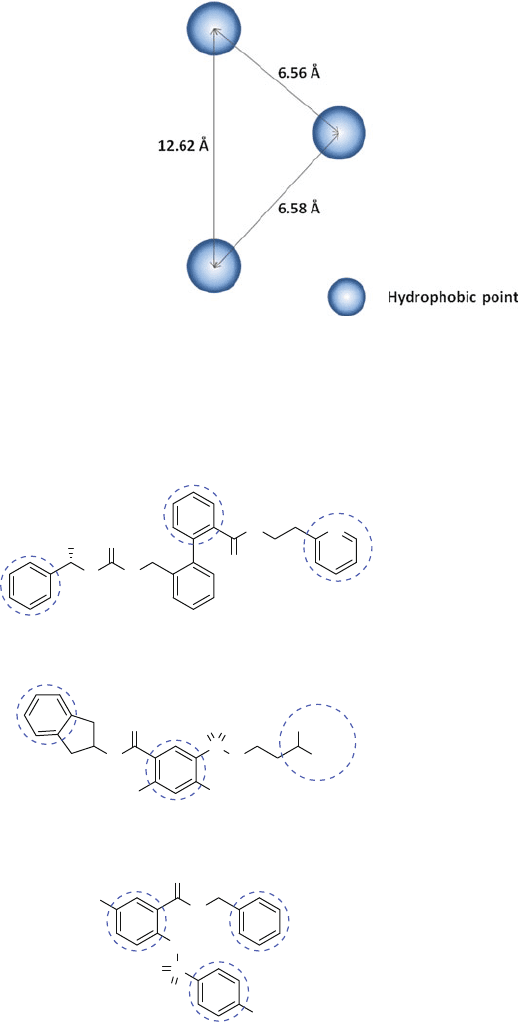
pharmacophore model and biphenyl derivatives: the central phenyl moiety of
compound 33 matches the middle hydrophobic center, and both ends of the side
chains correspond to the remaining hydrophobic centers of the mode l.
H
N
N
N
H
O
O
CH
3
O
31
S
Cl Cl
N
H
O
N
H
CH
3
CH
3
O O
32
N
H
NH
S
O
O
O
Cl
Cl
33
Fig. 3 A three hydrophobic
point pharmacophore model
for K
v
1.5 blockers
Potassium Channel Blockers as Antiarrhythmic Agents 133
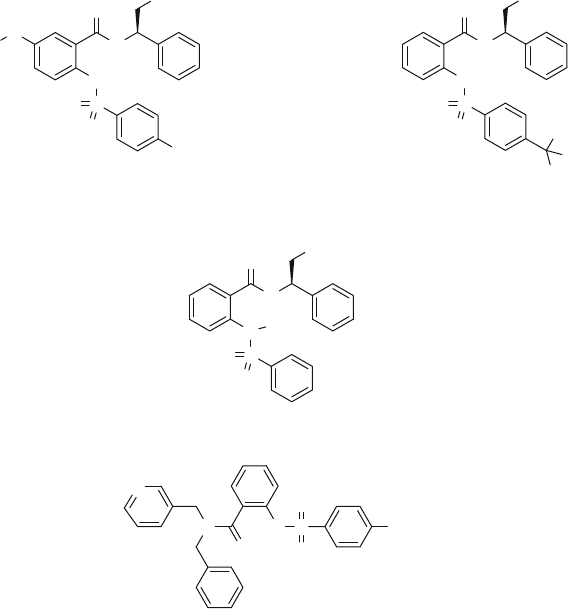
After the SAR analysis of different amide or sulfamide substitute groups, it was
found that the blockade effects would be influenced by the steric and electrostatic
effects of these substitutes [83]. The correlation between the inhibitory activities
and the pK
a
was observed. The pKa value decreased from 7.5 of compound 34
to 6.2 of compound 35 (1.21-fold), accompanied by the IC
50
decreasing from 0.5 to
4 mM (eightfold). Otherwise, replacement of the acidic hydrogen by a methyl group
(36, IC
50
¼ 10 mM) resulted in further reduction of activity. These results suggest
that the hydrogen might be involved in an intramolecular hydrogen bond with
the carbonyl oxygen, which stabilizes a favorable active conformation. The replace-
ment of methyl group of 36 to pyridine group lead to a potent K
v
1.5 blockers
S-0100176 (37, IC
50
¼ 0.7 mM).
N
H
NH
S
CH
3
CH
3
O
O
O
O
H
3
C
34
N
H
NH
S
CH
3
O
O
O
F
F
F
35
N
H
N
S
CH
3
O
O
O
CH
3
36
O
N
N
HN S CH
3
O
O
S-0100176 (37)
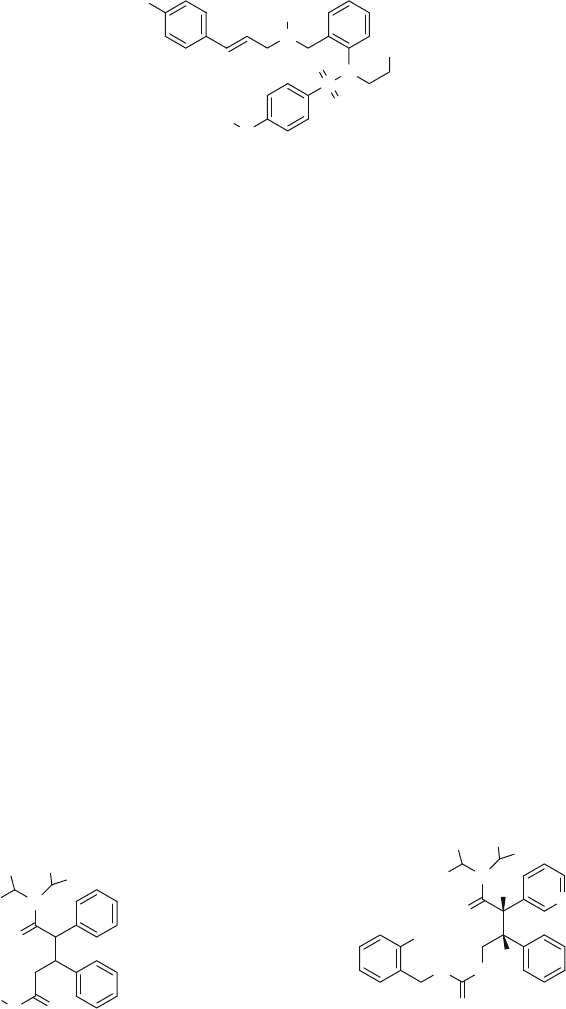
Based on the above results, Rezazadeh et al. reported a new K
v
1.5 blockers,
KN-93 (38,IC
50
¼ 0.3 mM), which showed multiion channel blockade effect,
including K
v
1.2, K
v
1.4, K
v
2.1, K
v
3.2, and K
v
4.2, and also an inhibitor of
Ca
2+
/calmodulin-dependent protein kinase II (CAMK-II) [84].
134 Q. You et al.
O
S
N
N
CH
3
Cl
OH
O
O
H
3
C
KN-93 (38)
3.3.7 Diisopropyl Amide Anal ogues
A novel type of blockers was discovered by Nanda et al. [85] through high-
throughput screening of the Merck sample collection [85–88]. The lead compound
39 (IC
50
¼ 0.25 mM) with a main functional group of N,N-diisopropyl amide was
structurally distinct from recent disclosed cardiac channel antagonists. Based on the
successful case in the structural modification from AVE0118 (24) to S9947 (25),
the optimization strategy was focused on the two aryl rings. It was interesting
that the replacement of either of the phenyl rings with a 3-pyridyl ring was well
tolerated, but due to the different electrostatic interactions, incorporation of other
pyridine isomers resulted in a significant decrease in potency. Compounds con-
taining two pyridine rings, including those with retained single 3-pyridyl ring,
would lose potency when compared with the 3-pyridyl and phenyl analogues.
Substitute effects were also briefly investigated: the 3-bromophenyl or
4-cyanophenyl analogues exhibited better potency than the parent phenyls but the
2-cyano substitute group was not well tolerated.
The replacement of ester group in compound 39 by 2-fluor obenzyl urea leads
to compound 40 (IC
50
¼ 0.15 mM), which demonstrated the best potency
against K
v
1.5 at IC
50
of 150 nM. This single active enantiomer was used for
all further evaluation. No changes at any doses in VRP or QT interval in animal
tests suggested a selective atrial effect of 40. Moreover, compound 40 is also a
P-glycoprotein (Pgp) substrate with low potential for cent ral nervous system (CNS)
exposure.
N
H
3
C
H
3
C
H
3
C
CH
3
O
O
H
3
C
O
39 (IC
50
= 0.25 µM)
N
N
H
3
C
H
3
C
H
3
C
CH
3
O
NH
H
N
F
O
H
H
40 (IC
50
= 0.15 µM)
Potassium Channel Blockers as Antiarrhythmic Agents 135