
Gupta S.P. (ed.) Ion Channels and Their Inhibitors
Подождите немного. Документ загружается.

N
OO
-
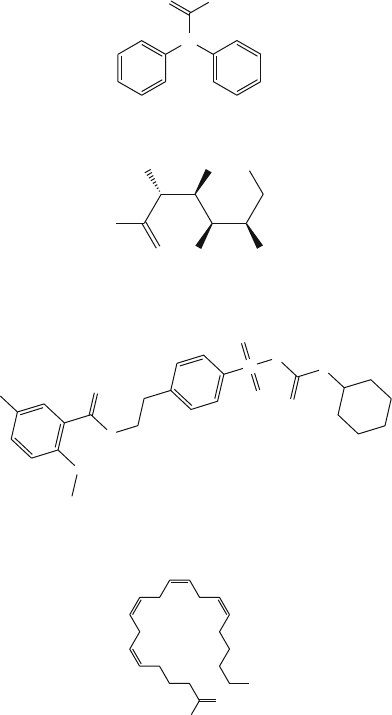
10, Diphenylamine carboxylate
HO OH
HO OH
HO
O
-
O
11, Gluconate
O
H
N
H
N
S
O
N
H
Cl
O
O
O
12, Glibenclamide
O
HO
13, Arachidonic acid
cytoplasmic mouth of the pore, where it can attract the Cl
into the pore by
a surface charge mechanism [177]. Thus, arachidonic acid is thought to enter the
cytoplasmic end of the channel pore to inhibit the CFTR Cl
currents, most likely
by physically occluding the Cl
permeation pathway [176]. According to Linsdell
[174], however, other negatively charged substances, too, such as sulfonyl ureas,
disulfonic stilbenes, indazoles, arylaminobenzoates, and conjugated bile salts,
inhibit CFTR Cl
currents by interacting electrostatic ally with K95 and blocking
the open channel. However, while the inhibition by these substances is weakened
by the depolarization of the membrane pote ntial [169, 174] and increase in extra-
cellular Cl
concentration, the arachidonic inhibition is practically independent of
both membrane potential and Cl
concentration [175].
326 S.P. Gupta and P.K. Kaur
In general, all anion channels can be blocked by many unrelated classes of
compounds, bearing a negative charge at physiologica l pH. Even many small
anions, for example, HEPES (4-(2-hydroxyethyl)-1-piperazineethanesulfonic
acid) and MOPS (3-(N-morpholino)propanesulfonic acid) buffers, have been
found to block Cl
channels [178, 179]. Trans ition metal cations, such as Zn
2+
,
Cd
2+
,La
3+
,Gd
3+
can also block anion channels; for example, Zn
2+
has been found
to block ClC-1 [180, 181] and the GABA receptor [182, 183], and Cd
2+
has been
often used to block ClC-2 channel [184–186].
4.4 Agents Acting on Other Cl
Channels
As discussed in the preceding section, some members of ClC channels could be
blocked by Zn
2+
and Cd
2+
ions. The inhibitors for the other chloride channels are
not so well stud ied. However, the Ca
2+
-activated chloride channels in mammalian
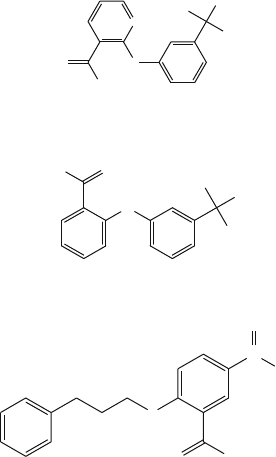
cells were found to be inhibited by niflumic and flufenamic acids (14,15)[187]as
well as by 5-nitro-2-(3-phenylpropylamino)benzoic acid (16, NPPB). In addition,
the disulfonic stilbene DIDS has also been found to potentially block the CaCC in
mammalian cells. For CLIC channels, indanylooxyace tic acid (17, IAA-94)
was found to be a potential blocker. This could block CLIC-1-induced currents
[188]. In addition, disulfonic stilbene DNDS (4,4
0
-dinitrodisulfonic stilbene and
TS-TM-calix(4)arene were also found to block p64-induced currents [108].
N
O
OH
HN
F
F
F
14, Niflumic acid
OHO
H
N
F
F
F
15, Flufenamic acid
O
OH
N
H
N
+
O
O
-
16, 5-Nitro-2-(3-phenylpropylamino)benzoic acid
Chloride Ion Channels: Structure, Functions, and Blockers 327

O
OH
O
17, Indanylooxyacetic acid
4.5 Other Cl
Transporting Systems and Their Blockers
In addition to the above important classes of Cl
channels and their blockers
described in the preceding sections, there are some other systems by which chloride
ions can be transported, for example, Na
2+
/2Cl
/K
+
carrier and apolar cells. A brief
description of these two and their blockers are given below.
4.5.1 Na
2+
/2Cl
/K
+
Carrier
Na
2+
/2Cl
/K
+
carrier was detected by Geck et al. [189] to be another Cl
transport
system. This system is found in many polar and apol ar cells [166, 190]. It was so far
believed to be only a primary pump, sensitive to furosemide (18)-like substances,
but now it has been found to also act as a secondary active chloride carrier. Thus,
the chloride transport can be blocked by all furosemide-like substances, for exam-
ple, furosemide (18), piretanide (19), triflocine (20 ), and torasemide (21), which
can interact with Na
2+
/2Cl
/K
+
carrier in epithelial cells. This carrier acts as
transepithelial transporter of NaCl, and is found together with Cl
channels on
the opposite cell membranes [191].
O
HO
S
O
NH
2
O
Cl
HN
O
18, Furosemide
N
O
O
OH
S
O
O
H
2
N
19, Piretanide
328 S.P. Gupta and P.K. Kaur
N
OH
O
N
H
F
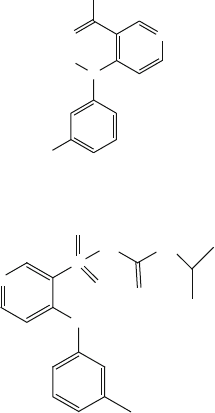
20, Triflocine
N
NH
S
O
O
NH
NH
O
21, Torasemide
4.5.2 Apolar Cells
The red blood cells also act as Cl
transporters, where the Cl
flux occurs via the
band 3 protein, a form of bicarbon ate/chloride exchange system [192]. This protein
is assumed to perform electroneutral anion exchange and to also permit the
channeling of Cl
. Its activity may thus be blocked by the compounds related to
stilbene, furosemide, and arylbenzoate classes.
4.6 Mechanism of Action of Anionic Channel Blockers
As discussed in a review by Greger [166], all Cl
channel blockers are essentially
converted into anionic form at physiological pH, in which the anionic group is
usually a carboxylate. All compounds also possess an amino bridge and an apolar
residue. The amino bridge is supposed to be necessary; it cannot be replaced by any
other group, such as oxygen, phosphorus, or carbon. The amino bridge may
probably be essential because of its ability to form a hydrogen bond acting as
a hydrogen-bond donor. An apolar group may be essential to have any hydrophobic
interaction with the receptor. In some group of compounds, the distances between
the amino and apolar groups and between amino and carboxylate groups are very
critical, for exampl e, in the group of NPPB (16) derivatives, the optimal spacer
between the phenyl ring and the amino group was a propyl group. Replacing this
Chloride Ion Channels: Structure, Functions, and Blockers 329
spacer by a butyl or ethy l led to dramat ic reduction in the potency of the
compounds. In the case of NPPB class of compounds, which also have a nitro
group at the meta-position with respect to carboxylate group, the distance between
this nitro group and the carboxylate group was also found to be important. These
observations lead to suggest that chloride channel blockers interact with several
sites of the channel.
However, this nitro group is found to be possessed by only the chloride channel
blockers. The blockers of Na
2+
/2Cl
/K
+
carrier contain instead a sulfonamide group
as in furosemide (18) and pireta nide (19), or a pyridine ring as in triflocine (20)
and torasemide (21). All other groups, namely, a carboxylate group, an amino group,
and an apolar moiety are commonly essential for both the classes of blockers [166].
5 Conclusion
Chloride ion channels have been found to play crucial roles in the development of
human diseases. They have been classified into different groups based on their
gating mechanisms that depend on changes in the membrane electrical potential,
activation of a protein kinase, increase in intracellular Ca
2+
levels and binding of
a ligand. Thus, there are four groups of Cl
channels termed chloride ion channels
(CLC channels), cystic fibrosis transmembrane regulator (CFTR), Ca
2+
-activated
chloride (CaCC) channels, and ligand-gated chloride ion channels (LGICs). How-
ever, a new class of Cl
channels known as CLICs has also been reported. Further,
another class of Cl
channels is constituted of bestrophins, a group of proteins,
which have been found to support Cl
channel activity when overexpressed in cell
expression.
CLC chloride channels constitute the only class of Cl
channels that are
conserved from bacteria to man. The crystal structure of two bacterial proteins
pictured out a dimer with two identical subunits, each composed of 18 a-helices,
most of which do not cross the membrane entirely. CFTR is a cyclic-AMP activated
plasma membrane chloride channel that has also been assumed to function as
a chloride channel in intracellular organelles. CFTR has been found to act as
a regulator of other ion channels, for example, Na
+
and Cl
. As far as its structure
is concerned, it has been found to possess 12 transmembrane domains, two NBFs,
and a regulatory R domain. The Ca
2+
-activated chloride channels (CaCC Channels)
are found in many cell types, for example, epithelial cells, neuro ns, cardiac cells,
smooth muscle cells, and blood cells. They play an important role in epithelial cells
as a transepithelial transporter. The ligand-gated Cl
channels (LGICs) open in
response to specific ligand molecules binding to extracellular domain of the receptor
protein. The two important LGICs are pentameric proteins, in which each subunit
has a large extracellular domain at the N-end, four transmembrane segments, and
an intracellular loop (Fig. 3). The LGICs are also called ionotropic receptors.
The CLICs are the proteins that function as intracellular chloride ion channels.
There are several members in CLIC family of proteins. All CLICs share structural
330 S.P. Gupta and P.K. Kaur
homology with members of omega GST superfamily. Unlike other ion channels,
they exist in dimorphic form: either a soluble globular protein, or as an integral
membrane protein suggested to form functional ion channels. Bestrophins are
a group of four proteins, which have been found to support Cl
channel activity.
The first member of this family, bestrophin 1, is relatively well studied and has been
shown to support Ca
2+
-activated chloride current in the basal membrane of the
retinal pigment epithelium. There is no evidence that it itself functions as a chloride
ion channe l. It is assumed to primarily reside in epithelium reticulum and not in the
plasma membrane.
Number of diseases have been found to be related to the abnormality of Cl
channels, for example, the mutations in them lead to several deleterious diseases in
muscle, kidney, bone, and brain, including mytonia congen ita, dystrophia, cystic
fibrosis, osteopet rosis, and epilepsy, their activation may lead to progression of
glioma in the brain and the growth of malaria parasite in the red blood cells, and the
loss of their activity may mediate the development of chronic pancreatitis, bronchi-
ectasis, congenital bilateral aplasia of vas deferens, alcohol ism, cataract, and Best’s
disease. Thus, the blockers of Cl
channels may be developed as useful therapeutic
agents against many of these diseases. So far there are drugs such as picrotoxin,
a mixture of picrotoxinin (1) and picrotin (2), acting as blocker of GABA receptor,
and cyanotri phenylborate (5) acting as the blocker of glycine receptors. Some
polycyclics, benzoates, phenoxyacetates, and sulfonates and sulfonamides have
been found to block Cl
channels in muscle cells, and broad range of anionic
ions such as diphenylamine carboxylate (10), gluconat e (11), and glibenclamide
(12), have been found to block CFTR channel in epithelial cells. Disulfonic stilbene
DIDS has been found to potentially block the CaCC in mammalian cells, and
indanylooxyacetic acid (17) is a potential blocker of CLIC channels.
Thus, this article presents all important aspects of Cl
channels, which may help
the medicinal chemists to develop important drugs for many diseases.
References
1. Nilius B, Droogmans G (2003) Amazing chloride channels: an overview. Acta Physiol Scand
177:119–147
2. Hille B (1991) Ion channels, 2nd edn. Sinauer Associates, Sunderland, MA
3. Puljak L, Kilic G (2006) Emerging roles of chloride channels in human diseases. Biochim
Biophys Acta 1762:404–413
4. Merzak A, Pilkington GJ (1997) Molecular and cellular pathology of intrinsic brain tumours.
Cancer Metastasis Rev 16:155–177
5. Ransom CB, O’Neal JT, Sontheimer H (2001) Volume-activated chloride currents contribute
to the resting conductance and invasive migration of human glioma cells. J Neurosci 21:
7674–7683
6. Romisch K (2005) Protein targeting from malaria parasites to host erythrocytes. Traffic
6:706–709
7. Breman JG, Alilio MS, Mills A (2004) Conquering the intolerable burden of malaria: what’s
new, what’s needed: a summary. Am J Trop Med Hyg 71:1–15
Chloride Ion Channels: Structure, Functions, and Blockers 331
8. Martin RE, Henry RI, Abbey JL et al (2005) The ‘permeome’ of the malaria parasite: an
overview of the membrane transport proteins of Plasmodium falciparum. Genome Biol 6:
R26
9. Jentsch TJ, Stein V, Weinreich F et al (2002) Molecular structure and physiological function
of chloride channels. Physiol Rev 82:503–568
10. Landry DW, Reitman M, Cragoe EJ Jr et al (1987) Epithelial chloride channel. Development
of inhibitory ligands. J Gen Physiol 90:779–798
11. Singh H (2010) Two decades with dimorphic chloride intracellular channels (CLICs). FEBS
Lett 584:2112–2121
12. Miller C, White MM (1984) Dimeric structure of single chloride channels from Torpedo
electroplax. Proc Natl Acad Sci USA 81:2772–2775
13. Bauer CK, Steinmeyer K, Schwarz JR et al (1991) Completely functional double-barreled
chloride channel expressed from a single Torpedo cDNA. Proc Natl Acad Sci USA 88:
11052–11056
14. Middleton RE, Pheasant DJ, Miller C (1994) Purification, reconstitution, and subunit com-
position of a voltage-gated chloride channel from Torpedo electroplax. Biochemistry 33:
13189–13198
15. Middleton RE, Pheasant DJ, Miller C (1996) Homodimeric architecture of a CLC-type
chloride ion channel. Nature 383:337–340
16. Ludewig U, Pusch M, Jentsch TJ (1996) Two physically distinct pores in the dimeric
ClC-0 chloride channel. Nature 383:340–343
17. Fahlke C, Knittle T, Gurnett CA et al (1997) Subunit stoichiometry of human muscle
chloride channels. J Gen Physiol 109:93–104
18. Dutzler A, Campbell EB, Cadene M et al (2002) X-ray structure of a ClC chloride channel
at 3.0 A
˚
reveals the molecular basis of anion selectivity. Nature 415:287–294
19. Mindell JA, Maduke M, Miller C et al (2001) Projection structure of a CLC type chloride
channel at 6.5 A
˚
resolution. Nature 409:219–223
20. Weinreich F, Jentsch TJ (2001) Pores formed by single subunits in mixed dimers of different
ClC chloride channels. J Biol Chem 276:2347–2353
21. Maduke M, Pheasant DJ, Miller C (1999) High-level expression, functional reconstitution,
and quaternary structure of a prokaryotic ClC-type chloride channel. J Gen Physiol 114:
713–722
22. Lorenz C, Pusch M, Jentsch TJ (1996) Heteromultimeric ClC chloride channel with novel
properties. Proc Natl Acad Sci USA 93:13362–13366
23. Miller C (1982) Open-state substructure of single chloride channels from Torpedo
electroplax. Philos Trans R Soc Lond B Biol Sci 299:401–411
24. Saviane C, Conti F, Push M (1999) The muscle chloride channel ClC-1 has a double-barreled
appearance that is differentially affected in dominant and recessive myotonia. J Gen Physiol
113:457–468
25. Este
´
vez R, Jentsch TJ (2002) CLC chloride channels: correlating structure with function.
Curr Opin Struct Biol 12:531–539
26. Schmidt-Rose T, Jentsch TJ (1997) Transmembrane topology of a CLC chloride channel.
Proc Natl Acad Sci USA 94:7633–7638
27. Fahlke C, Yu HT, Beck CL et al (1997) Pore-forming segments in voltage-gated chloride
channels. Nature 390:529–532
28. Fahlke C, R
€
udel R, Mitrovic N et al (1995) An aspartic acid residue important for voltage-
dependent gating of human muscle chloride channels. Neuron 15:463–472
29. Pusch M, Ludewig U, Rehfeldt A et al (1995) Gating of the voltage-dependent chloride
channel ClC-0 by the permeant anion. Nature 373:527–531
30. Chen TY, Miller C (1996) Nonequilibrium gating and voltage dependence of the ClC-0 Cl
–
channel. J Gen Physiol 108:237–250
31. Hanke W, Miller C (1983) Single chloride channels from Torpedo electroplax. Activation by
proteins. J Gen Physiol 82:25–45
332 S.P. Gupta and P.K. Kaur
32. Richard EA, Miller C (1990) Steady-state coupling of ion-channel conformations to a
transmembrane ion gradient. Science 247:1208–1210
33. Rychkov GY, Pusch M, Astill DS et al (1996) Concentration and pH dependence of skeletal
muscle chloride channel ClC-1. J Physiol (Lond) 497:423–435
34. Rychkov GY, Pusch M, Roberts ML et al (1998) Permeation and block of the skeletal muscle
chloride channel, ClC-1, by foreign anions. J Gen Physiol 111:653–665
35. Schriever AM, Friedrich T, Pusch M et al (1999) ClC chloride channels in Caenorhabditis
elegans. J Biol Chem 274:34238–34244
36. Koch MC, Steinmeyer K, Lorenz C et al (1992) The skeletal muscle chloride channel in
dominant and recessive human myotonia. Science 257:797–800
37. Steinmeyer K, Klocke R, Ortland C et al (1991) Inactivation of muscle chloride channel by
transposon insertion in myotonic mice. Nature 354:304–308
38. B
€
osl MR, Stein V, H
€
ubner C et al (2001) Male germ cells and photoreceptors, both
dependent on close cell–cell interactions, degenerate upon ClC-2 Cl
–
channel disruption.
EMBO J 20:1289–1299
39. Este
´
vez R, Better T, Stein V et al (2001) Barttin is a Cl
–
-channel beta-subunit crucial for
renal Cl
–
-reassertion and inner ear K
+
-secretion. Nature 414:558–561
40. Simon DB, Bindra RS, Mansfield TA et al (1997) Mutations in the chloride channel gene,
CLCNKB, cause Barter’s syndrome type III. Nat Genet 17:171–178
41. Birkenh
€
ager R, Otto E, Sch
€
urmann MJ et al (2001) Mutation of BSND causes Bartter
syndrome with sensorineural deafness and kidney failure. Nat Genet 29:310–314
42. Jentsch TJ (2007) Chloride and the endosomal-lysosomal pathway: emerging roles of CLC
chloride transporters. J Physiol 578:633–640
43. Gunther W, Luchow A, Cluzeaud F, Vandewalle A et al (1998) ClC-5, the chloride channel
mutated in Dent’s disease, colocalizes with the proton pump in endocytotically active kidney
cells. Proc Natl Acad Sci USA 95:8075–8080
44. Edwards JC, Kahl CR (2010) Chloride channels of intracellular membranes. FEBS Lett 584:
2102–2111
45. Plans V, Rickheit G, Jentsch TJ (2009) Physiological roles of CLC Cl()/H(+) exchangers in
renal proximal tubules. Pflugers Arch 458:23–37
46. Graves AR, Curran PK, Smith CL et al (2008) The Cl
–
/H
+
antiporter ClC-7 is the primary
chloride permeation pathway in lysosomes. Nature 453:788–792
47. Kornak U, Casper D, B
€
osl MR et al (2001) Loss of the ClC-7 chloride channel leads to
osteopetrosis in mice and man. Cell 104:205–215
48. Frattini A, Pangrazio A, Susani L et al (2003) Chloride channel ClCN7 mutations are
responsible for severe, recessive, dominant, and intermediate osteopetrosis. J Bone Miner
Res 18:1740–1747
49. Chu K, Snyder R, Econs MJ (2006) Disease status in autosomal dominant osteopetrosis type
2 is determined by osteoclastic properties. J Bone Miner Res 21:1089–1097
50. Henriksen K, Gram J, Neutzsky-Wulff AV et al (2009) Characterization of acid flux in
osteoclasts from patients harboring a G215R mutation in ClC-7. Biochem Biophys Res
Commun 378:804–809
51. Kasper D, Planells-Cases R, Fuhrman JC et al (2005) Loss of the chloride channel ClC-7
leads to lysosomal storage disease and neurodegeneration. EMBO J 24:1079–1091
52. Barasch J, Kiss B, Prince A et al (1991) Defective acidification of intracellular organelles in
cystic fibrosis. Nature 352:70–73
53. Barriere H, Bagdany M, Bossard F et al (2009) Revisiting the role of cystic fibrosis
transmembrane conductance regulator and counterion permeability in the pH regulation of
endocytic organelles. Mol Biol Cell 20:3125–3141
54. Haggie PM, Verkman AS (2009) Defective organellar acidification as a cause of cystic
fibrosis lung disease: reexamination of a recurring hypothesis. Am J Physiol Lung Cell Mol
Physiol 296:L859–L867
55. Anderson MP, Gregory RJ, Thomson S et al (1991) Demonstration that CFTR is a chloride
channel by alteration of its anion selectivity. Science 253:202–205
Chloride Ion Channels: Structure, Functions, and Blockers 333
56. Bear CE, Li CH, Kartner N et al (1992) Purification and functional reconstitution of the
cystic fibrosis transmembrane conductance regulator (CFTR). Cell 68:809–818
57. Sheppard DN, Rich DP, Ostedgaard LS et al (1993) Mutations in CFTR associated with
mild-disease-form Cl
–
channels with altered pore properties. Nature 362:160–164
58. Nagel G, Hwang TC, Nastiuk KL et al (1992) The protein kinase A-regulated Cl
–
channel
resembles the cystic fibrosis transmembrane conductance regulator. Nature 360:81–84
59. Horowitz B, Tsung SS, Hart P et al (1993) Alternative splicing of CFTR Cl
channels in
heart. Am J Physiol Heart Circ Physiol 264:H2214–H2220
60. Boucher RC, Stutts MJ, Knowles MR (1986) Na
+
transport in cystic fibrosis respiratory
epithelia. Abnormal basal rate and response to adenylate cyclase activation. J Clin Invest
78:1245–1252
61. Egan M, Flotte T, Afione S et al (1992) Defective regulation of outwardly rectifying Cl
–
channels by protein kinase A corrected by insertion of CFTR. Nature 358:581–584
62. Gabriel SE, Clarke LL, Boucher RC et al (1993) CFTR and outward rectifying chloride
channels are distinct proteins with a regulatory relationship. Nature 363:263–266
63. Alvarez DLRD, Canessa CM, Fyfe GK et al (2000) Structure and regulation of amiloride-
sensitive sodium channels. Annu Rev Physiol 62:573–594
64. Peterson OH (1992) Stimulus-secretion coupling: cytoplasmic calcium signals and the
control of ion channels in exocrine acinar cells. J Physiol (Lond) 448:1–51
65. Peterson OH, Philpott HG (1980) Mouse pancreatic acinar cells: the anion selectivity of the
acetylcholine-opened chloride pathway. J Physiol (Lond) 306:481–492
66. Frings S, Reuter D, Kleene SJ (2000) Neuronal Ca
2+
-activated Cl
channels: homing in on
an elusive channel species. Prog Neurobiol 60:247–289
67. Mayer ML (1985) A calcium-activated chloride current generates the after-depolarization of
rat sensory neurons in culture. J Physiol (Lond) 364:217–239
68. Scott RH, Sutton KG, Griffin A et al (1995) Aspects of calcium-activated chloride currents: a
neuronal perspective. Pharmacol Ther 66:535–565
69. Sorota S (1999) Insights into the structure, distribution and function of the cardiac chloride
channels. Cardiovasc Res 42:361–376
70. Pacaud P, Loirand G, Lavie JL et al (1989) Calcium-activated chloride current in rat vascular
smooth muscle cells in short-term primary culture. Pf
€
ugers Arch 413:629–636
71. Nishimoto I, Wagner JA, Schulman H et al (1991) Regulation of Cl
channels by multifunc-
tional CaM kinase. Neuron 6:547–555
72. Schumann MA, Gardner P, Raffin TA (1993) Recombinant human tumor necrosis factor
alpha induces calcium oscillation and calcium-activated chloride current in human
neutrophils. The role of calcium/calmodulin-dependent protein kinase. J Boil Chem 268:
2134–2140
73. Wagner JA, Cozens AL, Schulman H et al (1991) Activation of chloride channels in normal
and cystic fibrosis airway epithelial cells by multifunctional calcium/calmodulin-dependent
protein kinase. Nature 349:793–796
74. Kidd JF, Thorn P (2000) Intracellular Ca
2+
and Cl
channel activation in secretory cells.
Annu Rev Physiol 62:493–513
75. Uchida S, Sasaki S, Nitika K et al (1995) Localization and functional characterization of rat
kidney-specific chloride channel, ClC-K1. J Clin Invest 95:104–113
76. Waldegger S, Jentsch TJ (2000) Functional and structural analysis of ClC-K chloride
channels involved in renal disease. J Biol Chem 275:24527–24533
77. Reifarth FW, Amasheh S, Clauss W et al (1997) The Ca
2+
-inactivated Cl
channel at work:
selectivity, blocker kinetics and transport visualization. J Membr Biol 155:95–104
78. Arreola J, Melvin JE, Begenisich T (1998) Differences in the regulation of Ca
2+
-activated
Cl
channels in colonic and parotid secretory cells. Am J Physiol Cell Physiol 274:
C161–C166
79. Morris AP, Frizzel RA (1993) Ca
2+
-dependent Cl
channels in undifferentiated human
colonic cells (HT-29).II. Regulation and rundown. Am J Physiol Cell Physiol 264:
C977–C985
334 S.P. Gupta and P.K. Kaur
80. Dascal N, Gillo B, Lass Y (1985) Role of calcium mobilization in mediation of acetylcho-
line-evoked chloride currents in Xenopus laevis oocytes. J Physiol (Lond) 366:299–313
81. Ishikawa T (1996) A bicarbonate-and weak acid-permeable chloride conductance controlled
by cytosolic Ca
2+
and ATP in rat submandibular acinar cells. J Membr Biol 153:147–159
82. Wang YX, Kotlikoff MI (1997) Inactivation of calcium-activated chloride channels in
smooth muscle by calcium/calmodulin-dependent protein kinase. Proc Natl Acad Sci USA
94:14918–14923
83. Zhorov BS, Bregestovski PD (2000) Chloride channels of glycine and GABA receptors with
blockers: Monte Carlo minimization and structure-activity relationships. Biophys J
78:1786–1803
84. Changeux JP, Galzi JL, Devillers-Thiery A et al (1992) The functional architecture of the
acetylcholine nicotinic receptor explored by affinity labelling and site-directed mutagenesis.
Q Rev Biophys 25:395–432
85. Galzi JL, Changeux JP (1995) Neuronic nicotinic receptors: molecular organization and
regulations. Neuropharmacology 34:563–582
86. Karlin A, Akabas MH (1995) Toward a structural basis for the function of nicotinic
acetylcholine receptors and their cousins. Neuron 15:1231–1244
87. Bormann J, Hamill OP, Sakmann B (1987) Mechanism of anion permeation through
channels gated by glycine and gamma-aminobutyric acid in mouse cultured spinal neurons.
J Physiol (Lond) 385:243–286
88. Polenzani L, Woodward RM, Miledi R (1991) Expression of mammalian gamma-
aminobutyric acid receptors with distinct pharmacology in Xenopus oocytes. Proc Natl
Acad Sci USA 88:4318–4322
89. Kaupmann K, Huggel K, Heid J et al (1997) Expression cloning of GABA
B
receptors
uncovers similarity to metabotropic glutamate receptor. Nature 386:239–246
90. Sieghart W (1995) Structure and pharmacology of gamma-aminobutyric acids A receptor
subtypes. Pharmacol Rev 47:181–234
91. Grenningloh G, Gundelfinger E, Schmitt B et al (1987) Glycine vs GABA receptors. Nature
330:25–26
92. Grenningloh G, Pribilla I, Prior P et al (1990) Cloning and expression of the 58 kd beta
subunit of the inhibitory glycine receptor. Neuron 4:963–970
93. Greferath U, Brandstatter H, Wassle H et al (1994) Differential expression of glycine
receptor subunits in the retina of the rat: a study using immunohistochemistry and in situ
hybridization. Vis Neurosci 11:721–729
94. Yadid G, Goldstein DS, Pacak K et al (1995) Functional alpha 3-glycine receptors in rat
adrenal. Eur J Pharmacol 288:399–401
95. Miller GW, Schnellmann RG (1994) A putative cytoprotective receptor in the kidney:
relation to the neuronal strychnine-sensitive glycine receptor. Life Sci 55:27–34
96. Ikejima K, Qu W, Stachlewitz RF et al (1997) Kupffer cells contain a glycine-gated chloride
channel. Am J Physiol Gastrointest Liver Physiol 272:G1581–G1586
97. Meizel S (1997) Amino acid neurotransmitter receptor/chloride channels of mammalian
sperm and the acrosome reaction. Biol Reprod 56:569–574
98. Bohlhalter S, Mohler H, Fritschy JM (1994) Inhibitory neurotransmission in rat spinal cord:
co-localization of glycine- and GABA
A
-receptors at GABAergic synaptic contacts
demonstrated by triple immunofluoroscence staining. Brain Res 642:59–69
99. Furuyama T, Sato M, Sato K et al (1992) Co-expression of glycine receptor beta subunit and
GABA
A
receptor gamma subunit mRNA in the rat dorsal root ganglion cells. Brain Res 12:
335–338
100. Todd AJ, Sullivan AC (1990) Light microscope study of the coexistence of GABA-like and
glycine-like immunoreactivities in the spinal cord of the rat. J Comp Neurol 296:496–505
101. Olisen RW, Delorey TM, Gordey M et al (1999) GABA receptor function and epilepsy. Adv
Neurol 79:499–510
Chloride Ion Channels: Structure, Functions, and Blockers 335