
Hitchner James, Mard Michael. Financial Valuation Workbook
Подождите немного. Документ загружается.


Retailers reported that inventories for most goods were in line with their planned
levels, but inventories of winter merchandise were high. They also noted that they
had not changed their promotional activity from a year earlier. Auto dealers
reported that lighter floor traffic and a slowdown in light vehicle sales continued
through October and into mid-November. One large auto group noted that service
activity was also down and that used-car prices weakened considerably.
Construction and Real Estate
Overall real estate and construction activity was robust but softer than earlier in the
year. Demand for both new and existing homes continued to ease in October and
early November, but most reports described the market as strong. Those realtors
contacted indicated that sales in October and early November were down about
10% from very strong results a year earlier. Home builders’ reports appeared to be
more positive than realtors’ reports, with most reports indicating new home sales
were unchanged or down slightly. Conditions in the nonresidential sector remained
strong and steady for the most part, according to most reports.
Development of light industrial space was steady to down slightly, as was the
development of infrastructure projects. A report from one of the largest metro areas
suggested that a few large office projects that have recently broken ground might be
the last of the current downtown office expansion. Some contractors noted that
many customers have changed strategies, preferring to hire the contractor viewed as
most likely to complete the job on schedule rather than going with the low bidder.
Manufacturing
The manufacturing sector generally remained strong, although activity varied by
industry segment. According to most automakers, orders for light vehicles remained
strong nationwide. Inventories were generally in good shape, although they were
reportedly lean for select models. Despite these conditions, the pricing environment
remained soft, with an increase in incentive spending noted by some analysts.
Producers of agricultural and heavy construction equipment reported further soft-
ening in output in recent weeks, and most planned to reduce inventories further
next year, although not as aggressively as this year. Reports expected domestic
demand would be relatively soft in the coming year while foreign demand was
expected to pick up. Wallboard producers indicated that demand remained very
strong and factories continued to run near capacity. With new capacity coming on
stream, however, price increases were expected to moderate in the coming months.
A large manufacturer of telecommunications equipment noted that orders contin-
ued to recover from weak sales early in the year, due in large part to strengthening
demand in Asian markets.
Banking and Finance
Lending activity continued to be mixed in October and early November. Business
lending remained robust, and most bankers suggested that growth was steady. A few
reports indicated that overall asset quality on commercial loans might have deterio-
rated slightly, since intense competition for customers led some lenders to relax
12 VALUATION CASE STUDY EXERCISES

standards slightly. Some bankers appeared to be less optimistic about the near-term
commercial lending outlook than they had been in recent months. Household loan
demand softened further, according to most lenders, as new mortgage and refinanc-
ing activity continued to slow. Reports noted that asset quality on consumer loans
improved as existing bank and store credit-card balances were paid down, delin-
quencies slowed, and personal bankruptcies decreased. A report from one large
money center bank attributed this improvement to a lagged effect from strong refi-
nancing activity earlier in the year, and as a result, did not expect the improvement
to endure. None of the bankers contacted noted any unusual borrowing by busi-
nesses that would indicate an inventory buildup ahead of the year 2000 rollover, nor
was there any noticeable increase in the demand for cash by consumers.
Labor Markets
Labor markets remained very tight in October and early November, and worker
shortages appeared to intensify as the holiday hiring season began. Retailers and
others who increase hiring for the holidays were finding it particularly difficult to
staff positions this year. According to one report, many traditional seasonal work-
ers (such as students, homemakers, etc.) were already employed elsewhere, either
part- or full-time, as a result of overall strength in the economy. Some retailers
reportedly have gone to extraordinary lengths to attract seasonal hires by offering,
among other things, increased wages, steeper in-store discounts, and even tuition
reimbursement for part-time workers.
Demand for workers in most other sectors remained strong as well. Temporary
help firms in some metro areas reported increasing demand for manufacturing
workers, while there were a few reports of slackening demand for financial service
professionals, partly as a result of slowing mortgage applications. On balance,
reports suggested that overall wage pressures had not intensified further in recent
weeks. Staffing services reports indicated that wages were increasing fastest in the
administrative/clerical occupations while a slowdown in wage growth was noted
for information technology professionals. Reports from a large trucking firm noted
the continued shortage of drivers is especially serious during current high seasonal
demand for transporting goods. Most reports continued to argue that worker short-
ages were hampering the economic expansion.
Agriculture
The fall corn and soybean harvest was essentially complete in surrounding states.
Storage space for corn and soybeans was reported to be tight in some areas, due to
strong yields and a quick harvest pace that caused grain deliveries to bunch up at
elevators. Winter wheat planting was finished and most of the crop had emerged,
but its condition had deteriorated in some areas due to dry weather. A survey of
agricultural bankers indicated that farmland values were steady to weak during the
third quarter in several states, with rising values in only two states. Bankers also
indicated that slow farm loan repayments continued to be a problem, and a major-
ity believed there will be an increase in the incidence of financially stressed farmers
selling assets during the fall and winter.
Regional Economic Data (As of December 8, 1999) 13

Regional Economic Impact on Valuation
The regional economy should also be analyzed in performing a valuation to help to
determine specific risks associated with the particular region in which the Company
operates. In this instance, the regional economy is performing very well in many
areas.
LOCAL ECONOMY
Anycity, Anystate was founded in 1810. It has an estimated population of 670,000
citizens and is approximately 326 square miles in area. The economy is made up
primarily of trade, services, and manufacturing. Anycity has the 12th strongest
economy in the nation, according to a 1998 economic analysis. The analysis stud-
ied factors such as employment, per capita personal income and construction, and
retail employment.
According to a 1998 study, Anycity, Anystate was one of the top ten metro-
politan areas in the nation as a hot spot for starting and growing young companies.
The survey measured the number of significant start-up firms created during the last
ten years and the number of ten-year-old firms that grew substantially during the
last four years. Also, in November 1997, a national magazine named Anycity one
of the top ten “most improved cities” for business in the United States. Anystate
was ranked seventh based on cost of living, educational opportunities, quality of
life, and business issues. Construction activity also remained good.
Local Economic Impact on Valuation
The local economy is another important aspect to consider when performing a busi-
ness valuation. The local economy represents the immediate environment in which
the Company operates. The economy of Anycity, Anystate appears to be doing very
well. Thus, in our opinion, there is little risk associated with the local economy that
will affect the Company.
INDUSTRY OUTLOOK: WATER AND SEWER SYSTEMS
Water supply construction increased 5% in 1998, while sewerage construction was
about the same as the level in 1997. Both of these construction categories did well
in the mid-1990s, reflecting high levels of building construction as well as work on
long-deferred projects. The strong construction market expected in 2000 will help
both categories do well. In the longer term, waterworks probably will be one of the
more rapidly growing categories of public construction. The aqueduct systems of
most older cities are so old that extensive replacement work must be done each year.
The current level of construction in the United States is much lower than that
needed to replace waterworks every 50 years, which is the recommended practice.
Most water utilities are in a good position to raise the needed capital, so a steady
increase in replacement construction is likely through 2000.
The Safe Drinking Water Act requires numerous upgrades and replacements of
water supply facilities. The Water Resources Act has expanded the role of the
14 VALUATION CASE STUDY EXERCISES

Federal government in municipal water supply and appears to have facilitated
increased Federal funding for water supply construction. After 1999, sewerage con-
struction probably will continue to increase, although at a growth rate lower than
that of the overall economy. Federal spending may not keep up with inflation, but
the state and local share will increase steadily. A growing market factor is the need
to repair, modernize, and replace the sewage treatment plants that were built dur-
ing the boom of the 1970s. The sustained recovery in building construction also will
support sewerage construction.
Impact on Valuation
The outlook for this industry is good. The Company is a subcontractor that does
mainly water-line and sewer work. The water and sewer portion of the construc-
tion sector appears to be growing and is expected to grow in the next few years.
The fact that there is a need of repairs and modernization of sewage treatment
plants that were built a few decades ago also provides a positive outlook for the
Company.
EXERCISE 13: Which industry outlook factors are generally the most
important in supporting valuation assumptions?
a. Growth rates, profit margins, and risk
b. Regulatory and legal issues
c. Unemployment figures
d. Minority discounts and/or control premiums
HISTORICAL FINANCIAL ANALYSIS AND OVERVIEW
OF THE COMPANY
Financial statement amounts labeled “Dec-98” represent the nine-month period,
April 1, 1998 through December 31, 1998, due to change of year end.
EXERCISE 14: What is the most important use of historical financial data?
a. To determine how the company has performed
b. To assist in supporting anticipated performance
c. To highlight profitability
d. To determine average profits
EXERCISE 15: Analysts typically spread five years of financial statements
because:
a. Revenue Ruling 59-60 requires five years.
Historical Financial Analysis and Overview of the Company 15
b. Uniform Standards of Professional Appraisal Practice requires five
years.
c. An economic cycle is often captured in five years.
d. Most business plans are based on five years of projections.
Income Statements
REVENUES
Revenues are generally the first component to be reviewed by financial analysts. All
other things equal, trends in revenues will translate into trends in profit margins, as
well as the Company’s ultimate fate. Increases in revenues, all things equal, should
lead to higher profitability as the Company’s fixed costs are spread over a wider rev-
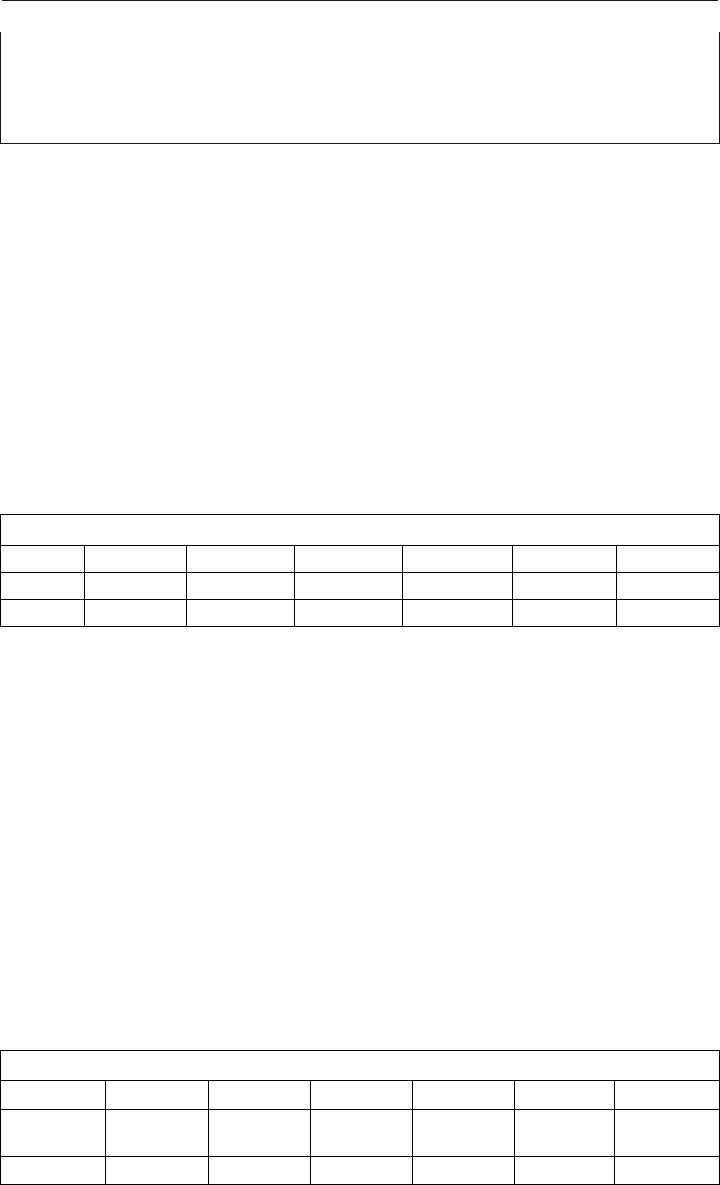
enue base, leading to lower fixed costs per dollar of revenue. Table 1.1 represents
the actual revenues of the Company for each year and the growth trend associated
with each year.
Table 1.1: Actual Revenues and Growth Trend
Mar-95 Mar-96 Mar-97 Mar-98 Dec-98 Dec-99
Revenues $12,198,433 $11,345,938 $10,726,214 $11,558,858 $12,278,556 $14,819,373
% Change -7.0% -5.5% 7.8% N/A 20.7%
As can be seen, the Company’s revenues have increased toward the latter part of the
analysis period. The revenues for the nine-month period ending December 1998
were higher than any of the previous 12-month periods. Over the period, 1995 to
1999, the compound growth rate in revenues was approximately 4%.
COST OF GOODS SOLD
To compare the Company to the industry, we used the 1999/2000 Benchmark
Studies (fictitious). We believe that the appropriate industry classification for the
Company is Standard Industrial Classification Code 1623: Construction: Water,
Sewer, Pipeline, Communication and Power Line—General Contractors. According
to the Benchmark Studies, the cost of goods sold averaged 78.2%. As presented in
Table 1.2, the Company’s cost of goods sold as a percentage of revenues was 78.8%
in 1999, which is comparable to the industry average.
Table 1.2: Cost of Goods Sold and Percentage of Revenues
Mar-95 Mar-96 Mar-97 Mar-98 Dec-98 Dec-99
Cost of
Goods Sold $9,774,937 $9,301,970 $8,193,650 $8,804,580 $8,868,450 $11,676,380
% of Sales 80.1% 82.0% 76.4% 76.2% 72.2% 78.8%
16 VALUATION CASE STUDY EXERCISES

OPERATING EXPENSES
According to the Benchmark Studies, operating expenses as a percentage of sales
for companies in this industry were approximately 14.2% in 1999. As presented in
Table 1.3, the Company’s operating expense as a percentage of sales was approxi-
mately 8.1% in 1999, significantly lower than that of the industry average.
Table 1.3: Operating Expenses and Percentage of Revenues
Mar-95 Mar-96 Mar-97 Mar-98 Dec-98 Dec-99
Operating
Expenses $1,135,984 $818,233 $1,213,537 $1,563,721 $872,841 $1,202,237
% of Sales 9.3% 7.2% 11.3% 13.5% 7.1% 8.1%
Balance Sheets
ASSETS
Current assets usually consist of cash and cash equivalents, accounts receivable,
inventory, and other current assets, which usually consist of prepaid expenses.
ASSET MIX
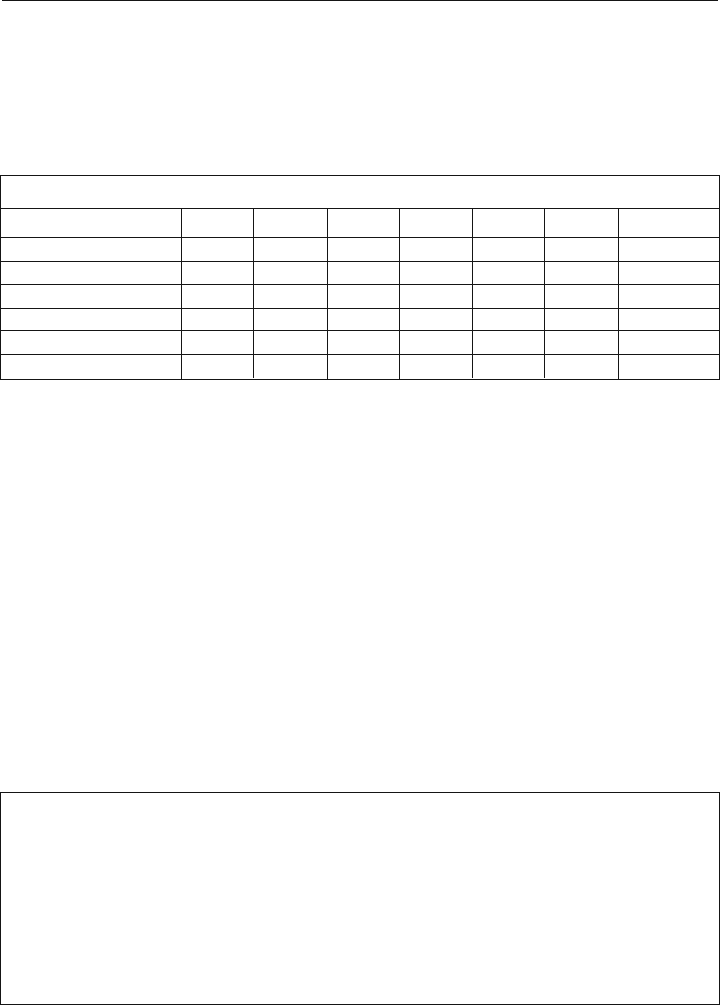
Over the period, the majority of the Company’s assets has been in fixed assets and
contract receivables. Table 1.4 illustrates the Company’s asset mix as a percentage
of total assets:
Table 1.4: Asset Mix Percentages
Mar-95 Mar-96 Mar-97 Mar-98 Dec-98 Dec-99 Benchmark
Cash and Equivalents 13.8% 9.0% 10.2% 10.5% 1.7% 4.6% 11.2%
Contract Receivables 19.6% 15.8% 12.6% 10.1% 39.3% 34.3% 39.9%
Inventories 0.2% 0.2% 0.3% 0.2% 0.1% 0.6% 1.0%
Other Current Assets 5.8% 8.9% 14.2% 22.3% 9.7% 5.9% 7.7%
Net Fixed Assets 54.4% 58.8% 59.6% 55.3% 47.9% 53.3% 33.5%
Other Assets 6.2% 7.1% 3.3% 1.6% 1.3% 1.3% 6.7%
As shown in Table 1.4, the Company’s asset mix was stable for the most part. The
contract receivables increased significantly in 1998 and 1999 due to the change in
the reporting periods. The contract receivables tend to be higher at the December
31 year end than they were at the March 31 year end. The Company also has a
much higher percentage of net fixed assets than the industry average. The Company
maintained a lower cash balance than the industry in the past few years, but that
again is mainly due to the change in the fiscal year ends.
Historical Financial Analysis and Overview of the Company 17
LIABILITIES
The majority of the liabilities consisted of long-term debt, including the current por-
tion. Table 1.5 illustrates the Company’s liabilities mix as a percentage of total lia-
bilities and stockholders’ equity.
Table 1.5: Liability Mix Percentages
Mar-95 Mar-96 Mar-97 Mar-98 Dec-98 Dec-99 Benchmark
Short-Term Notes 2.2% 2.5% 2.4% 2.9% 8.7% 2.9% 3.4%
Current Portion of LTD 0.0% 0.0% 0.0% 0.0% 3.9% 6.8% 4.8%
Accounts Payable 3.2% 7.4% 3.1% 4.3% 6.3% 7.7% 15.2%
Other Current Liabilities 12.9% 6.2% 4.1% 15.9% 4.3% 5.9% 12.8%
Long-Term Debt 10.4% 12.6% 14.5% 13.4% 6.7% 4.1% 12.9%
Equity 71.3% 71.3% 75.9% 63.5% 70.0% 72.6% 50.9%
The liability section of the balance sheet was also stable. The largest liabilities were
the accounts payable and the long-term debt. The equity as a percent is much higher
than the industry average.
EQUITY
Stockholders’ equity refers to the difference between the book value of a company’s
assets and its liabilities. The stockholders’ equity increased each year over the
period analyzed. During the entire period from March 1995 to December 1999, the
stockholders’ equity grew 109.8%.
Financial Ratio Analysis
Ratios for the nine-month period ending December 31, 1998, are not presented.
EXERCISE 16: The main drawbacks of publicly available benchmark finan-
cial ratios are:
a. There are very few SIC codes.
b. They calculate the ratios incorrectly.
c. The companies that make up the data cannot be used to determine pric-
ing ratios or capitalization rates.
d. The information is from public companies.
The industry statistics used in the ratio analysis were taken from Benchmark
Studies. The median statistics are for businesses whose primary Standard Industrial
Classification Code 1623: Construction: Water, Sewer, Pipeline, Communication
and Power Line—General Contractors.
Ratios are divided into four groups, each representing an important aspect of
the Company’s financial position. The groups are liquidity, activity, leverage, and
profitability.
18 VALUATION CASE STUDY EXERCISES

LIQUIDITY RATIOS
Liquidity analysis assesses the risk level and ability of a company to meet its cur-
rent obligations. It represents the availability of cash and the company’s ability to
eventually be converted into cash.
CURRENT RATIO
The current ratio compares current assets to current liabilities. It measures the mar-
gin of safety a company has for paying short-term debts in the event of a reduction
in current assets. It also gives an idea of a company’s ability to meet day-to-day pay-
ment obligations. Generally, a higher ratio is better.
Table 1.6: Current Ratios
Mar-95 Mar-96 Mar-97 Mar-98 Dec-99
Company 2.3 2.1 3.9 1.9 2.0
Industry 1.4 1.2 1.2 1.5 1.5
The Company’s current ratio was consistantly above the industry average over the
period, as shown in Table 1.6. The Company’s ratio is higher than the industry due
to lower current liabilities.
Quick Ratio
The quick ratio adds accounts receivables to cash and short-term investments and
compares the sum to current liabilities. The resulting ratio measures a company’s
ability to cover its current liabilities without having to convert inventory to cash.
Generally a higher ratio is better.
Table 1.7: Quick Ratios
Mar-95 Mar-96 Mar-97 Mar-98 Dec-99
Company 1.9 1.5 2.4 0.9 1.7
Industry 1.1 1.0 1.0 1.2 1.2
As shown in Table 1.7, the Company’s ratios fluctuated over the period. The basic
difference between the current and quick ratio is that the quick ratio includes only
cash and receivables as the numerator. Thus, inventory is not included. As can be
seen from the table, the industry averages contained a larger inventory base due to
the lower ratio. The Company carried a minimal inventory of materials and sup-
plies. In 1998, the Company’s ratio was lower than the industry average due to a
large increase in current liabilities in that year. Other than that year, the Company
has been very liquid and could easily cover its current maturities.
Conclusion of Liquidity Ratios
The Company appears to have lower risk than that of the industry. The current
ratio and the quick ratio are above the industry average for the most part. Thus, the
Historical Financial Analysis and Overview of the Company 19

Company would have little difficulty covering its obligations when compared to
other companies within the industry.
ACTIVITY RATIOS
Activity ratios, also known as “efficiency ratios,” describe the relationship between
the Company’s level of operations and the assets needed to sustain the activity. The
higher the ratio, the more efficient the Company’s operations, as relatively fewer
assets are required to maintain a given level of operations. Although these ratios do
not measure profitability or liquidity directly, they are ultimately important factors
affecting those performance indicators.
Collection Period Ratio
The collection period ratio, also known as the “days’ sales in receivables,” multiplies
accounts receivable at year end by 365, then divides the result by net sales for the
year. This ratio measures how much control a company has over its accounts receiv-
able, and indicates how many days, on the average, it takes that company to convert
accounts receivable to cash. Generally, the smaller the number of days, the better.
Table 1.8: Collection Period Ratios
Mar-95 Mar-96 Mar-97 Mar-98 Dec-99
Company 19 19 16 16 58
Industry 55 54 59 63 60
Compared to the industry, the Company was better at collecting receivables. For the
years represented in Table 1.8, the Company converted its accounts receivable to
cash more quickly than the other companies within the industry. The Company’s
collection period ratio was higher in 1999 due to exceptional circumstances con-
cerning two accounts.
Fixed Assets Activity Ratio
The fixed assets activity ratio compares net sales to fixed assets. It indicates a
company’s ability to generate net sales from the use of its fixed assets. Largely
depreciated fixed assets or a labor-intensive operation may cause a distortion of this
ratio. Generally, a higher ratio is better.
Table 1.9: Fixed Assets Activity Ratios
Mar-95 Mar-96 Mar-97 Mar-98 Dec-99
Company 6.9 5.2 4.7 4.1 4.1
Industry 5.8 6.2 6.1 6.9 6.4
The Company appears worse than the industry average during the period, as
demonstrated in Table 1.9. The Company appears to have not utilized its fixed
assets in generating revenues as effectively as the industry. However, the Company
owns all of its equipment and machinery as opposed to renting. Thus, the higher
20 VALUATION CASE STUDY EXERCISES
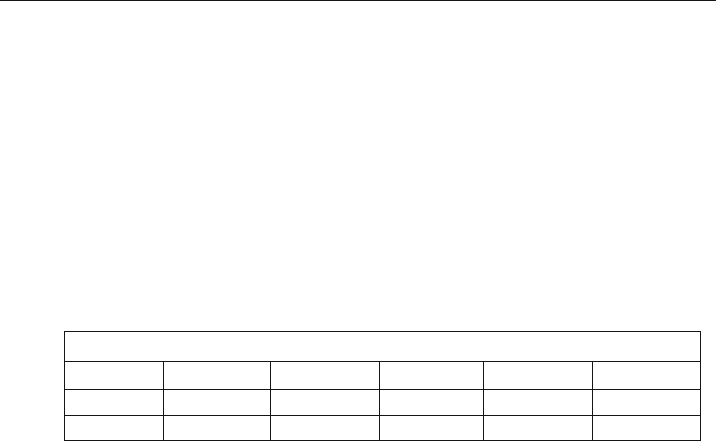
amount of fixed assets causes the ratio to be low as opposed to the industry figures.
Most companies of this nature do not own all of their equipment. The industry
averages most likely represent companies that both rent and own their respective
equipment and machinery.
Asset Management Ratio
The asset management ratio compares net sales to total assets. It measures a com-
pany’s ability to generate sales volume using its assets. It is useful in comparing
companies within specific industry groups on their effective employment of assets.
Generally, a higher ratio is better.
Table 1.10: Asset Management Ratios
Mar-95 Mar-96 Mar-97 Mar-98 Dec-99
Company 3.7 3.0 2.8 2.3 2.2
Industry 2.1 2.0 1.9 2.4 2.2
The Company’s average decreased each year. The Company’s trend (as shown in
Table 1.10) was worse than the industry the most recent two years. The Company
is not generating sales volume using its assets as effectively as in the past, but is
comparable to other companies in the industry currently.
Conclusion of Activity Ratios
The Company seems to be doing better and worse than the industry in this cate-
gory. The Company does collect its receivable quicker than other companies within
the industry, for the most part. However, the Company is not as effective as other
companies within the industry with fixed assets, but this may be affected by the
large level of owned fixed assets.
LEVERAGE RATIOS
Leverage ratios measure the relative exposure of the creditors versus the sharehold-
ers of a business. Leveraged companies accrue excess returns to their shareholders
as long as the rate of return on the investments financed by debt is greater than the
cost of debt. However, financial leverage brings additional risks primarily in the
form of fixed costs that would adversely affect profitability if revenues decline.
Additionally, the priority of interest and debt can have a severe negative impact on
a company when adversity strikes. The inability to meet these obligations may lead
to default and possibly bankruptcy.
Net Fixed Assets to Equity
The net fixed assets to equity ratio divides net fixed assets by a company’s equity. It
measures a company’s ability to support the acquisition of fixed assets by using the
original investment plus retained earnings. Generally, a low ratio is better.
Historical Financial Analysis and Overview of the Company 21