
Абрамова Р.Н., Болсуновская Л.М., Кемерова Н.С. Геология рудных месторождений и разведка полезных ископаемых. Часть 3. Разведка полезных ископаемых. Профессиональный английский язык
Подождите немного. Документ загружается.

South Africa is now the second largest gold producer. It is the first time since
1905 that the country has not been the largest. About 95% of South Africa's
gold mines are underground operations, reaching depths of over 3.8 km. Due
to declining ore grades, increased depth of mining, personnel problems, power
interruptions and rising production costs the output has been steadily falling.
South Africa has vast gold ore reserves, estimated at 40,000 t and represent-
ing about 40% of global reserves. South Africa's main gold producing mines
are located on the Archaean Witwatersrand Basin. This basin has been mined
for more than 100 years and has produced more than 41,000 t of gold. Unlike
most of the world’s major gold deposits, the Witwatersrand ("Wits") is an an-
cient placer deposit, with gold being hosted by conglomerates and grits. The
Wits sedimentary basin stretches through an arc of approximately 400 km
across the Free State, North West and Gauteng Provinces.
AUSTRALIA
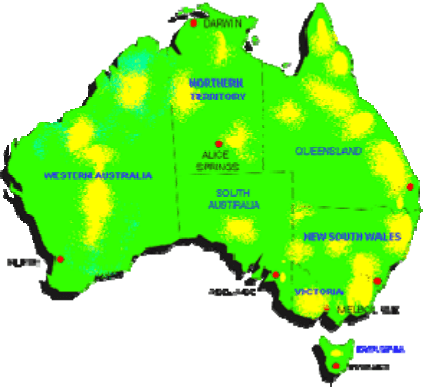
Gold is produced all over Australia, but Western Australia (WA) is by far the
largest gold producing state, producing about 155 t of gold in 2007, which
represented just under two-thirds of the country’s total output. New South
Wales (NSW) and Queensland are also relatively large producers with NSW
producing 35 t in 2007 and Queensland producing 21 t.
Australia's largest producer in 2007 was the Telfer operation in WA where
0.62 Moz was produced. Telfer was followed by the Super Pit at Kalgoorlie
where production was almost 0.61 Moz and Sunrise Dam which produced
0.60 Moz (18.7 t). Similar 2008 production figures have been reported by
these major gold mines. In terms of exploration, new gold mineralization was
48
found across Australia and at depths below known deposits in a variety of
mineralization styles. The Archaean greenstones of Western Australia's Yil-
garn Craton remain a very favorable target but substantial opportunities exist
in other provinces too.
USA
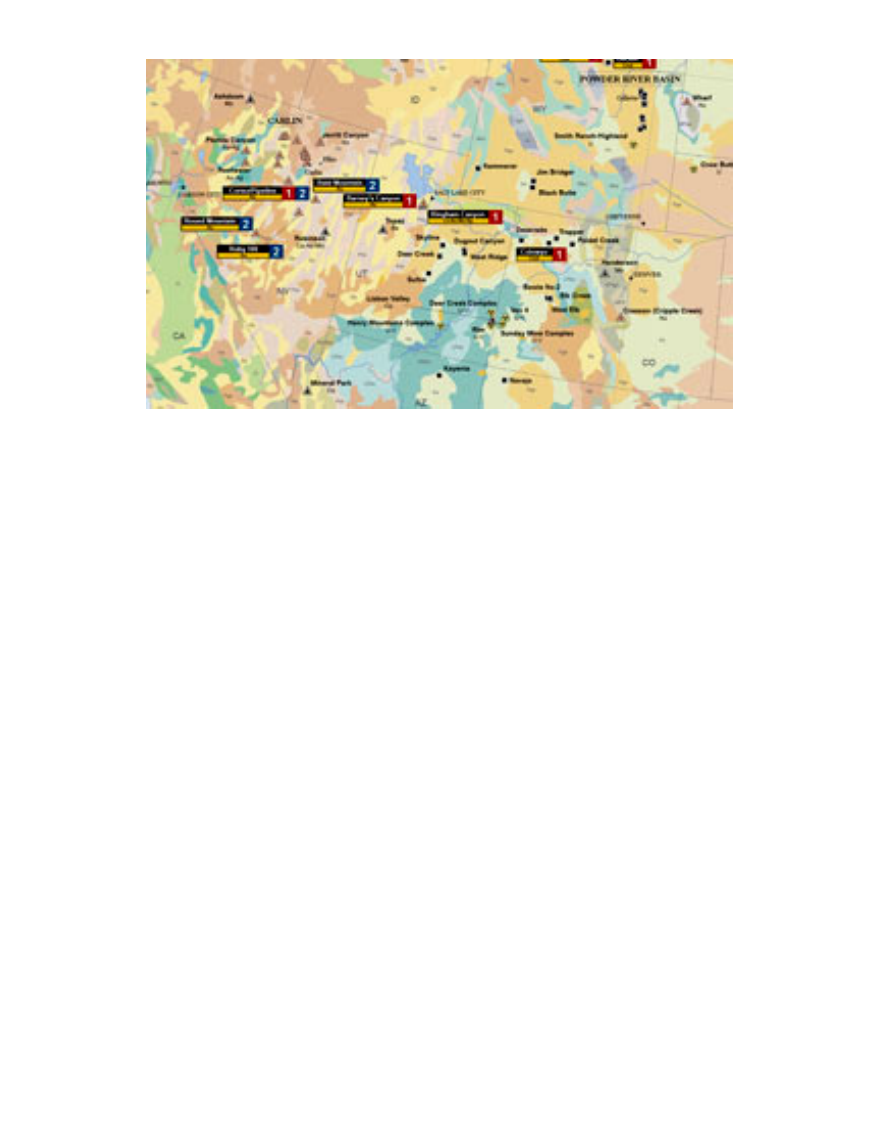
Gold production in the United States is mainly concentrated in the states of
Nevada, Alaska, Utah, and Colorado. There are also gold operations and ex-
ploration projects in Arizona, California, Idaho, Montana, New Mexico,
South Dakota, Utah, and Washington.
Nevada is the leading gold-producing state and ranked fourth after China,
South Africa and Australia in gold production worldwide. Mines in Nevada
accounted for almost 82% of domestic production in 2006. Almost all the
gold in Nevada comes from open pit mining and is recovered by means of
cyanide heap leaching. One of the largest gold operations in the U.S. is the
Carlin mine in northeast Nevada, which is producing gold from a large low-
grade deposit.
In Alaska, gold was produced at lode mines, a dozen large placer mines, and
numerous small placer mines, mostly in Alaska and the Western States.
Much of the gold produced in Alaska was mined from placer deposits occur-
ring along many of the major rivers and tributaries. The principal placer-
mining region has been the Yukon River basin which crosses central Alaska.
Beach deposits of the Nome district rank second among productive placer
deposits of Alaska.
49
PERU
Gold recovered as a byproduct from the concentrates of Peru’s polymetallic
mines amounted to 2.6 t in 2006. Large, medium, and small producers con-
tributed 187 t, while an unknown number of placers exploited by artisan min-
ers reported 15.8 t. Placer gold is being produced mostly in the Inca and the
Mariategui Regions and from rivers and streams throughout the jungle. The
Inambari River and its tributaries represent a well known placer zone located
in southeastern Andes.
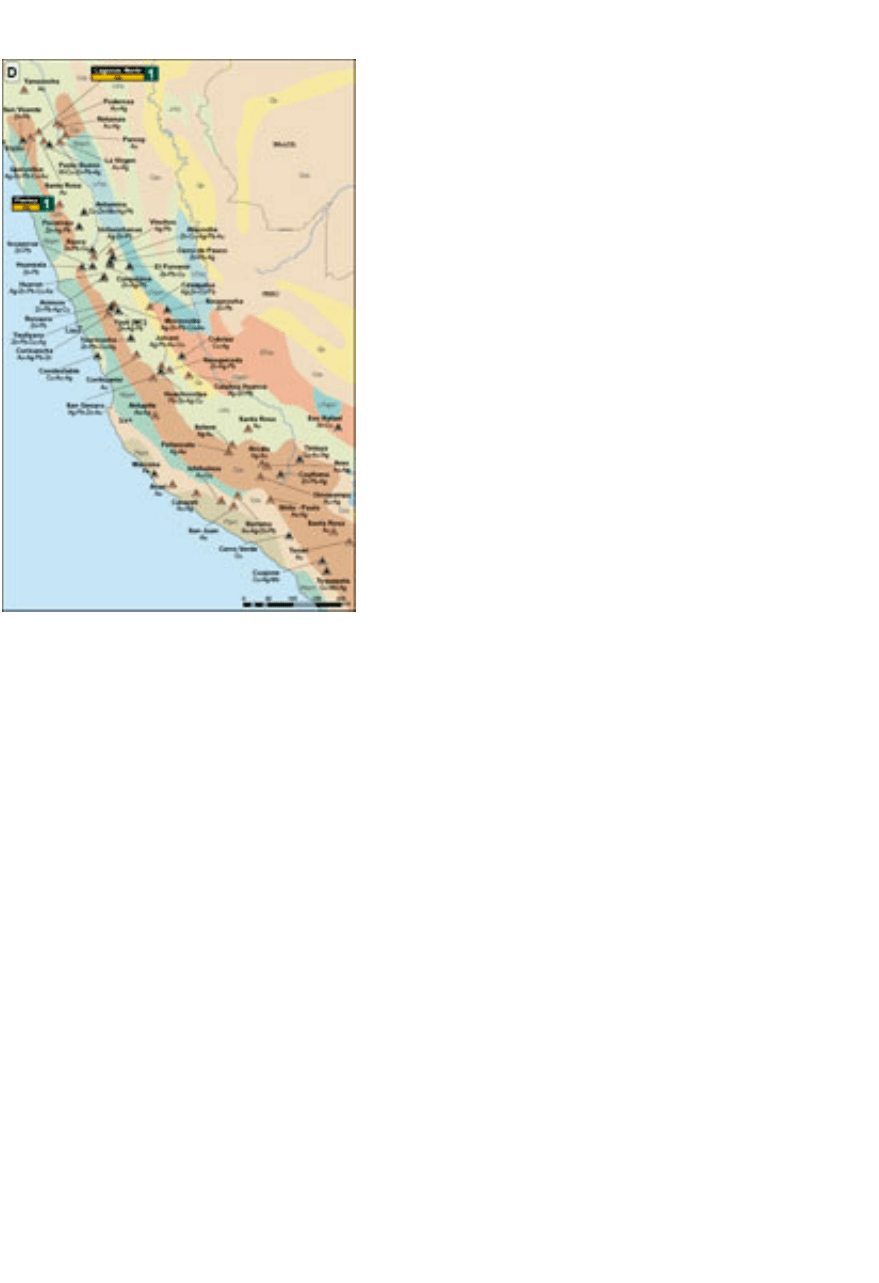
The Yanacocha mine in the Andes in northern Peru is considered one of the
biggest and most profitable in the world – it has produced over US$7 billion
worth of gold to date (2008). The Yanacocha gold deposits are high sulfida-
tion epithermal gold deposits, with varying amounts of silver. The Yanacocha
gold district is a 10 km x 4 km zone of altered rocks within a belt of Tertiary
volcanics that extends the whole length of Peru. This volcanic arc also hosts
the Pierina and Lagunas Norte deposits.
(www.gold.informine.com)
50