
API RP 2T-2010 Planning, Designing, and Constructing Tension Leg Platforms
Подождите немного. Документ загружается.


PLANNING, DESIGNING, AND CONSTRUCTING TENSION LEG PLATFORMS 181
Coating failures in the splash zone are primarily related to damage due to local impact. Special glass-flake
reinforced epoxy coatings have been used with good success on TLP splash zones. Thermally sprayed
aluminum has also been used successfully.
The coatings in the splash zone are difficult to repair or replace. Cathodic protection is effective through at
least the middle of the splash zone, so anything below that level should not need to be re-coated if the coating
fails. However, replacing the coatings near the waterline does present difficulties in staging and environmental
protection. Organic coatings such as epoxies/urethanes are currently rated at 15 years to 17 years without
impact damage. Glass flake reinforced coatings may last longer from a mechanical damage perspective.
Thermally sprayed aluminum can be used for up to 30-year life.
13.4 Corrosion Protection of Internal Surfaces
Internal surfaces exposed to a corrosive environment shall be protected from corrosion. Corrosion protection
can be achieved by the use one or more of the following corrosion protection technologies: coatings,
dehumidification, or cathodic protection (when seawater exposed). A corrosion engineering analysis should
be conducted to determine the most cost effective corrosion protection scheme.
13.5 Corrosion Protecton of Hull External Submerged Surfaces
The below water portions of the hull are typically protected with cathodic protection systems, in some cases
supplemented by coatings. Use of coatings with cathodic protection offers large weight savings when using
sacrificial anodes. Cathodic protection can be provided by sacrificial anodes, by an active impressed current
system, or by a combination of the two. Issues of concern for typical TLP hulls include shielding and shadows
preventing adequate coverage, and adverse interaction and anode wastage caused by adjacent components
(tendons, risers, pipelines), and overprotection leading to hydrogen embrittlement.
Protection of the internals of flooded caissons, enclosed and/or complicated tendon and riser porches, and
connections of risers and pipelines requires special design consideration.
13.6 Tendons
Tendon protection can be accomplished by several methods. All TLPs to date have used coated tendons
[fusion bonded epoxy (FBE), polyethylene (PE), or thermally sprayed aluminum (TSA), or combinations
thereof], combined with some form of sacrificial anode based cathodic protection. The cathodic protection
systems have included bracelet anodes on each tendon element, and cathodic protection projected from the
top (anodes on hull) and bottom (anodes on foundation). In all cases, the tendon CP design should account
for interaction with the cathodic protection of the hull, foundations, risers, and pipelines. Impressed current
systems should not be used for tendons.
The key to using sacrificial anodes to protect tendons from their ends is the potential attenuation along the
tendon. Potential attenuation is reduced by good coatings and a sufficient conductor area (wall thickness to
diameter ratio). Since coatings are usually in excellent condition at launch, this is not a problem for tendons in
the 5000+ ft range. As coatings deteriorate over time, the tendons are normally protected from both ends by
platform anodes and pile anodes. Coating deterioration rates should be based on actual experience, rather
that rates provided by coatings vendors.
The tendon system corrosion protection should also include consideration for the top and bottom connectors,
and the tendon tension monitoring system. These often include shielded spaces and crevices combined with
high-stress components.
13.7 Foundations
The foundations should be included in the overall corrosion protection design. The lower regions of the pile
are embedded in the soil with limited oxygen. The upper sections of the pile may have sufficient thickness to
provide a reasonable corrosion allowance, but the pile does provide a large current drain on any CP system
Copyright American Petroleum Institute
Provided by IHS under license with API
Licensee=Shell Global Solutions International B.V. Main/5924979112, User=Low, Ko
Not for Resale, 01/31/2011 00:10:44 MST
No reproduction or networking permitted without license from IHS
--``,`,```,,,``,`,``,,,,,,,,,,`-`-`,,`,,`,`,,`---

182 API RECOMMENDED PRACTICE 2T
which is grounded to the piles. This is well recognized by NACE. Coating the upper pile and connector
receptacle can reduce this current load. Pile geotechnical performance is generally based on rough raw steel
surfaces, and coatings may reduce skin friction, leading to lower pile performance. Any coatings on the pile
below the mudline should meet the requirements of 10.5.5. The connector/receptacle on the pile is part of the
tendon system, and should be protected. Impressed current systems should not be used for foundations.
13.8 Cathodic Protection (CP) Interaction
There is debate among corrosion protection system designers as to whether adjacent components should be
isolated or grounded to each other. Isolation when there is a structural connection is tenuous. One of the
advantages of isolation is that one system cannot draw current from and deplete the anodes on the other
system. One disadvantage of isolation is that is that near the connection, the near field flowing currents on
one system can locally damage the other unless both are locally protected quite thoroughly in this location.
The general recommendation herein is to ground all connected systems, and to ensure that all are sufficiently
protected to ensure that any one will not cannibalize the capacity of the others. In-service, this should be
checked through scheduled potential voltage monitoring as described in 13.9 and Section 15.
13.9 Monitoring
The cathodic protection system should be checked upon installations, and again on a regular basis through
visual examination and through potential voltage monitoring. Monitoring/surveying the CP system and
inspecting the platform for corrosion is addressed in Section 15.
14 Fabrication, Installation and Inspection
14.1 Introduction
14.1.1 Scope
This section deals with the fabrication, assembly, installation and fabrication inspection of a TLP. Specific
additional criteria for the fabrication of structural components, tendons and foundations are found in Section 8,
Section 9 and Section 10, respectively. Installation and marine operations are addressed for load-out,
launching, transportation, stability, positioning and inspection as they apply to the platform, foundations and
well templates. Tendon installation issues such as running, connecting, pretensioning are also discussed.
General guidance on documentation requirements for long-term operation is given. Typical documents
include the marine operations manual, the in-service inspection plan, and the construction portfolio.
14.1.2 Practices and Procedures
Fabrication, assembly, and installation procedures for the platform, tendons and foundations should be
developed during the design process so as to meet work requirements. A design basis document should be
developed by the contractor and approved by the client prior to the commencement of detailed engineering.
Close coordination between the designer, fabricator, installer, and operator is essential in developing these
procedures. The following serve as guidelines for acceptable practices.
a) Fabrication should be in accordance with applicable sections of recognized standards such as the AISC
360-05 and API 2A-WSD, 21st Edition (2002). Hull and deck fabrication may follow class society rules.
Riser and tendon fabrication may follow the ASME BPVC.
b) Welding should be performed in accordance with API 2A-WSD, Section 10 and AWS D1.1 (2000).
c) All work should be carefully executed with proper quality and testing procedures to assure that the work
product meets design specifications and drawings. All faults and/or deficiencies should be corrected
before the material is painted, coated, or otherwise made inaccessible.
Copyright American Petroleum Institute
Provided by IHS under license with API
Licensee=Shell Global Solutions International B.V. Main/5924979112, User=Low, Ko
Not for Resale, 01/31/2011 00:10:44 MST
No reproduction or networking permitted without license from IHS
--``,`,```,,,``,`,``,,,,,,,,,,`-`-`,,`,,`,`,,`---

PLANNING, DESIGNING, AND CONSTRUCTING TENSION LEG PLATFORMS 183
d) Prior to commencement of work, specification for the fabrication and quality control procedures covering
critical aspects pertinent to the product's quality should be developed and agreed upon by the designer,
operator, fabricator, and applicable regulatory agencies. Further, a program for nondestructive testing
(NDT) should be developed and agreed upon. This program should contain information and documents
for planning, controlling, reporting, standards, etc.
e) Personnel safety during all phases of fabrication and installation shall be maintained.
f) Consideration should be given to providing temporary access, lighting, ventilation, fire fighting, etc.,
during all phases of fabrication, assembly, and installation.
14.2 Structural Fabrication
14.2.1 General
This section addresses fabrication of the hull and deck structures, foundations, and well templates. Specific
guidance is provided in Section 8. API 2A-WSD, Section 4 and Section 11 should be consulted for guidance
on splices, welded tubular connections, and plate girder fabrication.
14.2.2 Welded Stiffened Plates and Shells
Fabrication of large diameter shells stiffened by either ring frames or a combination of ring frames and
longitudinal stiffeners requires consideration of local fabrication tolerances, weld details, connection details
and fabrication sequence.
If localized heating is proposed for straightening or repair of out of tolerance, the designer should assess its
effects on the material properties. Assembly of substructures can result in built in stresses. A construction
sequence should be developed and agreed by all parties for all structures to minimize this condition.
14.2.2.1 Fabrication Sequence
A fabrication sequence should be established so as to minimize the extent of residual stresses. Some
recommended guidelines for establishing this sequence are:
a) welds should progress in a direction from higher to lower restraint,
b) joints with expected significant shrinkage should be welded before those of lesser-expected shrinkage,
c) joints should be welded with as little restraint as possible,
d) splices in component parts of built in members should be made before welding to other component parts.
The overall fabrication sequence should be such that defects and deficiencies can be found and corrected
prior to completion of the affected part being made inaccessible.
14.2.2.2 Weld Details
In fabricating cylindrical, and noncylindrical sections including flat plate structures, the following
recommendations should be considered in addition to those discussed in 14.4.
a) Weld Proximity—All parallel welds (butt, tee, or fillet) should be separated considering the thickness of
the material and the heat-affected zone (HAZ). However, in no case should this toe-to-toe separation be
less than four times the plate thickness (4t). The most common case is the seam weld in a plate or
cylinder parallel to a stiffener.
Copyright American Petroleum Institute
Provided by IHS under license with API
Licensee=Shell Global Solutions International B.V. Main/5924979112, User=Low, Ko
Not for Resale, 01/31/2011 00:10:44 MST
No reproduction or networking permitted without license from IHS
--``,`,```,,,``,`,``,,,,,,,,,,`-`-`,,`,,`,`,,`---

184 API RECOMMENDED PRACTICE 2T
Longitudinal butt welds should be offset a sufficient distance to avoid having all welds intersecting at the
same corner.
b) Weld Intersections—Where the intersection and overlap of butt welds by butt, tee, or fillet welds is
unavoidable, the intersected (first) weld should be ground flush for a distance of 50 mm (2 in.) where
possible on either side of the abutting plate. Additional NDT may be required.
c) Weld Continuity—Intermittent welds are a stress concentration source that could lead to fatigue cracks if
oriented in the direction of varying tensile stresses. At points of intersecting stiffeners, stiffeners with
larger varying stress range should be welded continuously with interruptions in welding on the secondary
stiffeners. Cutouts (mouse holes) or clearances at these intersections should be of adequate size to
provide access for complete end welds, if permitted by the designer. The radius of these cutouts or
clearances should be at least 50 mm (2 in.). Intermittent welds should not be used where corrosion is
likely.
d) Seal Welds—Fillet welds in tank spaces should be detailed so as to limit the possibility of fluids
encroaching behind the welds. This can be accomplished by the use of seal welds.
14.2.2.3 Fabrication Details
When detailing the final construction drawings, consideration should be given to the following.
a) Drainage—Adequate drainage should be provided for the webs of deep non watertight ring frames.
b) Cutouts—The cutouts where stiffeners pass through deep nonwatertight ring frames should be designed
to provide support for the stiffener, retain adequate ring frame shear area, and limit the extent of stress
concentration.
c) Plate Orientation—The direction of rolling of plates should, where practical, line up with the direction of
the primary load path to minimize the fatigue effects in critical areas, such as pontoon or brace
connections to columns.
d) Tapers—When joining items of different thicknesses and widths, tapers of 2.5:1 to 4:1 are recommended
depending on service requirements.
14.2.3 Tolerances
Deviations should not exceed the design assumptions regarding buckling strength (i.e. out-of-planeness for
unstiffened plating, out-of-straightness for plate stiffeners, out-of-roundness for circular members). Special
consideration should be given to alignment between welded structural members. Allowable misalignment
depends on stress level and type of loading, as well as type and importance of the joint. Therefore, unless
specifically incorporated in the design approach, each member should be fabricated and positioned
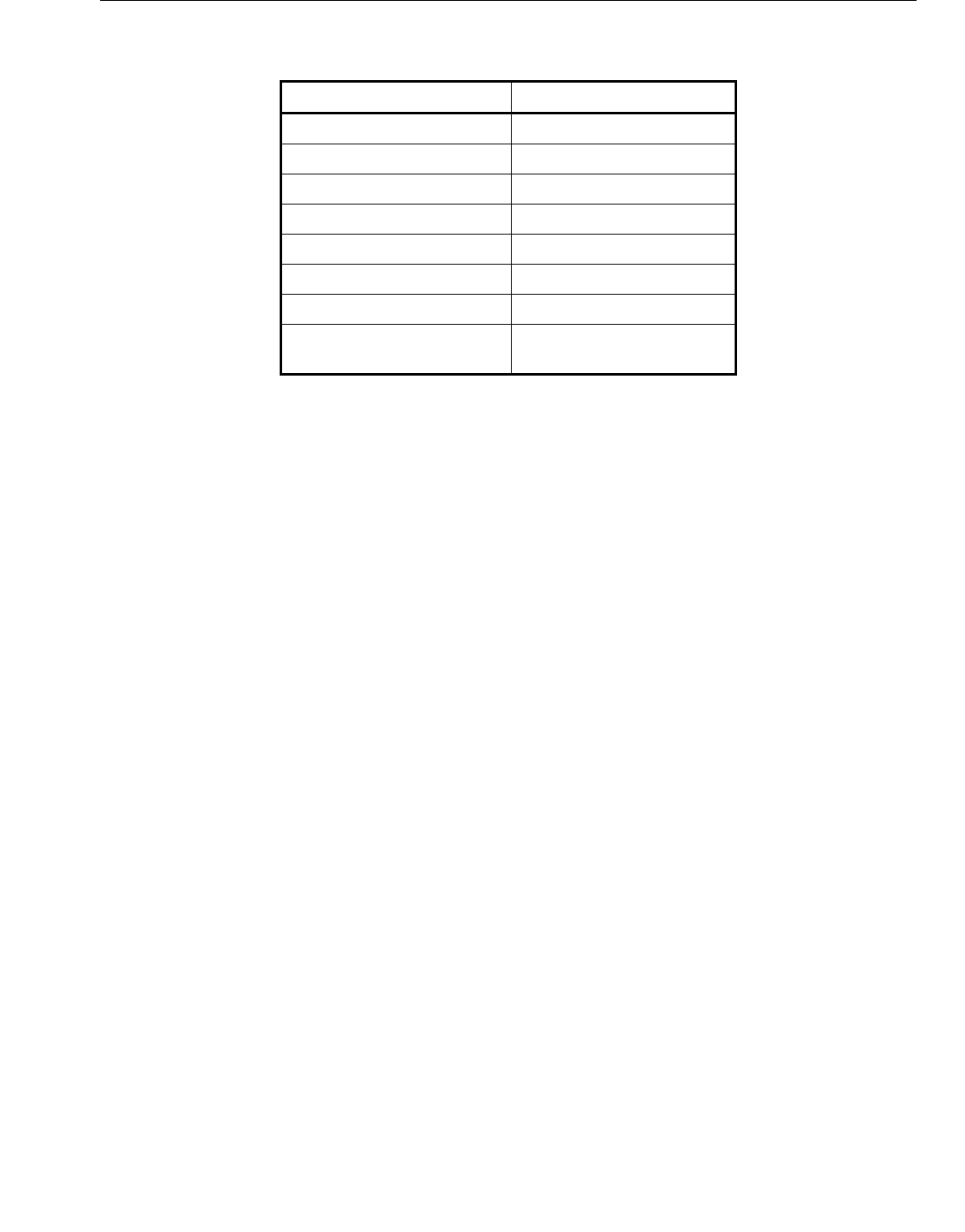
accurately to tolerances to the standards shown in Table 13.
Copyright American Petroleum Institute
Provided by IHS under license with API
Licensee=Shell Global Solutions International B.V. Main/5924979112, User=Low, Ko
Not for Resale, 01/31/2011 00:10:44 MST
No reproduction or networking permitted without license from IHS
--``,`,```,,,``,`,``,,,,,,,,,,`-`-`,,`,,`,`,,`---
PLANNING, DESIGNING, AND CONSTRUCTING TENSION LEG PLATFORMS 185
Table 13—Reference Standards for Design Tolerances
Structural Member Reference Standard
Tubular API 2B
Welded plates AWS D1.1
Beam-columns AWS D1.1
Trusses AWS D1.1
Girders AWS D1.1
Stiffened plates API 2V
Cylindrical shells API 2U
Deck and cap beams, piles,
grating, handrails and fences
API 2A-WSD, Section 11
14.3 Welding
14.3.1 Specifications
Welding should be performed in accordance with AWS D1.1 (2000) and other AWS documents as follows.
a) Sections 1 through 6 are applicable and constitute a body of rules for the construction of any welded
structure governed by AWS D1.1. Part C of Section 6 should not apply to tubular nodes. API 2X provides
guidance of ultrasonic techniques, procedures, reports and qualifications of technicians for tubular nodes.
b) Section 8 applies for general structural welding of plates and structural plates, e.g. portions of deck
sections.
c) Section 10 may apply to various TLP components.
d) AWS D1.1 alone may not be adequate for high-strength steels.
e) Supplementary requirements should be specified for the effects of dynamic loading on the structural
welding requirements for the fatigue sensitive portions of the TLP hull and deck.
14.3.2 Welding Procedures
Written welding procedures should be required for all work, including repairs, even where prequalified. The
essential variables specified in AWS D1.1, Section 5 and Appendix E should be shown in the welding
procedure and adhered to in production welding.
14.3.3 Welders
Welders should be qualified for the type of work assigned and be issued certificates of qualification stating
such limitations as required by AWS D1.1, Section 5 and Appendix E.
14.3.4 Qualification
14.3.4.1 General
Welding procedures, welders, and welding operators should be qualified in accordance with AWS D1.1 as
further qualified herein. A competent testing laboratory should be used to perform qualification tests. New
qualifications may be waived if prior qualifications and experience are deemed acceptable.
Copyright American Petroleum Institute
Provided by IHS under license with API
Licensee=Shell Global Solutions International B.V. Main/5924979112, User=Low, Ko
Not for Resale, 01/31/2011 00:10:44 MST
No reproduction or networking permitted without license from IHS
--``,`,```,,,``,`,``,,,,,,,,,,`-`-`,,`,,`,`,,`---

186 API RECOMMENDED PRACTICE 2T
14.3.4.2 Impact Requirements
Impact requirements should be included in the fabrication or purchase specification. When the purchase
specification does not specify impact requirements for Group II, Class A and B, Group III and Group IV, the
as-deposited weld metal and HAZ in the procedure qualifications should meet the minimum toughness
requirements specified in 8.8.2. Additional guidance for the selection of toughness requirements is given in
8.8.4.
Charpy V-notch tests should be performed in accordance with ASTM A370. The longitudinal axis of the
specimen should be at a minimum depth of T/2 for T = 19 mm (
3
/4 in.) or less and T/4 for T > 19 mm (
3
/4 in.),
from a weld surface.
14.3.4.3 Hardness
Hardness requirements should be by agreement of the manufacturer and the purchaser.
14.3.4.4 Gas Metal Arc Welding
The short arc process should not be used without prior approval of the purchaser.
14.3.4.5 Large Diameter Pipe
The procedure for submerged arc metal welding of girth joints on large diameter pipe should be qualified on
the smallest diameter for which the procedure will be used during production.
14.3.5 Welding Inspection
As a minimum, a visual inspection of welded joints should conform to the appropriate requirements of API 2A-
WSD and AWS D1.1.
Supplementary requirements should be specified for the effects of dynamic loading on the structural welding
requirements for the fatigue sensitive portions of the TLP hull and deck.
14.3.6 Unspecified Welds
Complete penetration groove welds should be used to join intersecting and abutting parts, unless otherwise
specified. This includes hidden intersections, as may occur in overlapped braces and pass-through stiffeners.
14.3.7 Groove Welds Made from One Side
At intersecting tubular members, were access to the root side of the welds is prevented, complete penetration
groove welds conforming to AWS D1.1, Figure 10.13.1A may be used. When tubular members are large
enough to allow welder access to the inside of the member, consideration may be given to cutout windows to
allow access for welding the backside of the joint. The cutout should be replaced and rewelded using a
properly fit backing bar with all splices in the backing bar full penetration welded.
14.3.8 Seal Welds
Unless otherwise specified, all faying surfaces should be sealed against corrosion by continuous fillet welds.
Seal welds need not exceed 3 mm (
1
/8 in.) regardless of base metal thickness, provided low hydrogen welding
is used.
14.3.9 Post Weld Heat Treatment (PWHT)
Stress relief by PWHT of cylindrical members fabricated form carbon steel is generally not required where the
weld joint thickness is 50 mm (2 in.) or less. Welding procedure qualification tests should be included when
Copyright American Petroleum Institute
Provided by IHS under license with API
Licensee=Shell Global Solutions International B.V. Main/5924979112, User=Low, Ko
Not for Resale, 01/31/2011 00:10:44 MST
No reproduction or networking permitted without license from IHS
--``,`,```,,,``,`,``,,,,,,,,,,`-`-`,,`,,`,`,,`---

PLANNING, DESIGNING, AND CONSTRUCTING TENSION LEG PLATFORMS 187
PWHT is used in production. A detailed PWHT procedure should be written for each heat treatment. In
specifying PWHT other factors such as high yield joint restraint should be considered in addition to thickness.
14.3.10 Weld Toughness
Where minimum toughness requirements are specified they should be applicable to the entire weldment
(base material, weld deposit and heat affected zone) as specified in 8.8.
14.4 Platform Assembly
14.4.1 General
Assembly of subcomponents depends on structural design and proposed fabrication technique. Several
different methods for fabrication and assembly may be considered. Some methods include the following.
a) Hull assembled on land and launched into water. Deck assembled at a different site, and loaded onto a
barge. Both hull and deck transported to a preselected integration site. Deck added by hull/deck mating
operation or by individual module lifting operations.
b) Hull assembled in dry dock and floated out; deck added as in item a).
c) Hull and deck assembled on land and launched into water. Deck modules may or may not be added at a
later floating stage.
d) Hull and deck assembled in dry dock and floated out.
e) Hull fabricated in sections and joined in a free-floating condition or on barges. Deck added as in item a)
above.
f) Hull assembled onshore; loaded onto a transport vessel or barge; then launched or floated off of the
transport vessel or barge at the integration site. Deck added as in item a).
In the selection of a fabricating and assembly method, some factors to be considered include:
— platform size, weight and draft;
— number of pontoons and columns;
— type of deck construction, e.g. open truss or plated;
— size and type of deck modules;
— fabricators’ facilities (inclusive of size and dry docks, overhead cranes, skid ways, etc.);
— depth of water at launch site and connecting waterways or channels to open sea or mating site.
Additional temporary buoyancy may be considered to reduce draft during fabrication and assembly
operations.
14.4.2 Erection Sequence
The fabricator should develop a detailed erection sequence showing a step-by-step plan for assembling
subcomponents to make up the hull and deck. Careful planning is required to ensure that subcomponents fit-
up within specified tolerances and that overall global dimensions are met.
Copyright American Petroleum Institute
Provided by IHS under license with API
Licensee=Shell Global Solutions International B.V. Main/5924979112, User=Low, Ko
Not for Resale, 01/31/2011 00:10:44 MST
No reproduction or networking permitted without license from IHS
--``,`,```,,,``,`,``,,,,,,,,,,`-`-`,,`,,`,`,,`---

188 API RECOMMENDED PRACTICE 2T
14.4.3 Dimensional Control
Careful attention to dimensional control is required to ensure that proper fit of fabricated modules and
structures is achieved during the assembly, mating and installation phases, so that time delay is minimized
and that fabricated structures meet design requirements.
The global as-built geometry of the structure should not deviate from the design in a way that may cause
significant change in load path.
Dimensional control operations should be planned to suit the design, fabrication, and erection plans, and
provide early warning for necessary corrective and/or reanalysis requirements.
Corrective and/or reanalysis results should be determined based on the survey results and the calculated
dimensions of the modules and structures for the actual support and loading condition during the particular
phase of constructions.
14.4.4 Weight Control
The actual weights of the fabricated modules and structures often vary from the calculated weight. An
effective weight control program should ensure that the final as-built weight meets the design requirements.
Selected subcomponents should be weighed to verify the calculated weights and centers of gravity. A
deadweight survey and inline test should be completed to verify the lightship weight and vertical center of
gravity of the completed hull and deck.
14.4.5 Heavy Lifts
Lifting Forces should be computed as per API 2A-WSD, Section 2.
14.4.6 Hull and Deck Mating Operations
14.4.6.1 General
Hull and deck mating operations refer primarily to the setting or assembly of the deck onto the floating hull
from a buoyant transport vessel. Mating operations include the approach, alignment, contact and load transfer
of the deck onto the hull, as well as the separation of components from the transport vessel. The designer
should prepare a detailed plan for these operations. Complete procedures for the intended method should be
included.
14.4.6.2 Site Selections
If the fabrication sequence of the platform involves separate fabrication of the hull and deck, the mating site
selection should provide, as a minimum, the following:
— adequate water depth to allow for the mating considering ballasting operations and changes in hull draft
and transportation vessels;
— sufficient shelter from prevailing environmental conditions to assure that hull/deck motions are
acceptable, and that the structures are not overstressed during critical interfacing operations.
14.4.6.3 Mating Hardware
Hardware involved in the mating operation should be specifically designed for the selected procedure and
may include guidance cones, pins, or slots, rubber shock pads or absorbers, hydraulic jacks and rapid load
separation equipment (e.g. pull-out blocks, hinged drop arms, rapid acting ballast systems, etc.).
Copyright American Petroleum Institute
Provided by IHS under license with API
Licensee=Shell Global Solutions International B.V. Main/5924979112, User=Low, Ko
Not for Resale, 01/31/2011 00:10:44 MST
No reproduction or networking permitted without license from IHS
--``,`,```,,,``,`,``,,,,,,,,,,`-`-`,,`,,`,`,,`---

PLANNING, DESIGNING, AND CONSTRUCTING TENSION LEG PLATFORMS 189
14.4.6.4 Load Analysis
Detailed deflection and load analysis should be performed to determine applied forces on structural
connections and mating hardware due to environmental loads, changes in ballasting arrangements or load
transfer during mating operations. Sufficient clearance between the transport vessel and deck after load
transfer may be achieved through deballasting of the hull and/or ballasting of the barge. It may also be
achieved through mechanical means (e.g. pull-out blocks or hinged drop arms). In this manner, dynamic
impact loads between the hull and deck may be lessened.
14.4.6.5 Equipment Testing
All mating equipment (such as ballasting arrangements, temporary generators, jacks and control systems,
etc.) should be thoroughly tested before float out or commencement of operations.
14.4.6.6 Stability
Stability calculations should be performed for both the platform hull and transport vessel to ensure adequate
stability during all phases of the ballasting and load transfer operations.
14.5 Transportation
14.5.1 General
Transportation operations should be planned concurrently with the structural design in order that loading
conditions during loadout, tow, and launch are clearly defined. Applicable regulations and/or codes such as
those of the United States Coast Guard (USCG) and the International Maritime Organization (IMO) should be
considered. Model testing may be used to confirm analysis results.
All marine operations shall, as far as practicable, be based upon well-proven principles, techniques, systems
and equipment, and shall be undertaken by qualified, competent personnel possessing relevant experience.
14.5.2 Platform
14.5.2.1 Launch
Calculations should be made to confirm that the platform can be safely skidded into the water or onto a barge,
or if built in a dry dock, that it can transfer from the on-bottom condition to the floating mode without instability
or overstressing.
14.5.2.2 Ballast Systems
The systems for ballasting and deballasting should be designed with sufficient numbers of valves and pumps
to provide a fail-safe operation during loadout or launch, tow, integration and installation.
14.5.2.3 Stability
Seakeeping characteristics along with heeling and righting moment curves of the platform should be produced
for the various free floating and towing conditions anticipated. The mathematical analyses may be correlated
with scale model test results. Design calculations should show that adequate buoyancy and stability exists if
damage occurs during transit.
14.5.2.4 Forces
The platform should be designed to resist all hydrostatic, environmental, and towing forces imposed on it
during transit. Towing attachments to the platform should be stronger than the breaking strength of the largest
towing wire and should be accessible during transit. Fatigue of the overall towing arrangement and at towing
attachments should also be considered.
Copyright American Petroleum Institute
Provided by IHS under license with API
Licensee=Shell Global Solutions International B.V. Main/5924979112, User=Low, Ko
Not for Resale, 01/31/2011 00:10:44 MST
No reproduction or networking permitted without license from IHS
--``,`,```,,,``,`,``,,,,,,,,,,`-`-`,,`,,`,`,,`---

190 API RECOMMENDED PRACTICE 2T
Refer to API 2A-WSD, Section 5 for fatigue calculation methods.
14.5.2.5 Towing Vessels
The proper number of seagoing and/or harbor tugs, with sufficient size and power, should be provided to
safely operate in any sea environment that may develop for each particular transit route, transportation time
and time of year.
14.5.3 Template Structures
14.5.3.1 General
Template structures (e.g. for foundations or wells) may be transported and handled by a variety of methods.
Possible operations can include loadout or launching at the fabrication site, transportation by self-floating or
as deck cargo, and either lift-off or launching at the installation site.
Refer to API 2A-WSD, Section 12.2, for additional guidance on transportation to an installation site.
14.5.3.2 Launch
A method of launch may be considered that utilizes the procedures and criteria established for the launching
of jacket-type offshore platforms. Structural strength, launch trajectory, and structural equilibrium after launch
should be assessed. A hypothetical damage condition should be considered when making these calculations.
Prior to launching, procedures should include a check to ensure that all watertight closures and valves have
been secured.
14.5.3.3 Barge Transport
Template structures transported as deck cargo are subject to loads generated by the vessel's dynamic
motions. As required, motion analyses should be undertaken to determine the dynamic load components that
should be incorporated in the structural and tie down analyses.
14.5.3.4 Free-floating Transport
Template structures transported by self-flotation will be subject to drag forces, still water bending, wave
induced bending and hydrostatic forces. Environmental loads should be predicted for worst-case tow criteria
and analyzed in accordance with procedures in 10.5. Points of attachment for towing hawsers should be
designed to limit stress concentrations and crack initiation at these locations. Stability calculations, including a
one-compartment damage condition, should be performed.
14.5.3.5 Offshore Lifts
Template structures lifted from transport barges should be designed following the guidance of API 2A-WSD.
Prior to lifting, procedures should include a check to ensure that all watertight closures and valves have been
secured.
14.5.4 Tendons
The transportation and handling of tendons between the fabrication site and the platform requires careful
evaluation to ensure that the tendons, including the connectors, coatings, anodes and other appurtenances,
are not damaged. Procedures should be evaluated following the guidance of API 2A-WSD. Consideration
should also be given to the need for protection of tendons and tendon components during storage and
handling following fabrication and prior to transportation. Protection means may include, but are not limited to,
temporary coatings and coverings.
Copyright American Petroleum Institute
Provided by IHS under license with API
Licensee=Shell Global Solutions International B.V. Main/5924979112, User=Low, Ko
Not for Resale, 01/31/2011 00:10:44 MST
No reproduction or networking permitted without license from IHS
--``,`,```,,,``,`,``,,,,,,,,,,`-`-`,,`,,`,`,,`---