
Gary Dahl. Advertising for Dummies
Подождите немного. Документ загружается.


Doing e-mail advertising
E-mail is the sweetheart of the current advertising models. It’s cheap. It’s fast.
It’s effective. Recently, response rates for permission-based advertising (where
you ask the customer before sending e-mail) beat the heck out of banner ad
click-through rates.
Why is e-mail so successful? Because it’s a form of dialogue. Your customers
can respond to you, a real human being, instead of watching a Web page.
Think of an e-mail campaign as being an extension of your other advertising
strategies. You don’t want to replace them entirely, but you can add the hottest
sizzle in town by using e-mail. The reason e-mail is hot is that you can target so
effectively. You can be wildly creative — embedding audio and video and inter-
active capabilities in your messages — for relatively little expense.
In the next sections, I offer pointers on the best way to do e-mail advertising.
I tell you how to compile — and/or buy — good lists of people to send your
e-mail ads to. I also advise writing and sending your own newsletter via e-mail
to prospective customers.
Collecting lists
If you want to use e-mail in your ad campaign, you’re going to need e-mail
addresses of people to send your messages to. Start by asking your regular
customers for their e-mail addresses. Those who want to receive ads from
you will comply — and you don’t want to bother the people who don’t want
to give you their e-mail addresses.
92
Part II: Creating Great Ads for Every Medium
Are banners and buttons effective?
If you get a 1 or 2 percent conversion rate, your
banners are performing at or above normal.
That’s dismal, you say. Well, yes it is, but consider
the whole story before rushing to judgment.
When so many dot-coms failed that we started
to call them dot-bombs, online ad impressions
still increased exponentially and reached an all-
time high in December 2000 — the height of the
panic.
Plus, with so many more ads out there now, the
conversion rate is bound to be lower. Not all
companies spend the time or effort to care
about the right kind of banner put in the right
place to do the right job. So good banners and
buttons can be very effective.
Banner bashing is popular. Maybe it’s right, too.
I can’t guarantee you that banner advertising
will wind up being the online ad model that
works. But I do think incorporating banners into
your overall advertising strategy makes sense.
11_045833 ch06.qxp 11/22/06 3:51 PM Page 92
You can also collect information from those who visit your site by asking
them for their feedback. Inquire about their interests. Ask them for their
e-mail addresses. Offer discount store coupons or tickets to a local show
to people who give you information. Remember: The data people give you
is valuable, so you may want to give a little something in return for the
information they give.
You can also buy lists containing thousands of e-mail addresses. But I hate
this method because the people on those lists haven’t asked to be there.
If you send unsolicited advertisements, you’re sending spam (unwanted
e-mail). Spam is unkind, unfair, and counterproductive. Plus, response rates
on these kinds of e-mails are low.
Publishing newsletters
E-mail newsletters are an increasingly popular Web phenomenon. Offer a
newsletter on your Web site and allow people to sign up. Then, once a week
or once a month, send out information about your business — information
that can help the customer. Be generous with your tips and information perti-
nent to your business. Word will get out that you offer good value, and people
will come.
A holistic veterinarian I know started her newsletter over a year ago, and it’s
a winner. Each month she sends out a newsletter via e-mail that is chock full
of tips for animal health. And her business has increased dramatically.
Using e-mail successfully
E-mail can be a strong part of your overall advertising campaign. In order to
make this happen, be sure to follow these tips:
Ask for e-mail addresses — never send unsolicited e-mail. People don’t
like to have e-mail forced into their mailbox, piling up without an end in
sight. Make sure the e-mail addresses you obtain are given voluntarily
from customers who really want to hear from you.
Keep records of all registrations forever. Sometimes, years later,
people tell you they never signed up. With great courtesy, show them
their original registration and the date you received it.
Always offer a chance to opt out. In each e-mail, tell people how they
can stop receiving the mail (unsubscribe). Make the instructions clear
and prominent.
State your privacy policy. Tell people that you will never share or sell
their e-mail addresses. And keep your word.
93
Chapter 6: Online Advertising
11_045833 ch06.qxp 11/22/06 3:51 PM Page 93

Appoint a real, live person to handle problems and inquiries. Your
goal should be to respond to each e-mail within 12 hours. Sooner is
better. Another good idea is to have an automated reply that is sent
immediately and lets the person know you received his message. Be
sure to follow up with a personalized reply as soon as possible. Many
(if not most) ISPs offer the ability to respond automatically.
Keep your list secure. Make sure that the recipients can’t see each
other’s e-mail addresses. You can figure out how to make an alias list
and put that list in the blind carbon copy (BCC) area when sent.
Check the e-mail you send out for typos, misspellings, and so on. Put
your best foot forward.
Choose your subject line with care. Make it provocative — and make it
sound like something other than an ad. “Make money fast,” doesn’t work.
“A unique opportunity to improve your business,” does work.
Avoid closing down communication. I once had an e-mail correspon-
dence that left me infuriated. I was about to buy a new car, and I wanted
my new baby to be perfect. I requested (by e-mail) a certain color that I
had seen on another model by the same auto manufacturer. I received an
e-mail in response that stated I couldn’t have my car in that color. Well,
okay, but the infuriating part was that her note had a postscript that
read, “Have a nice day!” With that one line, the salesperson declared the
conversation over and closed down communication. Never close off
communication with a customer.
94
Part II: Creating Great Ads for Every Medium
11_045833 ch06.qxp 11/22/06 3:51 PM Page 94

Chapter 7
Using Print Ads: Small Spaces
with Big Audiences
In This Chapter
Creating print ads that cut through the clutter
Writing and designing an ad that grabs your readers’ attention
Making sure your ad includes all the required elements — and nothing extra
B
ecause television is more fragmented by the numerous cable channels
now available, radio formats and magazines are more tightly targeted to
very narrow audiences, the Internet is a more popular alternative to tradi-
tional media, and consumers have increasingly more media choices, advertis-
ers have a difficult time reaching their entire target audience with a single
medium. For this reason, you also need to consider advertising in newspa-
pers, locally published magazines, and the magazine sections of your local
newspaper. Print is a tried-and-true vehicle for advertising, and if you use it
well, print ads can work for you, too.
Your print-buying options are many and varied, but in this chapter, I focus
primarily on newspaper advertising. The good news is that the formula for
designing and writing an effective print ad remains the same across the
board, so whether you decide to use your print ad in a medium other than
newspaper, you can use this information just as well.
Exploring the Advantages of Print
Despite the fact that newspaper readership has been declining steadily for
years, papers still have a lot going for them. They cover the entire demo-
graphic spectrum, and their flexibility allows you to stretch your advertising
budget. You don’t need to buy a full-page ad — newspapers can sell you ads
in an infinite variety of sizes. By designing small-space ads, you can buy more
frequency and more audience, and, in many cases, you can get great position
on the page.
12_045833 ch07.qxp 11/22/06 3:42 PM Page 95

As a general rule, the smaller the ad, the lower the cost per view. However,
the ad size you choose should match the “size” of the news announcement in
your ad. For example, if you’re advertising a giant once-a-year sale, a larger
ad better communicates that message. In contrast, a weekly special at a small
restaurant is better suited to a small space ad. Larger ads are more often
seen than smaller ads, but ad space is sold by the column inch, and the rela-
tionship between size and true impressions isn’t linear.
Also, you don’t need to run four-color ads (even the large, national advertis-
ers and their ad agencies rarely spend their money for that luxury), because
newspapers are, essentially, still a black-and-white medium. Even though USA
Today forever changed the face of newspapers by being the first to publish a
color paper back in 1982, costly four-color ads are still very rare in most
dailies (although four-color process is used in editorial content and news
photos all the time).
Another advantage to advertising in newspapers is the fact that they are
printed in sections, each one targeted to a particular interest — from sports
to entertainment to business. Buying space in the section that has been for-
matted to reach the greatest number of persons in your primary target audi-
ence demographic gives your ads a better chance of being read by your
prospective customers, which, in turn, helps you spend your budget more
effectively. Newspapers are the pickup trucks of advertising — solid, sturdy,
no-nonsense, and unglamorous — but they get the job done.
Print advertising isn’t limited to newspapers, though. Your local newspaper
may also include a locally focused magazine section. If you live in a large met-
ropolitan area, several locally published special-interest magazines will be
happy to sell you ads. You can also buy ad space in regional editions of major
magazines, such as Sports Illustrated, U.S. News and World Report, and Time,
which, although still a bit pricey, are often affordable (and always presti-
gious) to the local advertiser. Finally, the community papers, college papers,
entertainment guides, classified advertising papers, auto-seller papers, and
countless other advertising media are options you may want to consider
(although some of these publications make better fish wrap than advertising
vehicles, so be careful).
Recognizing What Makes
a Print Ad Successful
Advertising legend David Ogilvy was famous for writing print ads that con-
tained literally thousands of words. He assumed a certain intelligence and
curiosity in his readers, and he gave them an incredible volume of facts about
the various products he was selling. But that was in a different, less hectic
time. Ogilvy’s approach probably won’t work in this day and age, when the
average American is exposed to about 250 ad messages every day (which
96
Part II: Creating Great Ads for Every Medium
12_045833 ch07.qxp 11/22/06 3:42 PM Page 96

includes TV, radio, and print). In my opinion, today, brevity is the soul of
print.
Having said that, there is still a place for long-copy ads, depending on the
market you’re trying to reach and the type of ad you’re running. For example,
most advertising to older consumers requires more copy (but legible copy!),
because seniors tend to be willing to read and want complete information
before letting go of their hard-earned cash. Another reason to use long copy
is when you’re doing direct selling or seeking an order directly as a result of
an ad, which requires a more-complete sales message and is therefore best
suited to a long-copy approach.
In addition to copious amounts of white space (white background without any
graphics or type, like the margins on this page), an effective print ad must
include three main elements:
A strong headline
Brief sell copy
An arresting graphic
Anything else, other than your logo, is clutter, and the average person just
doesn’t have the time to sift through the mess. (For more on these three
elements, check out the section “Writing and Designing an Eye-Catching
Print Ad.”)
Some advertisers design reverse ads (a black background with white letters)
in their effort to attract the readers’ attention. But I don’t think this tech-
nique works any better than a nicely designed, clean ad with lots of white
background.
Most print ads are so muddled with copy, headlines, subheads, banners,
graphics, prices, and logos that the reader’s eye moves right past the ads,
because deciphering what the heck the ad is trying to sell is nearly impossi-
ble. The ads are such a blur that they appear to be in motion! It’s as if the
advertisers, who spend a lot of money for the ads, want to squeeze as much
information as possible into the space to get their money’s worth. Unfortu-
nately, a page filled with confusing, poorly designed ads is a page to quickly
turn, and that’s exactly what the readers do.
The ads that grab your audience’s attention, the ones that make an impact
and have a chance of being read, are the ones that are attractively designed
and invite your audience to stop for a moment. Good ads are uncluttered and
have clever headlines and interesting graphic elements — they’re reader-
friendly.
On the other hand, some cluttered ads can still be attractively designed to
make them easy to read and simple to grasp. If your business has multiple
locations, extensive inventory, or numerous products, you may need to
97
Chapter 7: Using Print Ads: Small Spaces with Big Audiences
12_045833 ch07.qxp 11/22/06 3:42 PM Page 97
include a lot of information in your ad. For example, my wireless client uses
newspaper to advertise certain cellular offers. These offers can be very com-
plicated, requiring extensive explanation and disclaimers. He also has dozens
of store locations that must be included in his print ads. But his ads (which
are designed by Pulse Media, a very talented local graphic design firm) never
appear cluttered, even though they are rarely larger than 4 columns wide by
12 inches high. Even with all the elements he has to include, his ads still have
ample room for white space. This achievement is a testament to thoughtful,
clean design — something you, too, should strive for.
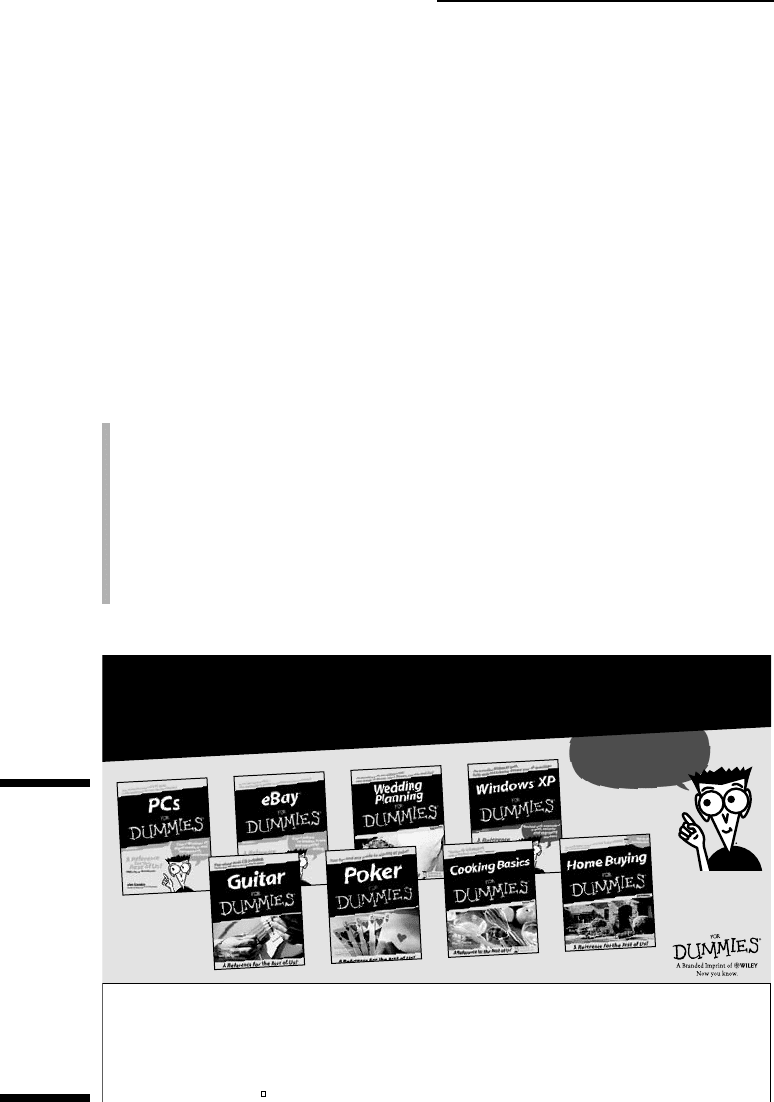
Figure 7-1 gives you a look at a cluttered print ad that worked. (It’s from my
For Dummies friends, so you know it worked!) This ad could be surrounded
by other ads and still jump off the page. A lot of information is packed into
this ad, so it could easily have been a hodgepodge of clutter. But instead, the
ad is clean and easy to understand, even though it contains the following
elements:
8 photos — and a cartoon!
A headline, promising a rebate
The fill-in-the-blank coupon
Instructions on how to fill out the coupon
The company logo
The terms of the deal, in tiny type
TERMS: All requests must be received by 12:00 am, April 15,
2005. Cash register receipt must be dated March 1, 2005 to
March 31, 2005. $5 rebate limited to two per name, address,or
household. Use of multiple addresses to obtain additional funds
constitutes fraud. Incomplete or incorrect submissions will not
be honored. Offer good in Continental U.S.A., Alaska, Hawaii, and
Puerto Rico.Void where prohibited by law.All submissions and
receipts become the exclusive property of Wiley Publishing, Inc.
This offer may not be published in any refunding magazine or
elsewhere without Wiley’s prior written permission. Allow 6-8
weeks delivery.Wiley is not responsible for lost, late, illegible,or
incomplete orders or postage-due, damaged, or separated mail.
For questions regarding the shipment of your rebate,
visit www.expressgroup.com.
Buy any Dummies book and
get $5.00 with a mail-in rebate.
Get details wherever books are sold.
Wiley,the Wiley logo, For Dummies, the Dummies Man logo, and related trademarks,logos, and trade dress are trademarks or registered trademarks of John Wiley & Sons, Inc.,and/or its affiliates.
Do
Anything.
Just Add Dummies!
™
Begins March 1, 2005 and ends March 31,2005.
Good on any Dummies book published by Wiley
priced at $6.99 or more.
• Complete and submit one rebate
form for each purchase
• Send completed rebate form(s) with your
receipt with Dummies item(s) circled to:
Dummies Offer
Dept. 15,Offer #OWGR1, P.O. Box 10007
Pirtleville, AZ 85626-1107
Name ____________________________________________________________________________
Address __________________________________________________________________________
City__________________________________________ State_____________ ZIP ______________
e-mail address ____________________________________________________________________
Store name(s) and city ______________________________________________________________
Titles of Dummies book(s) purchased __________________________________________________
________________________________________________________________________________
Check here if you want to find out about new Dummies books and special offers.Visit www.dummies.com
Buy any Dummies book and get a $5 manufacturer’s MAIL-IN rebate.
Figure 7-1:
A news-
paper ad
that
successfully
gives the
reader a
great deal of
information
and the
ability to
order the
product.
98
Part II: Creating Great Ads for Every Medium
12_045833 ch07.qxp 11/22/06 3:42 PM Page 98

So what keeps this ad from appearing cluttered? The ad uses bold graphic
elements and typography. The first things the eye sees are probably the pic-
tures of the books, then the headline (“Buy any Dummies book and get $5.00
with a mail-in rebate”). Those elements are the foundation of the ad and the
primary hooks to attract new customers: Who doesn’t want to save money?
If you must include multiple products and/or numerous complicated ele-
ments in your print ads, you can still create a crisp, uncluttered look by
paying careful attention to the design and layout. (For more on this, see the
sections “Generating your graphics” and “Don’t forget the layout!”.)
Writing and Designing an
Eye-Catching Print Ad
Newspaper and magazine readers (your prospective customers) don’t care
nearly as much about your business as you do. As a matter of fact, they don’t
care about your business at all. So for this reason, your ads must be clear,
succinct, informative, and inviting. Your ads need to give readers a reason to
be interested in your business. They can’t be pompous and assume, through
complicated copy or confusing graphics, that the readers understand every-
thing there is to know about your business and the products or services
you’re selling. In fact, your print ad has just a split second to attract attention
and quickly explain why your product or service has some lasting benefit to
those who read about it.
When you sit down to write a print ad, keep in mind that those who read it
aren’t going to spend a lot of time doing so. Plus, your ad, especially a news-
paper ad, will very likely share a page with many other ads, each of which is
vying for the reader’s attention. And you will probably have no control over
the page on which your ad is inserted or the position of your ad on that page.
Therefore, brief copy and a clean design are the soul of print, and to achieve
the best possible retail ad, you must give careful attention to the three basic
elements (from the previous section) of a good print ad. In the following sec-
tions, I cover each of these elements — plus some — so you can use them
effectively.
Hammering out your headline
In nearly all cases, the headline is the single most-important element of a
print ad. The headline has no more than a split second to grab the reader’s
attention. It’s often the largest element on an ad, is generally placed at the
top of the ad, and is the first thing — sometimes the only thing — a reader
99
Chapter 7: Using Print Ads: Small Spaces with Big Audiences
12_045833 ch07.qxp 11/22/06 3:42 PM Page 99

sees. Research says that 90 percent of body copy goes unread, so your head-
line had better be good. If the headline is clever, informative, and inviting, it
can stop the reader dead in his tracks. If the headline is long, drawn out, and
boring (or if it doesn’t even exist), the reader will skip right past your ad
without giving a moment’s thought to all the money you spent putting it
there.
Strive to be clear and concise in your headlines. Avoid the temptation to
become so “creative” that your meaning is lost or obscured.
Think of your ad headline the way you do the title of a book — for example, this
book, Advertising For Dummies, 2nd Edition, pretty much sums up what this
book is about and what level of experience you need to have to benefit from
the information in it. That’s how succinct your ad headline should be. In con-
trast, we could have titled this book something like An Easy-to-Read and Helpful
How-to-do-it Guide to Advertising Your Business (Whatever it May Be, Whether
You’re Selling Products or Services) for People Who Don’t Have Any Background
in Advertising. But that title takes too long to read and figure out — even
though it offers more information than our pithy title. Keep that in mind when
you’re writing your headline: Keep it short and to the point. (See the sidebar
“It’s an ad, not an encyclopedia,” in this chapter for more on headline length.)
The headline is worth some extra work on your part because it may be the
only element of your ad that anyone reads. When I write a print ad, I probably
spend 90 percent of my time devising the headline. When the light bulb
finally goes on and I’m satisfied that the headline is as good as it can be, the
body copy falls quickly into place. And if the headline is well written and
descriptive enough, it can either stand alone or pull the reader’s eye to the
body copy (the copy that sells the product, as described in this chapter’s sec-
tion “Building your body copy”).
Your headline usually works together with your graphic element, and vice
versa — the headline and graphics usually go hand-in-hand. The head (that’s
ad speak for headline) and the graphic, whether it’s a photo or a drawing, set
the tone of the ad and should be able to stand alone, whether or not anyone
gets around to reading the body copy. The head and graphic must create the
uniqueness of your ad, the extra something that separates you from all your
rivals who are advertising in the same print media.
Often, an ad consists of nothing more than a headline, a subhead, and a logo.
An ad for a clothing store may have a headline that reads, “ONE DAY ONLY
SALE!” and a subhead that reads, “Hurry! All suits, sports jackets, and slacks
reduced 50 percent this Saturday only.” Add the store logo, the address, and
a phone number, and the ad is complete — it contains all the information the
reader needs.
100
Part II: Creating Great Ads for Every Medium
12_045833 ch07.qxp 11/22/06 3:42 PM Page 100

Where the headline is placed within the ad is as important as what the head-
line says. You need to make sure that the headline dominates the ad so it can
be quickly understood. Too often, the headline, which includes the most
important information within an ad, is lost in a muddle of too many type
fonts, graphics, and other elements. The reader’s eye isn’t drawn to anything,
the ad is ignored, and the advertiser’s money goes down the drain.
Shaping your subheads
In addition to the main headline, a subhead is used to impart secondary infor-
mation. The headline must grab readers, but the subhead can explain the
deal further. Keep your headline brief and clever, and use the subhead to be a
bit more expansive with your information. For example, if you’re selling a
product, the headline may read, “The Deal of the Century!” The subhead
could follow with, “We’re having a store-wide clearance sale.” If you’re selling
a service, the headline could be, “Don’t Pay Your Taxes!” The subhead could
read, “Until you talk with Smith Accountancy.”
Not all ads require a subhead, but this element, generally set in smaller type, is
there to give the reader additional information without cluttering up your ad.
Building your body copy
The body copy, also known as the sell copy, is where you can explain your
offer in detail. But, like everything else in a good print ad, you need to keep
the body copy brief — and possibly not include it at all. A good ad can get by
without body copy, using just a well-written headline and a solid subhead.
Don’t expect rapt attention and deep involvement from the reader. (Ninety
percent of the time, body copy goes unread.) The reader doesn’t have time to
sift through mounds of information in order to find a reason to respond.
Squeezing 50 pounds of copy into a one-pound ad is a mistake. When writing
body copy for a print ad, regardless of the size of the ad, invoking the KISS
Rule — keep it simple, stupid — is a good idea.
Link the headline, key visual, and opening line of your body copy. Readers are
much more likely to make sense of your ad if the headline and key visual work
extremely well together. It also helps bring the reader into your ad if the copy
lead is consistent with the premise of your headline and key visual.
101
Chapter 7: Using Print Ads: Small Spaces with Big Audiences
12_045833 ch07.qxp 11/22/06 3:42 PM Page 101