
Gimble J.M. Academia to Biotechnology: Career Changes at any Stage
Подождите немного. Документ загружается.


Similar structures and roles exist within scientific institutions. In part,
this organizational structure defines responsibility and accountability. As a
graduate student or postdoctoral fellow, you enter into a relationship with
a faculty advisor/mentor. You accept certain responsibilities in the process
to (1) conduct your research activities and generate data; (2) be a good cit-
izen within the mentor’s laboratory, assisting others in their work; (3) be
fiscally conservative in ordering supplies and reagents; and (4) meet the
requirements for graduation within your department. If you fail to accom-
plish these tasks, you are ultimately accountable for the outcome (no
degree). At the same time, your mentor enters into a contract to: (1) pro-
vide an appropriately funded working environment for your training;
(2) promote your scientific development and maturation; and (3) protect
your welfare within the department and university.
By taking on a role in the relationship, you accept certain communi-
cation responsibilities. You report to your advisor or his or her designee on
a regular basis. It is likely that you have developed a format to streamline
and monitor your interactions. This might take the form of notes summa-
rizing previous meetings and identifying points for further discussion or
consideration. Each time you meet, you each have specific objectives that
you wish to address. These will include particular scientific projects, their
progress, future directions, graduation plans, and personal issues; one,
two, or all of these topics may be on the agenda at any given meeting.
At the same time, you might also serve in a supervisory role within the
laboratory’s organization. For example, you may have been assigned to
mentor a sophomore undergraduate working part-time in the laboratory. In
this capacity, you must oversee and guide the student’s activities on a reg-
ular basis. You become responsible for his or her progress and share credit
for both successes and failures. Certain tools, such as lists, frequent meet-
ings, and management techniques, can improve the odds for success.
Lists
It is difficult to manage multiple tasks, particularly those that rely on the
input and participation of others. One way to deal with this issue is to gen-
erate and maintain a list. While you may have a good memory, you are not
a computer (fortunately!).
Lists can be used for immediate and long-term tasks. For example, you
may find it helpful to organize your day by writing down and prioritizing
your scheduled activities (meetings, writing projects, experiments). Do
this either at the end of the preceding day or first thing upon arriving in the
office each morning. While you may not complete all of your “chores,” this
exercise will allow you to keep track of outstanding commitments. This
same approach is valuable for long-range planning, especially for tasks
involving a group of individuals. When initiating a project, it is prudent to
Organization 7
Ch01.qxd 7/29/04 12:36 PM Page 7

8 Chapter 1 / Communication
define and record the objectives your team seeks to accomplish. These can
include long-term aims (final goals) and milestones (identifiable points of
achievement on the path to each goal). The next step in the process is to
define the “action points” to be assigned to individual team members that
are necessary for the completion of the project. These action points should
include objective criteria documenting what constitutes an acceptable or
unacceptable outcome for the endeavor. It is possible to use these criteria
to define “go” or “no-go” decision points. Once these concepts are com-
mitted to a list, it should be circulated among the team members,
reviewed, and revised as necessary. By building consensus among the team
from the outset, you will have obtained commitment to a common goal and
purpose. At future team meetings, this calendar of the task, its compo-
nents, and the predetermined acceptance criteria provide a mechanism to
track the progress of the overall project at interim time points. These tools
will assist your team in reaching future decisions in a straightforward and
relatively nonjudgmental manner.
Frequency of Meetings
It is better not to rely on chance encounters at the company coffee pot or
in the hallway to maintain communication within a team or between indi-
viduals. Instead, it is more effective to establish and maintain a regular
time for discussion. This can be done “one on one” between supervisors
and supervisees or for an entire team or staff. By proactively determining
a set time and agenda for meetings, you will improve the quality and tim-
ing of information transfer. Rather than meeting whenever a crisis arises,
you may be able to avoid problems altogether.
You need to consider several factors when scheduling meetings.
First, is one party fairly junior? If so, then the frequency should be
adjusted to allow that individual both a degree of independence and easy
access to supervision. While there is no need to micromanage, it is impor-
tant to provide adequate guidance during early stages of development.
The frequency of meetings can be reduced as an individual matures and
he or she achieves greater autonomy. Alternatively, the meeting agenda
can be advanced to a different plane to provide a new level of educational
interaction.
Second, is one party in need of specific information on a regular basis?
If you are meeting with your company’s CEO to provide updates on a
particular project, do it at regular intervals. Allow the CEO to have a full
command of the project’s scientific progress at all times. Your CEO may
need to present to investors or corporate partners at any time, and he or
she needs to be prepared. If your CEO does not have an advanced scientific
Ch01.qxd 7/29/04 12:36 PM Page 8

degree, you may provide him or her with “on-the-job” scientific training.
Treat the meetings as an opportunity to explain your research program in
detail and to gain an ally for the future.
Third, what is appropriate to everyone’s schedule? We all have too
many meetings taking up our valuable time. Do not schedule any more
meetings than you really need.
Managing up
When you meet with a supervisor, view the action as a dynamic opportu-
nity. You are a participant and have control over the agenda. If possible,
prepare an agenda for the meeting. Obtain agreement over tasks and objec-
tives you hope to accomplish. Do not overextend your meeting in terms of
time and content. Arrive prepared to deal with the issues you have
included in your agenda. Be ready to present a plan for each task and a
possible solution to potential problems. Most managers will appreciate an
employee who takes a problem-solving approach; they prefer this to
someone who simply arrives with a list of issues that need resolution.
Managing down
You need to be able to function on both sides of the “corporate” divide. Try
to provide your supervisees with the same respect and empowerment you
would desire in their position. Build a consensus in identifying the shared
tasks and objectives of your team. Allow your team members to participate
as much as possible in the planning phase of a project. By allowing the team
to provide input, you facilitate their “buy in” to the overall objectives. Once
the major goals are identified, give the team the freedom to work out the
nitty-gritty details; let them decide on the interim milestones necessary to
reach the final goals. I look for team players whose skills are better than my
own; they might be able to run gels, culture cells, or isolate proteins more
efficiently than I do. So, it makes sense to let them determine the steps in
accomplishing those particular tasks. For many scientists, this process of
letting go is one of the hardest steps to take. Most of our training from
undergraduate to postdoctoral fellowship rewards us for doing everything
ourselves. Breaking this pattern of behavior takes a conscious effort.
Once all the steps in a project’s plan are laid out, be sure to review the
plan with all parties concerned and then commit it to record. You should
implement the experiment or process only after reaching this point. You
may feel that the process outlined above is inefficient and time consuming.
After you and your colleagues gain practice, it will go quicker and you will
see benefits in terms of morale, productivity, and successful outcomes.
Organization 9
Ch01.qxd 7/29/04 12:36 PM Page 9

chapter
2
INTERFACING WITH SIBLING
DEPARTMENTS
A biotechnology company is an amalgam of diverse subcultures (Table
2.1). Each arena has its own viewpoint and priorities. This chapter com-
pares the responsibilities of several biotech subcultures. There is a contin-
uum existing within the organization among these subcultures in which
the idea or product is passed along in an assembly line fashion.
BIOTECH SUBCULTURES
Research
Many academic life scientists fit most comfortably into the world of
research. Here, the ideal focus is on “basic” science with an emphasis on
mechanistic, hypothesis-driven experiments exploring the cutting edge of
a question.
Development
Once research identifies a potential scientific application, development
translates the idea into practice by providing “proof-of-principle” data to
11
Ch02.qxd 28/7/04 1:21 PM Page 11

12 Chapter 2 / Interfacing with Sibling Departments
further direct the process. This involves greater emphasis on reproducibil-
ity, reliability, and documentation of the data rather than on discovery.
Manufacturing and Quality Control/Assurance
This department may be involved in scaling up the scientific operation,
such as cell culture or protein production. Often, such steps rely on the
expertise of a chemical or biochemical engineer. The focus here is to
define matters in absolute terms, possibly in the form of a mathematical
equation. The intent is to reduce the scientific hypothesis into an absolute
certainty with 100% reproducibility, independent of the scientific operator
or practitioner. There is no room for error or deviation from established
protocols. The focus is to meet the demands of the regulatory and com-
mercial environment outside the confines of the company.
Clinical/Medical
This department is concerned with physician and patient acceptance of
the ultimate product. Its intent is to provide the medical consumer(s) with
an easy to use and affordable service. Even if you discover the most
advanced biomaterial for fracture repair, orthopedic surgeons will not wel-
come it if it requires a significant deviation from and lengthy extension of
their standard operating room practices.
Accounting/Business Development/Marketing
These personnel will always focus on the bottom-line dollar. No scientific
discovery can be supported if it will not lead to a commercially successful
product for the company. This means that the research costs cannot be
Table 2.1 Biotech Subcultures
Research
Development
Manufacturing and Quality Control/Assurance
Clinical/Medical
Accounting/Business Development/Marketing
Legal
Ch02.qxd 28/7/04 1:21 PM Page 12

greater than the potential revenue within a reasonable amount of time. It
does not pay to spend $600 million to develop a single product when its
predicted annual market value is $20 million. Marketers must estimate
how much a scientific discovery is worth based on the price the consumer
is willing to pay. The health care industry has unofficial “threshold
amounts” for particular procedures and diseases. For some diseases,
a product with a price exceeding $1,000 will not be viable, whereas for
others, the threshold may be 10–20 times higher. This reflects the severity
of the disease, the cost of treatment and hospitalization based on existing
modalities, and the presence (or absence) of third party payers.
Legal
The legal arm of the company will focus on scientific issues relating to
intellectual property. It will pursue the following questions with you rou-
tinely: If you make a novel discovery, can you patent the information? Have
you infringed on existing patents in the course of making your discovery?
If so, do you need to obtain a license from the current patent holder to
generate your product?
SUMMARY
A company must bring these diverse viewpoints into focus around a com-
mon goal. Each of the company’s subcultures uses what it considers to be
objective criteria to reach a decision. For someone trained in a different
discipline, it may be difficult to appreciate this fact. As a scientist, this
means you must begin to reach or accept decisions with the input of “non-
scientific” factors. This can be a challenge. Nevertheless, if any one of the
constituent subcultures within a company is ignored, the outcome is more
likely to be everyone’s failure rather than success. Working within a
biotech company will require compromises by all parties. This is not to
imply that you will compromise the integrity or accuracy of the science
itself, but only that you will face decisions in which a product will not be
pursued for good reasons, despite the presence of good science. In the best
of all worlds, the staff within each of the biotech’s subcultures will reach a
mutual understanding and respect for each other’s expertise as well as the
importance of their contribution to achieving a successful product.
Biotech Subcultures 13
Ch02.qxd 28/7/04 1:21 PM Page 13

chapter
3
THE CIRCULAR CONTINUUM:
P
APERS TO GRANTS TO
PATENTS
In both academia and biotechnology, writing skills are of critical impor-
tance. The ability to craft peer-reviewed publications, grants, and patents is
an essential tool for success in the intellectual property (IP) continuum. In
academia, papers carry the most importance, followed by grants and then
patents. In biotech, however, patents take first priority, followed by papers
and then grants. This chapter discusses each of these documents and
focuses on efficient ways to integrate their design and completion.
MANUSCRIPTS
A manuscript in a peer-reviewed journal is the fundamental monetary unit
in science. Your publications make up your permanent, public record of
accomplishment. The first writing project many of us faced in our scien-
tific careers involved the reporting of our work in manuscript format. The
ability to accumulate high quality, novel information and to present it in a
clear and logical manner is essential both in academia and the biotech
industry.
15
Ch03.qxd 28/7/04 1:22 PM Page 15
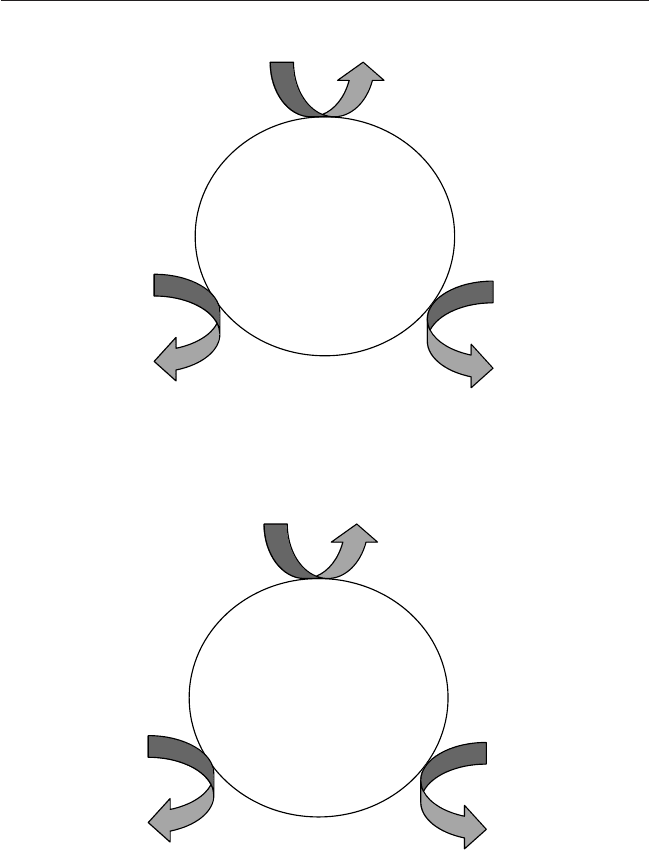
16 Chapter 3 / The Circular Continuum: Papers to Grants to Patents
No matter where you go, data talks. Once written, a manuscript can
serve this function in multiple ways. First, it communicates to the public
the information that your scientific team has developed. In addition to
other scientists, this public includes investors, business analysts, and ven-
ture capitalists interested in the biotech arena. Second, the format of a
The IP Continuum
#1: Papers
#2: Grants
#3: Patents
The IP Continuum
#1: Patents
#2: Papers
#3: Grants
Figure 3.1 Priorities from an academic perspective: how to report your data.
Figure 3.2 Priorities from a biotech perspective: how to maximize return on your
intellectual property.
Ch03.qxd 28/7/04 1:22 PM Page 16

manuscript provides the basis for potential grant applications. The publi-
cation lends credibility to your laboratory’s competence and the direction
of your future research. It improves the likelihood that granting agencies
will respond favorably to your requests for funding. Third, the manuscript
is a springboard to patent applications. The methods and results contained
in the manuscript will become the examples and background supporting
your patent’s claims. Finally, the manuscript’s figures and text provide you
with everything you will need to make oral presentations of your work in
both scientific and business forums. Chapter 4 will discuss the strategy of
preparing a manuscript.
GRANTS
Whether you are in academia or business, you will need money to support
your research. Researchers in universities and not-for-profit institutions
routinely submit grant applications to the federal government and private
research foundations for funding. The private sector is also eligible for
grant support. Annually, 2.5% of the federal research budget is specifically
set aside for Small Business Innovative Research (SBIR) grants
(http://grants.nih.gov/grants/funding/sbirsttr_programs.htm). In addition,
at least 0.3% of the federal research budget is earmarked for the Small
Business Technology Transfer (STTR) program. Companies with less than
500 employees are eligible to apply for these funds. The two programs dif-
fer in that companies applying for STTR funds must do so in collaboration
with a university or not-for-profit research center. While the principal
investigator on an STTR may be a university employee, the principal inves-
tigator on an SBIR must be an employee of the company. For-profit com-
panies can also apply for government contracts in response to specific
agency requests for research or service.
Many experienced scientists believe that the best grants are those for
which 90% of the work has already been completed. Successful grant appli-
cations to the National Institutes of Health (NIH) and other federal agencies
generally share features in common. Some of these are considered below:
1. They are traditionally hypothesis driven. Grant reviewers want you to
demonstrate that your studies will provide an unambiguous answer to a
defined question. Independent of the outcome, the study must provide
useful information that will advance your field of science.
2. Grants are focused. Reviewers will want you to narrow the scope of your
studies. Studies that are too broad are rejected as “diffuse and unfocused.”
3. The ideas and specific aims of the grant are laid out in a logical pro-
gression. The grant must convey the necessary background, preliminary
Grants 17
Ch03.qxd 28/7/04 1:22 PM Page 17

data, and experimental design of its studies in an easy-to-read manner.
If you force the reviewer to extrapolate or interpret your ideas, you are
already losing ground.
4. The grant contains identifiable milestones with decision tree formats
explaining how you will direct your research efforts in response to
unknown future data. The milestones include quantifiable metrics suit-
able for statistical evaluation.
Chapter 5 will discuss the strategy of preparing a grant application.
PATENTS
Although a manuscript may be the basic monetary unit of science, it is the
equivalent of a charitable donation from a business perspective if your
intellectual property does not have patent protection. A patent gives you
the right to prevent someone from practicing a novel tool or method you
have invented. To be eligible for patenting, you cannot have made your
idea freely available to the public. Any of the following constitutes a pub-
lic disclosure of your idea: posters or oral presentations at meetings,
invited talks, letters to colleagues, and publications. The date of a disclo-
sure occurs when the information hits the streets; if your poster abstract
appears electronically online a month before the actual meeting, that
becomes the disclosure date. While the U.S. Patent Office allows investi-
gators to obtain patents on ideas for up to 12 months after a public disclo-
sure, the majority of the world’s legal systems do not.
There are two general strategies to consider for patent applications:
1. Retroactive approach: In this scenario, you will submit patent applica-
tions only after you have completed all of the experiments required to
fully support and document your idea. The advantage to this approach
is that it reduces the risk to the institution. Now an internal team of sci-
entific and legal advisors can evaluate the data to answer the important
questions: will a patent be granted and, if so, will it have value to the
institution? The retroactive approach has certain disadvantages. First,
it delays the priority date of the final patent application; if anyone else
has filed a similar idea, he or she may interfere with your final patent
application even if you have more substantial data in your application.
Second, it requires discipline by you and members of your team. Any
unauthorized public disclosure of your data can jeopardize your patent
application. The longer you wait to file, the risk increases that an inad-
vertent conversation or presentation will take place. If you absolutely
18 Chapter 3 / The Circular Continuum: Papers to Grants to Patents
Ch03.qxd 28/7/04 1:22 PM Page 18