
Kenneth E. Gonsalves, Craig R. Halberstadt, Cato T. Laurencin, Lakshmi S. Nair. Biomedical Nanostructures
Подождите немного. Документ загружается.

example, cell adhesion to surfaces can be either promoted by immobilizing cell
adhesive peptides, such as RGD [3] and IKVAV [4], and proteins, such as
fibronectin [5] and laminin [6], or prohibited by attaching macromolecules such
as poly(ethyle ne glycol) [7]. Besides surface chemistry, surface morphology is of
paramount importance in determining the biological responses to biomaterials.
It is well known that cell orientation and the direction of cell movement are
affected by the morphology of the substrate, a phenomenon known as ‘‘contact
guidance.’’ The ability to control cell orientation and connection is especially
important for tissue engineering applications, as an intricate network of cells
and extracellular matrix proteins modulates tissue functions. The advent of
lithographic methods as used in microelectronics for making structures on the
same scale as biological cells has opened up the possibility of precise surface
engineering of biomaterials down to the nanometer scale [8].
The focus of this chapter will be placed on using ion beam lithography/ion
implantation to enhance performances of both ‘‘soft’’ polymeric biomaterials
and ‘‘hard’’ metallic biomaterials. Throughout this chapter, we will use specific
examples for applications such as hard tissue replacements, blood contacting
implants, and other products. A brief summary on the recent developments of
novel biocompatible photoresists, aiming at improving the compatibility of the
conventional photolithography with biomolecular (i.e., attachment of cell-
specific peptides and proteins) and cellular patterning, is also included.
2.2 OVERVIEW OF ION IMPLANTATION PROCESS
Ion implantation refers to the bombardment of material surfaces with ions with
a minimum exposure of 1020 keV of energy [9]. It is a process whereby
energetic dopant ions are made to impinge on silicon or other targets, resulting
in the penetration of these ions below the target surface and thereby giving rise
to controlled, predictable dopant distributions. Due to high initial energy, ions
penetrate the surface layer of the material losing their energy in two types of
interactions: elastic collisions with target nuclei and inelastic collisions with the
electrons [10]. Because the ions do not penetrate too deeply, usually less than a
micrometer, the implantation and modifications are confined to the near-
surface region, and only surfa ce properties are changed.
Ion implantation offers numerous advantages for treating component
surfaces. A primary benefit is the ability to selectively modify the surface
without detrimentally affecting mate rial’s bulk propert ies, largely because the
process is carried out at low substrate temperature. It is useful for generating
surface layers that are integrated with the substrate and have a specified
composition, thus avoiding the risk of delamination associated with techniques
such as coating. The process is extremely controllable and reproducible, and
offers high concentration of the dopants. It can be tailored to modify different
surfaces in desired ways. The technique is high ly versatile, allow ing selection of
the types of ions used according to the characteristics to be mo dified. When
used in combination with an electroformed screen mesh mask, it can transfer
26 BIOMEDICAL NANOSTRUCTURES
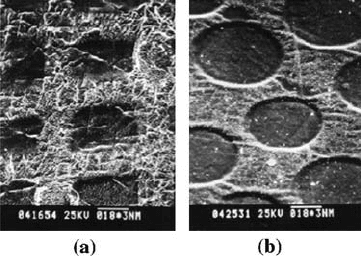
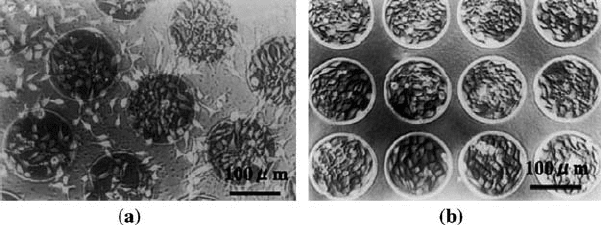
FIGURE 2.1 SEM morphology of silicon rubber that had the ion-beam texturing
process performed using an electroformed screen mesh mask with either a square (a) or
a round (b) pattern. The energy of the Ar ion beam used was 1 keV. (Reprinted from
Reference [11], with permission from Elsevier.)
the patterns from the mask to the surface by removing the atoms from the
unmasked area (Fig. 2.1) [11]. It is an attractive micro/nanofabrication
technique as it allows patterning and surfa ce chemistry modification to occur
simultaneously in a single-step process. This approach is distinct from the
mechanical transfer of micropatterns of a die into a polymer, as well as
conventional photolithography. The limitations of the former are that the
polymer has to be a thermally stable thermoplastic material and the surface
chemistry cannot be modified. In the latter case, the surface and bulk chemistry
are difficult to modify simultaneously while applying a specific pattern.
2.3 MICRO/NANOMACHINING OF ‘‘SOFT’’ POLYMERIC
BIOMATERIALS
Polymers have enjoyed widespread use in many biomedical applications,
ranging from contact lenses, intraocular lenses, dental implants, vascular
grafts, artificial hearts, breast implants, biodegradable sutures, pacemakers,
artificial skin, and joint replacements. As pointed out earlier, it is very
important that the polymeric biomaterials have the ‘‘correct’’ surface proper-
ties to ensure the successful functional outcome. Depending on the applica-
tions, the ‘‘correct’’ surface properties could be corrosion and/or wear
resistance, support of cell adhesion and differentiation, antimicrobial,
antithrombogenic, and so on.
2.3.1 Orthopedic Applications
Poly(methyl methacrylate) (PMMA) is used extensively as bone cement, which is
primarily used to adhere the stems of total joint prostheses in the medullary
cavity of bone [12]. As it acts as an interface between the prostheses component
and bone tissue, it is necessary that this material is biologically compatible with
MICRO/NANOMACHINING AND FABRICATION OF MATERIALS 27
osteoblasts (bone-forming cells) in order to enhance matrix formation and
mineralization that will ultimately support osseointegration of the implant with
the surrounding tissue. Applying masked ion beam lithography (MIBL), He et al.
[13, 14] investigated the potential of this technique for bone tissue engineering.
Compared to conventional patterning techniques such as photolithography,
MIBL produced patterns without using any harsh chemicals that are toxic to the
cells and could denature biologically active molecules such as proteins and pep-
tides (biomolecules). In these studies, PMMA films were exposed to masked Ca
+
ion (85 keV, 1 10
14
ions/cm
2
), P
+
ion (85 keV, 1 10
15
and 1 10
16
ions/cm
2
),
and Ar
+
ion (115 keV, 1 10
15
ions/cm
2
) implantations, respectively. The
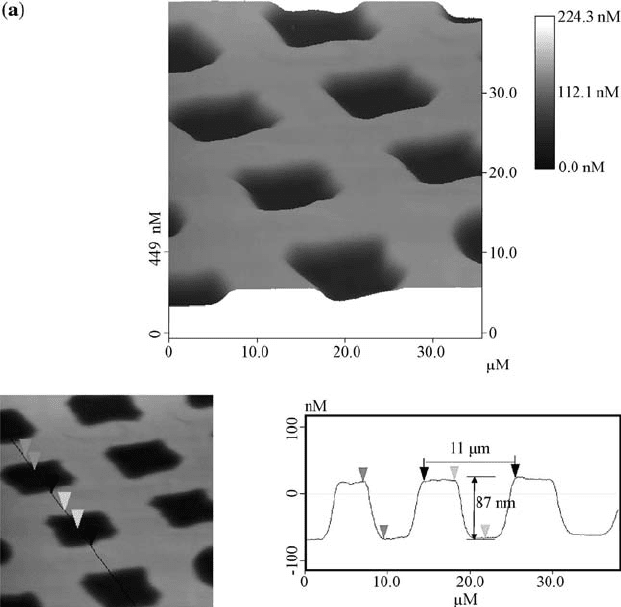
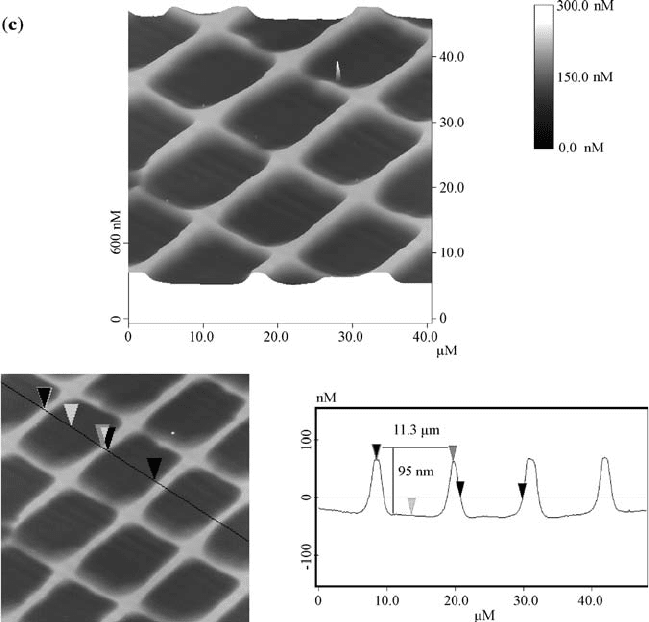
surface morphology of the PMMA films was studied using atomic force
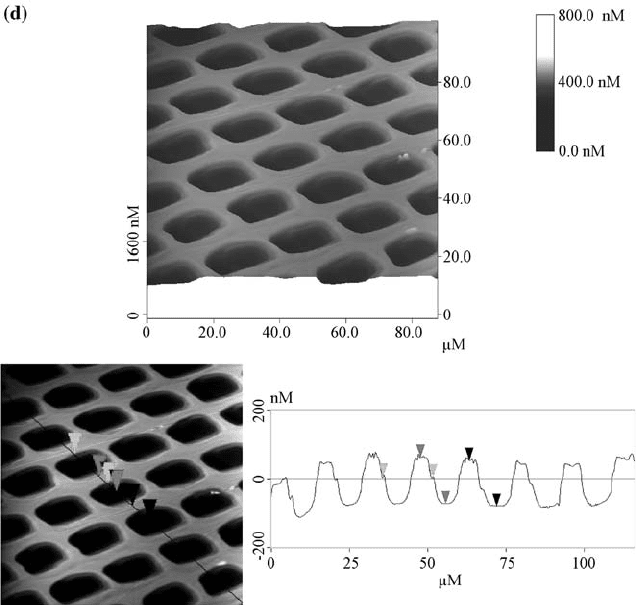
FIGURE 2.2 AFM images of the PMMA film surfaces, recorded in the tapping mode
with typical surface features characterized by a cross-section analysis. (a) 85 keV,
1 10
14
ions/cm
2
Ca
+
ions; (b) 85 keV, 1 10
15
ions/cm
2
P
+
ions; (c) 85 keV,
1 10
16
ions/cm
2
P
+
ions; and (d) 115 keV, 1 10
15
ions/cm
2
Ar
+
ions. (ac, reprinted
from Reference [14], with permission from Elsevier; d, reprinted from Reference [13],
with kind permission of Springer Science and Business Media.)
28
BIOMEDICAL NANOSTRUCTURES
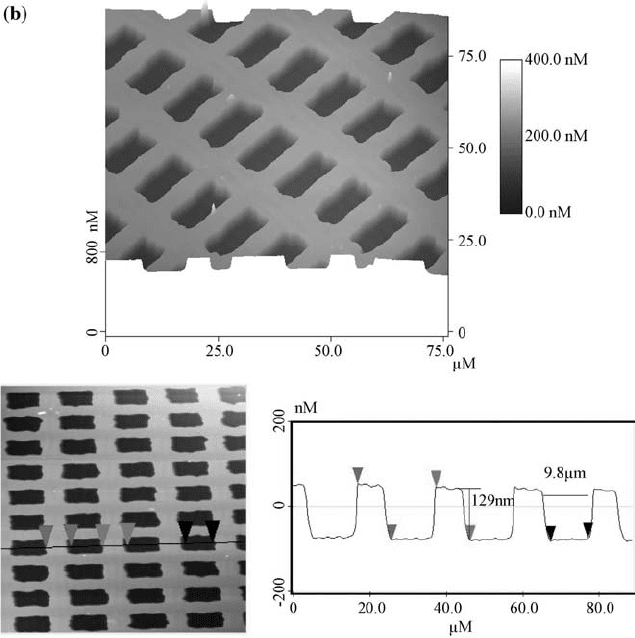
microscopy (AFM) after irradiation. As shown in Fig. 2.2, the patterns generated
on the films were characterized as arrays of holes with nanoscale depth and
microscale width. The AFM results of cross-section analysis on the Ca
+
ions
irradiated sample showed that the distance between the two left edges of the
isolated islands is about 11 mm, and the height of each island is about 87 nm. In
the lower dose P
+
ions treated sample, the distance is 9.8 mm and the depth is
129 nm. When the dose of P
+
ion was increased, the distance increased to
11.3 mm while the depth became 95 nm. Due to erosion of the walls from the
sides, the walls became thinner when the dosage of the ions was increased.
Initially, only the region that is under the opening of the mask is etched, but as
those areas recede, the walls stick up higher than the eroded areas. Even though
the mask shades the walls, ions that sputter off the center of each region can come
off at a shallow angle and strike the wall, which results in the sputtering from the
sides of the walls.
FIGURE 2.2 (Continued)
MICRO/NANOMACHINING AND FABRICATION OF MATERIALS 29
In order to evaluate the influence of the ion beam treatments on cell
adhesion, primary rat calvaria osteoblast cells were cultured on nonirradiated,
P
+
ion irradiated, and Ar
+
ion irradiated PMMA surfaces [13]. Both P
+
ions
and Ar
+
ions implanted PMMA samples had greater cell attachment than the
untreated PMMA, indicating that ion irradiation improves osteoblast adhesion
on polymeric substrate, most likely due to the increased surface roughness.
This is consistent with the literature on strong correlations between increased
surface roughness and enhanced osteoblast adhesion [15]. Furthermore, despite
the similarity in surface topography and surface roughness in both treated
samples, the extent of cell attachment was higher for the P
+
irradiated samples
than the Ar
+
irradiated samples. This observed difference may be due to not
only a surface morphological difference but may also be due to that P
+
ions
influence on osteoblast behavior. The depth profile of P in the treated PMMA
film was investigated by dynamic secondary ion mass spectroscopy (SIMS).
The majority of P ions are distributed in the area that is about 100 nm from the
FIGURE 2.2 (Continued)
30
BIOMEDICAL NANOSTRUCTURES
surface, with the maximum concentrations of 1.1 10
20
ions/cm
3
at 121 nm.
The result suggested that MIBL is capable of achieving a nanoscale elemental
composition/distribution.
In summary, the advantages of using ion implantation as a microfabrication
technique are as follows: (a) since it is a one-step process, the patterns can be
‘‘micromachined’’ into the material in a controlled manner through specific
masks; and (b) by selecting a specific ion to implant, such as Ca or P, the
surface chemistry of the biocompatible material can be tailored, which may
influence certain biological processes. In addition, nanostructures can be
controlled to allow for distinct cellular pattern adhesion. MIBL could be a
viable and novel technique for patterning and doping soft materials
simultaneously for potential biomedical applications.
The other type of commonly used polymeric orthopedic product is ultrahigh
molecular weight polyethylene (UHMW PE), which is generally used in total
joint replacement because of its superior properties such as ductility, impact
load damping, and excellent biocompatibility [16, 17]. However, the generated
FIGURE 2.2 (Continued)
MICRO/NANOMACHINING AND FABRICATION OF MATERIALS 31
wear debris at the articular surface compromises the long-term use of
UHMWPE, as it is considered the major cause of loosening and premature
failure of the total joint replacement [18]. Ion implantation has provided an
effective means to improve the wear propert ies of UHMWPE. For example,
UHMWPE was subjected to nitrogen ion implantation [19, 20]. Wear
resistance of UHMWPE after nitrogen implantation was improved by 68
times over control samples, due to cross-li nking of UHMWPE that reduces the
sliding between the molecules. In addition, the load-bearing capacity of
UHMWPE was increased, which could be partially attributed to the harder
and tougher surface-modified layer produced by nitrogen ion implantation.
Valenza et al. [21] studied the effect of ions other than nitrogen on wear
resistance of UHMWPE. UHMWPE was implanted using H
+
,He
+
,Ar
+
, and
Xe
+
ion beams at 300 keV. The irradiation was performed with an ion flux
ranging between 10
14
and 10
17
ions/cm
2
. Using traditional pin-on-disk wear
tests, the authors found that the surface wear resistance increases with
increasing irradiation dose: a reduction of about 76% is observed after 72 h in
a UHMWPE sample treated with 3 10
15
Xe
+
/cm
2
.
2.3.2 Blood-Contacting Devices
Synthetic polymers are widely used in blood-contacting implants and devices.
Using vascular prostheses for instance, clinically used artificial blood vessels
are constructed most frequently from expanded polytetrafluoroethylene
(ePTFE) or poly(ethylene terephthalate) (PET), also known as Dacron.
Major concerns associated with blood-contacting devices are infection,
thrombosis, and stenosis. Ion implantation has been successfully used to
improve the antithrombogenicity and hemocompatibility of polymeric
biomaterials [22–30]. The reduction of thrombogenicity of silicon rubber
for catheters was achieved by treating the surface with ions, such as
hydrogen, nitrogen, argon and neon, leading to increases in its hydrophilicity
and significantly changing the long-term ability of its surface to resist
biodeposits [25, 30]. The other approach to improve the biocompatibility of
artificial vascular grafts is to develop surfaces that support endothelializa-
tion. This is crucial since endothelial cells are responsible for the formation
of a nonthrombogenic interface between blood and tissue. In the early 1990s,
Lee et al. [22] reported that the adhesion and proliferation of endothelial
cells could be drastically improved when the surface of segmented
polyurethane (SPU) was modified by neon or sodium ion implantation
(Fig. 2.3). In vivo, the neon ion implanted SPU tubes demonstrated superior
graft patency when replacing the femoral artery [24] Kurotobi et al. [31]
prepared hybrid-type small vascular grafts of ePTF E in three steps: Ne ion
bombardment of the inner walls of small tubes, plasma protein coating on
implanted surfaces, and He ion bombardment through proteins coated on
inner walls. The graft was implanted in the carotid artery of a mongrel dog
and the health of the dog was followed for 180 days. The graft exhibited
32 BIOMEDICAL NANOSTRUCTURES
great antithrombogenicity, possibly as a result of low plasma protein
adsorption. Oxygen [28], silver [26, 27], and fluorine [29] ion implantations
have also been demonstrated to affect endothelial cell adhesion and growth
on polymer substrates.
2.3.3 Other Applications
Recently, ion implantation has also been used to treat polymers for nervous
system repair. Polydimethylsiloxane (PDMS) rubber tubes, commonly used
for peripheral nerve regeneration, were treated by carbon negative-ion
implantation [32]. The PDMS rubber surface was found to have more
hydrophilic properties due to the formation of functional groups such as
hydroxyl at the surface by the radiation effect of ion implantation. The
carbon-implanted PDMS rubber tube was effective in ‘‘tubulation’’ of rat
sciatic nerve, where 15-mm-long sciatic nerve was regenerated to conduct
nerve stimulation. Okuyama et al. [33] investigated neurite outgrowth on a
fluorinated polyimide film micropatterned by ion beam. The ability to control
the interaction of neurons with a biomaterial surface in a specific manner is
important for both the investigation of basic neuron cellular function and the
design of advanced bioelectronics such as biosensors and neural computers.
To demonstrate the importance of the surface topography and chemistry on
neuron cell behavior, micropatterns with 120 or 160 mm width (Fig. 2.4) w ere
prepared on polyimide surface using an ion-beam mask by irradiation with
He
+
,Ne
+
,orKr
+
at 1 10
14
ions/cm
2
. Neurons preferenti ally attached to
areas exposed to the ion beams. Interestingly, although most attachment was
found on Kr
+
treated surface and the least was on He
+
treated, the extent of
neurite outgrowth was the opposite; that is, He
+
surface supported the
longest neurite extension while cells on the Kr
+
surface showed the shortest
neurite length. These results imply that ion implantation could be used to
FIGURE 2.3 Morphology of endothelial cell attachment to Ne
+
ion implanted
(a) polystyrene and (b) segmented polyurethane with a fluence of 1 10
15
ions/cm
2
after incubation of 3 days.(Reprinted from Reference [30], with permission from
Elsevier.)
MICRO/NANOMACHINING AND FABRICATION OF MATERIALS 33
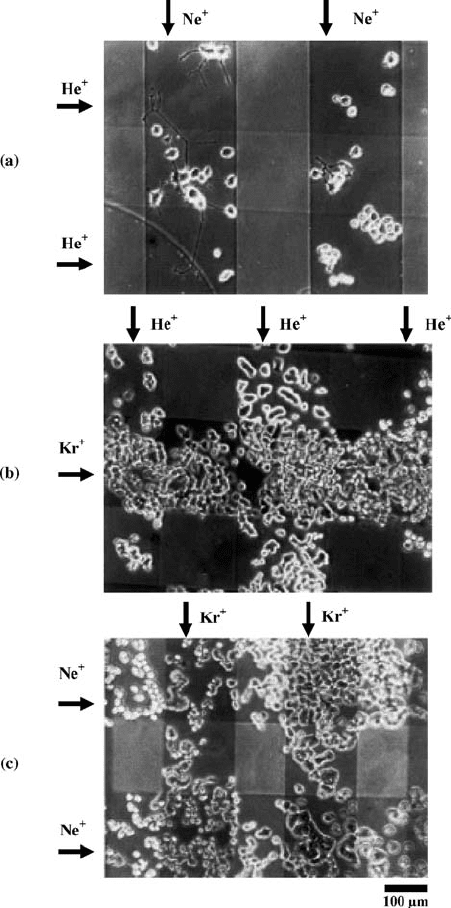
FIGURE 2.4 Images of phase contrast microscopy of PC12 cells cultured on ion-
irradiated fluorinated polyimide films for 72 h. (a) He
+
+Ne
+
irradiation; (b)
He
+
+Kr
+
irradiation; (c) Ne
+
+Kr
+
irradiation. (Reprinted from Reference [33],
with permission from Elsevier.)
34
BIOMEDICAL NANOSTRUCTURES
pattern specific cellular growth on a biomaterial substrate. Another example
of the possibilities offered by ion implantation for biomedical applications is
the development of a dural substitute in restorative cranial surgery. The ideal
synthetic dural substitute requires two different surfaces: a cell adhesive
external side and a nonadhesive cerebral side. Commonly, the nonabsorbable,
nonadhesive ePTFE is used for this purpose. Ne
+
ion implantation of one
side of ePTFE led to excellent bone attachment and tissue in-growth without
altering the properties of the nonadhesive cerebral side [30]. In another study,
ePTFE was exposed to Ar
+
ion implantation and exhibited excellent closure
of the dural defect without the postoperative leakage of the cerebrospinal
fluid (CSF) [34]. The improvement was believed to be due to fibroblast-like
cell invasion and anchoring into the gaps of the ePTFE surface created by
ion-beam irradiation that enhanced the cell adhesiveness of the material.
Examples of using ion implantation for other biomedical applications of
polymers include F
+
ion implantation to induce cell attachment onto the
PMMA intraocular lens [35], ion beam modifications of polyethylene for a
skin coverage substitute [36, 37], and Ar
+
ion implantation to reduce tissue
inflammatory response to polyurethanes [38]. I n addition to these applica-
tions, the prevention of medical device related infections remains a main
obstacle due to the high rate of complications, increasing health care costs
and causing high rate of mortality and morbidity. Therefore, it is of great
interest to the biomedical industry that the medical polymers possess anti-
infective properties. Studies have shown that ion implantation provides an
effective yet simple approach to minimize bacterial adhesion to polymers.
Silver ion implantation has been studied due to its antimicrobial properties
[39, 40]. Boldyryeva et al. demonstrated that negative silver ion implantation
into PMMA not only resulted in the formation of silver nanoparticles with
the diameter of less than 10 nm, but also created surface-exposed gradient of
such nanostructures [40]. Other ions, such as argon [41] and acetylene [42],
have also been shown to improve the antibacterial performance of polymeric
biomaterials.
2.4 MICRO/NANOMACHINING OF ‘‘HARD’’ METALLIC
BIOMATERIALS
Metallic materials are no strangers to the biomedical field. In fact, metal
implants are widely used for orthopedics, dental, and cardiovascular
applications, examples of which include total hip replacement, total knee
replacement, bone plates, an d stents. In the field of orthopedics, metals are
popular primarily because of their ability to bear significant loads, withstand
fatigue loading, and undergo plastic deformation prior to failure. Currently,
the most commonly used metal implants include stainless steels, cobalt
chromiummolybdenum alloys, commercially pure titanium, and titanium
alloys [12]. However, the use of metallic implants is not short of problems, and
MICRO/NANOMACHINING AND FABRICATION OF MATERIALS 35