
Ruderman David B. Early Modern Jewry: A New Cultural History
Подождите немного. Документ загружается.

400 km.
M E D I T E R R A N E A N S E A
B A L T I C S E A
N O R T H S E A
I T A L Y
S P A I N
F R A N C E
E N G L A N D
S W E D E N
S W I T Z E R L A N D
H U N G A R Y
G E R M A N E M P I R E
P O L A N D
L I T H U A N I A
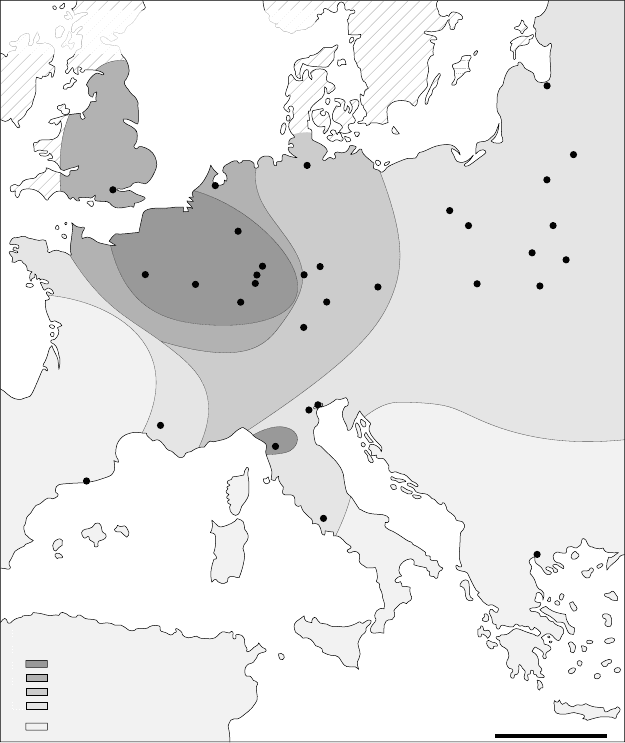
The Expansion of Ashkenazic Civilization
15
th
- 18
th
Centuries
Barcelona
Avignon
Lucca
Padua
Venice
Augsburg
Regensburg
Prague
Krakow
Bamberg
Wuerzburg
Mainz
Worms
Speyer
Strasbourg
Metz
Paris
Cologne
Amsterdam
London
Hamburg
Poznan
Kalisz
Lwów
Lublin
Loutsk
Brest
Grodno
Riga
Vilna
Rome
Salonika
Ashkenazi cultural sphere
till 11
th
century
till 13
th
century
till 14
th
century
till 16
th
century
Sephardic cultural sphere
S
A
V
O
Y
B
O
U
R
G
O
G
N
E
L
O
M
B
A
R
D
Y
B
O
H
E
M
I
A
M
O
R
A
V
I
A
S
I
L
E
S
I
A
L
O
W
C
O
U
N
T
R
I
E
S
P
R
O
V
E
N
C
E
Map 1. the expansion of Ashkenazic Civilization, 15th–18th Centuries
150 km.
Tiber
M E D I T E R R A N E A N S E A
SICILY
SARDINIA
CORSICA
TUSCANY
PIEDMONT
SAVOY
MILAN
GENOA
VENICE
PAPAL
STATES
KINGDOM
OF NAPLES
A D R I A T I C S E A
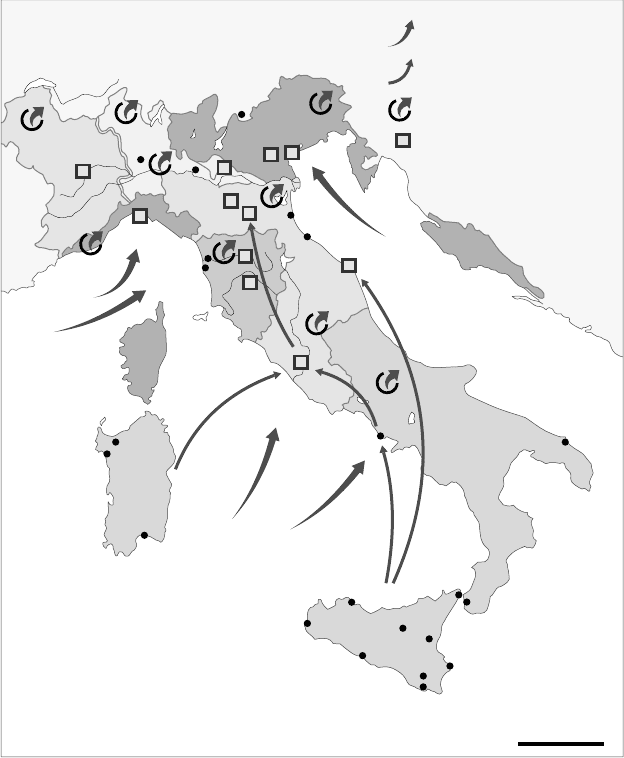
The Ghettos of Italy, 16
th
- 18
th
Centuries
Brindisi
Reggio
Paterno
Messina
Palermo
Nicosia
Marsala
Cagliari
Sassari
Naples
Rome
Ancona
Rimini
Florence
Sienna
Pisa
Genoa
Trent
Mantua
Cremona
Modena
Padua
Venice
Bologna
Turin
Milan
Leghorn
(Livorno)
Ravenna
1515
1541
1569
1593
1550
1571
1575
1597
1489
1515
1550
Alghero
Agrigento
Ragusa
Scicli
Syracuse
Jews expelled from Spain (1492)
and from Portugal (1496-1497)
Jews expelled from Spanish
territories in Italy (1492-1493)
Expulsion to the interior
of Italy
Ghetto
Map 2. the Ghettos of italy, 16th–18th Centuries
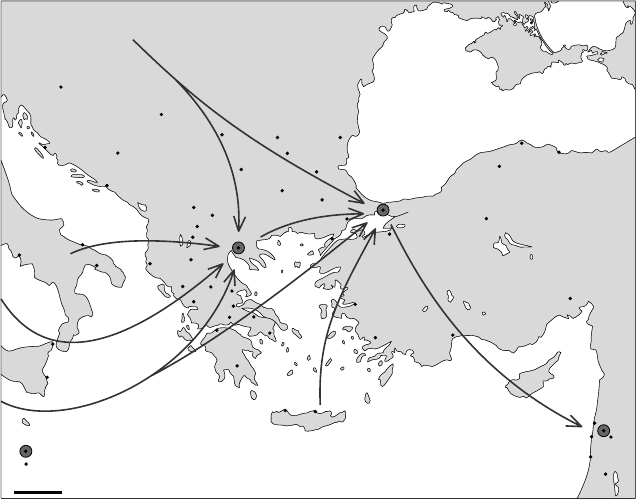
Map 3. Jewish Migration within the ottoman empire
100 km.
S P A N I S H
T E R R I TO R I E S
A E G E A N
S E A
Salonika
Istanbul
Jewish Migration within the Ottoman Empire
Major community
Community deported to Istanbul, 1453
Messina
Naples
Bari
Zara
(Zadar)
Zagreb
Belgrade
Sarajevo
Ragusa
Skoplje
Vidin
Sofia
Nicopolis
Tirnovo
Yambol
Rodosto
Ankara
Adana
Tyre
Safed
Haifa
Jaffa
Tiberias
Jerusalem
Kastamonu
Sinope
Samsun
Gallipoli
Brusa
(Bursa)
Provadija
Philipopolis
(Plovdiv)
Andrinople
(Edirne)
Stip
Prilep
Monastir
Kastoria
Ioannina
Arta
Trikkala
Larissa
Lamia
Patras
Thebes
Miletus
Antalya
Smyrna
(Iz mir)
Athens
Mistra
Khania
Heraklion
Salona
(Amfissa)
Vlora
(Valona)
Taranto
Syracuse
f
r
o
m
R
h
i
n
e
l
a
n
d
a
n
d
B
a
v
a
r
i
a
,
1
4
2
1
1
4
9
2
1
4
5
3
-
1
5
4
0
1
5
1
6
C
Y
P
R
U
S
f
r
o
m
P
r
o
v
e
n
c
e
1
5
0
1
f
r
o
m
S
p
a
i
n
1
4
9
2
a
n
d
f
r
o
m
P
o
r
t
u
g
a
l
1
4
9
7
C
R
E
T
E
C O R F U
R H O D ES
KO S
CH I OS
B L A C K S E A
M E D I T E R R A N E A N S E A
A D R I A T I C S E A
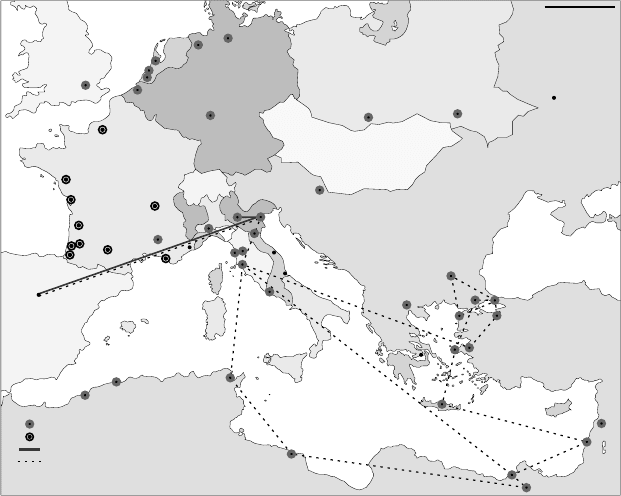
Map 4. the World of the Cardoso family, spanish Conversos
Madrid
Tripoli
Tunis
Alexandria
Candia
Athens
Bursa
Istanbul
Rodosto
Gallipoli
Salonika
Adrianople
Smyrna
(Izmir)
Cairo
Jaffa
Safed
Algiers
Oran
Biarritz
Tartas
Toulouse
Nantes
Rouen
London
The Hague
Amsterdam
Hamburg
Frankfurt
Krakow
Zamosc
Kiev
Emden
Rotterdam
Antwerp
La Rochelle
Bordeaux
Lyons
Avignon
Marseilles
Nice
Pisa
Florence
Pesaro
Ancona
Rome
Leghorn
(Livorno)
Bayonne
A T L A N T I C
O C E A N
U N I T E D
P R O V I N C E S
S A V O Y
P R U S S I A
S W I T Z E R L A N D
S P A I N
F R A N C E
G E R M A N Y
H U N G A R Y
P O L A N D
R U S S I A
E N G L A N D
Vienna
Verona
Ferrara
Genoa
Venice
PA PA L
S TAT E S
S A R D I N I A
S I C I LY
C R E T E
CH I OS
C Y P R U S
C O R S I C A
T U S C A N Y
O
T
T
O
M
A
N
E
M
P
I
R
E
400 km.
The World of the Cardoso Family, Spanish Conversos
Conversos who returned to Judaism
“Judaizers”
Isaac (Fernando) Cardoso, 1604 - 1681
Abraham (Miguel) Cardoso, 1626 - 1706
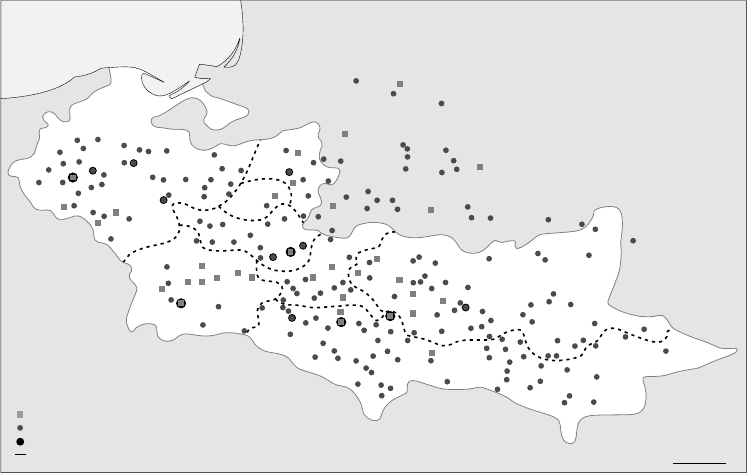
Map 5. the territory of the Council of the four Lands
100 km.
B A L T I C S E A
The Territory of the Council of the Four Lands
Important community
Average-size community
Market town
Administrative division of the Council of the Four Lands
Vilna
(Vilnius)
Grodno
Slutsk
Pinsk
Brest
Ciechanow
Tykocin
Vysokoye
Gniezno
Torun
Poznan
Grodzisk
Leszno
Krotoszyn
Kalisz
Checiny
Wodzislaw
Olkusz
Cracow
Pinczow
Opatow
Belzec
Lublin
Leczna
Chelm
Sandomierz
Jaroslaw
Lvov
Zolochev
Zamosc
Belz
Vladimir
Volynski
Kovel
Loutsk
Dubno
Ostrog
Brody
Kremenets
Izyaslav
Satanov
Szydlowiec
Leczyca
Wegrow
A U S T R I A
M O R A V I A
S I L E S I A
P R U S S I A
D U C A L P R U S S I A
O T T O M A N S
R U S S I A
L I T H U A N I A
Early Modern Jewry
This page intentionally left blank

introduction
s
ince my rst college course in european history
some forty-ve years ago, the historical period usu-
ally called “early modern” (roughly comprising the late
fteenth to late eighteenth centuries) has held a special
fascination for me.
it
displays so conspicuously the
trends and processes historians delight in studying: radi-
cal change, social and cultural crises, and the complex
and often unexpected mingling of the old and new.
one
is
hard-pressed to understand how such developments
as the new geographic and scientic discoveries, the in-
vention of print, the emergence of new national politi-
cal structures and policies, protracted and devastating
famines and wars, economic contractions and expan-
sions, and religious individualism countered by religious
discipline and control can all be subsumed easily under
one overarching interpretative framework.
such
labels
as “a period of transition,” of “paradox,” or of “seem-
ing contradictions and inconsistencies,” often evoked to
characterize early modernity, transparently betray how
challenging it is for the historian to make some sense
of the epoch as a whole in relation to its diverging and
contrasting parts.
such
is the case for those who study early modern
Jewish history as well.
take,
for example, the story
i
enjoy
relating to my students about three prominent
rabbis and writers who lived and worked in
venice in
the
rst half of the seventeenth century, although one
of them spent much of his life traveling to other parts
of the
european
continent and to the Middle
east.
it
would
be safe to say that each of them was aware of and
2 i N t r o d U C t i o N
appreciated the others and that each highly respected
the others for their intelligence and erudition.
the
rst, Leon Modena (1571–1648), served as rabbi,
cantor, and preacher in the ghetto while composing many
works (both published and unpublished) including an
autobiography, a collection of rabbinical responsa, ser-
mons, a critique of the kabbalah, a work composed in
italian
explaining Judaism and its practices to non-Jews,
and several books defending the integrity of the rabbinic
tradition and the
talmud.
Modena also composed an
unnished work called Sha’agat Aryeh (
the roar
of the
Lion) responding unfavorably to another composition
called Kol Sakhal (
the voice of
a
fool),
a radical and
devastating critique of the very foundations of rabbinic
Judaism. Given the apparently lame response Modena
offered to counter this work, it has often been assumed
that he also penned the Kol Sakhal. (
this
assumption
informs the most thorough and compelling treatment
of this work by
talya fishman.) the
colorful rabbi and
educator was not only a writer of many genres and a
holder of the many professions that he lists at the end of
his autobiography but also appears to have been a dis-
simulator, simultaneously defending the
talmud and
the
rabbis while criticizing and holding them accountable
for the miseries they had allegedly inicted on the Jew-
ish community. Modena was also going against the grain
in challenging the predominance of kabbalistic sapience
in a Jewish culture saturated with esoteric books and
their teachers. Modena’s life and thought is one of the
most documented of any rabbinic gure in early modern
europe,
but ironically it may be the least understood.
1
Modena’s rabbinic colleague, simone Luzzatto (1583–
1663), was a similarly enigmatic gure, functioning as a
i N t r o d U C t i o N 3
rabbi and educator for more than fty years in venice,
but appearing to have little sustained interest in rabbin-
ics or in traditional Jewish subjects given the paucity
of his Hebrew writing in these areas.
indeed,
Luzzatto
is primarily known for two works he published in
ital-
ian,
apparently written for non-Jewish readers.
the
rst,
the Discorso circa il stato de gl’ hebrei et in partico-
lar dimoranti nell’inclita città di Venetia (A
discourse
on
the
state
of the Jews, Particularly
those dwelling
in
the
illustrious
City of
venice) represented
a vigorous
defense of the Jewish presence in
venetian society
, argu-
ing that their economic utility to the state, their political
allegiance, and their high cultural prole entitled them
to live peacefully and creatively among their Catholic
neighbors. Luzzatto later published a work titled Socrate
ovvero dell’humano sapere (
socrates,
or Concerning Hu-
man Knowledge), his own highly original reconstruction
of the
socratic
trial, containing rich discourses on many
of the philosophical and scientic issues of his day.
the
work
purports to argue that without the aid of divine
revelation human beings are incapable of understanding
the truth and knowing the world. At least this seems to
be the theme of this work from a perusal of its long title
page. But alas, the reader who persists in reading the
book from beginning to end will discover only a skepti-
cal bent with no discussion whatsoever of the virtue of
revelation—Jewish or otherwise.
in fact, there are few
references to the Jewish provenance of this work other
than the name of the illustrious
venetian rabbi!
What
could have motivated this allegedly prominent spokes-
man of Judaism to compose a text in which his faith
appears to be totally absent?
despite
the considerable
learning and eloquence of both works, one written to