
Tracy John A. Accounting for Dummies
Подождите немного. Документ загружается.


Note: Figure 5-1 is not — I repeat not — a balance sheet. The balance sheet
for this business is presented later in the chapter (see Figure 5-2). Businesses
do not report a summary of changes in assets, liabilities, and owners’ equity
such as the one that I show in Figure 5-1 (although personally I think that
such a summary would be helpful to users of financial reports). The purpose
of Figure 5-1 is to leave a trail of how the three major types of transactions
during the year change the assets, liabilities, and owner’s equity accounts of
the business during the year.
The 2009 income statement of the business in the example is shown in
Figure 4-1 in Chapter 4. You may want to flip back to this financial statement.
On sales revenue of $26 million, the business earned $1.69 million bottom-line
profit (net income) for the year. The sales and expense transactions of the
business during the year plus the allied transactions connected with sales
and expenses cause the changes shown in the operating activities column
in Figure 5-1. You can see in Figure 5-1 that the $1.69 million net income has
increased the business’s owners’ equity–retained earnings by the same amount.
The operating activities column in Figure 5-1 is worth lingering over for a few
moments because the financial outcomes of making profit are seen in this
column. In my experience, most people see a profit number, such as the $1.69
million in this example, and stop thinking any further about the financial out-
comes of making the profit. This is like going to a movie because you like its
title, but you don’t know anything about the plot and characters. You proba-
bly noticed that the $1,515,000 increase in cash in this column differs from
the $1,690,000 net income figure for the year. That’s because the cash effect
of making profit (which includes the allied transactions connected with sales
and expenses) is almost always different than the net income amount for the
year. Chapter 6 on cash flows explains this difference.
The summary of changes presented in Figure 5-1 gives a sense of the balance
sheet in motion, or how the business got from the start of the year to the
end of the year. It’s very important to have a good sense of how transactions
propel the balance sheet. A summary of balance sheet changes, such as
shown in Figure 5-1, can be helpful to business managers who plan and con-
trol changes in the assets and liabilities of the business. They need a clear
understanding of how the two basic types of transactions change assets and
liabilities. Also, Figure 5-1 provides a useful platform for the statement of
cash flows, which I explain in Chapter 6.
Presenting a Balance Sheet
Figure 5-2 presents a two-year, comparative balance sheet for the business
example that I introduce in Chapter 4. The balance sheet is at the close of
business, December 31, 2008 and 2009. In most cases financial statements are
not completed and released until a few weeks after the balance sheet date.
100
Part II: Figuring Out Financial Statements
10_246009 ch05.qxp 4/16/08 11:59 PM Page 100

Therefore, by the time you would read this financial statement it’s already
out of date, because the business has continued to engage in transactions
since December 31, 2009. (Managers of a business get internal financial state-
ments much sooner.) When substantial changes have occurred in the interim,
a business should disclose these developments in its financial report.
When a business does not release its annual financial report within a few
weeks after the close of its fiscal year, you should be alarmed. There are rea-
sons for such a delay, and the reasons are all bad. One reason might be that
the business’s accounting system is not functioning well and the controller
(chief accounting officer) has to do a lot of work at year-end to get the
accounts up to date and accurate for preparing the financial statements.
Another reason is that the business is facing serious problems and can’t
decide on how to account for the problems. Perhaps a business may be
delaying the reporting of bad news. Or the business may have a serious dis-
pute with its independent CPA auditor that has not been resolved (see
Chapter 15 where I explain audits).
Cash
Accounts receivable
Inventory
Prepaid expenses
Current assets
Property, plant, and equipment
Accumulated depreciation
Net of depreciation
Total assets
Assets 2008
$2,165
$2,600
$3,450
$600
$8,815
$12,450
($6,415
$6,035
$14,850
$2,275
$2,150
$2,725
$525
$7,675
$11,175
($5,640
$5,535
$13,210
))
2009
Accounts payable
Accrued expenses payable
Income tax payable
Short-term notes payable
Current liabilities
Long-term notes payable
Owners’ equity:
Invested capital
Retained earnings
Total owners’ equity
Total liabilities and owners’ equity
Liabilities and Owners’ Equity 2008
$765
$900
$115
$2,250
$4,030
$4,000
$3,250
$3,570
$6,820
$14,850
$640
$750
$90
$2,150
$3,630
$3,850
$3,100
$2,630
$5,730
$13,210
2009
Typical Business, Inc.
Statement of Financial Condition
at December 31, 2008 and 2009
(Dollar amounts in thousands)
Figure 5-2:
The balance
sheets of a
business at
the end of
its two most
recent
years.
101
Chapter 5: Reporting Assets, Liabilities, and Owners’ Equity
10_246009 ch05.qxp 4/16/08 11:59 PM Page 101

In reading through a balance sheet such as the one shown in Figure 5-2, you
may notice that it doesn’t have a punch line like the income statement does.
The income statement’s punch line is the net income line, which is rarely
humorous to the business itself but can cause some snickers among analysts.
You can’t look at just one item on the balance sheet, murmur an appreciative
“ah-ha,” and rush home to watch the game. You have to read the whole thing
(sigh) and make comparisons among the items. Chapters 13 and 17 offer
more information on interpreting financial statements.
Notice in Figure 5-2 that the beginning and ending balances in the assets,
liabilities, and owner’s equity accounts are the same as in Figure 5-1. The
balance sheet in Figure 5-2 discloses the original cost of the company’s fixed
assets and the accumulated depreciation recorded over the years since
acquisition of the assets, which is standard practice. (Figure 5-1 presents
only the net book value of its fixed assets, which equals original cost minus
accumulated depreciation.)
The balance sheet is unlike the income and cash flow statements, which
report flows over a period of time (such as sales revenue that is the cumula-
tive amount of all sales during the period). The balance sheet presents the
balances (amounts) of a company’s assets, liabilities, and owners’ equity at
an instant in time. Notice the two quite different meanings of the term bal-
ance. As used in balance sheet, the term refers to the equality of the two
opposing sides of a business — total assets on the one side and total liabili-
ties and owners’ equity on the other side, like a scale with equal weights on
both sides. In contrast, the balance of an account (asset, liability, owners’
equity, revenue, and expense) refers to the amount in the account after
recording increases and decreases in the account — the net amount after all
additions and subtractions have been entered. Usually, the meaning of the
term is clear in context.
An accountant can prepare a balance sheet at any time that a manager wants
to know how things stand financially. Some businesses — particularly finan-
cial institutions such as banks, mutual funds, and securities brokers — need
balance sheets at the end of each day, in order to track their day-to-day finan-
cial situation. For most businesses, however, balance sheets are prepared
only at the end of each month, quarter, and year. A balance sheet is always
prepared at the close of business on the last day of the profit period. In other
words, the balance sheet should be in sync with the income statement.
Kicking balance sheets
out into the real world
The statement of financial condition, or balance sheet, shown earlier in
Figure 5-2 is about as lean and mean as you’ll ever read. In the real world
many businesses are fat and complex. Also, I should make clear that
Figure 5-2 shows the content and format for an external balance sheet, which
102
Part II: Figuring Out Financial Statements
10_246009 ch05.qxp 4/16/08 11:59 PM Page 102

means a balance sheet that is included in a financial report released outside a
business to its owners and creditors. Balance sheets that stay within a busi-
ness can be quite different.
Internal balance sheets
For internal reporting of financial condition to managers, balance sheets
include much more detail, either in the body of the financial statement itself
or, more likely, in supporting schedules. For example, just one cash account
is shown in Figure 5-2, but the chief financial officer of a business needs to
know the balances on deposit in each of the business’s checking accounts.
As another example, the balance sheet shown in Figure 5-2 includes just one
total amount for accounts receivable, but managers need details on which
customers owe money and whether any major amounts are past due. Greater
detail allows for better control, analysis, and decision-making. Internal bal-
ance sheets and their supporting schedules should provide all the detail that
managers need to make good business decisions. See Chapter 14 for more
detail on how business managers use financial reports.
External balance sheets
Balance sheets presented in external financial reports (which go out to
investors and lenders) do not include much more detail than the balance
sheet shown in Figure 5-2. However, external balance sheets must classify
(or group together) short-term assets and liabilities. For this reason, external
balance sheets are referred to as classified balance sheets.
Let me make clear that the CIA does not vet balance sheets to keep secrets
from being disclosed that would harm national security. The term classified,
when applied to a balance sheet, does not mean restricted or top secret;
rather, the term means that assets and liabilities are sorted into basic
classes, or groups, for external reporting. Classifying certain assets and liabil-
ities into current categories is done mainly to help readers of a balance sheet
more easily compare current assets with current liabilities for the purpose of
judging the short-term solvency of a business.
Judging solvency
Solvency refers to the ability of a business to pay its liabilities on time. Delays
in paying liabilities on time can cause very serious problems for a business.
In extreme cases, a business can be thrown into involuntary bankruptcy. Even
the threat of bankruptcy can cause serious disruptions in the normal opera-
tions of a business, and profit performance is bound to suffer. If current liabil-
ities become too high relative to current assets — which constitute the first
line of defense for paying current liabilities — managers should move quickly
to resolve the problem. A perceived shortage of current assets relative to cur-
rent liabilities could ring alarm bells in the minds of the company’s creditors
and owners.
103
Chapter 5: Reporting Assets, Liabilities, and Owners’ Equity
10_246009 ch05.qxp 4/16/08 11:59 PM Page 103

Therefore, notice in Figure 5-2 the following groupings (dollar amounts refer
to year-end 2009):
The first four asset accounts (cash, accounts receivable, inventory, and
prepaid expenses) are added to give the $8,815,000 subtotal for current
assets.
The first four liability accounts (accounts payable, accrued expenses
payable, income tax payable, and short-term notes payable) are added
to give the $4.03 million subtotal for current liabilities.
The total interest-bearing debt of the business is separated between
$2.25 million in short-term notes payable and $4 million in long-term notes
payable. (In Figure 5-1, only one total amount for all interest-bearing
debt is given, which is $6.25 million.)
The following sections offer more detail about current assets and liabilities.
Current (short-term) assets
Short-term, or current, assets include:
Cash
Marketable securities that can be immediately converted into cash
Assets converted into cash within one operating cycle
The operating cycle refers to the repetitive process of putting cash into inven-
tory, holding products in inventory until they are sold, selling products on
credit (which generates accounts receivable), and collecting the receivables
in cash. In other words, the operating cycle is the “from cash — through
inventory and accounts receivable — back to cash” sequence. The operating
cycles of businesses vary from a few weeks to several months, depending on
how long inventory is held before being sold and how long it takes to collect
cash from sales made on credit.
Current (short-term) liabilities
Short-term, or current, liabilities include non-interest-bearing liabilities that
arise from the operating (sales and expense) activities of the business. A
typical business keeps many accounts for these liabilities — a separate
account for each vendor, for instance. In an external balance sheet you
usually find only three or four operating liabilities, and they are not labeled
as non-interest-bearing. It is assumed that the reader knows that these oper-
ating liabilities don’t bear interest (unless the liability is seriously overdue
and the creditor has started charging interest because of the delay in paying
the liability).
104
Part II: Figuring Out Financial Statements
10_246009 ch05.qxp 4/16/08 11:59 PM Page 104
The balance sheet example shown in Figure 5-2 discloses three operating
liabilities: accounts payable, accrued expenses payable, and income tax
payable. Be warned that the terminology for these short-term operating
liabilities varies from business to business.
In addition to operating liabilities, interest-bearing notes payable that have
maturity dates one year or less from the balance sheet date are included in
the current liabilities section. The current liabilities section may also include
certain other liabilities that must be paid in the short run (which are too
varied and technical to discuss here).
Current ratio
The sources of cash for paying current liabilities are the company’s current
assets. That is, current assets are the first source of money to pay current lia-
bilities when these liabilities come due. Remember that current assets consist
of cash and assets that will be converted into cash in the short run. To size up
current assets against total current liabilities, the current ratio is calculated.
Using information from the company’s balance sheet (refer to Figure 5-2), you
compute its year-end 2009 current ratio as follows:
$8,815,000 current assets ÷ $4,030,000 current
liabilities = 2.2 current ratio
Generally, businesses do not provide their current ratio on the face of their
balance sheets or in the footnotes to their financial statements — they leave
it to the reader to calculate this number. On the other hand, many businesses
present a financial highlights section in their financial report, which often
includes the current ratio.
Folklore has it that a company’s current ratio should be at least 2.0. However,
business managers know that an acceptable current ratio depends a great
deal on general practices in the industry for short-term borrowing. Some
businesses do well with a current ratio less than 2.0, so take the 2.0 bench-
mark with a grain of salt. A lower current ratio does not necessarily mean
that the business won’t be able to pay its short-term (current) liabilities on
time. Chapters 13 and 17 explain solvency in more detail.
Preparing multiyear statements
The three primary financial statements of a business, including the balance
sheet, are generally reported in a two- or three-year comparative format. To
give you a sense of comparative financial statements, I present a two-year
comparative format for the balance sheet in Figure 5-2. Two- or three-year
comparative financial statements are de rigueur in filings with the Securities
105
Chapter 5: Reporting Assets, Liabilities, and Owners’ Equity
10_246009 ch05.qxp 4/16/08 11:59 PM Page 105

and Exchange Commission (SEC). Public companies have no choice, but pri-
vate businesses are not under the SEC’s jurisdiction. Generally accepted
accounting principles (GAAP) favor presenting comparative financial state-
ments for two or more years, but I’ve seen financial reports of private busi-
nesses that do not present information for prior years.
The main reason for presenting two- or three-year comparative financial
statements is for trend analysis. The business’s managers, as well as its out-
side investors and creditors, are extremely interested in the general trend of
sales, profit margins, ratio of debt to equity, and many other vital signs of the
business. Slippage in the ratio of gross margin to sales from year to year, for
example, is a very serious matter.
Coupling the Income Statement
and Balance Sheet
Chapter 4 explains that sales and expense transactions change certain assets
and liabilities of a business (which are summarized in Figure 5-1). Even in the
relatively straightforward business example introduced in Chapter 4, we see
that cash and four other assets are involved, and three liabilities are involved
in the profit-making activities of a business. I explore these key interconnec-
tions between revenue and expenses and the assets and liabilities of a busi-
ness here. It turns out that the profit-making activities of a business shape a
large part of its balance sheet.
Figure 5-3 shows the vital links between sales revenue and expenses and the
assets and liabilities that are driven by these profit-seeking activities. Please
note that I do not include cash in Figure 5-3. Sooner or later, sales and
expenses flow through cash; cash is the pivotal asset of every business.
Chapter 6 examines cash flows and the financial statement that reports the
cash flows of a business. Here I focus on the non-cash assets of a business, as
well as its liabilities and owners’ equity accounts that are directly affected by
sales and expenses. You may be anxious to examine cash flows, but as we say
in Iowa, “Hold your horses.” I’ll get to cash in Chapter 6.
The income statement in Figure 5-3 continues the same business example I
introduce in Chapter 4. It’s the same income statement but with one modifica-
tion. Notice that the depreciation expense for the year is taken out of selling,
general, and administrative expenses. We need to see depreciation expense on
a separate line.
106
Part II: Figuring Out Financial Statements
10_246009 ch05.qxp 4/16/08 11:59 PM Page 106
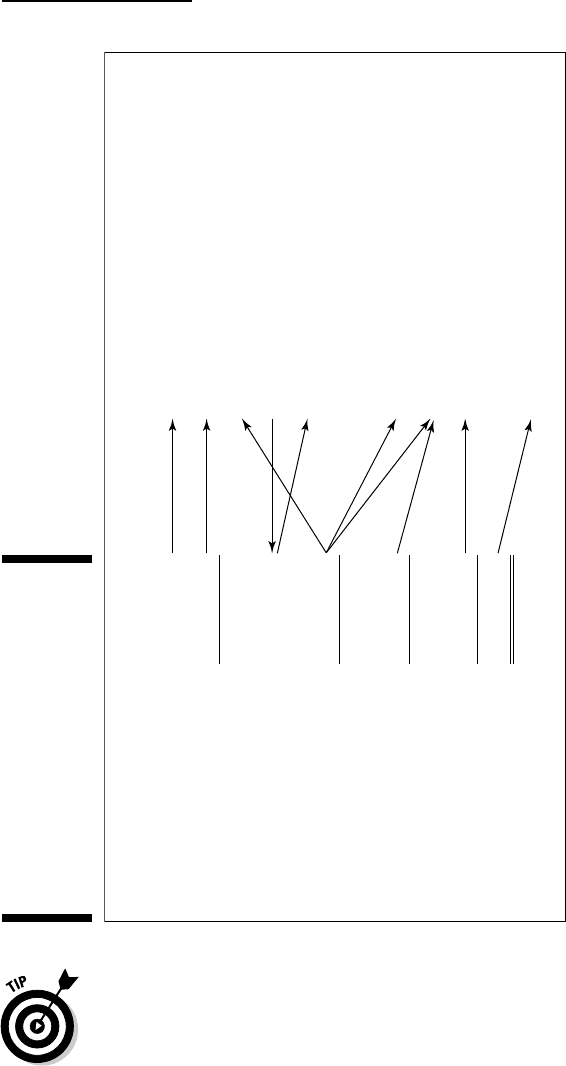
Figure 5-3 highlights the key connections between particular assets and liabil-
ities and sales revenue and expenses. Business managers need a good under-
standing of these connections to control assets and liabilities. And outside
investors and creditors should understand these connections to interpret the
financial statements of a business (see Chapters 13 and 17).
Sales revenue
Income Statement
Cost of goods sold expense
Gross margin
Depreciation expense
Selling, general,
and administrative expenses
Operating earnings
Interest expense
Income tax expense
Net income
Earnings before income tax
$26,000,000
14,300,000
$11,700,000
775,000
7,925,000
$3,000,000
400,000
910,000
$1,690,000
$2,600,000
Accounts receivable
Non-Cash Assets
Inventory
Prepaid expenses
Fixed assets, at original cost
Accumulated depreciation
Liabilities
Accounts payable
Owners‘ Equity
Retained earnings
Accrued expenses payable
Income tax payable
$2,600,000
$3,450,000
$600,000
$12,450,000
($6,415,000)
$765,000
$115,000
$900,000
Figure 5-3:
The
connections
between
sales
revenue and
expenses
and the non-
cash assets
and
liabilities
driven by
these profit-
making
activities.
107
Chapter 5: Reporting Assets, Liabilities, and Owners’ Equity
10_246009 ch05.qxp 4/16/08 11:59 PM Page 107

Sizing up assets and liabilities
Although the business example I use in this chapter is hypothetical, I didn’t
make up the numbers at random. For the example, I use a modest-sized busi-
ness that has $26 million in annual sales revenue. The other numbers in its
income statement and balance sheet are realistic relative to each other. I
assume that the business earns 45 percent gross margin ($11.7 million gross
margin ÷ $26 million sales revenue = 45 percent), which means its cost of
goods sold expense is 55 percent of sales revenue. The sizes of particular
assets and liabilities compared with their relevant income statement num-
bers vary from industry to industry, and even from business to business in
the same industry.
Based on its history and operating policies, the managers of a business can
estimate what the size of each asset and liability should be, which provide
very useful control benchmarks against which the actual balances of the
assets and liabilities are compared, to spot any serious deviations. In other
words, assets (and liabilities, too) can be too high or too low relative to the
sales revenue and expenses that drive them, and these deviations can cause
problems that managers should try to correct.
For example, based on the credit terms extended to its customers and the
company’s actual policies regarding how aggressively it acts in collecting
past-due receivables, a manager determines the range for the proper, or
within-the-boundaries, balance of accounts receivable. This figure is the con-
trol benchmark. If the actual balance is reasonably close to this control
108
Part II: Figuring Out Financial Statements
Turning over assets
Assets should be
turned over,
or put to use, by
making sales. The higher the turnover — the more
times the assets are used, and then replaced —
the better, because every sale is a profit-making
opportunity. The
asset turnover ratio
compares
annual sales revenue with total assets. In our
business example, the company’s asset turnover
ratio is computed as follows for the year 2009
(using relevant data from Figures 5-2 and 5-3):
$26,000,000 annual sales revenue ÷
$14,850,000 total assets = 1.75 asset
turnover ratio
Some industries are very capital-intensive,
which means that they have low asset turnover
ratios; they need a lot of assets to support their
sales. For example, gas and electric utilities are
capital-intensive. Many retailers, on the other
hand, do not need a lot of assets to make sales.
Their asset turnover ratios are relatively high;
their annual sales are three, four, or five times
their assets. Our business example that has a
1.75 asset turnover ratio falls in the broad
middle range of businesses that sell products.
10_246009 ch05.qxp 4/16/08 11:59 PM Page 108

benchmark, accounts receivable is under control. If not, the manager should
investigate why accounts receivable is smaller or larger than it should be.
The following sections discuss the relative sizes of the assets and liabilities
in the balance sheet that result from sales and expenses (for the fiscal year
2009). The sales and expenses are the drivers, or causes, of the assets and
liabilities. If a business earned profit simply by investing in stocks and bonds,
it would not need all the various assets and liabilities explained in this chap-
ter. Such a business — a mutual fund, for example — would have just one
income-producing asset: investments in securities. This chapter focuses on
businesses that sell products on credit.
Sales revenue and accounts receivable
In Figure 5-3 annual sales revenue for the year 2009 is $26 million. The year-
end accounts receivable is one-tenth of this, or $2.6 million. The average
customer’s credit period is roughly 36 days: 365 days in the year times the
10 percent ratio of ending accounts receivable balance to annual sales rev-
enue. Of course, some customers’ balances are past 36 days, and some are
quite new; you want to focus on the average. The key question is whether a
customer credit period averaging 36 days is reasonable.
Suppose that the business offers all customers a 30-day credit period, which
is fairly common in business-to-business selling (although not for a retailer
selling to individual consumers). The relatively small deviation of about 6
days (36 days average credit period versus 30 days normal credit terms)
probably is not a significant cause for concern. But suppose that, at the end
of the period, the accounts receivable had been $3.9 million, which is 15 per-
cent of annual sales, or about a 55-day average credit period. Such an abnor-
mally high balance should raise a red flag; the responsible manager should
look into the reasons for the abnormally high accounts receivable balance.
Perhaps several customers are seriously late in paying and should not be
extended new credit until they pay up.
Cost of goods sold expense and inventory
In Figure 5-3 the cost of goods sold expense for the year 2009 is $14.3 million.
The year-end inventory is $3.45 million, or about 24 percent. In rough terms,
the average product’s inventory holding period is 88 days — 365 days in the
year times the 24 percent ratio of ending inventory to annual cost of goods
sold. Of course, some products may remain in inventory longer than the
88-day average, and some products may sell in a much shorter period than
88 days. You need to focus on the overall average. Is an 88-day average inven-
tory holding period reasonable?
109
Chapter 5: Reporting Assets, Liabilities, and Owners’ Equity
10_246009 ch05.qxp 4/16/08 11:59 PM Page 109