
Ahmed S.N. Physics and Engineering of Radiation Detection
Подождите немного. Документ загружается.


606 Chapter 11. Dosimetry and Radiation Protection
particular type of radiation and the location of its source, that is
H
T,R
= w
R
·D
T,R
, (11.2.1)
where H
T,R
is the equivalent dose due to radiation type R, D
T,R
is the mean ab-
sorbed dose delivered by radiation R,andw
R
is the radiation weighting factor. The
radiation weighting factor is given by
w
R
= Q
R
·N
R
, (11.2.2)
where Q
R
and N
R
are the quality and modified factors for the radiation type R
respectively. For external sources of radiation, N
R
is taken to be unity. For internal
sources, N
R
is assigned a value by some relevant authority. In most cases a value of
N
R
= 1 can be taken and the knowledge of the quality factor is sufficient to calculate
the weighting factor. The quality factors for different radiation types are listed in
Table 11.2.1
1
.
Note that the above formula is valid for only one type of radiation. In case
of mixed field, the total equivalent dose can be obtained by simply summing the
contribution due to individual types of radiation, that is
H
T
=
R
w
R
· D
T,R
. (11.2.3)
Since the weighting factor is a dimensionless quantity, the equivalent dose is also
measured in units of J/kg. However now the specific name given to the unit is sievert
represented by the symbol Sv. There is also an older unit called rad equivalent for
man or rem, which is still in limited use. The conversion from Sv to rm is fairly
simple with
1 Sv ≡ 100 rem.
Example:
In a mixed radiation environment, a person receives 20 mGy of γ-ray dose
and 2 mGy of slow neutron dose. Calculate the total equivalent dose received
by the person.
Solution:
As the source is external, we can take N
R
= 1 and the weighting factors for
the two radiation types as given in Table 11.2.1 are
w
γ
=1 and w
n
=5.
1
In table-11.2.1 as well as in earlier sections the particle energies have been given in electron volt units
(keV , MeV ) instead of the conventional SI units of Joules. This convenient unit of energy is defined as the
energy attained by an electron when it is made to accelerate by an electric potential difference of 1 volt.
E = qV =(1.6 × 10
−19
C)(1
J
C
)
This gives
1eV =1.6 × 10
−19
J.

11.2. Quantities Related to Dosimetry 607
Table 11.2.1: Quality Factors for Different Types of Particles.
Type of Radiation Quality Factor (Q
R
)
x-rays, γ-rays 1
Electrons, Muons 1
α-Particles 20
Fission Fragments 20
Heavy Nuclei 20
Protons 5-10
Neutrons with E < 10 keV 5
10-100 keV 10
>100 keV up to 2 MeV 20
2-20 MeV 10
> 20 MeV 5
The equivalent doses due to γ-rays and neutrons are given by
H
T,γ
= w
γ
· D
T,γ
= (1)(20)
=20mSv
H
T,n
= w
n
·D
T,n
= (5)(2)
=10mSv
The total dose received by the person is then sum of these individual doses,
that is
H
T
= H
T,γ
+ H
T,n
=20+10
=30mSv
A.4 Effective Dose
The equivalent dose as described above can be used for one tissue type only as it
does not address the sensitiveness of tissue types to the same type of radiation.
Thequestionis,howwecandeterminethewholebodyequivalentdosetoestimate
the risk associated with a certain type of radiation environment. Or how one can
estimate the whole body dose if the dose received by a particular organ is known.
This is done by using the quantity effective dose, defined through the relation
E = w
T
· H
T
, (11.2.4)

608 Chapter 11. Dosimetry and Radiation Protection
where w
T
is the tissue weighting factor and H
T
is the equivalent dose in the tissue
T . The rational behind weighting the equivalent dose with w
T
is that, as explained
earlier, each tissue or organ responds differently to radiation. As with equivalent
dose, the effective dose is also measured in units of sievert. The w
T
for different
tissues and organs are given in Table 11.2.2. The reader should note that these
numbers are based on the ICRP recommendations at the time of writing this book.
For the most up to date factors the reader is encouraged to refer to the most recent
ICRP publications.
Table 11.2.2: Tissue weighting factors w
T
according to 1990 recommendations of
ICRP(26).
Tissue or Organ w
T
Gonads 0.20
Bone marrow (red), Colon, Lung, Stomach 0.12
Bladder, Breast, Liver, Oesophagus, Thyroid 0.05
Skin, Bone surface 0.01
Remainder 0.05
The effective dose as computed from the above relation is good for any single
tissue or organ and only one type of radiation. In case of mixed radiation exposure
to more than one tissues and organs, the total effective dose can simply by obtained
by adding the respective contributions together, that is
E
total
=
i
w
T,i
H
T,i
, (11.2.5)
where the subscript i refers to each organ. H
T,i
is the total equivalent dose for each
organ i as calculated from equation 11.2.3.
Example:
During a CT scan of the stomach, that had to be repeated several times, a
patient receives a total absorbed dose of 0.3 Gy. Compute the total effective
dose received by the patient.
Solution:
Since CT scan is performed with x-rays therefore the radiation weighting factor
w
R
= 1. The equivalent dose received by the patient’s stomach is
H
T,R
= w
R
·D
T,R
= (1)(0.3)
=0.3 Sv.

11.2. Quantities Related to Dosimetry 609
The tissue weighting factor for stomach is w
T
=0.12 as given in Table 11.2.2.
The effective dose is then give by
E = w
T
·H
T,R
=(0.12)(0.3)
=0.036 Sv =36mSv.
The usual effective dose received during a typical CT scan of abdomen is
around 10 mSv, which means that this patient received more than three times
the usual dose.
11.2.B Flux or Fluence Rate
We know that the ionizing power of radiation is directly related to the energy it car-
ries. This can be understood by noting that in most gases the number of charge pairs
produced per unit of absorbed energy is almost independent of the type of radiation
(see chapter on gas filled detectors). In case of solids, although this independence
is not guaranteed, still the ionization caused by radiation depends to a large extent
to the energy it delivers. In dosimetry therefore one is interested in determining the
amount of radiation carried by the radiation. Energy flux is a measure that can be
used to characterize this quantity. Another quantity closely related to energy flux
is the particle flux.
In order to define particle and energy fluxes, Let us first assume that we have
a mono-energetic beam of particles incident on a material having a cross sectional
area da. IfwecountthenumberofparticlesdN incident on this area in a time dt,
then the particle flux can be calculated from
Φ
r
=
dN
dtda
. (11.2.6)
This shows that the particle flux simply represents the number of particles incident
on a surface per unit area per unit time. In the field of dosimetry this quantity is
also known as particle fluence rate. Now, since we have a mono-energetic beam of
particles therefore we can use the above relation to compute the energy flux as
Ψ
r
=
E
p
dN
dtda
, (11.2.7)
where E
p
is the energy carried by a single particle. The energy flux is a measure of
the total energy incident on a surface per unit area per unit time. Another term used
for this quantity, specially in dosimetry, is the energy fluence rate. Energy fluence
rate is actually the preferred terminology adopted widely in the field of dosimetry.
In fact, the usage of flux is discouraged in this field. It is evident that the energy
fluence rate and particle fluence rate are directly related through the relation
Ψ
r
= E
p
Φ. (11.2.8)
Up until now we have considered the radiation beam to be absolutely mono-
energetic, that is, all the particles had same energy. This is certainly not true since
an absolute mono-energetic beam of particles is impossible to create. A realistic

610 Chapter 11. Dosimetry and Radiation Protection
beam has an energy spectrum with a range that could be very narrow or very wide.
If the energy spectrum is well defined, in most instances we can assign an average
energy
¯
E
p
to all the particles and still use the above formulas to compute the energy
flux. However a better thing to do would be to compute the energy flux spectrum
through the relation
dΨ
r
=
E
sp
dN
dtda
, (11.2.9)
where dΨ represents the energy flux at the energy E
sp
. A practical but very basic
way to do this would be to increment the discriminator windows in a single channel
analyzer in small steps and counting the particles for a certain time. This procedure
when carried out for the whole range of particle energies would yield the energy
flux spectrum. Of course a better way would be to use a multi channel analyzer,
which generates the spectrum without the need to change the discriminator level
repeatedly.
11.2.C Integrated Flux or Fluence
Sometimes it is desired to compute the flux and fluence rates integrated over a
certain time period. This could, for example, be required to determine the radiation
dose received by a patient undergoing radiation therapy.
The flux integrated over a period of time is called integrated flux or fluence.
Mathematically, it is given by
Φ=
dN
da
, (11.2.10)
where, dN represents the number of particles passing through the area da.Since
this relation does not explicitly contain time, it can also be interpreted to represent
the number of particles incident on a surface area da at any instant. However this
definition is somewhat misleading, since practically speaking, it is unmeasurable. We
have repeatedly seen in the previous chapters that performing a counting experiment
always involves time during which the counting is performed. This time can be
made very small but its width is still limited by the timing resolution of the readout
circuitry. It is therefore preferable to see the particle fluence as representing the
particle flux integrated over a time period.
Just like the particle fluence we can also define the energy fluence or integrated
energy flux as the amount of energy incident on a surface area within a certain time
period. Mathematically speaking, this can be written as
Ψ=
¯
E
p
dN
da
, (11.2.11)
where, as before,
¯
E
p
represents the average particle energy.
Example:
1.5 × 10
4
photons having an average wavelength of 0.12 nm pass through a
surface of area 1.8 cm
2
per second. Determine the energy fluence rate and
the integrated particle flux for 1 second of irradiation.

11.2. Quantities Related to Dosimetry 611
Solution:
The energy fluence rate for photons is given by
Ψ
r
=
¯
E
dN
dtda
=
hc
¯
λ
dN
dtda
,
where
¯
λ is the average wavelength of the photons. Substituting the given
values in this equation gives
Ψ
r
=
6.63 × 10
−34
2.99 × 10
8
0.12 × 10
−9
1.5 × 10
4
(1) (1.8 × 10
−4
)
=1.37 × 10
−7
Jm
−2
s
−1
The integrated flux can be computed as follows.
Φ=
dN
da
=
1.5 × 10
4
1.8 × 10
−4
=8.33 × 10
7
m
−2
=8.33 × 10
3
cm
−2
11.2.D Exposure and Absorbed Dose - Mathematical Definitions
We have already defined the terms exposure and absorbed dose. Here we will look
at their proper mathematical definitions.
Exposure X is defined as the charge dQ produced by heavy charged particles
(ions) per unit mass dM of dry air when all the electrons liberated by the incident
photons are completely stopped. Mathematically we can write this as
X =
dQ
dM
. (11.2.12)
This definition of exposure has a fundamental problem that it is valid only for
photons in dry air. Of course the intention for defining it in this way was to stan-
dardize the quantity and to make available a yardstick for comparison. However
since the ways photons interact with target materials are very different from other
particles, such as neutrons or α-particles, therefore exposure has not been found to
be very useful in characterizing damage due to other types of radiation.
Example:
Estimate how much energy deposition of photons per unit mass of dry air is
equivalent to 1 R.

612 Chapter 11. Dosimetry and Radiation Protection
Solution:
We know that
1 R =2.58 × 10
−4
C/kg.
To determine the number of charge pairs per kg corresponding to 1 R,we
simply divide the right hand side of the above equivalence by the unit electrical
charge, that is
N =
Q
e
=
2.58 × 10
−4
1.602 × 10
−19
=1.61 × 10
15
charge pairs per kg. (11.2.13)
The production of charge pairs is related directly to the energy deposited E
and the energy needed to produce a charge pair, through the relation
N =
E
W
.
The W -value for most gases including air is approximately 34 eV .Usingthis
and the value of N as calculated above we can determine the required energy
equivalent to 1 R as follows.
E = NW
=
1.61 × 10
15
(34)
=5.47 × 10
16
eV kg
−1
=5.47 × 10
7
MeV g
−1
In laboratory environments it is often desired to estimate the exposure expected
from a known radioactive source. Intuitively thinking we can say that the exposure
from a radioisotope is proportional to the following quantities.
Source Activity: The more the activity the larger number of decays and
hence higher exposure. Source activity is given by λ
d
N with λ
d
and N being
the sample’s decay constant and the number of radioactive atoms in the sample
respectively.
Inverse of Distance Squared: Exposure decreases with increasing distance
from the source. According to the inverse square law, the flux of radiation
varies by inverse of the square of the distance from a point source. Since
exposure is directly related to flux, it will also be inversely proportional to r
2
,
the distance between the source and the point of measurement. A point worth
mentioning here is that a source can be considered a point source if the point
of measurement is much larger than its mean radius.
Exposure Time: Radiation exposure increases with increasing exposure time.

11.2. Quantities Related to Dosimetry 613
Combining all of the above, we can reach at the following relation for the exposure
from a radiation source.
X ∝
λ
d
Nt
r
2
=Γ
λ
d
Nt
r
2
, (11.2.14)
where t is the exposure time and Γ is generally known as the gamma constant.
Gamma constant is specific to the type of radioisotope and its values for most
isotopes are available in literature (see Table 11.2.3). The usual quoted units of Γ
are Rcm
2
/MBqh and Rcm
2
/mCih.
Table 11.2.3: Gamma constants and predominant decay modes other than γ-decays
of some radioisotopes (4). All values are given in Rcm
2
mCi
−1
h
−1
.
Isotope (mode) Γ Isotope (mode) Γ Isotope (mode) Γ
227
89
Ac (β) 2.2
198
79
Au (β) 2.3
228
88
Ra (β) 5.1
124
51
Sb (β) 9.8
181
72
Hf (β) 3.1
106
44
Ru (β) 1.7
72
33
As (γ,e
+
) 10.1
124
53
I (EC) 7.2
46
21
Sc (β)) 10.9
140
56
Ba (β) 12.4
130
53
I (β) 12.2
75
34
Se (EC) 2.0
7
4
Be (EC) 0.3
132
53
I (β) 11.8
110
47
Ag (EC,β) 14.3
47
20
Ca (β) 5.7
192
77
Ir (β) 4.8
22
11
Na (EC) 12.0
11
6
C (EC) 5.9
59
26
Fe (β) 6.4
24
11
Na (β) 18.4
134
55
Cs (EC,β) 8.7
140
57
La (β) 11.3
85
38
Sr (EC) 3.0
137
55
Cs (β) 3.3
28
12
Mg (β) 15.7
182
73
Ta (β) 6.8
38
17
Cl (β) 8.8
52
25
Mn (EC) 18.6
121
52
Te (EC) 3.3
57
27
Co (EC) 0.9
65
28
Ni (β) 3.1
187
74
W (β) 3.0
60
27
Co (β) 13.2
95
41
Nb (β) 4.2
88
39
Y (EC) 14.1
154
63
Eu (EC,β) 6.2
42
19
K (β) 1.4
65
30
Zn (EC) 2.7
72
31
Ga (β) 11.6
226
88
Ra (α) 8.25
95
40
Zr (β) 4.1

614 Chapter 11. Dosimetry and Radiation Protection
Example:
Calculate the exposure received in 2 hours at a distance of 3 cm from a 10
mCi cobalt-60 source.
Solution:
The gamma constant for cobalt-60 is 13.2 Rcm
2
mCi
−1
h
−1
. To calculate the
exposure we substitute this and the given values in equation 11.2.14.
X =Γ
λ
d
Nt
r
2
=13.2
(10)(2)
3
2
=29.3 R (11.2.15)
Note that since λ
d
N corresponds to the activity of the material therefore we
did not need individual values of λ
d
and N .
Since exposure can not be used for particles other than photons therefore another
quantity called absorbed dose has been introduced. It is defined as the average energy
d
¯
E absorbed in an infinitesimal volume element dV per unit density ρ of the medium.
D =
1
ρ
lim
V →0
d
¯
E
dV
(11.2.16)
Note that this definition has less parameters than the definition of exposure and
therefore is much easier to measure and compare. The parameter that needs a bit
of attention here is the volume element, which according to the definition should be
infinitesimally small. The question is how small is infinitesimally small. The answer
lies in the physical limit of signal to noise ratio set by the statistics of charge pair
production. We know that the production of charge pairs is a statistical process with
the standard deviation given by
√
N for the production of N charge pairs. Now,
the production of charge pairs is, among other things, dependent on the availability
of molecules and therefore to the volume element itself. Hence the volume element
should not be too small to cause high fluctuations in the charge pair production. Of
course the fluctuations also depend on the energy flux of the radiation and therefore
one can not generally say how big the volume element should be for all cases.
Whatever the volume is, one can in general express the absorbed dose in terms
of energy absorbed per unit mass, that is
D =
d
¯
E
dM
, (11.2.17)
where dM = Vρ is the mass of the sample. From this definition it is evident that
the SI units for absorbed dose are J/kg. This is generally known as a gray and
represented by the symbol Gy.
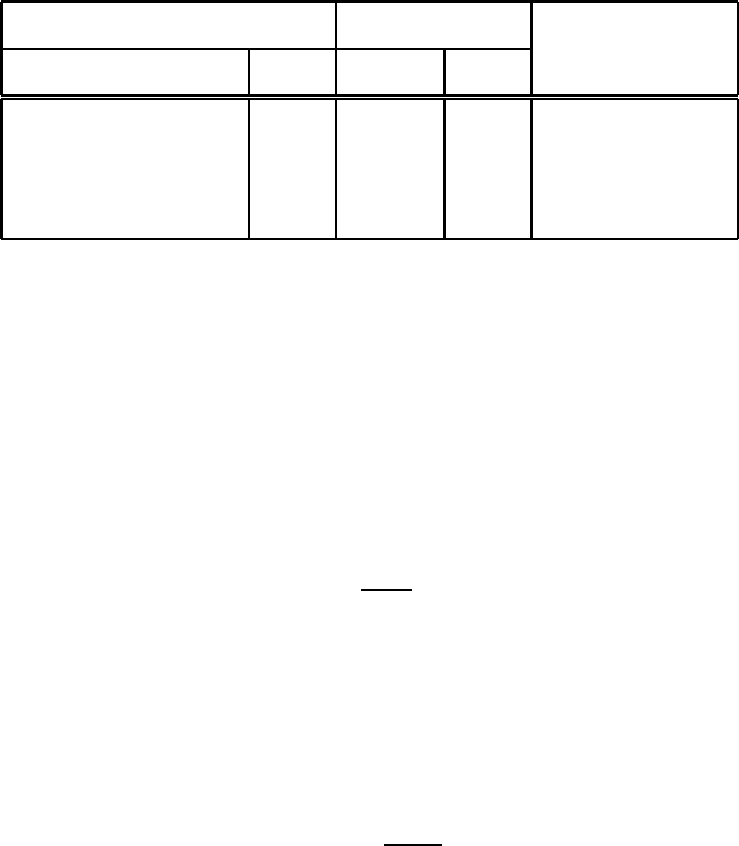
Radiation quantities and conversion factors relating to dosimetry are listed in
Table 11.2.4.
11.2. Quantities Related to Dosimetry 615
Table 11.2.4: New and old units of quantities related to radiation dose and their
conversion factors.
Old Unit New Unit Conversion
Name Symbol Name Symbol Factor
Radiation Absorbed Dose rad Gray Gy 1Gy = 100rad
Rad Equivalent for Man rem Sievert Sv 1Sv = 100rem
Curie Ci Bacquerel Bq 1Bq =2.7 ×10
−11
Ci
11.2.E Kerma, Cema, and Terma
In this section we will describe three quantities, Kerma, Cema, and Terma, that are
in common use in the field of dosimetry due to their effectiveness in characterizing
the macroscopic effects of radiation.
E.1 Kerma
Kerma is an acronym of kinetic energy released in a medium per unit mass. It is
defined as the total kinetic energy of all the charged particles liberated by uncharged
particles per unit mass of the target material. Mathematically, it is written as the
quotient of the charged particle’s kinetic energy E
kin
and the mass of the material
dm,thatis
K =
dE
kin
dm
. (11.2.18)
Kerma is generally measured in the same units that are used for absorbed dose,
that is, J/kg or Gray.NotethatheredE
kin
is the kinetic energy of the charges
produces as a result of radiation interaction. This energy is not necessarily equal to
the energy transferred by the incident radiation since some of the energy can also
go into other processes, such as radiative and radiationless transitions. The other
point to note here is that the mass element dm should be very small.
The above definition of Kerma is actually a simplified form of the actual micro-
scopic definition, which takes the form
K = lim
V →0
E
kin
ρV
. (11.2.19)
A point worth noting here is that the condition of the volume element shrinking to
zero ensures that the deposition of energy by radiative transfers gets ignored. In
this way Kerma is actually an approximation of absorbed dose.
Kerma is not independent of the type of the target material and therefore must
always be defined with respect to the medium. For example, the energy released in
air per unit mass of air should be written as air Kerma.
The energy lost by the incident radiation has two main components: collisional
loss and radiative loss. K can therefore be divided into K
col
and K
rad
corresponding