
Alkauskas A., Deak P., Neugebauer J., Pasquarello A., Van de Walle Ch.G. (Eds.) Advanced Calculations for Defects in Materials: Electronic Structure Methods
Подождите немного. Документ загружается.

19 Rozzi C.A., Varsano D., Marini A., Gross
E.K.U., and Rubio A. (2006) Phys. Rev. B,
73, 205119.
20 Schultz, P.A. (2006) Phys. Rev. Lett., 96,
246401.
21 Resta, R. (1994) Rev. Mod. Phys., 66, 899.
22 Resta, R. and Kunc, K. (1986) Phys. Rev. B,
34, 7146.
23 Freysoldt, C., Neugebauer, J., and Van de
Walle, C.G. (2009) Phys. Rev. Lett., 102,
016402.
24 Baroni, S. and Resta, R. (1986) Phys. Rev. B,
33, 7017.
25 Gonze, X. and Lee, C. (1997) Phys. Rev. B,
55, 10355.
26 Kunc, K. and Resta, R. (1983) Phys. Rev.
Lett., 51, 686.
27 Pham, T.A., Li T., Shankar, S., Gygi, F., and
Galli, G. (2010) Appl. Phys. Lett., 96,
062902.
28 Boeck, S., Freysoldt, C., Ismer, L., Dick, A.,
and Neugebauer, J. (2011) Comput. phys.
commun., 182, 543, Web page: http://
www.sphinxlib.de.
29 Bockstedte, M., Kley, A., Neugebauer, J.,
and Scheffler, M. (1997) Comput. Phys.
Commun., 107, 187.
30 Kresse, G. and Joubert, D. (1999) Phys. Rev.
B, 59, 1758.
258
j
14 Electrostatic Interactions between Charged Defects in Supercells
15
Formation Energies of Point Defects at Finite Temperatures
Blazej Grabowski, Tilmann Hickel, and Jörg Neugebauer
15.1
Introduction
A crucial quantity for the ab initio study of point defects is the defect formation
free energy F
f
(V,T) as a function of volume V and temperature T. The dominant
contribution to F
f
is due to the zero temperature formation energy E
f
ðVÞ¼
F
f
ðV; T ¼0KÞ, which can be calculated at a relatively low computational cost. The
calculation of higher order contributions such as quasiharmonic excitations (¼non-
interacting harmonic vibrations þ effect of thermal expansion; Section 15.2.2.3) and
anharmonic excitations (¼interacting vibrations; Section 15.2.2.4) significantly
increases the required computational resources. Since these effects are also expected
to yield only a comparatively small contribution to F
f
they are typically neglected.
Indeed, it is expected that their in fluence on defect properties in semiconducting
materials is far smaller than the inaccuracies resulting from the band gap problem.
Thus, the majority of defect studies in semiconductors (see Ref. [1] for a recent
review) are based on E
f
with only a few exceptions [2, 3].
The situation is likely to change in the near future. Recent progress in the
development of new exchange-correlation functionals [4, 5] and methods going
beyond density functional theory (DFT) [6, 7] allows for a highly accurate prediction of
band structures. At present, such calculations are computationally too expensive to be
routinely applicable to total energy calculations of defects. However, the steady
progress in methodological development and hardware components will soon close
this gap. Then, the determination of the above mentioned higher order contributions
will become critical.
For metals which do not suffer from the band gap problem, the situation is
different. The highly efficient screening in metallic materials removes a large part of
the self-interaction error which is mainly responsible for the band gap problem in
semiconductors. As a consequence, significantly more accurate defect formation
energies are obtained even with common local or semi-local exchange-correlation
functionals such as the local density approximation (LDA) or the generalized gradient
approximation (GGA). Thus, in order to reach the next accuracy level in defect
Advanced Calculations for Defects in Materials: Electronic Structure Methods, First Edition.
Edited by Audrius Alkauskas, Peter Deák, Jörg Neugebauer, Alfredo Pasquarello, and Chris G. Van de Walle.
Ó 2011 Wiley-VCH Verlag GmbH & Co. KGaA. Published 2011 by Wiley-VCH Verlag GmbH & Co. KGaA.
j
259

calculations, the inclusion of finite temperature contributions to F
f
is already now of
importance. Indeed, a review of the related literature clearly reveals such efforts
(Table 15.1): starting in the late 1980s with the seminal work by Gillan [8], DFT-based
studies of point defects were limited to the T ¼0 K contribution E
f
. This situation
persisted roughly until the beginning of the new century, when studies [13, 14] of
the electronic contribution to F
f
– of crucial importance for some metallic materi-
als [19] – appeared. In 2000 and 2003, Carling et al. [15, 16] provided a first ab initio
based assessment of the quasiharmonic contribution to the vacancy of aluminum. To
make such a study feasible at that time, the authors had to restrict the dynamics of the
system to the first shell around the vacancy, i.e., to the atomic shell which experiences
the largest effect as compared to the perfect bulk. An ab initio based evaluation of
the anharmonic contribution was computationally prohibitive at that time, which
made it necessary to resort to empirical potentials. Major methodological improve-
ments and the boost in computer power provide now the opportunity to study all
relevant free energy contributions of defect formation in a rigorous ab initio manner
(cf. Table 15.1).
In the present paper, we review the methodology required to compute defect
concentrations from ab initio including the electronic, quasiharmonic, and anhar-
monic contributions to the formation free energy (Section 15.2.2). For their correct
evaluation and interpretation it is important to correctly treat the strain induced by
the periodic array of defects in a supercell approach, since an improper treatment
Table 15.1 Representative ab initio studies of
point defect calculations in unary metals for the
specific case of vacancies. The abbreviations
are: 3d/4d/5d: respective transition elements;
xc: exchange-correlation functional; LDA: local
density approximation; GGA: generalized
gradient approximation; PWps: planewaves
with pseudopotentials; FP-LMTO: full potential
linearized muffin tin orbitals; PW-PAW:
planewaves with projector augmented waves; V:
rescaled volume approach; P: constant pressure
approach; volOpt: volume optimized approach
(Section 15.2.1.1); F
f
: defect formation free
energy; E
f
:(T ¼0 K) contribution to F
f
; el/qh/
ah: electronic/quasiharmonic/anharmonic
contribution to F
f
; 1s: first shell (around the
defect) contribution to the dynamical matrix;
emp: empirical potential approach.
year ref. elements methodology contributions to F
f
xc potential strain E
f
el qh ah
1989 [8] Al LDA PWps V x
1991 [9] Li LDA PWps V x
1993 [10] Al,Cu,Ag,Rh LDA FP-LMTO V x
1995 [11] 3d,4d,5d LDA FP-LMTO V x
1997 [12] Al LDA PWps P x
1998 [13] W LDA PWps P xx
1999 [14] Ta LDA PWps P xx
2000 [15] Al LDA/GGA PWps P x x
1s
x
emp
2003 [16] Al LDA/GGA PWps P x x
1s
x
emp
2009 [17] Fe GGA PW-PAW V xx
2009 [18] Al LDA/GGA PWps/PW-PAW volOpt/P xxx x
260
j
15 Formation Energies of Point Defects at Finite Temperatures
may lead to errors of the same order of magnitude. We therefore review first the
possible strategies and available correction schemes (Section 15.2.1). We then
present results demonstrating the quality and performance of the methods (Sec-
tion 15.3). The focus will be on point defects in aluminum since this material system
can be produced with high chemical purity and crystalline quality, thus providing
accurate experimental data as needed for a critical comparison. On the theoretical
side, a good performance of available exchange-correlation functionals can be
expected due to the free electron character of Al. All these aspects render aluminum
to be a particularly attractive system for evaluating the performance of ab initio
simulations of point defects. Indeed, as shown in Table 15.1 most theoretical studies
focused on this system.
15.2
Methodology
15.2.1
Analysis of Approaches to Correct for the Spurious Elastic Interaction
in a Supercell Approach
In the literature, two major approaches have been proposed and employed to correct
for the artificial strain fields in a supercell approach arising from a collective interplay
of all periodic images: (i) the rescaled volume and (ii) the constant pressure approach.
Within the rescaled volume approach [8], the volume of the supercell containing the
defect is rescaled such as to account for the volume of the missing atom. In contrast,
within the constant pressure approach [12], the volume of the defect supercell is
adjusted such as to correspond to the same pressure as is acting on the perfect bulk
supercell (commonly zero pressure is assumed). In the limit of asymptotically large
supercell sizes both approaches will converge to the same result. For realistic finite
sized ab initio supercells the two approaches give different results. It is commonly
accepted that the constant pressure method is superior to (more accurate than) the
rescaled volume one. This is due to the fact that the latter imposes additional
constraints on the system while the constant pressure approach allows the system
to relax along all degrees of freedom including the shape of the supercell. A
disadvantage of the constant pressure approach is that additional relaxations are
needed, which significantly increase computational effort. This fact is illustrated in
Table 15.1: early calculations of defect properties, when computer power was severely
limited, were solely based on the rescaled volume approach. Only at the end of the
1990s one was able to achieve the next level of accuracy and employ the constant
pressure approach. For the accurate calculation of finite temperature contributions to
the defect formation energy employing the more accurate constant pressure
approach is mandatory. Recently a more general approach, the volume optimized
scheme, was proposed [18]. It takes higher order terms in the concentration
dependence of F
f
into account thus going beyond the constant pressure treatment.
A consequence is that the formation free energy becomes concentration dependent.
15.2 Methodology
j
261
Approximating to first order in the defect concentration, the constant pressure
approach is obtained. Performing an additional approximation in the volume of
defect formation, the rescaled volume approach can be derived. The relation and
hierarchy between these approaches is discussed in the following.
15.2.1.1 The Volume Optimized Aapproach to Point Defect Properties
The central quantity, which contains all thermodynamic information about the
system such as e.g., the defect concentration, is the free energy surface
FðV; T; N; nÞ of a macroscopic crystal. In general, it depends on the crystal volume
V (we reserve the symbol V for the atomic volume introduced below), temperature T,
the number of atoms N, and the number of defects n. For the following discussion, we
consider a large fictitious supercell (Born–von Karman cell) representing this
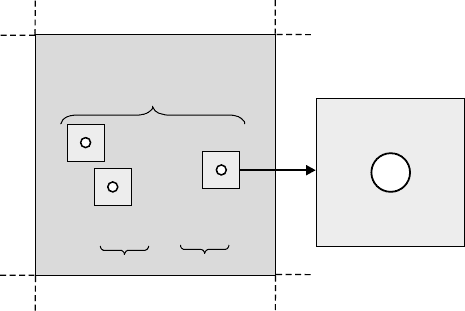
macroscopic crystal (Figure 15.1).
The term fictitious refers to the fact that an actual calculation of this supercell is not
feasible (and as will be discussed not necessary). The basic assumption is that the
presence of defects leads to two kinds of effects: (i) strong distortions of the atoms
close to the defect away from their ideal perfect bulk positions and (ii) long ranged
volumetric distortions affecting only the lattice constant. Around each defect, a
cell/box is constructed which we call defect cell. The defect cell needs to be large
enough to cover the first kind of effect but not necessarily the second kind since this
will be accounted for by the volume optimization introduced below. The defect cell
contains N
d
atoms, has a volume V
d
, and a free energy F
d
¼ F
d
ðV
d
; T; N
d
Þ.
According to this construction, the crystal outside the defect cells can be described
F( ,T;N,n)
Ω
Ω
ΩΩ
Ω
n times
F n ,T;N-nN
pd d
(- )
...
F ( ,T;N )
dd d
p
N
p
Figure 15.1 Schematic illustration of the
concept to compute the free energy
FðV; T; N; nÞ of a macroscopic crystal with
defects. The larger box represents a supercell of
volume V at temperature T containing N atoms
and n defects. A light-gray shaded box with
a white circle represents a cell of volume V
d
,
containing N
d
atoms, exactly one defect, and
having the free energy F
d
ðV
d
; T; N
d
Þ. The dark-
gray shaded region represents the perfect crystal
without defects, with volume V
p
¼ VnV
d
,
N
p
¼ NnN
d
atoms, and free energy
F
p
ðV
p
; T; N
p
Þ. The dashed lines indicate
periodic boundary conditions.
262
j
15 Formation Energies of Point Defects at Finite Temperatures

by a perfect crystal with volume V
p
¼ VnV
d
, N
p
¼ NnN
d
atoms, and free energy
F
p
¼ F
p
ðV
p
; T; N
p
Þ. The free energy of the fictitious supercell is then given by
FðV; T; N; n; V
d
; N
d
Þ¼F
p
ðV
p
; T; N
p
ÞþnF
d
ðV
d
; T; N
d
ÞþF
conf
ðT; N; nÞ;
ð15:1Þ
where we have also explicitly indicated the dependence of F on the volume of the
defect cell V
d
and the number of atoms in the defect cell N
d
. These dependencies
and their treatment will be discussed in the following. Further in Eq. (15.1), F
conf
is
the configurational free energy of the defects in the dilute limit. It is approximated
using Stirlings formula by [20] F
conf
k
B
T½nnlnðn/NÞ, with the Boltzmann
constant k
B
. The volume optimized approach [18] is based on the key observation
that in equilibrium the total free energy F is minimal with respect to changes in the
volume of the defect cell,
qF/qV
d
0; ð15:2Þ
so that the volume of the perfect crystal and of the defect cells will adjust self
consistently, i.e., until the optimum volume for both is achieved when minimizing F.
The actual result of the minimization procedure will depend on the free energy
volume curves of the perfect crystal and of the defect cell.
Equation (15.1) can be further transformed. The free energy of the perfect crystal
F
p
scales with the number of atoms due to its extensivity property,
F
p
ðV
p
; T; N
p
Þ/N
p
¼ F
p
ðV
p
; T; 1Þ
¼: F
p
ðV
p
; TÞ¼F
p
VcV
d
1cN
d
; T
;
ð15:3Þ
with
V
p
¼
V
p
N
p
¼
VcV
d
1cN
d
; ð15:4Þ
where we have defined the volume per atom V ¼ V/N and the concentration of
defects c ¼ n/N. Using this property to rewrite Eq. (15.1) yields
FðV; T; N; n; V
d
; N
d
Þ/N ¼ð1cN
d
ÞF
p
ðV
p
; TÞ
þcF
d
ðV
d
; T; N
d
ÞþF
conf
ðT; cÞ¼: FðV; T; c; V
d
; N
d
Þ; ð15:5Þ
where the configurational free energy depends now on the concentration as
F
conf
ðT; cÞ¼ck
B
Tð1lncÞ. Equation (15.5) is independent of N and defines the
free energy per atom FðV; T; c; V
d
; N
d
Þof the full supercell consisting of the perfect
crystal and the defect cells. Now, a formation free energy F
f
can be defined, which
turns out to be concentration dependent
F
f
ðV; T; c; V
d
; N
d
Þ¼F
d
ðV
d
; T; N
d
ÞN
d
F
p
ðV
p
; TÞ; ð15:6Þ
and thus:
15.2 Methodology
j
263

FðV; T; c; V
d
; N
d
Þ¼F
p
ðV
p
; TÞþcF
f
ðV; T; c; V
d
; N
d
ÞþF
conf
ðT; cÞ: ð15:7Þ
Applying next the equilibrium condition with respect to the defect
concentration, qF/qc 0, to Eq. (15.7) yields an equation for the equilibrium defect
concentration c
eq
k
B
Tlnc
eq
¼ F
f
ðV; T; c
eq
; V
d
; N
d
Þ
v
f
P
p
c
eq
N
d
1
; ð15:8Þ
where the volume of defect formation v
f
¼ V
d
N
d
V and the pressure inside the
perfect bulk P
p
¼qF
p
/qV
p
have been defined. It is straightforward to show that
the latter equals the external pressure P ¼qF/qV:
P ¼
qF
qV
¼ð1cN
d
Þ
qF
p
qV
p
qV
p
qV
¼
qF
p
qV
p
¼ P
p
: ð15:9Þ
Further, it follows from Eq. (15.2) that
qF
qV
d
¼ð1cN
d
Þ
qF
p
qV
p
qV
p
V
d
þc
qF
d
qV
d
¼ c
qF
d
qV
d
qF
p
qV
p
¼ cðP
d
þP
p
Þ0;
ð15:10Þ
with P
d
¼qF
d
/qV
d
the pressure inside the defect cell. Hence, the equilibrium
defect cell volume V
d;eq
is obtained when the pressure inside the defect cells equals
the pressure inside the perfect cell which, according to Eq. (15.9), equals the external
pressure, i.e., P
d
¼ P
p
¼ P.
Using V
d;eq
and Eqs. (15.8, 15.9), Eq. (15.7) can be transformed to the final
expression for the free energy of a crystal at (atomic) volume Vand temperature Tand
with an equilibrium concentration of thermally excited defects:
FðV; TÞ¼FðV; T; c
eq
; V
d;eq
; N
d
Þ
¼ F
p
Vc
eq
V
d;eq
1c
eq
N
d
; T
þ
c
eq
v
f
P
c
eq
N
d
1
c
eq
k
B
T:
ð15:11Þ
The parameter N
d
is determined by the specific supercell used for the
defect calculation and has to be checked for convergence. Note that Eq. (15.8)
[and thus Eq. (15.11)] cannot be solved for c
eq
in closed form due to the dependence
of F
f
on c. The actual equilibrium defect concentration must be thus solved self
consistently.
15.2.1.2 Derivation of the Constant Pressure and Rescaled Volume Approach
Employing well defined approximations, the constant pressure and rescaled volume
approaches can be easily derived from the volume optimized approach. Let us first
show the relation to the constant pressure approach. We therefore Taylor expand F in
Eq. (15.5) as a function of c around c ¼0:
264
j
15 Formation Energies of Point Defects at Finite Temperatures

FðV; TÞ¼F
p
ðV; TÞþc½F
d
ðV
d
; T; N
d
ÞN
d
F
p
ðV; TÞþPv
f
þF
conf
ðT; cÞþOðc
2
Þ;
ð15:12Þ
where Eq. (15.9) has been used. Retaining only the terms linear in c, the expression
for the free energy within the constant pressure approach is obtained [21]:
FV; TðÞF
p
V; TðÞþF
conf
T; cðÞþc ½F
d
ðV
d
; T; N
d
ÞN
d
F
p
ðV; TÞþPv
f
|fflfflfflfflfflfflfflfflfflfflfflfflfflfflfflfflfflfflfflfflfflfflfflfflfflfflfflfflfflfflffl{zfflfflfflfflfflfflfflfflfflfflfflfflfflfflfflfflfflfflfflfflfflfflfflfflfflfflfflfflfflfflffl}
¼F
f
P
; formation free energy at const: pressure:
:
ð15:13Þ
The term in the square brackets defines the defect formation free energy at constant
pressure, since V
d
needs to be chosen such as to satisfy the pressure equality,
Eq. (15.10). The term correctly includes the enthalpic Pv
f
contribution. This
contribution has been intensively discussed over many years in literature: in their
textbook, Varotsos and Alexopoulos [21] stress that it has been frequently ignored in
point defect studies. For a correct description at nonzero pressure it needs however
to be included. Based on the above derivation, we can straightforwardly analyze the
necessity of this contribution. It naturally arises from the Taylor expansion in
Eq. (15.12) and needs to be taken into account since it is part of the first order
term. Physically, the Pv
f
term reflects the fact that the work needed to form a defect
depends on the pressure and likewise on the volume changes it induces. Equa-
tion (15.13) can be simplified in a standard way [21] by using the defect equilibrium
condition qF/qc 0 to yield FðV; TÞF
p
ðV; TÞk
B
Tc
eq
ðV; TÞ, with the equilibri-
um defect concentration c
eq
ðV; TÞ¼exp½F
f
P
ðV; TÞ/ðk
B
TÞ.
The rescaled volume approach can be easily derived from Eq. (15.12). We therefore
note that F
d
ðV
d
; T; N
d
Þ is the zeroth order term of a Taylor expansion of
F
d
ðV
d
þv
f
; T; N
d
Þ in the volume of defect formation v
f
around v
f
¼ 0:
F
d
ðN
d
V; T; N
d
Þ¼F
d
ðV
d
þv
f
; T; N
d
Þ
¼ F
d
ðV
d
; T; N
d
ÞþPv
f
þOð½v
f
2
Þ:
ð15:14Þ
In the above equation the first equality follows from the definition of the volume of
defect formation. Further, qF
d
/qV
d
¼ P due to Eqs. (15.9) and (15.10) has been
used. Approximating to first order in v
f
, rearranging with respect to F
d
ðV
d
; T; N
d
Þ,
and plugging into Eq. (15.13) yields:
FV; TðÞF
p
V; TðÞþF
conf
T; cðÞþc ½F
d
ðN
d
V; T; N
d
ÞN
d
F
p
ðV; TÞ
|fflfflfflfflfflfflfflfflfflfflfflfflfflfflfflfflfflfflfflfflfflfflfflfflfflfflffl{zfflfflfflfflfflfflfflfflfflfflfflfflfflfflfflfflfflfflfflfflfflfflfflfflfflfflffl}
¼F
f
V
; formation free energy at rescaled volume:
ð15:15Þ
The quantity in square brackets is the formation free energy of the rescaled volume
approach [8]. To make this even more apparent, the extensivity property of F
p
can be
used to write F
f
V
as
F
f
V
ðV; T; N
d
Þ¼F
d
ðN
d
V; T; N
d
Þ
N
d
N
d
1
F
p
ð½N
d
1V; T; N
d
1Þ; ð15:16Þ
15.2 Methodology
j
265
with the plus (minus) sign referring to vacancies (self interstitials). As for the
constant pressure case, Eq. (15.15) can be simplified to FðV; TÞF
p
ðV; TÞ
k
B
Tc
eq
ðV; TÞ, with the equilibrium defect concentration given now by
c
eq
ðV; TÞ¼exp½F
f
V
ðV; TÞ/ðk
B
TÞ.
The preceding derivations show that the two standard approaches arise as natural
approximations of the volume optimized method. In particular, a hierarchy of
approximations can be identified: first, the constant pressure approach arises by
terminating the Taylor series in the defect concentration in Eq. (15.12) after the first
order term. The rescaled volume approach needs a further approximation by
terminating the Taylor series in the volume of defect formation in Eq. (15.14)
likewise after the first order term. For practical purposes we note the following:
The approximation in the defect concentration, Eq. (15.13), is well motivated, since
the basic assumption of non interacting defects, i.e., the dilute limit, is valid only for
low defect concentrations. We therefore recommend to employ the constant pressure
approach, also because of numerical instabilities in the volume optimized method
when approaching c
eq
N
d
1 due to the denominator in Eq. (15.11). In contrast, the
approximations needed to derive the rescaled volume approach are not appropriate
for realistic supercell sizes and will result in sizeable errors even for low defect
concentrations (see e.g., Figure 15.7).
15.2.2
Electronic, Quasiharmonic, and Anharmonic Contributions to the Formation
Free Energy
Let us now focus on the methodology needed to compute the electronic, quasihar-
monic, and anharmonic contribution to the free energy surface. For a defect
calculation, we need both the free energy of the defect cell F
d
ðV; TÞ and the free
energy of the perfect bulk F
p
ðV; TÞ as a function of volume and temperature as
outlined in the previous section. In the following we will derive the necessary steps
with particular emphasis on numerical efficiency. The latter issue is crucial to allow
a full ab initio determination of all contributions, specifically including the anhar-
monic one. Except for the remark at the end of Section 15.2.2.3 all considerations
refer to both free energy surfaces (F
d
and F
p
) and we therefore use generically the
symbol F.
15.2.2.1 Free Energy Born–Oppenheimer Approximation
Starting point is an expression for the free energy surface in which the ionic
and electronic degrees of freedom are decoupled quantum mechanically (Born–
Oppenheimer approximation), but which still contains the effect of thermodynamic
electronic excitations on the ionic vibrations. For that purpose, the standard
Born–Oppenheimer approximation [22] needs to be extended to the so called
free energy Born–Oppenheimer approximation which was introduced by Cao and
Berne [23] in 1993.
Within the standard Born–Oppenheimer approximation, the free energy F of
a system consisting of electrons and ions is written as:
266
j
15 Formation Energies of Point Defects at Finite Temperatures
F ¼k
B
T ln Z where Z ¼
X
n;m
e
bE
nuc
n;m
; ð15:17Þ
with
E
nuc
n;m
¼hL
n;m
jðT
^
nuc
þ 1
^
E
el
n
ÞjL
n;m
i; ð15:18Þ
and b ¼ðk
B
TÞ
1
. In Eq. (15.17), we have de fined the partition function Z of the
system in which the sums run over an electronic quantum number n and an ionic
quantum number m. The energy levels E
nuc
n;m
and eigenfunctions L
n;m
are solutions to
the nuclei Schr
€
odinger equation with the Hamiltonian ð
^
T
nuc
þ
^
1E
el
n
Þ, in which
^
T
nuc
is the ionic kinetic energy operator,
^
1 is the identity operator, and E
el
n
are potential
energy surfaces generated by the electronic system, i.e., the solutions to the electronic
Schr
€
odinger equation (cf. Figure 15.2). (As commonly done, we include the nucleus–
nucleus interaction into E
el
n
.) We can transform the partition function as
Z ¼
X
n;m
e
bhL
n;m
jð
^
T
nuc
þ
^
1E
el
n
ÞjL
n;m
i
¼
X
n;m
hL
n;m
je
bð
^
T
nuc
þ
^
1E
el
n
Þ
jL
n;m
i;
ð15:19Þ
sincetheL
n;m
areeigenfunctionsofð
^
T
nuc
þ
^
1E
el
n
Þ.It wouldbenowdesirabletofactorize
the exponential to separate the E
el
n
. This factorization needs however to be performed
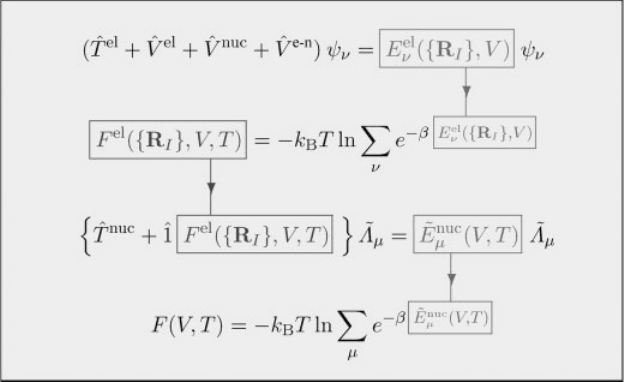
Figure 15.2 (online colour at: www.pss-b.
com) Key equations to compute the free energy
Born–Oppenheimer surface. Here, y
n
are
electronic wave functions and
ð
^
T
el
þ
^
V
el
þ
^
V
nuc
þ
^
V
en
Þ is the electronic
Hamiltonian with the electronic kinetic energy
operator, electron–electron repulsion operator,
nucleus–nucleus repulsion operator,
and electron–nucleus attraction operator,
respectively. The remaining quantities
are defined in Section 15.2.2.1.
15.2 Methodology
j
267