
Darwin J. The Empire Project. The Rise and Fall of the British World-System, 1830-1970
Подождите немного. Документ загружается.

215 / ‘Un-British rule’ in ‘Anglo-India’
core of their programme survived unchanged. Like European national-
ists, the Congress leaders saw in the educated class a proxy for the
nation. They saw themselves as trustees of the Indian idea. Their
vision of India was (politically at least) to remake it along Gladsto-
nian lines. The object of the Congress, declared its president in 1912,
was ‘to create a nation’ whose citizens would be ‘members of a world-
wide empire’. ‘Our great aim is to make the British Government the
National Government of the British Indian people.’
118
India was to
be a British Indian nation, inspired by the ideals of British-style Lib-
eralism. The apparatus of the Raj would be the scaffolding of Indian
nationhood, just as the adoption of British values would be the secret
of self-rule. Pressing the old case for easier Indian entry into the ranks
of the Civilians, Motilal Nehru insisted that, even if Indian candidates
were locally chosen, they should still be sent to Britain to complete
their education: ‘to acquire those characteristics which are essentially
British and . . . absolutely necessary in the interests of good government
in India’.
119
It was ‘axiomatic’, he went on, that the administration in
India ‘must have a pronounced British tone and character and too much
stress cannot be laid on Indians acquiring that character as a habit’.
120
It was no accident that Motilal sent his son (Jawaharlal) to Harrow and
Cambridge: he was meant for the Civil Service, not Congress.
In retrospect, we can see that each of these ideas of India
received in this period a decisive check. By 1914 they were all at stale-
mate. A new cadre of imperially minded Indians, ready and willing
to do India’s imperial duty, was the white hope of advanced opinion
in Britain. If the British world-system was not to weaken or stagnate,
India’s contribution must grow greater, its role more dynamic, its lead-
ers more receptive to their imperial task. In reality, there was not the
smallest sign that the most moderate of the Indian moderates would
agree to India’s existing imperial burdens once self-government was
granted. Like it or not, London would find itself bound to the Civilian
Raj. The unofficial ties of sympathy between the Imperial centre and its
Indian friends would be fretted by this dilemma. As for the Civilians,
their hope of embedding their rule in Indian sympathies, fusing their
autocracy with Indian conservatism, had (as it turned out) little chance
of success. It depended too heavily upon stifling the appeal of Indian
nationalism in the educated class and on rallying new groups and inter-
ests to provincial institutions without the means to satisfy their wants.
For the ‘British Indian nationalists’ of the Congress, the future was just
216 / Towards ‘The Sceptre of the World’
as gloomy. Indeed, they were trapped in a paradox. Without mobilising
a larger following (the course rejected in 1907) they had little hope of a
breakthrough at the provincial (let alone the All-India) level. Without
wresting more power and patronage from the Civilians, they had few
means of widening the appeal of the ‘manly liberalism’ they espoused.
When the dust had settled on the Morley-Minto reforms, that much
was clear.
To an extent only dimly glimpsed before 1914, the political
ground was heaving beneath them all. A fourth idea of India was in the
making. It was less the dream of an Indian state than the anxious search
for Indian community. Its prophet was Gandhi, whose Hind Swaraj
(1909) brusquely rejected Western civilisation and Congress ideology in
favour of a spiritual India of self-sufficient villages. Outside the formal
world of Civilian rule and Congress politics, a host of new interests
was emerging. Hindu sabhas,
121
Muslims,
122
caste associations, leagues
of peasants,
123
even groups of workers, sought a new solidarity or
defended an old. In Bengal
124
and Madras,
125
new social ambitions
were afoot in the countryside. Congress’s ‘British India’ meant little
to such men. Regional interests and communal identities were much
more pressing. Whom they would follow and to what effect were as
yet unknown. The answers would come much sooner than anyone
expected.
6
THE WEAKEST LINK: BRITAIN IN
SOUTH AFRICA
In South Africa, the bond of empire was weaker and the strains on it
much greater than in other colonies of settlement. The European whites
were predominantly non-British; the indigenous blacks more numerous
and resilient. The frontier wars of conquest lasted longer, were fought
with greater ferocity and spread out over a whole sub-continent. For
much of the nineteenth century, South Africa was viewed in London
as a hybrid region: a composite of settler and ‘native’ states. Imperial
policy veered unpredictably between a ‘Canadian’ solution of settler
self-government and the ‘Indian’ solution of direct control – at least
over the large zones where autonomous black communities survived.
Partly as a result, on the white side certainly, the ‘Imperial Factor’ was
regarded with profound mistrust.
South Africa was likely to be an awkward element in the impe-
rial system at the best of times. The sub-continent was stuck in its own
version of Catch-22. As long as the struggle between whites and blacks
continued there could be no hope of devolving imperial authority to
a settler government on the model of Canada, the Australian colonies
or (most relevantly) New Zealand. The whites were too divided; and
the blacks were too strong to be contained without the help of imperial
troops. But every imperial effort to promote settler unity and impose
a common policy towards black peoples and rulers roused fresh white
animosity against London’s ‘dictation’ – especially among the Afrikaner
(or Boer) majority. Suspicion of the Imperial Factor was the main cause
of South Africa’s peculiar fragmented state structure, with its division
between two colonies, two Boer republics and a scattering of black
territories, some in direct relations with London through the High
218 / Towards ‘The Sceptre of the World’
0
0
200 400
100 200 300 miles
500 km300100
Port Elizabeth
Grahamstown
Cape Town
East London
Durban
Bloemfontein
Johannesburg
Pretoria
Kimberley
BECHUANALAND
GERMAN
SOUTH-WEST
AFRICA
RHODESIA
BAROTSELAND-
NORTH-WESTERN
RHODESIA
PORTUGUESE
WEST
AFRICA
BRITISH
CENTRAL
AFRICA
CAPE COLONY
CAPE OF GOOD HOPE
TRANSVAAL
SOUTHAFRICAN
REPUBLIC
ORANGE FREE
STATE
GRIQUALAND
WEST
STELLALAND
GOSHEN
BRITISH
BECHUANALAND
TRANSKEI
BUSHMAN
LAND
BASUTO-
LAND
SWAZI-
LAND
BR.
KAFFRARIA
PONDO-
LAND
GRIQUA-
LAND EAST
NATAL
Z
U
L
U
L
A
N
D
Z
a
m
b
e
z
i
L
i
m
p
o
p
o
O
r
a
n
g
e
P
O
R
T
U
G
U
E
S
E
E
A
S
T
A
F
R
I
C
A
N
O
R
T
H
-
E
A
S
T
E
R
N
R
H
O
D
E
SI
A
Source: Philips' College Atlas for Southern Africa (plate III)
published by George Philip and Son, London, 1957
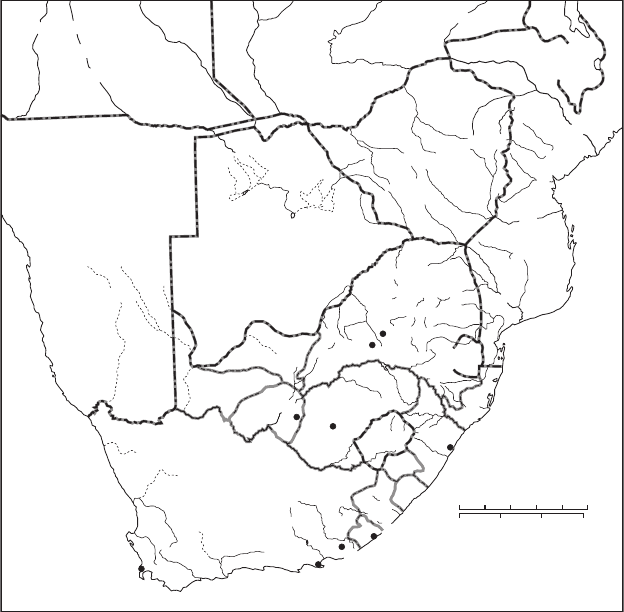
Map 8 South Africa in the nineteenth century
Commissioner in Cape Town, who doubled as the Cape Colony’s gov-
ernor. But, in the late nineteenth century, South Africa turned into
something more than a tiresome frontier province of the Empire. It
became the arena where the political and strategic cohesion of the
British world-system was tested to its limit.
There were several reasons for this. In the 1880s, South African
politics were transformed by the new wealth from diamonds and gold.
The rapid growth of the mineral economy sucked in foreign capital
and sharpened the competition for trade between the South African
states. But its most disturbing effect was to create uncertainty about the
geopolitical orientation of the whole region. With its gold revenues and
commercial leverage as the great inland market, the autonomous Boer
republic in the Transvaal now had the means to strike free from British
paramountcy, dragging the rest of Southern Africa with it. But it also
219 / The weakest link: Britain in South Africa
ran the risk of being inundated by foreign (mainly British) immigrants
attracted by its new prosperity. If that were to happen, the Transvaal
would become British by default, pulling the Afrikaners of the interior
back into Britain’s orbit, and making South Africa another Canada. The
stakes were high. By the 1890s, the grand problem of South African
politics seemed about to be settled. But no one could be sure what the
outcome would be.
What made this regional issue into an imperial question was
the intersection of South Africa’s economic revolution with two wider
political forces. The fate of the Transvaal, and of South Africa, turned
(or so it seemed) upon the treatment of the immigrant British, or
Uitlanders. The Transvaal was the high water mark of British migration,
the demographic imperialism that had served so well to extend British
influence, power and wealth. Kruger’s republic fiercely resisted the
habitual demand of British communities overseas for political and cul-
tural predominance as the self-appointed standard-bearers of progress.
But, in doing so, it set itself against a tide of British ethnic national-
ism then approaching its peak. As a result, the Transvaal’s relations
with Britain and the rest of South Africa became entangled in the bitter
ethnic rivalry of Afrikaners and ‘English’ (the usual term for British
settlers in South Africa) in the prelude to war in 1899. Worse still,
at the very moment when economic change was maximising political
uncertainty, South Africa became the focus of imperial rivalry. As the
new geopolitics of partition extended ever more widely across the Afro-
Asian world, Britain’s claim to regional supremacy in Southern Africa,
languidly asserted since 1815, became critical to her strategic interests
and world power status. This sudden conjuncture of ethnic, economic
and geopolitical tensions turned South Africa, almost overnight, from
a colonial backwater into the most volatile quarter of the Victorian
empire.
This was the setting for the prolonged struggle over the polit-
ical control of Southern Africa which reached its crisis between 1895
and 1909. To all the main protagonists, cabinet ministers, proconsuls,
British settlers, blacks and Boers, interests of fundamental importance
seemed at stake: imperial safety, economic progress, personal liberty,
political freedom, cultural survival. In the longer view, the outcome of
the struggle, the unification of South Africa as a self-governing, British
dominion rather than its secession, or balkanisation into competing
states, created a vital adjunct of British world power in the century
220 / Towards ‘The Sceptre of the World’
of global wars. But the more immediate question, as Southern Africa
entered its time of troubles, was whether imperial power could reshape
the sub-continent to its own design even at the point of the bayonet.
The lessons of the South African past were not encouraging.
Supremacy or stalemate
The British seized the Cape from the Dutch in 1795, returned it, and
took it again for good in 1806. The halfway house to India could not
be left in the hands of an enfeebled client of France, which the Nether-
lands had become. For the British, what mattered was Table Bay and
the naval base at Simonstown on the Indian Ocean side of Cape Point.
But this southern Gibraltar had a straggling hinterland. Beyond the
mountains around Cape Town lay a sprawling, thinly populated pas-
toral colony that stretched away for seven hundred miles to the north.
Wandering trekboers lived by transhumance and practised slavery.
1
On the Cape’s eastern frontier they had clashed since the 1770swith
Nguni (or Xhosa) peoples moving south in search of pastures. Even
before British rule began, friction between Boer frontiersmen and the
colonial authorities in Cape Town had sparked a local rebellion.
2
After
1806, British efforts to pacify the frontier, reduce their military costs
and outlaw slavery compounded Boer resentment at alien rule and its
anglicising tendency.
Already there were early signs of the imperial dilemma. Should
the British push forward and take control of the turbulent zone where
whites and blacks raided and counter-raided? Could they impose a
real separation between the quarrelsome frontier communities? Were
Boer and black misdeeds to be punished with an even hand? Should
the colonial government in Cape Town seek treaty partners among the
Xhosa chiefs and extend protection to its African allies? Behind all this
was the question of whether control of the South African Cape required
command of the South African interior. But, after 1836, it was no longer
just a matter of the Eastern Cape and its border wars. The British had
to define their imperial interest across the whole sub-continent.
For by that time a double revolution was transforming the
nature of the imperial problem. The drastic consolidation of the Zulu
state under Shaka (c.1787–1828) had released a huge wave of demo-
graphic turmoil affecting much of modern South Africa and beyond:
221 / The weakest link: Britain in South Africa
the mfecane or ‘crushing’.
3
Communities and tribes were disrupted,
defeated and displaced. As Shaka’s victims sought safety beyond his
reach, they invaded new neighbourhoods and provoked fresh conflicts.
Over a vast swathe of the interior highveld, the mfecane unleashed a
chaotic process of forced migration and ethnic conflict. As old commu-
nities fragmented, rival leaders competed to build a following, claim
land and assert their rule. The effects were felt all along the porous
frontier of the Cape. As a result, white traders, trekkers and mission-
aries, as well as runaway slaves and servants, moved easily into the
masterless realm beyond the Orange. Then, in the later 1830s, a large
movement of Cape farmers from the embattled Eastern Province – some
15,000 between 1834 and 1840 – trekked north and east to found a
Boer republic in Natal. Between them, the mfecane and the Great Trek
sucked the Colony’s human frontier deep into the interior. In a few
short years, the zone of imperial concern had been driven north from
the Orange to the Limpopo, and was on its way to the Zambezi.
To a succession of governors in Cape Town, the case for extend-
ing their imperial mandate over the whole sub-continent seemed unan-
swerable. The Cape’s strategic value would be lost if any harbour in
the region was controlled by independent whites: sooner or later they
would solicit the presence of a foreign power. On this argument, Natal,
with its magnificent port, was annexed in 1844, persuading the dis-
gruntled trekkers to seek republican freedom on the interior highveld.
Maritime supremacy was easy enough. But there was also a case for
dogging the steps of the emigrant Boers wherever they went. For it soon
became clear that the wars of expansion between the trekkers and rival
statebuilders in the mfecane aftermath – like the Sotho ruler Moshesh
or the Griqua captains Kok and Waterboer
4
– destabilised the whole
frontier. Endless border wars forced up the imperial garrison but held
back the Cape Colony’s commercial and political growth. Without an
inland paramountcy to impose order on all its warring communities,
the sub-continent would remain a costly colonial backwater, a constant
embarrassment to the humanitarian conscience and an inconvenient,
perhaps dangerous, drain on the scarce resource of military power.
The argument was persuasive but the means were lacking. Gov-
ernor after governor claimed that peace and plenty would follow an
extended paramountcy. One proposed an elaborate scheme of treaties,
magistrates and police beyond the Orange.
5
Three years later, Sir Harry
Smith swept aside chiefly rule in Xhosaland and annexed the whole
222 / Towards ‘The Sceptre of the World’
northern frontier up to the Vaal, to bring the Boers back under British
rule. ‘My position’, he declared in a revealing analogy,
has been analogous to that of every Governor General who
has proceeded to India. All have been fully impressed with
the weakness of that Policy which extended the Company’s
possessions . . . [F]ew . . . especially the men of more gifted
talents, have ever resigned . . . without having done that,
which . . . circumstances demanded and imperatively
imposed upon them. Such has been my case.
6
The Colonial Secretary gave reluctant sanction: enlargement, he said,
was inevitable.
7
But, in 1851, after spending millions, the Colonial
Office called a halt. The Boers were in revolt. The Eighth Xhosa War,
provoked by Smith’s policy, had been a military shambles hastily aban-
doned by Smith’s successor. Further north, the Zulu state still loomed
over the tiny colony in Natal. With black resistance unbroken, further
coercion of the independent Boers beyond the Orange was politically
futile and militarily dangerous. London made the best of a bad job. In
1852–4, in the conventions of Sand River and Bloemfontein, it con-
ceded the Boer republics practical autonomy and patched up peace on
the Cape frontier. A further advance under Governor Grey aimed to
incorporate the whole border zone between the Cape’s eastern frontier
and Natal. It was aborted by the outbreak of the Indian Mutiny, and the
hasty removal of much of Grey’s force, and then by the deepening crisis
in New Zealand to where Grey himself was transferred – although not
before the great Xhosa cattle-killing of 1857 (a despairing act of self-
immolation) had allowed him to push the settler frontier forward to the
river Kei.
8
But, for nearly twenty years, the Imperial Factor withdrew
from the South African interior, on the argument that, with the coast
(mostly) under British control, the inland republics were no threat to the
strategic command that was the ultima ratio of the imperial presence.
The ‘conventions policy’ was a grudging recognition of the
underlying weakness vitiating all attempts to make the sub-continent
as ‘British’ as Canada or Australia, or to master it imperially as the
British had mastered India. The Imperial government would not finance
a vast campaign of territorial conquest in Southern Africa. There (as
elsewhere) imperial expansion waited on local agents to create a frame-
work of information, order and opportunity: without it, reinforcements
223 / The weakest link: Britain in South Africa
of capital and manpower were hard to attract. Nor was British military
power a decisive weapon without the follow-through of local force.
But, in South Africa, the coastal colonies in the Cape and Natal were
cripplingly weak. They had no great staples like timber, wheat or wool
(though wool came closest), attracted few migrants and borrowed little
capital. Overland transport was costly and slow. The interior yielded
few commodities. The commercial energy that drove forward the settler
frontier elsewhere was in short supply. As a settler society, South Africa
was a pale shadow of Canada. Nor, despite Sir Harry Smith, could it be
a second India. There was no peasant economy to tax, no sepoy army to
recruit, and no means to pay for the ‘hire’ of imperial troops – the three
conditions which had allowed Anglo-Indian sub-imperialism to flour-
ish unchecked by London’s veto. Far from being the dominant force
in Southern Africa, the coastal colonies found themselves in frustrating
equipoise with the interior states, white and black. Black societies could
be harassed and threatened, but they were mobile, resilient and difficult
to incorporate – partly because, in the primitive state of the colonial
economy, that meant seizing their land by force and conscripting their
labour. The Boer republics were an even harder nut to crack.
It was easy to mistake the crudity of the Boer states for weak-
ness. But the Boers had developed a highly effective means of ‘primitive
accumulation’ to complement their social and military system.
9
On the
highveld grassland and around its margins, their horse-borne mobility
and firepower allowed them to capture African cattle, land and labour
far more easily than in the dense bush and deep valleys of the old Cape
borderlands. The Boer states existed to seize this wealth and redistribute
it among their citizen-warriors organised into the key unit of their social
and political life, the commando. The Boer elite were the commandants
who had first pick of the spoils and on whose military prowess their
followers depended. Boer institutions may have been simple,
10
but their
pastoral economy, drawing labour and foodcrops from black depen-
dants, allowed a thinly spread but highly effective occupation of the
highveld to be imposed in less than twenty years. Boer warfare was per-
fectly adapted to the open veld. Against it, the square and the infantry
charge, the standard British tactics, were largely ineffective.
Stalemate was thus the rule in South African politics. When the
British tried again to break it in the 1870s, the outcome was crushing
failure. Once more, the reason for a forward move was the chorus of
settler and official alarm at growing black resistance in the cockpit of
224 / Towards ‘The Sceptre of the World’
peoples between the Cape, Natal and the Boer republics. Once more the
blame was laid on disunity and competition among the whites. Federal
union of the white settler states, British and Boer, favoured by Cape
governors as the acceptable face of annexation, was endorsed by official
opinion in London.
11
Cape Colony was given Responsible (self-) Gov-
ernment in 1872 in the hope that its leaders would take up the federal
cause. They refused, fearing that the whole burden of frontier control
would fall on them. The Colonial Secretary, Lord Carnarvon, turned
instead to the junior colony, Natal, and to Sir Theophilus Shepstone.
12
Shepstone was the son of a British settler in the Eastern Cape. He
became an official interpreter and, in the border warfare of the 1830s,
rose quickly to be the government’s spokesman among the Xhosa chiefs.
By 1846, he was ‘diplomatic agent’ to the Africans in Natal and to the
Zulu kingdom beyond the Tugela. A large, impassive, secretive man,
Shepstone became the uncrowned king of Natal. He was an imperial
official, but a colonial patriot: an unrelenting Natal sub-imperialist, a
proto-Rhodes without the diamonds. His aim was to build a greater
Natal: to find new ‘locations’ for its blacks; to free more land for its
whites; to annex the northern coast; to control the northern trade to the
Zambezi; to conquer Zululand. Carnarvon’s rebuff at the Cape gave
him his chance, for London was now willing to throw the Imperial
Factor and its army into his puny settler bridgehead. Natal would be
the springboard for colonial federation. Shepstone’s local influence, his
mastery of frontier politics, his command of ‘native policy’, made him
the obvious choice as the new supremo of the northern interior. At
first all went well. Worsted in its war against the Pedi, the Transvaal
in 1876 was bankrupt, divided and demoralised. Shepstone talked its
dejected president into surrendering independence and conjured up a
petition for annexation which he declared in February 1877.
13
The Pedi
were defeated with imperial help.
14
Then, in the second stage of Shep-
stone’s grand design, the army Carnarvon had sent invaded Zululand,
and (after the disaster at Isandhlwana) decisively broke its power. In
a single forward movement, the British had broken the cycle of frus-
tration and transformed the geopolitics of Southern Africa. Or so it
seemed.
The moment of triumph was short. There was barely time
to broach federation before the Transvaal Boers began to throw off
their new colonial state with its courts and taxes. Paul Kruger’s fame
as a frontier fighter made him the natural leader of revolt. With the