
Darwin J. The Empire Project. The Rise and Fall of the British World-System, 1830-1970
Подождите немного. Документ загружается.

375 / Making imperial peace, 1919–1926
governments and especially India. Most important of all was the fact
that not even the return to gold could reverse the great shift of financial
power towards New York. America had become, like Britain, a great
creditor nation. London could no longer control interest rates across
the world as it had before 1914, nor draw in the gold it needed by
an upward shift in its own bank rate.
45
And, by the 1920s, the City’s
prime international asset, the collateral for any future crisis, was leak-
ing rapidly away. In 1931, of the great treasure trove of dollar securities
built up before 1914, scarcely one-tenth remained.
46
The war-chest of
the British system was almost empty.
West of India: the British in the Middle East
The logic of Britain’s position after 1918 was to maintain its world-
system but cut down its cost. Its Middle East policy seemed to throw
this in reverse. There the British acquired a huge new commitment. The
original impulse sprang from the need to defeat the Ottoman Empire,
once it became Germany’s ally. It was supercharged by the panic (in
1918) that followed Russia’s collapse and the great German offensive
in the West. In retrospect we can see that the strategic imperative that
drove the British into the Middle East was symptomatic of the funda-
mental instability of their whole system. Ever since the 1870s (arguably
since the 1840s), protecting their most valuable spheres and preserving
the cohesion of their global empire had forced them periodically into
new and heavy liabilities. Whatever ultimate benefits they promised,
these new zones of imperial control increased the risk of collision with
a rival power. They raised the costs of imperial defence. And, partly
as a result, they threatened to upset the political balance of the British
world-system by loading new burdens on its taxpayers and rousing new
fears among its disparate communities.
Before 1914, British leaders had been acutely aware of this dan-
ger even if they had few means of mitigating it. The furious arguments
over the occupation of Egypt that lasted at cabinet level into the mid-
1890s sprang from the fear that in so exposed a salient Britain would
face (sooner or later) a hostile European combination or be driven
willy-nilly into a costly alliance. To sprawl across the globe like a gouty
giant, warned a philosophical diplomat, courted a united onslaught by
resentful rivals. But as it turned out, neither the occupation of Egypt nor
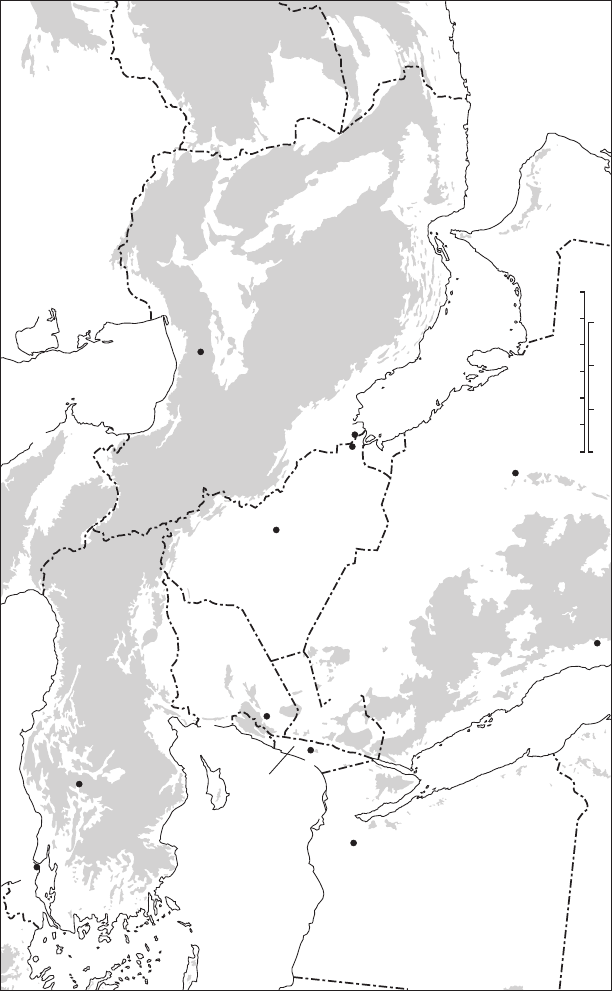
0
0
200 400
100 200 300 miles
600 km
Mecca
Riyadh
Basra
Abadan
Baghdad
Jerusalem
Cairo
Constantinople
Damascus
Tehran
SOVIET UNION
Russian control restored
1920–1921
British Informal Protectorate
1919–1921
AFGHANISTAN
INDIA
IRAN
SAUDI ARABIA
Organized
1902–1926
IRAQ
British Mandate
1920–1932
TRANSJORDAN
British Mandate
1920–1948
EGYPT
British Occupation
1882–1914
British Protectorate
1914–1922
PALESTINE
British Mandate
1920–1948
LEBANON & SYRIA
French Mandate
1920–1946
TURKISH REPUBLIC
Ankara
Source: J. Darwin, After
Tamerlane (Penguin Books, 2007)
Map 10 The Middle East after 1918
377 / Making imperial peace, 1919–1926
the colossal share that Britain took in the partition of Africa brought on
the confrontation the critics had feared. European statesmen, mindful
of the tensions of continental diplomacy, were disinclined to risk much
for ‘light soil’ in Africa, and only France was willing to challenge the
British over Egypt – a challenge that ended in the humiliation of Fashoda
in 1898. The mutual self-interest of the European powers in tranquil-
lising (contemporaries would have said ‘pacifying’) their African pos-
sessions at the lowest cost had all but sterilised the African continent
diplomatically by 1904, the year of the Anglo-French entente. But the
Middle East was a different story.
If Egypt was a salient, the Middle East was a vast arena in the
middle of the world that would have to be held against all comers. Since
antiquity it had been a cockpit of rival imperialisms vying for its trade
and agrarian wealth. It lay open to invasion over land from the north
and east, and by sea from the west and south. There were wide internal
frontiers of desert, marsh and mountain that waged a constant war of
attrition against settled authority in the cultivation zones. Strategically,
it was a quadrilateral. Mastery of the region meant keeping control of
its four great gateways: at the Straits, in North Persia, on the Isthmus
of Suez and round the shores of the Gulf – a task that defeated almost
every conqueror except the Ottomans at the height of their power. Cul-
turally, it was a mosaic of overlapping but impermeable communities,
the residue of successive waves of conquest, conversion and migration
and a reminder of the region’s past as the commercial and intellectual
crossroads of the Old World. In this heartland of Islam, no ruler could
ignore the scribal elite (the ulama) who enjoyed wide popular loyalty,
nor discount the traditions of religious militancy as fierce as any to be
found in Europe. The guardianship of its Holy Places aroused intense
concern among Islamic populations as far away as Senegal and Java.
Economically, it was a region that had once been the junction of global
trade, but had drifted into the relative poverty that intensified the isola-
tion of its remoter hinterlands. Vulnerable and volatile, it was tempting
to enter but hard to keep. It was small wonder that, while they had
agonised over its strategic fate, no British government since 1800 toyed
more than briefly with the idea of empire in the Middle East.
It was a measure of how far they had been driven from the
old assumptions of imperial defence that British leaders could agree by
mid-1918 that without Middle Eastern supremacy their world-system
would collapse. In the year that followed, British policy was inspired by
378 / ‘The great liner is sinking’
a grand design of which Lord Curzon was the principal architect. A for-
mer Viceroy, Curzon was chairman of the War Cabinet’s Eastern Com-
mittee. His knowledge of the region was unmatched (but not unchal-
lenged) by his ministerial colleagues. He was determined to exploit the
twist of fate that had delivered the Middle East into British hands, for
(or so he thought) it was the region in whose turbulent politics lay
the most important key to imperial safety. ‘You ask’, he lectured the
Eastern Committee, ‘why should England do this? Why should Great
Britain push herself out in these directions? Of course the answer is
obvious – India.’
47
Protecting India required the exclusion of any other
great power from Southwest Asia. But it did not mean the wholesale
extension of colonial rule. Curzon’s preference was for ‘native states’:
local autonomy for Arabs (and Kurds) modelled on the princely states
in India.
48
What mattered most was a proper settlement for Turkey and
Persia. Curzon was convinced that Ottoman Turkey must be cut down
to size, to demolish its pre-war status in the Islamic world and destroy
forever the power it had used with such deadly effect against Britain: its
control of the Straits. Denied their old leverage in European diplomacy
(command of the Straits), and restricted to their Anatolian homeland,
the Turks could do little harm. In the case of Persia, against whose dom-
ination by Russia he had warned so vociferously before 1914, Curzon’s
plan was to bind the shah’s government in a treaty that exchanged aid
for influence. Teheran’s grip would be tightened on its unruly provinces
with British help. The shah’s ministers would defer to British ‘advice’.
The deal would be sweetened by a British loan. To insure against dis-
ruption from the north, a military presence would be maintained in the
Caucasus and Trans-Caspia where post-imperial states were emerging
from the wreck of Tsarism. And, needless to say, the whole vast scope
of Curzon’s plan assumed implicitly that the citadel of Britain’s Middle
Eastern power, her primacy in Egypt, would be even safer and stronger
than before the war.
But Curzon’s grand design was flawed from the outset. It
assumed that the French could be denied what they had been promised
in 1916: control of ‘Syria’ – a loosely defined region extending from the
Lebanon coast to the Persian border. Clemenceau made it plain that
British bad faith in the Middle East would cost it dearly in Europe,
where French cooperation in treaty-making was vital: in September
1919, the British gave way. Curzon had assumed that the collapse of
Tsarism would prevent, or postpone indefinitely, the revival of Russian
379 / Making imperial peace, 1919–1926
influence in the Caucasus and Central Asia. By the middle of 1920,
the Red Army had shown that this was a pipe-dream with immediate
repercussions on the Anglo-Persian treaty, as yet unratified.
49
The easy
monopoly of great power influence on which Curzon had counted thus
rapidly dissolved. Even in the spheres under British control, his native
state formula ran into the ground. There was no question of reversing
the Balfour Declaration (its author was a senior member of the Lloyd
George government) with its promise of a Jewish ‘home’. That meant
that in ‘Palestine’ – another ill-defined zone – Arab autonomy would
have to be curtailed to protect the experiment in Jewish colonisation.
Meanwhile, in Mesopotamia (modern Iraq), military occupation by an
Anglo-Indian army was mutating into a form of government loosely
modelled on an Indian province (not a native state), in which a cadre
of British officials began to rule local communities much as they might
have done in the Punjab. Indirect command of the Eurasian crossroads,
cheap, flexible, cooperative, began to vanish like a mirage. But, on the
other hand, there was no question of building a Middle East Raj in the
way that the British had made an Indian empire: with its own army,
administration, ideology and political tradition. Quite apart from the
promise of accountability to an incipient League of Nations – under
the mandate system – any such evolution was completely blocked by
the harsh realities of financial control. In the Middle East, the main
cost of such Raj-making would have fallen not on the locals as had
happened in India, but on London and the taxpayers at home. But,
there, the demand for demobilisation and retrenchment grew stronger
every week.
In these conditions, local resistance to foreign rule spread
rapidly across the region. In the Arab lands it was centred on Damascus,
where a pre-war movement had sprung up among the notables against
the growing assertiveness of the Turkish authorities.
50
Here, the nota-
bles looked forward to an independent ‘Greater Syria’, uniting much
of the Fertile Crescent (including Palestine) in an Arab state of which
the Hashemite prince Feisal would be the nominal head.
51
French over-
rule and a ‘Jewish commonwealth’ in Palestine were fiercely rejected.
As the hope of freedom receded, and the French mandate grew more
certain, the Syrian leaders issued a despairing proclamation of Arab
independence in Syria, Lebanon, Palestine and Iraq. Four months later,
the French army scattered a Syrian militia and occupied Damascus.
In Palestine, where late Ottoman rule had strengthened the position
380 / ‘The great liner is sinking’
of the Arab notables in Jerusalem and extended their influence on the
countryside,
52
the prospect of colonial-style rule and sharing power
with a Jewish settlement was even less welcome. A ‘Palestine Arab
Congress’ voted in favour of joining Syria in 1919, there were rumours
of armed resistance and in the spring of 1920 protests against the
Balfour Declaration spilled over into violence against Jews. Worst of all
(from the British point of view) was Iraq. By mid-1920, the occupation
regime was surrounded by enemies. In the Kurdish north, its authority
was fragile. In Baghdad, the Sunni notables, encouraged from Damas-
cus, plotted against rulers who excluded them from power even more
than the Ottomans.
53
In the tribal zones of the centre and south, where
much of the war had been fought, the British were resented as the gath-
erers of tax and the breakers of custom. In July, the revolt broke out
in earnest. At the end of the month, Arnold Wilson, the Civil Commis-
sioner, told London that ‘our military weakness is so extreme’ that the
Euphrates valley might have to be abandoned. ‘An Arab state . . . may
yet come to pass but it will be by revolution not by evolution.’
54
The
British garrison of 35,000 (its bayonet strength) was pinned down,
unable to move beyond the railheads except in a force too small to
be safe.
55
As their losses rose and costs soared, ministers in London
began a furious debate on whether to pull back to Basra in the south
or withdraw from the country altogether.
For the British, 1920 was a year of crises. With an army that
had shrunk dramatically to its pre-war size of around 200,000 men,
they faced a whole clutch of emergencies: in India, where Gandhi’s
non-cooperation movement was in full swing; in Ireland, against the
IRA; and at home, where the sudden end of the post-war boom brought
a wave of industrial unrest. Nor were their troubles in the Middle East
confined to the Arabs. With its garrisons, camps and aerodromes, and
the Canal, Egypt was the castle-keep of British power, the ‘Clapham
Junction’ (as the clich
´
e had it) of imperial communications, more impor-
tant than ever with the post-war rise of Japanese sea-power. But, in
March 1919, it too had burst out in revolt. The spark was lit by
the refusal of the British to allow a delegation of Egyptian politicians
(organised into the Wafd or ‘delegation’ party) to appeal for indepen-
dence at the peace conference in Paris and by the arrest of the Wafd
leader, Sa’ad Zaghlul. The revolt of the notables had been triggered by
fear that the British were planning a constitutional ‘reform’ in which
local influence would be cut down in favour of foreign interests, and
381 / Making imperial peace, 1919–1926
was almost certainly encouraged by the Egyptian ruler, the Sultan.
56
Much more alarming was the revolt of the fellahin, embittered by the
burdens and depredations of a war economy, and the violent unrest
in the towns, where the Wafd made common cause with students and
organised labour. In the spring of 1919, the British briefly faced an
insurrection that cut off their communications (sixty-seven rail stations
were destroyed, lines blocked, telegraph wires cut), made travel per-
ilous and brought to mind hideous images of the Indian Mutiny. But,
even when the rural dust had settled, they found themselves baffled
by a political boycott. No Egyptian minister would (or dared) take
office without insisting on the promise of independence. The British
could stay on but they would face all the risks of violent confronta-
tion (orchestrated at will by local politicians) and all the costs of an
inflated garrison. A fruitless series of negotiations dragged on through
1920 and 1921. As if that were not enough, the early months of 1919
brought warning that the keystone of Curzon’s geostrategic plan – the
careful containment of post-war Turkey – was far from secure. On
19 May 1919, Mustapha Kemal (Ataturk) landed at Samsun on the
Black Sea coast to rally Turkish national resistance against the Greeks
and Armenians and their Great Power backers. In little more than a
year, the danger of a great Turkish recovery drove London into a reluc-
tant, and ultimately disastrous, alliance with the Greeks to destroy
Ataturk before he could pull down the flimsy structure of its post-war
imperium.
The scale of resistance was impressive, and at times it induced
something near panic among British leaders. They found themselves
trapped between an inglorious scuttle (throwing away all the gains of
their eastern triumph) and the escalating cost of military occupation –
at a moment when the reduction of their post-war spending had become
extremely urgent. By the end of 1920, their na
¨
ıve confidence in a cheap
and convenient regional primacy had given way to anxiety, impatience
and uncertainty. They were saved in part by the divisions and weak-
nesses of the nationalisms they feared. Significantly, the toughest was
Mustapha Kemal’s, forged in the sufferings of wartime Anatolia and
infused with the bitterness between the Muslim ‘Turks’ and the Chris-
tian ‘Greeks’, with whom they fought for control over Asia Minor.
57
In the Arab lands it was a different story. The notables in Damascus,
Baghdad and Jerusalem had no common programme. In Baghdad and
Jerusalem they wanted their own state, not one ruled from Damascus.
382 / ‘The great liner is sinking’
As provincial elites of the Ottoman Empire, they knew little of inter-
national politics and depended upon the Hashemite princes, Feisal and
Abdullah, as their intermediaries with the imperial powers. Socially,
they were deeply conservative and recoiled from the risks of popular
politics. They were hobbled by religious and ethnic divisions: there was
little chance of the Sunni notables of Baghdad making common cause
with the Shia rebels along the Euphrates, still less with the Kurds in
the north. In Egypt, the same theme of division was played out in dif-
ferent ways. There too the Wafdist leaders (drawn largely from the
landowning class) refrained from encouraging a further round of the
rural violence that had shocked the British in 1919. But the real check
to a unified movement was the power of the court and the dynasty.
The sultan (soon to be the king) was as keen as the Wafd to reduce
the overweening power the British had assumed over Egypt. But he
was equally keen that the beneficiaries of a British retreat should not
be the Wafd, whose open purpose was to reduce the monarchy to
a constitutional figurehead. His influence was mobilised to frustrate
the unity that might have forced the British into the concessions that
Zaghlul had demanded from them: full diplomatic freedom abroad and
the withdrawal of the British garrison from Cairo and Alexandria to a
cantonment near the Canal. Factional politics in Egypt between court
and country and within the Wafd itself produced a stalemate. No group
would or could sign a treaty with the British. But nor would the British
give up their control of Egypt’s external relations, their role as ‘trustee’
of foreign interests in the country, or their political grip on Egypt’s own
colony, the Sudan.
58
From mid-1921 onwards, the British traced a tortuous path
towards compromise. In Iraq, Churchill (who as Colonial Secretary had
assumed responsibility for Britain’s two Arab mandates) found in Feisal
a ruler-in-waiting (he had been driven out of Syria) who was acceptable
to the Sunni notables in Baghdad, and a seemingly reliable ally against
the threatened reflux of Turkish influence. After an ‘election’ in which
official influence was thrown openly on his side and his main local rival
was unceremoniously deported, he was declared the choice of the Iraqi
people. But, when it came to the treaty by which the new Iraq govern-
ment was to accept the mandate, Britain’s diplomatic supervision and a
military presence (in the form of bases), Feisal proved alarmingly obdu-
rate. It took a Kurdish revolt in the north, new signs of Shia unrest, and
Feisal’s own temporary retirement with political appendicitis (a local
383 / Making imperial peace, 1919–1926
variant of the diplomatic cold) before the anti-treaty party in Baghdad
was repressed and an agreement endorsing the mandate and Britain’s
supervisory rights was eventually signed in October 1922. In Pales-
tine, Arab resentment was partially appeased by amputating its eastern
zone as a separate mandate of Trans-Jordan and installing Abdullah,
Feisal’s elder brother, there as king; and by conceding, through the
creation of the Supreme Muslim Council, that Palestine proper would
be ruled on a communal, not a unitary, basis. The Council became
the instrument through which the Jerusalem notables would exert their
influence over the Arab population. In Egypt, the logjam was eventually
broken by the British High Commissioner, Lord Allenby, the victor of
Megiddo. Allenby scrapped the treaty that London had demanded from
the Egyptian politicians, and declared unilaterally that Egypt was now
‘independent’. The protectorate of 1914 was terminated. British super-
vision would be confined henceforth to Egyptian diplomacy (it would
have to ‘conform’ to Britain’s), the safety of foreign nationals (some
250,000, mainly Greeks, who enjoyed extra-territorial privileges) and
the Sudan. With the ambiguous, and perhaps disingenuous, promise
that the Residency would no longer interfere in local politics, an uneasy
calm descended upon Anglo-Egyptian relations.
These compromises were necessary for regional tranquillity
(and a reduction of Britain’s military burden), but they were not suf-
ficient. British influence in the Middle East (if it was not to be at pro-
hibitive cost) still turned on a settlement of the Turkish question. A
resurgent and nationalist Turkey, in control of the Straits, bent on
recovering its old Arab provinces, and enjoying the open support of
Russia and the covert sympathy of France: this was the nightmare sce-
nario that had led Curzon and Lloyd George to back the onslaught
of the Greeks on the Kemalist forces in Anatolia. In September 1922,
when the Greeks were routed, the nightmare seemed close to reality.
At Chanak, on the Straits, a shooting war between British and Turks
was only averted by the promise of a conference. When it convened
at Lausanne, Curzon (who had survived the fall of the Lloyd George
coalition in October after the Conservative rebellion occasioned in part
by the costs and risks of its eastern policy) faced the Turkish demand
for the restoration of the Straits, Istanbul and Thrace, and the return
of the Mosul vilayet, the northern and predominantly Kurdish third of
Iraq. Worse still, while Turkish claims were backed by Russia, Curzon
gained little help from France. It was a critical moment. To give up
384 / ‘The great liner is sinking’
Mosul, warned the Colonial Office, would mean the collapse of Iraq.
59
But, without peace with the Turks, the cost of its defence would be
unacceptably high. To give back control over the Straits would hand
Turkey the lever for the demolition of any Middle East settlement. Yet
Curzon’s hand was stronger than it looked. The Turks were reluctant to
fight their way into Gallipoli and Thrace, and nervous of embracing the
old enemy to the north. After seven months of diplomacy, prolonged
by the deafness, sometimes feigned, of the Turkish delegate, the treaty
of Lausanne was signed. The Turks regained Eastern Thrace, and full
control over Istanbul and Asia Minor. In return, they agreed that the
Straits should be permanently open and their shores demilitarised, a
concession that turned the Black Sea (in the bitter phrase of a Russian
delegate) into ‘an English lake’.
60
But their real concession was to agree
to reserve the dispute over Mosul for arbitration, a vital breathing space
for the fragile mandate. It was a turning point.
In the end, geopolitics had been the decisive factor in the Mid-
dle East peace. By 1921, Russian power had revived enough to make
coercing Turkey impossible and to ruin Curzon’s hopes of imposing his
semi-protectorate in Persia. But not enough to dissuade the two ‘strong
men’ who came to power there from seeking an accommodation with
Britain. Reza Pasha in Persia, like Kemal in Turkey, could exploit the
new balance of power to restore the independence that had seemed all
but lost in 1919. But he was not strong enough to exclude British influ-
ence or expel British interests, whether strategic or economic (like the
Anglo-Persian Oil Company’s concession in southwest Persia).
61
Both
Turkey and Persia became buffer states, poised uneasily between Rus-
sian power to the north and British to the south.
62
But it was enough for
British purposes. On the British side, their Middle East policy was gov-
erned by three powerful assumptions. First, that local leaders, Egyptian
or Arab, were too realistic to expect a ‘real’ freedom and that, shrewdly
managed, the ‘amour propre’ of local nationalisms would not conflict
with their imperial interests. It is quite possible, remarked Lord Mil-
ner hopefully, during his abortive attempt at an Egyptian settlement,
‘that what we mean by “Protectorate” is not really incompatible with
what they mean by “Independence”’.
63
Secondly, that British objects
were best obtained by indirect methods and informal control. ‘These
Eastern peoples with whom we have to ride pillion’, said Curzon with
viceregal condescension, ‘have different seats from Europeans, and it
does not seem to me to matter very much whether we put them on the