
He M., Petoukhov S. Mathematics of Bioinformatics: Theory, Methods and Applications
Подождите немного. Документ загружается.

GENETIC MATRICES AND MATRIX ALGEBRAS 213
can replace each codon by its anticodon in the genomatrices
CA UG;
[]
()
123
3
,
CA UG;
[]
()
231
3
,
CA UG;
[]
()
312
3
,
CA UG;
[]
()
132
3
,
CA UG;
[]
()
213
3
,
CA UG;
[]
()
321
3
.
Six new genomatrices appear in this case. Have they any connection with
bipolar algebras? This question has a positive answer. The multiplication tables
for the basic elements of bipolar matrices, connected with these new genoma-
trices, are identical to the multiplication tables for the initial genomatrices.
In other words, the complementary transformations of the genomatrices
CA UG;
[]
()
123
3
,
CA UG;
[]
()
231
3
,
CA UG;
[]
()
312
3
,
CA UG;
[]
()
132
3
,
CA UG;
[]
()
213
3
,
and
CA UG;
[]
()
321
3
change the matrix forms of presentation of the initial YY
8
numbers only and do not change the bipolar algebras of the genomatrices. But
if we consider the transposed matrices which are generated from the matrices
YY
8
123
()
CAUG
,
YY
8
231
()
CAUG
, and so on, they correspond to new octet bipolar
algebras.
Matrix genetics has already proved its usefulness in bioinformatics, but
in our opinion, we are in the very beginning stages of exporing its rich
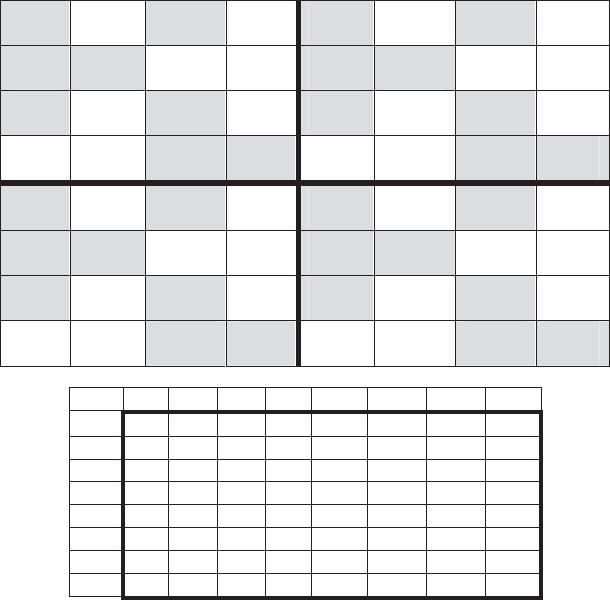
FIGURE 8.30 Top: the bipolar matrix ( YY
8
)
231
, which corresponds to the genomatrix
CA UG;
[]
()
231
3
. Bottom: its multiplication table of the eight basic elements.
f
0
f
1
f
2
f
3
m
4
m
5
m
6
m
7
f
0
f
0
f
1
f
2
f
3
m
4
m
5
m
6
m
7
f
1
f
1
-f
0
-f
3
f
2
m
5
-m
4
-m
7
m
6
f
2
f
2
f
3
f
0
f
1
m
6
m
7
m
4
m
5
f
3
f
3
-f
2
-f
1
f
0
m
7
-m
6
-m
5
m
4
m
4
f
0
f
1
f
2
f
3
m
4
m
5
m
6
m
7
m
5
f
1
-f
0
-f
3
f
2
m
5
-m
4
-m
7
m
6
m
6
f
2
f
3
f
0
f
1
m
6
m
7
m
4
m
5
m
7
f
3
-f
2
-f
1
f
0
m
7
-m
6
-m
5
m
4
CCC
x
0
CAC
-x
2
ACC
x
4
AAC
-x
6
CCA
x
1
CAA
-x
3
ACA
x
5
AAA
-x
7
CUC
x
2
CGC
x
0
AUC
-x
6
AGC
-x
4
CUA
x
3
CGA
x
1
AUA
-x
7
AGA
-x
5
UCC
x
4
UAC
-x
6
GCC
x
0
GAC
-x
2
UCA
x
5
UAA
-x
7
GCA
x
1
GAA
-x
3
UUC
-x
6
UGC
-x
4
GUC
x
2
GGC
x
0
UUA
-x
7
UGA
-x
5
GUA
x
3
GGA
x
1
CCU
x
0
CAU
-x
2
ACU
x
4
AAU
-x
6
CCG
x
1
CAG
-x
3
ACG
x
5
AAG
-x
7
CUU
x
2
CGU
x
0
AUU
-x
6
AGU
-x
4
CUG
x
3
CGG
x
1
AUG
-x
7
AGG
-x
5
UCU
x
4
UAU
-x
6
GCU
x
0
GAU
-x
2
UCG
x
5
UAG
-x
7
GCG
x
1
GAG
-x
3
UUU
-x
6
UGU
-x
4
GUU
x
2
GGU
x
0
UUG
-x
7
UGG
-x
5
GUG
x
3
GGG
x
1
214 MATRIX GENETICS, HADAMARD MATRICES, AND ALGEBRAIC BIOLOGY
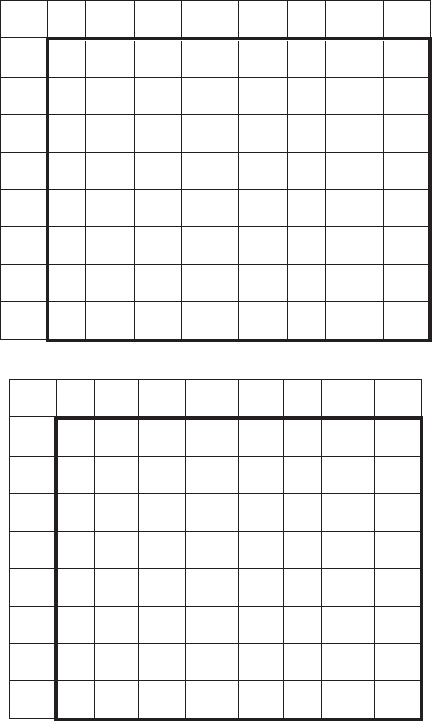
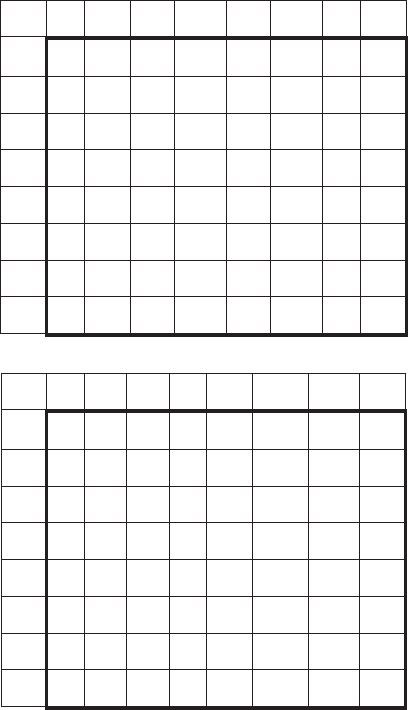
FIGURE 8.31 Multiplication tables of the basic elements of the octet bipolar alge-
bras ( YY
8
)
312
, ( YY
8
)
132
.
f
0
f
0
f
1
m
2
m
3
f
4
f
5
m
6
m
7
f
1
f
1
f
0
m
3
m
2
f
5
f
4
m
7
m
6
m
2
f
0
f
1
m
2
m
3
f
4
f
5
m
6
m
7
m
3
f
1
f
0
m
3
m
2
f
5
f
4
m
7
m
6
f
4
f
4
- f
5
m
6
- m
7
-f
0
f
1
-m
2
m
3
f
5
f
5
- f
4
m
7
- m
6
- f
1
f
0
- m
3
m
2
m
6
f
4
- f
5
m
6
- m
7
-f
0
f
1
-m
2
m
3
m
7
f
5
- f
4
m
7
- m
6
- f
1
f
0
- m
3
m
2
f
0
f
1
m
2
m
3
f
4
f
5
m
6
m
7
f
0
f
0
f
1
m
2
m
3
f
4
f
5
m
6
m
7
f
1
f
1
-f
0
m
3
-m
2
-f
5
f
4
-m
7
m
6
m
2
f
0
f
1
m
2
m
3
f
4
f
5
m6 m
7
m
3
f
1
-f
0
m
3
-m
2
-f
5
f
4
-m
7
m
6
f
4
f
4
f
5
m
6
m
7
f
0
f
1
m
2
m
3
f
5
f
5
-f
4
m
7
-m
6
-f
1
f
0
-m
3
m
2
m
6
f
4
f
5
m
6
m
7
f
0
f
1
m
2
m
3
m
7
f
5
-f
4
m
7
-m
6
-f
1
f
0
-m
3
m
2
f
0
f
1
m
2
m
3
f
4
f
5
m
6
m
7
opportunities. Below we give an example of one of the results that has already
been arrived at in the fi eld of matrix genetics.
8.5 SOME RULES OF EVOLUTION OF VARIANTS OF THE
GENETIC CODE
Modern science knows many variants (or dialects) of the genetic code, data
about which are shown on NCBI ’ s Web site, http://www.ncbi.nlm.nih.gov/
Taxonomy/Utils/wprintgc.cgi . Seventeen variants (or dialects) of the genetic
SOME RULES OF EVOLUTION OF VARIANTS OF THE GENETIC CODE 215
f
0
m
1
f
2
m
3
f
4
m
5
f
6
m
7
f
0
f
0
m
1
f
2
m
3
f
4
m
5
f
6
m
7
m
1
f
0
m
1
f
2
m
3
f
4
m
5
f
6
m
7
f
2
f
2
m
3
f
0
m
1
f
6
m
7
f
4
m
5
m
3
f
2
m
3
f
0
m
1
f
6
m
7
f
4
m
5
m
5
f
4
m
5
-f
6
-m
7
-f
0
-m
1
f
2
m
3
m
5
f
4
m
5
-f
6
-m
7
-f
0
-m
1
f
2
m
3
f
6
f
6
m
7
-f
4
-m
5
-f
2
-m
3
f
0
m
1
m
7
f
6
m
7
-f
4
-m
5
-f
2
-m
3
f
0
m
1
f
0
f
1
f
2
f
3
m
4
m
5
m
6
m
7
f
0
f
0
f
1
f
2
f
3
m
4
m
5
m
6
m
7
f
1
f
1
f
0
f
3
f
2
m
5
m
4
m
7
m
6
f
2
f
2
-f
3
-f
0
f
1
m
6
-m
7
-m
4
m
5
f
3
f
3
-f
2
-f
1
f
0
m
7
- m
6
-m
5
m
4
m
4
f
0
f
1
f
2
f
3
m
4
m
5
m
6
m
7
m
5
f
1
f
0
f
3
f
2
m
5
m
4
m
7
m
6
m
6
f
2
-f
3
-f
0
f
1
m
6
-m
7
-m
4
m
5
m
7
f
3
-f
2
-f
1
f
0
m
7
-m
6
-m
5
m
4
FIGURE 8.31 Continued.
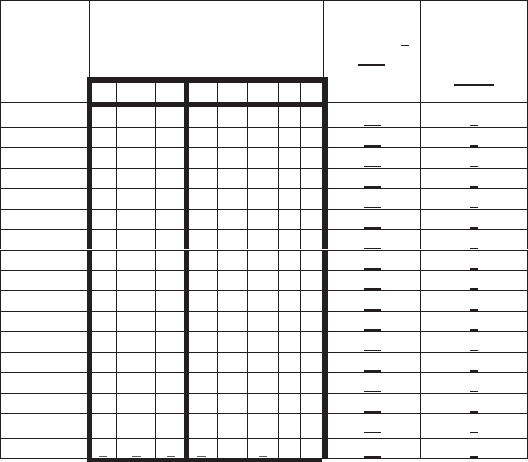
code exist, which differ one from another by their numbers of degeneracy
(NDs; see Figure 8.32 ). By defi nition, the numbers of degeneracy of an amino
acid are equal to the number of triplets that encode this amino acid in the
dialect considered. Numbers of degeneracy, which are observed in the dialects,
are equal to numbers from 1 to 8. For example, the fi rst dialect of the genetic
code (the Vertebrate Mitochondrial Code) in Figure 8.32 possesses 12 amino
acids, for which the number of degeneracy is 2 (Asn, Asp, Cys, Gln, Glu, His,
Ile, Lys, Met, Phe, Trp, Tyr); six amino acids, for which the number of degen-
eracy is 4 (Ala, Arg, Gly, Pro, Thr, Val), and two amino acids, for which the
number of degeneracy is 6 (Leu, Ser).
One can see from the genomatrix in Figure 8.2 that in the Vertebrate
Mitochondrial Code, the set of 20 amino acids is divided into two subsets: the
( YY
8
)
213
, and ( YY
8
)
321
.
216 MATRIX GENETICS, HADAMARD MATRICES, AND ALGEBRAIC BIOLOGY
subset of the eight high - degeneracy amino acids, which are coded by four or
more triplets (Ala, Arg, Gly, Leu, Pro, Ser, Thr, Val), and the subset of 12 low -
degeneracy amino acids, which are coded by three or fewer triplets (Asn, Asp,
Cys, Gln, Glu, His, Ile, Lys, Met, Phe, Trp, Tyr). This division corresponds to the
division of the set of cells of the bipolar matrix YY
8
into two subsets: the subset
of cells with the sign + and the subset of cells with the sign − (Figures 8.25 and
8.26 ).
We consider this dialect, which is shown in Figure 8.32 as number 1 in the
fi rst column, as the basic dialect with which to compare other dialects. Let us
analyze the 17 dialects of the genetic code to reveal the possible phenomeno-
logical rules and numerical invariants of evolution of the genetic code.
At fi rst it seems that in Figure 8.32 the distribution of numbers of degen-
eracy in a set of the 17 dialects of the genetic codes is chaotic on the whole.
But this impression disappears if one divides the set of 20 amino acids into
the two subsets that were mentioned above in accordance with the genomatrix
in Figure 8.2 : the subset of low - degeneracy amino acids, each of which is
encoded by three or fewer triplets in the Vertebrate Mitochondrial Code, and
FIGURE 8.32 The 17 dialects of the genetic code and distributions of their numbers
of degeneracy (ND) among 20 amino acids (AA). The two columns on the right show
quantities of low and high - degenerate acids ( Σ AA). Bold frames mark two categories
of numbers of the degeneracy: from 1 to 3 and from 4 to 8 (Petoukhov, 2001a,b ) . (Data
from http://www.ncbi.nlm.nih.gov/Taxonomy/Utils/wprintgc.cgi .)
to 3
ND from
4 to 8
1 2 3 4 5 6 7 8
1 12 6 2
12
8
2 2 9 1 5 3
12
8
3 1 10 1 5 3
12
8
4 12 6 1 1
12
8
5 2 8 2 6 1 1
12
8
6 2 8 2 5 3
12
8
7 2 9 1 5 3
12
8
8 12 5 3
12
8
9 2 7 3 6 1 1
12
8
10 2 8 2 5 3
12
8
11 2 9 1 5 2 1
12
8
12 1 10 1 6 1 1
12
8
13 2 9 1 5 1 1 1
12
8
14 2 9 1 5 1 2
12
8
15 2 9 1 5 1 1 1
12
8
16 13 5 1 1
13
7
17 2 8 1 6 3
11
9
Dialects
Distribution of numbers of
degeneracy from 1 to 8
among 20 AA
ΣAA with
ND from 1
ΣAA
with
SOME RULES OF EVOLUTION OF VARIANTS OF THE GENETIC CODE 217
the subset of high - degeneracy amino acids, each of which is encoded by four
or more triplets in the same basic dialect. Such a division reveals hidden regu-
larities. Other types of division of the set of 20 amino acids into two subsets
does not reveal hidden regularities.
The numbers of the dialects of the genetic code in Figure 8.32 correspond
to the following dialects: (1) the Vertebrate Mitochondrial Code; (2) the
Standard Code; (3) the Mold, Protozoan, and Coelenterate Mitochondrial
Code and the Mycoplasma/Spiroplasma Code; (4) the Invertebrate
Mitochondrial Code; (5) the Echinoderm and Flatworm Mitochondrial Code;
(6) the Euplotid Nuclear Code; (7) the Bacterial and Plant Plastid Code; (8)
the Ascidian Mitochondrial Code; (9) the Alternative Flatworm Mitochondrial
Code; (10) the Blepharisma Nuclear Code; (11) the Chlorophycean
Mitochondrial Code; (12) the Trematode Mitochondrial Code; (13) the
Scenedesmus Obliquus Mitochondrial Code; (14) the Thraustochytrium
Mitochondrial Code; (15) the Alternative Yeast Nuclear Code; (16) the Yeast
Mitochondrial Code; and (17) the Ciliate, Dasycladacean and Hexamita
Nuclear Code.
The data in Figure 8.32 permit us to formulate the following phenomeno-
logical rules (Petoukhov, 2001a,b ) .
Phenomenological Rule 1 In the dialects of the genetic code, the set of 20
amino acids contains two opposite subsets: the fi rst consisting of 12 low -
degeneracy amino acids (with their numbers of degeneracy from 1 to 3), and
the second consisting of eight high - degeneracy amino acids (with their numbers
of degeneracy from 4 to 8).
As the authors conclude, this rule about the canonical ratio 12 : 8 for two
categories of amino acids holds true in nature without exception for dialects
of the genetic code of autotrophic organisms. These types of organisms play
the main role in biogeochemical cycles. But this rule has small exceptions in
two cases of heterotrophic organisms in a form of minimal numeric shifting
from the regular ratio 12 : 8 to the nearest integer ratios: The Yeast Mitochondrial
Code possesses the ratio 13 : 7 for these two categories of amino acids, and the
Ciliate, Dasycladacean and Hexamita Nuclear Code possesses the ratio 11 : 9.
These nonstandard ratios encircle the canonical ratio 12 : 8 from opposing sides
of the numerical axis. These nonstandard ratios demonstrate additionally the
main role of the canonical ratio 12 : 8 as that center, around which minimal
numeric fl uctuations exist.
The data about evolution of the genetic code also demonstrate the existence
of the following rule about canonical subsets of low - and high - degeneracy
amino acids.
Phenomenological Rule 2 If a triplet encodes different amino acids in dif-
ferent genetic codes, these amino acids belong to the same canonical subset
of amino acids. In other words, it is practically forbidden for those triplets that
218 MATRIX GENETICS, HADAMARD MATRICES, AND ALGEBRAIC BIOLOGY
encode amino acids from one canonical subset of degeneracy to pass into the
group of triplets during biological evolution, which encode amino acids from
another canonical subset.
A single exception to this rule exists: The triplet UAG can encode amino
acids Leu or Gln in the different canonical subsets. The rule says nothing about
stop codons, so it does not consider those evolutionary cases when triplets that
encode stop codons (or amino acids) in one genetic code begin to encode
amino acids (or stop codons, respectively) in another code.
The phenomenological rules described above testify that two independent
branches of evolution of the genetic code exist in billions of biological species:
one branch for canonical subsets of high - degeneracy amino acids, and another
branch for canonical subsets of low - degeneracy amino acids. These evolution-
ary branches within the consolidated code system can be compared with a
parallel evolution of male and female organisms within a frame of one biologi-
cal species. It reveals simultaneously that nature realizes an association of two
very different subsets of 8 and 12 amino acids in the set of 20 amino acids. The
matrix genetics thereby reveals the existence of such an internal structure in
the set of 20 amino acids, which possesses the invariant properties in the evolu-
tion of the genetic code. One can fi nd additional details about such phenom-
enological rules of the dialects in the literature (Petoukhov, 2001a,b , 2008a ;
Petoukhov and He, 2009 ) .
During evolution of the genetic code, only some triplets change their code —
meaning in the different dialects in comparison with the basic case of the
Vertebrate Mitochondria Code in the sense that they begin to encode other
amino acids or stop signals. What are the limitations utilized by nature in its
choice of such changeable (or evolutional) triplets? Has the matrix disposition
of these variable triplets any relation to the YY - coordinates x
0
, x
1
, … , x
7
of
the matrix YY
8
(Figures 8.25 and 8.26 ) and to their disposition in the genoma-
trix? Or do the bipolar coordinates have no relation to evolution of the genetic
code and to systemic disposition of the variable triplets in the genomatrix
[C A; U G]
(3)
?
If such a relation is discovered, it gives additional evidence that the genetic
octet bipolar algebra can be utilized as the adequate model of the genetic code
or as the algebraic basis of the genetic code (the algebraic precode). It can be
useful in tasks of sorting, putting in order, and in a deeper understanding of
the genetic language. It can help to create new effective methods of informa-
tion processing for many applied tasks as well. The appropriate algebraic
model of the genetic code should give opportunities to deduce some evolu-
tional peculiarities of the genetic code from such a fundamental mathematical
system.
The results of a corresponding comparison analysis have shown the
expressed connection between the disposition of the variable triplets in the
genomatrix [C A; U G]
(3)
and disposition of the YY - coordinates x
0
, x
1
, … , x
7
SOME RULES OF EVOLUTION OF VARIANTS OF THE GENETIC CODE 219
together with their signs, + and − , in the matrix YY
8
. The results obtained lead
to a few phenomenological rules of evolution of the dialects of the genetic
code on the basis of the genetic octet bipolar algebra. In other words, the
scheme, which is defi ned by this matrix algebra, holds true in the evolution of
the genetic code in some signifi cant aspects. These results give additional evi-
dence of the appropriateness of such in each iteration of a population of an
algebraic approach in bioinformatics.
The matrix form of presentation of members of the genetic octet bipolar
algebra (Figures 8.25 and 8.26 ) contains 32 components with the sign + and
32 components with the sign − . The matrix disposition of the components with
the sign + fi ts the disposition of the 32 black triplets. These black triplets
encode eight kinds of high - degeneracy amino acids (Ala, Arg, Gly, Leu, Pro,
Ser, Thr, Val); the other 12 amino acids are encoded by the white triplets and
they are low - degeneracy acids. In the case of the Vertebrate Mitochondrial
Code, the matrix disposition of these two canonical subsets fi ts the matrix
disposition of the YY - coordinates with the signs + and − correspondingly.
Now we present additional phenomenological rules, which were discovered
from the viewpoint of the octet bipolar algebra YY
8
and which are additional
evidence of the adequacy of this algebra for the genetic code and its evolution-
ary peculiarities. What are the formal attributes that are utilized by nature in
its choice of evolutional changeable triplets from the set of 64 triplets? How
are these triplets and their appropriate amino acids disposed in the genomatrix
[C A; U G]
(3)
(Figures 8.25 and 8.26 )? Has the matrix disposition of these
variable triplets any relation to the YY - coordinates x
0
, x
1
, … , x
7
and to their
disposition in the genomatrix? Can these variable triplets be associated natu-
rally with the groups of the purine triplets, pyrimidine triplets, and YY -
coordinates? Or do the YY - coordinates have no relation to evolution of the
genetic code and to a systemic disposition of the variable triplets in the geno-
matrix [C A; U G]
(3)
? In this section we continue the comparison analysis to
answer such questions.
Table 8.1 includes data for analyzing these questions. The Vertebrate
Mitochondrial Code (code 1) is utilized as the standard for comparison of code
meanings of triplets in different dialects. The second tabular column shows
those changeable triplets, which possess another code meaning (relative to
their meaning in dialect 1) in the dialect named in the fi rst column. The name
of the encoded amino acid or stop codon is given near each triplet in the
second column in connection with the appropriate dialect named in the fi rst
column. Brackets in the second column contain the amino acid or stop codon
that is encoded by this triplet in dialect 1. Each row of the second column is
fi nished by the YY - coordinate, which is disposed together with this triplet in
the same cell of the genomatrix in Figure 8.26 . The third column displays data
about start codons, which defi ne the beginning of protein synthesis in the
dialect considered. An appropriate YY - coordinate is shown for each start
codon as well.

220 MATRIX GENETICS, HADAMARD MATRICES, AND ALGEBRAIC BIOLOGY
TABLE 8.1 Changeable Triplets and Start Codons in the Dialects of the
Genetic Code
Dialect of the Genetic Code Changeable Triplets Start Codons
1. The Vertebrate
Mitochondrial Code
A U U , − x
6
AUC, − x
6
AUA, − x
7
AUG, − x
7
GUG, x
3
2. The Standard Code
UGA, Stop (Trp), − x
5
AGG, Arg (Stop), − x
5
AGA, Arg (Stop), − x
5
AUA, Ile (Met), − x
7
UUG, − x
7
CUG, x
3
AUG, − x
7
3. The Mold, Protozoan, and
Coelenterate
Mitochondrial Code and
the Mycoplasma/
Spiroplasma Code
AGG, Arg (Stop), − x
5
AGA, Arg (Stop), − x
5
AUA, Ile (Met), − x
7
UUG, − x
7
UUA, − x
7
CUG, x
3
AUC, − x
6
AUU, − x
6
AUG, − x
7
AUA, − x
7
GUG, x
3
4. The Invertebrate
Mitochondrial Code
AGG, Ser (Stop), − x
5
AGA, Ser (Stop), − x
5
UUG, − x
7
AUU, − x
6
AUC, − x
6
AUA, − x
7
AUG, − x
7
GUG, x
3
5. The Echinoderm and
Flatworm Mitochondrial
Code
AGG, Ser (Stop), − x
5
AGA, Ser (Stop), − x
5
AUA, Ile (Met), − x
7
AAA, Asn (Lys), − x
7
A U G , − x
7
GUG, x
3
6. The Euplotid Nuclear
Code
UGA, Cys (Trp), − x
5
AGG, Arg (Stop), − x
5
AGA, Arg (Stop), − x
5
AUA, Ile (Met), − x
7
A U G , − x
7
7. The Bacterial and Plant
Plastid Code
UGA, Stop (Trp), − x
5
AGG, Arg (Stop), − x
5
AGA, Arg (Stop), − x
5
AUA, Ile (Met), − x
7
UUG, − x
7
CUG, x
3
AUC, − x
6
AUU, − x
6
AUA, − x
7
AUG, − x
7
8. The Ascidian
Mitochondrial Code
AGG, Gly (Stop), − x
5
AGA, Gly (Stop), − x
5
UUG, − x
7
AUA, − x
7
AUG, − x
7
GUG, x
3
9. The Alternative Flatworm
Mitochondrial Code
UAA, Tyr (Stop), − x
7
AGG, Ser (Stop), − x
5
AGA, Ser (Stop), − x
5
AUA, Ile (Met), − x
7
AAA, Asn (Lys), − x
7
A U G , − x
7

SOME RULES OF EVOLUTION OF VARIANTS OF THE GENETIC CODE 221
Dialect of the Genetic Code Changeable Triplets Start Codons
10. The Blepharisma Nuclear
Code
UGA, Stop (Trp), − x
5
UAG, Gln (Stop), − x
7
AGG, Arg (Stop), − x
5
AGA, Arg (Stop), − x
5
AUA, Ile (Met), − x
7
A U G , − x
7
11. The Chlorophycean
Mitochondrial Code
UGA, Stop (Trp), − x
5
UAG, Leu (Stop), − x
7
AGG, Arg (Stop), − x
5
AGA, Arg (Stop), − x
5
AUA, Ile (Met), − x
7
A U G , − x
7
12. The Trematode
Mitochondrial Code
AGG, Ser (Stop), − x
5
AGA, Ser (Stop), − x
5
AAA, Asn (Lys), − x
7
A U G , − x
7
GUG, x
3
13. The Scenedesmus
obliquus Mitochondrial
Code
UGA, Stop (Trp), − x
5
UAG, Leu (Stop), − x
7
UCA, Stop (Ser), x
5
AGG, Arg (Stop), − x
5
AGA, Arg (Stop), − x
5
AUA, Ile (Met), − x
7
A U G , − x
7
14. The Thraustochytrium
Mitochondrial Code
UGA, Stop (Trp), − x
5
UUA, Stop (Leu), − x
7
AGG, Arg (Stop), − x
5
AGA, Arg (Stop), − x
5
AUA, Ile (Met), − x
7
A U U , − x
6
AUG, − x
7
GUG, x
3
15. The Alternative Yeast
Nuclear Code
UGA, Stop (Trp), − x
5
AGG, Arg (Stop), − x
5
AGA, Arg (Stop), − x
5
AUA, Ile (Met), − x
7
CUG, Ser (Leu), x
3
CUG, x
3
AUG, − x
7
16. The Yeast Mitochondrial
Code
AGG, Arg (Stop), − x
5
AGA, Arg (Stop), − x
5
CUG, Thr (Leu), x
3
CUU, Thr (Leu), x
2
CUA, Thr (Leu), x
3
CUC, Thr (Leu), x
2
AUA, − x
7
AUG, − x
7
17. The Ciliate,
Dasycladacean and
Hexamita Nuclear Code
UGA, Stop (Trp), − x
5
UAG, Gln (Stop), − x
7
UAA, Gln (Stop), − x
7
AGG, Arg (Stop), − x
5
AGA, Arg (Stop), − x
5
AUA, Ile (Met), − x
7
A U G , − x
7
Source: Initial data from http://www.ncbi.nlm.nih.gov/Taxonomy/Utils/wprintgc.cgi .
TABLE 8.1 Continued
222 MATRIX GENETICS, HADAMARD MATRICES, AND ALGEBRAIC BIOLOGY
Triplets that Change Their Code Meaning Let us analyze the data from the
second column of Table 8.1 . This column shows 14 types of changeable triplets
that possess different code meanings in different dialects: AAA, AGA, AGG,
AUA, CUA, CUC, CUG, CUG, CUU, UAA, UAG, UCA, UGA, and UUA.
Some of these triplets have several meanings. For example, the triplet AGA
encodes the stop signal in dialect 1, the amino acid Arg in dialect 4, and the
amino acid Gly in dialect 8. Or the triplet UAA encodes the stop signal in
dialect 1, the amino acid Tyr in dialect 9, and the amino acid Gln in dialect 17.
All kinds of changeable triplets are encountered 69 times in the second
column. But only two types of male (or purine) YY - coordinates, − x
5
and − x
7
with the sign − , correspond to these triplets in all dialects in practice. Specifi cally,
the male coordinate − x
5
is encountered 41 times (59.4% of all cases), and the
male coordinate − x
7
is encountered 22 times (31.9% of all cases), a total of
more than 90% of all cases. The male coordinate + x
5
is encountered once in
dialect 13 but with the sign + . One can name the male YY - coordinates − x
5
, − x
7
,
and + x
5
as canonical bipolar coordinates for the changeable triplets (Table
8.1 ). The statistics described allow one to formulate the following rule.
Phenomenological Rule 3, Connected with Octet Bipolar Algebra Those
triplets possess different code meanings in the various dialects of the genetic
code, which correspond to the canonical male coordinates − x
5
, − x
7
, and + x
5
of
the matrix YY
8
.
This rule holds true precisely for all the dialects except for the case of yeast,
with its two dialects: dialect 15, where the noncanonical male coordinate + x
3
appears (for the triplet CUG), and dialect 16, which has a unique feature. In
dialect 16 the four triplets CUA, CUG, CUC, and CUU, which begin with the
same pair of letters (CU), change their code meanings in an identical way; all
of them encode the acid Thr instead of the acid Leu. (It is an unusual case
because, if any other four triplets are begun with the same pair of any letters,
they do not change their code meanings jointly in other dialects.) These four
triplets correspond to the noncanonical YY - coordinates + x
2
and + x
3
.
Yeasts are unicellular mushrooms, chemoorganoheterotrophs, which repro-
duce by vegetative cloning (asexual reproduction). Probably the genetic - code
deviation of yeast from rule 3 is connected with their asexual reproduction
and heterotrophy. The additional evidence of molecular - genetic singularity
of yeast is the fact that no histone H
1
is discovered in their genetic system
( http://drosophila.narod.ru/Review/histone.html ).
One can make one more remark about the male coordinates − x
5
and − x
7
,
which are connected to more than 90% of all changeable triplets, as mentioned
above. All triplets that correspond to these coordinates, change their code
meanings except for the four invariable triplets: UGG with the coordinate − x
5
,
and AAG, AUG, and UUG with the coordinate − x
7
. Perhaps new dialects of
the genetic code will be discovered in the future in which these triplets change
their code meanings as well.