
He M., Petoukhov S. Mathematics of Bioinformatics: Theory, Methods and Applications
Подождите немного. Документ загружается.

CENTRAL DOGMA OF INFORMATICS 253
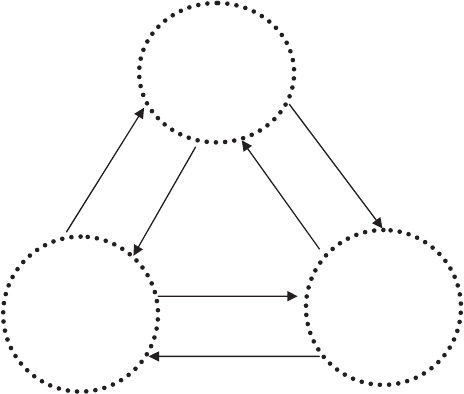
FIGURE 10.2 PBS technology triangle model.
Physical
Technology
Biological
Technology
Societal
Technology
societal technologies are connected and interdependent, and the technologies
are the driving force of life. They are connected through a central unit: infor-
mation . Information is everything; and everything is connected to everything
else. Information exits, mutates, and evolves. Rules, patterns, and blueprints
are embedded in information. Technology is a natural refl ection, confi guration,
and innovation of physical matter, biological materials, and the human mind.
The simple PBS triangle rotates around a central information point. The evolu-
tion of technology and information sciences causes social, biological, and
environmental changes.
There is a direct correlation between the development of technology and
changes in history. Physical technology allows human beings to change their
world, including societal and biological technologies. At the same time, tech-
nological advances allow people to thrive and become more successful within
their own society.
10.3 CENTRAL DOGMA OF INFORMATICS
The central dogma of molecular biology was fi rst enunciated by Francis Crick
in 1958 and restated in an article in Nature in 1970 (Crick, 1970 ). It states the
conversion of the genetic message in DNA to a functional mRNA (transcrip-
tion) and subsequent conversion of the genotype that was copied, to a pheno-
type in the form of proteins. The process of conversion of a mRNA to a
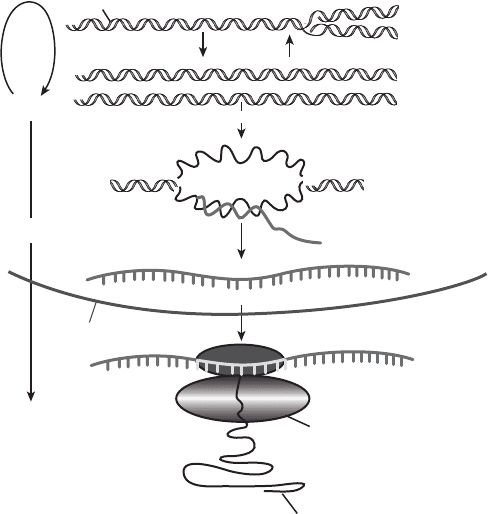
functional protein, known as translation , is illustrated in Figure 10.3 by three
major stages. This central dogma forms the backbone of molecular biology.
254 EVOLUTIONARY TRENDS AND CENTRAL DOGMA OF INFORMATICS
Stage 1 (Replication) The DNA replicates its information in a process that
involves many enzymes. It is a fundamental process occurring in all living
organisms to copy their DNA. Each strand of the original double - stranded
DNA molecule serves as a template for reproduction of the complementary
strand. Hence, following DNA replication, two identical DNA molecules have
been produced from a single double - stranded DNA molecule. Cellular proof-
reading and error - checking mechanisms ensure nearly perfect fi delity for
DNA replication (Berg et al., 2002 ).
Stage 2 (Transcription) The DNA codes for the production of messenger
RNA (mRNA) during transcription. In eucaryotic cells, the mRNA migrates
from the nucleus to the cytoplasm. Transcription is the synthesis of RNA under
the direction of DNA. RNA synthesis, or transcription, is the process of tran-
scribing DNA nucleotide sequence information into RNA sequence informa-
tion. The nucleic acid sequences use complementary language, and the
information is simply transcribed, or copied, from one molecule to the other.
DNA sequence is copied enzymatically by RNA polymerase to produce a
complementary nucleotide RNA strand, called messenger RNA (mRNA)
because it carries a genetic message from the DNA to the protein - synthesizing
FIGURE 10.3 Central dogma of molecular biology.
DNA
Replication
Transcription
nucleus
cytoplasm
Translation
Ribosome
Information
nuclear envelope
RNA
Protein
DNA
Information
Information
mRNA
Protein
CENTRAL DOGMA OF INFORMATICS 255
machinery of the cell. One signifi cant difference between the RNA and DNA
sequences is the presence of U, or uracil, in RNA instead of the T, or thymine,
of DNA. In the case of protein - encoding DNA, transcription is the fi rst step
and usually leads to the expression of the genes by the production of the
mRNA intermediate, which is a faithful transcript of a gene ’ s protein - building
instruction. The stretch of DNA that is transcribed into an RNA molecule is
called a transcription unit . A DNA transcription unit that is translated into
protein contains sequences that direct and regulate protein synthesis in addi-
tion to coding the sequence that is translated into protein. The regulatory
sequence that is before [upstream ( − ), toward the 5 ′ DNA end] the coding
sequence is called the 5 ′ untranslated region (5 ′ UTR), and the sequence found
following [downstream ( + ), toward the 3 ′ DNA end] the coding sequence is
called the 3 ′ untranslated region (3 ′ UTR). Transcription has some proofread-
ing mechanisms, but they are fewer and less effective than the controls for
copying DNA; therefore, transcription has a lower copying fi delity than DNA
replication (Berg et al., 2006 ).
Stage 3 (Translation) Messenger RNA carries coded information to ribo-
somes. The ribosomes “ read ” this information and use it for protein synthesis.
Translation is the fi rst stage of protein biosynthesis (part of the overall process
of gene expression). Translation is the production of proteins by decoding
mRNA produced in transcription. Translation occurs in the cytoplasm, where
the ribosomes are located. Ribosomes are made of a small and a large subunit,
which surround the mRNA. In translation, messenger RNA (mRNA) is
decoded to produce a specifi c polypeptide according to the rules specifi ed by
the genetic code. This uses an mRNA sequence as a template to guide the
synthesis of a chain of amino acids that form a protein. Many types of tran-
scribed RNA, such as transfer RNA, ribosomal RNA, and small nuclear RNA,
are not necessarily translated into an amino acid sequence. Translation pro-
ceeds in four phases: activation, initiation, elongation, and termination (all
describing the growth of the amino acid chain, or polypeptide, which is the
product of translation). Amino acids are brought to ribosomes and assembled
into proteins. Proteins do not code for the production of protein, RNA or
DNA. They are involved in almost all biological activities, structural or
enzymatic.
The central dogma of molecular biology has paved a revolutionary road for
further investigations in great details of the process of replication, transcrip-
tion, and translation. Furthermore, this central dogma has provided a great
impact on the study of informatics. The process of conversion from data to
information and to knowledge has a much broader and fundamental impact
on many domains, as information is an intrinsic property of the universe: the
intricate organization of matter and energy.
As the philosopher Paul Churchland (1989) notes, humans have been trying
to understand the world throughout most of recorded history; in just the past
256 EVOLUTIONARY TRENDS AND CENTRAL DOGMA OF INFORMATICS
200 years, our curiosity has revealed much of what nature had kept hidden
from us: the fabric of space – time, the constitution of matter, the many forms
of energy, the origins of the universe, the nature of life itself with the discovery
of DNA, and the completion of the mapping of the human genome in 2001.
But one mystery has not been solved: the mystery of the human brain and
how it gives rise to thoughts and feeling, hopes and desires, love, and the
experience of beauty, not to mention dance, visual art, literature, and informa-
tion (Freeman, 2000a,b ).
Interaction among matter, energy, and information is the root of evolution.
Information is distributed throughout the brain (Allman, 2000 ). Animals
evolve certain physical forms as a response to their environment, and the
characteristics that conferred an advantage for mating were passed down to
the next generation through the genes. A subtle point in Darwinian theory is
that living organisms — whether plants, viruses, insects, or animals — coevolved
with the physical world. In other words, the world is also changing in response
to them. If one species develops a mechanism to keep away a particular
predator, that predator ’ s species is then under evolutionary pressure either to
develop a means to overcome that defense or to fi nd another food source.
Natural selection is an arms race of physical morphologies changing to
catch up with one another. Our minds are the product of millions of years of
evolution. Our thought patterns, our predispositions to solve problems in
certain ways, and our sensory systems are all products of evolution. Our minds
coevolved with the physical world, changing in response to ever - changing
conditions (La Cerra and Bingham, 2002 ; Madden, 2004 ). A combinatorial
mind has opened up a world of words and sentences, of theories and equations,
of poem and melodies, of jokes and sorties (Bates, 2005 ; Cooper, 2001 ; Durham,
1991 ; Goonatilake, 1991 ).
Darwin ’ s theory of natural selection was revolutionized by the discovery of
the gene, specifi cally Watson and Crick ’ s discovery of the structure of DNA.
Perhaps we are witnessing another revolution in the aspect of evolution that
depends on social behavior, on culture (Madden, 2004 ).
The term information includes data on the one hand, and knowledge on the
other. In the following, we briefl y review the key defi nitions of data, informa-
tion, and knowledge from various aspects and then introduce a general defi ni-
tion of data, information, and knowledge. In analogy with the central dogma
of molecular biology, we establish the central dogma of informatics. Each
concept of data, information, and knowledge carries its own entity with arrays
of spectrum that can be investigated. Most important, the process of trans-
forming data to information and converting information to knowledge con-
tinue to be the central theme of informatics.
A datum is a small chunk of information. Data are commonly seen as
something raw. Data are symbols without relationships and may be seen as a
portion of the entire information without being processed. Data may be
referred to information selected or generated by human beings for social
purposes (Bates, 2005 ).
CENTRAL DOGMA OF INFORMATICS 257
Here we defi ne data as a collection of symbols, images, or other outputs from
devices on source to represent the qualitative or quantitative attributes of a
variable or set of variables that are unprocessed and for which no relationships
have been established. Data is a multidimensional abstract concept on a path
to being fully distilled (Hammarberg, 1981 ), that is, in a sequence that goes
from data to information to knowledge.
The term information is thought of as organized data, or “ facts, ” organized
into a coherent pattern. According to Peirce (Short, 2007 ), information was
embedded in his wider theory of symbolic communication, which he called the
semeiotic , now a major part of semiotics. For Peirce, information integrates the
aspects of signs and expressions covered separately by the concepts of denota-
tion and extension, on the one hand, and by connotation and comprehension,
on the other.
Information is also viewed as a form of mass – energy system (Stonier, 1990,
1997 ). Information is an implicit component (the hidden dimension) of virtu-
ally every single equation governing the laws of nature. Information is the core
ingredient of all communication and control processes in living and nonliving
systems (Young, 1987 ).
Claude E. Shannon, for his part, was very cautious: “ The word information
has been given different meanings by various writers in the general fi eld of
information theory ” (Shannon and Weaver, 1975 , Wiener, 1961 ). Gregory
Bateson defi ned information as “ a difference that makes a difference ” (Bateson,
1979 ).
According to Floridi, four types of mutually compatible phenomena are
commonly referred to as information (Floridi, 2002 ):
1. Information about something (e.g., a train timetable)
2. Information as something (e.g., DNA or fi ngerprints)
3. Information for something (e.g., algorithms or instructions)
4. Information in something (e.g., a pattern or a constraint)
Here we defi ne information as a multidimensional organized entity derived
from data source through a process of transformation. The information entity
has many attributes or patterns with relationships. It has its own structure and
can be converted to knowledge through a process of transformation.
The term knowledge is thought of as organized and internalized information
and the ability to utilize the information. Knowledge was viewed as informa-
tion given meaning and integrated with other contents of understanding
(Bates, 2005 ; Davenport and Prusak, 1998 ). It simply defi nes knowledge as
information given meaning. Knowledge represents the intellectual constructs
of human beings organizing human information. Knowledge may be defi ned
as organized information in people ’ s heads.
Here we defi ne knowledge as a multidimensional functional entity derived
from information through a process of transformation. Knowledge has its own
structure and function. Knowledge about primitive organisms provides much
258 EVOLUTIONARY TRENDS AND CENTRAL DOGMA OF INFORMATICS
information about shared metabolic features and hints at diseases that affect
humans in an economical and ethically acceptable manner. Knowledge from
many scientifi c disciplines and their subfi elds has to be integrated to achieve
the goals of informatics. Applying knowledge can lead to new scientifi c
methods, to new diagnostics, and to new discoveries.
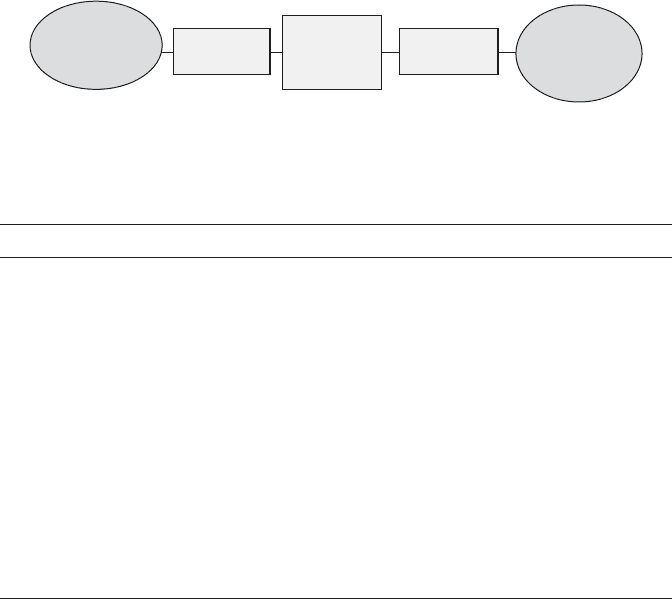
We now propose the central dogma of informatics , as illustrated in Figure
10.4 and described in Table 10.2 .
Data and knowledge are connected through a central unit: information . All
living systems are dependent on an environment with which they can exchange
matter, energy, and information. The evolution of information causes social,
biological, and environmental changes.
10.4 CHALLENGES AND PERSPECTIVES
Historically, tools and weapons made of stone were the technologies in the
Stone Age. Tools and weapons made of bronze were the technologies in the
FIGURE 10.4 Central dogma of informatics.
Data
Knowledge
Transcription
Information
Translation
TABLE 10.2 Central Dogma of Informatics
Data (Replication) Information (Transcription) Knowledge (Translation)
A datum is a small
chunk of
information.
Associated areas:
Data structure
Data mining
Data analysis
Data integration
Data replication
Databases
Information is thought of as
organized data, or “ facts ”
organized into coherent
patterns
Information = data + meaning
Associated areas:
Pattern discovery
Information processing
Information storage
Information retrieval
Information fl ow
Information control
Knowledge is thought of
as organized and
internalized information
and ability to utilize the
information
Knowledge = internalized
information + ability to
utilize the information
Associated areas:
Knowledge discovery
Knowledge management
Knowledge transfer
REFERENCES 259
Bronze Age. The Iron Age marks the period of development of technology,
when the working of iron came into general use, replacing bronze as the basic
material for implements and applications.
During certain periods in history, innovations in technology have grown
at such a rapid pace that they have produced what has become known as
an industrial revolution. Nineteenth - and twentieth - century inventions such
as the telephone, phonograph, wireless radio, motion picture, automobile,
airplane, computer, Internet, and wireless devices have added nearly univer-
sal technological complexity to modern daily life. Biotechnology, nanotech-
nology, and emerging technologies are rapidly becoming embedded in every
sector of our lives. While technology, tools, and applications are being devel-
oped and evolved, the newly developed information sciences study the col-
lection, classifi cation, manipulation, storage, retrieval, and dissemination of
information. By the nineteenth century the fi rst signs of information science
emerged as separate and distinct from other sciences and social sciences
but in conjunction with communication and computation. In 1854, George
Boole published An Investigation into Laws of Thought … , which lays the
foundations for Boolean algebra, used later for information retrieval.
Today, a device for data and information is booming in society in general.
With the development of assembly - line mass production of automobiles,
household appliances, and the building of ever - taller skyscrapers, technology
became not only a fact of everyday life, but also a way of life in itself. Society
is being transformed rapidly by increased mobility, rapid communication, and
a deluge of information available from mass media and the World Wide Web.
What is information? What are the structures of data? What are the topologi-
cal and geometrical properties of information? What are the functional fea-
tures of knowledge? How are data transcribed into information? How are
information sets translated into knowledge? These are fundamental questions
that require further investigation. Data mining is an active fi eld that examines
the process of extracting hidden patterns from data. Knowledge discovery is
a growing fi eld that examines the process of converting the information into
knowledge. Knowledge tends to travel from descriptive to qualitative to quan-
titative. During the process of this transition, numerical, graphical, and math-
ematical aspects emerge to explore the issues of data, knowledge, intelligence,
noise, and meaning. This new kind of mathematics may be called the mathe-
matics of knowledge and intelligence.
REFERENCES
Allman , J. M. ( 2000 ). Evolving Brains . New York : Scientifi c American Library .
Bates , M. J. ( 2005 ). Information and knowledge: an evolutionary framework for infor-
mation science . Inf. Res. , 10 ( 4 ).
Bateson , G. ( 1979 ). Mind and Nature: A Necessary Unity . Advances in Systems Theory,
Complexity, and the Human Sciences . Cresskill, NJ : Hampton Press .
260 EVOLUTIONARY TRENDS AND CENTRAL DOGMA OF INFORMATICS
Belkin , N. J. , and Robertson , S. E. ( 1976 ). Information science and the phenomenon of
information . J. Am. Soci. Inf. Sci. , 27 ( 4 ), 197 – 204 .
Berg , J. M. , Tymoczko , J. L. , Stryer , L. , and Clarke , N. D. ( 2002 ). Biochemistry . New York :
W.H. Freeman .
Berg , J. , Tymoczko , J. L. , and Stryer , L. ( 2006 ). Biochemistry , 6th ed . New York : W.H.
Freeman .
Churchland , P. ( 1989 ). A Neurocomputational Perspective: The Nature of Mind and the
Structure of Science . Cambridge, MA : MIT Press .
Cooper , W. S. ( 2001 ). The Evolution of Reason: Logic as a Branch of Biology . Cambridge,
MA : Cambridge University Press .
Crick , F. ( 1970 ). Central dogma of molecular biology . Nature , 227 , 561 – 563 .
Davenport , T. , and Prusak , L. ( 1998 ). Working Knowledge . Cambridge, MA : Harvard
University Press .
Durham , W. H. ( 1991 ). Coevolution: Genes, Culture and Human Diversity . Stanford,
CA : Stanford University Press .
Floridi , L. ( 2002 ). What is the philosophy of information? Metaphilosophy , 33 ( 1 – 2 ),
123 – 145 .
Freeman , W. J. ( 2000a ). How Brains Make Up Their Minds . New York : Columbia
University Press .
Freeman , W. J. ( 2000b ). A neurobiological interpretation of semiotics: meaning, repre-
sentation and information . Inf. Sci. , 124 ( 1 – 4 ), 93 – 102 .
Goonatilake , S. ( 1991 ). The Evolution of Information: Lineages in Gene, Culture and
Artifact . London : Pinter .
Hammarberg , R. ( 1981 ). The cooked and the raw . J. Inf. Sci. , 3 ( 6 ), 261 – 267 .
He , M. , ( 2009 ). The evolution and future trends of technology and information sciences .
2009 WASE International Conference on Information Engineering , Vol. 1, pp.
11 – 15 .
La Cerra , P. , and Bingham , R. ( 2002 ). The Origin of Minds: Evolution, Uniqueness and
the New Science of the Self . New York : Harmony Books .
Madden , A. D. ( 2004 ). Evolution and information . J. Document. , 60 ( 1 ), 9 – 23 .
Meyers , R. (Ed.) ( 2001 ). Encyclopedia of Physical Science and Technology , 3rd ed . New
York : Elsevier .
Salk , J. E. ( 1983 ). Anatomy of Reality . Westport, CT : Greenwood Publishing Group .
Shannon , C. E. , and Weaver , W. ( 1975 ). Mathematical Theory of Communication .
Urbana, IL : University of Illinois Press .
Short , T. L. ( 2007 ). Peirce ’ s Theory of Signs . New York : Cambridge University
Press .
Stonier , T. ( 1990 ). Information and the Internal Structure of the Universe . Berlin :
Springer - Verlag .
Stonier , T. ( 1997 ). Information and Meaning: An Evolutionary Perspective . Berlin :
Springer - Verlag .
von Bertalanffy , L. ( 1976 ). General System Theory: Foundations, Development,
Applications . New York : George Braziller .
REFERENCES 261
Wersig , G. , and Neveling , U. ( 1975 ). The phenomena of interest to information science .
Inf. Sci. , 9 ( 4 ), 127 – 140 .
Wiener , N. ( 1961 ). Cybernetics: or Control and Communication in the Animal and the
Machine , 2nd ed . Cambridge, MA : MIT Press .
Young , P. ( 1987 ). The Nature of Information . New York : Praeger .

APPENDIX A
Bioinformatics Notation
and Databases
In this appendix we list the universal or standard genetic code, general math-
ematical notation, physical units, chemical notation, molecular biological data-
bases, and the abbreviations and linear, chemical, and three - dimensional
structures of the 20 naturally occurring amino acids. These notations and units
have appeared in the bioinformatics literature and are used throughout the
book. We collect them here for use as a general reference.
A.1 STANDARD GENETIC CODE
Mathematics of Bioinformatics: Theory, Practice, and Applications, By Matthew He and
Sergey Petoukhov
Copyright © 2011 John Wiley & Sons, Inc.
262
Second Position of Codon
UC A G
F
i
r
s
t
P
o
s
i
t
i
o
n
U
UUU Phe [F]
UUC Phe [F ]
UUA Leu [L]
UUG Leu [L]
UCU Ser [S]
UCC Ser [S]
UCA Ser [S]
UCG Ser [S]
UAU Tyr [Y]
UAC Tyr [Y]
UAA
Ter
[end]
UAG
Ter
[end]
UGU Cys [ C]
UGC Cys [C ]
UGA
Ter
[end]
UGG Trp [W ]
U
C
A
G
T
h
i
r
d
P
o
s
i
t
i
o
n
C
CUU Leu [L]
CUC Leu [L]
CUA Leu [L]
CUG Leu [L]
CCU Pro [P]
CCC Pro [P]
CCA Pro [P]
CCG Pro [P]
CAU His [H]
CAC His [H]
CAA Gln [Q]
CAG Gln [Q]
CGU Arg [R]
CGC Arg [R]
CGA Arg [R]
CGG Arg [R]
U
C
A
G
A
AUU Ile [I]
AUC Ile [I]
AUA Ile [I]
AUG Met [M]
ACU Thr [T]
ACC Thr [T]
ACA Thr [T]
ACG Thr [T]
AAU Asn [N]
AAC Asn [N]
AAA Lys [K]
AAG Lys [K]
AGU Ser [S ]
AGC Ser [S ]
AGA Arg [R]
AGG Arg [R]
U
C
A
G
G
GUU Val [V]
GUC Val [V]
GUA Val [V]
GUG Val [V]
GCU Ala [A]
GCC Ala [A]
GCA Ala [A]
GCG Ala [A]
GAU Asp [D]
GAC Asp [D]
GAA Glu [E]
GAG Glu [E]
GGU Gly [G]
GGC Gly [G]
GGA Gly [G]
GGG Gly [G]
U
C
A
G