
Kasper C., van Griensven M., P?rtner R. (Eds.) Bioreactor Systems for Tissue Engineering II: Strategies for the Expansion and Directed Differentiation of Stem Cells
Подождите немного. Документ загружается.

47. Schallmoser K, Rohde E, Reinisch A et al (2008) Rapid large-scale expansion of functional
mesenchymal stem cells from unmanipulated bone marrow without animal serum. Tissue Eng
Part C Methods 14:185–196
48. Reinisch A, Bartmann C, Rohde E et al (2007) Humanized system to propagate cord blood-
derived multipotent mesenchymal stromal cells for clinical application. Regen Med 2:
371–382
49. Kocaoemer A, Kern S, Klu
¨
ter H et al (2007) Human AB serum and thrombin-activated
platelet-rich plasma are suitable alternatives to fetal calf serum for the expansion of mesen-
chymal stem cells from adipose tissue. Stem Cells 25:1270–1278
50. de Mos M, van der Windt AE, Jahr H et al (2008) Can platelet-rich plasma enhance tendon
repair? A cell culture study. Am J Sports Med 36:1171–1178
51. Johansson L, Klinth J, Holmqvist O et al (2003) Platelet lysate: a replacement for fetal bovine
serum in animal cell culture? Cytotechnology 42:67–74
52. Choi YC, Morris GM, Sokoloff L (1980) Effect of platelet lysate on growth and sulfated
glycosaminoglycan synthesis in articular chondrocyte cultures. Arthritis Rheum 23:
220–224
53. Drengk A, Zapf A, Stu
¨
rmer EK et al (2009) Influence of platelet-rich plasma on chondrogenic
differentiation and proliferation of chondrocytes and mesenchymal stem cells. Cells Tissues
Organs 189:317–326
54. Kaps C, Loch A, Haisch A et al (2002) Human platelet supernatant promotes proliferation but
not differentiation of articular chondrocytes. Med Biol Eng Comput 40:485–490
55. Mishra A, Tummala P, King A et al (2009) Buffered platelet-rich plasma enhances mesen-
chymal stem cell proliferation and chondrogenic differentiation. Tissue Eng Part C Methods
(Epub ahead of print)
56. Kra
¨
mer DK, Bouzakri K, Holmqvist O et al (2005) Effect of serum replacement with plysate
on cell growth and metabolismin primary cultures of human skeletal muscle. Cytotechnology
48:89–95
57. Slapnicka J, Fassmann A, Strasak L et al (2008) Effects of activated and nonactivated platelet-
rich plasma on proliferation of human osteoblasts in vitro. J Oral Maxillofac Surg 66:297–301
58. Umeno Y, Okuda A, Kimura G (1989) Proliferative behaviour of fibroblasts in plasma-rich
culture medium. J Cell Sci 94:567–575
59. Krasna M, Domanovic
´
D, Tomsic A et al (2007) Platelet gel stimulates proliferation of human
dermal fibroblasts in vitro. Acta Dermatovenerol Alp Panonica Adriat 16:105–110
60. Pepelassi EA, Markopoulou CE, Dereka XE et al (2009) Platelet-rich plasma effect on
periodontally affected human gingival fibroblasts: an in vitro study. J Int Acad Periodontol
11:160–168
61. Davenport M, Verrier S, Droeser R et al (2009) Platelet lysate as a serum substitute for 2D
static and 3D perfusion culture of stromal vascular fraction cells from human adipose tissue.
Tissue Eng Part A 15:869–875
62. Kitoh H, Kitakoji T, Tsuchiya H et al (2007) Distraction osteogenesis of the lower extremity
in patients with achondroplasia/hypochondroplasia treated with transplantation of culture-
expanded bone marrow cells and platelet-rich plasma. J Pediatr Orthop 27:629–634
63. Lataillade JJ, Doucet C, Bey E et al (2007) New approach to radiation burn treatment by
dosimetry-guided surgery combined with autologous mesenchymal stem cell therapy. Regen
Med 2:785–794
64. Wall ME, Bernacki SH, Loboa EG (2007) Effects of serial passaging on the adipogenic
and osteogenic differentiation potential of adipose-derived human mesenchymal stem cells.
Tissue Eng 13:1291–1298
65. Bodnar AG, Ouellette M, Frolkis M et al (1998) Extension of life-span by introduction of
telomerase into normal human cells. Science 279:349–352
66. Chang MW, Grillari J, Mayrhofer C et al (2005) Comparison of early passage, senescent and
hTERT immortalized endothelial cells. Exp Cell Res 309:121–136
26 S. Wolbank et al.
67. Wieser M, Stadler G, Jennings P et al (2008) hTERT alone immortalizes epithelial cells of
renal proximal tubules without changing their functional characteristics. Am J Physiol Renal
Physiol 295:F1365–F1375
68. Stadler G, Hennerbichler S, Lindenmair A et al (2008) Phenotypic shift of human amniotic
epithelial cells in culture is associated with reduced osteogenic differentiation in vitro.
Cytotherapy 10:743–752
69. Stadler G, Wieser M, Streubel B et al (2008) Low telomerase activity: possible role in the
progression of human medullary thyroid carcinoma. Eur J Cancer 44:866–875
70. Voglauer R, Grillari J, Fortschegger K et al (2005) Establishment of human fibroma cell lines
from a MEN1 patient by introduction of either hTERT or SV40 early region. Int J Oncol
26:961–970
71. Abdallah BM, Haack-Sørensen M, Burns JS et al (2005) Maintenance of differentiation
potential of human bone marrow mesenchymal stem cells immortalized by human telomerase
reverse transcriptase gene despite extensive proliferation. Biochem Biophys Res Commun
326:527–538
72. Simonsen JL, Rosada C, Serakinci N et al (2002) Telomerase expression extends the pro-
liferative life-span and maintains the osteogenic potential of human bone marrow stromal
cells. Nat Biotechnol 20:592–596
73. Jun ES, Lee TH, Cho HH et al (2004) Expression of telomerase extends longevity and
enhances differentiation in human adipose tissue-derived stromal cells. Cell Physiol Biochem
14:261–268
74. Shi S, Gronthos S, Chen S et al (2002) Bone formation by human postnatal bone marrow
stromal stem cells is enhanced by telomerase expression. Nat Biotechnol 20:587–591
75. Wolbank S, Stadler G, Peterbauer A et al (2009) Telomerase immortalized human amnion-
and adipose-derived mesenchymal stem cells: maintenance of differentiation and immuno-
modulatory characteristics. Tissue Eng Part A 15:1843–1854
76. Dimri GP, Lee X, Basile G et al (1995) A biomarker that identifies senescent human cells in
culture and in aging skin in vivo. Proc Natl Acad Sci USA 92:9363–9367
77. Le Blanc K, Tammik L, Sundberg B et al (2003) Mesenchymal stem cells inhibit and stimulate
mixed lymphocyte cultures and mitogenic responses independently of the major histocompat-
ibility complex. Scand J Immunol 57:11–20
78. Le Blanc K, Tammik C, Rosendahl K et al (2003) HLA expression and immunologic proper-
ties of differentiated and undifferentiated mesenchymal stem cells. Exp Hematol 31:890–896
79. McIntosh K, Zvonic S, Garrett S et al (2006) The immunogenicity of human adipose-derived
cells: temporal changes in vitro. Stem Cells 24:1246–1253
80. Puissant B, Barreau C, Bourin P et al (2005) Immunomodulatory effect of human adipose
tissue-derived adult stem cells: comparison with bone marrow mesenchymal stem cells.
Br J Haematol 129:118–129
81. Rasmusson I, Ringde
´
n O, Sundberg B (2005) Mesenchymal stem cells inhibit lymphocyte
proliferation by mitogens and alloantigens by different mechanisms. Exp Cell Res 305:33–41
82. Lee JM, Dedhar S, Kalluri R et al (2006) The epithelial-mesenchymal transition: new insights
in signaling, development, and disease. J Cell Biol 172:973–981
83. Campioni D, Lanza F, Moretti S et al (2008) Loss of Thy-1 (CD90) antigen expression on
mesenchymal stromal cells from hematologic malignancies is induced by in vitro angiogenic
stimuli and is associated with peculiar functional and phenotypic characteristics. Cytotherapy
10:69–82
84. Zhang X, Soda Y, Takahashi K et al (2006) Successful immortalization of mesenchymal
progenitor cells derived from human placenta and the differentiation abilities of immortalized
cells. Biochem Biophys Res Commun 351:853–859
85. Burns JS, Abdallah BM, Guldberg P et al (2005) Tumorigenic heterogeneity in cancer stem
cells evolved from long-term cultures of telomerase-immortalized human mesenchymal stem
cells. Cancer Res 65:3126–3135
Alternative Sources of Adult Stem Cells: Human Amniotic Membrane 27

Adv Biochem Engin/Biotechnol (2010) 123: 29–54
DOI: 10.1007/10_2009_15
#
Springer-Verlag Berlin Heidelberg 2009
Published online: 12 December 2009
Mesenchymal Stromal Cells Derived from
Human Umbilical Cord Tissues: Primitive
Cells with Potential for Clinical and Tissue
Engineering Applications
Pierre Moretti*, Tim Hatlapatka*, Dana Marten, Antonina Lavrentieva,
Ingrida Majore, Ralf Hass, and Cornelia Kasper
Abstract Mesenchymal stem or stromal cells (MSCs) have a high potential for
cell-based therapies as well as for tissue engineering applications. Since Friedenstein
first isolated stem or precursor cells from the human bone marrow (BM) stroma that
were capable of osteogenesis, BM is currently the most common source for MSCs.
However, BM presents several disadvantages, namely low frequency of MSCs,
high donor-dependent variations in quality, and painful invasive intervention. Thus,
tremendous research efforts have been observed during recent years to find alterna-
tive sources for MSCs.
In this context, the human umbilical cord (UC) has gained more and more
attention. Since the UC is discarded after birth, the cells are easily accessible
without ethical concerns. This postnatal organ was found to be rich in primitive
stromal cells showing typical characteristics of bone-marrow MSCs (BMSCs), e.g.,
they grow as plastic-adherent cells with a fibroblastic morphology, express a set of
typical surface markers, and can be directly differentiated at least along mesoder-
mal lineages. Compared to BM, the UC tissue bears a higher frequency of stromal
cells with a higher in vitro expansion potential. Furthermore, immune-privileged
and immune-modulatory properties are reported for UC-derived cells, which open
highly interesting perspectives for clinical applicati ons.
P. Moretti, T. Hatlapatka, D. Marten, A. Lavrentieva, I. Majore, and C. Kasper (*)
Institut fu
¨
r Technische Chemie, Leibniz Universita
¨
t Hannover, Callinstraße, 5, 30167, Hannover,
Germany
e-mail: Moretti@iftc.uni-hannover.de, Hatlapatka@iftc.uni-hannover.de, Marten@iftc.uni-hannover.
de, Lavrentieva@iftc.uni-hannover.de, Majore@iftc.uni-hannover.de, Kasper@iftc.uni-hannover.de
R. Hass
AG Biochemie und Tumorbiologie, Klinik fu
¨
r Frauenheilkunde und Geburtshilfe, Medizinische
Hochschule Hannover, Carl-Neuberg-Str.1, 30625, Hannover, Germany
e‐mail: hass.ralf@mh‐hannover.de
*Equal Contributors
Keywords Counterflow centrifugal elutriation, Mesenchymal stem cell, Mesen-
chymal stromal cell, MSC, Umbilical cord
Contents
1 Introduction. . . . . . . . . . . . . . . . . . . . . . . . . . . . . . . . . . . . . . . . . . . . . . . . . . . . . . . . . . . . . . . . . . . . . . . . . . . . . . . . . 31
2 The Human Umbilical Cord: A Source of MSCs. . . . . . . . . . . . . . . . . . . . . . . . . . . . . . . . . . . . . . . . . . . 31
3 Isolation of MSCs from the Umbilical Cord. . . . . . . . . . . . . . . . . . . . . . . . . . . . . . . . . . . . . . . . . . . . . . . . 33
4 Characterization of UC-Derived MSCs. . . . . . . . . . . . . . . . . . . . . . . . . . . . . . . . . . . . . . . . . . . . . . . . . . . . . 35
5 In Vitro Differentiation Potential . . . . . . . . . . . . . . . . . . . . . . . . . . . . . . . . . . . . . . . . . . . . . . . . . . . . . . . . . . . 40
6 Immune Properties of MSCs and In Vivo Applications . . . . . . . . . . . . . . . . . . . . . . . . . . . . . . . . . . . . 44
7 Future Perspectives . . . . . . . . . . . . . . . . . . . . . . . . . . . . . . . . . . . . . . . . . . . . . . . . . . . . . . . . . . . . . . . . . . . . . . . . . 46
References . . . . . . . . . . . . . . . . . . . . . . . . . . . . . . . . . . . . . . . . . . . . . . . . . . . . . . . . . . . . . . . . . . . . . . . . . . . . . . . . . . . . . . . 48
Abbreviations
ALP Alkaline phosphatase
b-FGF Basic fibroblast growth factor
BM Bone marrow
BrdU 5-Bromo-2-deoxyuridine
CCE Counterflow centrifugal elutriation
CD Cluster of d ifferentiation
CFSE Carboxyfluorescei n diacetate succinimidyl ester
CFU-F Colony forming unit-fibrobl ast
DAPI 4
0
,6-Diamidino-2-phenylind ole
ESC Embryonic stem cell
GMP Good manufacturing practice
GvHD Graft-versus-host disease
HA Hyaluronic acid
HLA Human leukozyte antigen
HUCPVC Human umbilical cord perivascular cells
ISCT International Society for Cellular Therapy
MLC Mixed lymphocyte culture
MSC Mesenchymal stromal cell
MTT 3-(4,5-Dimethylthiazol-2-yl)-2,5-diphenyltetrazolium bromide
PBL Peripheral blood lymphocytes
PBMC Peripheral blood mononuclear cell
PBS Phosphate buffered saline
UC Umbilical cord
UCB Umbilical cord blood
UCMS Umbilical cord matrix cells
VEGF Vascular endothelial growth factor
WJ Wharton’s jelly
WJC Wharton’s jelly cell
30 P. Moretti et al.
1 Introduction
The engineering of stem cells to restore defect functions in human tissues is an
exciting challenge in the field of regenerative medicine. Embryonic stem cells
(ESC) have a great potential for this purpose due to their pluripotent differentiation
capability, but their use is limited by serious ethical considerations. Recent findings
evidencing the reprogramming of somatic cells to pluripotent stem cells (termed
IPS cells) [1] open ethically acceptable perspectives. However the concern remains
that undifferentiated IPS cells as well as ESC may form teratomas after transplan-
tation in the body.
Adult mesenchymal stem or stromal cel ls (MSCs) are considered a valuable
alternative to these cells. Since their discovery in bone marrow (BM) by Frieden-
stein et al. [2], BMSCs have been extensively investigated and their use in animal
studies as well as in clinical trials showed encouraging results (reviewed in [3]).
Today BM-MSCs are still considered as the “gold standard” for the use of adult
MSCs. Nevertheless BM as a source for MSCs presents several disadvantages.
Besides the invasive and pain ful collec ting procedure, in BM-aspirates MSCs are
present at very low frequency (approximately 0.001–0.01% [4]) and their quality
varies with the age of the donor. The low frequency implies that an extensive
in vitro expansion of the cells will be required to deliver clinical doses to a patient,
which enhances the risk of epigenetic damages as well as viral and bacterial
contaminations. For these reasons, alternative sources of MSCs are needed.
In this context, the human umbilical cord (U C) gained more and more attention
during the last decade (see Fig. 1). The UC is a non-controversial and accessible
source of autologous cells, which can be easily processed after birth. It has been
demonstrated that MSCs are found both in the blood (UCB) [5] and in the tissues of
UC. However, UCB-derived MSCs may have a limited technological potential
because their frequency seems even lower than in BM (range 0.001–0.000001%
[6]) and their isolation is hardly reproducible [7, 8], whereby UCB contains larger
amounts of other tissue stem cell populations including CD133
+
cells or hemato-
poietic stem cells (CD34
+
). In contrast, the frequency of MSC s in UC-tissues is
believed to be much higher. Thus, using robust isolation procedures, a large number
of multipotent primitive stromal cells with high proliferation capacity can be
isolated. All these features open interesting perspectives for the scalable production
and engineering of UC-derived cells for clinical applications. Here, we give an
overview of the scientific evidences collecte d during the recent years that human
UC may be a valuable cell source for cell-based therapies.
2 The Human Umbilical Cord: A Source of MSCs
The hum an UC is the lifeline between th e fetus and the placenta. It is formed
during the fifth week of embryogenesis and grows to a final length of approximately
60–65 cm, weighs about 40 g, and has a mean diameter of 1.5 cm in normal
Mesenchymal Stromal Cells Derived from Human Umbilical Cord Tissues 31
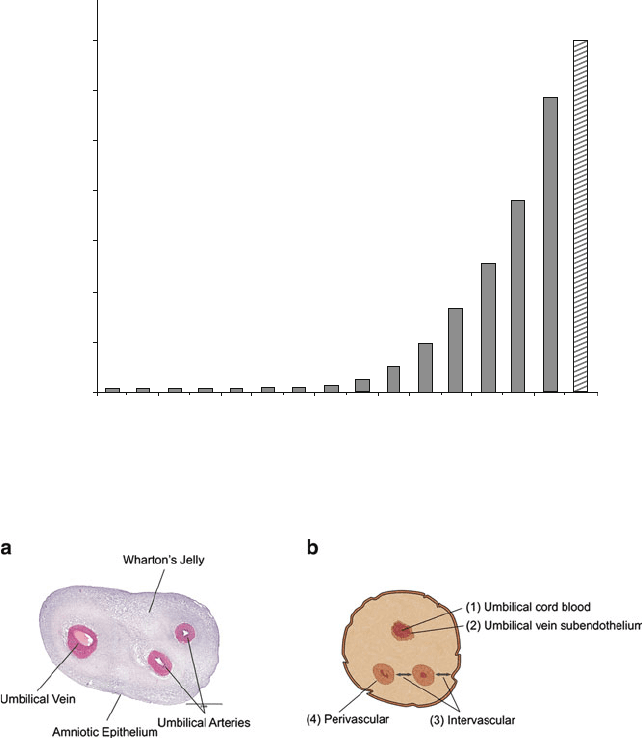
pregnancies [9 , 10]. UC usually comprises two arteries and a vein, which are
immersed within the so-called Wharton’s jelly (WJ) and enclosed by a simple
amniotic epithelium (see Fig. 2a). WJ is a mucoid connective tissue rich in
proteoglycans and hyaluronic acid (HA), which insulates and protects umbilical
vessels from torsion, compression, or bending and therefore ensures a constant
blood flow between fetus and placenta.
Fig. 2 Cross section of an umbilical cord. (a) UC consists of two arteries and one vein embedded
in the Wharton’s jelly and surrounded by an amniotic epithelium (modified from [95]). (b) Four
separate compartments within the umbilical cord have been shown to comprise mesenchymal
stromal cells
350
300
Cumulative number of publications
250
200
150
100
50
0
2222234
6
12
24
48
82
128
191
293
349
1994 1995 1996 1997 1998 1999 2000 2001 2002 2003 2004 2005 2006 2007 2008 2009
Fig. 1 Cumulative numbe r of publications over the last 15 years dealing with UC-de rived MSCs
(entries by PubMed with the terms “mesench ymal stem cel ls” and “umbi lical cord” t ill July
2009)
32 P. Moretti et al.
In recent years, several studies described at least four separate regions (see
Fig. 2b) of the UC containing MSCs. The term “MSC” has been related to several
definitions. In this chapter we use “MSC” as an acronym for mesenchymal stromal
cell (discussed in Sect. 4). MSCs could successfully be isolated from UCB [7, 11–15],
the umbilical vein subendothelium [16–18], the intervascular region [19–29], the
perivascular region [30, 31], or from whole UC tissue [32, 33]. UC-derived MSCs
meet the basic definition of multipotent MSCs as postulated by the International
Society for Cellular Therapy (ISCT) (see Sect. 4).
Thus, this chapter will focus on MSCs derived from UC tissue, but not from
UCB (see Fig. 2b, region 2–4).
3 Isolation of MSCs from the Umbilical Cord
In recent years, several investigat ors published protocols for isolating MSCs from
the UC tissue. Dependi ng on from which part of the cord the cells shoul d be
isolated, protocols have been adopted and modified. A schematic overview of
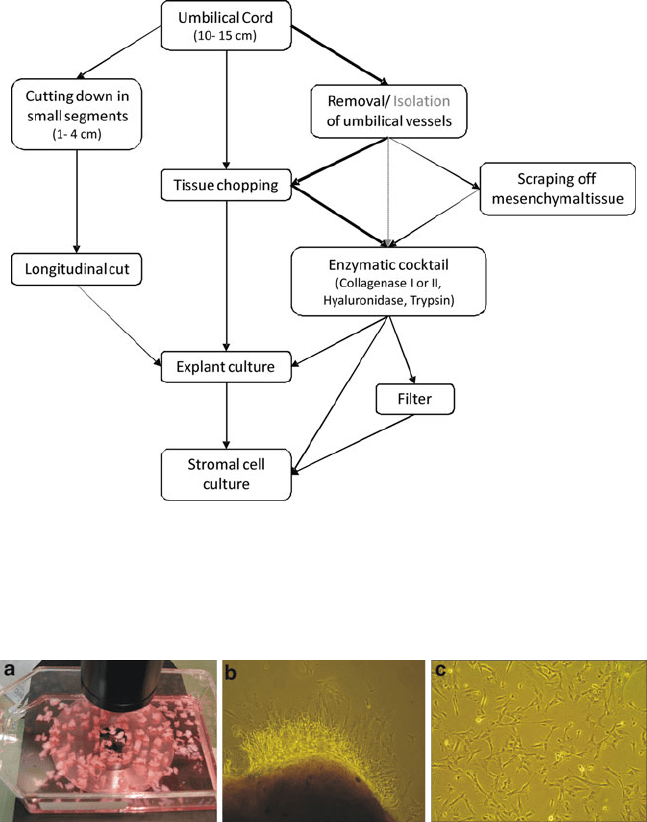
applied isolation protocols is given in Fig. 3. Basically, the isolation procedure
starts with the removal of umbilical vessels. The cord is then cut down to smaller
segments or chopped into small pieces which are subsequently enzymatically
digested [22, 23, 29]. Alternative isolation methods without removal of vessels
[34, 35] and without enzymatic digestions [26, 34] or explant cultures [33, 36] have
also been described. To isolate cells from the perivascular tissue or the subendothe-
lium of the umbilical vein, further methods have been established [16–18, 30, 31].
We have used a protocol witho ut enzymatic digestion and without removal of
umbilical vessels to isolate MSC-like cells from whole UC tissue in an explant
culture approach. There fore, human UCs were obtained from patients with written
consent delivering full-term (38–40 weeks) infants by cesarean section. The use of
this material has been approved by the Institutional Revie w Board, project #3037 in
an extended permission on June 17, 2006.
First, blood from arteries and the vein was removed by flushing phosphate
buffered saline (PBS) through the vessels using a sterile syringe and blunt needles.
Thereafter,UCwasstoredinanappropriate transfer medium (PBS) enriched with
5g L
1
glucose, 50 mgmL
1
gentamicin, 2.5 mgmL
1
amphotericin B, 100 U.mL
1
penicillin, and 100 mgmL
1
streptomycin), to minimize the risk of contaminatio ns.
The UC was first cut into 10–15 cm long segments which were subsequently cut into
approximately 0.5 cm
3
large pieces. During the isolation procedure, transfer medium
was used to keep the cord and the minced piecesmoist.Finally,thesmallpieceswere
transferred to cell culture flaks (Fig. 4a) and incubated in aMEM supplemented with
15% of allogous human serum and 50 mgm
1
gentamicin at 37
C in a humidified
atmosphere with 5% CO
2
. The medium was changed every second day. An outgrowth
of adherent cells from single tissue pieces could be observed after approximately
10 days (Fig. 4b). After 2 weeks the UC tissue was removed and the adherent cells
(Fig. 4c) were harvested by enzymatic treatment. The obtained cell suspension was
Mesenchymal Stromal Cells Derived from Human Umbilical Cord Tissues 33
centrifuged at 200 g for 5 min and the cells were resuspended in aMEM supplemented
with 10% human serum and 50 mgmL
1
gentamicin and subcultured at a density of
4000 cells cm
2
. These culture conditions have demonstrated to support an optimal
growth of the cells.
The isolated cells exhibited a high proliferation potential. Cell population
doubling times ranged from 27.5 1.6 h (passage 2) to 78.9 6.3 h (passage 17).
Fig. 4 Isolation of mesenchymal stem cell-like cells from umbilical cord. (a) Explant culture of
minced UC tissue. (b) After approximately 10 days of culture cells start to grow out of the small
UC segments. (c) Adherent growing monolayer of fibroblast-shaped cells after 2 weeks of culture
Fig. 3 Schematic overview of applied isolation protocols. Various approaches have been used to
isolate mesenchymal stromal cells from the umbilical cord tissue. Basically, the isolation proce-
dure includes steps of removing umbilical vessels, tissue chopping and enzymatic digestion
(indicated by bold arrows), but several alterations of protocols have been described
34 P. Moretti et al.
At our culture conditions, the cells could be expanded without loss of proliferative
activity and viability at least for 20 population doublings . After approximately 50
population doublings the cells entered a phase of replicative senescence. High
proliferation pote ntial and expansion capacity are common features for UC-derived
stromal cells, which were described by several other groups [20, 26, 29, 30, 34, 35,
37, 38]. Furthermore, UC-derived cells could be efficiently cryopreserved and
revitalized. We used a cryo-medium containing 80% human serum, 10% culture
medium, and 10 % DMSO. The cells were gradually frozen at a rate of 1
C min
1
and finally stored at 196
C. At these conditions cell survival rate after rapid
thawing at 37
C reached 75 12.8%.
To date, it still remains to be further investigated whether cells isolated from
different compartments or derived by different isolation procedures share the same
stem cell characteristics, e.g., prolifera tion and differentiation potential and immu-
nologic properties (see below).
4 Characterization of UC-Derived MSCs
The acronym “MSC” has been widely used in the literature for “mesenchymal
stromal cell” as well as for “mesenchymal stem cell” to denominate plastic-adherent
fibroblast-like cultures isolated from different adult or extra-embryonic tissues.
Because there is currently no consensus set of markers allowing the identification
of MSCs and considering the fact the definition criteria for stem cell is not
unanimously accepted [39], it appeared unwise to apply the term “stem cell” for
mesenchymal cell population. In this context, ISCT proposed to term plastic-
adherent fibroblast cultures “multipotent mesenchymal stromal cells” (MSC) [40]
and published in 2006 the minimal criteria defining these cells [41].
UC-derived stromal cells meet the basic criteria defined by the ISCT, namely the
adherence to plastic, the expression of a set of specific surface antigens (see below),
and a multipotent differentiation potential (discussed in paragrap h 5 Differentiation
Potential).
Histologically, cells freshly isolated from the UC are mainly fib roblastic in
appearance (see Fig. 5a). However, some groups reported more than one phenotype
in UC-derived MSC cultures [23, 29, 31, 36] and noticed changes in the distribution
of the phenotype after several passages [23, 36]. Our group observed for instance a
broad cell size distribution and marked morphological differences in isolated UC-
MSCs cultures (see Fig. 5b). After fractionation of different populations via coun-
terflow centrifugal elutriation (CCE) according to the size of the cells, we obtained
two sub-populations with significant differences in cell size, growth properties, and
biochemical markers expression. Whereas small-sized subpopulation exhibited the
highest proliferative capacity and the most pronounced expression of MSC mar-
kers, large-sized cells were identified as senescent via b-galactosidase sta ining (see
Fig. 6)[36]. These findings may be of importance in order to deliver high quality
cells for clinical applications.
Mesenchymal Stromal Cells Derived from Human Umbilical Cord Tissues 35
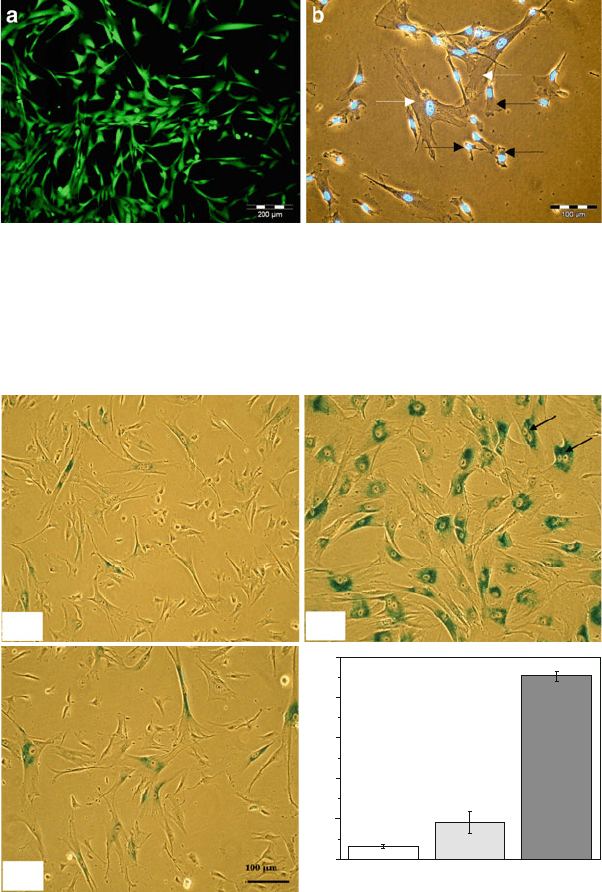
Fig. 5 Morphology of UC-derived stroma cells. (a) UC MSC show predominantly fibroblastic
morphology. The cytoplasm of cells was visualized via Calcein-AM stain (100 magnification).
(b) Cells with marked morphological differences can be rather observed in the cultures collected
from UC. The image presents large cells (a, white arrows) surrounded by small cells (b, black
arrows), which show increased nucleus-to-cytoplasm ratio. For the visualization of cell nuclei
DAPI staining was performed (200 magnification)
0
20
40
60
80
100
∗
∗
p< 0,01
∗∗
p< 0,001
∗∗
UC-derived
prinary cells
Subpopulation of
small-sized cells
Subpo pulation of
large-sized cells
Persentage of senescent cells (%)
d
c
a
b
Fig. 6 Senescence staining in sub-population of UC-derived primary cell cultures [36]. (a) UC-
derived primary cell population. (b) CCE-derived subpopulation of small-sized cells. (c) CCE-
derived subpopulation of large-sized cells. (d) Comparison of the senescence level in the
CCE-derived fractions. Cells were cultured for 6 days after elutriation. Following subculture, the
cells were seeded at a density of 6000 cells cm
2
and cultured for further 48 h in complete medium.
A relative high portion of multi-nucleated cells (arrows) were detectable in the subpopulation of
the large-sized cells. Student’s t-tests were performed for the recognition of the significant
differences (marked with asterisks) in comparison to UC-derived primary cell population
36 P. Moretti et al.