
Kelly J.J. Graduate Mathematical Physics, With MATHEMATICA Supplements
Подождите немного. Документ загружается.

296 8 Legendre and Bessel Functions
Ret
Imt
H
Ν
1
z
H
Ν
2
z
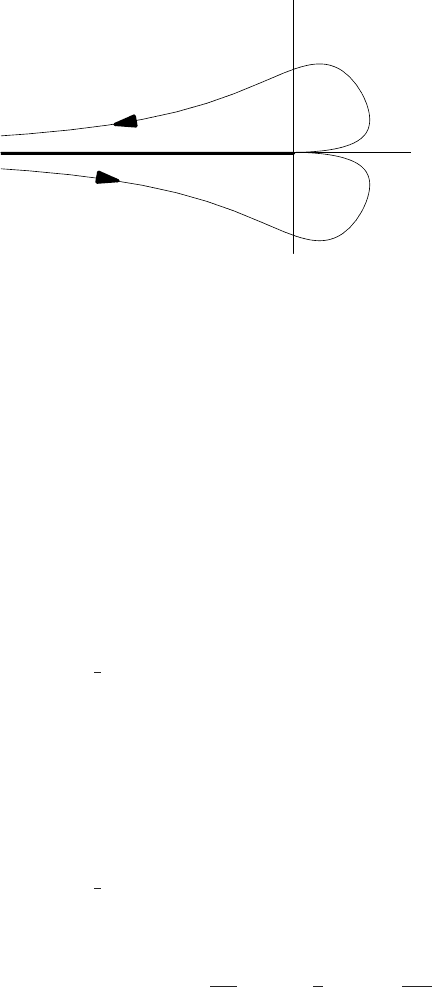
Figure 8.5. Contours for integral representation of Hankel functions.
Bessel functions because they are solutions to the same differential equation derived from
those recursion relations.
Note that the same integrand provides two independent solutions to Bessel’s equation,
H
1
Ν
z and H
2
Ν
z, depending upon whether the negative real axis is approached from
above or from below. These solutions are distinct even for integral Ν, despite the fact that
the cut is not needed, because neither contour is closed. Thus, the ordinary Bessel func-
tion, J
Ν
z, must be a linear combination of these Hankel functions. For simplicity, suppose
that Ν!n actually is an integer. Recognizing that the portions of the two contours that lie
along, or infinitesimally close to, the positive real axis are traversed in opposite directions
and cancel, the two contours can be joined to form a closed contour for H
1
n
zH
2
n
z
that can be deformed to that used for Bessel’s integral representation of J
n
z, namely a
closed contour enclosing the origin in a counterclockwise sense. Thus, we obtain
J
n
z
1
2
H
1
n
zH
2
n
z (8.207)
and expect this same relationship to apply continuously to nonintegral Ν. After all, Bessel
functions for fixed z can be interpreted as continuous functions of Ν even if that argument
is customarily represented as a subscript instead of as a second variable. Alternatively, one
can develop a power series by expanding the factor of Expz/2t and using the integral
representation of the A function to obtain the coefficients for powers of z, and obtaining
thereby the known series for J
Ν
z. Therefore,
J
Ν
z
1
2
H
1
Ν
zH
2
Ν
z (8.208)
provides a definition for arbitrary Ν and, more importantly, an integral representation
Rez > 0 J
Ν
z
1
2Π
C
Exp
z
2
t t
1
t
t
Ν1
(8.209)
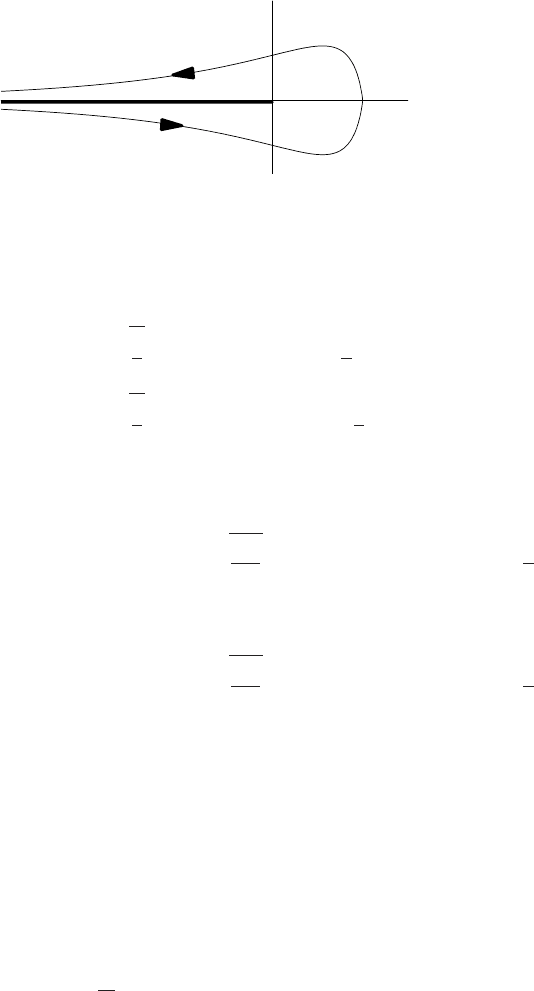
based upon the contour in Fig. 8.6.
8.3 Bessel Functions 297
Ret
Imt
Figure 8.6. Contour for J
Ν
z.
The Hankel functions and their spherical analogs are especially useful for analyzing
scattering solutions in the far field. Using the method of steepest descent, one finds
H
1
Ν
z
2
Π
z
1/ 2
Exp
z 2Ν1
Π
4
(8.210)
H
2
Ν
z
2
Π
z
1/ 2
Exp
z 2Ν1
Π
4
(8.211)
for Rez > 0. (This exercise is left to the student as an opportunity to refresh his/her skills
with the method of steepest descent.) Thus, we identify
H
1
n
kΞExpΩt
2
ΠkΞ
ExpkΞΩt Exp
2n 1
Π
4
(8.212)
as an outgoing cylindrical wave associated with the angular function P
n
CosΘ
and
H
2
n
kΞExpΩt
2
ΠkΞ
ExpkΞΩt Exp
2n 1
Π
4
(8.213)
as the corresponding incoming wave for large radius Ξ.Herek is the wave number and
the asymptotic condition requires kΞD1 and modest n;forlargen a somewhat more
sophisticated analysis may be needed to obtain the required accuracy.
8.3.3 Neumann Functions
Having obtained two independent solutions, the Hankel functions, and identifying Bessel
functions of the first kind as a linear combination of Hankel functions, we can now define
Bessel functions of the second kind as the orthogonal linear combination
N
Ν
z
1
2
H
1
Ν
zH
2
Ν
z (8.214)
where this choice of phase yields Neumann functions. (These functions are often labeled Y
Ν
in the literature and sometimes have different phase conventions.) The Neumann functions

298 8 Legendre and Bessel Functions
obey the same recursion relations as Bessel and Hankel functions. From the asymptotic
behaviors
J
Ν
z
2
Π
z
1/ 2
Cos
z 2Ν1
Π
4
(8.215)
N
Ν
z
2
Π
z
1/ 2
Sin
z 2Ν1
Π
4
(8.216)
we recognize the Bessel functions as the cylindrical analogs of trigonometric functions.
Alternatively, we can define Neumann functions as linear combinations of J
Ν
and J
Ν
,
which are independent solutions for nonintegral Ν. To determine the appropriate coeffi-
cients, we use
J
Ν
z
1
2
H
1
Ν
zH
2
Ν
z (8.217)
and analyze
H
Ν
z
1
Π
C
Exp
z
2
t t
1
t
t
Ν1
(8.218)
The substitution
t
Π
s
, t
Π
s
2
s H
Ν
z
ExpΠΝ
Π
C
'
Exp
z
2
s s
1
s
s
Ν1
(8.219)
preserves the integrand up to a phase. In order to preserve the contours also, we must
choose the upper sign for H
1
and the lower sign for H
2
. Thus, we obtain the symmetries
H
1
Ν
z
ΠΝ
H
1
Ν
z (8.220)
H
2
Ν
z
ΠΝ
H
2
Ν
z (8.221)
such that
J
Ν
z
1
2
H
1
Ν
zH
2
Ν
z (8.222)
J
Ν
z
1
2
ΠΝ
H
1
Ν
z
ΠΝ
H
2
Ν
z (8.223)
requires
H
1
Ν
zCscΝΠ
ΠΝ
J
Ν
zJ
Ν
z (8.224)
H
2
Ν
zCscΝΠ
ΠΝ
J
Ν
zJ
Ν
z (8.225)
for nonintegral Ν. Finally, substituting these results into the definition for N
Ν
, we obtain
N
Ν
zCotΝΠJ
Ν
zCscΝΠJ
Ν
z (8.226)
after a little algebra. This is the most common definition for Neumann functions, but
appears to be singular for integer Ν. However, under those circumstances we can apply

8.3 Bessel Functions 299
l’Hôpital’s rule to the limit Ν!n to obtain a result
N
n
z
1
Π
lim
Ν!n
(J
Ν
z
(Ν
n
(J
Ν
z
(Ν
(8.227)
that is continuous with respect to Ν.
We now have the means to analyze the behavior of N
Ν
z near the origin, where
J
Ν
z
z
2
Ν
m0
1
AΝ m 1Am 1
z
2
4
m
(8.228)
J
Ν
z
z
2
Ν
m0
1
AΝ m 1Am 1
z
2
4
m
(8.229)
provide the necessary expansions. Thus,
N
Ν
zCotΝΠ
z
2
Ν
m0
1
AΝ m 1Am 1
z
2
4
m
CscΝΠ
z
2
Ν
m0
1
AΝ m 1Am 1
z
2
4
m
(8.230)
for nonintegral Ν. Although combining these expansions does not seem to offer an attrac-
tive formula for the coefficients, it is immediately clear that Neumann functions are singu-
lar at the origin. Hence, it is often sufficient to display only the leading terms. For simplic-
ity suppose that ReΝ > 0 and that Ν is nonintegral, such that
ReΝ > 0 N
Ν
z*
CscΝΠ
A1 Ν
z
2
Ν
(8.231)
Using the identity
AzA1 z
Π
SinΝΠ
(8.232)
we obtain
ReΝ > 0 N
Ν
z*
AΝ
Π
z
2
Ν
(8.233)
Thus, N
Ν
has a branch point at the origin with power-law divergence for Ν0. For the
special case Ν0, we use
(z
Ν
(Ν
z
Ν
Logz (8.234)
and the definition of the digamma function
Ψz
( Log
Az
(z
A
'
z
Az
(8.235)

300 8 Legendre and Bessel Functions
to write
N
n
z
1
Π
lim
Ν!n
(J
Ν
z
(Ν
n
(J
Ν
z
(Ν
(8.236)
(J
Ν
z
(Ν
J
Ν
z Log
z
2
z
2
Ν
m0
ΨΝ m 1
AΝ m 1Am 1
z
2
4
m
(8.237)
(J
Ν
z
(Ν
J
Ν
z Log
z
2
z
2
Ν
m0
m
ΨΝ m 1
AΝ m 1Am 1
z
2
4
m
(8.238)
and to obtain
N
n
z
1
Π
lim
Ν!n
3
4
4
4
4
4
5
2J
n
z Log
z
2
z
2
n
m0
Ψn m 1
An m 1Am 1
z
2
4
m
z
2
n
m0
ΨΝ m 1
AΝ m 1Am 1
z
2
4
m
6
7
7
7
7
7
8
(8.239)
where the final summation requires further attention because both numerator and denomi-
nator appear to diverge for integer n. We leave the final steps as an exercise for the student
and quote a final result
N
n
z
1
Π
3
4
4
4
4
4
5
2J
n
z Log
z
2
z
2
n
n1
m0
An m
Am 1
z
2
4
m
z
2
n
m0
Ψn m 1Ψm 1
An m 1Am 1
z
2
4
m
6
7
7
7
7
7
8
(8.240)
in which the coefficients are manifestly finite, even if rather cumbersome. For the present
purposes it is sufficient to recognize that the divergence of N
0
near the origin
N
0
z*
2
Π
Log
z
2
(8.241)
is logarithmic.
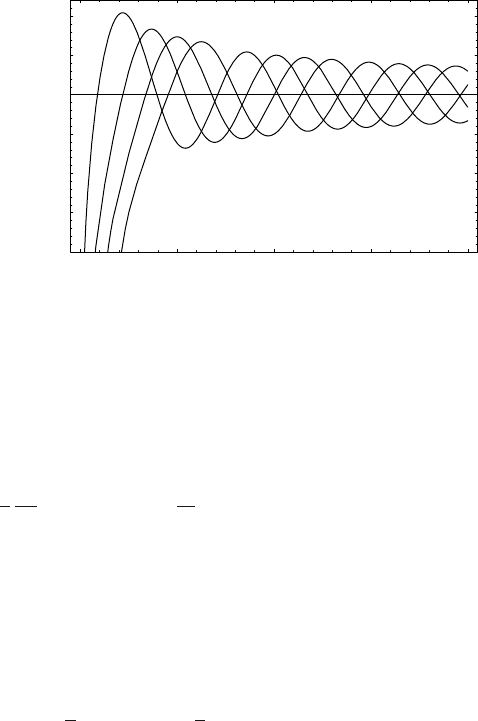
Figure 8.7 illustrates the Neumann functions. Aside from the divergence near the ori-
gin, these functions also oscillate with slowly decreasing amplitude for large x. Note that
we cannot easily display the values for x<0 because of the logarithmic contribution. The
divergence near the origin is logarithmic or stronger: logarithmic for N
0
or power law (z
n
)
for N
n
with n>0.
So why do we need two kinds of Bessel functions? A general solution to a second-order
differential equation, such as Bessel’s equation, is a linear combination of both kinds.
Unless the boundary conditions eliminate the Neumann functions by requiring finite values
at the origin, any expansion based upon eigenfunctions for Bessel’s equation will require
both regular and irregular solutions.
8.3 Bessel Functions 301
0 5 10 15 20
x
0.75
0.5
0.25
0
0.25
0.5
N
n
x
Figure 8.7. Bessel functions of second kind, for n 0 3.
8.3.4 Modified Bessel Functions
Modified Bessel functions are solutions to a differential equation
1
Ξ
Ξ
Ξ f
'
Ξ
k
2
Ν
2
Ξ
2
f Ξ 0 f Ξ AI
Ν
kΞ BK
Ν
kΞ (8.242)
which is related to the ordinary Bessel equation by the substitution k !k which trans-
forms a wave equation into a diffusion equation. Consequently, we anticipate solutions of
the form J
Ν
kΞ and N
Ν
kΞ. It is customary to define modified Bessel functions with the
phase and normalization conventions
I
Ν
z
Ν
Jz (8.243)
K
Ν
z
Π
2
Ν1
H
1
Ν
z
Π
2
Ν1
J
Ν
zN
Ν
z
(8.244)
where the first kind, I
Ν
, is regular while the second kind, K
Ν
, is irregular at the origin.
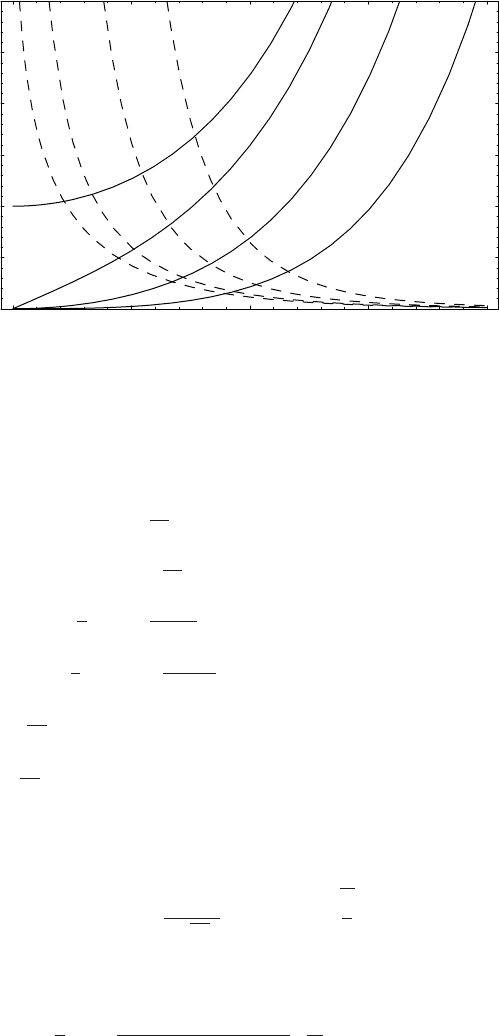
Figure 8.8 illustrates the first few modified Bessel functions for integer order and positive
arguments. The phase conventions ensure that both functions are real for positive x. These
functions are sometimes described as hyperbolic Bessel functions or as Bessel functions of
imaginary arguments, but the latter is not really an appropriate description because their
extension to complex arguments provides many of their most important properties (as for
practically all functions discussed in this course!). These functions do not have nonzero
real roots and are not mutually orthogonal.
One can develop all of the important properties of modified Bessel functions using
straightforward, but often tedious, analysis based upon cylindrical Bessel functions, but in
a belated attempt for brevity we forgo the details and merely quote some of the results.
302 8 Legendre and Bessel Functions
0 1 2 3 4
x
0.5
1
1.5
2
2.5
3
Figure 8.8. I
n
solid, K
n
dashed.
The basic recursion relations are
I
Ν1
zI
Ν1
z
2Ν
z
I
Ν
z (8.245)
K
Ν1
zK
Ν1
z
2Ν
z
K
Ν
z (8.246)
I
Ν1
z
Ν
z
I
Ν
z
I
Ν
z
z
(8.247)
K
Ν1
z
Ν
z
K
Ν
z
K
Ν
z
z
(8.248)
z
z
Ν
I
Ν
z
z
Ν
I
Ν1
z (8.249)
z
z
Ν
K
Ν
z
z
Ν
K
Ν1
z (8.250)
where the sign differences between relationships for I
Ν
and K
Ν
arise from the Ν dependence
of the conventional phases. The leading asymptotic forms are
Rez20 I
Ν
z
z
1/ 2
z
2Π
,K
Ν
z
Π
2
z
1/ 2
z
(8.251)
while the power series for I
Ν
takes the form
I
Ν
z
z
2
Ν
m0
1
AΝ m 1Am 1
z
2
4
m
(8.252)

8.3 Bessel Functions 303
Like the Neumann functions, one can show
K
Ν
z
Π
2
CscΝΠ
I
Ν
zI
Ν
z
(8.253)
for nonintegral Ν or
K
n
z
n
2
lim
Ν!n
(I
Ν
z
(Ν
(I
Ν
z
(Ν
(8.254)
for integer order. The power series for K
Ν
is cumbersome, but we note that the divergence
near the origin is given by
ReΝ > 0 K
Ν
z*
AΝ
2
z
2
Ν
(8.255)
K
0
z*ΓLog
z
2
(8.256)
where Euler’s gamma constant is given by
Γ lim
m!
3
4
4
4
4
4
5
m
k1
1
k
Logm
6
7
7
7
7
7
8
* 0.577 216a (8.257)
8.3.5 Spherical Bessel Functions
Next we consider spherical Bessel functions. In spherical coordinates the radial part of the
wave equation takes the form
u
''
r
k
2
1
r
2
ur0
ur
kr
Aj
krBn
kr (8.258)
where
j
x
Π
2
x
1/ 2
J
1
2
x (8.259)
n
x
Π
2
x
1/ 2
N
1
2
x (8.260)
are spherical Bessel functions of order , with j
regular and n
irregular at the origin. Nor-
mally is a nonnegative integer and the radial variable is nonnegative for physics applica-
tions, but it can still be helpful to generalize these definitions to include complex arguments
and arbitrary order. Thus, the spherical Bessel equation then takes the form
f
''
z
2
z
f
'
z
1
ΝΝ 1
z
2
f z0 fzAj
Ν
zBn
Ν
z (8.261)
with solutions
j
Ν
z
Π
2
z
1/ 2
J
Ν
1
2
z (8.262)
n
Ν
z
Π
2
z
1/ 2
N
Ν
1
2
z (8.263)
whose major properties can be derived easily from those for cylindrical Bessel functions.
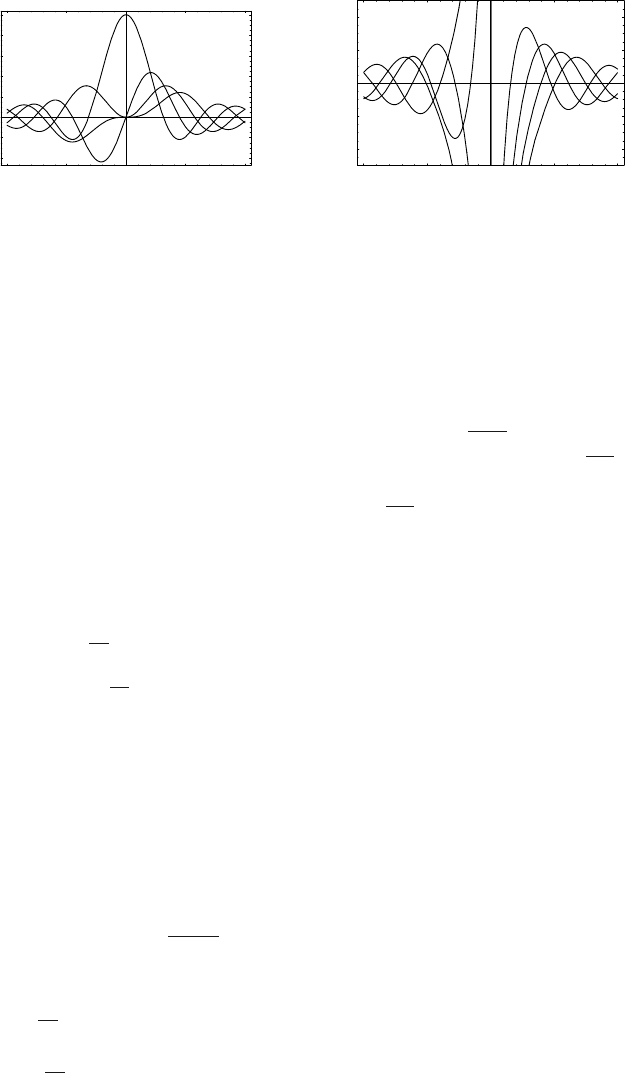
304 8 Legendre and Bessel Functions
10 5 0 5 10
x
0.4
0.2
0
0.2
0.4
0.6
0.8
1
j
x
10 5 0 5 10
x
0.4
0.2
0
0.2
0.4
n
x
Figure 8.9. Spherical Bessel functions.
Spherical Bessel functions, like their cylindrical cousins, are entire functions of the
complex variable Ν even though most physics applications only require nonnegative inte-
gers Ν! 2 0. For integer , j
z is an entire function while n
z has a pole of order 1
at the origin. For arbitrary Ν, both functions have a branch point at the origin and a cut nor-
mally taken below the negative real axis, but are analytic everywhere else. Although most
authors express the proportionality factor between j
Ν
and J
Ν1/ 2
as
Π/ 2z, that notation is
ambiguous on the negative real axis. Therefore, we prefer to use z
1/ 2
instead of
1/zto
ensure the proper phases on the negative real axis. With our convention the parity of j
x
is
,justasitisforJ
x, whereas the more common
1/z notation results in an addi-
tional negative sign for x<0. Figure 8.9 shows that spherical Bessel functions for integer
and real arguments are oscillatory with interleaved roots.
The asymptotic behavior of spherical Bessel functions are trigonometric functions
zj
Ν
z Sin
z
ΝΠ
2
(8.264)
zn
Ν
z Cos
z
ΝΠ
2
(8.265)
similar to those for cylindrical Bessel functions. In most physics applications we encounter
spherical Bessel functions in the form j
kr where k is a positive wave number and r a
positive radius, such that their oscillation amplitudes decrease asymptotically according
to kr
1
. However, for more general arguments the imaginary parts of either z or Ν result
in exponentially growing contributions that must be handled carefully and may limit the
usefulness of these asymptotic formulas.
The basic recursion relations take the form
f
Ν1
z f
Ν1
z
2Ν1
z
f
Ν
z (8.266)
Ν f
Ν1
zΝ1 f
Ν1
z2Ν1 f
'
Ν
z (8.267)
z
z
Ν1
f
Ν
z z
Ν1
f
Ν1
z (8.268)
z
z
Ν
f
Ν
z z
Ν
f
Ν1
z (8.269)

8.3 Bessel Functions 305
where f j, n,h
1
,h
2
is any family of solutions to the spherical Bessel equation or any
linear combination with coefficients independent of Ν or z. These can be obtained from
the corresponding results for cylindrical Bessel functions or from the differential equation.
Notice that
j
0
z
Sinz
z
(8.270)
n
0
z
Cosz
z
(8.271)
provide solutions to the spherical Bessel equation for Ν0. By inductively applying the
recursion relations, we then obtain Rayleigh’s formulas for nonnegative integers
j
zz
1
z
z
Sinz
z
(8.272)
n
zz
1
z
z
Cosz
z
(8.273)
h
1
zz
1
z
z
z
z
(8.274)
h
2
zz
1
z
z
z
z
(8.275)
that resemble Rodrigues’ formula. Explicit formulas can now be developed for positive
integers, which is the most important situation.
Using
J
Ν
z
z
2
Ν
m0
1
AΝ m 1Am 1
z
2
4
m
(8.276)
one finds
j
Ν
z
Π
2
z
2
Ν
m0
1
A
Νm
3
2
Am 1
z
2
4
m
(8.277)
immediately. For integer Ν! we use
A
1
2
Π
2 1!!
2
n
(8.278)
to obtain
j
zz
m0
1
2 2m 1!!m!
z
2
2
m
(8.279)
Similarly, for integer order we use
N
1
2
zCot
1
2
Π
J
1
2
zCsc
1
2
Π
J
1
2
z
1
J
1
2
z (8.280)