
Kerry J., Butler P. Smart Packaging Technologies for Fast Moving Consumer Goods
Подождите немного. Документ загружается.

OTE/SPH OTE/SPH
JWBK126-FM JWBK126-Kerry March 19, 2008 10:3 Char Count= 0
Contents xi
15.3 Latest Developments and Future Opportunities 275
15.3.1 Better Product Protection 275
15.3.2 Better Product/Packaging Communication 276
15.3.3 Better Product Delivery 277
15.3.4 New Forms of Functionality 278
15.3.5 Health in the Home 278
16 Laser Surface Authentication – Biometrics for Brand Protection
of Goods and Packaging 281
Russell Cowburn
16.1 Introduction 281
16.2 Naturally Occurring Randomness 281
16.3 Diffuse Laser Scattering 282
16.4 The Statistics of LSA 285
16.5 The Practicalities of Using LSA 296
16.6 Applications and Advantages of LSA 300
References 303
17 Legislative Issues Relating to Smart Packaging 305
Rinus Rijk
17.1 Introduction 305
17.2 Smart Packaging 307
17.3 Legislation Relevant to Smart Packaging 309
17.3.1 Framework Regulation (EC) No 1935/2004 on Food Contact
Materials 309
17.3.2 Specific Regulation on Active and Intelligent Materials
and Articles 310
17.3.3 Authorisation Procedure and EFSA Guidelines 312
17.3.4 General Safety 315
17.3.5 Labelling 316
17.4 Demonstration of Compliance of Active and Intelligent Packaging 317
17.4.1 Basic Rules for Migration Testing 317
17.4.2 Active and Intelligent Packaging 318
17.5 Conclusions 320
References 320
Index 325
OTE/SPH OTE/SPH
JWBK126-FM JWBK126-Kerry March 19, 2008 10:3 Char Count= 0
Contributors
Paul Butler Packaging Materials and Technologies Ltd, Rotherleigh House, Harpsden
Way, Henley-on-Thames, Oxon, RG9 1NS, UK
Robert H. Clarke Michigan State University, East Lansing, Michigan, USA
Russell Cowburn Blackett Physics Laboratory, Imperial College London, Prince Consort
Road, London SW7 2AZ, UK
Karl Crowley Adaptive Sensors Group, National Centre for Sensor Research, School of
Chemical Sciences, Dublin City University, Dublin, Ireland
Brian P. F. Day Food Science Australia, 671 Sneydes Road, Werribee, VIC 3030,
Australia
T. F. Delgado Escola Superior de Biotecnologia, Rua Dr Antonio Bernardino de Almeida,
4200-072 Porto, Portugal
Dermot Diamond Adaptive Sensors Group, National Centre for Sensor Research, School
of Chemical Sciences, Dublin City University, Dublin, Ireland
Robert Esse Humidipak, Inc., Minnetonka, Minnesota, USA
Lindsey Gaunt Research Development Manager/Project Manager – Medicine and Den-
tistry, University of Bristol, Bristol, UK
S. A. Hogan Department of Food and Nutritional Sciences, University College, Cork,
Ireland
Jung H. Han
OTE/SPH OTE/SPH
JWBK126-FM JWBK126-Kerry March 19, 2008 10:3 Char Count= 0
xiv Contributors
Joseph P. Kerry Department of Food and Nutritional Sciences, University College, Cork,
Cork City, Co. Cork, Ireland
Kyungwon Kim Department of Food Science, Oregon State University, Corvallis,
Oregon 97334, USA
Young-Teck Kim Department of Packaging Science, Clemson University, Clemson,
South Carolina 29634, USA
Robert M. Kimmel Department of Food Science at the University of Manitoba,
Winnipeg, Manitoba, R3T 2N2, Canada
Jose Maria Lagar´on
Amparo L´opez-Rubio Bragg Institute, Australian Nuclear Science and Technology Or-
ganisation, Lucas Heights, New South Wales, Australia
Maria Jose Ocio
F. A. R. Oliveira Escola Superior de Biotecnologia, Rua Dr Antonio Bernardino de
Almeida, 4200-072 Porto, Portugal
Maurice G. O’Sullivan DepartmentofFood and Nutritional Science, UniversityCollege,
Cork, Ireland
Alexis Pacquit Adaptive Sensors Group, National Centre for Sensor Research, School
of Chemical Sciences, Dublin City University, Dublin, Ireland
Maria de F´atima Po¸cas Escola Superior de Biotecnologia, Rua Dr Antonio Bernardino
de Almeida, 4200-072 Porto, Portugal
Rinus Rijk Consultant to Keller and Heckman LLP, Brussels, Belgium
Albert Saari Humidipak, Inc., Minnetonka, Minnesota, USA
Maria Smolander VTT Technical Research Centre of Finland, P.O. Box 1000, FI-02044
VTT
James Stafford UK Head of RFID Adaption, Avery Dennison, Information and Brand
Management Divison, UK
Petros Taoukis Laboratory of Food Chemistry and Technology, School of Chemical
Engineering, National Technical University of Athens, Greece
OTE/SPH OTE/SPH
JWBK126-FM JWBK126-Kerry March 19, 2008 10:3 Char Count= 0
Preface
There is no official definition of smart packaging but most would agree that it is packaging
that goes beyond the use of simple packaging materials combined with traditional printed
features such as alphanumerics, graphics and simple barcodes. It can apply to primary,
secondary, or tertiary packaging. In the literature this new type of packaging has been
classified in many ways – ‘active’, ‘intelligent’, ‘smart’, ‘diagnostic’, ‘functional’ and
‘enhanced’ are all terms that have been used.
In this book, we prefer to gather all forms of packaging where the package does more than
simply protect, store and give information about the product under the all-embracing term
‘smart packaging’. This definition of smart packaging therefore encompasses aspects of
packaging design and the incorporation of mechanical, chemical, electrical and electronic
forces, or combination of these, within the package. It includes packaging that is active
in some way with or without communication to the users and it also includes the most
common form of electronic smart packaging, RFID-enabled packaging. Although we have
attempted to unify the book around the ‘smart packaging’ terminology, inevitably some of
our authors have preferred to stick with their own familiar definitions.
Packaging needs to become smarter in the future for a number of reasons. Up to now,
packaging has done an excellent job in preventing waste and getting products to customers
in good condition. However, the world of consumer packaged goods is mature and the
market saturated, at least in the developed world, so a new paradigm is necessary.
We live in a rapidly changing world where yesterday’s status quo is no longer good
enough. At the retail store or supermarket, a sea of coloured noise greets shoppers – row
upon row of near identical packaged products that fail to engage the senses, lift the spirits,
educate, inspire or entertain. Responsive features are one of the most exciting aspects
of smart packaging and present many opportunities to improve the consumer/packaging
interface, which has remained unchanged for decades. Future packaging must offer and
deliver a more compelling value proposition to the consumer, particularly in terms of
convenience and on-the-go support to increasingly hectic lifestyles.
OTE/SPH OTE/SPH
JWBK126-FM JWBK126-Kerry March 19, 2008 10:3 Char Count= 0
xvi Preface
A major part of this book is devoted to the challenges and imperatives for tomorrow’s
packaging for the food industry. Requirements to improve food product quality and safety,
enhance or stabilise food composition and nutrition, extend shelf-life product stability or
build confidence, information or consumer convenience into food packs are fast becoming
market demands. Future packaging formats must be designed with these requirements
in mind. Numerous examples of commercially used smart packaging technologies are
provided, along with research presenting current areas that are receiving a lot of attention
for potential future commercial usage.
RFID-enabled packaging is a hugely important developmentareaandconsequently forms
a part of this book butis not treated in great depth. We have chosen to highlight a contribution
on the physics of RFID readability, and the strong influences of packaging and product
materials, and a real-life successful case study in a retail application. Readers are referred
to the many other publications on RFID for further details of this important technology.
Significant smart packaging opportunities exist in non-food market sectors such as phar-
maceuticals, beverages, health and beauty, and household products, and these challenges
are covered in subsequent chapters. Included as a separate chapter is the new and exciting
technology of laser surface authentication – a potentially powerful anti-counterfeiting pro-
cess for packaging. Finally the important area of legislation as it relates to smart packaging
formats is explored.
Consumer benefits will ultimately drive smart packaging developments and must be
clearly communicated to the consumer. The strategy of just throwing new products at
consumers needs to change, and for real packaging innovation to move up marketing and
advertising budgets. Smart packaging can be considered as a natural progression in package
innovation for many fast moving consumer goods (FMCGs). After all, competition for shelf
space has never been more intense, and the competition arena is increasingly moving from
media to the point-of-purchase, making packaging more important than ever before.
Joseph Kerry
University College Cork, Ireland
Paul Butler
Packaging Materials and Technologies Ltd, UK
OTE/SPH OTE/SPH
JWBK126-Cp JWBK126-Kerry March 3, 2008 14:28 Char Count= 0
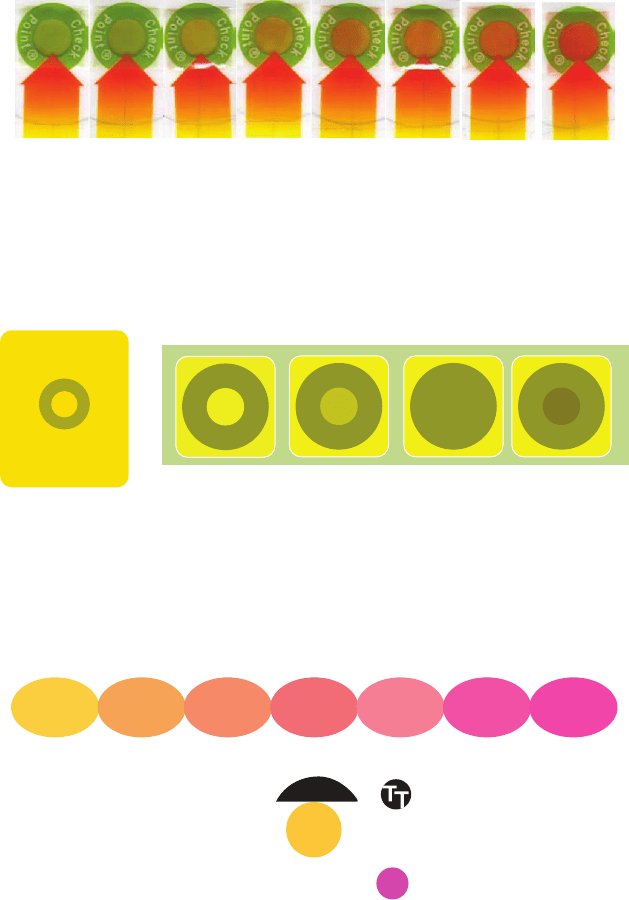
Figure 4.1 Response scale of enzymatic CheckPoint
R
TTI (Vitsab, Sweden).
Fresh-Check
®
Indicator
Best when used
before center is
darker than ring.
Figure 4.2 Polymer based Fresh-Check
R
TTI (Temptime Corp.).
35-K
= Expired
ACTIVE
It
color of “ACT
IV
E” large circ
le
matches
c
olor of sma
ll
circle,
T
T
Sensor
TM
is exp
ired.
sensor
T
M
TT Sensor
T
M
NOT
A
S
A
F
E
-
FO
R
-USE
I
NDICA
TOR
Figure 4.5 TT Sensor
TM
TTI (Avery Dennison Corp.).
Smart Packaging Technologies for Fast Moving Consumer Goods Edited by Joseph Kerry and Paul Butler
© 2008 John Wiley & Sons, Ltd. ISBN: 978-0-470-02802-5
OTE/SPH OTE/SPH
JWBK126-Cp JWBK126-Kerry March 3, 2008 14:28 Char Count= 0
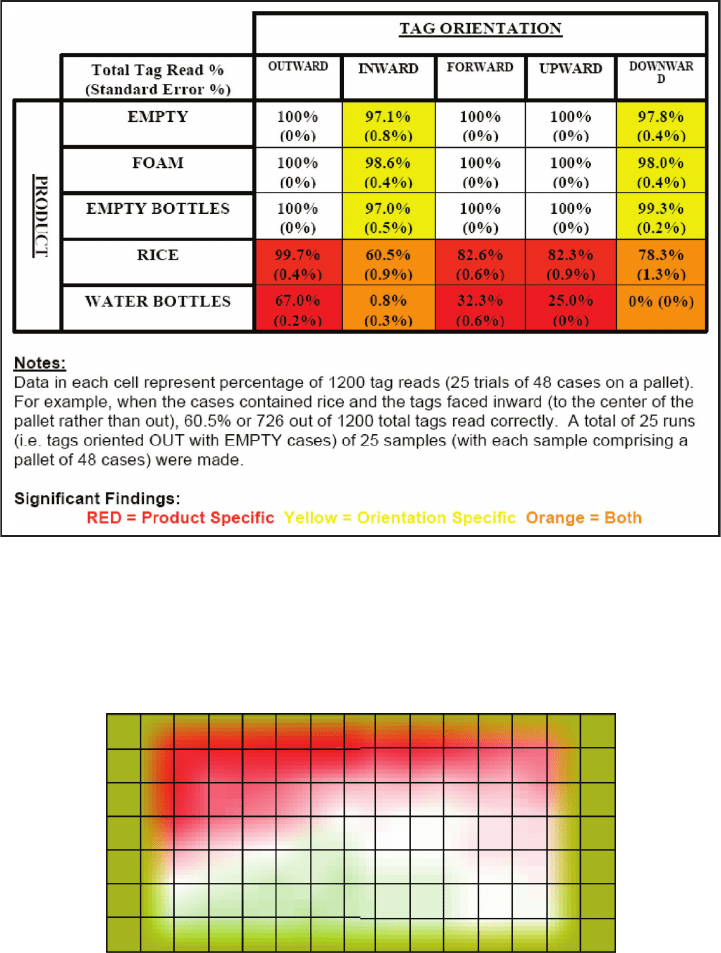
Figure 10.4 Results of Tazelaar experiment on product/package influence on RFID
readability.
Figure 10.9 Example RFID hotspot result for one side of a case [46].

OTE/SPH OTE/SPH
JWBK126-01 JWBK126-Kerry March 3, 2008 11:34 Char Count= 0
1
Active Packaging of Food
Brian P. F. Day
1.1 Introduction and Background Information
Active packaging has been variously classified in the literature by a number of differing
definitions. Some of these definitions are either so broad as to include many packages that
are clearly not active, or so narrow as to exclude important subsets of active packaging
(Robertson, 2006). According to previous reviews, active packaging has been classified as
a subset of smart packaging and referred to as the incorporation of certain additives into
packaging film or within packaging containers with the aim of maintaining and extending
product shelf-life (Day, 2001; 2003). However, as pointed out by Robertson (2006), this
definition focuses on the additives that make a package active and hence excludes certain
categories such as temperature compensating polymeric films for fresh fruit and vegetables.
Another definition states that packaging may be termed active when it performs some
desired role in food preservation other than providing an inert barrier to external conditions
(Rooney, 1995). Robertson (2006) correctly identifies ‘desired’ and ‘inert’ as the key words
in this definition, since all packaging materials, except glass, are not totally inert and can
contribute undesirable components to food or absorb desirable components from food.
Consequently, for the purposes of this chapter, active packaging is defined as ‘packaging in
which subsidiary constituents have been deliberately included in or on either the packaging
material or the package headspace to enhance the performance of the package system’
(Robertson. 2006). The key words here are ‘deliberately’ and ‘enhance’, and implicit in
this definition is that performance of the package system includes maintaining the sensory,
safety and quality aspects of the food.
Information emanating fromFood Science Australiais given afterthe exercise of allreasonable careand skill inits compilation,
preparation and issue, but is provided without liability in its application and use.
Smart Packaging Technologies for Fast Moving Consumer Goods Edited by Joseph Kerry and Paul Butler
© 2008 John Wiley & Sons, Ltd. ISBN: 978-0-470-02802-5
OTE/SPH OTE/SPH
JWBK126-01 JWBK126-Kerry March 3, 2008 11:34 Char Count= 0
2 Smart Packaging Technologies for Fast Moving Consumer Goods
Hence, active packaging includes components of packaging systems that are capable
of scavenging oxygen; absorbing carbon dioxide, moisture, ethylene and/or flavour/odour
taints; releasing carbon dioxide, ethanol, antioxidants and/or other preservatives; and/or
maintaining temperature control and/or compensating for temperature changes. Pira Inter-
national Ltd estimated the global value of the total active packaging market in 2005 to be
worth $1.558 billion and has forecasted this market in 2010 to be worth $2.649 billion
(Anon., 2005e). Table 1.1 lists examples of active packaging systems, some of which may
offer extended shelf-life opportunities for new categories of food products (Day, 2003;
Rooney, 1995; Brody, 2005; Robertson, 2006).
Active packaging has been used with many food products and is being tested with nu-
merous others. Table 1.1 lists some of the food applications that have benefited from active
packaging technology. It should be noted that all food products have a unique deterioration
mechanism that must be understood before applying this technology. The shelf-life of pack-
aged food is dependent on numerous factors such as the intrinsic nature of the food (e.g. pH,
water activity, nutrient content, occurrence of antimicrobial compounds, redox potential,
respiration rate and biological structure) and extrinsic factors (e.g. storage temperature,
relative humidity and the surrounding gaseous composition). These factors will directly
influence the chemical, biochemical, physical and microbiological spoilage mechanisms
of individual food products and their achievable shelf-lives. By carefully considering all of
these factors, it is possible to evaluate existing and developing active packaging technolo-
gies and apply them for maintaining the quality and extending the shelf-life of different
food products (Day, 2001).
Active packaging is not synonymous with intelligent packaging, which simplistically
refers to packaging that senses and informs (Day, 2003). Robertson (2006) defines intel-
ligent packaging as packaging that contains an external or internal indicator to provide
information about aspects of the history of the package and/or quality of the food. In-
telligent packaging devices are capable of sensing and providing information about the
function and properties of packaged food and can provide assurances of pack integrity,
tamper evidence, product safety and quality, as well as being utilised in applications such
as product authenticity, anti-theft and product traceability. Intelligent packaging devices
include time–temperature indicators, gas sensing dyes, microwave doneness indicators,
microbial growth indicators, physical shock indicators, and numerous examples of tamper
proof, anti-counterfeiting and anti-theft technologies (Day, 2001; Robertson, 2006).
It should be noted that there is a certain grey area with regards to what constitutes
active and/or intelligent packaging (Brody, 2005; Robertson, 2006). The vast majority of
consumers could not tell the difference and probably do not care so long as the packaging is
safe and functional (Kerry, personal communication). Smart packaging can be considered
an all-embracing term used to encompass both active and intelligent packaging, as well
functional and emotional packaging in addition to clever packaging design (Kerry and
Butler, foreword of this book; Robertson, 2006).
The intention of this chapter is to provide an overview of active packaging and to describe
briefly the different types of device, the scientific principles behind them, the principal food
applications and some of the food safety and regulatory issues that need to be considered
by potential users. The major focus of this chapter is on oxygen scavengers but other active
packaging technologies are described and some recent developments are highlighted. More
detailed information on active packaging can be obtained from some of the other chapters
in this book as well as the references listed.

OTE/SPH OTE/SPH
JWBK126-01 JWBK126-Kerry March 3, 2008 11:34 Char Count= 0
Active Packaging of Food 3
Table 1.1 Selected examples of active packaging systems
Active packaging
system Mechanisms Food applications
Oxygen scavengers Iron based
Metal/acid
Nylon MXD6
Metal (e.g. platinum) catalyst
Ascorbate/metallic salts
Enzyme based
Bread, cakes, cooked rice,
biscuits, pizza, pasta,
cheese, cured meats and
fish, coffee, snack foods,
dried foods and beverages
Carbon dioxide
scavengers/emitters
Iron oxide/calcium hydroxide
Ferrous carbonate/metal halide
Calcium oxide/activated charcoal
Ascorbate/sodium bicarbonate
Coffee, fresh meats and fish,
nuts and other snack food
products and sponge cakes
Ethylene scavengers Potassium permanganate
Activated carbon
Activated clays/zeolites
Fruit, vegetables and other
horticultural products
Preservative
releasers
Organic acids
Silver zeolite
Spice and herb extracts
BHA/BHT antioxidants
Vitamin E antioxidant
Chlorine dioxide/sulphur dioxide
Cereals, meats, fish, bread,
cheese, snack foods, fruit
and vegetables
Ethanol emitters Encapsulated ethanol Pizza crusts, cakes, bread,
biscuits, fish and bakery
products
Moisture absorbers PVA blanket
Activated clays and minerals
Silica gel
Fish, meats, poultry, snack
foods, cereals, dried foods,
sandwiches, fruit and
vegetables
Flavour/odour
absorbers
Cellulose triacetate
Acetylated paper
Citric acid
Ferrous salt/ascorbate
Activated carbon/clays/zeolites
Fruit juices, fried snack
foods, fish, cereals, poultry,
dairy products and fruit
Temperature control
packaging
Non-woven plastics
Double-walled containers
Hydrofluorocarbon gas
Quicklime/water
Ammonium nitrate/water
Calcium chloride/water
Super corroding alloys/salt water
Potassium permanganate/glycerine
Ready meals, meats, fish,
poultry and beverages
Temperature
compensating films
Side chain crystallisable polymers Fruit, vegetables and other
horticultural products
Reproduced and updated from Active Packaging of Foods, New Technologies Bulletin No. 17. Copyright (1998), with
permission from the Campden & Chorleywood Food Research Association, Chipping Camden, Glos., UK