
Kerry J., Butler P. Smart Packaging Technologies for Fast Moving Consumer Goods
Подождите немного. Документ загружается.

OTE/SPH OTE/SPH
JWBK126-03 JWBK126-Kerry March 19, 2008 10:2 Char Count= 0
34 Smart Packaging Technologies for Fast Moving Consumer Goods
major function of oxygen is to maintain the muscle pigment myoglobin in its oxygenated
form, oxymyoglobin, in red meats.
Important properties by which consumers judge meat are appearance, texture and flavour
(Faustman and Cassens, 1990). Appearance, specifically colour, is a critical quality attribute
in influencing the consumer’s decision to purchase. In fresh red meats, myoglobin can exist
in one of three chemical forms. Deoxymyoglobin, which is purple, is rapidly oxygenated
to cherry red oxymyoglobin on exposure to air. Over time, oxymyoglobin is oxidised to
metmyoglobin which results in a brown discoloration associated with a lack of freshness
(Faustman and Cassens, 1990). Low oxygen concentrations favour oxidation of oxymyo-
globin to metmyoglobin (Ledward, 1970). In order to minimise metmyoglobin formation in
fresh red meats, oxygen must be excluded from the packaging environment to below 0.05 %
or be present at saturating levels (Faustman and Cassens, 1990). High oxygen levels within
MAP also promote oxidation of muscle lipids over time with deleterious effect on fresh
meat colour (Kerry et al., 2000). Lipid oxidation is a major quality deteriorative process
in meat, resulting in a variety of breakdown products that produce undesirable off-odours
and flavours.
In cured, cooked, packaged meat products, factors such as percentage residual oxygen,
product to headspace volume ratio, oxygen transmission rate of the packaging material,
storage temperature, light intensity and product composition are critical factors affecting
colour stability and ultimately consumer acceptance (Møller et al., 2003). Nitrosylmyo-
globin, formed from a reaction between myoglobin and nitrite is denatured, upon cooking,
to nitrosylmyochrome which gives the characteristic pink colour to cooked, cured ham
(Juncher et al., 2003). Exposure to light in combination with oxygen is of critical impor-
tance to the colour stability of cooked cured ham as light exposure, even at low oxygen
levels, can cause oxidation of nitrosylmyochrome to denatured metmyoglobin, which im-
poses an undesirable greyness to the meat surface (Møller et al., 2000). Commercially,
discoloration in pre-packed, cooked, cured ham is associated with low residual oxygen
levels and is overcome with the use of oxygen scavengers or an oxygen scavenging film.
Also, with respect to fresh red meats, oxygen scavengers used in conjunction with a carbon
dioxide/nitrogen gas mixture extends the colour shelf-life of fresh beef (Allen et al., 1996).
Oxygen scavengers are some of the best known examples of smart packaging devices used
with oxygen sensitive meat-based products.
3.2 Oxygen Scavengers
High levels of oxygen present in packs containing meat and poultry facilitate microbial
growth, off-flavour and off-odour development, colour changes and nutritional losses,
thereby causing significant reduction in the quality, safety and overall shelf life stability of
these muscle foods. This problem is further compounded in muscle-based food products
where clean labelling requirements and minimal processing procedures are being used to
satisfy retailer, and ultimately consumer, concerns and demands for fresher and less pro-
cessed muscle food products. Control of oxygen levels in oxygen-sensitive food packs is
critical in order to limit the rate of such deteriorative and spoilage reactions. Oxygen ab-
sorbing systems provide an alternative to vacuum and gas flushing technologies as a means
of improving product quality and shelf life (Ozdemir and Floros, 2004), while helping
OTE/SPH OTE/SPH
JWBK126-03 JWBK126-Kerry March 19, 2008 10:2 Char Count= 0
Smart Packaging of Meat and Poultry Products 35
to circumvent problems created by ‘chemical or preservative free’ minimally processed
muscle foods. Vacuum packaging and MAP techniques do not always facilitate complete
removal of oxygen. Oxygen that permeates through the packaging film or is trapped within
the meat or between meat slices cannot be removed by these techniques. Quality changes
in oxygen-sensitive foods can be minimised through the use of oxygen scavengers, which
absorb residual oxygen following packaging (Vermeiren et al., 1999). Existing oxygen
scavenging technologies utilise one or more of the following concepts: iron powder ox-
idation, ascorbic acid oxidation, photosensitive dye oxidation, enzymatic oxidation (e.g.
glucose oxidase and alcohol oxidase), unsaturated fatty acids (e.g. oleic or linolenic acid),
rice extract or immobilised yeast on a solid substrate (Floros et al., 1997; Vermeiren et al.,
1999). Structurally, the oxygen scavenging component of a package can take the form of
a sachet, label, film (incorporation of scavenging agent into packaging film), card, closure
liner or concentrate (Suppakul et al., 2003). The majority of commercially available oxygen
scavengers are based on the principle of iron oxidation (Smith et al., 1990):
Fe −→ Fe
2+
+ 2e
−
1
/
2
O
2
+ H
2
O + 2e
−
−→ 2OH
−
Fe
2+
+ 2OH
−
−→ Fe(OH)
2
Fe(OH)
2
+
1
/
4
O
2
+
1
/
2
H
2
O −→ Fe(OH)
3
Comprehensive details on a variety of commercially available oxygen scavengers are
presented by Suppakul et al. (2003). Ageless
r
(Mitsubishi Gas Chemical Co., Japan) is
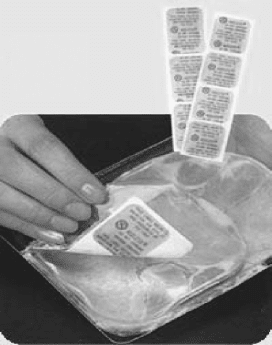
the most common oxygen scavenging system based on iron oxidation (Figure 3.1). These
scavengers are designed to reduce oxygen levels to less than 0.1 %. Other examples of
oxygen absorbing sachets include ATCO
r
(used commercially as oxygen scavengers in
pre-packed, cooked and cooked, sliced meat products – Emco Packaging Systems, UK;
Figure 3.1 Ageless
R
Label Mitsubishi Gas Chemical Co. Reproduced with permission from
Ageless Sales, Mitsubishi Gas Chemical Co. Japan.
OTE/SPH OTE/SPH
JWBK126-03 JWBK126-Kerry March 19, 2008 10:2 Char Count= 0
36 Smart Packaging Technologies for Fast Moving Consumer Goods
O
2
O
2
O
2
O
2
O
2
O
2
O
2
O
2
O
2
O
2
O
2
O
2
O
2
O
2
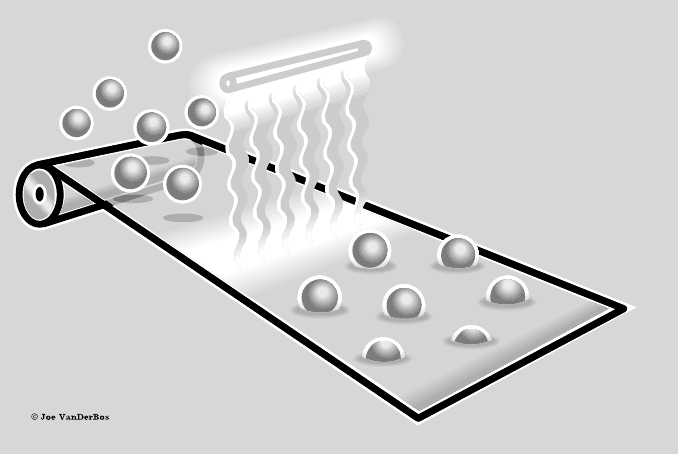
Figure 3.2 Light-activated oxygen scavenging films Cryovac
R
OS Films. Reproduced with
permission from Cryovac Food Packaging, Sealed Air Corporation, USA.
Standa Industrie, France), FreshPax
r
(Multisorb Technologies, Inc., USA) and Oxysorb
r
(Pillsbury Co., USA).
The scientific literature contains a number of references to studies that examine the
influence of oxygen scavenger sachets on meat quality and these have been reviewed by
Kerry et al. (2006).
An alternative to sachets involves the incorporation of the oxygen scavenger into the
packaging structure itself. This minimizes negativeconsumer response and offersa potential
economic advantage through increased outputs. It also eliminates the risk of accidental
rupture of the sachets and inadvertent consumption of their contents (Suppakul et al.,
2003). Cryovac
r
0S2000
TM
polymer based oxygen scavenging film has been developed
by Cryovac Div., Sealed Air Corporation, USA. This UV light-activated oxygen scavenging
film (Figure 3.2), composed of an oxygen scavenger layer extruded into a multilayer film,
can reduce headspace oxygen levels from 1 % to ppm levels in 4–10 days and is comparable
in effectiveness with oxygen scavenging sachets. The OS2000
TM
scavenging films have
applications in a variety of food products including dried or smoked meat products and
processed meats (Butler, 2002). A similar UV light-activated oxygen scavenging polymer
ZERO
2
r
, developed by CSIRO, Division of Food Science Australia in collaboration with
VisyPak Food Packaging, Visy Industries, Australia, forms a layer in a multilayer package
structure and can be used to reduce discoloration of sliced meats. Another successful
commercial example for use with meat is the OSP
TM
system (Chevron Philips Chemical
Company, USA). The active substances of OSP
TM
systems are ethylene methacrylate and
cyclohexene methacrylate, which need to be blended with a catalyst or photoinitiator in
order to activate the oxygen scavenging mechanism.
OTE/SPH OTE/SPH
JWBK126-03 JWBK126-Kerry March 19, 2008 10:2 Char Count= 0
Smart Packaging of Meat and Poultry Products 37
3.3 Carbon Dioxide Scavengers and Emitters
As stated previously, the function of carbon dioxide within a packaging environment is to
suppress microbial growth. Therefore a carbon dioxide generating system can be viewed
as a technique complementary to oxygen scavenging (Suppakul et al., 2003). Since the
permeability of carbon dioxide is three-to five-times higher than that of oxygen in most
plastic films, it must be continuously generated to maintain desired concentration within
the package (Ozdemir and Floros, 2004). High carbon dioxide levels (10–80 %) are desir-
able for foods such as meat and poultry in order to inhibit surface microbial growth and
extend shelf life. Removal of oxygen from the package creates a partial vacuum which
may result in the collapse of flexible packaging. Also, when a package is flushed with a
mixture of gases including carbon dioxide, the carbon dioxide may dissolve in the product
and create a partial vacuum. In such cases, the simultaneous release of carbon dioxide from
oxygen-consuming sachets is desirable. Such systems are based on either ferrous carbonate
or a mixture of ascorbic acid and sodium bicarbonate (Rooney, 1995). Examples of com-
mercially available dual action combined carbon dioxide generators/oxygen scavengers are
Ageless
r
G (Mitsubishi Gas Chemical Co., Japan) and FreshPax
r
M (Multisorb Tech-
nologies, Inc, USA). Carbon dioxide emitting sachets or labels can also be used alone. The
Verifrais
TM
package, manufactured by SARL Codimer (Paris, France), has been used to
extend the shelf life of fresh meats. This innovative package consists of a standard MAP
tray but has a perforated false bottom under which, a porous sachet containing sodium
bicarbonate/ascorbate is positioned. When juice exudates from the packaged meat drips
onto the sachet, carbon dioxide is emitted, thus replacing any carbon dioxide absorbed by
the meat and preventing package collapse.
The inhibition of spoilage bacteria utilizing active packaging technology may reduce bac-
terial competition and thus permit growth of toxin producing, non-proteolytic C. botulinum
or other pathogenic bacteria (Sivertsvik, 2003). L¨ovenklev et al. (2004) reported that while
a high concentration of carbon dioxide decreased the growth rate of non-proteolytic C.
botulinum type B, the expression and production of toxin was greatly increased. As such,
the risk of botulism may be increased, rather than reduced, in high carbon dioxide MAP
systems. It would appear that further research into the safety risks associated with the use
of carbon dioxide in such packaging systems is necessary.
Carbon dioxide absorbers, (sachets) consisting of either calcium hydroxide and sodium
hydroxide, or potassium hydroxide, calcium oxide and silica gel, may be used to remove
carbon dioxide during storage in order to preventbursting of packages. Possible applications
include use in packs of dehydrated poultry products and beef jerky (Ahvenainen, 2003).
3.4 Moisture Control
The main purpose of liquid water control is to lower the water activity of the product,
thereby suppressing microbial growth (Vermeiren et al., 1999). However, as the growth
sector in fresh chilled muscle-based foods has evolved, another very good reason to control
residual levels of predominantly product-released water in packs is to enhance the visual
impact of product at retail level during product–consumer interaction. Temperature cycling
OTE/SPH OTE/SPH
JWBK126-03 JWBK126-Kerry March 19, 2008 10:2 Char Count= 0
38 Smart Packaging Technologies for Fast Moving Consumer Goods
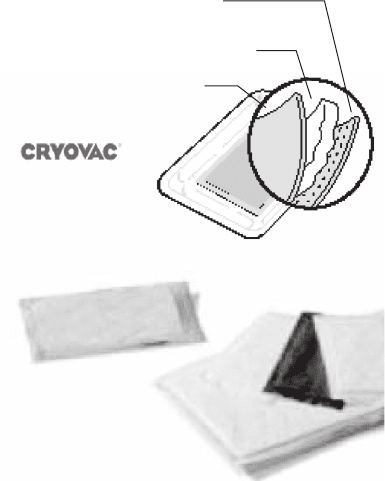
Polyethylene film perforated
with one-way valves
Highly absorbent virgin fluff pulp
Non-permeable top layer
polyethylene film
Figure 3.3 Dri-Loc
R
Absorbent pads, Cryovac
R
, Sealed Air Corporation. Reproduced with
permission from Cryovac Food Packaging, Sealed Air Corporation, USA.
of high water activity foods, like meat and poultry products, has led to the use of plastics
with an antifog additive that lowers the interfacial tension between the condensate and
the film. This promotes film transparency and enables the customer to see clearly the
packaged food (Rooney, 1995), although it does not affect the amount of liquid water
present inside the package. Several companies manufacture drip absorbent sheets or pads
such as Cryovac
r
Dri-Loc
r
(Sealed Air Corporation, USA), Thermarite
r
or Peaksorb
r
(Australia), Toppan
TM
(Japan) and Fresh-R-Pax
TM
(Maxwell Chase Technologies, LLC,
USA) for liquid control in high water activityfoods such as meat and poultry. Typically, these
systems consist of a super-absorbent polymer located between two layers of a microporous
or non-woven polymer (Figure 3.3). Such sheets are used as drip-absorbing pads placed
under whole chickens or chicken cuts (Suppakul et al., 2003).
3.5 Antimicrobial Packaging
Microbial contamination and subsequent growth reduces the shelf-life of foods and in-
creases the risk of food borne illness. Traditional methods of preserving foods from
the effects of microbial growth include thermal processing, drying, freezing, refrigera-
tion, irradiation, MAP and addition of antimicrobial agents or salts. However some of
these techniques cannot be applied to certain products such as fresh meats (Quintavalla
OTE/SPH OTE/SPH
JWBK126-03 JWBK126-Kerry March 19, 2008 10:2 Char Count= 0
Smart Packaging of Meat and Poultry Products 39
and Vicini, 2002). Antimicrobial packaging is a promising form of active packaging
especially for meat and poultry products. Since microbial contamination of muscle-based
food products occurs primarily at the surface, attempts have been made to improve safety
and to delay spoilage by the use of antibacterial sprays or dips. Limitations of such an ap-
proach include neutralisation of antibacterial compounds on contact with the meat surface
or diffusion of compounds from the surface into the meat mass. Incorporation of bacterici-
dal agents into meat formulations may result in partial inactivation of the active compounds
by meat constituents and therefore exert a limited effect on surface microflora (Quintavalla
and Vicini, 2002). Antimicrobial food packaging materials must extend the lag phase and
reduce the growth phase of microorganisms in order to extend shelf life and to main-
tain product quality and safety (Han, 2000). Comprehensive reviews on antimicrobial food
packaging have been published by Appendini and Hotchkiss (2002), Suppakul et al. (2003),
and Coma (2008). To confer antimicrobial activity, antimicrobial agents may be coated,
incorporated, immobilised, or surface modified onto package materials (Suppakul et al.,
2003). The classes of antimicrobial compound used include acid anhydrides, alcohols, bac-
teriocins, chelators, enzymes, organic acids and polysaccharides. Examples of commercial
antimicrobial materials include concentrates (e.g. AgION
TM
, AgION Technologies LLC,
USA), extracts (Nisaplin
r
(Nisin), Integrated Ingredients, USA) and films (Microgard
TM
Rhone-Poulenc, USA). Antimicrobial packages have not been commercially successful,
with the exception in Japan, of Ag-substituted zeolite, which is the most common antimi-
crobial agent incorporated into plastics. Ag-ions inhibit a range of metabolic enzymes and
have strong antimicrobial activity (Vermeiren et al., 1999). Antimicrobial films can be clas-
sified into two types: those that contain an antimicrobial agent that migrates to the surface
of the food and, those which are effective against surface growth of microorganisms with-
out migration. Research conducted on the use, application and operation of antimicrobial
agents contained within or on meat packaging materials has been reviewed by Kerry et al.
(2006) and Coma (2008).
3.6 Sensors
The most important (non-inert) gases in MAP products are oxygen and carbon dioxide
and their headspace partial pressures serve as useful indicators of the quality status of
a meat product. Headspace profiles of oxygen and carbon dioxide can change over time
and are influenced by product type, respiration, packaging material, pack size, volume
ratios, storage conditions, package integrity, etc. A number of analytical techniques are
available to monitor gas phases in MAP products. Instrumental techniques such as GC and
GC/MS are not suitable for rapid measurements and are time consuming and expensive.
Portable headspace oxygen and/or carbon dioxide gas analysers use ‘minimally destructive’
techniques (packages can be resealed) but tend not to be applicable to real-time, on-line,
control of packaging processes or large scale usage. An optical sensor approach is thought
to offer a realistic alternative to such conventional methods.
Many intelligent packaging concepts involve the use of sensors and indicators. For the
purposes of clarity the two areas will be discussed separately, although such a distinction is
somewhat arbitrary and some overlap is unavoidable. In general, the use of these systems
OTE/SPH OTE/SPH
JWBK126-03 JWBK126-Kerry March 19, 2008 10:2 Char Count= 0
40 Smart Packaging Technologies for Fast Moving Consumer Goods
is envisaged in terms of incorporation into established meat and poultry packaging formats
such as MAP and vacuum packaging.
A sensor is defined as a device used to detect, locate or quantify energy or matter, giving
a signal for the detection or measurement of a physical or chemical property to which
the device responds (Kress-Rogers, 1998a). To qualify as a sensor, a device must provide
continuous output of a signal. Most sensors contain two basic functional units : a receptor
and a transducer. In the receptor physical or chemical information is transformed into a
form of energy that may be measured by the transducer. The transducer is a device capable
of transforming the energy carrying the physical or chemical information about the sample
into a useful analytical signal.
Research and developmentof sensortechnology has been largelyconcentrated in biomed-
ical and environmental applications (Demas et al., 1999). The specifications of such sen-
sors are, however, quite different from those required for food packaging applications.
The development of improved methods to determine food quality such as freshness, mi-
crobial spoilage, oxidative rancidity or oxygen and/or heat induced deterioration is ex-
tremely important to food manufacturers. In order to maximise the quality and safety
of foodstuffs, a prediction of shelf-life based on standard quality control procedures is
normally undertaken. Replacement of such time-consuming and expensive quality mea-
surements with rapid, reliable and inexpensive alternatives has lead to greater efforts being
made to identify and measure chemical or physical indicators of food quality. Devel-
opment of a potential sensor for rapid quantification of such an indicator is known as
the marker approach (Kress-Rogers, 2001). Determination of indicator headspace gases
provides a means by which the quality of a meat product and the integrity of the pack-
aging in which it is held can be established rapidly and inexpensively. One means of
doing so is through the production of intelligent packaging incorporating gas sensor
technology.
Chemical sensor and biosensor technology has developed rapidly in recent years. The
main types of transducers with potential use in meat packaging systems include electrical,
optical, thermal or chemical signal domains. Sensors can be applied as the determinant
of a primary measurable variable or, using the marker concept, as the determinant of
another physical, chemical or biological variable (Kress-Rogers, 1998a). In the case of
headspace gas sensing, accurate measurements are desirable as indicators of meat product
quality. Developments in sensor technology has narrowed the gap between the theoretical
and the commercially viable, and although practical uses of sensors in the meat industry
remain very limited, significant practical steps towards more widespread use have been
made (Kerry and Papkovsky, 2002). High development and production costs, strict in-
dustry specifications, safety considerations and relatively limited demand (in comparison
with the biomedical sector) from industry and consumer alike, have proved the main ob-
stacles to commercial use. Very few systems to date have been able to match exacting
industry standards required for successful application. However, developments in materi-
als science, continuous automation processes, signal processing and process control, along
with transfer of technology from the biomedical, environmental and chemical sectors all
lead toward the likelihood of more universal adoption of sensor technology in food pack-
aging. Greater pressure on food manufacturers to guarantee safety, quality and traceabil-
ity is also likely to promote the establishment of commercial sensor technology in food
packaging.
OTE/SPH OTE/SPH
JWBK126-03 JWBK126-Kerry March 19, 2008 10:2 Char Count= 0
Smart Packaging of Meat and Poultry Products 41
3.6.1 Gas Sensors
Gas sensors are devices that respond reversibly and quantitatively to the presence of a
gaseous analyte by changing the physical parameters of the sensor and are monitored by an
external device. Systems presently available for gas detection include amperometric oxygen
sensors, potentiometric carbon dioxide sensors, metal oxide semiconductor field effect
transistors, organic conducting polymers and piezoelectric crystal sensors (Kress-Rogers,
1998b). Conventional systems for oxygen sensors based on electrochemical methods have
a number of limitations (Trettnak et al., 1995) including consumption of analyte (oxygen),
cross-sensitivity to carbon dioxide and hydrogen sulfide and fouling of sensor membranes.
They also involve destructive analysis of packages.
In recent years, a number of instruments and materials for optical oxygen sensing have
been described (Papkovsky et al., 1995; Trettnak et al., 1995). These sensors are usually
comprise a solid-state material and operate on the principle of luminescence quenching or
absorbance changes caused by direct contact with the analyte. They are chemically inert,
do not consume analytes and provide a non-invasive technique for gas analysis through
translucent materials.
Approaches to optochemical sensing have included (a) a fluorescence-based system
using a pH sensitive indicator (Wolfbeis et al., 1988), (b) absorption-based colourimetric
sensing realised through a visual indicator (Mills et al., 1992), and (c) an energy transfer
approach using phase fluorimetric detection (Neurater et al., 1999). The latter allows for
the possibility of combining oxygen and carbon dioxide measurements in a single sensor
through compatibility with previously developed oxygen sensing technology. Most carbon
dioxide sensors, however, have been developed for biomedical applications and the use of
existing carbon dioxide sensors in food packaging applications is still not feasible (Kerry
and Papkovsky, 2002).
3.6.2 Fluorescence-based Oxygen Sensors
Fluorescence-based oxygen sensors represent the most promising systems to date for remote
measurement of headspace gases in packaged meat products. Reiniger et al. (1996) first
introduced the concept of using luminescent dyes quenched by oxygen as non-destructive
indicators in food packaging applications. A number of disposable oxygen sensing proto-
types has been developed that can be produced at low cost and provide rapid determination
of oxygen concentration (Kerry and Papkovsky, 2002).
The active component of a fluorescence-based oxygen sensor normally consists of a
long-delay fluorescent or phosphorescent dye encapsulated in a solid polymer matrix. The
dye–polymer coating is applied as a thin film coating on a suitable solid support. Molecular
oxygen, present in the packaging headspace, penetrates the sensitive coating through simple
diffusion and quenches luminescence by a dynamic, i.e. collisional, mechanism. Oxygen
is quantified by measuring changes in luminescence parameters against a predetermined
calibration. The process is reversible and clean: neither the dye nor oxygen is consumed in
the photochemical reactions involved, no by-products are generated and the whole cycle
can be repeated.
Materials for oxygen sensors must meet strict sensitivity and working performance re-
quirements if they are to prove suitable for commercial intelligent packaging applications.
OTE/SPH OTE/SPH
JWBK126-03 JWBK126-Kerry March 19, 2008 10:2 Char Count= 0
42 Smart Packaging Technologies for Fast Moving Consumer Goods
They must also have fluorescence characteristics suited to the construction of simple mea-
suring devices. Fluorescence and phosphorescence dyes with lifetimes in the microsecond
range are best suited to oxygen sensing in food packaging. Other necessary features include
suitable intensity, well resolved excitation and emission longwave bands and good photo-
stability characteristics of the indicator dye. Such features allow sensor compatibility with
simple optoelectronic measuring devices (LEDs, photodiodes, etc.), minimise interference
by scattering and sample fluorescence, and allow long-term operation without recalibration
(Papkovsky et al., 1995). Materials using fluorescent complexes of ruthenium, phospho-
rescent palladium(II)- and platinum(II)-porphyrin complexes and related structures have
shown considerable promise as oxygen sensors (Papkovsky et al., 1991; 1995).
The combination of indicator dye and encapsulating polymer medium determines the
sensitivity and effective working range of such sensors. For the purposes of food pack-
aging applications, dyes with relatively long emission lifetimes (∼40–500 μs) such as
Pt-porphyrins combined with polystyrene as polymer matrix appear to offer greatest po-
tential (Papkovsky et al., 2000). Other polymers with good gas-barrier properties such as
polyamide, polyethylene teraphthalate and PVC are not suitable for oxygen sensing as
oxygen quenching is slow in such media. The use of plasticised polymers is also unsuitable
due to toxicity concerns associated with potential plasticiser migration.
Details relating to sensor fabrication and the criteria that must be considered in order
that commercialisation of such technology becomes a reality is described in more detail by
Kerry and Papkovsky (2002) and Kerry et al. (2006).
Publications on the suitability of fluorescence-based oxygen sensors have provided use-
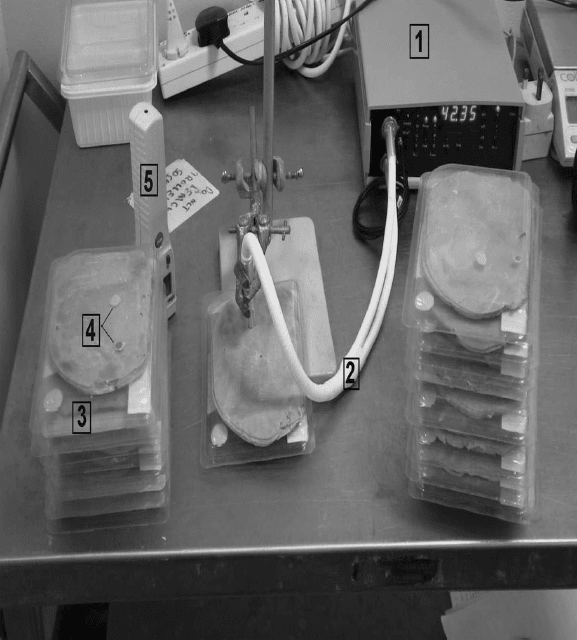
ful data on their effectiveness in meat packaging applications. Fitzgerald et al. (2001)
examined the potential of platinum-based disposable oxygen sensors as a quality control
instrument for vacuum-packed raw and cooked meat and MA packed sliced ham (Figure
3.4). Direct contact of sensors on the foods provided accurate oxygen profiles over time
and correlated well with conventional headspace analysis. Smiddy et al. (2002a) used oxy-
gen sensors to examine the effects of residual oxygen concentration on lipid oxidation in
both anaerobically packaged MA and vacuum-packed cooked chicken. Similarly, this ap-
proach was repeated for raw and cooked beef (Smiddy et al., 2002b). These studies further
demonstrated the suitability of such sensors for measuring oxygen levels in commercially
used meat packaging and their potential as predictors of quality. Papkovsky et al. (2002)
used oxygen sensors to measure oxygen content in the headspace of four commercial
sliced ham products. Accurate measurements were made under ambient light conditions,
in direct contact with the product and under conditions of significant temperature varia-
tion. Although the sensor demonstrated minor changes in calibration as a result of direct
physical contact with the meat surface over a prolonged period, these effects were min-
imised through optimisation of the sensor material. It is unlikely in any event, that sensors
placed in direct contact with a meat product would be acceptable to producer or consumer
alike. O’Mahony et al. (2004) used sensors printed directly onto the packaging material
of sous vide beef lasagne. Although oxygen profiles, microbial growth and lipid oxida-
tion were clearly correlated, further studies appear necessary to investigate issues relating
to sensor/packaging material compatibility. Fluorescent oxygen sensors were also useful
in detecting a substantial fraction of commercial anaerobic MA or vacuum packed meat
products that contained elevated levels of oxygen (Papkovsky et al., 2002; Smiddy et al.,
2002c).
OTE/SPH OTE/SPH
JWBK126-03 JWBK126-Kerry March 19, 2008 10:2 Char Count= 0
Smart Packaging of Meat and Poultry Products 43
Figure 3.4 Use of platinum fluorescent-based disposable oxygen sensors in MAP packed
sliced ham (number 4 in figure indicating as part of this mail).
The development of oxygen sensors is indicative of a move towards commercialisation
of indicator-based, intelligent, meat packaging systems. Full commercial realisation might
ultimately mean the production of huge numbers of sensors for use throughout the meat
distribution chain. It has been estimated that in today’s terms, each sensor should cost less
than €0.01 to produce (Kerry and Papkovsky, 2002) and impact minimally on packaged
meat production costs.
3.6.3 Biosensors
Recently developed biosensor technologies represent another area with considerable poten-
tial for application in intelligent meat packaging systems. Biosensors are compact analytical
devices that detect, record and transmit information pertaining to biological reactions (Yam
et al., 2005). They consist of a bioreceptor specific to a target analyte and a transducer to
convert biological signals to a quantifiable electrical response. Bioreceptors are organic