
Manning Ch. D., Raghavan P., Sch?tze H. Introduction to Information Retrieval - Введение в информационный поиск
Подождите немного. Документ загружается.

Online edition (c)2009 Cambridge UP
16 1 Boolean retrieval
inverted index, comprising a dictionary and postings lists. We introduced
the Boolean retrieval model, and examined how to do efficient retrieval via
linear time merges and simple query optimization. In Chapters
2–7 we will
consider in detail richer query models and the sort of augmented index struc-
tures that are needed to handle them efficiently. Here we just mention a few
of the main additional things we would like to be able to do:
1. We would like to better determine the set of terms in the dictionary and
to provide retrieval that is tolerant to spelling mistakes and inconsistent
choice of words.
2. It is often useful to search for compounds or phrases that denote a concept
such as “operating system”. As the Westlaw examples show, we might also
wish to do proximity queries such as Gates NEAR Microsoft. To answer
such queries, the index has to be augmented to capture the proximities of
terms in documents.
3. A Boolean model only records term presence or absence, but often we
would like to accumulate evidence, giving more weight to documents that
have a term several times as opposed to ones that contain it only once. To
be able to do this we need term frequency information (the number of timesTERM FREQUENCY
a term occurs in a document) in postings lists.
4. Boolean queries just retrieve a set of matching documents, but commonly
we wish to have an effective method to order (or “rank”) the returned
results. This requires having a mechanism for determining a document
score which encapsulates how good a match a document is for a query.
With these additional ideas, we will have seen most of the basic technol-
ogy that supports ad hoc searching over unstructured information. Ad hoc
searching over documents has recently conquered the world, powering not
only web search engines but the kind of unstructured search that lies behind
the large eCommerce websites. Although the main web search engines differ
by emphasizing free text querying, most of the basic issues and technologies
of indexing and querying remain the same, as we will see in later chapters.
Moreover, over time, web search engines have added at least partial imple-
mentations of some of the most popular operators from extended Boolean
models: phrase search is especially popular and most have a very partial
implementation of Boolean operators. Nevertheless, while these options are
liked by expert searchers, they are little used by most people and are not the
main focus in work on trying to improve web search engine performance.
?
Exercise 1.12
[⋆]
Write a query using Westlaw syntax which would find any of the words professor,
teacher, or lecturer in the same sentence as a form of the verb explain.
Online edition (c)2009 Cambridge UP
1.5 References and further reading 17
Exercise 1.13
[⋆]
Try using the Boolean search features on a couple of major web search engines. For
instance, choose a word, such as burglar, and submit the queries (i) burglar, (ii) burglar
AND burglar, and (iii) burglar OR burglar. Look at the estimated number of results and
top hits. Do they make sense in terms of Boolean logic? Often they haven’t for major
search engines. Can you make sense of what is going on? What about if you try
different words? For example, query for (i) knight, (ii) conquer, and then (iii) knight OR
conquer. What bound should the number of results from the first two queries place
on the third query? Is this bound observed?
1.5 Refe rences and further reading
The practical pursuit of computerized information retrieval began in the late
1940s (Cleverdon 1991, Liddy 2005). A great increase in the production of
scientific literature, much in the form of less formal technical reports rather
than traditional journal articles, coupled with the availability of computers,
led to interest in automatic document retrieval. However, in those days, doc-
ument retrieval was always based on author, title, and keywords; full-text
search came much later.
The article of Bush (1945) provided lasting inspiration for the new field:
“Consider a future device for individual use, which is a sort of mech-
anized private file and library. It needs a name, and, to coin one at
random, ‘memex’ will do. A memex is a device in which an individual
stores all his books, records, and communications, and which is mech-
anized so that it may be consulted with exceeding speed and flexibility.
It is an enlarged intimate supplement to his memory.”
The term Information Retrieval was coined by Calvin Mooers in 1948/1950
(Mooers 1950).
In 1958, much newspaper attention was paid to demonstrations at a con-
ference (see Taube and Wooster 1958) of IBM “auto-indexing” machines, based
primarily on the work of H. P. Luhn. Commercial interest quickly gravitated
towards Boolean retrieval systems, but the early years saw a heady debate
over various disparate technologies for retrieval systems. For example Moo-
ers (1961) dissented:
“It is a common fallacy, underwritten at this date by the investment of
several million dollars in a variety of retrieval hardware, that the al-
gebra of George Boole (1847) is the appropriate formalism for retrieval
system design. This view is as widely and uncritically accepted as it is
wrong.”
The observation of AND vs. OR giving you opposite extremes in a precision/
recall tradeoff, but not the middle ground comes from (Lee and Fox 1988).
Online edition (c)2009 Cambridge UP
18 1 Boolean retrieval
The book (Witten et al. 1999) is the standard reference for an in-depth com-
parison of the space and time efficiency of the inverted index versus other
possible data structures; a more succinct and up-to-date presentation ap-
pears in Zobel and Moffat (2006). We further discuss several approaches in
Chapter
5.
Friedl (2006) covers the practical usage of regular expressions for searching.REGULAR EXPRESSIONS
The underlying computer science appears in (Hopcroft et al. 2000).
Online edition (c)2009 Cambridge UP
DRAFT! © April 1, 2009 Cambridge University Press. Feedback welcome. 19
2
The term vocabula ry an d p ostings
lists
Recall the major steps in inverted index construction:
1. Collect the documents to be indexed.
2. Tokenize the text.
3. Do linguistic preprocessing of tokens.
4. Index the documents that each term occurs in.
In this chapter we first briefly mention how the basic unit of a document can
be defined and how the character sequence that it comprises is determined
(Section 2.1). We then examine in detail some of the substantive linguis-
tic issues of tokenization and linguistic preprocessing, which determine the
vocabulary of terms which a system uses (Section
2.2). Tokenization is the
process of chopping character streams into tokens, while linguistic prepro-
cessing then deals with building equivalence classes of tokens which are the
set of terms that are indexed. Indexing itself is covered in Chapters
1 and 4.
Then we return to the implementation of postings lists. In Section 2.3, we
examine an extended postings list data structure that supports faster query-
ing, while Section
2.4 covers building postings data structures suitable for
handling phrase and proximity queries, of the sort that commonly appear in
both extended Boolean models and on the web.
2.1 Document d elineation and character sequence decoding
2.1.1 Obtaining the character sequence in a document
Digital documents that are the input to an indexing process are typically
bytes in a file or on a web server. The first step of processing is to convert this
byte sequence into a linear sequence of characters. For the case of plain En-
glish text in ASCII encoding, this is trivial. But often things get much more

Online edition (c)2009 Cambridge UP
20 2 The term vocabulary and postings lists
complex. The sequence of characters may be encoded by one of various sin-
gle byte or multibyte encoding schemes, such as Unicode UTF-8, or various
national or vendor-specific standards. We need to determine the correct en-
coding. This can be regarded as a machine learning classification problem,
as discussed in Chapter
13,
1
but is often handled by heuristic methods, user
selection, or by using provided document metadata. Once the encoding is
determined, we decode the byte sequence to a character sequence. We might
save the choice of encoding because it gives some evidence about what lan-
guage the document is written in.
The characters may have to be decoded out of some binary representation
like Microsoft Word DOC files and/or a compressed format such as zip files.
Again, we must determine the document format, and then an appropriate
decoder has to be used. Even for plain text documents, additional decoding
may need to be done. In XML documents (Section
10.1, page 197), charac-
ter entities, such as &, need to be decoded to give the correct character,
namely & for &. Finally, the textual part of the document may need to
be extracted out of other material that will not be processed. This might be
the desired handling for XML files, if the markup is going to be ignored; we
would almost certainly want to do this with postscript or PDF files. We will
not deal further with these issues in this book, and will assume henceforth
that our documents are a list of characters. Commercial products usually
need to support a broad range of document types and encodings, since users
want things to just work with their data as is. Often, they just think of docu-
ments as text inside applications and are not even aware of how it is encoded
on disk. This problem is usually solved by licensing a software library that
handles decoding document formats and character encodings.
The idea that text is a linear sequence of characters is also called into ques-
tion by some writing systems, such as Arabic, where text takes on some
two dimensional and mixed order characteristics, as shown in Figures
2.1
and 2.2. But, despite some complicated writing system conventions, there
is an underlying sequence of sounds being represented and hence an essen-
tially linear structure remains, and this is what is represented in the digital
representation of Arabic, as shown in Figure
2.1.
2.1.2 Choosing a document unit
The next phase is to determine what the document unit for indexing is. ThusDOCUMENT UNIT
far we have assumed that documents are fixed units for the purposes of in-
dexing. For example, we take each file in a folder as a document. But there
1. A classifier is a function that takes objects of some sort and assigns them to one of a number
of distinct classes (see Chapter 13). Usually classification is done by machine learning methods
such as probabilistic models, but it can also be done by hand-written rules.

Online edition (c)2009 Cambridge UP
2.1 Document delineation and character sequence decoding 21
ٌبَِآ ⇐ ٌ ب ا ت ِ ك
un b ā t i k
/kitābun/ ‘a book’
◮
Figure 2.1 An example of a vocalized Modern Standard Arabic word. The writing
is from right to left and letters undergo complex mutations as they are combined. The
representation of short vowels (here, /i/ and /u/) and the final /n/ (nunation) de-
parts from strict linearity by being represented as diacritics above and below letters.
Nevertheless, the represented text is still clearly a linear ordering of characters repre-
senting sounds. Full vocalization, as here, normally appears only in the Koran and
children’s books. Day-to-day text is unvocalized (short vowels are not represented
but the letter for
¯
a would still appear) or partially vocalized, with short vowels in-
serted in places where the writer perceives ambiguities. These choices add further
complexities to indexing.
اا ا1962 132ا لا ! "!"# .
← → ← → ← START
‘Algeria achieved its independence in 1962 after 132 years of French occupation.’
◮
Figure 2.2 The conceptual linear order of characters is not necessarily the order
that you see on the page. In languages that are written right-to-left, such as Hebrew
and Arabic, it is quite common to also have left-to-right text interspersed, such as
numbers and dollar amounts. With modern Unicode representation concepts, the
order of characters in files matches the conceptual order, and the reversal of displayed
characters is handled by the rendering system, but this may not be true for documents
in older encodings.
are many cases in which you might want to do something different. A tra-
ditional Unix (mbox-format) email file stores a sequence of email messages
(an email folder) in one file, but you might wish to regard each email mes-
sage as a separate document. Many email messages now contain attached
documents, and you might then want to regard the email message and each
contained attachment as separate documents. If an email message has an
attached zip file, you might want to decode the zip file and regard each file
it contains as a separate document. Going in the opposite direction, various
pieces of web software (such as latex2html) take things that you might regard
as a single document (e.g., a Powerpoint file or a L
A
T
E
X document) and split
them into separate HTML pages for each slide or subsection, stored as sep-
arate files. In these cases, you might want to combine multiple files into a
single document.
More generally, for very long documents, the issue of indexing granularityINDEXING
GRANULARITY
arises. For a collection of books, it would usually be a bad idea to index an

Online edition (c)2009 Cambridge UP
22 2 The term vocabulary and postings lists
entire book as a document. A search for Chinese toys might bring up a book
that mentions China in the first chapter and toys in the last chapter, but this
does not make it relevant to the query. Instead, we may well wish to index
each chapter or paragraph as a mini-document. Matches are then more likely
to be relevant, and since the documents are smaller it will be much easier for
the user to find the relevant passages in the document. But why stop there?
We could treat individual sentences as mini-documents. It becomes clear
that there is a precision/recall tradeoff here. If the units get too small, we
are likely to miss important passages because terms were distributed over
several mini-documents, while if units are too large we tend to get spurious
matches and the relevant information is hard for the user to find.
The problems with large document units can be alleviated by use of ex-
plicit or implicit proximity search (Sections
2.4.2 and 7.2.2), and the trade-
offs in resulting system performance that we are hinting at are discussed
in Chapter
8. The issue of index granularity, and in particular a need to
simultaneously index documents at multiple levels of granularity, appears
prominently in XML retrieval, and is taken up again in Chapter 10. An IR
system should be designed to offer choices of granularity. For this choice to
be made well, the person who is deploying the system must have a good
understanding of the document collection, the users, and their likely infor-
mation needs and usage patterns. For now, we will henceforth assume that
a suitable size document unit has been chosen, together with an appropriate
way of dividing or aggregating files, if needed.
2.2 Determining the vocabulary of terms
2.2.1 Tokenization
Given a character sequence and a defined document unit, tokenization is the
task of chopping it up into pieces, called tokens, perhaps at the same time
throwing away certain characters, such as punctuation. Here is an example
of tokenization:
Input: Friends, Romans, Countrymen, lend me your ears;
Output:
Friends Romans Countrymen lend me your ears
These tokens are often loosely referred to as terms or words, but it is some-
times important to make a type/token distinction. A token is an instanceTOKEN
of a sequence of characters in some particular document that are grouped
together as a useful semantic unit for processing. A type is the class of allTYPE
tokens containing the same character sequence. A term is a (perhaps nor-TERM
malized) type that is included in the IR system’s dictionary. The set of index
terms could be entirely distinct from the tokens, for instance, they could be
Online edition (c)2009 Cambridge UP
2.2 Determining the vocabulary of terms 23
semantic identifiers in a taxonomy, but in practice in modern IR systems they
are strongly related to the tokens in the document. However, rather than be-
ing exactly the tokens that appear in the document, they are usually derived
from them by various normalization processes which are discussed in Sec-
tion
2.2.3.
2
For example, if the document to be indexed is to sleep perchance to
dream, then there are 5 tokens, but only 4 types (since there are 2 instances of
to). However, if to is omitted from the index (as a stop word, see Section
2.2.2
(page 27)), then there will be only 3 terms: sleep, perchance, and dream.
The major question of the tokenization phase is what are the correct tokens
to use? In this example, it looks fairly trivial: you chop on whitespace and
throw away punctuation characters. This is a starting point, but even for
English there are a number of tricky cases. For example, what do you do
about the various uses of the apostrophe for possession and contractions?
Mr. O’Neill thinks that the boys’ stories about Chile’s capital aren’t
amusing.
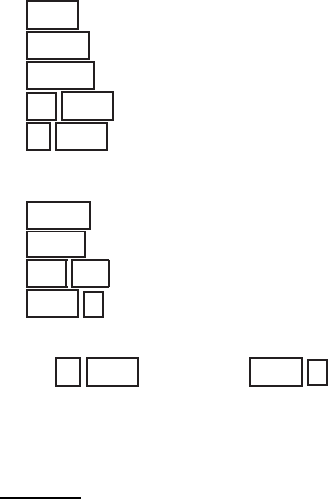
For O’Neill, which of the following is the desired tokenization?
neill
oneill
o’neill
o’ neill
o neill ?
And for aren’t, is it:
aren’t
arent
are n’t
aren t ?
A simple strategy is to just split on all non-alphanumeric characters, but
while
o neill looks okay, aren t looks intuitively bad. For all of them,
the choices determine which Boolean queries will match. A query of neill
AND capital will match in three cases but not the other two. In how many
cases would a query of o’neill AND capital match? If no preprocessing of a
query is done, then it would match in only one of the five cases. For either
2. That is, as defined here, tokens that are not indexed (stop words) are not terms, and if mul-
tiple tokens are collapsed together via normalization, they are indexed as one term, under the
normalized form. However, we later relax this definition when discussing classification and
clustering in Chapters 13–18, where there is no index. In these chapters, we drop the require-
ment of inclusion in the dictionary. A term means a normalized word.

Online edition (c)2009 Cambridge UP
24 2 The term vocabulary and postings lists
Boolean or free text queries, you always want to do the exact same tokeniza-
tion of document and query words, generally by processing queries with the
same tokenizer. This guarantees that a sequence of characters in a text will
always match the same sequence typed in a query.
3
These issues of tokenization are language-specific. It thus requires the lan-
guage of the document to be known. Language identification based on clas-LANGUAGE
IDENTIFICATION
sifiers that use short character subsequences as features is highly effective;
most languages have distinctive signature patterns (see page
46 for refer-
ences).
For most languages and particular domains within them there are unusual
specific tokens that we wish to recognize as terms, such as the programming
languages C++ and C#, aircraft names like B-52, or a T.V. show name such
as M*A*S*H – which is sufficiently integrated into popular culture that you
find usages such as M*A*S*H-style hospitals. Computer technology has in-
troduced new types of character sequences that a tokenizer should probably
tokenize as a single token, including email addresses (jblack@mail.yahoo.com),
web URLs (http://stuff.big.com/new/specials.html),numeric IP addresses (142.32.48.231),
package tracking numbers (1Z9999W99845399981), and more. One possible
solution is to omit from indexing tokens such as monetary amounts, num-
bers, and URLs, since their presence greatly expands the size of the vocab-
ulary. However, this comes at a large cost in restricting what people can
search for. For instance, people might want to search in a bug database for
the line number where an error occurs. Items such as the date of an email,
which have a clear semantic type, are often indexed separately as document
metadata (see Section
6.1, page 110).
In English, hyphenation is used for various purposes ranging from split-HYPHENS
ting up vowels in words (co-education) to joining nouns as names (Hewlett-
Packard) to a copyediting device to show word grouping (the hold-him-back-
and-drag-him-away maneuver). It is easy to feel that the first example should be
regarded as one token (and is indeed more commonly written as just coed u-
cation), the last should be separated into words, and that the middle case is
unclear. Handling hyphens automatically can thus be complex: it can either
be done as a classification problem, or more commonly by some heuristic
rules, such as allowing short hyphenated prefixes on words, but not longer
hyphenated forms.
Conceptually, splitting on white space can also split what should be re-
garded as a single token. This occurs most commonly with names (San Fran-
cisco, Los Angeles) but also with borrowed foreign phrases (au fait) and com-
3. For the free text case, this is straightforward. The Boolean case is more complex: this tok-
enization may produce multiple terms from one query word. This can be handled by combining
the terms with an AND or as a phrase query (see Section 2.4, page 39). It is harder for a system
to handle the opposite case where the user entered as two terms something that was tokenized
together in the document processing.
Online edition (c)2009 Cambridge UP
2.2 Determining the vocabulary of terms 25
pounds that are sometimes written as a single word and sometimes space
separated (such as white space vs. wh itespace). Other cases with internal spaces
that we might wish to regard as a single token include phone numbers ((800) 234-
2333) and dates (Mar 11, 1983). Splitting tokens on spaces can cause bad
retrieval results, for example, if a search for York University mainly returns
documents containing New York University. The problems of hyphens and
non-separating whitespace can even interact. Advertisements for air fares
frequently contain items like San Francisco-Los Angeles, where simply doing
whitespace splitting would give unfortunate results. In such cases, issues of
tokenization interact with handling phrase queries (which we discuss in Sec-
tion 2.4 (page 39)), particularly if we would like queries for all of lowercase,
lower-case and lower case to return the same results. The last two can be han-
dled by splitting on hyphens and using a phrase index. Getting the first case
right would depend on knowing that it is sometimes written as two words
and also indexing it in this way. One effective strategy in practice, which
is used by some Boolean retrieval systems such as Westlaw and Lexis-Nexis
(Example
1.1), is to encourage users to enter hyphens wherever they may be
possible, and whenever there is a hyphenated form, the system will general-
ize the query to cover all three of the one word, hyphenated, and two word
forms, so that a query for over-eager will search for over-eager OR “over eager”
OR overeager. However, this strategy depends on user training, since if you
query using either of the other two forms, you get no generalization.
Each new language presents some new issues. For instance, French has a
variant use of the apostrophe for a reduced definite article ‘the’ before a word
beginning with a vowel (e.g., l’ensemble) and has some uses of the hyphen
with postposed clitic pronouns in imperatives and questions (e.g., donne-
moi ‘give me’). Getting the first case correct will affect the correct indexing
of a fair percentage of nouns and adjectives: you would want documents
mentioning both l’ensemble and un ensemble to be indexed under ensemble.
Other languages make the problem harder in new ways. German writes
compound nouns without spaces (e.g., Comput erlinguistik ‘computational lin-COMPOUNDS
guistics’; Lebensversicherungsgesellschaftsangestellter ‘life insurance company
employee’). Retrieval systems for German greatly benefit from the use of a
compound-sp litter module, which is usually implemented by seeing if a wordCOMPOUND-SPLITTER
can be subdivided into multiple words that appear in a vocabulary. This phe-
nomenon reaches its limit case with major East Asian Languages (e.g., Chi-
nese, Japanese, Korean, and Thai), where text is written without any spaces
between words. An example is shown in Figure
2.3. One approach here is to
perform wo rd segmentation as prior linguistic processing. Methods of wordWORD SEGMENTATION
segmentation vary from having a large vocabulary and taking the longest
vocabulary match with some heuristics for unknown words to the use of
machine learning sequence models, such as hidden Markov models or condi-
tional random fields, trained over hand-segmented words (see the references