
Manning Ch. D., Raghavan P., Sch?tze H. Introduction to Information Retrieval - Введение в информационный поиск
Подождите немного. Документ загружается.

Online edition (c)2009 Cambridge UP
26 2 The term vocabulary and postings lists
◮
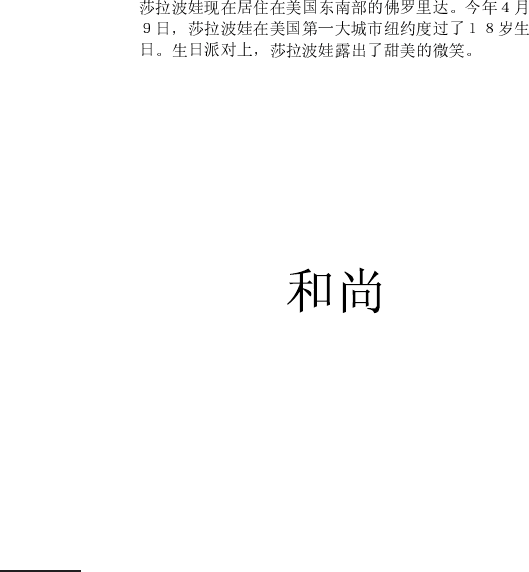
Figure 2.3 The standard unsegmented form of Chinese text using the simplified
characters of mainland China. There is no whitespace between words, not even be-
tween sentences – the apparent space after the Chinese period (
◦
) is just a typograph-
ical illusion caused by placing the character on the left side of its square box. The
first sentence is just words in Chinese characters with no spaces between them. The
second and third sentences include Arabic numerals and punctuation breaking up
the Chinese characters.
◮
Figure 2.4 Ambiguities in Chinese word segmentation. The two characters can
be treated as one word meaning ‘monk’ or as a sequence of two words meaning ‘and’
and ‘still’.
a an and are as at be by for from
has he in is it its of on that the
to was were will with
◮
Figure 2.5 A stop list of 25 semantically non-selective words which are common
in Reuters-RCV1.
in Section 2.5). Since there are multiple possible segmentations of character
sequences (see Figure
2.4), all such methods make mistakes sometimes, and
so you are never guaranteed a consistent unique tokenization. The other ap-
proach is to abandon word-based indexing and to do all indexing via just
short subsequences of characters (character k-grams), regardless of whether
particular sequences cross word boundaries or not. Three reasons why this
approach is appealing are that an individual Chinese character is more like a
syllable than a letter and usually has some semantic content, that most words
are short (the commonest length is 2 characters), and that, given the lack of
standardization of word breaking in the writing system, it is not always clear
where word boundaries should be placed anyway. Even in English, some
cases of where to put word boundaries are just orthographic conventions –
think of notwithsta nding vs. not t o mention or into vs. on to – but people are
educated to write the words with consistent use of spaces.
Online edition (c)2009 Cambridge UP
2.2 Determining the vocabulary of terms 27
2.2.2 Dropping common terms: stop words
Sometimes, some extremely common words which would appear to be of
little value in helping select documents matching a user need are excluded
from the vocabulary entirely. These words are called stop words. The generalSTOP WORDS
strategy for determining a stop list is to sort the terms by collection frequencyCOLLECTION
FREQUENCY
(the total number of times each term appears in the document collection),
and then to take the most frequent terms, often hand-filtered for their se-
mantic content relative to the domain of the documents being indexed, as
a stop list, the members of which are then discarded during indexing. AnSTOP LIST
example of a stop list is shown in Figure
2.5. Using a stop list significantly
reduces the number of postings that a system has to store; we will present
some statistics on this in Chapter
5 (see Table 5.1, page 87). And a lot of
the time not indexing stop words does little harm: keyword searches with
terms like the and by don’t seem very useful. However, this is not true for
phrase searches. The phrase query “President of the United States”, which con-
tains two stop words, is more precise than President AND “United States”. The
meaning of flights to London is likely to be lost if the word to is stopped out. A
search for Vannevar Bush’s article As we may think will be difficult if the first
three words are stopped out, and the system searches simply for documents
containing the word think. Some special query types are disproportionately
affected. Some song titles and well known pieces of verse consist entirely of
words that are commonly on stop lists (To be or not to be, Let It Be, I don’t want
to be, .. . ).
The general trend in IR systems over time has been from standard use of
quite large stop lists (200–300 terms) to very small stop lists (7–12 terms)
to no stop list whatsoever. Web search engines generally do not use stop
lists. Some of the design of modern IR systems has focused precisely on
how we can exploit the statistics of language so as to be able to cope with
common words in better ways. We will show in Section
5.3 (page 95) how
good compression techniques greatly reduce the cost of storing the postings
for common words. Section
6.2.1 (page 117) then discusses how standard
term weighting leads to very common words having little impact on doc-
ument rankings. Finally, Section
7.1.5 (page 140) shows how an IR system
with impact-sorted indexes can terminate scanning a postings list early when
weights get small, and hence common words do not cause a large additional
processing cost for the average query, even though postings lists for stop
words are very long. So for most modern IR systems, the additional cost of
including stop words is not that big – neither in terms of index size nor in
terms of query processing time.

Online edition (c)2009 Cambridge UP
28 2 The term vocabulary and postings lists
Query term Terms in documents that should be mat ched
Windows Windows
windows Windows, windows, window
window window, windows
◮
Figure 2.6 An example of how asymmetric expansion of query terms can usefully
model users’ expectations.
2.2.3 Normalization (equivalence classing of terms)
Having broken up our documents (and also our query) into tokens, the easy
case is if tokens in the query just match tokens in the token list of the doc-
ument. However, there are many cases when two character sequences are
not quite the same but you would like a match to occur. For instance, if you
search for U SA, you might hope to also match documents containing U.S.A.
Token normalizatio n is the process of canonicalizing tokens so that matchesTOKEN
NORMALIZATION
occur despite superficial differences in the character sequences of the to-
kens.
4
The most standard way to normalize is to implicitly create equivalenceEQUIVALENCE CLASSES
classes, which are normally named after one member of the set. For instance,
if the tokens anti-discriminatory and antidiscriminatory are both mapped onto
the term antidiscriminatory, in both the document text and queries, then searches
for one term will retrieve documents that contain either.
The advantage of just using mapping rules that remove characters like hy-
phens is that the equivalence classing to be done is implicit, rather than being
fully calculated in advance: the terms that happen to become identical as the
result of these rules are the equivalence classes. It is only easy to write rules
of this sort that remove characters. Since the equivalence classes are implicit,
it is not obvious when you might want to add characters. For instance, it
would be hard to know to turn antidiscriminatory into anti-discriminatory.
An alternative to creating equivalence classes is to maintain relations be-
tween unnormalized tokens. This method can be extended to hand-constructed
lists of synonyms such as car and automobile, a topic we discuss further in
Chapter
9. These term relationships can be achieved in two ways. The usual
way is to index unnormalized tokens and to maintain a query expansion list
of multiple vocabulary entries to consider for a certain query term. A query
term is then effectively a disjunction of several postings lists. The alterna-
tive is to perform the expansion during index construction. When the doc-
ument contains automobile, we index it under car as well (and, usually, also
vice-versa). Use of either of these methods is considerably less efficient than
equivalence classing, as there are more postings to store and merge. The first
4. It is also often referred to as term normalization, but we prefer to reserve the name term for the
output of the normalization process.

Online edition (c)2009 Cambridge UP
2.2 Determining the vocabulary of terms 29
method adds a query expansion dictionary and requires more processing at
query time, while the second method requires more space for storing post-
ings. Traditionally, expanding the space required for the postings lists was
seen as more disadvantageous, but with modern storage costs, the increased
flexibility that comes from distinct postings lists is appealing.
These approaches are more flexible than equivalence classes because the
expansion lists can overlap while not being identical. This means there can
be an asymmetry in expansion. An example of how such an asymmetry can
be exploited is shown in Figure
2.6: if the user enters windows, we wish to
allow matches with the capitalized Windows operating system, but this is not
plausible if the user enters window, even though it is plausible for this query
to also match lowercase windows.
The best amount of equivalence classing or query expansion to do is a
fairly open question. Doing some definitely seems a good idea. But doing a
lot can easily have unexpected consequences of broadening queries in unin-
tended ways. For instance, equivalence-classing U.S.A. and USA to the latter
by deleting periods from tokens might at first seem very reasonable, given
the prevalent pattern of optional use of periods in acronyms. However, if I
put in as my query term C.A.T., I might be rather upset if it matches every
appearance of the word cat in documents.
5
Below we present some of the forms of normalization that are commonly
employed and how they are implemented. In many cases they seem helpful,
but they can also do harm. In fact, you can worry about many details of
equivalence classing, but it often turns out that providing processing is done
consistently to the query and to documents, the fine details may not have
much aggregate effect on performance.
Accents and diacritics. Diacritics on characters in English have a fairly
marginal status, and we might well want cliché and cliche to match, or naive
and naïve. This can be done by normalizing tokens to remove diacritics. In
many other languages, diacritics are a regular part of the writing system and
distinguish different sounds. Occasionally words are distinguished only by
their accents. For instance, in Spanish, peña is ‘a cliff’, while pena is ‘sorrow’.
Nevertheless, the important question is usually not prescriptive or linguistic
but is a question of how users are likely to write queries for these words. In
many cases, users will enter queries for words without diacritics, whether
for reasons of speed, laziness, limited software, or habits born of the days
when it was hard to use non-ASCII text on many computer systems. In these
cases, it might be best to equate all words to a form without diacritics.
5. At the time we wrote this chapter (Aug. 2005), this was actually the case on Google: the top
result for the query C.A.T. was a site about cats, the Cat Fanciers Web Site http://www.fanciers.com/.
Online edition (c)2009 Cambridge UP
30 2 The term vocabulary and postings lists
Capitalizati on /case-folding. A common strategy is to do case-folding by re-CASE-FOLDING
ducing all letters to lower case. Often this is a good idea: it will allow in-
stances of Automobile at the beginning of a sentence to match with a query of
automobile. It will also help on a web search engine when most of your users
type in ferrari when they are interested in a Ferrari car. On the other hand,
such case folding can equate words that might better be kept apart. Many
proper nouns are derived from common nouns and so are distinguished only
by case, including companies (General Motors, The Associated Press), govern-
ment organizations (the Fed vs. fed) and person names (Bush, Black). We al-
ready mentioned an example of unintended query expansion with acronyms,
which involved not only acronym normalization (C.A.T. → CAT) but also
case-folding (CAT → cat).
For English, an alternative to making every token lowercase is to just make
some tokens lowercase. The simplest heuristic is to convert to lowercase
words at the beginning of a sentence and all words occurring in a title that is
all uppercase or in which most or all words are capitalized. These words are
usually ordinary words that have been capitalized. Mid-sentence capitalized
words are left as capitalized (which is usually correct). This will mostly avoid
case-folding in cases where distinctions should be kept apart. The same task
can be done more accurately by a machine learning sequence model which
uses more features to make the decision of when to case-fold. This is known
as truecasing. However, trying to get capitalization right in this way probablyTRUECASING
doesn’t help if your users usually use lowercase regardless of the correct case
of words. Thus, lowercasing everything often remains the most practical
solution.
Other issues in English. Other possible normalizations are quite idiosyn-
cratic and particular to English. For instance, you might wish to equate
ne’er and never or the British spelling colour and the American spelling color.
Dates, times and similar items come in multiple formats, presenting addi-
tional challenges. You might wish to collapse together 3/12/91 and Mar. 12,
1991. However, correct processing here is complicated by the fact that in the
U.S., 3/12/ 91 is Mar. 12, 1991, whereas in Europe it is 3 Dec 1991.
Other languages. English has maintained a dominant position on the WWW;
approximately 60% of web pages are in English (Gerrand 2007). But that still
leaves 40% of the web, and the non-English portion might be expected to
grow over time, since less than one third of Internet users and less than 10%
of the world’s population primarily speak English. And there are signs of
change: Sifry (2007) reports that only about one third of blog posts are in
English.
Other languages again present distinctive issues in equivalence classing.
Online edition (c)2009 Cambridge UP
2.2 Determining the vocabulary of terms 31
◮
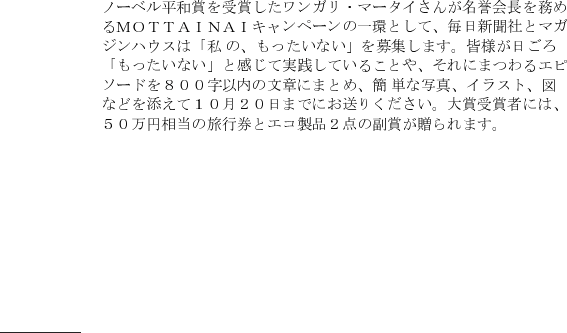
Figure 2.7 Japanese makes use of multiple intermingled writing systems and,
like Chinese, does not segment words. The text is mainly Chinese characters with
the hiragana syllabary for inflectional endings and function words. The part in latin
letters is actually a Japanese expression, but has been taken up as the name of an
environmental campaign by 2004 Nobel Peace Prize winner Wangari Maathai. His
name is written using the katakana syllabary in the middle of the first line. The first
four characters of the final line express a monetary amount that we would want to
match with ¥500,000 (500,000 Japanese yen).
The French word for the has distinctive forms based not only on the gender
(masculine or feminine) and number of the following noun, but also depend-
ing on whether the following word begins with a vowel: le, la, l’, les. We may
well wish to equivalence class these various forms of the. German has a con-
vention whereby vowels with an umlaut can be rendered instead as a two
vowel digraph. We would want to treat Schütze and Schuetze as equivalent.
Japanese is a well-known difficult writing system, as illustrated in Fig-
ure
2.7. Modern Japanese is standardly an intermingling of multiple alpha-
bets, principally Chinese characters, two syllabaries (hiragana and katakana)
and western characters (Latin letters, Arabic numerals, and various sym-
bols). While there are strong conventions and standardization through the
education system over the choice of writing system, in many cases the same
word can be written with multiple writing systems. For example, a word
may be written in katakana for emphasis (somewhat like italics). Or a word
may sometimes be written in hiragana and sometimes in Chinese charac-
ters. Successful retrieval thus requires complex equivalence classing across
the writing systems. In particular, an end user might commonly present a
query entirely in hiragana, because it is easier to type, just as Western end
users commonly use all lowercase.
Document collections being indexed can include documents from many
different languages. Or a single document can easily contain text from mul-
tiple languages. For instance, a French email might quote clauses from a
contract document written in English. Most commonly, the language is de-
tected and language-particular tokenization and normalization rules are ap-
plied at a predetermined granularity, such as whole documents or individual
paragraphs, but this still will not correctly deal with cases where language
changes occur for brief quotations. When document collections contain mul-
Online edition (c)2009 Cambridge UP
32 2 The term vocabulary and postings lists
tiple languages, a single index may have to contain terms of several lan-
guages. One option is to run a language identification classifier on docu-
ments and then to tag terms in the vocabulary for their language. Or this
tagging can simply be omitted, since it is relatively rare for the exact same
character sequence to be a word in different languages.
When dealing with foreign or complex words, particularly foreign names,
the spelling may be unclear or there may be variant transliteration standards
giving different spellings (for example, Chebyshev and Tchebycheff or Beijing
and Peking). One way of dealing with this is to use heuristics to equiva-
lence class or expand terms with phonetic equivalents. The traditional and
best known such algorithm is the Soundex algorithm, which we cover in
Section
3.4 (page 63).
2.2.4 Stemming and lemmatization
For grammatical reasons, documents are going to use different forms of a
word, such as organize, organizes, and organizing. Additionally, there are fami-
lies of derivationally related words with similar meanings, such as democracy,
democratic, and democratization. In many situations, it seems as if it would be
useful for a search for one of these words to return documents that contain
another word in the set.
The goal of both stemming and lemmatization is to reduce inflectional
forms and sometimes derivationally related forms of a word to a common
base form. For instance:
am, are, is ⇒ be
car, cars, car’s, cars’ ⇒ car
The result of this mapping of text will be something like:
the boy’s cars are different colors ⇒
the boy car be differ color
However, the two words differ in their flavor. Stemming usually refers toSTEMMING
a crude heuristic process that chops off the ends of words in the hope of
achieving this goal correctly most of the time, and often includes the re-
moval of derivational affixes. Lemmatization usually refers to doing thingsLEMMATIZATION
properly with the use of a vocabulary and morphological analysis of words,
normally aiming to remove inflectional endings only and to return the base
or dictionary form of a word, which is known as the lemma. If confrontedLEMMA
with the token saw, stemming might return just s, whereas lemmatization
would attempt to return either see or saw depending on whether the use of
the token was as a verb or a noun. The two may also differ in that stemming
most commonly collapses derivationally related words, whereas lemmatiza-
tion commonly only collapses the different inflectional forms of a lemma.
Online edition (c)2009 Cambridge UP
2.2 Determining the vocabulary of terms 33
Linguistic processing for stemming or lemmatization is often done by an ad-
ditional plug-in component to the indexing process, and a number of such
components exist, both commercial and open-source.
The most common algorithm for stemming English, and one that has re-
peatedly been shown to be empirically very effective, is P orter’s algorithmPORTER STEMMER
(Porter 1980). The entire algorithm is too long and intricate to present here,
but we will indicate its general nature. Porter’s algorithm consists of 5 phases
of word reductions, applied sequentially. Within each phase there are var-
ious conventions to select rules, such as selecting the rule from each rule
group that applies to the longest suffix. In the first phase, this convention is
used with the following rule group:
(2.1) Rule Example
SSES → SS caresses → caress
IES → I ponies → poni
SS → SS caress → caress
S → cats → cat
Many of the later rules use a concept of the measure of a word, which loosely
checks the number of syllables to see whether a word is long enough that it
is reasonable to regard the matching portion of a rule as a suffix rather than
as part of the stem of a word. For example, the rule:
(m > 1) EMENT →
would map replacement to replac, but not cement to c. The official site for the
Porter Stemmer is:
http://www.tartarus.org/˜martin/PorterStemmer/
Other stemmers exist, including the older, one-pass Lovins stemmer (Lovins
1968), and newer entrants like the Paice/Husk stemmer (Paice 1990); see:
http://www.cs.waikato.ac.nz/˜eibe/stemmers/
http://www.comp.lancs.ac.uk/computing/research/stemming/
Figure 2.8 presents an informal comparison of the different behaviors of these
stemmers. Stemmers use language-specific rules, but they require less know-
ledge than a lemmatizer, which needs a complete vocabulary and morpho-
logical analysis to correctly lemmatize words. Particular domains may also
require special stemming rules. However, the exact stemmed form does not
matter, only the equivalence classes it forms.
Rather than using a stemmer, you can use a lemmatizer, a tool from Nat-LEMMATIZER
ural Language Processing which does full morphological analysis to accu-
rately identify the lemma for each word. Doing full morphological analysis
produces at most very modest benefits for retrieval. It is hard to say more,

Online edition (c)2009 Cambridge UP
34 2 The term vocabulary and postings lists
Sample text: Such an analysis can reveal features that are not easily visible
from the variations in the individual genes and can lead to a picture of
expression that is more biologically transparent and accessible to
interpretation
Lovins stemmer: such an analys can reve featur that ar not eas vis from th
vari in th individu gen and can lead to a pictur of expres that is mor
biolog transpar and acces to interpres
Porter stemmer: such an analysi can reveal featur that ar not easili visibl
from the variat in the individu gene and can lead to a pictur of express
that is more biolog transpar and access to interpret
Paice stemmer: such an analys can rev feat that are not easy vis from the
vary in the individ gen and can lead to a pict of express that is mor
biolog transp and access to interpret
◮
Figure 2.8 A comparison of three stemming algorithms on a sample text.
because either form of normalization tends not to improve English informa-
tion retrieval performance in aggregate – at least not by very much. While
it helps a lot for some queries, it equally hurts performance a lot for others.
Stemming increases recall while harming precision. As an example of what
can go wrong, note that the Porter stemmer stems all of the following words:
operate operating operates operation operative operatives operational
to oper. However, since operate in its various forms is a common verb, we
would expect to lose considerable precision on queries such as the following
with Porter stemming:
operational AND research
operating AND system
operative AND dentistry
For a case like this, moving to using a lemmatizer would not completely fix
the problem because particular inflectional forms are used in particular col-
locations: a sentence with the words operate and system is not a good match
for the query operating AND system. Getting better value from term normaliza-
tion depends more on pragmatic issues of word use than on formal issues of
linguistic morphology.
The situation is different for languages with much more morphology (such
as Spanish, German, and Finnish). Results in the European CLEF evaluations
have repeatedly shown quite large gains from the use of stemmers (and com-
pound splitting for languages like German); see the references in Section
2.5.
Online edition (c)2009 Cambridge UP
2.2 Determining the vocabulary of terms 35
?
Exercise 2.1
[⋆]
Are the following statements true or false?
a. In a Boolean retrieval system, stemming never lowers precision.
b. In a Boolean retrieval system, stemming never lowers recall.
c. Stemming increases the size of the vocabulary.
d. Stemming should be invoked at indexing time but not while processing a query.
Exercise 2.2 [⋆]
Suggest what normalized form should be used for these words (including the word
itself as a possibility):
a. ’Cos
b. Shi’ite
c. cont’d
d. Hawai’i
e. O’Rourke
Exercise 2.3 [⋆]
The following pairs of words are stemmed to the same form by the Porter stemmer.
Which pairs would you argue shouldn’t be conflated. Give your reasoning.
a. abandon/abandonment
b. absorbency/absorbent
c. marketing/markets
d. university/universe
e. volume/volumes
Exercise 2.4 [⋆]
For the Porter stemmer rule group shown in (2.1):
a. What is the purpose of including an identity rule such as SS → SS?
b. Applying just this rule group, what will the following words be stemmed to?
circus canaries boss
c. What rule should be added to correctly stem pony?
d. The stemming for ponies and pony might seem strange. Does it have a deleterious
effect on retrieval? Why or why not?