
Molina-Par?s C., Lythe G. (editors) Mathematical Models and Immune Cell Biology
Подождите немного. Документ загружается.

10 Stochastic Modelling of Two Competing Clonotypes 213
increase or decrease of the i th species. Here we consider a two-dimensional version
so N D 2, M D 4 and x D Œn; n
0
. With n T cells of clonotype i and n
0
T cells of
clonotype i
0
, the birth and death rate of cells of clonotype n are denoted
nn
0
and
nn
0
, respectively. These propensities were previously denoted ˛
j
.Œn; n
0
/.Asimi-
lar notion denotes the corresponding rates for cells of clonotype i
0
. Naturally, when
there are zero cells of a clonotype the birth and death rates for that clonotype are
both zero, i.e.,
0n
0
D
0n
0
D
n0
D
n0
D 0.Otherwise,forn; n
0
D 1;2:::,we
define the birth and death rates to have the following functional form:
nn
0
D nf.n;n
0
;
ii
0
;
i= i
0
;p/
0
nn
0
D
0
n
0
f.n
0
;n;
i
0
i
;
i
0
=i
;p
0
/
nn
0
D n
0
nn
0
D
0
n
0
;
where
f.n;n
0
;x;y;p/ D pe
x
1
X
rD0
x
r
rŠ
1
r
h
n
i
C n C n
0
C .1 p/e
y
1
X
rD0
y
r
rŠ
1
r
h
n
i
C n
:
(10.4)
The form of the birth rates reflects the competition between clonotypes for survival
stimulus, so that clonotypes that overlap more with other clonotypes in terms of
the set of APPs that they depend on, receive less stimulus overall than clonotypes
that overlap less with other clonotypes. The summation over r arises because of
the way that the sets of APPs are partitioned. In general the rth term corresponds
to the stimulus that the clonotype receives from those APPs that it shares with r
other clonotypes. For example, the r D 0 term corresponds to the stimulus that the
clonotype receives from APPs that it shares with no other clonotypes, the r D 1 term
corresponds to the stimulus that the clonotype receives from one other clonotype,
etc. In any particular organism the number of distinct clonotypes will be finite, albeit
possibly very large, so after finitely many terms in the summation, the rest of the
terms are zero. This function may be approximated, for example, by truncating each
of the two summations, or by employing a Poisson approximation [5]. Notice that
the model has an absorbing state at Œ0; 0.Here
h
n
i
is the average clone size over
the na¨ıve repertoire,
ii
0
is the mean niche overlap for antigen presentation profiles
(APPs) that can provide survival signals to T cells of clonotype i and clonotype i
0
,
and
i= i
0
is the mean niche overlap for APPs that provide survival signals to T cells
of clonotype i but not T cells of clonotype i
0
. See Stirk et al. for more details.
This describes the model in its full generality but we consider the special case
i= i
0
1;
i
0
=i
1:
In this case the authors [5] observe that a good approximation to (10.4)is
f.n;n
0
;x;y;p/ D
p
n C n
0
C .1 p/
1
n C
h
n
i
y
: (10.5)
214 S. MacNamara and K. Burrage
Parameters We fix
h
n
i
D 10. We begin with 10 cells of each clonotype and con-
sider the solution at t
f
D 30. We choose:
D
0
D 60
D
0
D 1
i= i
0
D
i
0
=i
D 100
p D p
0
D 0:5 : (10.6)
Thus the model is symmetric.
Simulations
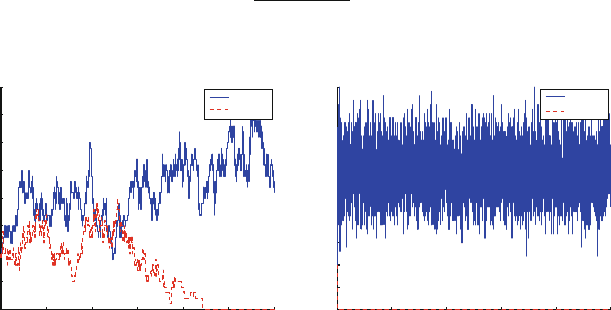
Figure 10.1 shows an SSA simulation of the model with these parameters. One
clonotype reaches extinction before t D 30, while the other clonotype remains and
fluctuates about an average of approximately 32 cells for a very long time. At first
we may think that the simulation has settled down to its stationary distribution but
this is not the case because extinction of both species is guaranteed in this model.
Thus we instead associate the long period with n>0shown in Fig. 10.1 with a
quasi-stationary distribution (QSD).
Here we give a simple argument to show that the simulation in Fig. 10.1 is in-
deed eventually absorbed. Note that Stirk et al. give a more sophisticated analysis
and establish that absorption is guaranteed in general. After extinction of one of the
clonotypes, we are left with a one-dimensional, infinite state, birth-death process for
the remaining clonotype. There is an absorbing state at 0, and an irreducible class
f1;2;:::g, from which the absorbing state is accessible. Following standard nota-
tion and standard theory for birth-death processes [6], absorption with probability
one is equivalent to divergence of the series
1
X
iD1
1
2
:::
i
1
2
:::
i
:
00524681010 15 20 25 30
0
5
10
15
20
25
30
35
40
Time Time
Number
Number
x 10
4
0
5
10
15
20
25
30
35
40
45
50
Type 2
Type 1
Type 1
Type 2
Fig. 10.1 A simulation of the T cell clonotype populations

10 Stochastic Modelling of Two Competing Clonotypes 215
In the simulation in Fig. 10.1, after extinction of clonotype n
0
, the death rate is
n
D
n and the function in (10.5)is
p
n
C
1 p
n C
h
n
i
i= i
0
1
n
;
for large n, so the birth rate
n
n.1=n/ D for large n. With these observa-
tions it is straight-forward to show that the series diverges, for example by the nth
term test.
Although absorption is guaranteed, we can see from Fig.10.1 that the time to
extinction for both species is very large (at least t D 10
5
in this case). The length
of time that a clonotype spends in a QSD before being absorbed is identified as an
important issue and discussed in depth by Stirk et al. [5]. Bounds for the mean time
until absorption are given [5, Sect. 3]. Also, the work of N˚asell [24] is applied to this
process to find the form of the QSD [5, Sect. 3.2.2]. Significantly, it is shown that
clones with a smaller niche overlap last longer, because they face less competition
for survival stimuli. This mechanism drives the T cell repertoire towards greater
diversity and thus endows the immune system with a greater functional capacity for
recognizing a larger variety of foreign pathogens.
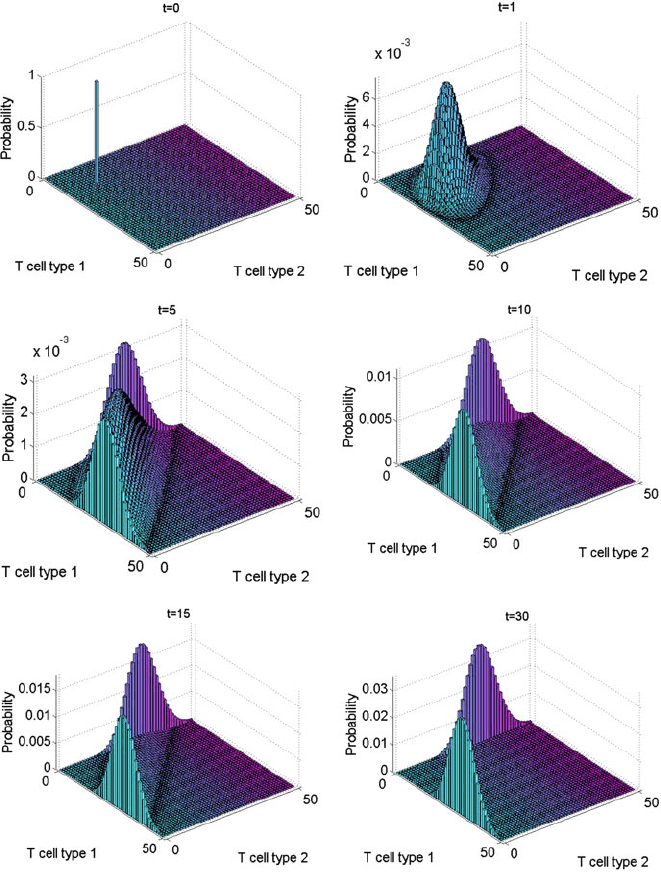
Figure 10.2 shows the evolution of the PDF associated with the model, computed
via a Krylov FSP algorithm for the solution of the Master Equation [20]. The PDF
starts as a delta distribution on the initial state, as seen in the figure labelled t D 0.
However, after a very short time, t D 1, it spreads out to resemble a Gaussian
distribution. By t D 5, it is trimodal. The middle peak then gradually disappears
so that by t D 30, only two of the original peaks remain. The remaining peaks
correspond to the QSD. Each peak corresponds to moderate levels of one T cell
clonotype and extinction of the other. The distribution is symmetric about the line
n D n
0
, reflecting the symmetry of this model.
Time-Dependent Propensity Functions
Thus far has been a constant but Stirk et al. identify this as an issue for future
research and discuss the desire to consider it as a time-dependent parameter, be-
cause , which represents the strength of the stimulation that a T cell receives from
the relevant APPs, depends on the T cell repertoire, which changes with time as
some clones go extinct and new clones are released from the thymus [5]. It is well-
recognized that older individuals often have a weaker immune system, as evidenced
by the greater susceptibility of the aged to infection [2]. Very complicated processes
in immunobiology underly this aging effect but it may be due in part to a decline in
the strength of the birth rates. For example, there are limits to how many times that
a T cell may replicate, perhaps partly due to the shortening of the telomeres with
each replication [5, 25, 26], and the level of stimulation felt by a T cell clonotype
may decline with age [27]. This motivates us to consider a variation of the original
216 S. MacNamara and K. Burrage
Fig. 10.2 The initial delta distribution, at t D 0, on the initial state Œ10; 10, and the solution to
the Master Equation at times t D 1; 5; 10; 15; 30
model in which the birth rates decline with time. As Stirk et al. and others point out,
similar numbers of T cells are found in older and younger individuals [28]. Thus we
must bear in mind with what follows that we consider a reduction in birth rates for
some clonotypes but not all. Here we consider just two clonotypes, which is only a
small fraction of the total number of clones in the full T cell repertoire.
10 Stochastic Modelling of Two Competing Clonotypes 217
0 5 10 15 20 25 30
0
0.1
0.2
0.3
0.4
0.5
0.6
0.7
0.8
0.9
1
t
0 5 10 15 20 25 30
Time
φ (t)
0
5
10
15
20
25
ab
30
Number
Type 1
Type 2
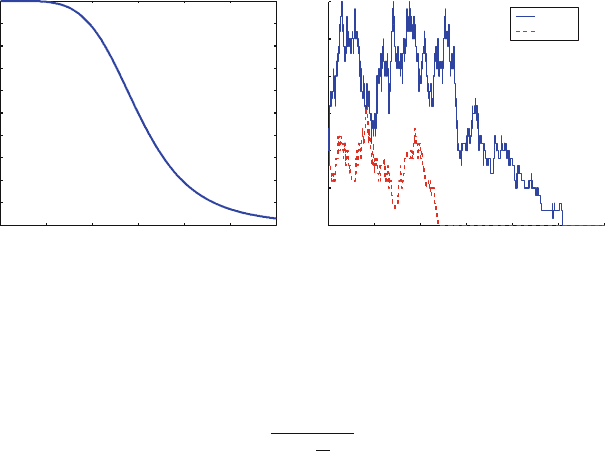
Fig. 10.3 (a) The time dependence of .t/ in (10.7). (b) A simulation of the T cell clonotype
populations, with the time-dependent propensities scaled as described near (10.7)
We represent time dependence by the hill function
.t/ D
1
1 C
t
K
m
; (10.7)
where K D 15 and m D 5. The function declines with time, with a steep sigmoidal
shape, as shown in Fig. 10.3a. We scale the propensities for the birth rates by .t/.
For this example, we replace and
0
in (10.6) with 60.t/. Thus at t D 0 the new
birth rates are the same as the old ones and remain similar for small values of t,but
for large values of t the new birth rates are much less than the old birth rates.
Figure 10.3b shows a simulation of the time-dependent process. This simulation
is obtained by a slight variation of the algorithm for the time-independent case [29].
The main subtlety here is in choosing the time step based on the exponential of
the integral of the propensity functions. We see the populations decline sharply at
t 15, corresponding to the decline in .t/. In contrast to the time-independent
case, both populations are extinct by t D 30.
Numerical Solution of the Time-Dependent Master Equation
Having considered a trajectory approach we now discuss complementary PDF ap-
proaches to the time-dependent case. Consider the system
p
0
.t/ D A.t/p.t /;
which is the same as in (10.1) except that here the matrix A.t/ is time-dependent.
In analogy with the constant-coefficient case, we would like to find a solution of the
form
p.t/ D exp
.t/
p.0/:
218 S. MacNamara and K. Burrage
If, 8t;t
0
, A.t/ commutes with A.t
0
/,wehave
.t/ D
Z
t
0
A.s/ds:
In the constant-coefficient case, the integral is .t/ D tA, thus recovering (10.2)as
an important special case. Magnus [30] derived a formula for the general case:
.t/ D
Z
t
0
A.s
1
/ds
1
1
2
Z
t
0
Z
s
1
0
ŒA.s
2
/; A.s
1
/ds
2
ds
1
C
1
4
Z
t
0
Z
s
1
0
Z
s
2
0
h
ŒA.s
3
/; A.s
2
/; A.s
1
/
i
ds
3
ds
2
ds
1
C
1
12
Z
t
0
Z
s
1
0
Z
s
1
0
h
A.s
3
/; ŒA.s
2
/; A.s
1
/
i
ds
3
ds
2
ds
1
C ::: (10.8)
Here the commutator ŒA; B is defined as AB BA . This infinite series contin-
ues with higher order terms containing progressively higher order commutators and
higher order multiple integrals. Burrage has discussed the Magnus formula in the
context of stochastic differential equations [31]. It has been widely used for theo-
retical purposes but for numerical purposes, it is awkward to evaluate in this form.
For example, one may consider the approximation obtained by truncating the series
after suitably many terms. However, it is expensive to evaluate the many multiple in-
tegrals, and higher commutators, and it is not trivial to decide where to truncate the
series, or which terms should be selected to obtain the highest order approximation
for the least computational effort. Fortunately, in a series of papers on numerical
methods based on the Magnus formula, Iserles et al. [32] showed that the scheme
A
1
D A
t
N
C
1
2
p
3
6
!
h
!
; A
2
D A
t
N
C
1
2
C
p
3
6
!
h
!
;
N C1
D
1
2
h.A
1
C A
2
/ C
p
3
12
h
2
ŒA
2
; A
1
; (10.9)
p.t
N C1
/ D e
N C1
p.t
N
/; (10.10)
where t
N C1
D t
N
C h, is an order four approximation. Notice A
1
and A
2
are the
evaluation of the matrix at Gaussian quadrature points.
For this work, we implement this scheme in combination with a Krylov FSP
approach. The algorithm repeats two steps until the desired time point is reached:
first, with a fixed step size of h D 0:5,weformA
1
, A
2
and
N C1
in (10.9);
then pass
N C1
to the Krylov FSP solver and apply the update rule (10.10). We
refer to this procedure as the Magnus Krylov FSP algorithm. It is summarized in
Algorithm 2.
The algorithm requires the following inputs: the initial distribution, p.0/;the
time t
f
, at which the solution is required; and the matrix A representing the Markov

10 Stochastic Modelling of Two Competing Clonotypes 219
329 ALGORITHM 2: Magnus Krylov FSP.A; p.0/; t
f
;h)
330 t 0;
331 p.t/ p.0/;
332 while t<t
f
do
333 Compute A
1
, A
2
and
N C1
in (10.9) with t
N
D t;
334 Compute e
N C1
p.t/ by Krylov FSP
335 p.t / e
N C1
p.t/ as in (10.10);
336 t t C h ;
337 end while
338 return p.t/;
chain. The initial distribution will often be a delta distribution on the initial state,
as in the examples in this paper. The algorithm also requires a way to evaluate the
matrix A.t/ at various time points. Although Algorithm 2 is described as if it re-
quires the full matrix A, in fact it does not need this. A function representing the
action of the matrix on a vector is sufficient for a Krylov method. At any instant the
algorithm only requires a finite principal submatrix of the full matrix A. This finite
state projection can be dynamic so that it tracks most of the support of the distribu-
tion [18, 20]. The algorithm also requires a step size h and for this implementation
a fixed step size of h D 0:5 was used. However this is a simplification and in future
work adaptive step size strategies will be investigated.
Remarks. – In general Algorithm 2 expands the projection at each step as nec-
essary. However for the particular application in this paper we implemented a
simplified version of the algorithm. First, we truncate the state space to a size of
approximately 10;000. We use this same state space to form
O
A.t/ (8t). Note that
O
A.t/ is only an approximation to A.t/ but we will abuse notation and denote
both by A.t/.
– Due to the expansion around the initial state in whole numbers of steps of reach-
ability [20], the precise size of the state space employed by the algorithm is
10;076. Repeating the experiments with a smaller truncation size of 5;000 gives
results that are visually indistinguishable from the larger system.
– The sum of the conserved probability at each step is monitored and remains
>1 10
5
. In the constant coefficient case this would guarantee accuracy, with
the computed solution being a lower bound on the true solution, within D 10
5
in a component-wise sense. This suggests that the solution in our time-dependent
case is also very accurate. However, this is only a heuristic algorithm and a for-
mal analysis of the error behaviour is still to be considered.
– In the current implementation, at each step, A
1
, A
2
, ŒA
1
; A
2
and finally are
formed as sparse matrices and then is passed to the Krylov solver, which em-
ploys an Arnoldi process together with an adaptive time step integration scheme.
The matrices A
1
, A
2
share the same sparsity pattern and are very sparse: the
density of non zeros is 5 10
4
. The commutator is about twice as dense, at
10
3
, but this is still very sparse. So the problem is well-suited to a Krylov
approach.
220 S. MacNamara and K. Burrage
– The solutions are computed within a few minutes. Matrices such as A
1
can be
formed in less than one second.
– In many applications A.t/ ! A
1
as t !1so that for sufficiently large t the
problem reduces to (10.1) with A replaced by the constant equilibrium matrix
A
1
. In these situations it is desirable to combine the Magnus Krylov FSP with
the standard Krylov FSP described in the previous section: initially, we employ
the Magnus method but after sufficiently large t is reached, we switch to the
cheaper, standard Krylov FSP. The successful application of this combination
requires a way to recognize when sufficiently large t has been reached. For the
application at hand, .t/ ! 0 for large t so we could employ this strategy for,
say t > 100, for example.
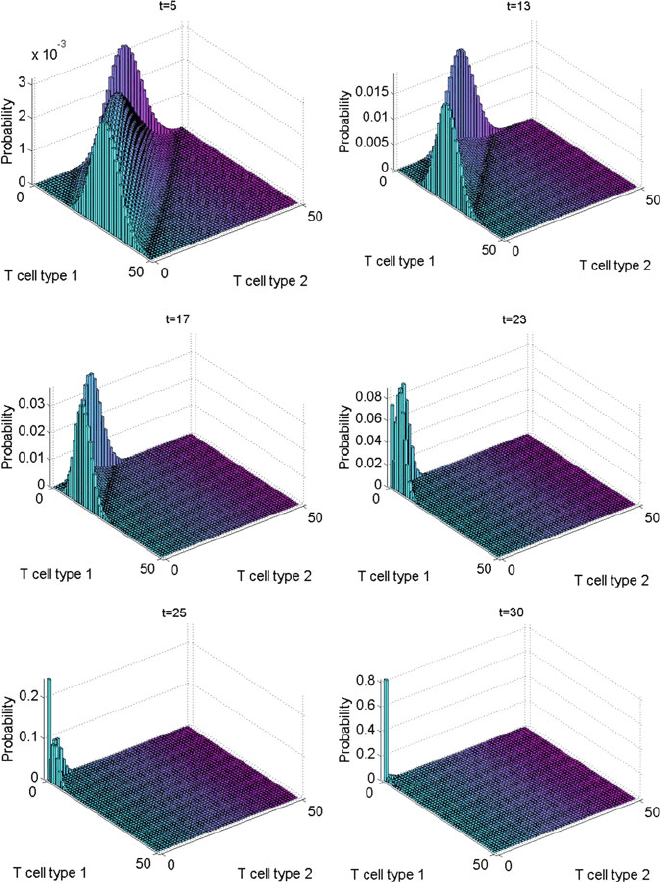
Figure 10.4 shows the evolution of the PDF in the time-dependent case. Ini-
tially, the distribution is similar to the time-independent case: compare, for example,
Fig. 10.4 at t D 5 with Fig. 10.2.However,att 8 the evolution starts to diverge
and by t D 13 the PDF is noticeably different. In particular we see the distribu-
tion gradually moving towards the origin at the snapshots in t D 13; 17; 23; 25,and
by t D 30 about 80% of the distribution is in the absorbing state. This is in con-
trast to the time-independent case for which the QSD lasts for a very long time. This
attenuation of the time spent in the QSD is significant in understanding the immuno-
logical implications of the age-dependent case. As noted in above, diversity in the T
cell repertoire is maintained because clonotypes with a smaller niche overlap tend
to last longer because they face less competition for survival stimuli. However for
clonotype populations that show an age-dependent decline in as in (10.7), the QSD
may not last very long even if the clonotype has a small niche overlap. This results
in an abnormal loss of diversity from the T cell repertoire. corresponding decrease
in the functional capacity of the immune system to recognize foreign epitopes.
The Mean Time to Extinction of Both Clonotypes
In this section we quantify how the survival time of a clonotype depends on the
time-dependence of the birth-rates. Assuming that the process begins in the quasi-
stationary distribution, the mean time until absorption is given by 1=
C
,where
C
is
the decay parameter associated with the Markov chain. For many applications, after
a brief initial transient the process is approximately in the QSD so this is a reason-
able assumption. The theory of the decay parameter and QSDs is presented in [33].
Thus we use 1=
C
as an indication of the survival time of a clonotype. For the bi-
variate clonotype model, we compute the eigenvalue, , with smallest magnitude, of
the matrix A
C
.HereA
C
is same as the FSP (10.3), except that the absorbing state
has also been removed. One way to compute is to use the inverse power method,
or to call the MATLAB sparse eigenvalue routine, eigs.A
C
;1;0/. We approximate
the decay parameter by
C
. Note that there are some technical issues with
this approximation for infinite models [33–36]. Although the clonotype models are
10 Stochastic Modelling of Two Competing Clonotypes 221
Fig. 10.4 The solution to the ME at t D 5; 13; 17; 23; 25; 30 in the time-dependent case
infinite this is because bounds are not known and may be large. Real applications
will have finite numbers of clonotypes so it is reasonable to focus on the finite case.
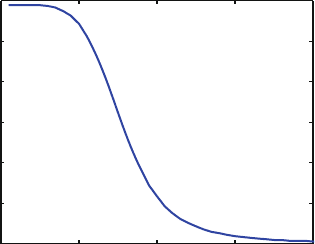
Figure 10.5 shows the change in the mean time to absorption, from the QSD, as a
function of time. It can be seen that the time-dependence resembles that of the time-
dependent birth rates in Fig. 10.3a, although on a log scale. At t D 0, the average
222 S. MacNamara and K. Burrage
0 10 20 30 40
0
2
4
6
8
10
12
log(1/λ
C
)
t
Fig. 10.5 The mean time until extinction of both clonotypes in the two-dimensional model
lifetime of a clonotype is 10
11
but at t D 20 the lifetime is only 10
2
. This shows
that the simulation in Fig. 10.1 would probably not go extinct until 10
11
. Also, this
shows that the reduction in the birth rates over time, by about an order of magnitude,
leads to a much larger effect on the life expectancy of a clonotype, which decreases
by several orders of magnitude.
Discussion
This work has focused on the implications of a particular functional form of the
time-dependence for diversity maintenance but future work will consider the signif-
icance of different functional forms for .t/. Furthermore it would be interesting to
explore parameter space and models that have more clonotypes. For example this
work focused on the case that 1 but it would be interesting to relax this assump-
tion and consider the model with appropriate approximations to the birth rates. We
identify a number of important areas for refining the numerical methods described
here:
– Generalizing the error analysis of the Krylov FSP approximation to:
A time-dependent matrix
A combination of the Krylov FSP with the order 4 approximation
– Employing adaptive time-steps in the Magnus Krylov FSP integrator.
– Identifying a more sophisticated embedding of the Magnus formula in the
Krylov methods, for improved computational efficiency. For example, as a
Krylov method, only a function that returns the action of on a given vector, v,
is required, so we do not need to form the matrix, or the commutator in (10.9).
Instead, one possibility is to employ the following scheme. First form the vectors,
w
1
D A
1
v; w
2
D A
2
v; w
3
D A
2
w
1
; w
4
D A
1
w
2
;