
Thomas M. Cover, Joy A. Thomas. Elements of information theory
Подождите немного. Документ загружается.

7.1 EXAMPLES OF CHANNEL CAPACITY 185
00
11
XY
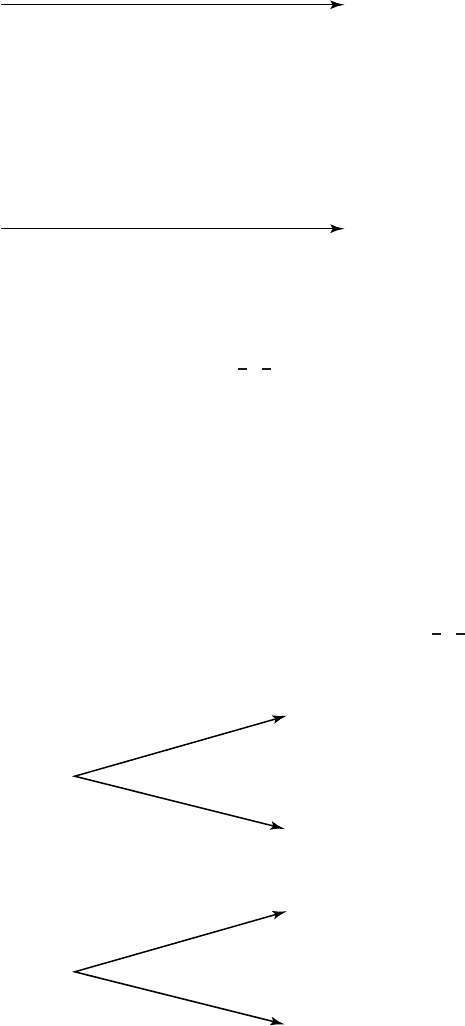
FIGURE 7.2. Noiseless binary channel. C = 1 bit.
1 bit. We can also calculate the information capacity C = max I(X;Y) =
1bit,whichisachievedbyusingp(x) = (
1
2
,
1
2
).
7.1.2 Noisy Channel with Nonoverlapping Outputs
This channel has two possible outputs corresponding to each of the two
inputs (Figure 7.3). The channel appears to be noisy, but really is not.
Even though the output of the channel is a random consequence of the
input, the input can be determined from the output, and hence every trans-
mitted bit can be recovered without error. The capacity of this channel is
also 1 bit per transmission. We can also calculate the information capacity
C = max I(X;Y) = 1bit,whichisachievedbyusingp(x) = (
1
2
,
1
2
).
1/2
1/2
0
2
1
XY
1/3
2/3
1
4
3
FIGURE 7.3. Noisy channel with nonoverlapping outputs. C = 1 bit.
186 CHANNEL CAPACITY
7.1.3 Noisy Typewriter
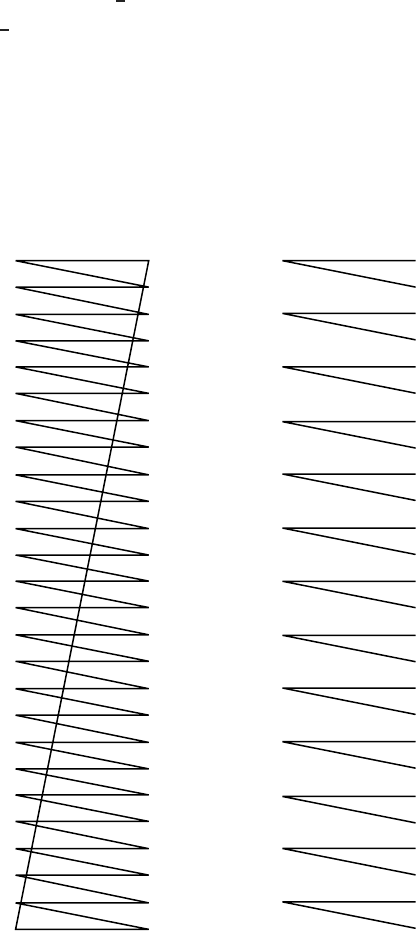
In this case the channel input is either received unchanged at the
output with probability
1
2
or is transformed into the next letter with
probability
1
2
(Figure 7.4). If the input has 26 symbols and we
use every alternate input symbol, we can transmit one of 13 sym-
bols without error with each transmission. Hence, the capacity of
this channel is log 13 bits per transmission. We can also calculate
the information capacity C = max I(X;Y) = max (H (Y ) − H(Y|X)) =
max H(Y)− 1 = log 26 − 1 = log 13, achieved by using p(x) distributed
uniformly over all the inputs.
Noisy channel
A
B
AA
B
C
D
C
C
D
E
A
B
C
D
E
Y
Z
Y
ZZ
Noiseless subset of inputs
FIGURE 7.4. Noisy Typewriter. C = log 13 bits.

7.1 EXAMPLES OF CHANNEL CAPACITY 187
7.1.4 Binary Symmetric Channel
Consider the binary symmetric channel (BSC), which is shown in Fig. 7.5.
This is a binary channel in which the input symbols are complemented
with probability p. This is the simplest model of a channel with errors,
yet it captures most of the complexity of the general problem.
When an error occurs, a 0 is received as a 1, and vice versa. The bits
received do not reveal where the errors have occurred. In a sense, all
the bits received are unreliable. Later we show that we can still use such
a communication channel to send information at a nonzero rate with an
arbitrarily small probability of error.
We bound the mutual information by
I(X;Y) = H(Y)− H(Y|X) (7.2)
= H(Y)−
p(x)H(Y|X = x) (7.3)
= H(Y)−
p(x)H(p) (7.4)
= H(Y)− H(p) (7.5)
≤ 1 − H(p), (7.6)
where the last inequality follows because Y is a binary random variable.
Equality is achieved when the input distribution is uniform. Hence, the
information capacity of a binary symmetric channel with parameter p is
C = 1 − H(p) bits. (7.7)
1 −
p
1 −
p
p
p
0
1
0
1
FIGURE 7.5. Binary symmetric channel. C = 1 − H(p) bits.
188 CHANNEL CAPACITY
7.1.5 Binary Erasure Channel
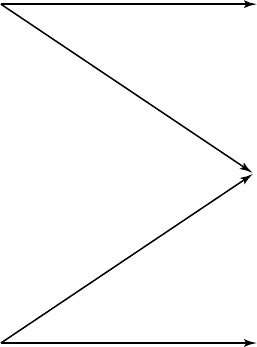
The analog of the binary symmetric channel in which some bits are lost
(rather than corrupted) is the binary erasure channel. In this channel, a
fraction α of the bits are erased. The receiver knows which bits have
been erased. The binary erasure channel has two inputs and three outputs
(Figure 7.6).
We calculate the capacity of the binary erasure channel as follows:
C = max
p(x)
I(X;Y) (7.8)
= max
p(x)
(H (Y ) − H(Y|X)) (7.9)
= max
p(x)
H(Y) − H(α). (7.10)
The first guess for the maximum of H(Y) would be log 3, but we cannot
achieve this by any choice of input distribution p(x). Letting E be the
event {Y = e}, using the expansion
H(Y) = H(Y,E) = H(E) + H(Y|E), (7.11)
and letting Pr(X = 1) = π ,wehave
H(Y) = H((1 − π)(1 − α), α, π(1 − α)) = H(α)+ (1 − α)H(π).
(7.12)
1 − a
1 − a
0
e
a
a
0
11
FIGURE 7.6. Binary erasure channel.

7.2 SYMMETRIC CHANNELS 189
Hence
C = max
p(x)
H(Y) − H(α) (7.13)
= max
π
(1 − α)H(π) + H(α) − H(α) (7.14)
= max
π
(1 − α)H(π) (7.15)
= 1 −α, (7.16)
where capacity is achieved by π =
1
2
.
The expression for the capacity has some intuitive meaning: Since a
proportion α of the bits are lost in the channel, we can recover (at most)
a proportion 1 −α of the bits. Hence the capacity is at most 1 − α.Itis
not immediately obvious that it is possible to achieve this rate. This will
follow from Shannon’s second theorem.
In many practical channels, the sender receives some feedback from
the receiver. If feedback is available for the binary erasure channel, it is
very clear what to do: If a bit is lost, retransmit it until it gets through.
Since the bits get through with probability 1 −α, the effective rate of
transmission is 1 − α. In this way we are easily able to achieve a capacity
of 1 −α with feedback.
Later in the chapter we prove that the rate 1 − α isthebestthatcanbe
achieved both with and without feedback. This is one of the consequences
of the surprising fact that feedback does not increase the capacity of
discrete memoryless channels.
7.2 SYMMETRIC CHANNELS
The capacity of the binary symmetric channel is C = 1 −H(p) bits per
transmission, and the capacity of the binary erasure channel is C = 1 −
α bits per transmission. Now consider the channel with transition matrix:
p(y|x) =
0.30.20.5
0.50.30.2
0.20.50.3
. (7.17)
Here the entry in the xth row and the yth column denotes the conditional
probability p(y|x) that y is received when x is sent. In this channel, all
the rows of the probability transition matrix are permutations of each other
and so are the columns. Such a channel is said to be symmetric. Another
example of a symmetric channel is one of the form
Y = X + Z(mod c), (7.18)

190 CHANNEL CAPACITY
where Z has some distribution on the integers {0, 1, 2,...,c− 1}, X has
the same alphabet as Z,andZ is independent of X.
In both these cases, we can easily find an explicit expression for the
capacity of the channel. Letting r be a row of the transition matrix, we
have
I(X;Y) = H(Y)− H(Y|X) (7.19)
= H(Y)− H(r) (7.20)
≤ log |
Y|−H(r) (7.21)
with equality if the output distribution is uniform. But p(x) = 1/|
X|
achieves a uniform distribution on Y , as seen from
p(y) =
x∈X
p(y|x)p(x) =
1
|X|
p(y|x) = c
1
|X|
=
1
|Y|
, (7.22)
where c is the sum of the entries in one column of the probability transition
matrix.
Thus, the channel in (7.17) has the capacity
C = max
p(x)
I(X;Y) = log 3 − H(0.5, 0.3, 0.2), (7.23)
and C is achieved by a uniform distribution on the input.
The transition matrix of the symmetric channel defined above is doubly
stochastic. In the computation of the capacity, we used the facts that the
rows were permutations of one another and that all the column sums were
equal.
Considering these properties, we can define a generalization of the
concept of a symmetric channel as follows:
Definition A channel is said to be symmetric if the rows of the channel
transition matrix p(y|x) are permutations of each other and the columns
are permutations of each other. A channel is said to be weakly symmetric
if every row of the transition matrix p(·|x) is a permutation of every other
row and all the column sums
x
p(y|x) are equal.
For example, the channel with transition matrix
p(y|x) =
1
3
1
6
1
2
1
3
1
2
1
6
(7.24)
is weakly symmetric but not symmetric.
7.4 PREVIEW OF THE CHANNEL CODING THEOREM 191
The above derivation for symmetric channels carries over to weakly
symmetric channels as well. We have the following theorem for weakly
symmetric channels:
Theorem 7.2.1 For a weakly symmetric channel,
C = log |
Y|−H(row of transition matrix), (7.25)
and this is achieved by a uniform distribution on the input alphabet.
7.3 PROPERTIES OF CHANNEL CAPACITY
1. C ≥ 0sinceI(X;Y) ≥ 0.
2. C ≤ log |
X| since C = max I(X;Y) ≤ max H(X) = log |X|.
3. C ≤ log |
Y| for the same reason.
4. I(X;Y) is a continuous function of p(x).
5. I(X;Y) is a concave function of p(x) (Theorem 2.7.4). Since
I(X;Y) is a concave function over a closed convex set, a local
maximum is a global maximum. From properties 2 and 3, the maxi-
mum is finite, and we are justified in using the term maximum rather
than supremum in the definition of capacity. The maximum can then
be found by standard nonlinear optimization techniques such as gra-
dient search. Some of the methods that can be used include the
following:
•
Constrained maximization using calculus and the Kuhn–Tucker
conditions.
•
The Frank–Wolfe gradient search algorithm.
•
An iterative algorithm developed by Arimoto [25] and Blahut
[65]. We describe the algorithm in Section 10.8.
In general, there is no closed-form solution for the capacity. But for
many simple channels it is possible to calculate the capacity using prop-
erties such as symmetry. Some of the examples considered earlier are of
this form.
7.4 PREVIEW OF THE CHANNEL CODING THEOREM
So far, we have defined the information capacity of a discrete memoryless
channel. In the next section we prove Shannon’s second theorem, which
192 CHANNEL CAPACITY
X
n
Y
n
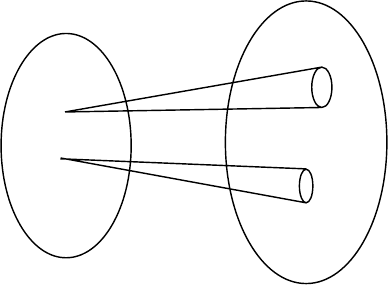
FIGURE 7.7. Channels after n uses.
gives an operational meaning to the definition of capacity as the number
of bits we can transmit reliably over the channel. But first we will try to
give an intuitive idea as to why we can transmit C bits of information over
a channel. The basic idea is that for large block lengths, every channel
looks like the noisy typewriter channel (Figure 7.4) and the channel has a
subset of inputs that produce essentially disjoint sequences at the output.
For each (typical) input n-sequence, there are approximately 2
nH (Y |X)
possible Y sequences, all of them equally likely (Figure 7.7). We wish
to ensure that no two X sequences produce the same Y output sequence.
Otherwise, we will not be able to decide which X sequence was sent.
The total number of possible (typical) Y sequences is ≈ 2
nH (Y )
.Thisset
has to be divided into sets of size 2
nH (Y |X)
corresponding to the different
input X sequences. The total number of disjoint sets is less than or equal
to 2
n(H (Y )−H(Y|X))
= 2
nI (X;Y)
. Hence, we can send at most ≈ 2
nI (X;Y)
distinguishable sequences of length n.
Although the above derivation outlines an upper bound on the capacity,
a stronger version of the above argument will be used in the next section
to prove that this rate I is achievable with an arbitrarily low probability
of error.
Before we proceed to the proof of Shannon’s second theorem, we need
a few definitions.
7.5 DEFINITIONS
We analyze a communication system as shown in Figure 7.8.
A message W , drawn from the index set {1, 2,...,M}, results in the
signal X
n
(W ), which is received by the receiver as a random sequence

7.5 DEFINITIONS 193
Encoder
Decoder
Channel
p
(
y
|
x
)
WX
n
Y
n
Message
W
Estimate
of
Message
^
FIGURE 7.8. Communication channel.
Y
n
∼ p(y
n
|x
n
). The receiver then guesses the index W by an appropriate
decoding rule
ˆ
W = g(Y
n
). The receiver makes an error if
ˆ
W is not the
same as the index W that was transmitted. We now define these ideas
formally.
Definition A discrete channel, denoted by (
X,p(y|x), Y), consists of
two finite sets
X and Y and a collection of probability mass functions
p(y|x), one for each x ∈
X, such that for every x and y, p(y|x) ≥ 0, and
for every x,
y
p(y|x) = 1, with the interpretation that X is the input
and Y is the output of the channel.
Definition The nth extension of the discrete memoryless channel (DMC)
is the channel (
X
n
,p(y
n
|x
n
), Y
n
),where
p(y
k
|x
k
,y
k−1
) = p(y
k
|x
k
), k = 1, 2,...,n. (7.26)
Remark If the channel is used without feedback [i.e., if the input sym-
bols do not depend on the past output symbols, namely, p(x
k
|x
k−1
,y
k−1
)
= p(x
k
|x
k−1
)], the channel transition function for the nth extension of the
discrete memoryless channel reduces to
p(y
n
|x
n
) =
n
i=1
p(y
i
|x
i
). (7.27)
When we refer to the discrete memoryless channel, we mean the discrete
memoryless channel without feedback unless we state explicitly other-
wise.
Definition An (M, n) code for the channel (
X,p(y|x), Y) consists of
the following:
1. An index set {1, 2,...,M}.
2. An encoding function X
n
: {1, 2,...,M}→X
n
, yielding codewords
x
n
(1), x
n
(2), ..., x
n
(M). The set of codewords is called the code-
book.

194 CHANNEL CAPACITY
3. A decoding function
g :
Y
n
→{1, 2,...,M}, (7.28)
which is a deterministic rule that assigns a guess to each possible
received vector.
Definition (Conditional probability of error)Let
λ
i
= Pr(g(Y
n
) = i|X
n
= x
n
(i)) =
y
n
p(y
n
|x
n
(i))I (g(y
n
) = i) (7.29)
be the conditional probability of error given that index i was sent, where
I(·) is the indicator function.
Definition The maximal probability of error λ
(n)
for an (M, n) code is
defined as
λ
(n)
= max
i∈{1,2,...,M}
λ
i
. (7.30)
Definition The (arithmetic) average probability of error P
(n)
e
for an
(M, n) code is defined as
P
(n)
e
=
1
M
M
i=1
λ
i
. (7.31)
Note that if the index W is chosen according to a uniform distribution
over the set {1, 2,...,M},andX
n
= x
n
(W ),then
P
(n)
e
= Pr(W = g(Y
n
)), (7.32)
(i.e., P
(n)
e
is the probability of error). Also, obviously,
P
(n)
e
≤ λ
(n)
. (7.33)
One would expect the maximal probability of error to behave quite differ-
ently from the average probability. But in the next section we prove that
a small average probability of error implies a small maximal probability
of error at essentially the same rate.