
Engelbrecht Andries P. Computational Intelligence: An Introduction
Подождите немного. Документ загружается.

178 10. Genetic Programming
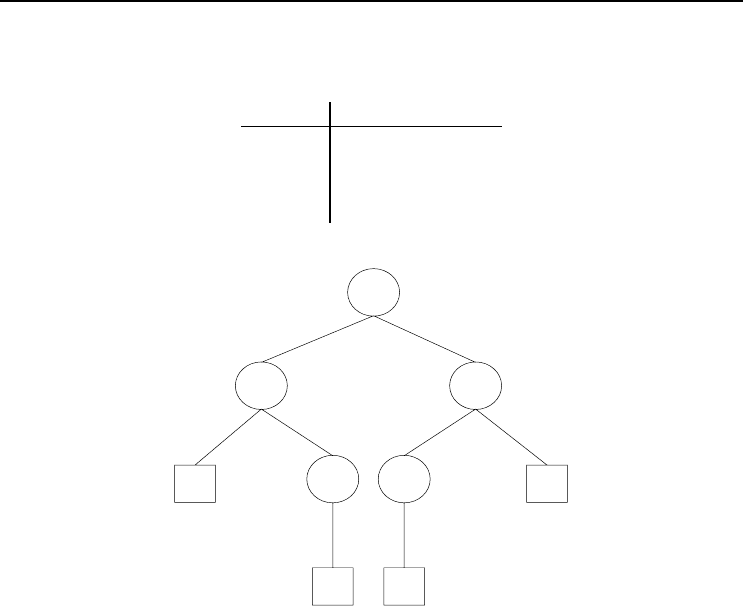
Table 10.1 XOR Truth Table
x
1
x
2
Target Output
000
01
1
10
1
11
0
OR
AND AND
NOT NOT
x
1
x
1
x
2
x
2
Figure 10.1 Tree-Representation of XOR
As mentioned above, a grammar forms an important part of chromosome represen-
tation. As part of the grammar, a terminal set, function set, and semantic rules
need to be defined. The terminal set specifies all the variables and constants, while
the function set contains all the functions that can be applied to the elements of the
terminal set. These functions may include mathematical, arithmetic and/or Boolean
functions. Decision structures such as if-then-else and loops can also be included in
the function set. Using tree terminology, elements of the terminal set form the leaf
nodes of the evolved tree, and elements of the function set form the non-leaf nodes.
For a specific problem, the search space consists of the set of all possible trees that
can be constructed using the defined grammar.
Two examples are given next to illustrate GP representations. One of the first appli-
cations of GP was to evolve Boolean expressions. Consider the expression,
(x
1
AND NOT x
2
)OR(NOTx
1
AND x
2
)
and given a data set of interpretations and their associated target outputs (as given
in Table 10.1), the task is to evolve this expression. The solution is represented in
Figure 10.1. For this problem, the function set is defined as {AND, OR,NOT},and
the terminal set is {x
1
,x
2
} where x
1
,x
2
∈{0, 1}.
10.2 Initial Population 179
+
Ŧ
3.5/
expsin
Ŧ
x
z
a
ln
x
y
*
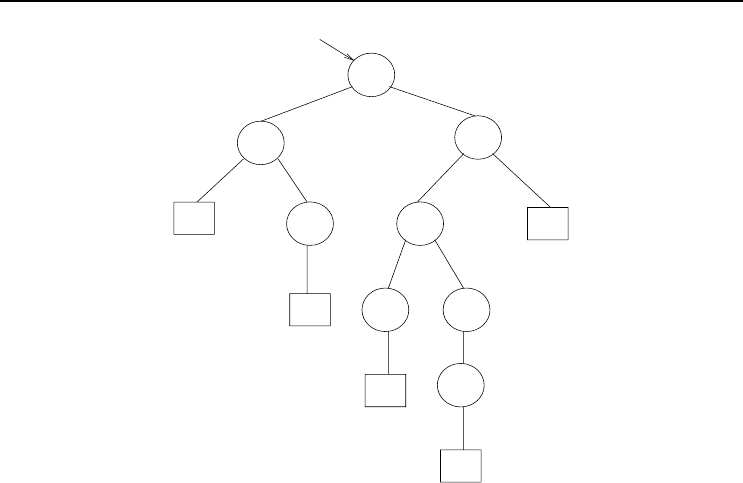
Figure 10.2 Tree-Representation for Mathematical Expressions
The next example considers the problem of evolving a mathematical expression. Con-
sider the task of evolving the program,
y:=x*ln(a)+sin(z)/exp(-x)-3.4;
The terminal set is specified as {a, x, z, 3.4} with a, x, z ∈ R. The minimal function set
is given as {−, +, ∗,/,sin, exp, ln}. The global optimum is illustrated in Figure 10.2.
In addition to the terminal and function sets, rules can be specified to ensure the
construction of semantically correct trees. For example, the logarithmic function, ln,
can take only positive values. Similarly, the second parameter of the division operator
can not be zero.
10.2 Initial Population
The initial population is generated randomly within the restrictions of a maximum
depth and semantics as expressed by the given grammar. For each individual, a root
is randomly selected from the set of function elements. The branching factor (the
number of children) of the root, and each non-terminal node, are determined by the
arity of the selected function. For each non-root node, the initialization algorithm
randomly selects an element either from the terminal set or the function set. As soon
as an element from the terminal set is selected, the corresponding node becomes a leaf
node and is no longer considered for expansion.

180 10. Genetic Programming
Instead of initializing individuals as large trees, individuals can be initialized to be
as simple as possible. During the evolutionary process these individuals will grow if
increased complexity is necessary (refer to Section 10.6). This facilitates creation of
simple solutions.
10.3 Fitness Function
The fitness function used for GP is problem-dependent. Because individuals usually
represent a program, calculation of fitness requires the program to be evaluated against
a number of test cases. Its performance on the test cases is then used to quantify the
individual’s fitness. For example, refer to the problems considered in Section 10.1.
For the Boolean expression, fitness is calculated as the number of correctly predicted
target outputs. For the mathematical expression a data set of sample input patterns
and associated target output is needed. Each pattern contains a value for each of the
variables (a, x and z) and the corresponding value of y. For each pattern the output of
the expression represented by the individual is determined by executing the program.
The output is compared with the target output to compute the error for that pattern.
The MSE over the errors for all the patterns gives the fitness of the individual.
As will be shown in Section 10.6, GP can also be used to evolve decision trees. For
this application each individual represents a decision tree. The fitness of individuals
is calculated as the classification accuracy of the corresponding decision tree. If the
objective is to evolve a game strategy in terms of a computer program [479, 481], the
fitness of an individual can be the number of times that the individual won the game
out of a total number of games played.
In addition to being used as a measure of the performance of individuals, the fitness
function can also be used to penalize individuals with undesirable structural properties.
For example, instead of having a predetermined depth limit, the depth of a tree can
be penalized by adding an appropriate penalty term to the fitness function. Similarly,
bushy trees (which result when nodes have a large branching factor) can be penalized
by adding a penalty term to the fitness function. The fitness function can also be used
to penalize semantically incorrect individuals.
10.4 Crossover Operators
Any of the previously discussed selection operators (refer to Section 8.5) can be used
to select two parents to produce offspring. Two approaches can be used to generate
offspring, each one differing in the number of offspring generated:
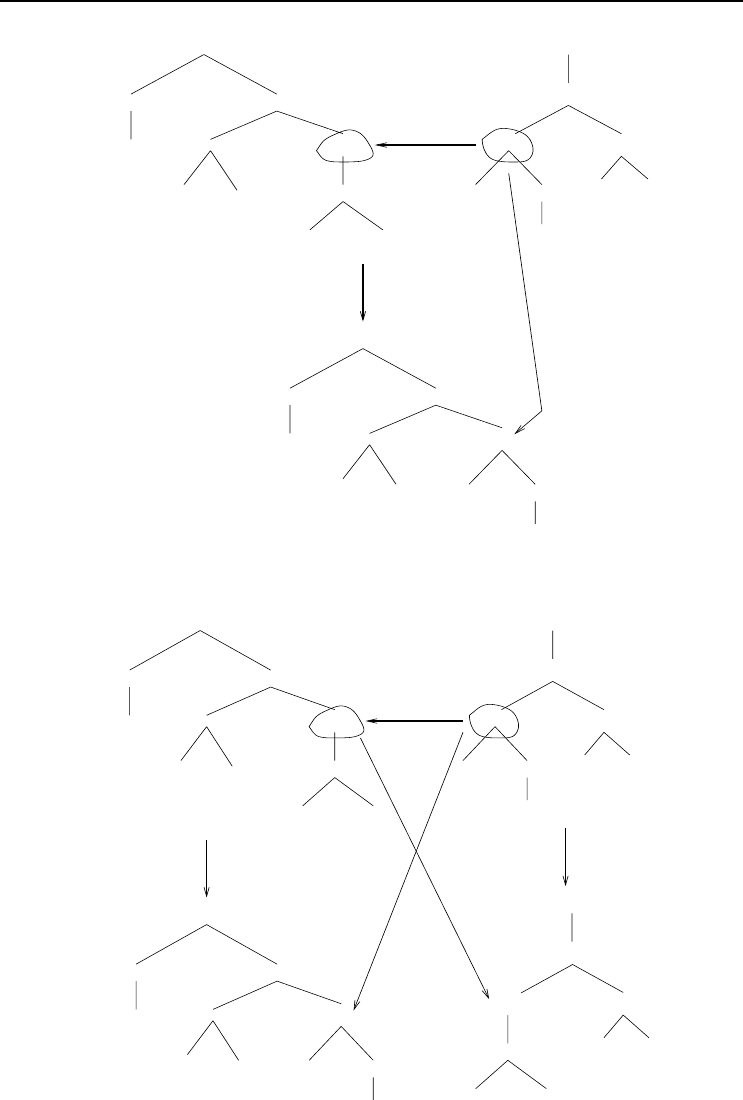
• Generating one offspring: A random node is selected within each of the
parents. Crossover then proceeds by replacing the corresponding subtree in the
one parent by that of the other parent. Figure 10.3(a) illustrates this operator.
10.4 Crossover Operators 181
*
z sin
Parent 1
sin
*
3.4 a
Parent 2
ln
+
/
az
Offspring
exp
-
3.4 x
*
a*
z sin
3.4
3.4
exp
-
3.4 x
*
a
+
+
(a) Creation of one offspring
ln
+
/
az
Parent 1 Parent 2
3.4
Offspring 1
Offspring 2
*
z sin
ln
+
/
az
exp
-
3.4 x
*
a
exp
-
3.4 x
a*
z sin
3.4
*
sin
*
3.4 a
+
sin
*
3.4 a
+
(b) Creation of two offspring
Figure 10.3 Genetic Programming Crossover

182 10. Genetic Programming
• Generating two offspring: Again, a random node is selected in each of the
two parents. In this case the corresponding subtrees are swapped to create the
two offspring as illustrated in Figure 10.3(b).
10.5 Mutation Operators
Mutation operators are usually developed to suit the specific application. However,
many of the mutation operators developed for GP are applicable to general GP rep-
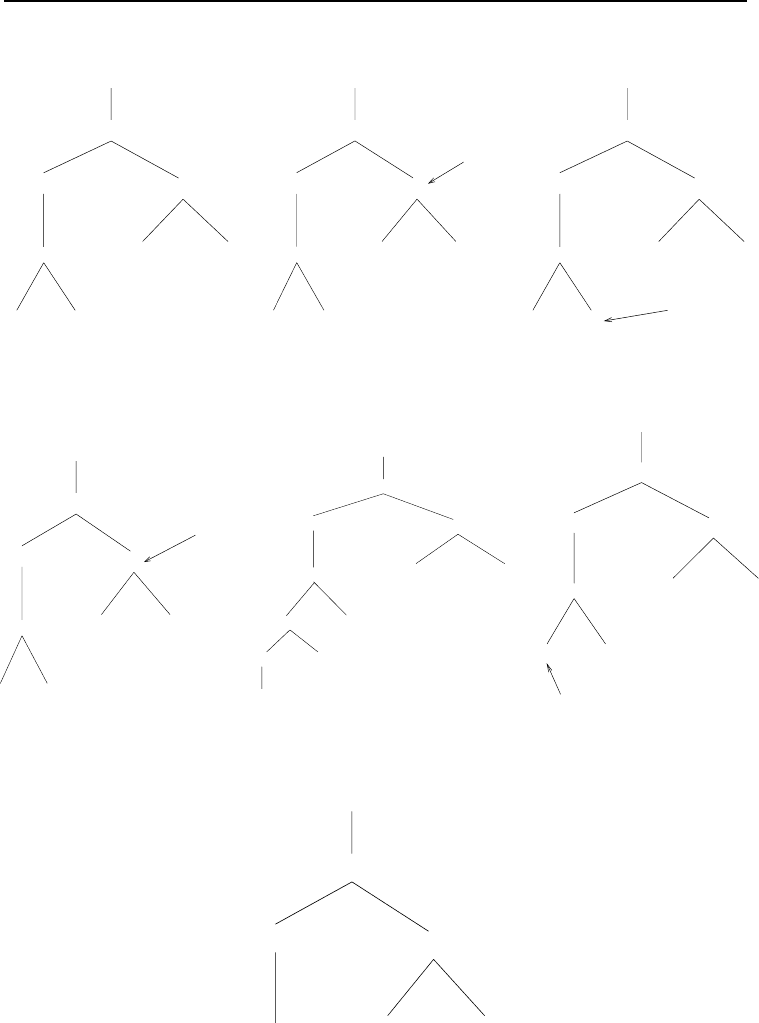
resentations. With reference to Figure 10.4(a), the following mutation operators can
be applied:
• Function node mutation: A non-terminal node, or function node, is randomly
selected and replaced with a node of the same arity, randomly selected from the
function set. Figure 10.4(b) illustrates that function node ‘+’ is replaced with
function node ‘−’.
• Terminal node mutation: A leaf node, or terminal node, is randomly selected
and replaced with a new terminal node, also randomly selected from the termi-
nal set. Figure 10.4(c) illustrates that terminal node a has been replaced with
terminal node z.
• Swap mutation: A function node is randomly selected and the arguments of
that node are swapped as illustrated in Figure 10.4(d).
• Grow mutation: With grow mutation a node is randomly selected and re-
placed by a randomly generated subtree. The new subtree is restricted by a
predetermined depth. Figure 10.4(e) illustrates that the node 3.4 is replaced
with a subtree.
• Gaussian mutation: A terminal node that represents a constant is randomly
selected and mutated by adding a Gaussian random value to that constant.
Figure 10.4(f) illustrates Gaussian mutation.
• Trunc mutation: A function node is randomly selected and replaced by a
random terminal node. This mutation operator performs a pruning of the tree.
Figure 10.4(g) illustrates that the + function node is replaced by the terminal
node a.
Individuals to be mutated are selected according to a mutation probability p
m
.Inad-
dition to a mutation probability, nodes within the selected tree are mutated according
to a probability p
n
. The larger the probability p
n
, the more the genetic build-up of
that individual is changed. On the other hand, the larger the mutation probability
p
m
, the more individuals will be mutated.
All of the mutation operators can be implemented, or just a subset thereof. If more
than one mutation operator is implemented, then either one operator is selected ran-
domly, or more than one operator is selected and applied in sequence.
In addition to the mutation operators above, Koza [479] proposed the following asexual
operators:
10.5 Mutation Operators 183
3.4 a
*
exp
+
ln
za
/
(a) Original tree
3.4 a
*
exp
+
ln
za
-
new node of
same arity
(b) Function node
3.4 z
*
exp
+
ln
za
/
New terminal node
(c) Terminal node
3.4 a
*
exp
+
ln
/
za
Arguments swapped
(d) Swapping
*
exp
+
ln
za
/
a+
sin z
x
(e) Grow
3.51 a
*
exp
+
ln
za
/
3.41+N(0,0.1)
(f) Gaussian
exp
+
ln
za
/
a
(g) Trunc
Figure 10.4 Genetic Programming Mutation Operators

184 10. Genetic Programming
• Permutation operator: This operator is similar to the swap mutation. If a
function has n parameters, the permutation operator generates a random permu-
tation from the possible n! permutations of parameters. The arguments of the
function are then permutated according to this randomly generated permutation.
• Editing operator: This operator is used to restructure individuals according to
predefined rules. For example, a subtree that represents the Boolean expression,
x AND x is replaced with the single node, x. Editing rules can also be used to
enforce semantic rules.
• Building block operator: The objective of the building block operator is to
automatically identify potentially useful building blocks. A new function node
is defined for an identified building block and is used to replace the subtree
represented by the building block. The advantage of this operator is that good
building blocks will not be altered by reproduction operators.
10.6 Building Block Genetic Programming
The GP process discussed thus far generates an initial population of individuals where
each individual represents a tree consisting of several nodes and levels. An alternative
approach has been developed in [248, 742] – specifically for evolving decision trees
– referred to as a building-block approach to GP (BGP). In this approach, initial
individuals consist of only a root and the immediate children of that node. Evolution
starts on these “small” initial trees. When the simplicity of the population’s individ-
uals can no longer account for the complexity of the problem to be solved, and no
improvement in the fitness of any of the individuals within the population is observed,
individuals are expanded. Expansion occurs by adding a randomly generated building
block (i.e. a new node) to individuals. In other words, grow mutation is applied.
This expansion occurs at a specified expansion probability, p
e
, and therefore not all of
the individuals are expanded. Described more formally, the building-block approach
starts with models with a few degrees of freedom – most likely too few to solve the
problem to the desired degree of accuracy. During the evolution process, more degrees
of freedom are added when no further improvements are observed. In between the
triggering of expansion, crossover and mutation occur as for normal GP.
This approach to GP helps to reduce the computational complexity of the evolution
process, and helps to produce smaller individuals.
10.7 Applications
GP was developed to evolve computer programs [478, 479]. Programs have been
evolved for a wide range of problem types as illustrated in [479]. These problem types
10.8 Assignments 185
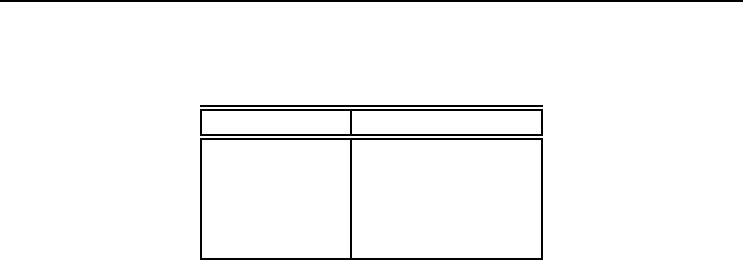
Table 10.2 Genetic Programming Applications
Application References
Decision trees [248, 479, 685, 742]
Game-playing [479, 481]
Bioinformatics [484, 485]
Data mining [648, 741, 917]
Robotics [206, 486, 347]
include Boolean expressions, planning, symbolic function identification, empirical dis-
covery, solving systems of equations, concept formation, automatic programming, pat-
tern recognition, game-playing strategies, and neural network design. Table 10.2 pro-
vides a summary of other applications of GP.
A very complete list of GP publications and applications can be found at
http://www.cs.bham.ac.uk/~ubl/biblio/gp-html/
10.8 Assignments
1. Explain how a GP can be used to evolve a program to control a robot, where the
objective of the robot is to move out of a room (through the door) filled with
obstacles.
2. First explain what a decision tree is, and then show how GP can be used to
evolve decision trees.
3. Is it possible to use GP for adaptive story telling?
4. Given a pre-condition and a post-condition of a function, is it possible to evolve
the function using GP?
5. Explain why BGP is computationally less expensive than GP.
6. Show how a GP can be used to evolve polynomial expressions.
7. Discuss how GP can be used to evolve the evaluation function used to evaluate
the desirability of leaf nodes in a game tree.

Chapter 11
Evolutionary Programming
Evolutionary programming (EP) originated from the research of L.J. Fogel in 1962
[275] on using simulated evolution to develop artificial intelligence. While EP shares
the objective of imitating natural evolutionary processes with GAs and GP, it differs
substantially in that EP emphasizes the development of behavioral models and not
genetic models: EP is derived from the simulation of adaptive behavior in evolution.
That is, EP considers phenotypic evolution. EP iteratively applies two evolutionary
operators, namely variation through application of mutation operators, and selection.
Recombination operators are not used within EP.
This chapter provides an overview of EP, organized as follows: The basic EP is de-
scribed in Section 11.1. Different mutation and selection operators are discussed in
Section 11.2. Self-adaptation and strategy parameters are discussed in Section 11.3.
Variations of EP that combine aspects from other optimization paradigms are reviewed
in Section 11.4. A compact treatment of a few advanced topics is given in Section 11.5,
including constraint handling, multi-objective optimization, niching, and dynamic en-
vironments.
11.1 Basic Evolutionary Programming
Evolutionary programming (EP) was conceived by Laurence Fogel in the early 1960s
[275, 276] as an alternative approach to artificial intelligence (AI), which, at that time,
concentrated on models of human intelligence. From his observation that intelligence
can be viewed as “that property which allows a system to adapt its behavior to meet
desired goals in a range of environments” [267], a model has been developed that
imitates evolution of behavioral traits. The evolutionary process, first developed to
evolve finite state machines (FSM), consists of finding a set of optimal behaviors from a
space of observable behaviors. Therefore, in contrast to other EAs, the fitness function
measures the “behavioral error” of an individual with respect to the environment of
that individual.
As an approach to evolve FSMs, individuals in an EP population use a representa-
tion of ordered sequences, which differs significantly from the bitstring representation
proposed by Holland for GAs (refer to Chapter 9). EP is, however, not limited to
an ordered sequence representation. David Fogel et al. [271, 272] extended EP for
Computational Intelligence: An Introduction, Second Edition A.P. Engelbrecht
c
2007 John Wiley & Sons, Ltd
187