
Holik H. (ed.) Handbook of Paper and Board
Подождите немного. Документ загружается.

consideration when using deinking sludges for composting and agricultural and
land application purposes.
The level of heavy metals in sludges of recovered paper processing is generally
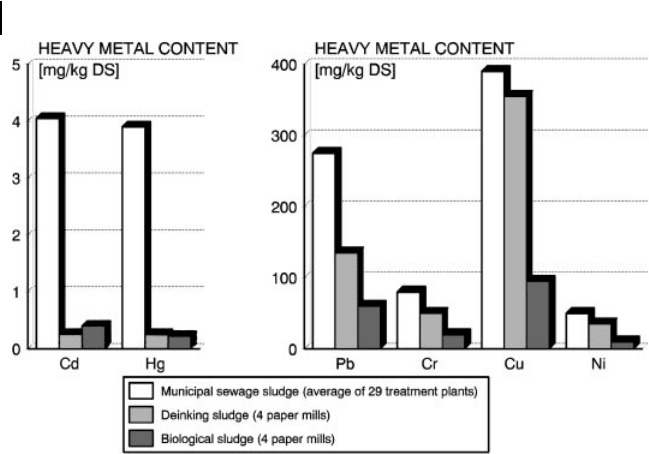
low. Figure 10.8 compares the concentrations of heavy metals in deinking sludge
with the contents of heavy metals in biological sludge of wastewater treatment
plants of paper mills and in municipal sewage sludge. This data shows that
sludges of deinking plants have less contamination than those of municipal waste-
water treatment. The concentration of cadmium and mercury is especially insig-
nificant and sometimes even below the detection limit of the test method applied
(atomic absorption spectrometry). Only the concentration of copper has the same
order of magnitude as that of municipal sewage sludge. The copper content of
deinking sludge is primarily due to blue pigments of printing inks which contain
phthalocyano compounds.
Traces of halogenated organic compounds such as polychlorinated biphenyls
(PCB), polychlorinated dibenzodioxins (PCDD), and polychlorinated dibenzofur-
ans (PCDF) also require consideration. PCB compounds were used in the manu-
facture of carbonless paper until the early 1970s. The PCB level of deinking sludge
has decreased significantly since then. Recent data obtained from several deinking
plants confirm that the PCB concentration is below 0.3 mg kg
–1
dry solids
(0.3 ppm) using the most relevant seven congeners.
PCDD/PCDF concentrations of deinking sludges show a similar pattern of de-
cline. Due to the continuing change from elemental chlorine bleaching of chem-
ical pulp to chlorine dioxide and oxygen bleaching, the PCDD/PCDF contents of
deinking sludges of German paper mills have been decreasing significantly. Today,
PCDD/PCDF concentrations of deinking sludge are 25–60 ng I-TE kg
–1
dry solids
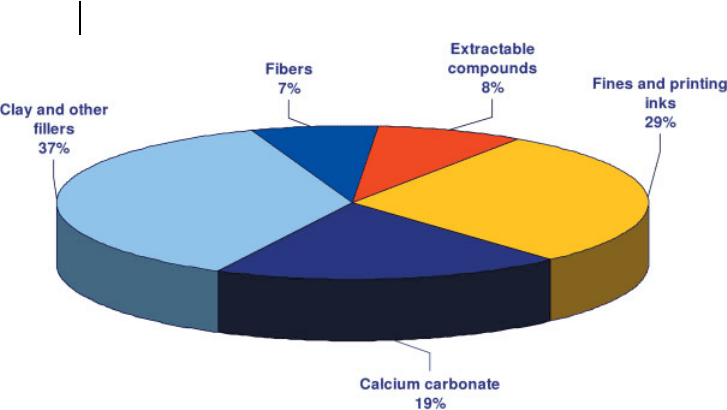
Fig. 10.7 Composition of deinking sludges from the
production of wood-containing graphic papers related
to dry substances (Germany) [11].
10 Environmental Aspects
432

Table 10.4 Chemical characteristics of deinking sludges with
data related to dry substance [11].
Parameter Unit n Minimum Maximum Average
dry content wt% 11 38.1 62.1 51.2
ash content wt% 14 36.4 67.3 54.8
heating value kJ kg
–1
(wet) 12 1 240 4 320 2 310
heating value kJ kg
–1
(dry) 13 4 750 8600 6940
pH 13 6.8 8.3 7.5
sulfur wt% 3 0.06 0.12 0.08
fluorine wt% 14 n/a < 0.1 n/a
chlorine wt% 14 0.01 0.1 0.05
carbon wt% 14 19.1 35.8 26.0
hydrogen wt% 14 2.6 4.2 3.3
nitrogen wt% 14 0.20 0.50 0.35
phosphorus mg kg
–1
14 300 560 464
potassium wt% 14 0.08 0.30 0.19
calcium wt% 14 1.5 14.9 9.3
magnesium wt% 14 0.16 0.79 0.37
aluminum wt% 6 2.8 6.5 4.6
iron wt% 6 < 0.1 0.5 0.2
silicon wt% 6 3.3 7.6 5.8
lead mg kg
–1
14 9.5 79.4 44.6
cadmium mg kg
–1
14 0.02 1.54 0.34
chromium mg kg
–1
14 4.8 96.6 39.1
copper mg kg
–1
14 64.2 345.0 186.2
mercury mg kg
–1
14 0.10 0.89 0.26
nickel mg kg
–1
14 < 31.3 31.3 11.4
zinc mg kg
–1
14 34.2 1320 269
PCB mg kg
–1
5 n/a < 0.3 n/a
AOX mg kg
–1
14 160 1200 516
dioxins/furans ng I-TE kg
–1
3 26.5 58.3 37.9
n = quantity of analyzed deinking sludge samples. n/a = not available.
I-TE = International Toxicity Equivalent according to NATO/CMS.
10.2 Solid Waste 433
(I-TE = International toxicity equivalent). These figures are not significantly higher
than the average contents of PCDD/PCDF in municipal sewage sludge. As a result
of modifications of the bleaching sequences in chemical pulping, dioxin formation
does not occur in most pulp producing countries. Consequently, dioxin discharges
from recovered paper processing mills are already low and will decrease further.
The parameter AOX (adsorbable organic halogen-containing compounds) plays
an essential role in environmental regulations. In Germany for example, the direct
application of sewage sludge on agricultural soil is regulated for heavy metal con-
centration, PCB and dioxin concentrations, and AOX level. In many cases, the
AOX of deinking sludge is often above the acceptable limit of 500 mg kg
–1
dry
solids. Investigations have shown that up to 80% of AOX in deinking sludge is due
to chlorinated yellow pigments that are components of printing inks. These pig-
ments are water insoluble and nonbiodegradable.
10.2.2
In-mill Waste Handling
The aim of in-mill waste handling is usually to achieve as high a dry solids content
as possible, because all commonly used methods for material and energy recovery
benefit from a high solids content.
In a sludge suspension, water exists in the following forms:
• Free water
• Capillary water
• Bound and intercellular water.
Fig. 10.8 Heavy metal contents of deinking sludge, biological
sludge and municipal sewage sludge (Germany) [13].
10 Environmental Aspects
434
Free water can be removed simply by gravity settling. Much of the water is re-
moved by allowing the sludge to stand, when solids sink to the bottom and water
forms a supernatant. Capillary water can be removed mechanically by filtration or
centrifugation. Bound and intercellular water can be removed by drying.
10.2.2.1 Dewatering
For sludge dewatering two-stage processes are often used. An initial step for dewa-
tering using gravity tables or drums and disk thickeners occurs before a high-
consistency dewatering with belt filter presses or screw presses. Batch-agitated
chamber filter presses are of only minor importance due to their costly sludge
conditioning with inorganic precipitation agents (metallic salts and chalk) or or-
ganic polymers, and their high maintenance costs. Centrifuges are universally
applicable and generally managed without steps before the dewatering. With pure
biological sludges, systems using these devices can achieve the highest dry con-
tents.
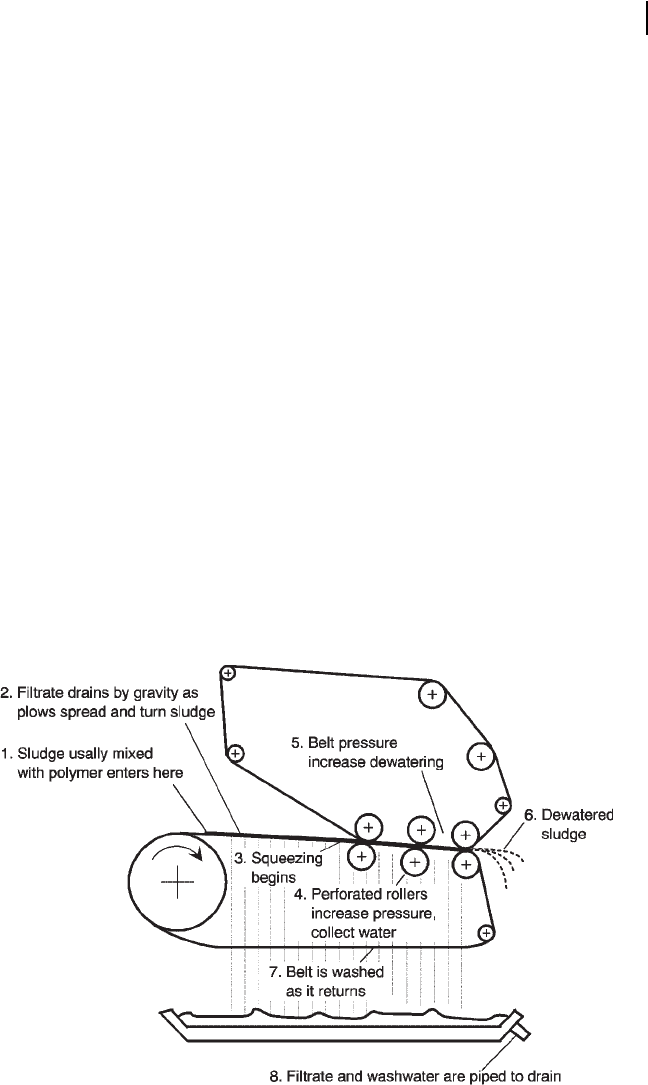
Figure 10.9 shows the basic function of a belt filter press. The sludge is trans-
ported between two wire belts where it is subjected to a gradually increasing pres-
sure. Direct pressure forces and shearing forces squeeze water from the sludge.
Conditioning with polyelectrolytes is necessary for most types of sludge. Fig-
ure 10.10 shows the basic function of a screw press. The sludge is transported by a
slowly rotating screw working against discharge restriction. The water squeezed
out is released through openings in the cylindrical housing surrounding the screw.
Some screw presses have the optional possibility of heating the sludge by injecting
Fig. 10.9 Basic functions of a belt filter press [11].
10.2 Solid Waste
435
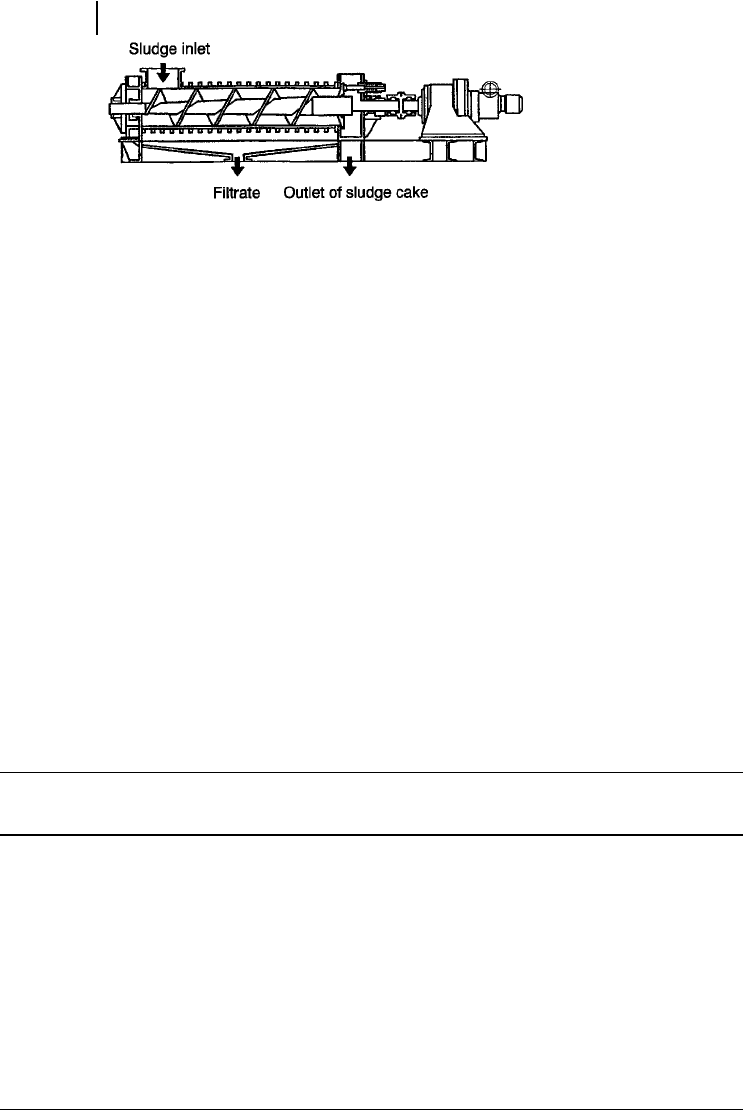
steam through the screw shaft. Conditioning of the sludge with polyelectrolytes is
common.
Today, the ragger and the rejects from the pulper disposal system are usually not
subjected to any special dewatering. Due to their material composition, “draining
off” gives dry contents of 60–80%. Screen spiral conveyors, vibrating screens, and
screw and rake classifiers are useful for dewatering heavy and coarse rejects. De-
watering of light and fine rejects with screens, endless wires or vibrating screens
is usually followed by additional dewatering using a reject screw press.
Table 10.5 summarizes the most common dewatering systems for different
types of waste. The achievable dry solids contents are also indicated. The differ-
ences in the dry solids contents are due to different pressure levels and times. For
example, screw presses operate with pressures up to 8 bar for times up to 10 min.
Belt filter presses work with pressures only up to 0.5 bar and short pressing times
of only 1–2 min. With increasing proportions of biological sludges from waste-
water treatment plants, the dry solids contents decrease for all techniques. Inde-
pendent of the technique applied, dry contents of only 15–40% are possible with
purely biological sludges.
Fig. 10.10 Basic function of a screw press.
Table 10.5 Composition and dewatering of rejects and
deinking sludges.
Heavy-weight and
coarse rejects
Light-weight and
fine rejects
Deinking sludges
composition glass, nails, sand, stones,
paper clips, pins
sand, textiles, fibers, coating
colors, plastic fragments, hot
melts, stickies
fillers, pigments, fibers,
printing ink, stickies
dewatering
facilities
screens
vibrating screens
screw classifiers
rake classifiers
screens
disk thickeners
dewatering drums
gravity tables
screw presses
dewatering drums
gravity tables
belt filter presses
screw presses
chamber filter presses
centrifuges
achievable dry
solids contents
60–80% 50–65% one-stage operation: < 15 %
two-stage operation: < 65 %
10 Environmental Aspects436

10.2.2.2 Drying
Thermal drying processes are used for more comprehensive removal of water
from mechanically dewatered sludges. Sludge dryers find use primarily when
available or potential disposal processes are impossible or uneconomical, e.g. high
landfill costs per ton of moist sludge due to insufficient dryness. Besides giving
mass reduction, drying of the sludge has other advantages that broaden the waste
management options:
• Sludges at about 95% dry substance are odorless. The bacteria-free conditions
mean that sludges can be stored in the open or in simple silos.
• Dried sludges can be transported without any problem in the same way as bulk
goods in regular transport systems.
• Dosing and mixing with other waste and combustibles is simpler.
• Combustion is easier and produces more heat per unit of mass of dry mate-
rial.
Direct and indirect drying systems are in operation. Direct systems are convection
dryers, and indirect systems are contact dryers. With convection dryers, heat trans-
fer occurs by direct contact between hot air and the sludge. The hot air also pro-
vides pneumatic transport through the dryer. Convection dryers can be heated
directly or indirectly. Compared with the contact dryers, the contamination of the
resulting condensed exhaust air is low, but the volume of exhaust air is consider-
ably higher.
Among the contact drying processes in the paper industry are steam heated
centrifugal dryers and disk dryers. The types of convection dryers used are drum
dryers, belt dryers or rack dryers.
In all drying processes, flue gas and dry goods control have primary importance
due to the danger of combustion and explosion. In this respect, indirect drying
processes are less problematical. Depending on its structure in the moist state, the
dried sludge takes on the form of fine granules or pellets. For direct and indirect
drying, the heat requirement is 4.0–4.5 GJ t
–1
of evaporated water.
10.2.3
Utilization and Final Disposal of Solid Waste
The current possibilities for material and energy recovery and final disposal of the
different types of paper mill waste are shown in Figure 10.11. The dominant prac-
tice in the past for disposal was landfilling. Today, and in the future, energy recov-
ery and material use of waste as in other branches of industry is gaining increasing
importance.
Figure 10.12 shows how wastes of the German paper industry were utilized and
disposed of in 2001. The largest share, at 36%, was utilized in the building materi-
als sector, mainly in the brick and cement industry. The energetically utilized share
was 35%. Internal power plants at paper mills had a utilization level of 26 % and
9% was accounted for by external energetic utilization in power plants or waste
incineration plants. 18% of residues were directed to biological utilization, of
10.2 Solid Waste 437
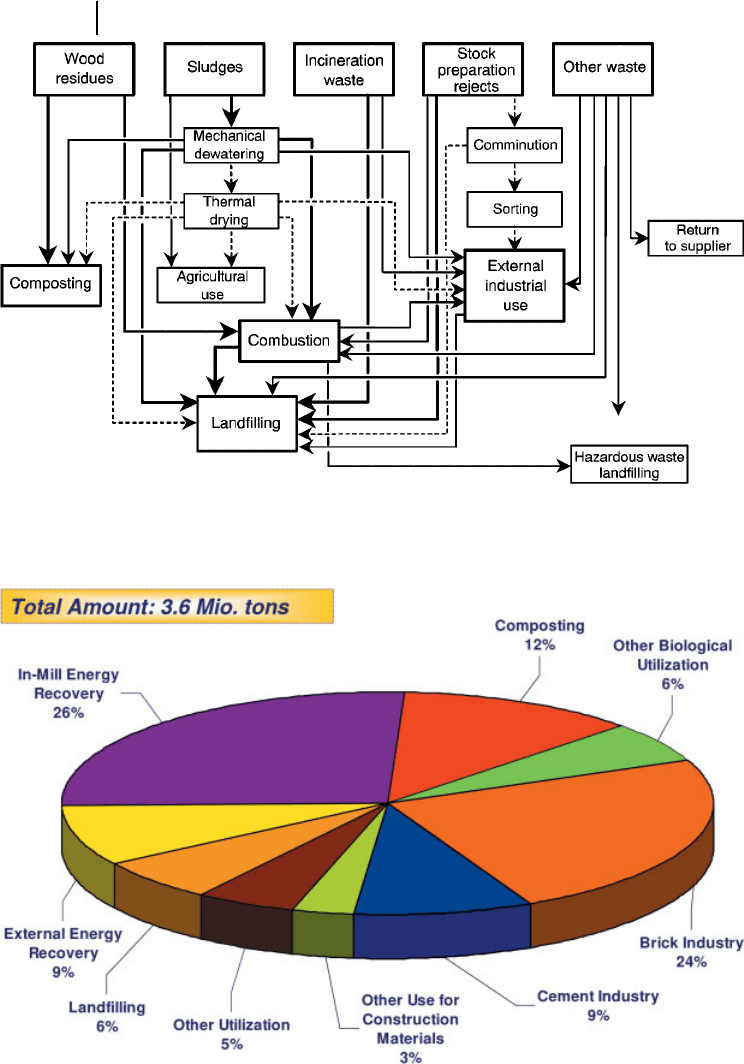
Fig. 10.11 Utilization and disposal of solid wastes of
recovered paper processing [11].
Fig. 10.12 Utilization and disposal of paper mill residues in
Germany (2001).
10 Environmental Aspects
438

which two-thirds were composted. The share of residues disposed of by landfilling
had already dropped to just 6%.
10.2.3.1 Energy Recovery
In the pulp and paper industry there is a long tradition of waste incineration. For
example, consider the combustion of bark and wood residues. Recent years have
seen a growing interest in the use of other types of waste such as sludges and
rejects for energy production purposes. The reasons are:
• increased costs of fossil fuels and purchased power
• reduced landfill capacities and increased landfill costs
• more stringent environmental regulations governing the use of this waste in
agriculture
• development of new combustion technologies with highly effective flue gas
cleaning technologies.
Due to their heating values and low content of harmful substances, most types of
waste from paper mills are suitable for energy recovery. Sludges and rejects are
burned mainly in grate and fluidized bed combustion facilities. Burning of sludges
is also carried out in multiple hearth incineration plants.
10.2.3.1.1 Grate Combustion
Grate combustion systems are especially suitable for lumpy fuels but not for most,
paste-like, and finely grained fuels. With moist sludges for example, the retention
times on the grate can be insufficient for complete combustion. Nevertheless,
grate combustion systems are used in the paper industry primarily for co-firing of
sludges with coal, bark or wood residues. Grate combustion with a stationary grate
is shown in Fig. 10.13. Long reaction times for control processes and the difficult
combustion control on the grate by the addition of air presuppose that the mois-
ture content and ash content of the sludge vary only within narrow tolerances.
10.2.3.1.2 Fluidized Bed Combustion
Fluidized bed combustion results in good heat transmission and intimate mixing
of air and fuel. Combustion is, on the whole, better than in grate furnaces, and
emissions are therefore lower. Figure 10.14 shows the scheme of a stationary flui-
dized bed furnace. In fluidized bed boilers the combustion conditions can be con-
trolled through regular temperature and pressure measurements, which is not the
case with grates. Stationary fluidized bed furnaces as well as circulating fluidized
bed furnaces offer very good operating conditions for low emissions of air-borne
pollutants. The emissions of nitrogen oxides are especially low compared with
grate combustion. Direct desulfurization is possible by the addition of basic sor-
bents such as limestone or dolomite into the body of the furnace.
10.2 Solid Waste 439
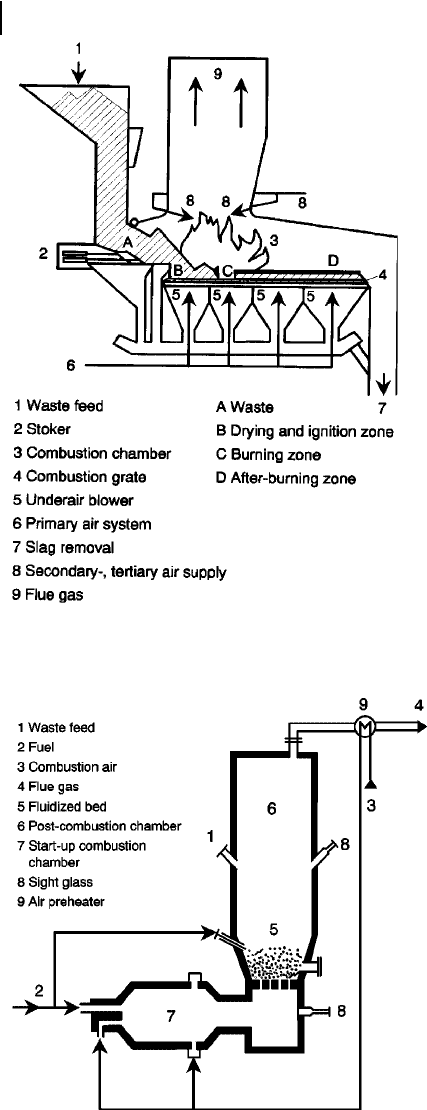
Fig. 10.13 Grate combustion with
a stationary grate [11].
Fig. 10.14 Stationary fluidized
bed combustion [11].
10 Environmental Aspects
440
10.2.3.1.3 Multiple Hearth Combustion
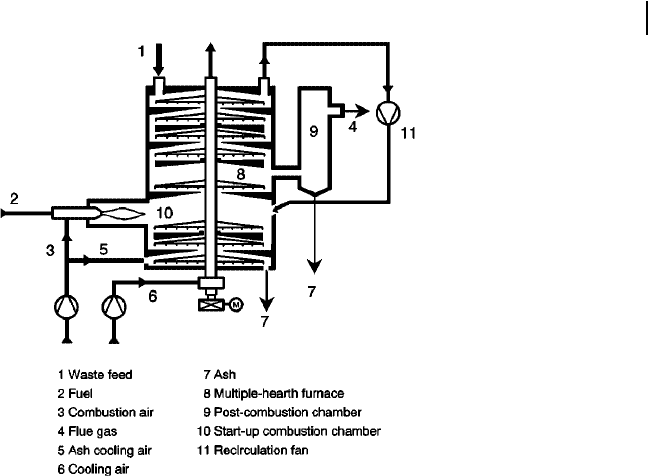
Multiple hearth combustion plants, as shown schematically in Fig. 10.15, are espe-
cially suitable for the combustion of moist and paste-like waste. They have been
used for decades in the paper industry for energy production from primary and
biological sludges, often together with bark. The flue gas purification plant down-
stream from the multiple hearth furnaces usually consists of wet scrubbers to
remove dust and sulfur compounds. The flue gas finally enters the stack via a mist
eliminator.
10.2.3.1.4 Choice of Combustion Technology
The choice of combustion technology depends on the operating conditions and the
nature of the waste. According to today’s knowledge, fluidized bed combustion is
the most suitable for burning sludges and rejects. In fluidized bed combustion
neither fluctuations of heating value of the fuel nor changing proportions of non-
combustible components such as sand, metals or fillers have a negative influence
on the combustion efficiency.
For fuels with a low heating value, such as deinking sludges, the stationary
fluidizing is probably a more suitable option. Fuels with a higher heating value
such as wood and bark are incinerated more effectively in a circulating fluidized
bed. Due to the mechanical flow requirements of the fuel, producing a consistent
grain size distribution by mechanical processing such as extraction of metals,
shredding and grinding may be necessary. This requires consideration, especially
when co-burning rejects with sludges.
Fig. 10.15 Multiple hearth
combustion [11].
10.2 Solid Waste
441