
Holik H. (ed.) Handbook of Paper and Board
Подождите немного. Документ загружается.


stages move the sample under the sensor and the sensor passes the captured
height data to the computer for evaluation.
Another surface property of paper is the abrasion resistance. The mechanical
abrasion resistance of surfaces is determined in the friction wheel process (DIN 53
109–93). In this process, the amount of abrasion which is obtained by abrading the
conditioned or wet sample with an abrasion wheel of defined quality under defined
conditions is measured.
12.7
Optical Properties
An object, e.g., a paper surface, is termed white when the illumination intensity
and the absorption capacity of the surface are independent of the wavelength.
Deviations confer a more or less pronounced color shade on the surface.
In the paper industry, a special process is used to characterize the brightness
because this is one of the most important optical properties of paper. The determi-
nation of the reflectance factor (ISO brightness) is based on ISO 2470 (1999). For
this test, a filter is used which has an intensity maximum at a wavelength of
457 nm. The reflectance (blue component) measured in a reflectometer under
specified conditions is known as brightness. It is expressed as a percentage of the
brightness of a white standard.
Another optical property of paper is its transparency, i. e., a measure of its light
transmittance. It is calculated from the reflectance factors R
0
, R
w
, and R
(w)
, which
are determined in accordance with DIN 53 147 (1993). The reflectance factor of the
individual sheet on a completely black background is R
0
, R
w
is the reflectance
factor of the individual sheet on a white background, and R
(w)
is the reflectance
factor of the white base.
Most white papers and paperboards, and therefore also secondary fiber materi-
als, currently contain an optical brightener. Brightness measurements for such
materials depend on the relative proportion of UV radiation in the illuminant used
for the determination. The standard test methods for ISO brightness have not
defined the standard illuminant for use in the determination. The relative amount
of UV has also not been defined. As a result, widely different R457 reflectance
factors exist for the same kind of fluorescent material. The problem has recently
been solved. A revised ISO method, ISO 2470, states that the UV radiation of the
illumination must correspond to the relative amount of UV in the standard illumi-
nant C when measuring fluorescent objects.
The opacity is a measure of light-tightness. It is defined in ISO 2471 (1998) as the
ratio of the reflectance factor R
0
to the reflectance factor R
'
. Both reflectance
factors are determined in accordance to DIN 53 145 (2000). R
0
is measured as the
reflectance factor of an individual sheet on a completely black background and R
'
as the reflectance factor of an “infinitely” thick stack of the same paper.
12 Testing of Paper and Board472

12.8
Printing Properties
The printing properties of paper result from complex interactions between print-
ing ink, printing process, and paper. Practice-oriented printability tests must be
performed to evaluate these properties. Test printers are also suitable for this pur-
pose. Instruments for offset printing, gravure printing, and flexographic printing
can be used with standard printing inks under laboratory conditions to test the dry
pick resistance or the wet pick resistance of papers. Missing dots, mottling and ink
penetration properties can also be tested. Conversely, the behavior of various print-
ing inks towards standard papers can also be evaluated.
Using an image analyzer for testing printed image and printing process has
increased during the last decade. This is due to the improved capability of the
analyzers and because the importance of the quality of the printed image has
increased. The image analyzer and its use in paper testing has already been men-
tioned earlier in connection with paper tests. The image analyzer is used to meas-
ure the uniformity of paper (print mottle, number of missing dots, and properties
of dot), surface properties of paper (fiber rising, picking, and contact angle meas-
urement), and many other properties of paper, i. e., width of cracking at the fold.
Furthermore, defined proof copies produced with the test printers can be used to
test full ink coverage, color density, color gloss, shade, abrasion resistance, stack-
ing ability, and contact yellowing.
More reliable results obviously come from tests that closely simulate the actual
printing process. That is why tests developed for full-scale printing machines give
the best predictions of the actual printability properties of a paper [5].
12.9
Behavior towards Liquids
The behavior of liquids towards paper is characterized by the processes of wetting
and penetration. In both cases, the characteristic physical property is the surface
tension. This value can be measured directly and tensiometrically in the case of
liquids and indirectly, via the contact angle of test liquid droplets, in the case of
solids such as paper. A liquid wets the surface of paper only if its surface tension is
lower than that of the paper. The same holds for the wetting of the capillary walls
upon penetration of liquids into the capillaries of the paper.
If the wetting and the penetrating capacity of liquids are to be changed, the surface
tension of the paper must also be changed. This is achieved, for instance, by sizing
the paper, a process which must fulfill the requirements regarding printability with
aqueous inks. According to DIN 53 126 (2001), paper is considered to be printable
if a standard ink line drawn with an adjusted drawing pen has neither run nor
penetrated into the paper after 24 h.
The water absorption W
A
(Cobb) (ISO 535, 1991) refers to the amount of water
that is absorbed by a certain area of paper on one-sided contact for a specified
12.9 Behavior towards Liquids 473

exposure time. The time of exposure to water must be chosen such that a sufficient
amount of water enters into the fiber matrix, but does not penetrate to the opposite
side of the sample.
In the determination of grease permeability (DIN 53 116), red-colored palm kernel
oil is used as the testing agent. The passage of fat through the sample under
specified conditions is then evaluated.
12.10
Exclusion of Gases and Vapors
As a rule, papers have only a limited ability to exclude gases and vapors. Of partic-
ular importance are the air permeability (e.g., for filtration properties) and the
water-vapor permeability.
There are two standardized test methods available for the determination of the
mean air permeability: the Bendtsen method (ISO 5636-3, 1992) and the Schopper
method (ISO 5636-2, 1984).
A gravimetric method for the determination of water-vapor permeability is de-
scribed in ISO 12572 (2001). This method is suitable for building materials. For
foils, laminated paper and board also DIN 53 122-1 (2001) is recommended.
References
1 R. Korn, F. Burgstaller, Papier- und Zell-
stoffprüfung, 2nd edn., Springer-Verlag,
Berlin 1953.
2 K. Frank, Taschenbuch der Papierprüfung,
Eduard Roether Verlag, Darmstadt 1958.
3 R. E. Marks (ed.), Handbook of Physical and
Mechanical Testing of Paper and Paperboard,
Marcel Dekker, New York 1983.
4 J.-E. Levlin, L. Söderhjelm, Pulp and Paper
Testing, Vol. 17, ISBN 952-5216-17-9 Fapet
Oy, Helsinki 1999.
5 A. Mackay and A. Wright, Correlation be-
tween laboratory printability testing and com-
mercial printing, 50
th
Appita Annual General
Conference, APPITA, Rotura, 1996, p. 405.
References
474

13
Book and Paper Preservation
Manfred Anders
13.1
Introduction
Most modern paper lacks the durability and permanence that has characterized its
use since its earliest application in recording the history of man and his civiliza-
tion. Although fundamental papermaking techniques have changed little in nearly
2000 years, two innovations in the 19th century, namely (i) the use of alum as a
component of size, and (ii) the replacement of cotton fiber by wood pulp, are
responsible for this predicament.
There has been an unbelievable development in the production of documents
since the invention of printing with movable letters by Gutenberg. Within a short
period of time, the necessary fibers for paper production could no longer be
supplied by rags. After an intense search wood was discovered as an alterna-
tive. Ground wood pulp was used and later also chemical pulp, whereas in the
latter the lignin is removed in a chemical process and so a “woodfree” pulp is
produced.
The beginning of industrial paper manufacture dates from the middle of the
19th century, and with the development of paper machines, a new sizing method
which could be integrated into the mechanical process became necessary. The
sizing of paper is necessary for its writing property, otherwise it would act like
blotting paper. The “sizing in the mass”, wherein rosin is precipitated onto the
fibers by means of acid-forming alum or aluminum sulfate in the pulp, was part of
the mechanical paper manufacture until the 1980s. Today, a pH neutral and syn-
thetic sizing agent is used. Papermaker’s alum easily forms sulfuric acid on expo-
sure to water in air; in turn this acid easily catalyzes the depolymerization of
cellulose. Further, cellulose from wood pulp is more susceptible to this attack than
linen- or cotton-derived fiber. Today it is accepted that the inherent acidity of such
papers accounts for 85–90% of the destruction in book papers, resulting in a half-
life for fold endurance of an estimated 7.5 years [1].
William Barrow was one of the first to describe the problem and correctly iden-
tify the cause at the Virginia State Library [2] beginning in the 1930s. Prior to his
work, book and paper conservators relied as much on art as on science. While
Handbook of Paper and Board. H. Holik (Ed.)
Copyright © 2006 WILEY-VCH Verlag GmbH & Co. KGaA, Weinheim
ISBN: 3-527-30997-7
475

highly skilled, these professionals often selected materials and treatment without
adequate consideration of the long-term consequences.
The discovery and the use of wood pulp (1840 by Keller) and acid sizing, mostly
with alum or aluminum sulfate (1807 by Illig), are the main reasons for the cur-
rent problems of deterioration of books in libraries und archives. Even at that time
it was known that acid-sized wood pulp paper was not as stable against aging as
traditionally made rag paper. Today the books most threatened by deterioration are
those that were made in the last 150 years and not, as many people may assume,
the older works from centuries ago.
There has been a fundamental change in papermaking in recent years. The
development of synthetic sizing enables the industry to produce paper with neutral
to slightly alkaline pH. With calcium carbonate as a filler, this paper has a suffi-
cient alkaline reserve against acid contaminants from the environment. The paper
has a better aging permanence than previous modern papers.
The main cause for paper deterioration in libraries and archives is the acid
catalyzed hydrolysis of cellulose, the ingredient that gives permanence to the pa-
per. The aging permanence of paper is closely connected with the acid concentra-
tion in the paper. The priority in preservation measures is in most cases the deaci-
dification of acid paper. Today, more than 70 years after Barrow’s pioneering work,
mass deacidification of books and archive materials has become a commercial
reality.
13.2
Mechanisms of Paper Deterioration (Fig. 13.1)
13.2.1
Paper Deterioration by Aging
The aging mechanisms can be divided into biological, physical and chemical proc-
esses. While using and storing paper appropriately, only the chemical processes
are decisive. Paper nearly universally involves cellulose, although its source and
methods of processing have evolved steadily throughout the centuries. As produc-
tion costs dropped significantly, the application of paper dramatically expanded so
that its traditional applications, particularly its use in books and official records,
were dwarfed by other functions. Such widespread use of paper reduced the em-
phasis on permanence.
The sizing of paper continues to be the predominant cause of paper deteriora-
tion. In the early 1800s, about the time of Robert’s invention of the fourdrinier
machine for continuous paper manufacturing, gelatin sizing was abandoned in
favor of alum or alum-rosin blends. Papermaker’s alum, Al
2
(SO
4
)
3
· 18 H
2
O, is
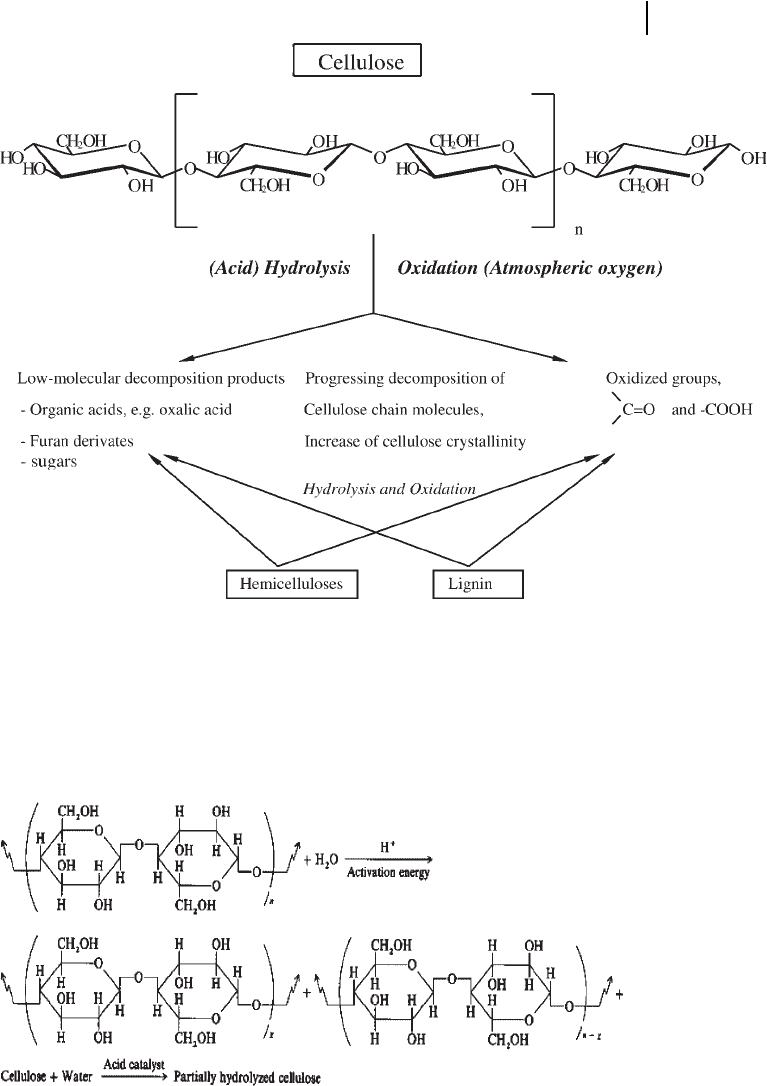
easily hydrolyzed by water to form sulfuric acid. Acid catalyzed hydrolytic attacks
cause degradation of cellulose by random scission of the hemiacetal links, leading
to breakage of chain linkages (Fig. 13.2). Even a few scissions per molecule cause a
substantial loss in physical properties [3]. In 1851, the discovery of the soda process
13 Book and Paper Preservation476
for separating cellulose from wood added a further dimension to the problem
since paper derived from wood pulp is more susceptible to acid attacks than the
cotton cellulose obtained from linen and rags.
Fig. 13.1 The main decomposition reactions of paper fibers.
Fig. 13.2 Acid catalyzed hydrolysis of cellulose.
13.2 Mechanisms of Paper Deterioration
477

The lack of paper permanence is attributable to both internal and external influ-
ences [4]. In addition to sizing materials, internal factors include the type of fiber,
coatings, and the presence of acidic and metallic compounds. External variables
are the conditions during storage and use. Heat and humidity accelerate the deteri-
oration of paper, and atmospheric pollution is frequently the source of external
acid attacks. A comparison of identical volumes stored in the New York Public
Library and the Royal Library in The Hague proved the importance of proper
storage, as the New York books were found to be in a far more advanced stage of
deterioration [5].
It was not until 1926, when Gösta Hall from Sweden developed a satisfactory
method for accelerated aging [6], that researchers had the means to simulate the
effects of the natural aging process. Although Edwin Sutermeister of the S. D.
Warren Company recognized as early as 1901 that stable paper should contain an
alkaline filler, it was left to William Barrow of the Virginia State Library to pull the
disparate elements of early researchers together in a scientific analysis of the prob-
lem [7].
As acid catalyzed hydrolysis of cellulose is responsible for up to 90% of paper’s
loss of permanence, researchers have concentrated on deacidification as the pri-
mary solution to the impermanence of modern papers. Paper deacidification in-
volves introduction of a strong base to convert acid species to their corresponding
neutral salts, and the establishment of a neutral buffer to protect the paper against
future acidcatalyzed damage. The first recorded attempt to neutralize paper was
by Arthur Church at the Victoria and Albert Museum in London who, in 1891,
advocated the immersion of paper in a methanolic solution of barium hydroxide
[8].
Subsequent attempts to develop effective deacidification focused on aqueous
techniques which offered the additional benefit of modest strengthening through
re-establishment of hydrogen bonding. Otto Schierholz, working for the Ontario
Research Foundation in Toronto, secured a patent in 1936 for his work which
involved dipping paper in a solution of alkaline earth bicarbonates [9]. In 1943
Barrow described a two-step process, involving immersion in a calcium hydroxide
bath and subsequent treatment with calcium bicarbonate. Commentators differ as
to whether Barrow was aware of the earlier Canadian work. Further refinement of
the technique included the 1957 development by James Gear et al. at the United
States National Archives of a one-step process involving magnesium bicarbonate,
and the use of the more soluble magnesium hydroxide by scientists at the Library
of Congress in 1978. While effective and proven, these techniques involve pains-
taking care as they are applied to single sheets.
13.2.2
Oxidative Deterioration Processes
Although the above mentioned acid catalyzed hydrolysis is the main cause for the
deterioration of cellulose and the connected loss of permanence, the influence of
oxidation cannot be neglected. The oxidative damage is much more complex in its
13 Book and Paper Preservation478
various chemical reactions, synergistic effects and secondary reactions and not at
all completely researched.
Cellulose can be oxidized not only by various oxidants like pollution gases from
the air (ozone, NO
x
, etc.) and bleaching agents in the wood pulp production, but
also by atmospheric oxygen. In the oxidation by atmospheric oxygen an additional
activation or catalysis is needed.
Acids as well as bases have a catalyzing effect. The catalysis by heavy metal ions
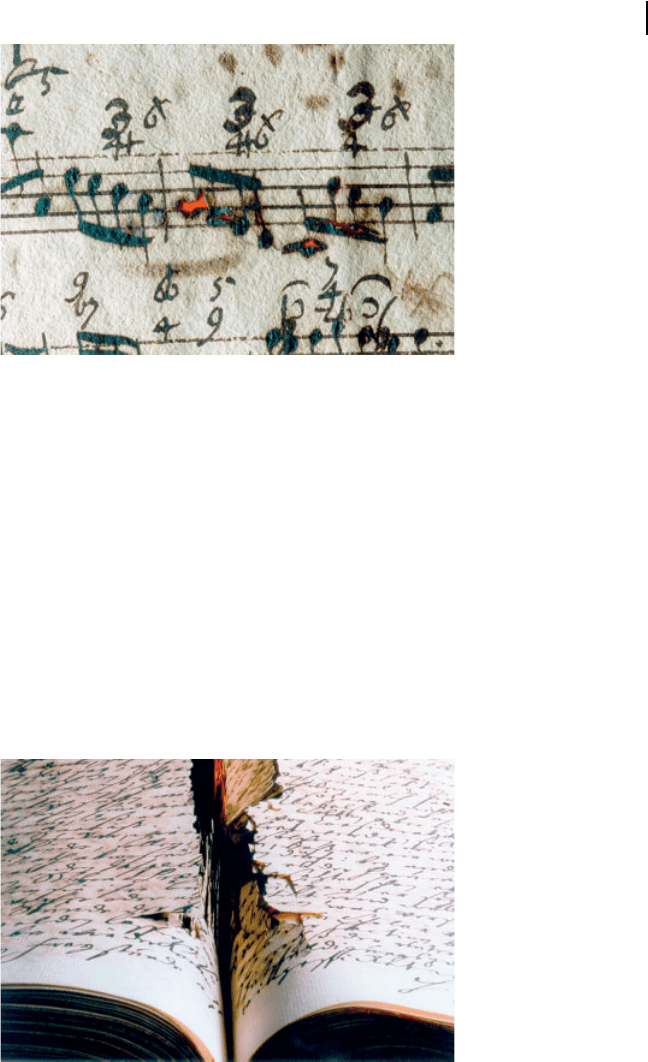
is really effective. A well-known example of this mechanism is the ink corrosion
which leads to a total destruction of paper in the area of ink due to the excess of
iron ions in the ferro-gallic ink and the acid. Some of the most valuable manu-
scripts are affected (Fig.13.3 and 13.4). Temperature and electromagnetic radia-
tion, especially UV rays, have an activating effect.
Fig. 13.3 Approximately 200 years old manuscript attacked by
ink corrosion.
Fig. 13.4 Approximately 200 years old manuscript attacked by
ink corrosion.
13.2 Mechanisms of Paper Deterioration
479
The observed reactions are often summarized under the term “autoxidation” as
reaction products of such oxidation processes: organic acids like ethanoic acid,
formic acid, oxalic acid etc., cause a further acidification of the paper. Due to these
oxidation processes the acid catalyzed hydrolytic deterioration of cellulose is ac-
celerated.
13.2.3
Alterations due to Paper Aging
13.2.3.1 Yellowing
Paper ages by becoming yellow and brittle. An intensification of the yellowing is
observed with continuous aging. There are various reasons for the yellowing of
paper. Many of the reaction products of the aging processes, such as oxidation
products, condensed furan derivates etc. are dark colored. More and more of these
colored reaction products are produced with continuous aging. In wood-contain-
ing, i.e. lignin-containing papers, the yellowing is extremely intense.
13.2.3.2 Embrittlement of Paper
The alterations in paper that result from aging can be seen most obviously on the
basis of the angles of cracks after a strain-to-crack measurement. The ratio be-
tween individual fiber strength and the bonding strength between the fibers
changes during the aging of paper. The strength of individual fibers decreases due
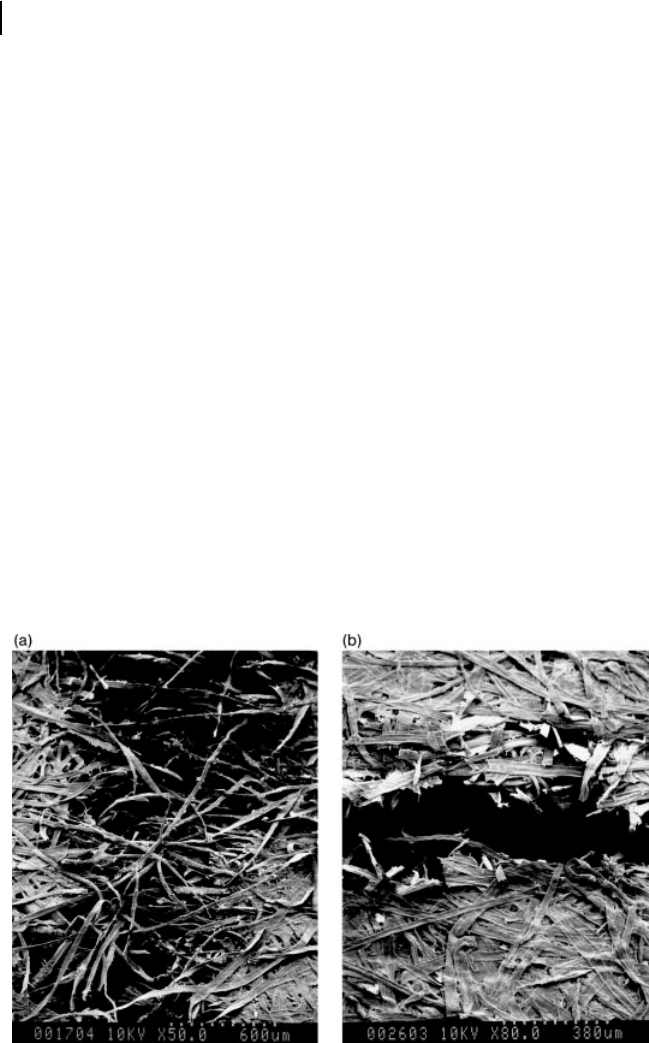
Fig. 13.5 Scanning electron microscope pictures of the angles
of cracks of non-aged (a) and aged (b) paper after a strain-to-
stress measurement.
13 Book and Paper Preservation
480

to the shortening of cellulose molecules as the result of deterioration mechanisms
in the course of aging. On the other hand the inter-fiber bonding is strengthened
by linking reactions and salt bonds: the fibers are linked one to the other inflexibly
and strongly. The fiber-fiber bonds are developed on the fiber surface so that the
structure of their surface, where an increasing number of reactive groups are
developed by oxidation processes, is decisive. As a consequence of aging inflexible
bonds between fibers are created. In the case of a mechanical strain the attacking
forces cannot be spread to nearby fibers because the fibers are linked inflexibly.
During a mechanical strain, like in tearing, in an aged paper the deformation
energy is spread less in the paper but concentrates on individual fibers that are
already weakened and then break.
If new paper is torn the fibers slide apart without breaking. This can be shown
with pictures from a scanning electron microscope of the angles of cracks of aged
and non-aged paper after a strain-to-stress measurement (Fig. 13.5). The fibers of
the new paper only slid apart whereas in the aged paper they broke. This means
that the fiber-fiber bonds in new paper and the individual fibers in aged paper are
the mechanically weaker points.
13.3
Development of Mass Deacidification Processes
13.3.1
Overview
There are many statements in literature about different deacidification systems
and agents, its advantages, use and also comparative examinations [10–16]. In the
treatment a long-term acid protection (exogenous influences) is to be achieved and
therefore an additional alkaline buffer is deposited in the paper [17–23]. In the
following the most important methods are introduced.
On the one hand the deacidification systems can be divided into single sheet
methods and mass deacidification methods. On the other hand the methods can differ
in the polarity of the solvents used. Polar solvents have a swelling effect on cellu-
lose, or rather paper, and can dissolve some of the colors and inks and therefore
mostly nonpolar solvents are used in mass deacidification systems. Single sheet
methods with water as a treatment medium are the classical methods.
Mass preservation is designed to meet the needs of national and major research
libraries and archive groups. With a mean collection deterioration rate of 4.7% [24]
and limited resources, a treatment based on painstaking manual work is incon-
sistent with the need. Further, greater emphasis has been placed on nonaqueous
and gas-phase deacidification techniques to compensate for some of the intrinsic
limitations of aqueous methods.
Nonaqueous deacidification systems contain a deacidification agent and an or-
ganic solvent that serves as the carrier. The solvents offer the advantage of rapid
penetration and drying. The latter is particularly important in minimizing the
13.3 Development of Mass Deacidification Processes 481