
Kerry J., Butler P. Smart Packaging Technologies for Fast Moving Consumer Goods
Подождите немного. Документ загружается.

OTE/SPH OTE/SPH
JWBK126-05 JWBK126-Kerry March 15, 2008 18:57 Char Count= 0
Smart Packaging Technologies for Fish and Seafood Products 85
reduce the growth of aerobic bacteria, packs containing reduced oxygen content can result
in apparently unspoiled fish containing dangerous levels of a toxin produced by Clostridium
botulinum, the bacterium responsible for causing botulism. Therefore, to ensure MAP fish
is fit for consumption, researchers have focused on trying to understand the effects of
temperature on C. botulinum growth. From earlier work by Baker and Genigeorgis [33],
Skinner and Larkin developed a simple model to predict conservatively the temperature
dependent time before the C. botulinum toxin breached acceptable limits [34]:
log L = 0.65 − 0.525 T + 2.74
1
T
(1)
where L is the lag-time (days) for C. botulinum toxin formation and T is temperature
(
◦
C). Welt et al. developed a theoretical means for determining optimal TTI behaviour
(for pseudo-zero order kinetics) based on this curve [35]. Following on from this Mendoza
and coworkers compared the behaviour of a number commercially available and prototype
TTIs to determine the most suitable for use in seafood packaging [31]. To this end, they
characterised the response of the TTIs under dynamic and isothermal conditions (see Fig
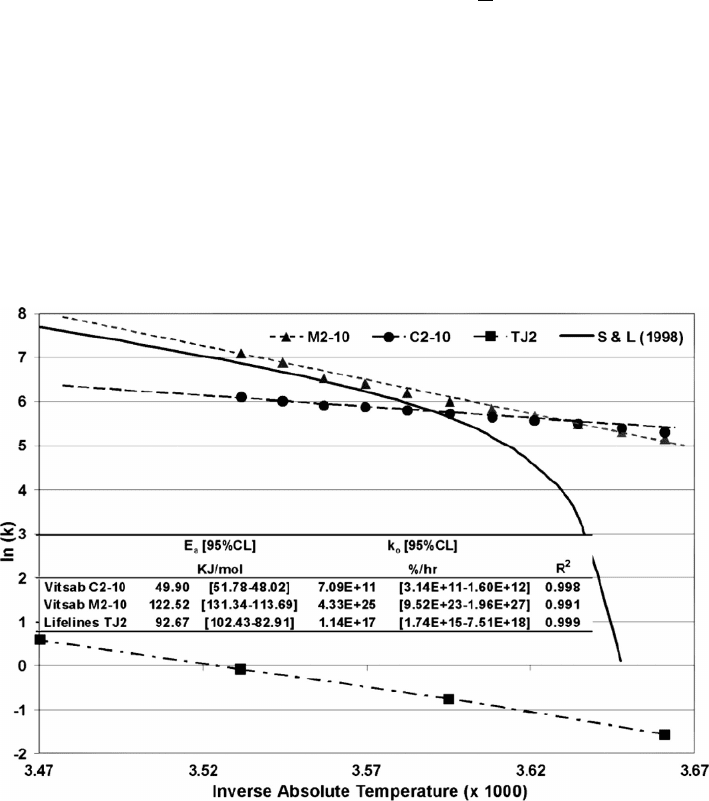
5.5) and compared the results against the Skinner-Larkin relationship. A visual example
of this is given in Figure 5.6 which shows an Arrhenius plot (i.e. ln k against 1/T, see
Equation 2) of the Skinner–Larkin curve and three commercial TTIs. Where a TTI line cuts
below the SL curve (e.g. the C2-10 and TJ2), it is responding slower than the C. botulinum
Figure 5.6 An Arrhenius plot of the Skinner–Larkin curve (S & L) and the response of three
commercial TTIs (Vistab M2-10, C2-10 and Lifelines TJ2). Reproduced from T.F. Mendoza et al.,
Journal of Food Science, Vol. 69 (3), pp. FMS90–FMS96. Copyright (2004) with permission of
Blackwell Publishing.
OTE/SPH OTE/SPH
JWBK126-05 JWBK126-Kerry March 15, 2008 18:57 Char Count= 0
86 Smart Packaging Technologies for Fast Moving Consumer Goods
lag time, i.e. indicating spoilage too late. To be effective, the TTI line must approach the SL
curve from above, as the M2-10 in this example. Even so, the non-linear SL curve displays
increasing deviation from the M2-10 line from approximately 3 to −1
◦
C (i.e. 3.62 to
3.67 on the x-axis), resulting in the sensor giving a false positive for fish that is still safe.
Although this scenario is by far the lesser of two evils, it is still wasteful and further research
is required to develop TTIs that provide a more accurate fit to spoilage profiles.
Nevertheless, the future for TTI smart packaging appears to be in a very healthy state. The
science of both seafood spoilage and TTI behaviour is now well understood with further
improvements and refinements occurring continuously. This improving reliability, coupled
with low unit cost (2–4c/ unit cost for Fresh-Check
r
indicators, according to TempTime)
makes TTIs an attractive means of improving confidence in quality. The acceptance of TTIs
as fulfilling the USFDA regulatory requirement for MAP seafood cannot be overstated as
this is driving the adoption of the technology in the United States. In Europe, adoption
is being driven more on the supermarket/marketing side, with stores such as Monoprix in
France using, since 1991, the Fresh-Check
r
TTI – ‘La puce fraˆıcheur’ from Temptime
(formely LifeLines Technology, USA) as a guarantee of freshness to the consumer and to
obtain, in the process, a competitive advantage [36].
5.6 Food Quality Indicators
While TTIs provide an excellent means of indicating shelf life and flagging temperature
abuses, they do not provide an indication of actual quality of the produce. Temperature
abuses prior to packaging (e.g. on board the trawler, improper storage of fillets at processor,
etc.) will not be taken into account by the TTIs. Therefore, a true food quality indicator
(FQI) will flag the reduction in quality as a direct result of a process that occurs during
spoilage. Use of quality assessment for seafood is common regarding fresh, unpacked
produce, though to our knowledge no commercially available FQI exists for packaged
seafood produce. To determine possible means of devising an FQI for smart packaging, it
is useful to give a brief overview of quality assessment of unpackaged seafood produce.
As noted earlier, faster, automated sensory techniques were investigated in the recent
EU project, FAIR CT98-4076 to develop an artificial quality index (AQI) [12]. The wide
variety of changes in terms of texture, colour, electrical properties and odour observed
during spoilage of cod and hake suggested a range of possibilities for directly assessing
quality. Unfortunately, many of these techniques are not suited to implementation in smart
packaging due to technical and cost issues. Aside from unit cost, the design and imple-
mentation of FQIs into packaging is more problematic than externally placed TTI labels.
In this case, the FQIs will have to be within the pack or at the very least have contact with
the interior atmosphere (or headspace) of the pack, requiring the sensor and its ingredients
to comply with stringent regulations governing food packaging, covered by in the US by
the Code of Federal Regulations – Title 21 [37].
Even so, a number of promising avenues of research exist for FQIs in seafood. One of
the most promising is the development of sensors that respond to changes in the packaging
headspace as the fish spoil. Many of the spoilage mechanisms discussed in the previous
section result in the release of different volatile gases over time. Duflos et al. employed
mass spectroscopy techniques to determine the differences in the gases emitted by cod,

OTE/SPH OTE/SPH
JWBK126-05 JWBK126-Kerry March 15, 2008 18:57 Char Count= 0
Smart Packaging Technologies for Fish and Seafood Products 87
Table 5.4 Volatile amines commonly emitted during seafood spoilage
Compound Formula Boiling point Density pK
a
Ammonia NH
3
−33.4
◦
C 0.68 g/L 9.25
Dimethylamine N(CH
3
)
2
H7
◦
C 1.5 g/L 10.73
Trimethylamine N(CH
3
)
3
2.9
◦
C 0.67 g/L 9.81
mackerel and whiting after 0 and 10 days of storage at 4
◦
C [38]. In a thorough study they
identified 20 volatile compounds common to the three species that increased over time.
Of particular interest are the volatile amines, responsible for the pungent smell of spoiled
fish. These compounds are related to ammonia and some examples of those emitted during
seafood spoilage are given in Table 5.4. The pK
a
is a property related to pH and in this case
indicates that the amines are relatively basic.
The measurement of amines in fish flesh, TVB-N (Total Volatile Basic Nitrogen) anal-
ysis, is already widely used as a laboratory-based assessment of quality [21]. On-flesh pH
measurements are also employed, the pH of the flesh increasing as the amine content in-
creases. This change in pH allows the possibility of employing pH indicator dyes as means
to provide a colorimetric indication of quality. An early device proposed as a seafood in-
dicator involved wooden skewers permeated with a dye that changed colour if inserted
into spoiled seafood [39]. More recently, colorimetric membranes have been developed for
detecting a variety of gases such as carbon dioxide [40] and ammonia [41]. These sensors
are generally non-specific, responding to the pH change brought about due to a build up
of the target gas. This lack of specificity limits the uses of these sensors to a few specific
well-defined situations. Fortunately, seafood FQI technology shows strong potential as an
application for these simple sensors.
As noted earlier, no commercial implementations of the technology appear to exist at
present. However around the year 2000, the National Centre for Toxicological Research
(NCTR, affiliated with the USFDA) was developing an FQI called a Fresh-Tag, licensed to
Cox Technologies [24, 42]. The Fresh-Tag was designed to respond to the volatile amines
that build up during seafood spoilage. The original device was in the form of a rectangular
plastic tag with a hollow barb for piercing the pack [43]. As amines build up in the packaging
headspace, they proceed through the barb to the active sensor, consisting of a wick that
progressively changes colour as the amines build up. At time of writing the exact status of
the Fresh-Tag is unclear. The original license holder, Cox Technologies, was acquired by
Sensitech in 2004 who were in turn acquired by Carrier Corp – neither Sensitech or Carrier
Corp make reference to the device on their respective web pages. On the development side,
the NCTR and consultant partners are currently engaged in market exploration to develop
a viable device based on the original Fresh-Tag technology.
The Adaptive Sensor Group in Dublin City University has also been developing FQI
technology for seafood and a brief overview of our research in this area follows.
The sensors consist of pH indicator dyes immobilised within a cellulose-based poly-
mer membrane. An example of some of these dyes is given in Figure 5.7. These sensors
can be cast onto substrates as diverse as PET (polyethylene terephthalate) or filter paper,
through drop coating or mass production techniques such as screen printing. A schematic
diagram outlining how the sensor works is given Figure 5.8. Initially, when the fillets
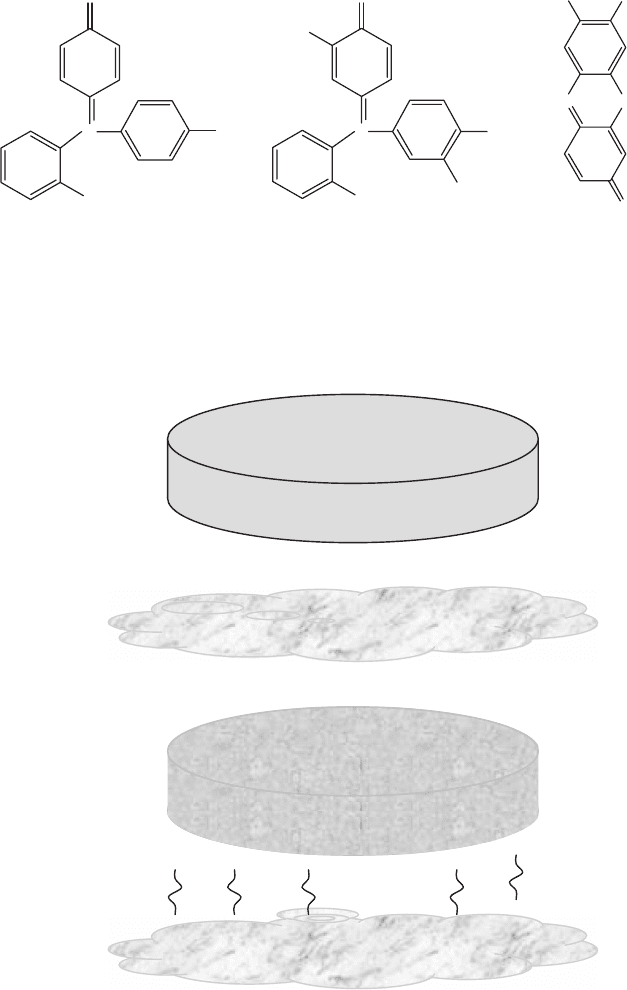
OTE/SPH OTE/SPH
JWBK126-05 JWBK126-Kerry March 15, 2008 18:57 Char Count= 0
88 Smart Packaging Technologies for Fast Moving Consumer Goods
C
O
OH
CH
3
H
3
C
C
O
OH
SO
3
−
Na
+
SO
3
−
Na
+
(b) Cresol red
yellow to red
(a) Phenol red
yellow to red
N NH
H
3
C NH
2
N
+
(CH
3
)
2
Cl
−
(c) Neutral red
red to yellow
Figure 5.7 Structural formulas of some of the colorimetric indicators being investigated for
food quality indicators. The acid to base colour change is also given.
SENSOR
DYE-H
DYE-H
DYE-HDYE-H
Initially,
dye is in
acidic
form.
Volatile
amines
emitted
on spoil
Gases emitted at
this stagee give
fresh smell - no
colour change
DYE-H – yellow
DYE-salt – red
Amines change
form of dye –
and thus its
colour
DYE-H
DYE-H
DYE-H
Fresh Fish Fillet
(a)
(b)
SENSOR
DYE-
salt
DYE-
salt
DYE-
salt
DYE-
salt
DYE-
salt
DYE-
salt
DYE-
salt
Spoiled Fish Fillet
NH
3
NH
3
N(CH
3
)
2
H
N(CH
3
)
3
Figure 5.8 Schematic showing the basic operation of the food quality indicator before (a)
and after (b) spoilage.
OTE/SPH OTE/SPH
JWBK126-05 JWBK126-Kerry March 15, 2008 18:57 Char Count= 0
Smart Packaging Technologies for Fish and Seafood Products 89
are freshly packed, the dye within the sensor is in its acidic form (usually yellow in colour).
As the fish spoils, the volatile amines detailed in Table 5.4 are increasingly released and the
dye is changed to a new form (basic), usually red or blue in colour depending on the dye
used. The sensor response is colorimetric and can therefore be observed with the human
eye through the use of a reference ring in a similar way to the TTI sensors (Figure 5.2c). A
more quantitative means of measuring and recording the colour change is possible through
the use of a colorimeter. The custom-built colorimeter employed in this study has been
described previously [44]. In brief, two LEDs at a 45
◦
configuration illuminate the area of
interest and the reflected light is measured by a photodiode.
Although the concept appears simple, a number of challenges exist. As the volatile
amines are released during spoilage are produced by microbial action on the flesh, there
is often a lag between the increase in microbial populations and the increase in amine
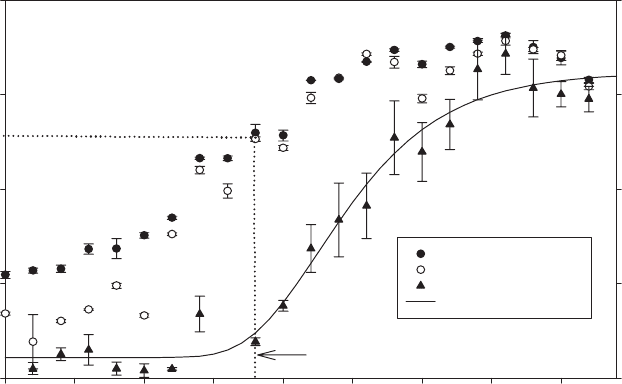
concentration. An example of this is given in Figure 5.9 which shows the response of a
bromocresol green sensor to cod fillets stored at room temperature. Both the TVC and
Pseudomonas populations show a gradual increase more or less from the start, which then
rapidly accelerates, reaching the 10
7
cfu/g spoilage threshold after about 18 hours. This is
also the time at which the bromocresol green sensor begins to change colour after initially
displaying little change. Therefore in the case of this sensor, the point of spoilage can
therefore be taken as once the colour change has begun [44, 45].
There are a number of options regarding sensor formulation and preparation to reduce
this lag time and improve the response of the sensor; e.g. membrane thickness, choice of
Time (hours)
4035302520151050
2
4
6
8
10
0.0
0.1
0.2
0.3
0.4
TVC (N=3)
Pseudomonas (N=3)
Sensor response (N=3)
Sensor response model
10^
7
(cfu/g)
Threshold of bacterial spoilage
Onset of detection
Figure 5.9 Correlation of sensor response and changes in bacterial population of fresh cod
kept at 20
◦
C over time. Bacterial data are averages of two replicates while sensor data are
average of 15 measurements. The error bars are standard error of the mean values. Reprinted
from Pacquite et al., Talanta, Vol. 69, pp. 512–520. Copyright (2006) with permission from
Elsevier.
OTE/SPH OTE/SPH
JWBK126-05 JWBK126-Kerry March 15, 2008 18:57 Char Count= 0
90 Smart Packaging Technologies for Fast Moving Consumer Goods
substrate, etc. However choice of dye remains by far the most dominant factor. In this case,
the dyes considered generally belong to the sulfonphthalein family, whose basic structure
is composed of three aromatic rings connected to a carbon – see Figure 5.7(a) and (b) for
two examples. This family of dyes more or less covers the full range of pH, potentially
allowing a sensor to be tailored – or tuned – to respond to a particular concentration of
amines. Dyes with pK
a
values just below (≤1.5 units) or above the amine pK
a
values (see
Table 5.4) cannot be used as no change in colour will be observed. Therefore, the lower the
pK
a
of the dye, the more responsive it will be to lower concentrations of volatile amines.
There is, however, a limiting factor; large quantities of water are always present with a pack
of seafood and the headspace humidity is in the region of 100 %. For dyes of pK
a
values
around or below 7, the water can result in a colour change – potentially masking the amine
response. To combat this, the sensor can be ‘waterproofed’, e.g. by using hydrophobic
enclosures, though this may also adversely affect the amine response while adding greatly
to the unit cost of a sensor. Therefore, a relatively narrow pK
a
range exists for suitable dyes
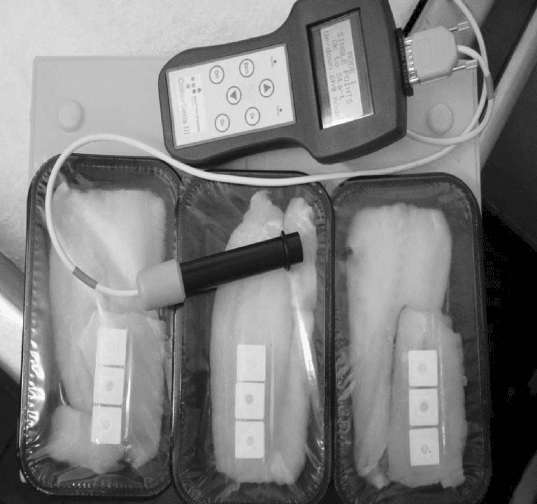
(∼7.5–8.5). Evaluation of sensor behaviour has been conducted through packaging trials –
where the sensor response to fish fillets of known history (packaged in the same manner as
commercially packaged fish) is checked against conventional freshness tests. An example
of these packaged fillets and the colorimeter used in the trials (described previously) is given
in Figure 5.10. The results of sensor formulations composed of three potential candidate
dyes are given in Figure 5.11.
Figure 5.10 Examples of cod fillets packaged with three internal spoilage indicators (three
different sensor formulations in each pack). The colorimeter and probe used for measuring the
colour change are also shown.
OTE/SPH OTE/SPH
JWBK126-05 JWBK126-Kerry March 15, 2008 18:57 Char Count= 0
Smart Packaging Technologies for Fish and Seafood Products 91
14121086420
Elapsed time/days
Colorimeter response/A.U.
Sensor 1
Sensor 2
Sensor 3
Figure 5.11 Measured responses for sensor formulations incorporating three different dyes.
Three packs: 250 g cod fillets stored at 4
◦
C. Error bars display standard deviation (n = 6;
sensors 1 and 2, n = 3; sensor 3).
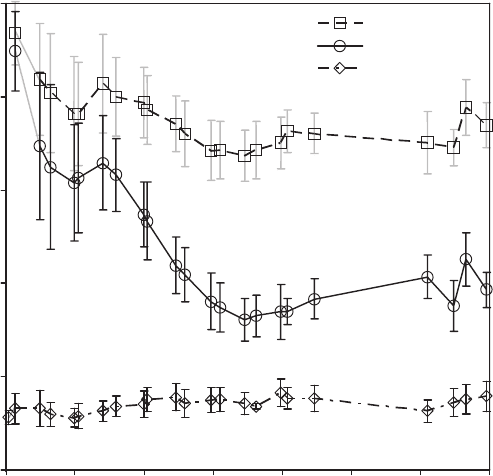
Sensor 1 contained cresol red; a dye with pK
a
of ca 8.1, sensor 2 incorporated phenol red
with a pK
a
of ∼7.8, while sensor 3 contained neutral red, a non-sulfonphthalein dye also
with a pK
a
of ∼7.8. The structure of the three dyes is given in Figure 5.7. After preparation,
sensors 1 and 2 appear light yellow in colour while sensor 3 appears red – indicating that
the dyes are in the protonated (acidic) form. In the deprotonated (basic) form, sensors 1 and
2 appear red (causing a drop in response) and sensor 3 turns yellow (yielding an increase in
response). The sensors are affixed to the transparent packaging film prior to sealing the film
and tray. The cod fillets used in this study had been landed on the morning of the trial, and
time zero was taken as the moment the packs were sealed. Throughout the duration of the
trial the packs were stored in a refrigerator (4
◦
C). The supplier generally predicts a shelf
life of between 6 and 8 days for the fish under these conditions. The three response curves
for the sensors in Figure 5.11 are shown to scale relative to each other. Sensors 1 and 2 can
be seen to display varying responses over time while sensor 3 displays only a very slight
increase over the entire trial. On the first day, sensors 1 and 2 display a rapid drop before
levelling off as they equilibrate to the conditions within the pack. Between day 3 and 7 both
these sensors darken steadily before again levelling off – this endpoint corresponding to
spoilage of the fish. Sensors 1 and 2 both display similar levels of relatively large scatter,
however the increased response of sensor 2 means the response is easier to distinguish.
Therefore, the pK
a
of sensor 2 appears to yield an indicator that displays a good trade off
between amine response and effects due to water within the pack.
OTE/SPH OTE/SPH
JWBK126-05 JWBK126-Kerry March 15, 2008 18:57 Char Count= 0
92 Smart Packaging Technologies for Fast Moving Consumer Goods
Elapsed time/days
1086420
Colorimeter response/A.U.
70
75
80
85
90
95
100
TVB-N/mg 100g
−1
0
10
20
30
40
50
60
35
Sensor response
TVB-N
TVB-N spoilage threshold
1
.
417
.577
−(x−4.32)/–0.826
+
+=
e
y
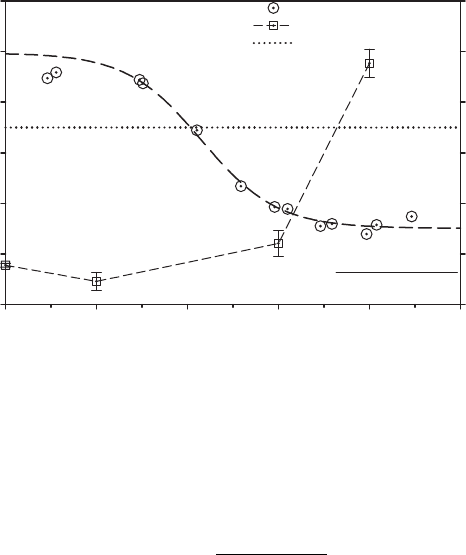
Figure 5.12 Comparison of sensor response to total volatile basic nitrogen measurements for
cod fillets.
From Figure 5.11 it appears that the working sensor appears broadly to follow sigmoidal
type behaviour. In Figure 5.12, the response of the phenol red sensor is shownwith measured
TVB-N. In this case a logistic sigmoid has been fitted to the measured data.
y = y
0
+
a
1 + e
−(x−x
0
)/b
(2)
A good correlation can be observed between the curve and colorimetric data. Briefly, the
parameters y
0
and a describe the lower and upper thresholds of the curve, respectively while
b indicates the sharpness or rapidity of the change – for spoilage indicator applications the
quicker the change the better in order to lessen any ambiguity. x
0
indicates the midpoint of
the colour change in the sensor – in this case 4.32 days. The EU TVB-N limit for spoilage is
35 mg per 100 g of flesh and is marked by the dotted line. The TVB-N valuesfor the fillets are
seen to cross this line at some stage between the sixth and eighth day, with a sharp increase
during this time. From Figure 5.12, it can be seen that this corresponds to the endpoint of the
colorimetric sensor. Therefore, the sensor indicates that the packaged fillets have spoiled
once the sensor reaches this end state – corresponding to the red colour noted previously.
This result has been reproduced in trials involving fish packaged in processors through the
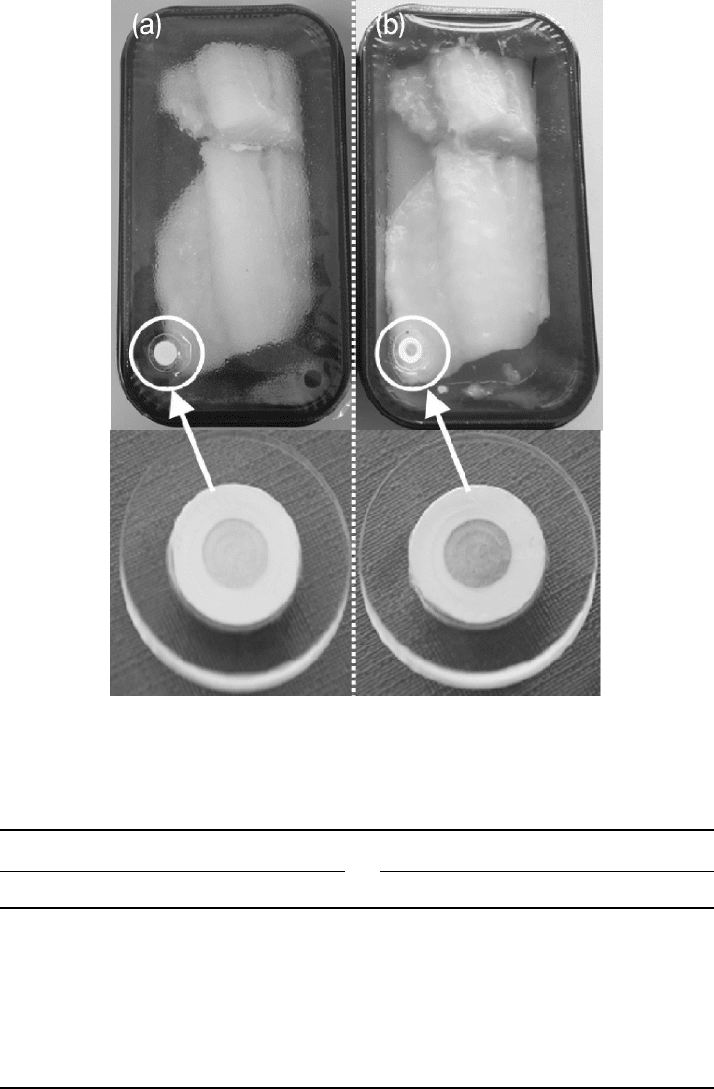
supply chain to supermarkets [46]. An example of how the sensors may be accommodated
within the packs (showing sensors before and after spoilage) is shown in Figure 5.13. In
due course it is anticipated that a full scale roll out of the sensor will be accomplished.
5.7 Overview: TTI versus FQI
A summary of the main points relating to TTIs and FQIs is given in Table 5.5. Due to
their increasingly widespread adoption, TTIs are currently leading the charge in terms of
smart packaging quality indicators for seafood. As noted, the technology has proved useful
for supplier cold-chain management as well as supermarket quality marketing. On the
OTE/SPH OTE/SPH
JWBK126-05 JWBK126-Kerry March 15, 2008 18:57 Char Count= 0
Smart Packaging Technologies for Fish and Seafood Products 93
Figure 5.13 An example of one possible implementation of the food quality indicator showing
the sensor before (a) and after (b) spoilage.
Table 5.5 Comparisons of the respective advantages and disadvantages of TTIs and FQIs
Time-temperature integrators Food quality indicators
Advantages Disadvantages Advantages Disadvantages
Easily read
Accepted quality
assurance method,
commercially
available, cheap
unit cost science
understood –
maturing technology
Do not directly
indicate actual
seafood quality
Easily read
Directly indicate
quality/spoilage,
potentially cheap
Not yet
commercially
available
Affixed inside pack
– Restrictions on
formulation
– Difficult to apply
OTE/SPH OTE/SPH
JWBK126-05 JWBK126-Kerry March 15, 2008 18:57 Char Count= 0
94 Smart Packaging Technologies for Fast Moving Consumer Goods
other hand FQI technology, though embryonic, has also attracted interest from suppliers
and supermarkets willing to conduct trials in the new technology, thus demonstrating a
potential market for direct indicators of quality. In any event, it would be wrong to think
of the two technologies as mutually exclusive and the information provided by each may
well be used in a complementary fashion; TTIs to ensure cold-chain compliance and FQIs
to ensure quality.
5.8 Modified Atmosphere Packaging (MAP)
MAP solutions are the subject of extensive research and are increasingly used to extend
shelf-life of fresh products. Two excellent reviews were written by Sivertsvik et al. and
Phillips [47, 48]. The achievable extension of shelf life depends on species, fat content,
initial microbial population, gas mixture, the ratio of gas volume to product volume and
most importantly, storage temperature.
The air surrounding us contains approximately 78 % nitrogen (N
2
), 21 % oxygen (O
2
) and
roughly 1 % of argon (Ar) and other gases [of which about 0.03 % is carbon dioxide (CO
2
)].
Atmospheric oxygen, which supports all aerobic respiratory life, leads quite readily to
oxidation of molecules and may be coupled to enzymically balanced systems. This process
of oxidation continues after death, causing loss of freshness and spoilage [49]. Thus the
removal of oxygen extends meat shelf-life efficiently. However anaerobic atmospheres
have less effect on fresh fish shelf-life. Not only is the microflora of meat not the same
as that of whole, gutted of filleted fish, but many other fish specificities make a direct
comparison difficult. For one, the initial load of bacteria present is comparatively larger in
fish, consisting of microorganisms capable of growing at low temperature. Some of them
are pathogens that may be able to grow before spoilage occurs. Furthermore, the higher pH
of the flesh, the redox potential (E
h
) of the fish muscle and the structural damage effect of
CO
2
on the latter, makes MAP a more complicated science with respect to seafood products
[50]. CO
2
is the most important gas used in MAP of fish because of its bacteriostatic and
fungistatic properties. It is highly soluble in water and fat and the solubility increases
greatly with decreased temperature [47]. Stammen et al. [51] showed that even after the
packaging has been opened, the CO
2
is slowly released by the product and continues to
exert a preservative effect known as ‘CO
2
s residual effect’. The principal effect of raised
carbon dioxide modified-atmosphere packaging is an extension of the ‘lag’ phase of the
growth of the bacteria on the fish, the inhibition of the common spoilage bacteria and the
promotion of a predominantly slower growing Gram-positive flora [49, 52]. However it
has been reported to increase water loss (drip) and gaping of the muscle by dissolving of
muscle cellular structure [53]. The growth of certain yeasts can be stimulated by high levels
of CO
2
and thus can be a major cause of spoilage in certain products [48]. On the other
hand, adjusting the headspace composition with N
2
reduces the rate of oxidative rancidity
in fatty fish. The most widely used gases mixtures in MAP of fish include CO
2
,N
2
and
O
2
at a 40 %, 30 % and 30 % ratio respectively [54, 55]. N
2
is inert and tasteless, and is
mostly used as a filler gas because of its low solubility in water and fat [47] to prevent
pack collapse [48]. Cod is without a doubt the preferred species for MAP studies and on
average, based on the gas mixture ratio above, shelf-life usually doubles from 6–9 days in
air and at chilled temperature to 12–20 days in MAP.