
Kerry J., Butler P. Smart Packaging Technologies for Fast Moving Consumer Goods
Подождите немного. Документ загружается.


OTE/SPH OTE/SPH
JWBK126-08 JWBK126-Kerry March 3, 2008 13:7 Char Count= 0
146 Smart Packaging Technologies for Fast Moving Consumer Goods
Figure 8.7 Guitar preservation system.
significant harm. A moisture management system as described herein using salt solutions
can provide an ongoing and specifically targeted relative humidity atmosphere for each
application over an extended period of time.
Another significant use for moisture regulators is to calibrate the humidity sensors in
displays and galleries in museums. Calibration bags are available periodically to calibrate
hygrometers. Dial type hygrometers can often be 15 percentage points to high or low.
Digital type hygrometers are more accurate, but they too should be checked periodically
as they tend to drift over time.
8.8.6 Nylon Parts
Nylon connectors have an optimal humidity when they do not crack when compressed or
blister when heat is applied. Wood veneers can be formed over small radii only over a
narrow range of moisture content. Powdered materials such as laser printer cartridges will
tend to produce fuzzy images if too dry where static charges develop, or form lumps if too
moist.
8.8.7 Clothing Storage in Humid Environments
Natural fabrics should be stored at a relative humidity of less than 50 % to minimize the
development of ‘mustiness’ that necessitates lengthy ’airing’ or cleaning before use. This
is especially important in the Southern Atlantic coast, the Gulf coast, and Pacific Northwest
states. The summer months in the Mississippi/Missouri valley also experience high ambient
relative humidities from May into September. Even new homes in these states experience
relative humidities exceeding 60 %. Pouches have been prepared and tested to hold the
relative humidity in storage bins and garment bags made of films with low MVTR.
OTE/SPH OTE/SPH
JWBK126-08 JWBK126-Kerry March 3, 2008 13:7 Char Count= 0
Active Moisture-management Packaging 147
0
20
40
60
80
100
0 1020 3040 5060
Time, Days
TAMP F # % RH
Ambient
Te mp F
% RH Bag #1
% RH Bag 2
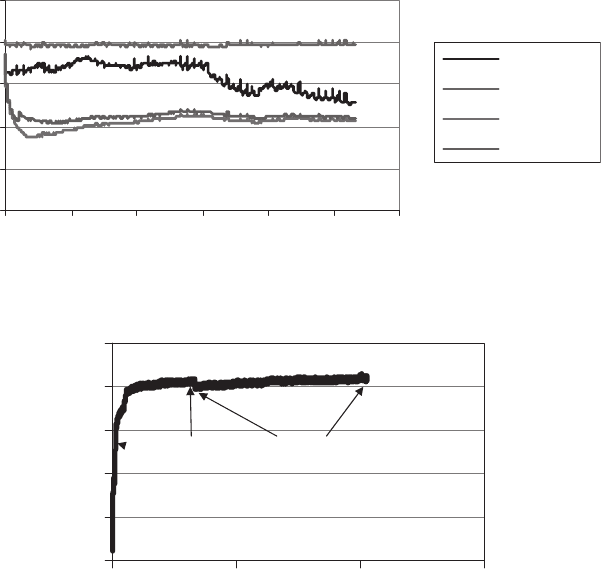
Figure 8.8 Hunting Clothing Storage, Florida Home June July.
50
55
60
65
70
75
0 500 1000 1500
Time, Hours
% Relative Humidity
Tropical BoxRoom Condition
Figure 8.9 A two-way moisture regulator maintains a constant relative humidity of 70% at
room conditions as well as in a tropical chamber with an 84% atmosphere.
Figure 8.8 shows the relative humidity in two garment bags containing winter hunting
jackets stored in a bedroom closet in a new Southern Florida home.
8.9 Competitive Technology
Moisture management has been limited to formulation, processing and packaging. These
have employed expensive, high barrier films, or resorted to glass or metal containers.
Active systems to control moisture have been limited to desiccants such as silica gels,
molecular sieves, certain clays, selected salts. Desiccants tend to reduce the a
w
of the
products to near zero, and thus have limited application. Other active systems include
a wide variety of devices to add moisture to the environment, such as wicks, sponges,
and semipermeable films. These hydration devices tend to increase the a
w
to high levels,
especially in humid environments. For this reason, such devices require a certain rate of
loss of moisture from the container.
OTE/SPH OTE/SPH
JWBK126-08 JWBK126-Kerry March 3, 2008 13:7 Char Count= 0
148 Smart Packaging Technologies for Fast Moving Consumer Goods
Conditioned silica gels and some clays have the property of absorbing and desorbing
moisture over a relatively narrow range of humidities. While effective, they suffer from a
very limited capacity, often only 5 to 10 % of their weight, and their precision is fair at best.
Electronic devices to maintain a constant humidity in chambers, even buildings, are
available. However, they are rather expensive and not practical for portable use. Also, they
require significant, regular maintenance to be reliable.
8.10 Future Trends
A number of food products can be greatly aided in their shelf-life if a moisture management
system is designed to work in conjunction with temperature and in some instancesheadspace
gas control. Some examples where this technology will be commercialized within the next
5 years will potentially include:
(i) International shipping of fresh fruits and vegetables. Moisture and humidity control
has never been readily available to help prevent dehydration during ocean shipments
and thus has forced some products into air freight. A moisture management system
could offer cost savings while ensuring a superior product being delivered.
(ii) The fresh produce sector has grown dramatically within the past 5 years with the
many iterations of cut lettuce in various consumer pack varieties. Current systems do
an excellent job of controlling the headspace gases but cannot impact the moisture
and humidity within the package. As a result, packages moving from temperature
controlled environments through the normal handling and consumer use systems will
experience changes that can result in product deterioration and unacceptable products
before the shelf-life limit has been reached. A moisture management system is a tool
that could greatly aid this delivery system.
(iii) With improving economic status and having all adults in a household employed, the
demand for ready-to-eat prepared vegetables and cut fruits or vegetables is increasing
rapidly. The maintenance of constant humidity in the package is critical to preserving
quality of appearance, flavor and texture.
(iv) Products in the home that are stored for future use could be better preserved if stored
in a food protection system that included moisture management. Examples would be
dried fruit, raisins, fresh fruits, etc.
(v) Moisture management is an important component in controlling the growth of
microorganisms. With increasing public awareness of food-borne infections and
microbial toxins, providing constant humidity in a package will be contribute to de-
livery of safe foods.
References
Fennema, O. (1996) Water and ice, in Food Chemistry, O. Fennema (Ed.), Marcel Dekker, New York.
Pariza, M. W. (1996) Toxic substances, in Food Chemistry, O. Fennema (Ed.), Marcel Dekker, New
York.
OTE/SPH OTE/SPH
JWBK126-08 JWBK126-Kerry March 3, 2008 13:7 Char Count= 0
Active Moisture-management Packaging 149
Levine, H., Slade, L. and Karel, M. (1988) Moisture Management in Food Systems, Center For
Professional Advancement, East Burnswick, New York.
Saari, A. and Esse, R. (1999) US Patent Number 5 936 178. Humidity Control Device Issued Aug
10, 1999, 35 claims.
Saari, A. and Esse, R. (2001) US Patent Number 6 244 432 Humidity Control Device for Gun Cases
Issued June 12, 2001. 34 claims.
Saari, A. and Esse, R. (2006) US Patent Number 6 921 026 Preservation of Intermediate Moisture
Foods by Controlling Humidity and Inhibition of Mold Growth. 46 claims.

OTE/SPH OTE/SPH
JWBK126-09 JWBK126-Kerry March 15, 2008 18:59 Char Count= 0
9
Smart Packaging Technologies
for Fruits and Vegetables
M.F.F. Poc¸as, T.F. Delgado and F.A.R. Oliveira
9.1 Introduction
Traditional packaging has contributed greatly to the early development of food distribution
systems. However, it is no longer sufficient because today’s society became increasingly
complex. Innovative packaging with enhanced functions is constantly being sought in re-
sponse to the consumer demands for minimally processed foods with fewer preservatives,
increased regulatory requirements, market globalization, concern for food safety and the
recent threat of food bioterrorism [1]. Active packaging (AP) and intelligent (smart) pack-
aging (IP) are becoming increasingly popular among researchers and industry.
Apparently there is no common, clear and unequivocal definition of these two types of
system. The legislation [2] presents the following definitions: ‘Active food contact materials
and articles means materials and articles that are intended to extend the shelf-life or to
maintain or improve the condition of packaged food; they are designed to deliberately
incorporate components that would release or absorb substances into or from the packaged
food or the environment surrounding the food’. ‘Intelligent food contact materials and
articles means materials and articles which monitor the condition of packaged food or the
environment surrounding the food’. Active packaging is associated with the preservation
and protection function and it refers to systems that are able to change the conditions the
product is exposed to. Examples include oxygen absorbers, materials with permeability
depending on temperature, antimicrobial materials, etc.
Smart or intelligent packaging is associated with communication: a system capable of de-
tecting, sensing, recording, tracing, communicating, and applying science logic, to facilitate
Smart Packaging Technologies for Fast Moving Consumer Goods Edited by Joseph Kerry and Paul Butler
© 2008 John Wiley & Sons, Ltd. ISBN: 978-0-470-02802-5
OTE/SPH OTE/SPH
JWBK126-09 JWBK126-Kerry March 15, 2008 18:59 Char Count= 0
152 Smart Packaging Technologies for Fast Moving Consumer Goods
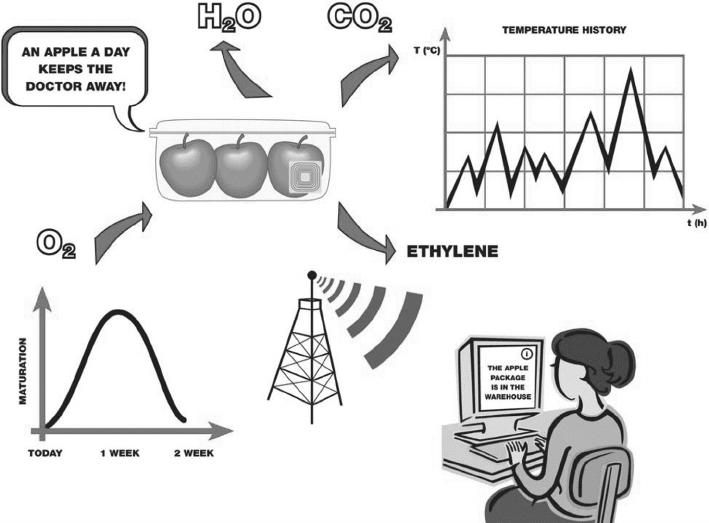
Figure 9.1 Smart packaging for fruits and vegetables.
decision making, to extend shelf-life, enhance safety, improve quality, provide informa-
tion, and warn about possible problems [1]. Examples of technologies associated with smart
packaging systems are time–temperature indicators (TTIs), gas indicators, biosensors and
radio frequency (RFID) tags for identification and/or for monitoring product properties or
the ambient conditions the product is exposed to (Figure 9.1). Smart and intelligent pack-
aging may also include physical shock indicators and smart labels. Although in its infancy,
smart labels may consist of systems that detect a diabetic consumer and alert him/her to the
sugar content of the product, and systems that alert the patient on the schedule for taking
prescribed medicines. Thermochromic inks already have a few applications that show when
an optimal or dangerous temperature has been reached, for example the temperature of the
beer bottle (refrigerated) or the right cooking temperature of pre-prepared soups.
Nanotechnology is expected to have an important influence in active and intelligent pack-
aging, as in most areas of science and technology [3,4]. It may be used to improve polymer
barrier properties (e.g. nanoparticles of clay dispersed throughout plastic are able to block
oxygen, carbon dioxide and moisture); to create functional coatings (e.g. antimicrobial and
preservative released ‘on command’), sensors (of pathogens for example) and smart inks;
and to produce printed devices and systems. An example would be electronic consumption
dates that automatically adjust according to time and temperature history of the product.
Active and smart packaging usage in the food sector is more advanced in markets like
Japan and USA than in Europe. Furthermore, there is more experience in the application of
OTE/SPH OTE/SPH
JWBK126-09 JWBK126-Kerry March 15, 2008 18:59 Char Count= 0
Smart Packaging Technologies for Fruits and Vegetables 153
smart packaging in very expensive products and in products highly sensitive to damage by
distribution handling conditions, like medical and medicinal products, electronics devices,
etc. The fruits and vegetables sector is, as compared with other products and food products,
a low margin sector, in which periods for investment return are longer and decisions
on implementation of technical solutions that have an impact on structural issues of the
organisation and its supply chain are slower. Legislation and costs are also factors that may
have some contribution on a relative unbalance between the real commercial applications
of smart packaging and the interest recorded at research and development initiatives
and trials.
This chapter includes a section focusing on the packaging requirements for fruits and veg-
etables. The smart systems, which application is potentially more relevant to the fruits and
vegetables sector, are also focused on (i) time–temperature indicators (since the temperature
control during the distribution chain is of major importance in the product deterioration rate);
(ii) control of gas composition and gas indicators, and (iii) radio frequency tags, for product
identification and traceability. Since these topics are covered at depth in other chapters, the
specific application to fruits and vegetables, its benefits and limitations are covered here.
9.2 Packaging Requirements for Fruits and Vegetables
Fresh fruits and vegetables are, in general, highly perishable products that require controlled
handling conditions all over the distribution chain, from production to consumer, in order to
maintain quality and safety and to increase the shelf-life. These products are living products
that keep respiring, consuming oxygen and producing carbon dioxide after harvesting. The
post-harvesting deterioration process is influenced by intrinsic factors of the product, such
as the cultivar, the maturation stage, etc., by its handling conditions and by ambient factors.
Temperature is, without a doubt, the most important single factor that can be used to
retard the deterioration process of fruits and vegetables since it strongly affects the respira-
tion, ethylene production and transpiration rates. As a general rule, the rate of respiration
increases two to three times for each increase of 10
◦
C and this variation may normally be
described by an equation of the Arrhenius law type. The energy of activation ranges from
40 to 105 kJ/mol and depends on the composition of the atmosphere surrounding the prod-
uct. However, some products, like banana, lemon and mango for example, are susceptible
to physiological damage at low temperatures. Most products suffer irreversible damage at
temperatures lower than −1
◦
C. Therefore, temperature control and monitoring during all
stages of distribution and storage are of prime importance for these products.
Handling conditions are also important since mechanical damage caused by impact,
compression or vibration accelerates the senescence process. Tomato fruit quality, for
example, is substantially reduced by bruise (i.e. impact) damage. Bruising is considered
to be a two-step process, in which mechanical damage occurs first and then enzymatic
degradation of the affected tissue, including cell walls, takes place. This could result in
a rapid enzymatic breakdown of the cell wall polysaccharides, observed as soft spots or
bruises on the fruit [5]. The mechanical damage during transportation is the principal cause
of lost quality of tomato. The frequencies around 8 Hz and acceleration of 1 g are conditions
of damage during the transport of tomatoes and these should be avoided in the transport
system when the fruit is packed in cardboard boxes with plastic trays [6].
OTE/SPH OTE/SPH
JWBK126-09 JWBK126-Kerry March 15, 2008 18:59 Char Count= 0
154 Smart Packaging Technologies for Fast Moving Consumer Goods
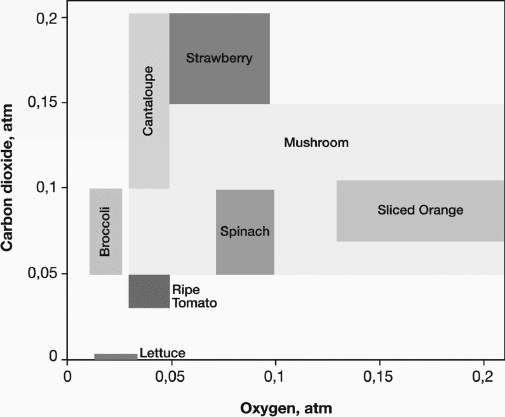
Figure 9.2 Optimum recommended gas composition for different fruits and vegetables.
The concentration of gases in the product surroundings also plays a very important role
in the rate of respiration, and the quality and shelf-life of the product can largely benefit
from the use of a modified atmosphere packaging system. The respiration rate decreases
with the decrease in oxygen concentration. The carbon dioxide has, usually, an opposite
effect, although depending on the type of product, degree of maturation, concentrations
range and time of exposure. For example, high levels of carbon dioxide may cause tissue
damage and thus induce an increase in the respiration rate. Figure 9.2 represents the range of
optimum concentrations of oxygen and carbon dioxide to extend the shelf-life of different
common fruits and vegetables. Every product needs a different and sometimes very spe-
cific gas concentration ratio to maximise shelf-life. This specific ratio depends on cultivar,
temperature and duration of storage. Even if modified atmosphere packaging delivers those
ratios to produce at the point of packing, these ratios immediately begin to change with time
due to respiratory processes and, particularly if there are temperature fluctuations, com-
promising the product’s shelf-life. The concentration of gases inside the package depends
on the equilibrium between the product respiration and the gas transfer through the pack-
age. These processes have, in most cases, different sensibility to temperature. Variations in
temperature cause a perturbation in the equilibrium and consequently a drift away from the
optimum ratio of gas concentration. Packaging materials with gas permeability responding
to temperature variations are an important example of smart packaging for compensation
of the temperature oscillations occurring during transport.
Minimally processed fruits and vegetables are a relatively recent but drastically ex-
panding market, due to the consumer demand for convenience. These products, however,
are very perishable. The processing operations (peeling, cutting, etc.), although minimal,
break the cell walls, bringing enzymes and subtrates into contact, promoting contact with
microrganisms, and creating ‘stress’ conditions. As a consequence, there is an increase
OTE/SPH OTE/SPH
JWBK126-09 JWBK126-Kerry March 15, 2008 18:59 Char Count= 0
Smart Packaging Technologies for Fruits and Vegetables 155
in the respiration and ethylene production rates, in oxidation, water loss and degradation
of lipidic membranes. These changes increase the susceptibility of the product to degra-
dation and simultaneously yield the accumulation of metabolites such as ethanol, lactic
acid and ethyl acetate. These products are more demanding in packaging requirements,
and modified atmosphere packaging is most often required. Barrier properties, in particular
the permeability to oxygen and to carbon dioxide and its variation with temperature, are
parameters that should be carefully selected. Active and smart packaging may find in this
type of product an interesting application market, to increase their shelf-life and to monitor
their quality and safety.
The packaging specific requirements for fresh fruits and vegetables are essentially related
to maintaining, controlling and/or monitoring:
r
temperature,
r
gas composition and humidity,
r
mechanical damage.
Besides these technical functions of preservation and protection, packaging functions
also include communication with the consumer, which is a well proven marketing tool, and
convenience of use.
9.3 Time–Temperature Indicators
TTIs are typically small self adhesives attached to, or small devices incorporated in, the
package providinga visual indication, most commonly by changing colour or movingcolour
front, as a response to temperature history during distribution and storage. These indicators
may be placed in the shipping container or in the individual consumer package [1].
There are three basic types of TTIs: full history (those that start integration immediately
once activated), partial history (those that start integration when a certain temperature
threshold has been achieved), and critical temperature or abuse indicators (that show a
change if a certain temperature was achieved and whose response does not depend on the
time the product has been packaged).
Regardless the mechanism of the indicator, the rate of change of the visual indica-
tion must be temperature dependent, increasing at higher temperatures similarly to most
physicochemical reactions. The major mechanisms on which the TTIs are based include
enzymatic reaction, polymerisation, melting point and diffusion of a substance. More re-
cently, TTIs based on microbial growth and based on reactions in crystal phase have been
made available. In the first case, once the indicator is activated, an enzymatic reaction takes
place causing a pH change and a consequent colour change. Indicators that work based on
polymerisation have a polymer coating that gets darker at a rate that depends on the temper-
ature. The colour of the polymer is compared to a colour reference surface printed on the
indicator. These indicators are usually self-activated, thus requiring deep low temperature
storage before use. In the case of the new crystal indicators, the colour gets lighter and,
more importantly, the reaction can be initiated by activation of the indicator by UV light
when necessary. Some indicators are based on melting point of a certain substance. When
the substance melts, a different colour appears on the indicator window. This is matched
with a product critical temperature. Such indicators are abuse indicators, since they indicate

OTE/SPH OTE/SPH
JWBK126-09 JWBK126-Kerry March 15, 2008 18:59 Char Count= 0
156 Smart Packaging Technologies for Fast Moving Consumer Goods
that the critical temperature was achieved but the colour change shown does not indicate
anything about the time the product was exposed to that temperature. This type of indicator
may be combined with a mechanism of progression over a base material of the coloured
substance after melting. The rate of progression depends on the temperature and thus the
indicator can be designed to match a certain food degradation process. The more recent
mechanisms applied to an indicator are based on a pH change due to the microbial growth.
The indicators must:
r
be easily activated,
r
exhibit an easily measurable change dependent of temperature/time,
r
be irreversible and with low time of response,
r
correlate well with the food deterioration mechanism.
This latter requirement depends on how close the value of activation energy of the indicator
reaction is from the value of activation energy of the food’s deterioration reaction.
The product deterioration can be monitored by measuring, over time, a specific charac-
teristic Q critical to the shelf-life, like colour in mushrooms, firmness in strawberries or the
microbial count in salad (Figure 9.3). If the reaction of Q loss follows a first order kinetics,
it may be represented as:
−
dQ
dt
= kQ (1)
where t represents the time and k represents the reaction rate constant. This depends on
temperature according to Arrhenius law:
k = k
o
exp
−E
a
R
1
T
−
1
T
o
(2)
where E
a
is the activation energy of the characteristic loss rate, representing product degra-
dation. In chemical reactions, E
a
is usually in the range of 41–126 kJ/mol. Table 9.1
presents values of E
a
for respiration rate of some fruits and vegetables or E
a
of product
characteristics measured during storage to monitor product quality loss.
The same mathematical modelling can be made for the visible response X of the TTI:
colour change can be measured by reflectance; colour front movement can be measured by
Table 9.1 Values of activation energy (E
a
) for different processes
occurring in fruits and vegetables
Product QE
a
, (KJ/mol) Source
Carrots
Shredded
Respiration rate
79 [20]
Sliced 70 [21]
Whole 55 [21]
Onion Respiration rate 35 [22]
Mushrooms Colour change 63 [8]
Lettuce Colour change 37 [8]
Strawberry Firmness loss 39 [8]
Fresh apple Respiration rate 29 [23]