
Molina-Par?s C., Lythe G. (editors) Mathematical Models and Immune Cell Biology
Подождите немного. Документ загружается.

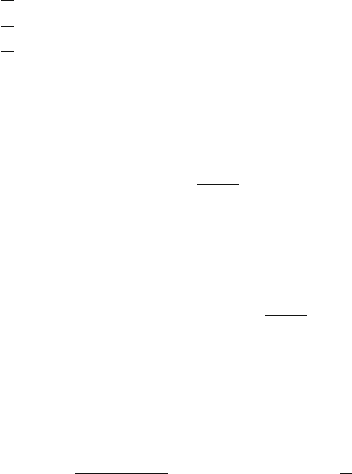
3 Tuning of TCR Specificity by Co-Receptors 53
8
<
:
d
dt
P
0
DP
0
d
dt
P
i
D .P
i1
P
i
/ for i D 1;:::;n 1
d
dt
P
n
D P
n1
(3.8)
with initial conditions P
0
.0/ D 1, P
i
.0/ D 0 for i>0. These equations are readily
solved to give
P
i
.t/ D exp.t/
.t /
i
iŠ
(3.9)
for i D 0;:::;n 1 and
P
n
.t/ D 1 exp.t/
n1
X
iD0
.t /
i
iŠ
(3.10)
for the nth phosphorylation. Substituting this result in the general expression for the
triggering probability, (3.4), with an exponentially distributed dwell time, (3.5), we
obtain
P
trig
D
n
T
R
=T
ij
C n
n
where T
R
D
n
(3.11)
and lim
n!1
P
trig
D exp.T
R
=T
ij
/ in accordance with the threshold model, (3.7).
The latter is already an excellent approximation to the n-step proof-reading model
when n is of order 10, even if the corresponding Gamma distribution does not ade-
quately approximate a step function for n this low.
Co-Receptor Kinetics
The co-receptors CD4 and CD8 modulate the rate of TCR triggering by pMHC
engagement [27–29] and thereby the TCR’s functional avidity [30]. Various dis-
tinct modulatory roles of the co-receptor, possibly acting in concert, have been
proposed: (1) promoting the association of TCR and pMHCI [31]; (2) stabilising
the TCR/pMHCI interaction [28, 32], thus prolonging the mean dwell time of the
interaction which alters the efficacy of the pMHCI ligand [23]; and (3) enhancing
the rate at which the TCR/CD3 complex attains signalling status [29, 33], by asso-
ciation of TCR/CD3 with protein tyrosine kinases such as p56
lck
[34] and adaptor
molecules such as LAT [35]andLIME[36].
The first of these two mechanisms affects the affinity of the TCR/pMHC inter-
action, whereas the third affects the TCR triggering threshold. Thus, let T
?
ij
denote
the mean lifetime of the TCR/pMHC interaction when the MHC molecule is bound
to the co-receptor. The stabilising effect is expressed by the inequality T
?
ij
>T
ij
.
Similarly, let T
?
R
denote the TCR triggering threshold when the MHC molecule is

54 H.A. van den Berg and A.K. Sewell
bound to the co-receptor. Co-receptor enhancement is expressed by the inequality
T
?
R
<T
R
. There is evidence that CD8 acts through all three mechanisms [32, 37],
whereas CD4 seems to act only through the third mechanism [38]. Moreover, the
CD8 ˛ˇ heterodimer is considerably more potent as a co-receptor than the ˛˛ ho-
modimer [34,39,40], which stresses the importance of the third function, which is
strongly dependent on the presence of the CD8ˇ chain [39,41].
During any particular interaction between TCR/pMHC, the co-receptor may bind
and unbind the MHC molecule any number of times. It will be assumed that the co-
receptor-dependent effects (viz. reduced TCR/pMHC off-rate and enhanced rate of
ITAM phosphorylationsand so on) hold instantaneously and momentarily whenever
the co-receptor is bound. Let s denote the number of transitions between the co-
receptor-bound and unbound forms of the TCR/pMHC complex during the lifetime
of the latter. The triggering probability, conditioned on this number of transitions, is
then expressed as follows:
P
trig
D
1
X
sD0
P.trig j s; C
C
/P.s j C
C
/P.C
C
/ C P.trig j s; C
/P.s j C
/P.C
/
(3.12)
where P.C
C
/ and P .C
/ are the probabilities that the TCR/pMHC complex is
bound (C
C
) or unbound (C
) to the co-receptor when the cognate contact forms.
Equilibrium considerations give the following:
P.C
C
/ D
C
and P.C
/ D
C
(3.13)
where is the co-receptor association rate and the dissociation rate. The co-
receptor may engage the TCR/pMHC complex via a TCR/CD3 binding site as
well as an MHC biding site, making association and dissociation two-stage pro-
cesses [5,34,42]. Provided the kinetics of the second step are sufficiently rapid, the
kinetics may be treated as first-order (see [37] for a detailed argument).
The probability of s transitions can be readily calculated by considering the geo-
metric distribution associated with the embedded Markov chain (the “jump chain”).
For s even, one finds:
P.s j C
C
/ D
1
1 C T
?
ij
T
ij
T
?
ij
.1 C T
ij
/.1 C T
?
ij
/
!
s=2
(3.14)
P.s j C
/ D
1
1 C T
ij
T
ij
T
?
ij
.1 C T
ij
/.1 C T
?
ij
/
!
s=2
(3.15)
whereas for s odd, these probabilities are:
P.s j C
C
/ D
T
ij
.s1/=2
T
?
ij
.1 C T
ij
/.1 C T
?
ij
/
!
.sC1/=2
(3.16)
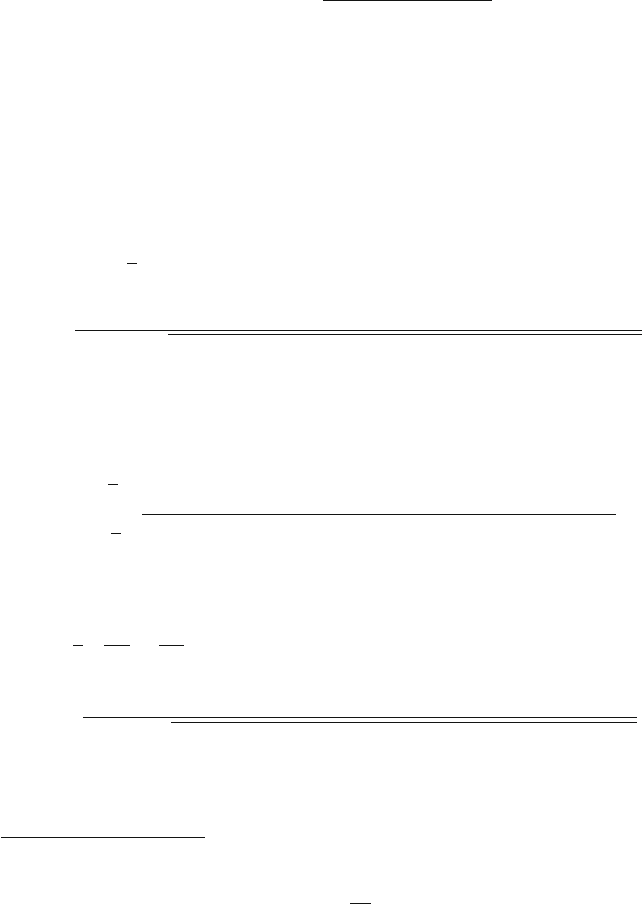
3 Tuning of TCR Specificity by Co-Receptors 55
P.s j C
/ D
T
?
ij
.s1/=2
T
ij
.1 C T
ij
/.1 C T
?
ij
/
!
.sC1/=2
: (3.17)
The triggering probabilities can be computed, in general, from a Markov chain
whose transition graph is obtained by doubling the original TCR/CD3 transition
graph as discussed above, and inserting directed arcs linking corresponding nodes
bidirectionally, expressing the processes of co-receptor association and dissocia-
tion.
5
Since the off-rate is affected by co-receptor engagement, the lifetime T of
the TCR/pMHC complex is no longer an exponential variate. The mixture of two
off-rates gives rise to a bi-exponential distribution:
P.T > t/ D
1
2
e
C
t
C e
t
C
. C /
2
C .T
1
ij
T
?
ij
1
/. /
e
C
t
e
t
2. C /
q
. C C T
1
ij
C T
?
ij
1
/
2
4.=T
?
ij
C =T
ij
C .T
ij
T
?
ij
/
1
/
(3.18)
where
˙
D
1
2
. C C T
1
ij
C T
?
ij
1
/
˙
1
2
q
. C C T
1
ij
C T
?
ij
1
/
2
4.=T
?
ij
C =T
ij
C .T
ij
T
?
ij
/
1
/:
The mean lifetime is readily obtained:
E.T / D
1
2
1
C
C
1
C
. C /
2
C .T
1
ij
T
?
ij
1
/. /
.1=
C
1=
/
2. C/
r
C CT
1
ij
C T
?
ij
1
2
4
=T
?
ij
C =T
ij
C .T
ij
T
?
ij
/
1
:
(3.19)
5
A simple formula is obtained using the Heaviside simplification, (3.6):
P.trig j s; C
˙
/ D P
e
T C
T
R
T
?
R
e
T
?
>T
R
j s; C
˙
where
e
T is a Gamma-distributed random variable with location parameter T
ij
=.1CT
ij
/ and shape
parameter ~ D 1 C ent..s C 1/=2/ iff s is even and C
˙
D C
, whereas ~ D ent..s C 1/=2/
otherwise (where ent.x/ is the largest integer smaller than x), and
e
T
?
is another Gamma-distributed
random variable with location parameter T
?
ij
=.1 CT
?
ij
/ and shape parameter ~ D 1 Cent..s C
1/=2/ iff s is even and C
˙
D C
C
, whereas ~ D ent..s C1/=2/ otherwise.
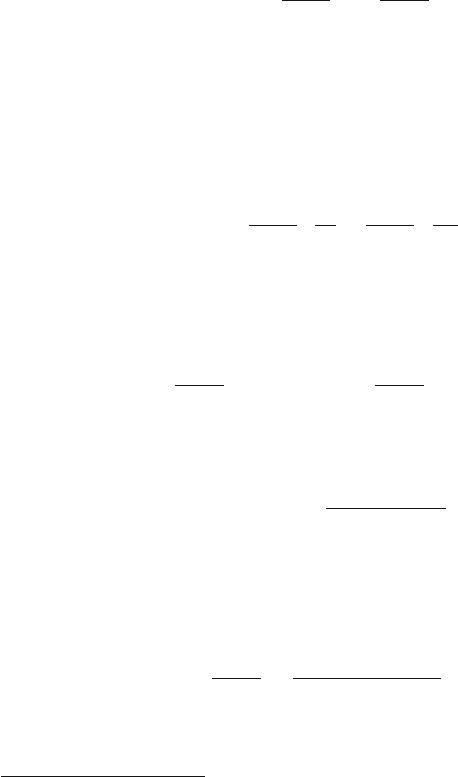
56 H.A. van den Berg and A.K. Sewell
Co-Receptor Kinetics in the ‘Slow’ and ‘Fast’ Limits
More insight into the above results can be gained by considering two special cases,
which form the endpoints of a continuum of possibilities. The first is the case where
the co-receptor kinetics is slow with respect to the TCR/pMHC kinetics, so that the
MHC molecule either retains its contact with the co-receptor during the cognate in-
teraction or remains unbound during its comparatively short docking with the TCR.
Then (3.19) reduces to:
E.T / D
C
T
ij
C
C
T
?
ij
as one would expect from elementary considerations.
6
On the other hand, if the
co-receptor kinetics is very rapid compared to the cognate interaction, many transi-
tions happen during a TCR/pMHC docking, and the lifetime becomes exponential
again, with an effective off-rate determined by the co-receptor binding equilibrium.
Thus (3.19) reduces to
E.T / D
C
1
T
ij
C
C
1
T
?
ij
!
1
:
Simple expressions for the triggering probability are similarly obtained for these
special cases. If the co-receptor is slow relative to the TCR, the s D 0 term in (3.12)
dominates and one finds:
P
trig
D
C
exp
T
R
=T
ij
C
C
exp
T
?
R
=T
?
ij
(3.20)
whereas for rapid co-receptor kinetics one obtains:
P
trig
D exp
=T
ij
C =T
?
ij
=T
R
C =T
?
R
!
:
The parameter is proportional to the surface density of co-receptor molecules;
if ŒCD(4—8) denotes this surface density and K
D
is the dissociation constant of
the co-receptor–MHC interaction, the following holds:
C
D
ŒCD(4—8)
ŒCD(4—8) C K
D
:
6
This presupposes a co-receptor binding equilibrium, which is realistic for CD8/TCR or CD4/TCR
adducts, but may not be realistic for CD8/MHCI or CD4/MHCII couplings, whose stability may
depend on the TCR/pMHC docking.
3 Tuning of TCR Specificity by Co-Receptors 57
Thus, by varying the co-receptor levels, the T cell modulates interaction time and
triggering probability as well as the functional sensitivity P
trig
=E.T /. Interestingly,
the effect of increased co-receptor levels is not necessarily to increase P
trig
=E.T /.
An increase at high co-receptor levels (i.e. ŒCD(4—8) K
D
) compared to low
co-receptor levels (ŒCD(4—8) K
D
) is only found if the following condition is
satisfied:
T
?
R
T
R
<
T
?
ij
T
ij
1
T
ij
T
R
ln
T
?
ij
T
ij
: (3.21)
This means that, should the co-receptor only exert the TCR/pMHC stabilisation ef-
fect (i.e. T
?
R
D T
R
, no threshold effect), an increase of the functional sensitivity is
possible only if T
ij
<T
R
(ligands which satisfy this condition are
sub-optimal ag-
onists
at ŒCD(4—8) K
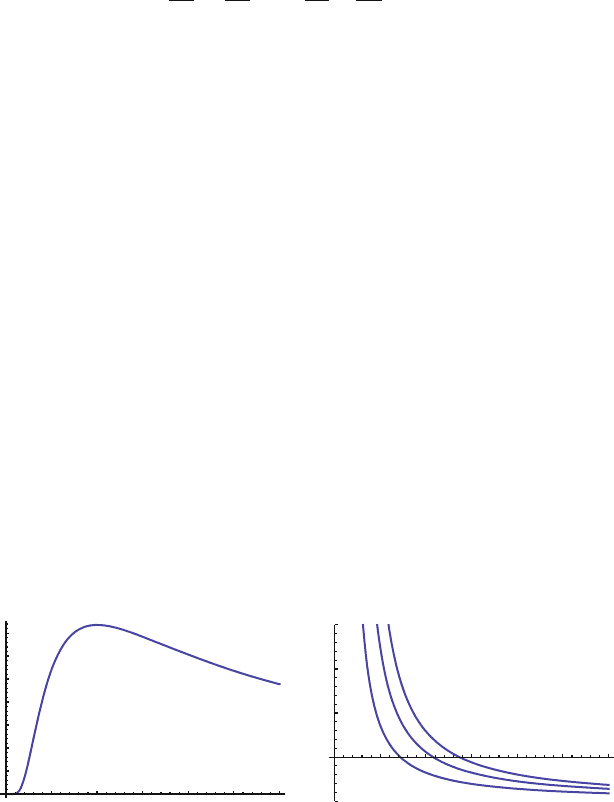
D
). This is illustrated in the left panel of Fig. 3.2,which
shows scaled functional sensitivity expŒT
R
=T
ij
.T
R
=T
ij
/ as a function of T
ij
=T
R
.
The co-receptor stabilisation effect amounts to a shift to the right in this graph;
it is clear that the TCR’s functional sensitivity to sub-optimal agonists can be en-
hanced by such a shift. The opposite will be true of ligands such that T
ij
>T
R
(the
so-called
heteroclitic agonists
). The right panel of Fig. 3.2 shows the percentage
co-receptor enhancement obtained when saturating levels of co-receptor are com-
pared to zero levels. It is assumed that T
?
ij
D 2T
ij
, as suggested by the data of the
Sewell group [32]; the leftmost curve corresponds to the case where there is no ef-
fect on the receptor threshold, while the middle curve corresponds to T
?
R
D T
R
=2
and the rightmost to T
?
R
D T
R
=10. This illustrates that the receptor-level effect en-
larges the range of ligands that are positively boosted by the co-receptor, and that
the receptor-level boost factor T
?
R
=T
R
need not be much larger than the stabilisa-
tion factor T
ij
=T
?
ij
; van den Berg et al. [37] estimate that this boost is twofold for
the pMHCI/CD8 interaction.
For slow co-receptor kinetics, condition (3.21) applies at all co-receptor den-
sities, whereas for rapid kinetics, an enhancement relative to nil co-receptor may
occur even when condition (3.21) is not satisfied; in this case, the functional sensitiv-
ity P
trig
=EŒT first increases with increasing co-receptor levels and then decreases at
0.5 1.0 1.5 2.0 2.5 3.0
-50
50
100
150
0.5 1.0 1.5 2.0 2.5 3.0
0.05
0.10
0.15
0.20
0.25
0.30
0.35
functional sensitivity
percentage boost
mean residence time
mean residence time
Fig. 3.2 Co-receptor-mediated enhancement of functional sensitivity

58 H.A. van den Berg and A.K. Sewell
higher levels. This effect
7
is qualitatively important only for marginally sub-optimal
agonists whose ‘unboosted’ T
ij
is lower than, but close to T
R
.
The present analysis suggests that T cells can use co-receptor expression lev-
els not only to modulate the functional sensitivity (“avidity”) to a given peptide
ligand, but, moreover, that co-receptor level variation should enable differential reg-
ulation of TCR sensitivity. That is to say: the functional sensitivity for some ligands
goes down while that for others goes up as the T cell up- or down-regulates its co-
receptor. All these ligands have the potential to be good agonists, but at any one
time, the T cell is tuned in on only a few, or just one, of them.
While the above theory suggests the possibility of
differential regulation of TCR
avidity
, such a phenomenon remains to be experimentally observed. One would
have to find a TCR
X
and two ligands
A
and
B
such that
A
is a good agonist for
X
at low levels of the co-receptor whereas
B
is a good agonist for
X
at high levels
of the co-receptor, such that the ordering of functional sensitivities reverses as the
co-receptor levels are varied. Since good agonists at nil co-receptor levels will be
rare and are highly unlikely to be the index ligand through which any given clone is
initially identified, it is perhaps not too surprising that the predicted effect has not
yet been observed.
If it can be confirmed that differential regulation of TCR avidity occurs, there
are two far-reaching consequences: (1) T cells have an – albeit limited – ability
for “avidity maturation” which effectively multiplies the diversity of the repertoire
(cf. [45]), in terms of enhancing its ability to match any pathogenic challenge to a
highly sensitive TCR; (2) costimulation plays a pivotal role in supplying the T cell
with accessory information: in the absence of disease, the T cell should be kept
from tuning in (at least not too strongly) to the ligands it encounters,
8
whereas the
opposite response is required when the APC carries a salient epitope. The remainder
of this chapter focuses on the latter case, and describes how the unique properties of
the ‘signal 2’ system help shape the T cell response.
Costimulatory Tuning of the Responder Spectrum
The professional APC involved in the initiation of an immune response presents the
harm-associated epitope on the MHC molecule, together with an accessory costim-
ulus (‘signal 2’
9
) which it transmits via the receptors CD80 and CD86 [54]. The
7
A mathematically equivalent effect is obtained by keeping co-receptor levels constant, but in-
creasing K
D
; this has been achieved by mutating the ˛2 domain of the MHCI molecule [43, 44],
which interacts with the co-receptor.
8
Since such ligands are “self” or in some cases “harmless non-self”; co-receptor expression is up-
and down-regulated by, respectively, interferon- and interleukin-4 [46], which is thought to be
directly involved in modulating the autoreactivity of the quiescent repertoire [47]. Costimulation
also governs CD25
C
regulatory T cells which are important in maintaining immune tolerance to
autoligands [48].
9
Depending on the nature of this costimulus, a na¨ıve T cell may induced to undergo cell divi-
sion and differentiation, to take part in an immune response [16, 49, 50]. Alternatively, it may be

3 Tuning of TCR Specificity by Co-Receptors 59
two main
10
costimulatory receptors on the T cell are CD28 and CD152 (Fig. 3.1);
the former being a key activator and the latter a key attenuator for the activation
of na¨ıve T cells [49, 58]. Costimulation through CD28 and CD152 regulates the
expansion of the T cell clones that take part in the immune response [59,60].
The characteristics of the CD80/CD86–CD28/CD152 costimulatory system are
discussed below. It has been observed that both CD80 and CD86 can interact with
CD28 as well as CD152 [61]. One could interpret this finding as mere redundancy,
or, alternatively, one could regard this as a system which exploits differences in
affinities as a means to transmit information encoded in the CD80/CD86 ratio on
the APC. We analyse this (relatively novel)
differential affinity
signalling paradigm.
It has been proposed that the CD80/CD86–CD28/CD152 costimulatory system
modulates the spectrum of functional sensitivities for the antigenic peptide, among
the responding clones [62,63]. This seems plausible, since costimulation is known to
modulate the cellular activation threshold
11
[65], and (3.3) suggests a link between
activation threshold and functional sensitivity; Sect. 3 analyses this idea in detail,
based on the following model:
W
act
D m
APC
m
T cell
b
W
act
(3.22)
where
b
W
act
expresses the baseline activation threshold (for a na¨ıve T cell interacting
with a mature professional APC) and m
APC
m
T cell
is multiplier expressing modu-
lation of the activation threshold. It is assumed here that modulation of
b
W
act
by the
APC (m
APC
) and by the T cell (m
T cell
) combine multiplicatively; this assumption,
which forms the basis for our dynamic model, will be examined first.
Differential Affinity Signalling in the CD80/CD86–CD28/CD152
System
Engagement of CD28 potentiates T cell survival, proliferation, and activation [66].
CD28 appears to reduce the cellular activation threshold (W
act
)inna¨ıve T cells
12
induced to enter an unresponsive anergic state [51], from which it may further differentiate into an
immunoregulatory phenotype [52, 53].
10
Another receptor important in T cell priming is CD27, which binds CD70 [55]; CD278 as well
as members of the TNF receptor family are expressed in activated T cells and are important in
regulating the size of the expansion [56, 57].
11
In the absence of CD28, the activation threshold is large and can only be attained by prolonged
stimulation [50] or by high presentation levels of the antigenic ligand [64].
12
CD28-mediated costimulation regulates the number of mitotic events that responding T cells
undergo [67]; acting through phosphatidylinositol 3’-kinase (PI3K) and Akt, the costimulatory
receptor CD28 increases the rate of glucose uptake and glycolysis, preparing the T cell for pro-
liferation [68]. It is unclear whether CD28 can have a direct effect on the TCR triggering rate or
the rate of pMHC engagement [16,69]; CD28 could enhance TCR triggering by Itk/Emt-mediated
activation of tyrosine kinase, as well as by recruitment and clustering of such kinases in membrane

60 H.A. van den Berg and A.K. Sewell
while CD152 generally counteracts the effects of CD28 [58, 76]; its engagement
increases the cellular activation threshold [77].
13
Up-regulation of CD152 is de-
pendent on TCR signalling [63]aswellasCD28[85]; this constitutes a negative
feedback effect which limits clonal expansion and may broaden the avidity spec-
trum among the responding clones by being strongest in high-avidity T cells, which
receive the strongest cognate stimulation [62,86].
The APC costimulates the T cell through two counter-receptorsCD80 and CD86,
each of which interact with both CD28 and CD152. CD80 binds both costimulatory
receptors more strongly than CD86, and, moreover, markedly favours engagement
of CD152 over CD28, whereas the more weakly binding CD86 shows much less
bias [61]. While CD28 has a single binding site for CD80(86), CD152 has two
identical binding sites which exhibit negative cooperativity; the site which binds
first has a much higher affinity for both CD80 and CD86 than CD28’s single
site [61].
To represent these interactions in a simple
14
mathematical model, assume that
CD28 has a single binding site for CD80 and CD86, with two distinct affinities ex-
pressed by the two-dimensional dissociation constants K
28/80
and K
28/86
.Forthe
CD152 dimer assume two identical, interdependent binding sites. The cooperativity
between binding to one of the sites and the occupancy of the other is represented by
the following two-dimensional dissociation constants: K
ı
152/80
(K
ı
152/86
) for binding
to CD80 (CD86) when the other site is still unoccupied, and K
152/80
(K
152/86
)for
binding to CD80 (CD86) when the other site is already occupied by either CD80
or CD86.
15
At equilibrium, the following conditions then govern the surface densi-
ties of the various species in the area of contact between the T cell and the APC:
microdomains [70–73]. Various T cell activation genes depend on the nuclear factor of activation in
T cells (the transcription factor NFAT). The relevant active form of this intracellular messenger is
unphosphorylated NFAT, localised in the nucleus. The enzyme glycogen synthase kinase-3 (GSK3)
is thought to phosphorylate serine residues on NFAT, which causes it to be exported from the nu-
cleus. It is thought that the general effect of CD28 costimulation is to depress the level of active
GSK3, while CD152 costimulation may elevate GSK3 activity [62,74,75].
13
Engagement of CD152, also known as CTLA-4, also restricts clonal expansion, i.e. the num-
ber of mitotic events following activation [78–81]. Furthermore, CD152 interferes with TCR
signalling, possibly by a direct interaction with the TCR/CD3-chain, thus negatively regulat-
ing recruitment of the TCR to kinase-rich membrane microdomains [82, 83]. CD152 can recruit
PP2A-family serine/threonine phosphatases that may attenuate intracellular signalling cascades, or
interfere directly with CD28 by targeting PP2A activity to CD28 [84]. While the cytoplasmic tail
of CD152 contains a binding motif for Scr homology-2 domain containing tyrosine phosphatases,
the involvement of such phosphatases in CD152 signalling remains unclear [77].
14
Spatial aspects related to CD80 dimerization, as proposed by Schwartz et al. [87], are ignored.
15
Collins et al. [61] furnish the following relations between the dissociation constants, based
on 3D measurements: K
28/80
=K
28/86
D 0:2I K
ı
152/80
=K
28/86
D 0:0185I K
ı
152/86
=K
28/86
D
0:2845I K
152/80
=K
28/86
D 0:065I K
152/86
=K
28/86
D 0:725: These values indicate negative co-
operativity: the dissociation constants for the second ligands are over two times higher than the
corresponding first ligand value (i.e. K
as compared to K
ı
).
3 Tuning of TCR Specificity by Co-Receptors 61
8
ˆ
ˆ
ˆ
ˆ
ˆ
ˆ
ˆ
ˆ
ˆ
ˆ
ˆ
<
ˆ
ˆ
ˆ
ˆ
ˆ
ˆ
ˆ
ˆ
ˆ
ˆ
ˆ
:
ŒCD28
free
ŒCD80
free
D K
28/80
ŒCD28/CD80
ŒCD28
free
ŒCD86
free
D K
28/86
ŒCD28/CD86
ŒCD152
free
ŒCD80
free
D K
ı
152/80
ŒCD152/CD80
ŒCD152
free
ŒCD86
free
D K
ı
152/86
ŒCD152/CD86
ŒCD152/CD80
free
ŒCD80
free
D K
152/80
ŒCD152/CD80/CD80
ŒCD152/CD86
free
ŒCD80
free
D K
152/80
ŒCD152/CD86/CD80
ŒCD152/CD80
free
ŒCD86
free
D K
152/86
ŒCD152/CD80/CD86
ŒCD152/CD86
free
ŒCD86
free
D K
152/86
ŒCD152/CD86/CD86
(3.23)
where square brackets indicate surface densities and ‘free’ means ‘unoccupied’. Let
A
A
denote the total surface area of the APC, A
T
the total surface area of the T cell,
and A
C
the surface area of the conjugate interface. Then the relevant conservation
laws can be written as follows:
jCD28jDA
T
ŒCD28
free
C A
C
.ŒCD28/CD80 C ŒCD28/CD86/ (3.24)
jCD152jDA
T
ŒCD152
free
C A
C
.ŒCD152/CD80 CŒCD152/CD86
CŒCD152/CD80/CD80 C ŒCD152/CD80/CD86
CŒCD152/CD86/CD80 C ŒCD152/CD86/CD86/ (3.25)
jCD80jDA
A
ŒCD80
free
C A
C
.ŒCD28/CD80 CŒCD152/CD80
CŒCD152/CD80/CD86 C ŒCD152/CD86/CD80
C2ŒCD152/CD80/CD80/ (3.26)
jCD86jDA
A
ŒCD86
free
C A
C
.ŒCD28/CD86 CŒCD152/CD86
CŒCD152/CD80/CD86 C ŒCD152/CD86/CD80
C2ŒCD152/CD86/CD86/ (3.27)
where jjdenotes the total number of molecules present on the cell’s surface.
It is straightforward to reduce these equations to a system of only two non-
linear equations, which are readily solved numerically by means of a fixed-point
algorithm.
16
The hypothesis of differential affinity signalling is embodied in the following
three parameters:
APC D
jCD86j
jCD80jCjCD86j
I (3.28)
T cell D
jCD28j
jCD152jCjCD28j
I (3.29)
T cell:APC D
.jCD152jCjCD28j/=A
T
.jCD80jCjCD86j/=A
A
: (3.30)
16
The species CD152/CD86/CD80 and CD152/CD80/CD86 are physically identical, and distin-
guished in the calculations by the order in which they engaged their ligands; the two densities are
added to give the density of the single molecular species they represent.

62 H.A. van den Berg and A.K. Sewell
The parameter represents the balance between CD80andCD86ontheAPC.The
APC can influence the nature of signal transmission between APC and T cell by
adjusting . Similarly, represents the balance between CD28 and CD152, and
this balance is under the control of the T cell. The third parameter represents the
balance between CD28/152 and CD80/86; this parameter is jointly determined by
the two interacting cells. The costimulatory status of the APC is expressed by the
following dimensionless parameter:
D
K
28/86
.jCD80jCjCD86j/=A
A
:
The discussion at the start of this section motivates the following assumptions:
(1) both CD28 and CD152, when expressed, make a constitutive contribution to
intracellular processing of the TCR-stimulus; and (2) the strength of the stimula-
tory effect of CD28 (and, similarly, of the inhibitory effect of CD152) depends on
the relative enrichment of these receptors in the T cell:APC contact area, where the
TCR signal arises. These enrichment effects can be expressed as sequestration ra-
tios, defined as the contact area density of all species relative to the density prior to
the cell–cell contact:
%
CD28
def
D .jCD28j=A
T
/
1
.ŒCD28
free
C ŒCD28/CD80 C ŒCD28/CD86/
and
%
CD152
def
D .jCD152j=A
T
/
1
.ŒCD152
free
C ŒCD152/CD80 C ŒCD152/CD86
CŒCD152/CD80/CD80 C ŒCD152/CD80/CD86
CŒCD152/CD86/CD80 C ŒCD152/CD86/CD86/ :
This sequestration effect corresponds to the increase in signalling intensity.
The effective stimulation of the T cell depends on the balance between positive
stimulation (due to the combined CD28 species in the cell–cell contact area) and
negative stimulation (due to the combined CD152 species in the cell–cell contact
area), which is expressed by the ratio %
CD28
=.%
CD152
.1 //. This quantity can be
identified with the multiplier in (3.22) under the following identifications:
m
APC
%
CD28
%
CD152
and m
T cell
.1 /
that is, the T cell sets the balance between CD28 and CD152 whereas the APC
determines the sequestering ratios by varying and . Comparison of the top and
bottom panels in Fig. 3.3 indicates that these two factors combine multiplicatively,
as assumed by (3.22); the effect of changing m
T cell
amounts – to a very good ap-
proximation – to a simple scaling. As the left and middle panels of Fig. 3.3 show,
sequestering of both co-receptors decreases with an increasing proportion of CD86,
but at different rates, which leads to either an increase or a decrease of the stimula-
tory balance (right panels), depending on the value of .