
The J.P. Morgan guide to credit derivatives
Подождите немного. Документ загружается.


This article introduces the basic structures and applications that have emerged in
recent years and focuses on situations in which their use produces benefits that can be
evaluated without the assistance of complex mathematical or statistical models. The
applications discussed will include those for risk managers addressing portfolio
concentration risk, for issuers seeking to minimize the costs of liquidity in the debt
capital markets, and for investors pursuing assets that offer attractive relative value.
In each case, the recurrent theme is that in bypassing barriers between different asset
classes, maturities, rating categories, debt seniority levels, and so on, credit
derivatives create enormous opportunities to exploit and profit from associated
discontinuities in the pricing of credit risk.

The most highly structured credit derivatives transactions can be assembled
by combining three main building blocks:
1 Credit (Default) Swaps
2 Credit Options
3 Total Return Swaps
Credit (Default) Swaps
The Credit Swap or (“Credit Default Swap”) illustrated in Chart 1 is a bilateral
financial contract in which one counterparty (the Protection Buyer) pays a periodic
fee, typically expressed in basis points per annum, paid on the notional amount, in
return for a Contingent Payment by the Protection Seller following a Credit Event
with respect to a Reference Entity.
The definitions of a Credit Event, the relevant Obligations and the settlement
mechanism used to determine the Contingent Payment are flexible and determined by
negotiation between the counterparties at the inception of the transaction.
Since 1991, the International Swap and Derivatives Association (ISDA) has made
available a standardized letter confirmation allowing dealers to transact Credit Swaps
under the umbrella of an ISDA Master Agreement. The standardized confirmation
allows the parties to specify the precise terms of the transaction from a number of
defined alternatives. In July 1999, ISDA published a revised Credit Swap
documentation, with the objective to further standardize the terms when appropriate,
and provide a greater clarity of choices when standardization is not appropriate (see
Highlights on the new 1999 ISDA credit derivatives definitions).
The evolution of increasingly standardized terms in the credit derivatives market
has been a major development because it has reduced legal uncertainty that, at
least in the early stages, hampered the market’s growth. This uncertainty
originally arose because credit derivatives, unlike many other derivatives, are
frequently triggered by a defined (and fairly unlikely) event rather than a defined
price or rate move, making the importance of watertight legal documentation for
such transactions commensurately greater.
2. Basic credit derivative structures and applications
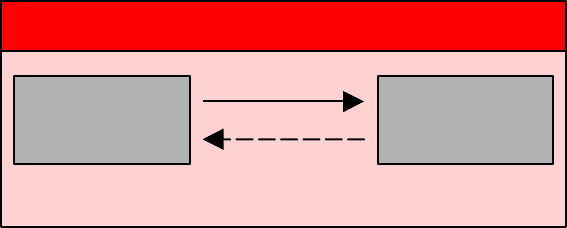
Figure 1: Credit (default) swap
Protection
buyer
Protection
seller
Contigent payment
X bp pa
Failure to meet payment obligations when due (after giving effect to the
Grace Period, if any, and only if the failure to pay is above the payment
requirement specified at inception),
Bankruptcy (for non-sovereign entities) or Moratorium (for sovereign
entities only),
Repudiation,
Material adverse restructuring of debt,
Obligation Acceleration or Obligation Default. While Obligations are
generally defined as borrowed money, the spectrum of Obligations goes
from one specific bond or loan to payment or repayment of money,
depending on whether the counterparties want to mirror the risks of direct
ownership of an asset or rather transfer macro exposure to the Reference
entity.
A Credit Event is most commonly defined as the occurrence of one or more of
the following:
(i)
(ii)
(iii)
(iv)
(v)
The Contingent Payment can be effected by a cash settlement mechanism
designed to mirror the loss incurred by creditors of the Reference Entity
following a Credit Event. This payment is calculated as the fall in price of the
Reference Obligation below par at some pre-designated point in time after the
Credit Event. Typically, the price change will be determined through the
Calculation Agent by reference to a poll of price quotations obtained from
dealers for the Reference Obligation on the valuation date. Since most debt
obligations become due and payable in the event of default, plain vanilla loans
and bonds will trade at the same dollar price following a default, reflecting the
market’s estimate of recovery value, irrespective of maturity or coupon.
Alternatively, counterparties can fix the Contingent Payment as a predetermined
sum, known as a “binary” settlement.

The other settlement method is for the Protection Buyer to make physical
delivery of a portfolio of specified Deliverable Obligations in return for payment
of their face amount. Deliverable Obligations may be the Reference Obligation or
one of a broad class of obligations meeting certain specifications, such as any
senior unsecured claim against the Reference Entity. The physical settlement
option is not always available since Credit Swaps are often used to hedge
exposures to assets that are not readily transferable or to create short positions for
users who do not own a deliverable obligation.
Further standardisation of terms with 38 presumptions for terms that are not specified
The new ISDA documentation aims for further standardisation of a book of definitions. Where parties do not
specify particular terms, the definitions may provide for fallbacks. For example, where the Calculation Agent
has not been specified by the parties in a confirmation to a transaction, it is deemed to be the Protection
Seller.
Tightening of the Restructuring definition
Previous Restructuring definition referred to an adjustment with respect to any Obligation of the Reference
Entity resulting in such Obligation being, overall, “materially less favorable from an economic, credit or risk
perspective” to its holder, subject to the determination of the Calculation Agent. The definition has been
amended in the new ISDA documentation and now lists the specific occurrences on which the Restructuring
Credit Event is to be triggered.
“The Matrix”: Check-list approach for specifying Obligations and Deliverable Obligations
Selection of (1) Categories and (2) Characteristics for both Obligations and Deliverable Obligations.
Counterparties have to choose one Category only for Obligations and Deliverable Obligations but may select
as many respective Characteristics as they require.
New concepts/timeframe for physical settlement
For physically-settled default swap transactions, the new documentation introduces the concept of Notice of
Intended Physical Settlement, which provides that the Buyer may elect to settle the whole transaction, not to
settle or to settle in part only. The Buyer has 30 days after delivery of a Credit Event Notice to notify the other
part of its intentions with respect what it intends to physically settle after which if no such notice is delivered,
the transaction lapses.
Dispute resolution
New guidelines to address parties’ dissatisfaction with the recourse to a disinterested third party. The
creation of an arbitration panel of experts has been considered.
Materiality clause
In certain contracts, the occurrence of a Credit Event has to be coupled with a significant price deterioration
(net of price changes due to interest rate movements) in a specified Reference Obligation issued or
guaranteed by the Reference Entity. This requirement, known as a Materiality clause, is designed to ensure
that a Credit Event is not triggered by a technical (I.e, non-credit-related) defaut, such as a disputed or late
payment or a failure in the cleaning systems. The Materiality clause has disappeared from the main body of
the new ISDA confirmations, and is now the object of an annex to the document.
A few highlights on the new 1999 ISDA credit derivatives definitions
Addressing illiquidity using Credit Swaps

Credit Swaps, and indeed all credit derivatives, are mainly inter-professional
(meaning non-retail) transactions. Averaging $25 to $50 million per transaction,
they range in size from a few million to billions of dollars. Reference Entities
may be drawn from a wide universe including sovereigns, semi-governments,
financial institutions, and all other investment or sub-investment grade corporates.
Maturities usually run from one to ten years and occasionally beyond that,
although counterparty credit quality concerns frequently limit liquidity for longer
tenors. For corporates or financial institutions credit risks, five-year tends to be
the benchmark maturity, where greatest liquidity can be found. While publicly
rated credits enjoy greater liquidity, ratings are not necessarily a requirement.
The only true limitation to the parameters of a Credit Swap is the willingness of
the counterparties to act on a credit view.
Illiquidity of credit positions can be caused by any number of factors, both
internal and external to the organization
in question. Internally, in the case of
bank loans and derivative transactions, relationship concerns often lock portfolio
managers into credit exposure arising from key client transactions. Corporate
borrowers prefer to deal with smaller lending groups and typically place
restrictions on transferability and on which entities can have access to that
group. Credit derivatives allow users to reduce credit exposure without
physically removing assets from their balance sheet. Loan sales or the
assignment or unwinding of derivative contracts typically require the notification
and/or consent of the customer. By contrast, a credit derivative is a confidential
transaction that the customer need neither be party to nor aware of, thereby
separating relationship management from risk management decisions.
Similarly, the tax or accounting position of an institution can create significant
disincentives to the sale of an otherwise relatively liquid position – as in the case
of an insurance company that owns a public corporate bond in its hold-to-maturity
account at a low tax base. Purchasing default protection via a Credit Swap can
hedge the credit exposure of such a position without triggering a sale for either tax
or accounting purposes. Recently, Credit Swaps have been employed in such
situations to avoid unintended adverse tax or accounting consequences of
otherwise sound risk management decisions.
More often, illiquidity results from factors external to the institution in question.
The secondary market for many loans and private placements is not deep, and
in the case of certain forms of trade receivable or insurance contract, may not
exist at all. Some forms of credit exposure, such as the business concentration
risk to key customers faced by many corporates (meaning not only the default
risk on accounts receivable, but also the risk of customer replacement cost), or
the exposure employees face to their employers in respect of non-qualified
deferred compensation, are simply not transferable at all. In all of these cases,
Credit Swaps can provide a hedge of exposure that would not otherwise be
achievable through the sale of an underlying asset.
In some cases,
credit swaps
have
substituted
other credit
instruments to
gather most of
the liquidity on
a specific
underlying
credit risk.
Credit Swaps
deepen the
secondary
market for
credit risk far
beyond that of
the secondary
market of the
underlying
credit
instrument.
Exploiting a funding advantage or avoiding a disadvantage via credit swaps
When an investor owns a credit-risky asset, the return for assuming that credit
risk is only the net spread earned after deducting that investor’s cost of funding
the asset on its balance sheet. Thus, it makes little sense for an A-rated bank
funding at LIBOR flat to lend money to a AAA-rated entity that borrows at
LIBID. After funding costs, the A-rated bank takes a loss but still takes on risk.
Consequently, entities with high funding levels often buy risky assets to generate
spread income. However, since there is no up-front principal outlay required for
most Protection Sellers when assuming a Credit Swap position, these provide an
opportunity to take on credit exposure in off balance-sheet positions that do not
need to be funded. Credit Swaps are therefore fast becoming an important
source of investment opportunity and portfolio diversification for banks,
insurance companies (both monolines and traditional insurers), and other
institutional investors who would otherwise continue to accumulate
concentrations of lower-quality assets due to their own high funding costs.
On the other hand, institutions with low funding costs may capitalise on this
advantage by funding assets on the balance sheet and purchasing default
protection on those assets. The premium for buying default protection on such
assets may be less than the net spread such a bank would earn over its funding
costs. Hence a low-cost investor may offset the risk of the underlying credit but
still retain a net positive income stream. Of course, as we will discuss in more
detail, the counterparty risk to the Protection Seller must be covered by this
residual income. However, the combined credit quality of the underlying asset
and the credit protection purchased, even from a lower-quality counterparty, may
often be very high, since two defaults (by both the Protection Seller and the
Reference Entity) must occur before losses are incurred, and even then losses will
be mitigated by the recovery rate on claims against both entities.
Lowering the cost of protection in a credit swap
Contingent credit swap
Contingent credit swaps are hybrid credit derivatives which, in addition to the
occurrence of a Credit Event require an additional trigger, typically the
occurrence of a Credit Event with respect to another Reference Entity or a
material movement in equity prices, commodity prices, or interest rates. The
credit protection provided by a contingent credit swap is weaker -thus cheaper-
than the credit protection under a regular credit swap, and is more optimal when
there is a low correlation between the occurrence of the two triggers.
Dynamic credit swap
Dynamic credit swaps aim to address one of the difficulties in managing credit
risk in derivative portfolios, which is the fact that counterparty exposures
change with both the passage of time and underlying market moves. In a swap
position, both counterparties are subject to counterparty credit exposure, which
is a combination of the current mark-to-market of the swap as well as expected
future replacement costs.
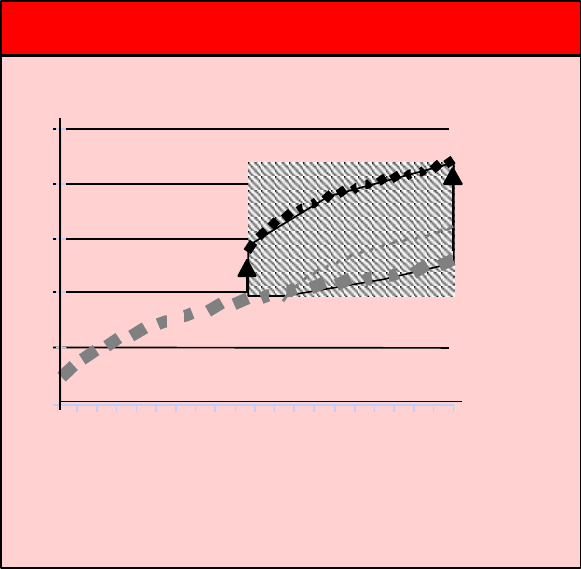
Chart 2 shows how projected exposure on a cross-currency swap can change in
just a few years. At inception in May 1990, prevailing rates implied a
maximum exposure at maturity of $125 million on a notional of $100 million.
Five years later, as the yen strengthened and interest rates dropped, the
maximum exposure was calculated at $220 million. By January 1996, the
exposure slipped back to around $160 million..
Figure 2:The instability of projected swap exposure
$ million10
0
50
100
150
200
250
1 2 3 4 5 6 7 8 9 10
Years
Expected exposure
May 1990
May 1995
January 1996
May 1995
January 1996
May 1990
The shaded area shows the extent to which projected
peak exposure on a 10-year yen/$ swap with principal
exchange, effective in May 1990, fluctuated during the
subsequent five and a half years
Expected exposure
Years
Swap counterparty exposure is therefore a function both of underlying market
volatility, forward curves, and time. Furthermore, potential exposure will be
exacerbated if the quality of the credit itself is correlated to the market; a fixed
rate receiver that is domiciled in a country whose currency has experienced
depreciation and has rising interest rates will be out-of-the-money on the swap
and could well be a weaker credit.
An important innovation in credit derivatives is the Dynamic Credit Swap (or
“Credit Intermediation Swap”), which is a Credit Swap with the notional linked to
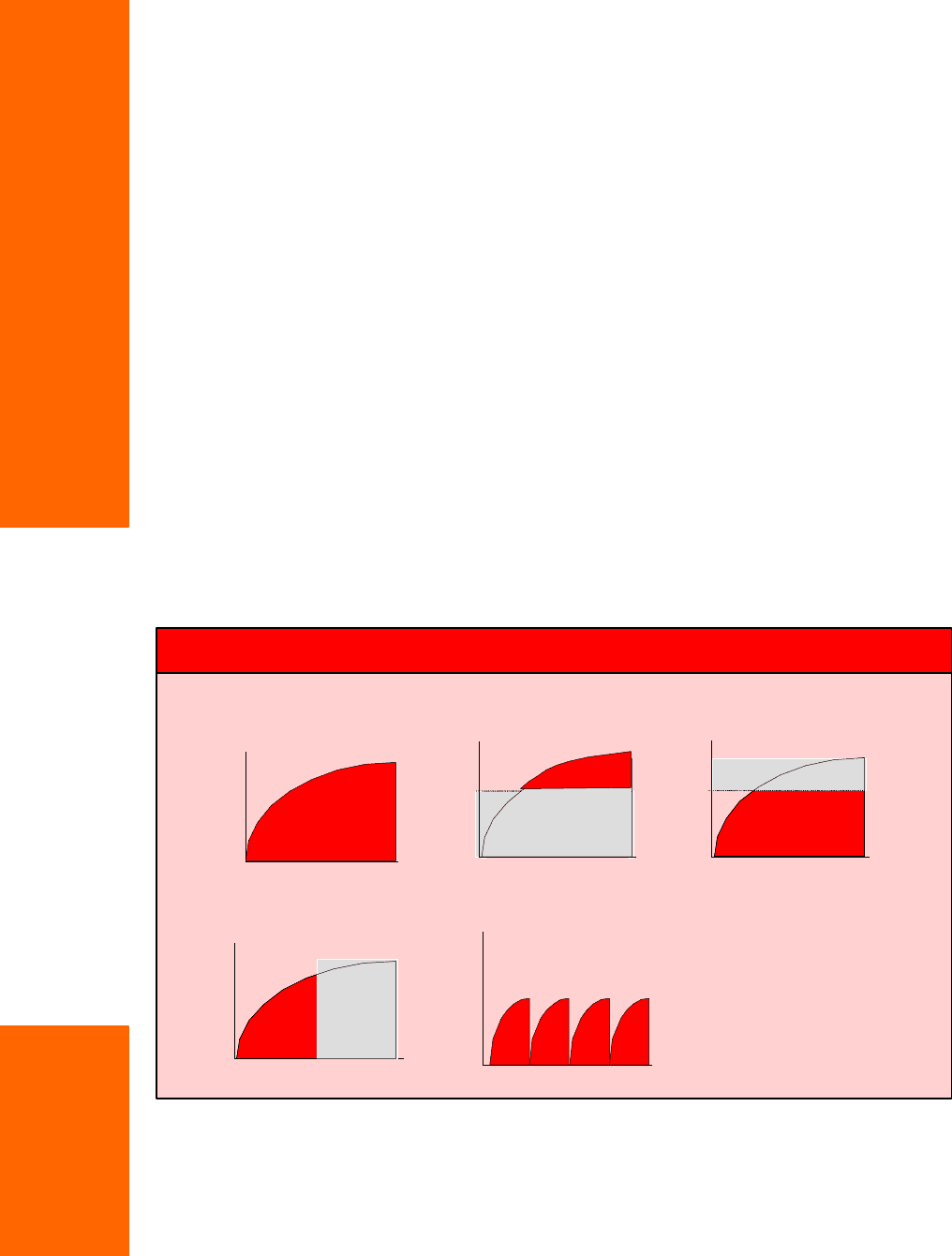
the mark-to-market of a reference swap or portfolio of swaps. In this case, the
notional amount applied to computing the Contingent Payment is equal to the
mark-to-market value, if positive, of the reference swap at the time of the Credit
Event (see Chart 3.1). The Protection Buyer pays a fixed fee, either up front or
periodically, which once set does not vary with the size of the protection
provided. The Protection Buyer will only incur default losses if the swap
counterparty and the Protection Seller fail. This dual credit effect means that the
credit quality of the Protection Buyer’s position is compounded to a level better
than the quality of either of its individual counterparties. The status of this credit
combination should normally be relatively impervious to market moves in the
underlying swap, since, assuming an uncorrelated counterparty
, the probability of
a joint default is small.
Dynamic Credit Swaps may be employed to hedge exposure between margin calls on
collateral posting (Chart 3.5). Another structure might cover any loss beyond a pre-
agreed amount (Chart 3.2) or up to a maximum amount (Chart 3.3). The protection
horizon does not need to match the term of the swap; if the Buyer is primarily
concerned with short-term default risk, it may be cheaper to hedge for a shorter
period and roll over the Dynamic Credit Swap (Chart 3.4).
Figure 3:The instability of projected swap exposure
0.2
0.4
0.6
0.8
1.2
4. Full MTM for first year
Exposure
$
0
1.0
1 year
3. First $20 million of loss
Millions
0
20
0.2
0.4
0.6
0.8
1.2
1. Full MTM
Exposure
1
0
1.0
5. MTM between collateral posting
0
0.2
0.4
0.6
0.8
1.0
1.2
$
$
$
These graphs show the
projected exposure on a
cross-currency swap
over time. The shaded
area represents
alternative coverage
possibilities of dynamic
credit swaps
2. Any loss over $20million
0 1
0
20
Millions
$
A Dynamic Credit Swap avoids the need to allocate resources to a regular mark-to-
market settlement or collateral agreements. Furthermore, it provides an alternative to
unwinding a risky position, which might be difficult for relationship reasons or due to
underlying market illiquidity.
TR Swaps
transfer an
asset’s total
economic
performance,
including - but
not restricted
to its credit
related
performance
Key
distinction
between
Credit Swap
and TR
Swap:
A Credit
Swap results
in a floating
payment only
following a
Credit Event,
while a TR
Swap results
in payments
reflecting
changes in
the market
value of a
specified
asset in the
normal
course of
business.
Where a creditor is owed an amount denominated in a foreign currency, this is analogous
to the credit exposure in a cross-currency swap. The amount outstanding will fluctuate
with foreign exchange rates, so that credit exposure in the domestic currency is dynamic
and uncertain. Thus, foreign-currency-denominated exposure may also be hedged using a
Dynamic Credit Swap.
Total (Rate of) Return Swaps
A Total Rate of Return Swap (“Total Return Swap” or “TR Swap”) is also a bilateral
financial contract designed to transfer credit risk between parties, but a TR Swap is
importantly distinct from a Credit Swap in that it exchanges the total economic
performance of a specified asset for another cash flow. That is, payments between the
parties to a TR Swap are based upon changes in the market valuation of a specific
credit instrument, irrespective of whether a Credit Event has occurred.
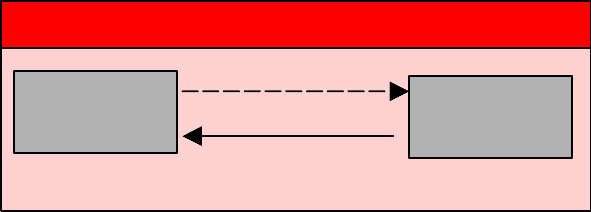
Specifically, as illustrated in Chart 4, one counterparty (the “TR Payer”) pays to the other
(the “TR Receiver”) the total return of a specified asset, the Reference Obligation. “Total
return” comprises the sum of interest, fees, and any change-in-value payments with respect
to the Reference Obligation. The change-in-value payment is equal to any appreciation
(positive) or depreciation (negative) in the market value of the Reference Obligation, as
usually determined on the basis of a poll of reference dealers. A net depreciation in value
(negative total return) results in a payment to the TR Payer. Change-in-value payments may
be made at maturity or on a periodic interim basis. As an alternative to cash settlement of the
change-in-value payment, TR Swaps can allow for physical delivery of the Reference
Obligation at maturity by the TR Payer in return for a payment of the Reference Obligation’s
initial value by the TR Receiver. Maturity of the TR Swap is not required to match that of the
Reference Obligation, and in practice rarely does. In return, the TR Receiver typically
makes a regular floating payment of LIBOR plus a spread (Y b.p. p.a. in Chart 2).
Figure 4: Total return swap
TR Payer
Libor + Y bp p.a.
Total return of asset
TR
Receiver

Synthetic financing using Total Return Swaps
When entering into a TR Swap on an asset residing in its portfolio, the TR Payer has
effectively removed all economic exposure to the underlying asset. This risk transfer
is effected with confidentiality and without the need for a cash sale. Typically, the
TR Payer retains the servicing and voting rights to the underlying asset, although
occasionally certain rights may be passed through to the TR Receiver under the terms
of the swap. The TR Receiver has exposure to the underlying asset without the initial
outlay required to purchase it. The economics of a TR Swap resemble a synthetic
secured financing of a purchase of the Reference Obligation provided by the TR
Payer to the TR Receiver. This analogy does, however, ignore the important issues of
counterparty credit risk and the value of aspects of control over the Reference
Obligation, such as voting rights if they remain with the TR Payer.
Consequently, a key determinant of pricing of the “financing” spread on a TR Swap (Y
b.p. p.a. in Chart 2) is the cost to the TR Payer of financing (and servicing) the
Reference Obligation on its own balance sheet, which has, in effect, been “lent” to the
TR Receiver for the term of the transaction. Counterparties with high funding levels
can make use of other lower-cost balance sheets through TR Swaps, thereby facilitating
investment in assets that diversify the portfolio of the user away from more affordable
but riskier assets.
Because the maturity of a TR Swap does not have to match the maturity of the underlying
asset, the TR Receiver in a swap with maturity less than that of the underlying asset may
benefit from the positive carry associated with being able to roll forward short-term
synthetic financing of a longer-term investment. The TR Payer may benefit from being
able to purchase protection for a limited period without having to liquidate the asset
permanently. At the maturity of a TR Swap whose term is less than that of the Reference
Obligation, the TR Payer essentially has the option to reinvest in that asset (by continuing
to own it) or to sell it at the market price. At this time, the TR Payer has no exposure to
the market price since a lower price will lead to a higher payment by the TR Receiver
under the TR Swap.
Other applications of TR Swaps include making new asset classes accessible to investors
for whom administrative complexity or lending group restrictions imposed by borrowers
have traditionally presented barriers to entry. Recently insurance companies and levered
fund managers have made use of TR Swaps to access bank loan markets in this way.
A TR Swap can
be seen as a
balance sheet
rental from the
TR Payer to the
TR Receiver.