
The J.P. Morgan guide to credit derivatives
Подождите немного. Документ загружается.

Credit Options
Credit Options are put or call options on the price of either (a) a floating rate note, bond,
or loan or (b) an “asset swap” package, which consists of a credit-risky instrument with
any payment characteristics and a corresponding derivative contract that exchanges the
cash flows of that instrument for a floating rate cash flow stream. In the case of (a), the
Credit Put (or Call) Option grants the Option Buyer the right, but not the obligation, to sell
to (or buy from) the Option Seller a specified floating rate Reference Asset at a pre-
specified price (the “Strike Price”). Settlement may be on a cash or physical basis.
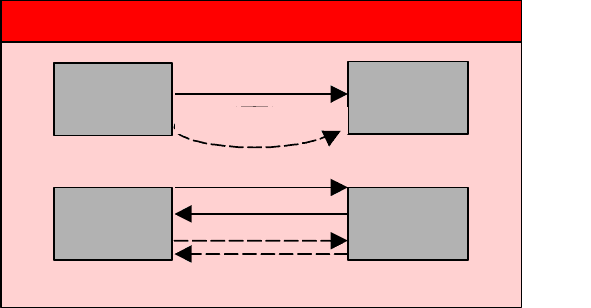
Figure 5: Credit put option
Put
buyer
Fee: x bps
Put
seller
Put
buyer
Reference asset
Put
seller
Cash (par)
Libor + sprd
Cash of ref asset
The more complex example of a Credit Option on an asset swap package described in
(b) is illustrated in Chart 5. Here, the Put buyer pays a premium for the right to sell to
the Put Seller a specified Reference Asset and simultaneously enter into a swap in
which the Put Seller pays the coupons on the Reference Asset and receives three- or
six-month LIBOR plus a predetermined spread (the “Strike Spread”). The Put seller
makes an up-front payment of par for this combined package upon exercise.
Credit Options may be American, European, or multi-European style. They may be
structured to survive a Credit Event of the issuer or guarantor of the Reference Asset (in
which case both default risk and credit spread risk are transferred between the parties),
or to knock out upon a Credit Event, in which case only credit spread risk changes
hands
As with other options, the Credit Option premium is sensitive to the volatility of the
underlying market price (in this case driven primarily by credit spreads rather than the
outright level of yields, since the underlying instrument is a floating rate asset or asset
swap package), and the extent to which the Strike Spread is “in” or “out of” the money
relative to the applicable current forward credit spread curve. Hence the premium is
greater for more volatile credits, and for tighter Strike Spreads in the case of puts and
wider Strike Spreads in the case of calls. Note that the extent to which a Strike Spread on
a one-year Credit Option on a five-year asset is in or out of the money will depend upon
the implied five-year credit spread in one year’s time (or the “one by five year” credit
spread), which in turn would have to be backed out from current one- and six-year spot
credit spreads.
Yield enhancement and credit spread/downgrade protection
Credit Options have recently found favor with institutional investors as a source
of yield enhancement. In buoyant market environments, with credit spread
product in tight supply, credit market investors frequently find themselves
underinvested. Consequently, the ability to write Credit Options, whereby
investors collect current income in return for the risk of owning (in the case of a
put) or losing (in the case of a call) an asset at a specified price in the future is an
attractive enhancement to inadequate current income.
Buyers of Credit Options, on the other hand, are often institutions such as banks
and dealers who are interested in hedging their mark-to-market exposure to
fluctuations in credit spreads: hedging long positions with puts, and short positions
with calls. For such institutions, which often run leveraged balance sheets, the off-
balance-sheet nature of the positions created by Credit Options is an attractive
feature. . Credit Options can also be used to hedge exposure to downgrade risk,
and both Credit Swaps and Credit Options can be tailored so that payments are
triggered upon a specified downgrade event.
Such options have been attractive for portfolios that are forced to sell
deteriorating assets, where preemptive measures can be taken by structuring
credit derivatives to provide downgrade protection. This reduces the risk of
forced sales at distressed prices and consequently enables the portfolio manager
to own assets of marginal credit quality at lower risk. Where the cost of such
protection is less than the pickup in yield of owning weaker credits, a clear
improvement in portfolio risk-adjusted returns can be achieved.

Hedging future borrowing costs
Credit Options also have applications for borrowers wishing to lock in future
borrowing costs without inflating their balance sheet. A borrower with a known future
funding requirement could hedge exposure to outright interest rates using interest rate
derivatives. Prior to the advent of credit derivatives, however, exposure to changes in
the level of the issuer’s borrowing spreads could not be hedged without issuing debt
immediately and investing funds in other assets. This had the adverse effect of
inflating the current balance sheet unnecessarily and exposing the issuer to
reinvestment risk and, often, negative carry. Today, issuers can enter into Credit
Options on their own name and lock in future borrowing costs with certainty.
Essentially, the issuer is able to buy the right to put its own paper to a dealer at a pre-
agreed spread. In a further recent innovation, issuers have sold puts or downgrade puts
on their own paper, thereby providing investors with credit enhancement in the form of
protection against a credit deterioration that falls short of outright default (whereupon
such a put would of course be worthless). The objective of the issuer is to reduce
borrowing costs and boost investor confidence.

Generic investment considerations: Building tailored credit derivatives structures
Maintaining diversity in credit portfolios can be challenging. This is particularly true
when the portfolio manager has to comply with constraints such as currency
denominations, listing considerations or maximum or minimum portfolio duration.
Credit derivatives are being used to address this problem by providing tailored
exposure to credits that are not otherwise available in the desired form or not available
at all in the cash market.
Under-leveraged credits that do not issue debt are usually attractive, but by
definition, exposure to these credits is difficult to find. It is rarely the case,
however, that no economic risk to such credits exists at all. Trade receivables,
fixed price forward sales contracts, third party indemnities, deep in-the-money
swaps, insurance contracts, and deferred employee compensation pools, for
example, all create credit exposure in the normal course of business of such
companies. Credit derivatives now allow intermediaries to strip out such unwanted
credit exposure and redistribute it among banks and institutional investors who find
it attractive as a mechanism for diversifying investment portfolios. Gaps in the
credit spectrum may be filled not only by bringing new credits to the capital
markets, but also by filling maturity and seniority gaps in the debt issuance of
existing borrowers.
In addition, credit derivatives help customize the risk/return profile of a financial
product. The credit risk on a name, or a basket of names, can be “re-shaped” to meet
investor needs, through a degree of capital/coupon protection or in contrary by
adding leverage features. The payment profile can also be tailored to better suit
clients’ asset-liability management constraints through step-up coupons, zero-coupon
structures with or without lock-in of the accrued coupon.
Credit-Linked Notes can be used to create funded bespoke exposures unavailable
in the capital markets.
Unlike credit swaps, credit-linked notes are funded balance sheet assets that offer
synthetic credit exposure to a reference entity in a structure designed to resemble a
synthetic corporate bond or loan. Credit-linked notes are frequently issued by special
purpose vehicles (corporations or trusts) that hold some form of collateral securities
financed through the issuance of notes or certificates to the investor. The investor
receives a coupon and par redemption, provided there has been no credit event of the
reference entity. The vehicle enters into a credit swap with a third party in which it
sells default protection in return for a premium that subsidizes the coupon to
compensate the investor for the reference entity default risk.
3. Investment Applications
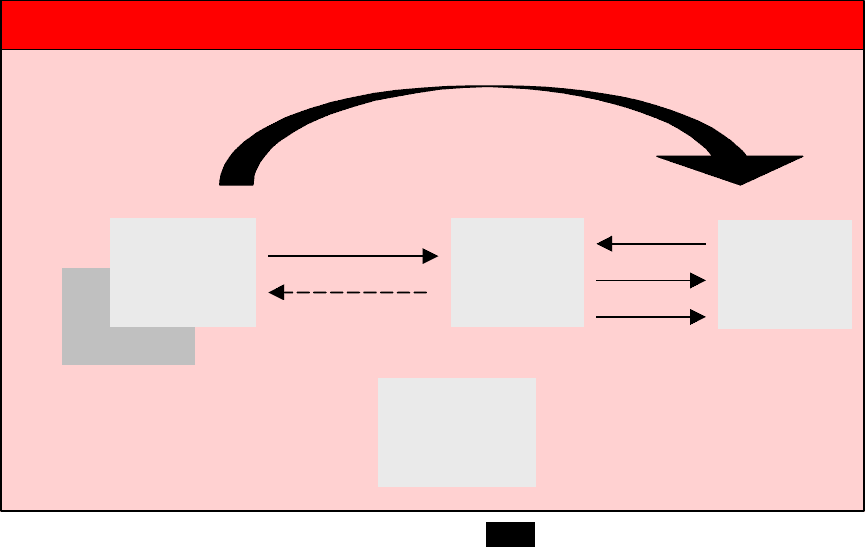
Figure 1: The credit-linked note issued by a special purpose vehicle
SPV
Investor
Aaa Securities
MGT
CREDIT DEFAULT SWAP
Protection payment
Contingent payment
Par minus net losses
RISK
REFERENCE CREDIT
The investor assumes credit risk of both the Reference Entity and the underlying
collateral securities. In the event that the Reference Entity defaults, the underlying
collateral is liquidated and the investor receives the proceeds only after the Credit
Swap counterparty is paid the Contingent Payment. If the underlying collateral
defaults, the investor is exposed to its recovery regardless of the performance of
the Reference Entity. This additional risk is recognized by the fact that the yield on
the Credit-Linked Note is higher than that of the underlying collateral and the
premium on the Credit Swap individually.
In order to tailor the cash flows of the Credit-Linked Note it may be necessary to make
use of an interest rate or cross-currency swap. At inception, this swap would be on-
market, but as markets move, the swap may move into or out of the money. The
investor takes the swap counterparty credit risk accordingly.
Credit-Linked Notes may also be issued by a corporation or financial institution. In this
case the investor assumes risk to both the issuer and the Reference Entity to which
principal redemption is linked.
Credit overlays
Credit overlays consist of embedding a layer of credit risk, in credit derivatives form,
into an existing financial product. Typically, the credit overlay will be added onto an
interest rate, equity or commodities structure thus creating a hybrid product with
more attractive risk/returns features.

For example, combining the principal risk of a credit-linked note with an equity option,
allows to significantly improve the participation in the option payoff.
Example: using a credit overlay in an equity-linked product
• An SPV issues structured notes indexed on a basket of
food company equities
• With the proceeds from the note issuance, the SPV
purchases AAA-rated Asset Backed Securities which will
remain in the vehicle until maturity
• The SPV enters into a credit swap with Morgan in which
Morgan buys protection on the same basket of food
company credit exposures
• The Credit Swap is overlaid onto the AAA-rated securities,
thus creating credit and equity Linked Notes referenced on
the basket of food companies
• The yield on the Credit Linked Notes is used to fund the
call option on the equity basket, the Credit Overlay allows
for an enhanced Participation in the Equity Basket
Performance
• At maturity, the investor receives par plus the payout of the
call option. Should a Credit Event occur on the Underlying
Portfolio of Reference Entitites, the principal repaid at
maturity would be reduced by the amount of losses
incurred under the Credit Event
Similar structures where the basket is replaced by an equity-index
also enjoy strong investor appeal
Using credit overlays as part of an asset restructuring
Portfolio managers may also express an interest to repackage some of their holdings, re-
tailoring their cashflows to better suit asset-liabilities management constraints. The addition
of a credit risk overlay to the repackaged assets effectively creates a funded credit derivative,
the existing portfolio being used as collateral to the structure. By using credit derivatives as
part of such restructuring, the investor achieves three goals: (i) restructuring the cashflows
into a more desirable profile, (ii) diversifying the investment portfolio and (iii) enhancing the
return of the newly created note.
Achieving superior returns by introducing leverage in a credit derivatives
structure
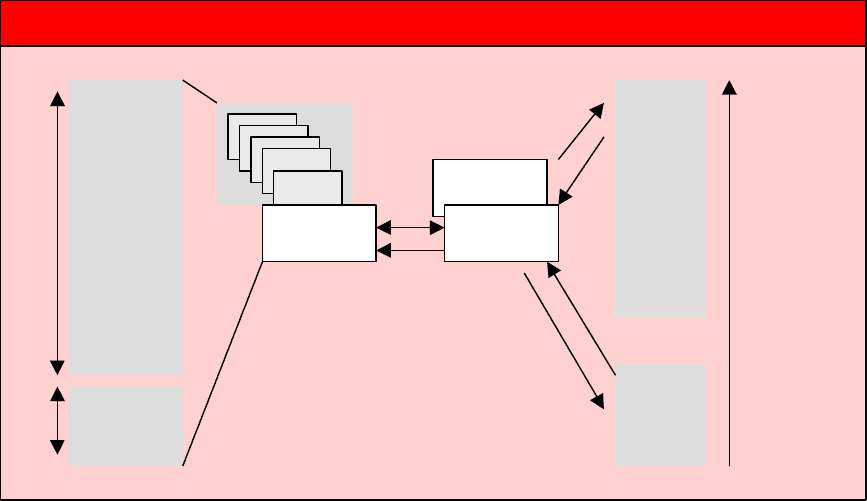
Tranched credit risk:
Simply, leverage in a credit structure is the process of re-apportioning risk and return.
Leverage is commonly introduced in a basket of credits by tranching the portfolio into junior
and senior pieces. The protection seller who commits to indemnify the protection buyer
against the first X% lost as a result of credit events (see Exhibit) effectively has a leveraged
position, his underlying exposure being much larger than his notional at stake.
If the size of the first-loss piece is large enough to stand more than one credit event – i.e.
absent any first-to-default trigger-, the portion of notional having suffered a loss will either
be liquidated at the time of default, or settled at maturity. In most first-loss structures, the
coupon will step-down after the credit event, to reflect the reduction in the notional at stake.
However, in less risky tranches, such as second-loss (or mezzanine) pieces, it is often
possible to build a coupon-protection feature without substantially deteriorating the overall
return.
First-loss or mezzanine credit positions can be transferred either in unfunded form or
via credit-linked notes. Examples of traded mezzanine credit linked notes include the
Bistro securities described in the previous chapter. In addition, more recent variations
of leveraged credit linked notes have combined credit derivatives and existing
Collateralized Bond Obligation (CBO) technology to create structures where the
portfolio of credit default swaps is not static but managed by a third party, who may be
the investor himself.
Figure 2: Tranched Credit Risk
Class A
Class B
Collateral
SPV
$80m
Class A
notes
(senior)
$20m
Class B
notes
(sub-
ordinated)
CLN
$100m portfolio of credits
MGT
Portfolio size $100m
80%
20%
First loss
Second loss
Second loss
experiences
losses in excess
of the
subordinated
tranche
Losses
absorbed in
subordinated
pieces first
First-to-default credit positions
In a first-to-default basket, the risk buyer typically takes a credit position in each credit
equal to the notional at stake. After the first credit event, the first-to-default note (swap)
stops and the investor no longer bears the credit risk to the basket. First-to-default Credit
Linked Note will either be unwound immediately after the Credit Event – this is usually
the case when the notes are issued by an SPV - or remain outstanding – this is often the
case with issuers - in which case losses on default will be carried forward and settled at
maturity. Losses on default are calculated as the difference between par and the final price
of a reference obligation, as determined by a bid-side dealer poll for reference obligations,
plus or minus, in some cases, the mark-to-market on any embedded currency/interest rate
swaps transforming the cashflows of the collateral.
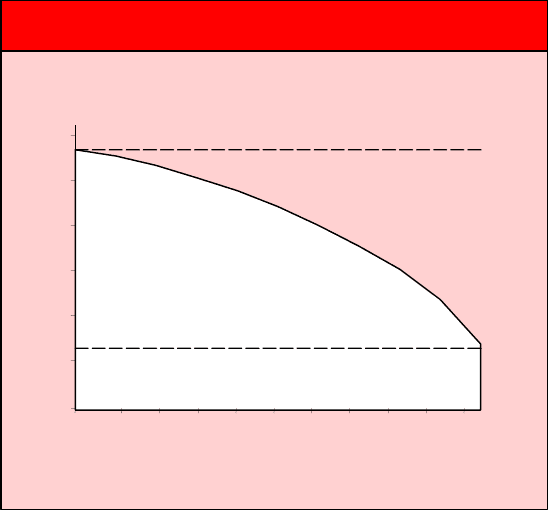
First-to-default structures are substantially pair-wise correlation plays, and provide
interesting yield-enhancing opportunities in the current tight spread environment. The yield
on such structures is primarily a function of (i) the number of names in the basket, i.e. the
amount of leverage in the structure and (ii) how correlated the names are. The first-to-default
spread shall find itself between the worse credit’s spread and the sum of the spreads, closer to
the latter if correlation is low, and closer to the former if correlation is high (see Exhibit).
Intuition suggests taking first-to-default positions to uncorrelated names with similar spreads
(hence similar default probabilities), in order to maximize the steepness of the curve below,
thus achieving a larger pick-up above the widest spread.
Returns can be further improved via the addition of a mark-to market feature, whereby
the investor also takes the mark-to-market on the outstanding credit default swaps.
Valuation of that mark-to-market can be computed by comparing the reference spread to
an offer-side dealer poll of credit default swap spreads.
Investor
Par
Par minus net losses
Libor + x bps
Figure 3: First-to-default spread curve
0
0%
10%
20%
30%
40%
50%
60%
70%
80%
90%
100%
Correlation
20
40
60
80
100
120
≈ widest individual spread
≈ sum of all spreads

An alternative way to create a leveraged position for the investor is to use zero coupon
structures, i.e. delay the coupon payments in a credit linked note, and reinvest the accruals.
De-leveraging exposures to riskier credit through a degree of capital and/or
coupon protection
Finally, leverage can be introduced by overlaying a degree of optionality for the protection
buyer’s benefit. Substitution options whereby the protection buyer has the right to
substitute some of the names in the basket, by another pre-defined set of names or any
other credit but subject to a number of guidelines, allow for significant yield enhancement.
By providing the flexibility to customize the riskyness of cashflows, credit derivative
structures can alternatively be used as a way to access new, riskier asset classes. An investor
with a high-grade corporates portfolio of credits may want to invest in a high-yield name,
without significantly altering the overall risk profile of his holdings. This can be done by
protecting part or whole of the principal of a swap/note. In some case, a minimum guaranteed
coupon might be offered in addition to principal protection.
Example 1:
A 20-year USD capital-guaranteed credit linked note on Venezuela can be decomposed
into a combination of (i) a zero-coupon Treasury and (ii) a series of Venezuela-linked
annuity-like streams representing the coupons purchased from the note proceeds less
the cost of the Treasury strip
While, as mentioned earlier, delaying the interest payments can be a powerful mean to
enhance returns, equally, the leverage thus created can be significant.
Example 2:
Consider a 15-year zero-coupon structure on an emerging market/high yield credit where a
credit event occurs after 13 years: the accrued amount lost this close to maturity is
significant. Some investors may not want or may not be allowed (for regulatory purposes)
to put such a large amount of coupon at stake. Such risk can be reduced by building-in an
accruals lock-in feature, whereby if a credit event occurs, the investor receives, at maturity,
whatever coupon amount has accrued up to the credit event date.

To summarize, we have seen that credit derivatives allow investors to invest in a wide
range of assets with tailored risk-return profile to suit their specific requirements. The
asset can be a credit play on a portfolio of names, with or without leverage. We have also
seen how to add a degree of credit exposure into a non-credit product, via an overlay
mechanism. The nature and extent of the credit risk embedded in an asset determines the
pricing of the asset, which is the focus of the next chapter.