
Tracy John A. Accounting for Dummies
Подождите немного. Документ загружается.


Irrelevant (or sunk) costs: Costs that should be disregarded when deciding
on a future course of action; if brought into the analysis, these costs could
cause you to make the wrong decision. An irrelevant cost is a vestige of the
past — that money is gone. For this reason, irrelevant costs are also called
sunk costs. For example, suppose that your supervisor tells you to expect a
slew of new hires next week. All your staff members use computers now,
but you have a bunch of typewriters gathering dust in the supply room.
Should you consider the cost paid for those typewriters in your decision to
buy computers for all the new hires? Absolutely not — that cost should
have been written off and is no match for the cost you’d pay in productivity
(and morale) for new employees who are forced to use typewriters.
Generally speaking, fixed costs are irrelevant when deciding on a future course
of action, assuming that they’re truly fixed and can’t be increased or decreased
over the short term. Most variable costs are relevant because they depend
on which alternative is selected.
Although fixed costs themselves are usually irrelevant in decision making, these
costs often indicate something about a business’s capacity — how much building
space it has, how many machine-hours are available for use, how many hours of
labor can be worked, and so on. Managers have to figure out the best way to uti-
lize these capacities. For example, suppose your retail business pays an annual
building rent of $200,000, which is a fixed cost (unless the rental contract with the
landlord has a rent escalation clause based on sales revenue). The rent, which
gives the business the legal right to occupy the building, provides 15,000 square
feet of retail and storage space. You should figure out which sales mix of products
will generate the highest total margin — equal to total sales revenue less total
variable costs of making the sales, including the costs of the goods sold and all
variable costs driven by sales revenue and sales volume.
Actual, budgeted, and standard costs
The actual costs a business incurs may differ (though we hope not significantly)
from its budgeted and standard costs:
Actual costs: Historical costs, based on actual transactions and operations
for the period just ended, or going back to earlier periods. Financial state-
ment accounting is mainly (though not entirely) based on a business’s
actual transactions and operations; the basic approach to determining
annual profit is to record the financial effects of actual transactions and
allocate historical costs to the periods benefited by the costs.
Budgeted costs: Future costs, for transactions and operations expected
to take place over the coming period, based on forecasts and established
goals. Fixed costs are budgeted differently than variable costs. For example,
if sales volume is forecast to increase by 10 percent, variable costs will
definitely increase accordingly, but fixed costs may or may not need to be
230
Part III: Accounting in Managing a Business
17_246009 ch11.qxp 4/17/08 12:50 AM Page 230

increased to accommodate the volume increase. In Chapter 10, I explain
the budgeting process and budgeted financial statements.
Standard costs: Costs, primarily in the area of manufacturing, that are
carefully engineered based on detailed analysis of operations and forecast
costs for each component or step in an operation. Developing standard costs
for variable production costs is relatively straightforward because most are
direct costs. In contrast, most fixed costs are indirect, and standard costs for
fixed costs are necessarily based on more arbitrary methods (see “Direct
versus indirect costs,” earlier in this chapter). Note: Some variable costs
are indirect and have to be allocated to specific products in order to come
up with a full (total) standard cost of the product.
Product versus period costs
Some costs are linked to particular products, and others are not:
Product costs: Manufacturing costs attached directly or allocated to
particular products. The cost is recorded in the inventory asset account
and stays in that asset account until the product is sold, at which time
the cost goes into the cost of goods sold expense account. (See Chapters 4
and 5 for more about these accounts; also, see Chapter 7 for alternative
methods for selecting which product costs are first charged to the cost of
goods sold expense.)
For example, the cost of a new Ford Focus sitting on a car dealer’s show-
room floor is a product cost. The dealer keeps the cost in the inventory
asset account until you buy the car, at which point the dealer charges
the cost to the cost of goods sold expense.
Period costs: Costs that are not attached to particular products. These
costs do not spend time in the “waiting room” of inventory. Period costs
are recorded as expenses immediately; unlike product costs, period costs
don’t pass through the inventory account first. Advertising costs, for
example, are accounted for as period costs and recorded immediately in
an expense account. Also, research and development costs are treated as
period costs (with some exceptions).
Separating product costs and period costs is particularly important for
manufacturing businesses, as you find out in the following section.
231
Chapter 11: Cost Concepts and Conundrums
17_246009 ch11.qxp 4/17/08 12:50 AM Page 231

Assembling the Product Cost
of Manufacturers
Businesses that manufacture products have several additional cost problems
to deal with, compared with retailers and distributors. I use the term manufac-
ture in the broadest sense: Automobile makers assemble cars, beer companies
brew beer, automobile gasoline companies refine oil, DuPont makes products
through chemical synthesis, and so on. Retailers (also called merchandisers)
and distributors, on the other hand, buy products in a condition ready for
resale to the end consumer. For example, Levi Strauss manufactures clothing,
and Macy’s is a retailer that buys from Levi Strauss and sells the clothes to the
public. The following sections describe costs unique to manufacturers.
Minding manufacturing costs
Manufacturing costs consist of four basic types:
Raw materials (also called direct materials): What a manufacturer buys
from other companies to use in the production of its own products. For
example, General Motors buys tires from Goodyear (or other tire manu-
facturers) that then become part of GM’s cars.
Direct labor: The employees who work on the production line.
Variable overhead: Indirect production costs that increase or decrease as
the quantity produced increases or decreases. An example is the cost of
electricity that runs the production equipment: You pay for the electricity
for the whole plant, not machine by machine, so you can’t attach this cost
to one particular part of the process. But if you increase or decrease the
use of those machines, the electricity cost increases or decreases accord-
ingly. (In contrast, the monthly utility bill for a company’s office and sales
space probably is fixed for all practical purposes.)
Fixed overhead: Indirect production costs that do not increase or
decrease as the quantity produced increases or decreases. These fixed
costs remain the same over a fairly broad range of production output
levels (see “Fixed versus variable costs,” earlier in this chapter). Three
significant fixed manufacturing costs are
• Salaries for certain production employees who don’t work directly
on the production line, such as a vice president, safety inspectors,
security guards, accountants, and shipping and receiving workers.
• Depreciation of production buildings, equipment, and other manu-
facturing fixed assets.
• Occupancy costs, such as building insurance, property taxes, and
heating and lighting charges.
232
Part III: Accounting in Managing a Business
17_246009 ch11.qxp 4/17/08 12:50 AM Page 232
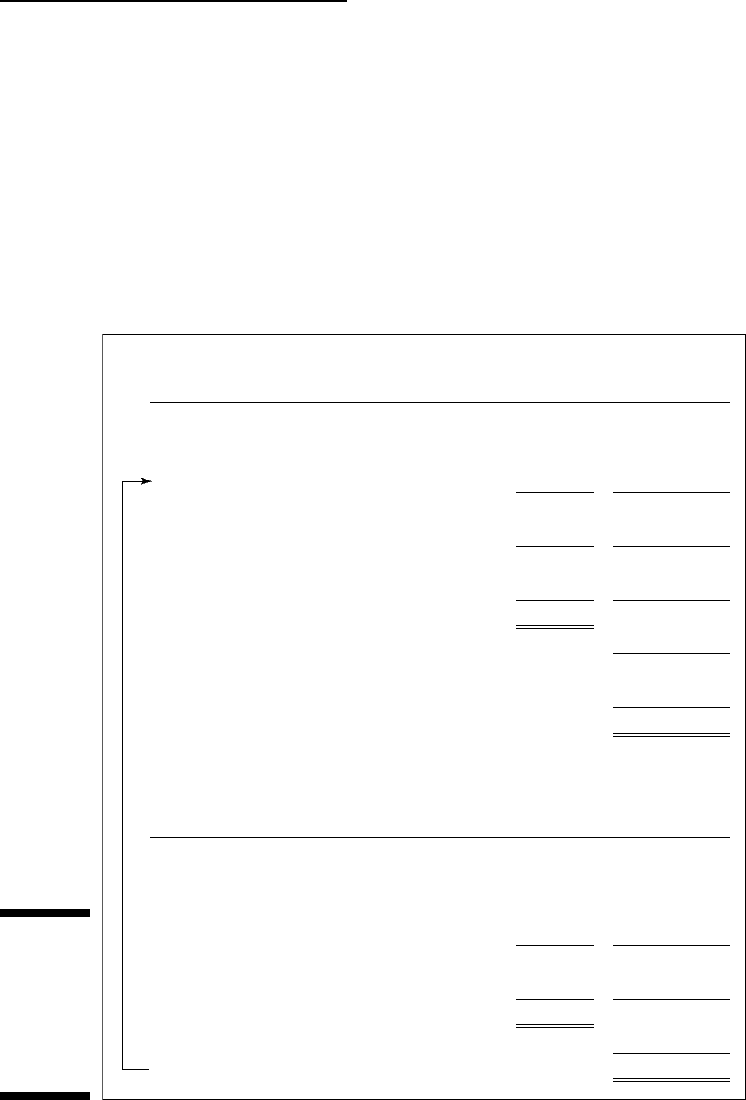
Figure 11-1 presents an annual income statement for a manufacturer and
includes information about its manufacturing costs for the year. The cost of
goods sold expense depends directly on the product cost from the summary
of manufacturing costs that appears below the income statement. A business
may manufacture 100 or 1,000 different products, or even more, and the busi-
ness must prepare a summary of manufacturing costs for each product. To
keep our example easy to follow (but still realistic), Figure 11-1 presents a sce-
nario for a one-product manufacturer. The multi-product manufacturer has
some additional accounting problems, but I can’t provide that level of detail
here. This example illustrates the fundamental accounting problems and
methods of all manufacturers.
Income Statement for Year
Sales volume 110,000 units
Per Unit
Per Unit
Totals
Sales revenue $1,400 $154,000,000
Cost of goods sold expense (760) (83,600,000)
Gross margin $640 $70,400,000
Variable operating expenses (300) (33,000,000)
Margin $340 $37,400,000
Fixed operating expenses (195) (21,450,000)
Earnings before interest and income tax (EBIT) $145 $15,950,000
Interest expense (2,750,000)
Earnings before income tax $13,200,000
Income tax expense (4,488,000)
Net income $8,712,000
Manufacturing Costs for Year
Production capacity 150,000 units
Actual output 120,000 units
Production Cost Components
Totals
Raw materials $215 $25,800,000
Direct labor 125 15,000,000
Variable manufacturing overhead costs 70 8,400,000
Total variable manufacturing costs $410 $49,200,000
Fixed manufacturing overhead costs 350 42,000,000
Total manufacturing costs $760 $91,200,000
To 10,000 units inventory increase (7,600,000)
To 110,000 units sold $83,600,000
Figure 11-1:
Example for
determining
the product
cost of
a manu-
facturer.
233
Chapter 11: Cost Concepts and Conundrums
17_246009 ch11.qxp 4/17/08 12:50 AM Page 233

The information in the manufacturing costs summary below the income
statement (see Figure 11-1) is highly confidential and for management eyes
only. Competitors would love to know this information. A company may
enjoy a significant cost advantage over its competitors and definitely does
not want its cost data to get into their hands.
Classifying costs properly
Two vexing issues rear their ugly heads in determining product cost for a
manufacturer:
Drawing a bright line between manufacturing costs and non-
manufacturing operating costs: The key difference here is that manufac-
turing costs are categorized as product costs, whereas non-manufacturing
operating costs are categorized as period costs (refer to “Product versus
period costs,” earlier in this chapter). In calculating product costs, you
include only manufacturing costs and not other costs. Period costs are
recorded right away as expenses — either in variable operating expenses
or fixed operating expenses (see Figure 11-1). Here are some examples of
each type of cost:
• Wages paid to production line workers are a clear-cut example of a
manufacturing cost.
• Salaries paid to salespeople are a marketing cost and are not part
of product cost; marketing costs are treated as period costs, which
means they are recorded immediately to expense of the period.
• Depreciation on production equipment is a manufacturing cost,
but depreciation on the warehouse in which products are stored
after being manufactured is a period cost.
• Moving the raw materials and partially-completed products through
the production process is a manufacturing cost, but transporting the
finished products from the warehouse to customers is a period cost.
The accumulation of direct and indirect production costs starts at the
beginning of the manufacturing process and stops at the end of the produc-
tion line. In other words, product cost stops at the end of the production
line — every cost up to that point should be included as a manufacturing
cost.
If you misclassify some manufacturing costs as operating costs, your
product cost calculation will be too low (see the following section,
“Calculating product cost”). Also, the Internal Revenue Service may come
knocking at your door if it suspects that you deliberately (or even inno-
cently) misclassified manufacturing costs as non-manufacturing costs in
order to minimize your taxable income.
234
Part III: Accounting in Managing a Business
17_246009 ch11.qxp 4/17/08 12:50 AM Page 234
Allocating indirect costs among different products: Indirect manufac-
turing costs must be allocated among the products produced during
the period. The full product cost includes both direct and indirect
manufacturing costs. Creating a completely satisfactory allocation
method is difficult; the process ends up being somewhat arbitrary, but
it must be done to determine product cost. Managers should understand
how indirect manufacturing costs are allocated among products (and,
for that matter, how indirect non-manufacturing costs are allocated
among organizational units and profit centers). Managers should also
keep in mind that every allocation method is arbitrary and that a different
allocation method may be just as convincing. (See the sidebar “Allocating
indirect costs is as simple as ABC — not!”)
235
Chapter 11: Cost Concepts and Conundrums
Allocating indirect costs is
as simple as ABC — not!
Accountants for manufacturers have developed
many methods and schemes for allocating indi-
rect overhead costs, most of which are based
on a common denominator of production activ-
ity, such as direct labor hours or machine hours.
A different method has received a lot of press
recently:
activity-based costing
(ABC).
With the ABC method, you identify each sup-
porting activity in the production process and
collect costs into a separate pool for each iden-
tified activity. Then you develop a
measure
for
each activity — for example, the measure for the
engineering department may be hours, and the
measure for the maintenance department may
be square feet. You use the activity measures as
cost drivers
to allocate costs to products.
The idea is that the engineering department
doesn’t come cheap; including the cost of their
slide rules and pocket protectors, as well as their
salaries and benefits, the total cost per hour for
those engineers could be $200 or more. The logic
of the ABC cost-allocation method is that the
engineering cost per hour should be allocated on
the basis of the number of hours (the driver)
required by each product. So if Product A needs
200 hours of the engineering department’s time
and Product B is a simple product that needs only
20 hours of engineering, you allocate ten times as
much of the engineering cost to Product A. In
similar fashion, suppose the cost of the mainte-
nance department is $20 per square foot per year.
If Product C uses twice as much floor space as
Product D, it would be charged with twice as
much maintenance cost.
The ABC method has received much praise for
being better than traditional allocation methods,
especially for management decision making.
But keep in mind that this method still requires
rather arbitrary definitions of cost drivers, and
having too many different cost drivers, each
with its own pool of costs, is not too practical.
Cost allocation always involves arbitrary meth-
ods. Managers should be aware of which meth-
ods are being used and should challenge a
method if they think that it’s misleading and
should be replaced with a better (though still
somewhat arbitrary) method. I don’t mean to put
too fine a point on this, but cost allocation
essentially boils down to a “my arbitrary method
is better than your arbitrary method” argument.
17_246009 ch11.qxp 4/17/08 12:50 AM Page 235

Calculating product cost
The basic equation for calculating product cost is as follows (using the exam-
ple of the manufacturer given in Figure 11-1):
$91,200,000 total manufacturing costs ÷ 120,000 units
production output = $760 product cost per unit
Looks pretty straightforward, doesn’t it? Well, the equation itself may be
simple, but the accuracy of the results depends directly on the accuracy of
your manufacturing cost numbers. The business example we’re using in this
chapter manufactures just one product. Even so, a single manufacturing
process can be fairly complex, with hundreds or thousands of steps and
operations. In the real world, where businesses produce multiple products,
your accounting systems must be very complex and extraordinarily detailed
to keep accurate track of all direct and indirect (allocated) manufacturing
costs.
In our example, the business manufactured 120,000 units and sold 110,000
units during the year, and its product cost per unit is $760. The 110,000 total
units sold during the year is multiplied by the $760 product cost to compute
the $83.6 million cost of goods sold expense, which is deducted against the
company’s revenue from selling 110,000 units during the year. The company’s
total manufacturing costs for the year were $91.2 million, which is $7.6 mil-
lion more than the cost of goods sold expense. The remainder of the total
annual manufacturing costs is recorded as an increase in the company’s
inventory asset account, to recognize that 10,000 units manufactured this
year are awaiting sale in the future. In Figure 11-1, note that the $760 product
cost per unit is applied both to the 110,000 units sold and to the 10,000 units
added to inventory.
Note: The product cost per unit for our example business is determined for
the entire year. In actual practice, manufacturers calculate their product
costs monthly or quarterly. The computation process is the same, but the
frequency of doing the computation varies from business to business.
Product costs likely will vary each successive period the costs are deter-
mined. Because the product costs vary from period to period, the business
must choose which cost of goods sold and inventory cost method to use. (If
product cost happened to remain absolutely flat and constant period to
period, the different methods would yield the same results.) Chapter 7
explains the alternative accounting methods for determining cost of goods
sold expense and inventory cost value.
236
Part III: Accounting in Managing a Business
17_246009 ch11.qxp 4/17/08 12:50 AM Page 236

Examining fixed manufacturing
costs and production capacity
Product cost consists of two very distinct components: variable manufacturing
costs and fixed manufacturing costs. In Figure 11-1, note that the company’s
variable manufacturing costs are $410 per unit, and its fixed manufacturing
costs are $350 per unit. Now, what if the business had manufactured ten more
units? Its total variable manufacturing costs would have been $4,100 higher.
The actual number of units produced drives variable costs, so even one more
unit would have caused the variable costs to increase. But the company’s total
fixed costs would have been the same if it had produced ten more units, or
10,000 more units for that matter. Variable manufacturing costs are bought on a
per-unit basis, as it were, whereas fixed manufacturing costs are bought in bulk
for the whole period.
Fixed manufacturing costs are needed to provide production capacity — the
people and physical resources needed to manufacture products — for the
period. After the business has the production plant and people in place for
the year, its fixed manufacturing costs cannot be easily scaled down. The
business is stuck with these costs over the short run. It has to make the best
use it can from its production capacity.
Production capacity is a critical concept for business managers to stay focused
on. You need to plan your production capacity well ahead of time because you
need plenty of lead-time to assemble the right people, equipment, land, and
buildings. When you have the necessary production capacity in place, you want
to make sure that you’re making optimal use of that capacity. The fixed costs of
production capacity remain the same even as production output increases or
decreases, so you may as well make optimal use of the capacity provided by
those fixed costs. For example, you’re recording the same depreciation amount
on your machinery regardless of how you actually use those machines, so you
should be sure to optimize the use of those machines (within limits, of course —
overworking the machines to the point where they break down won’t do you
much good).
The burden rate
The fixed cost component of product cost is called the burden rate. In our man-
ufacturing example, the burden rate is computed as follows (see Figure 11-1
for data):
$42,000,000 fixed manufacturing costs for period ÷
120,000 units production output for period =
$350 burden rate
Note that the burden rate depends on the number divided into total fixed
manufacturing costs for the period — that is, the production output for the
period.
237
Chapter 11: Cost Concepts and Conundrums
17_246009 ch11.qxp 4/17/08 12:50 AM Page 237

Now, here’s a very important twist on my example: Suppose the company
had manufactured only 110,000 units during the period — equal exactly to
the quantity sold during the year. Its variable manufacturing cost per unit
would have been the same, or $410 per unit. But its burden rate would have
been $381.82 per unit (computed by dividing the $42 million total fixed manu-
facturing costs by the 110,000 units production output). Each unit sold, there-
fore, would have cost $31.82 more simply because the company produced
fewer units. (The burden rate is $381.82 at the 110,000 output level but only
$350 at the 120,000 output level.)
If only 110,000 units were produced, the company’s product cost would have
been $791.82 ($410 variable costs plus the $381.82 burden rate). The com-
pany’s cost of goods sold, therefore, would have been $3.5 million higher for
the year ($31.82 higher product cost × 110,000 units sold). This rather signifi-
cant increase in its cost of goods sold expense is caused by the company pro-
ducing fewer units, even though it produced all the units that it needed for
sales during the year. The same total amount of fixed manufacturing costs is
spread over fewer units of production output.
Idle capacity
The production capacity of the business example in Figure 11-1 is 150,000 units
for the year. However, this business produced only 120,000 units during the
year, which is 30,000 units fewer than it could have. In other words, it operated
at 80 percent of production capacity, which is 20 percent idle capacity:
120,000 units output ÷ 150,000 units capacity =
80% utilization, or 20% idle capacity
This rate of idle capacity isn’t unusual — the average U.S. manufacturing
plant normally operates at 80 to 85 percent of its production capacity.
The effects of increasing inventory
Looking back at the numbers shown in Figure 11-1, the company’s cost of
goods sold benefited from the fact that it produced 10,000 more units than it
sold during the year. These 10,000 units absorbed $3.5 million of its total
fixed manufacturing costs for the year, and until the units are sold this $3.5
million stays in the inventory asset account (along with the variable manufac-
turing costs, of course). It’s entirely possible that the higher production level
was justified — to have more units on hand for sales growth next year. But
production output can get out of hand, as I discuss in the following section,
“Puffing Profit by Excessive Production.”
238
Part III: Accounting in Managing a Business
17_246009 ch11.qxp 4/17/08 12:50 AM Page 238

Managers (and investors as well) should understand the inventory increase
effects caused by manufacturing more units than are sold during the year. In the
example shown in Figure 11-1, the cost of goods sold expense escaped $3.5 million
of fixed manufacturing costs because the company produced 10,000 more
units than it sold during the year, thus pushing down the burden rate. The
company’s cost of goods sold expense would have been $3.5 million higher if
it had produced just the number of units it sold during the year. The lower
output level would have increased cost of goods sold expense and would
have caused a $3.5 million drop in gross margin and earnings before income
tax. Indeed, earnings before income tax would have been 27 percent lower
($3.5 million ÷ $13.2 million = 27 percent decrease).
239
Chapter 11: Cost Concepts and Conundrums
The actual costs/actual output method
and when not to use it
The product cost calculation for the business
example shown in Figure 11-1 is based on the
actual cost/actual output method,
in which you
take your actual costs — which may have been
higher or lower than the budgeted costs for the
year — and divide by the actual output for the year.
The actual costs/actual output method is appro-
priate in most situations. However, this method
is not appropriate and would have to be modi-
fied in two extreme situations:
Manufacturing costs are grossly excessive
or wasteful due to inefficient production
operations: For example, suppose that the
business represented in Figure 11-1 had to
throw away $1.2 million of raw materials
during the year. The $1.2 million should be
removed from the calculation of the raw
material cost per unit. Instead, you treat it as
a period cost — meaning that you take it
directly into expense. Then the cost of goods
sold expense would be based on $750 per
unit instead of $760, which lowers this
expense by $1.1 million (based on the 110,000
units sold). But you still have to record the
$1.2 million expense for wasted raw materi-
als, so EBIT would be $100,000 lower.
Production output is significantly less than
normal capacity utilization: Suppose that the
Figure 11-1 business produced only 75,000
units during the year but still sold 110,000
units because it was working off a large
inventory carryover from the year before.
Then its production output would be 50 per-
cent instead of 80 percent of capacity. In a
sense, the business wasted half of its pro-
duction capacity, and you can argue that half
of its fixed manufacturing costs should be
charged directly to expense on the income
statement and not included in the calculation
of product cost.
17_246009 ch11.qxp 4/17/08 12:50 AM Page 239