
Antliff Allan. Anarchy and Art: From the Paris Commune to the Fall of the Berlin Wall (ENG)
Подождите немного. Документ загружается.


Antliff, Allan (Author). Anarchy and Art : From the Paris Commune to the Fall of the Berlin Wall.
Vancouver, BC, CAN: Arsenal Pulp Press, 2007. p cx.
http://site.ebrary.com/lib/dominicanuc/Doc?id=10308829&ppg=110
110 ANARCHY AND ART
NOTES TO CHAPTER 5
Stalin quoted in l"lark R. Bei�singer, Sciwtc klllagollwt, S;,di5t Di5ciplill alld
Souirt
Power (Cambridge, MA: Harvanl Univer�i[y Press, 1988): 19.
2 See the dinative study on constructivism; Christina Lodder,
Rllui1
COllstnlctiviml (New Ha\'cn: Yale University Press, 1983), 112.
3
The largest artists' organization of the period, the Association of Artists of
Revolutionary Russia (1922-1932), practiced
p
ainting and sculpture in a real�
ist style, as did lesser groups such as the Society ofEascl Painters and the New
Society of Painters. See Brandon Taylor, "On AkhRR," Art of the Sovis: Paimillg,
S
mlpuwe lld /h'(hiucwrt ill 0 Prry StTr, 1917-1992, jUatthew Cullerne
Bown and Brandon Taylor, e{ls. (Mam:hester: Manchester University Pres�, 1993):
51-72.
4 Va rvara Stepanova, "The General Theory ofConstrnctivism," (December 22,
Inl) in Noever, 174.
5 Ibid.
6 Ibid.
7
Ibid., 177.
8
Gan's role is discussed in aria Gough, Thr Artist as Prodflcr,': Rllssi""
Cstrllctivi"" ill Rwo/llti01l (Berkeley: University of California Press, 2005): 68.
9 Alexei Gan,
Comtruetivi5111 (1922) in The mrioll ofClSrnletiviml, Stephen
Bann, ed. (New York: Da Capo Press, 1974): 36-37.
10 Ibid., 41.
11 Ibid., 40.
12 See Lodder, 24-29.
13 Ibid., 7.
14 Ibid., 133-139.
15 Ibid., 147-152, 263.
16 See
VI. Lenin, "The Immediate Tasks of the Soviet Government" (April 28,
1918),
quoted in Maurice Brinton, Tbe Bolsheviks mId IVorkers COllrrol(Montreal:
Black Rose Press, 1975): 40-41.
17
Edw3nl Braun,
deyerhold: A Revolution ill Tbell'e (London: Methuen, 199H): 160,
171.
18 L�ncelo[ L�wton, Tbe Rui Relllfi1l (London: Mcmillan and Co., 1927):
376.
19 Braun, Meyrrbo: A Rolri ill Theatre, 172.
20 Judith A. Merkle, IHnllagelllellf alld eology: Tbe Lega of tbe Illfelatiollal Scitlltijic
lflgelem �01mmt (Berkeley: University of California Press, 1980): 11-15.
21 Ibid., 75-80.
22
Frank
B. Gilbreth and L. M. Gilbreth, Applied Motio1l Study: A Coretioll of Ppers
1m
the EfCit Nhthod to lmllistrial Pn!pardlltf (Ne
w
York: Slurgis nd \VallOn,
1917):
37.
B Beissinger, 32.
24 Leon Tro tsk
y
quoted in ibid.
25
Ibid.

Antliff, Allan (Author). Anarchy and Art : From the Paris Commune to the Fall of the Berlin Wall.
Vancouver, BC, CAN: Arsenal Pulp Press, 2007. p cxi.
http://site.ebrary.com/lib/dominicanuc/Doc?id=10308829&ppg=111
26 J'rkle, 105-109.
27 Lenin <
l
uoLed in Merkle, 113.
28 fkissinger, 37-44.
29
Gaste quoted in Beissinger, 33.
DeatbtoArt
III
30 Caste
v
quoted in Kurt Johannson, A/eej Gas-v: Pro/daril/ anl of tbe ,arbill(
Age
(S[Qckilolm: Almqvist and Wiksell , 1(83): 62.
3!
Gastev quoted in ibid., 61-62.
32
Gastev quoted in Kendell E. Bailes, "Alexei Gastev and the Soviet Controversy
over Ta ylorism, 1918-24," SQvid Stdies 29 Uuly 1977): 378.
B Catherine Cook, Runil AVI/t�Gn/: TbOI·i of Art, AnhitIlI', tbe City
(London: Academy Croup, 19(5): 112.
34 Beissinger, 54-55.
35
Braun,
yerbol: A RollltiQII i ThII7, 17.
36 Johannson, 113.
37 Law[Qn,375.
38 Ibid.
39
Vsevolod Meyerhold, "Biomechanics" Uune 12, 1922), in MlJebold 0 Tbrat,
Edward Braun, e. (New York: Hill and "ng, 1(69): 199.
40 Illid.
41 Dmitri V. Sarabia nov and Natalia L. Adaskina, Popovn (New York: rry N.
Abrams, 19(0): 198-200.
42
Luihov Popova, "Discussion of the Magnanimous Cuckold" (April 27, 1(22), in
pQpovn,378.
43
Ibid., 378-379.
44
Braun, Meyerbold: A R/liti/ ill Tbratl, 184-185, 195.
45
Beissinger, 84.
46 IlIid., 89.
47
Merkle, 132.
48
Mallhe
w
Cullerne Hown, Soria/ist Realist Paitig (Nw b
v
en: Yale Uni:rsiry
Press,
1(98): passim.
49 Alcxandr Rodchenko, "Reconstructing the Artist" (1936), in Larcnticv, 237-304.
50
David King, T COmial" Vimishu: Tbe Falsificatioll of Pbotogmpbs alld AI"t ill
Slnli! Rssin
(New York: Metropolitan Books, 1997), 133.
51 Ihid., 116-133.

Antliff, Allan (Author). Anarchy and Art : From the Paris Commune to the Fall of the Berlin Wall.
Vancouver, BC, CAN: Arsenal Pulp Press, 2007. p cxii.
http://site.ebrary.com/lib/dominicanuc/Doc?id=10308829&ppg=112

Antliff, Allan (Author). Anarchy and Art : From the Paris Commune to the Fall of the Berlin Wall.
Vancouver, BC, CAN: Arsenal Pulp Press, 2007. p cxiii.
http://site.ebrary.com/lib/dominicanuc/Doc?id=10308829&ppg=113
CHAPTER 6
GAY ANARCHY
Sexual Politics in tbe C,."cible of McGwtbyisl
In the United States, as opposed to Europe, Wo rld War II is still re�
IIlIIlIJrcll as the ugouJ war" for a reason. Compareu to the "relatively
gentle breezes that reached America's shores," writes Ralph Levering,
"the
w
ind
s
of WT tht pmmded
F.\lmpe
. ,m Asi
from 1919 to 194
were
like a s
i
x-year-long hurricane":
A sizable portion of the cities on the great Eurasian landmass
and its adjoining island states-Britain and Japan-were dam
aged severely. London was hit repeatedly early in the war by
German bombers, and later by German rockets. Rotterdam
and other cities in the Netherlands were bombed mercilessly
in 1940. Berlin was pummelled by Allied bombers until, as
American
di
plomat Robert Murphy observed, "the odor of
death was everywhere";
other German cities, like Dresden
and Stuttgart, were fire-bombed until tens of thousands of the
residents were charred beyond recognition. To the east, erce
ghting virtually levelled thousands of cities and towns in
Eastern Europe, Russia, and China, and a concerted American
bombing c
am
paign against Japan in the last years of the war
turned large areas of compact Japanese population centres into
rubble. Estimates of war related deaths in all the countries in
volved
run as high as 55 million, of whom roughly 20 million
were Russians.l
II)
Antliff, Allan (Author). Anarchy and Art : From the Paris Commune to the Fall of the Berlin Wall.
Vancouver, BC, CAN: Arsenal Pulp Press, 2007. p cxiv.
http://site.ebrary.com/lib/dominicanuc/Doc?id=10308829&ppg=114
114 ANARCHY ANDART
... My - " o
�.
, .".,-
_.
...... _
-- . "
_ ., _·
... !
_
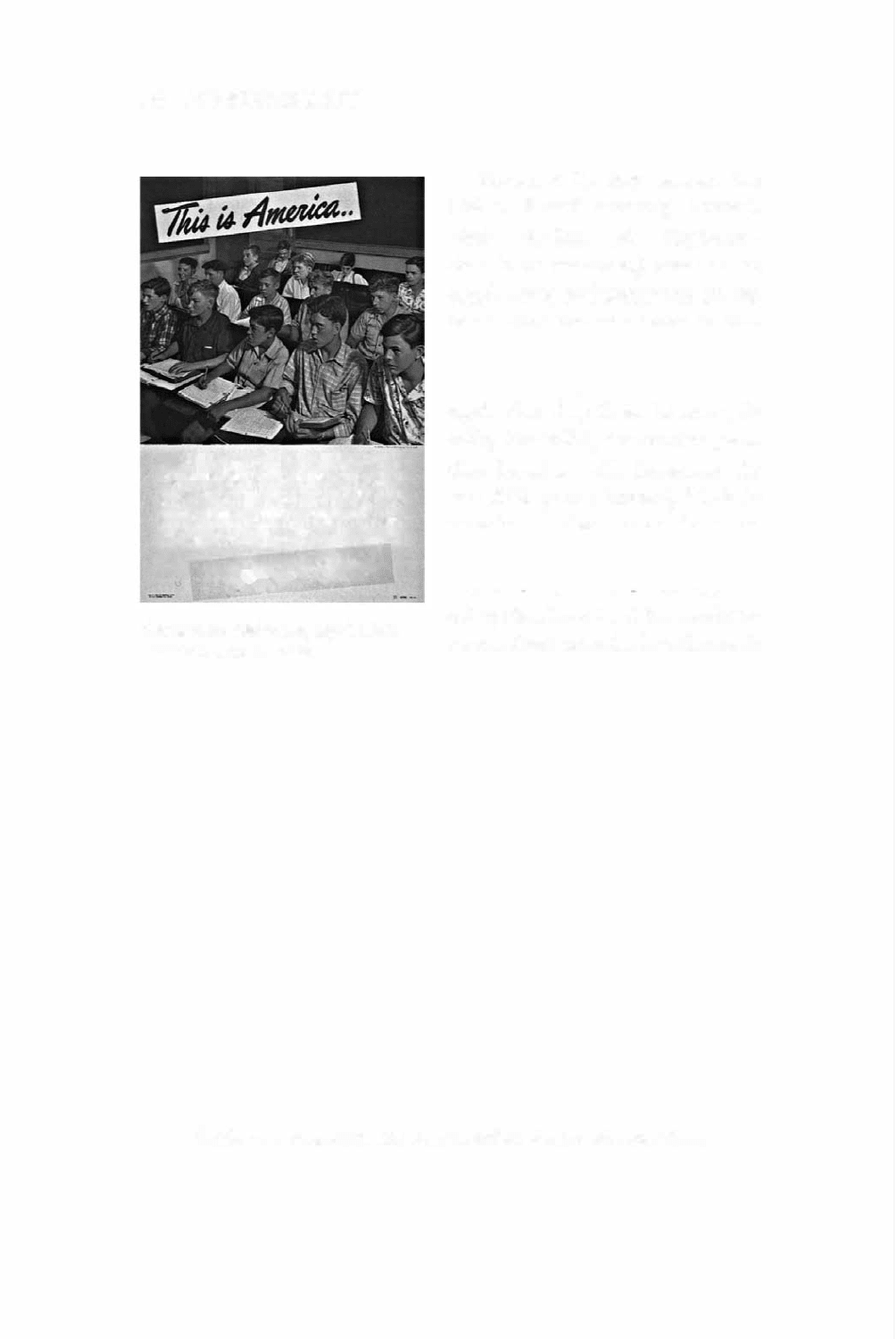
The Sbeo-C/ai Compa], This is
America
... , 1942. Poster.
Protected by O oceans, the
United States' economy boomed
while civilian life Uapanese
Americans exempted) went on as
usual.
Peace and prosperity on the
home front proved a boon to gov
ernment propaganda, which mo
bilized the population around the
myth that they lived in an equi
table, bountiful, democratic para
dise bursting with freedoms. As
one 1942 poster boasted, "This is
Nileril!a ... where every boy l!an
dream of being President. Where
free schools) fre.e opportnnit
free.
enterprise, have built the most de
cent nation on earth. A nation built
upon the rights of all men."l
Seemingly, in the minds of the American public, the government
could do no wrong. Indeed, on August 8, 1945, two days after the
atomic bomb was dropped on Hiroshima, 85 percent of those sur
veyed favored the action, and 96.5 percent of those polled fol lowing
the bombing of Nagasaki approved of future bombings, if required.3
Dwight Macdonald, the anarchist-pacifist editor of
the New York
journal
Politics (1944-1949), was one of the few to offer another point
of-view: dropping the bomb proved conclusively that the much vaunt
ed democracies of the United States and Britain were stage-managed
affairs run by bureaucrats completely devoid of any humanitarian sen-
timent. He wrote:
It seems tting that the bomb was not developed by any of the
totalitarian powers ... but by two democracies (Britain and the
United States), the last major powers to continue to pay at least
ideological respect to the humanitarian-democratic tradition.

Antliff, Allan (Author). Anarchy and Art : From the Paris Commune to the Fall of the Berlin Wall.
Vancouver, BC, CAN: Arsenal Pulp Press, 2007. p cxv.
http://site.ebrary.com/lib/dominicanuc/Doc?id=10308829&ppg=115
GayAarchy 115
It also seems tting that the heads of these governments are
both colorless mediocrities. Ave rage men elevated to their posi
tions by the mechanics of the system. All this emphasizes that
perfect automatism, that absolute lack of human consciousness
or aims which our society is rapidly achieving .... The more
commonplace the personalities and senseless the institutions
the more grandiose the destruction.�
Protests from lone gures like Macdonald, however, could not stem
post-war reaction as the United States government rallied its popu
lace for a new "Cold Wa r" against its former ally, the Soviet Union.
"Beginning in the late
1940s and continuing until the mid-1960s" the
bdlicos pro-AlIIrica, pro-capitalist, anti-radical consnsus
nC01l1-
passed "political parties, labor unions, and business groups, mass cir
�\lltion l;lg7.ines nd dily ncwsppCrS, e.thiI nd re.ligio\
I
S grO\
I
PS,
veterans and professional organizations, and liberal and conservative
interest groups."> These were tough times to be an anarchist.
The American public's hostility towards radicalism was com
pounded by the sorry state of anarchism in the United States. Before
Wo rld War
n, the movement was already much diminished, thanks
to government persecution during World War I and the mass appeal
of the American Communist Party in the
1920s and '30s. The cata
clysmic defeat of Spain's anarchist-syndicalist movement during me
Spanish Civil War
(1936-1939) was another bitter blow, and World
ar II brought further calamity: the Jewish-American wing of the
movement supported the allied war effort in the name of ghting fa s
cism while Italian- and Spanish-American anarchists denounced both
sides as imperialists. By
1945, "the divisions caused by the war," writes
Paul Av rich, "left the anarchists in a shambles, and what had once
been a flourishing movement shrank to the proportions of a sect.''6
Responding
these circumstances in the winter of 1945, Holly
Cantine, co-editor with Dachine Rainer of the journal
The Ret01"1
(1942-1951), called for a rerurn to anarchism's communal roots.7
The Retol"1 was published from Cantine's house near Wo odstock,
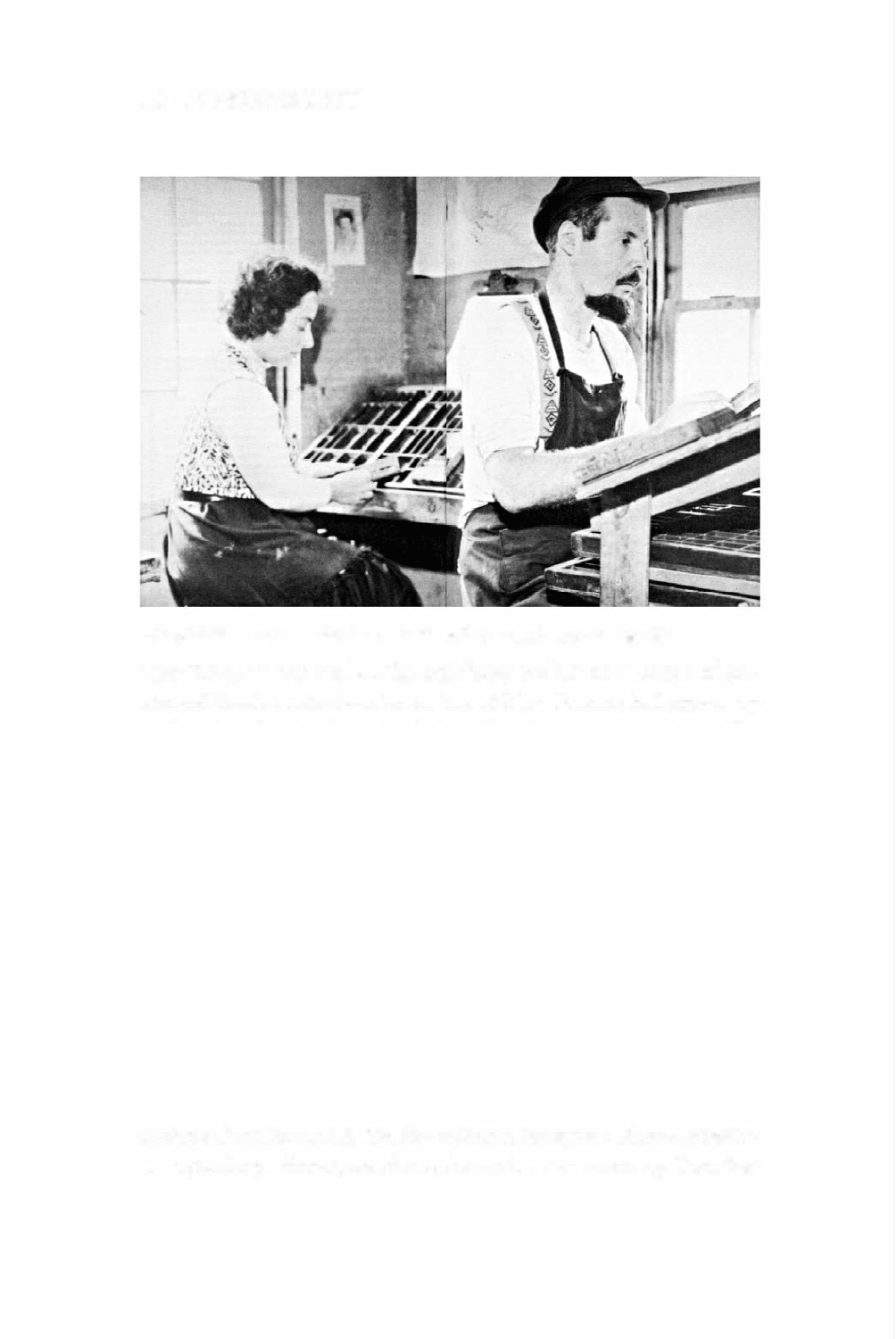
Antliff, Allan (Author). Anarchy and Art : From the Paris Commune to the Fall of the Berlin Wall.
Vancouver, BC, CAN: Arsenal Pulp Press, 2007. p cxvi.
http://site.ebrary.com/lib/dominicanuc/Doc?id=10308829&ppg=116
116 ANARCHY ANDART
Hoey mt;uf aud Da,b;uf Ra;ut; Ixuhtu, N w '946-195. Pbotogmpb.
New York, an arts-and-crafts socialist-anarchist community of art
ists and intellectuals founded in the 1900s.8 Cantine had grown up
in Wo odstock and, after a brief stint of graduate studies at Columbia
University, returned to build a house not far from the village. Rainer
met Cantine at the ofces of
Politics around 1945 and joined him at
his home on Mount To bias, not far from Wo odstock, after a brief
courtship.'" There, they lived self-sufficiently and worked
establish
a community of the Iike-minded.1O
In his editorial on strategies for building an American anarchist
movement in the post-war era, Cantine proposed that activists aban
don party politics and union-based organizing in favor of decentral
ized,
non-hierarchical cooperative initiatives along the lines of his
own efforts.llin this way, the radical could serve as "the precursor of a
new society, an individual who has broken with the values of the status
quo, and has created for himself a new way of life based on a more eq
uitable set of values."'2 Cantine underlined that he was not proposing
a retreat from the world. On the contrary, the spread of anarchism by
example,
he predicted, would inspire workers
walk away from "ex-
Antliff, Allan (Author). Anarchy and Art : From the Paris Commune to the Fall of the Berlin Wall.
Vancouver, BC, CAN: Arsenal Pulp Press, 2007. p cxvii.
http://site.ebrary.com/lib/dominicanuc/Doc?id=10308829&ppg=117
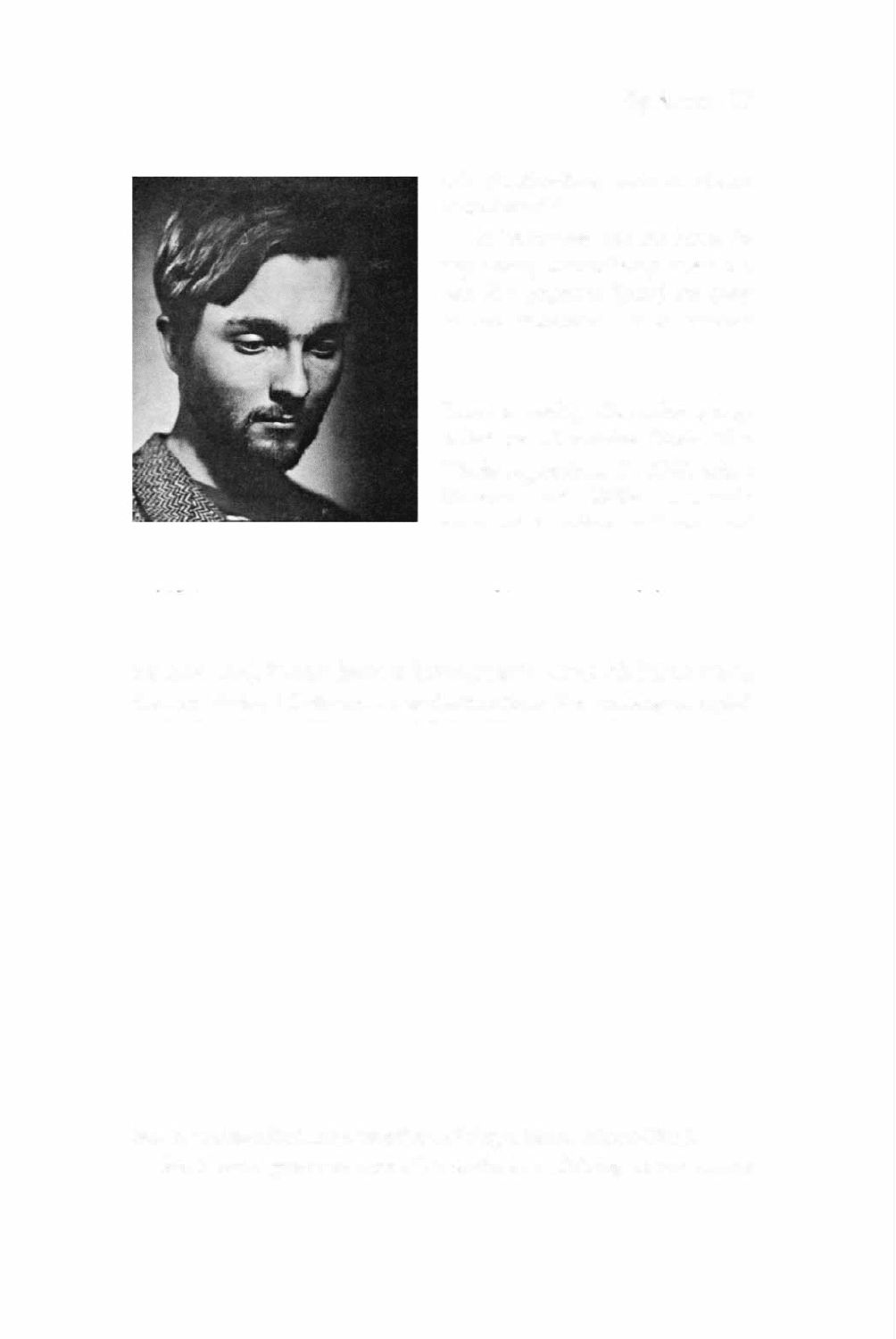
Rort Dl IlICall, 1944. Photoaph.
Gay Anarchy 117
isting institutions, and cause them
to collapse."13
At least, that was his hope. In
any event, immediately after the
war his program found an echo
in
San Francisco� where fo rmer
odstock resident and ,la 1'
chist poet Robert Duncan helped
found a weekly discussion group
called the Libertarian Circle. The
Circle began in early 1946, when
Duncan and Philip Lamantia
proposu fo unuing an "open anu
above-board" anarchist discussion
grO\lP to fe llow :mrhist Kenneth Rexroth. Rexroth h:ld heen living
in San Francisco since
1927 and was well-known in the arts commu
nity for his poeuy and literary criticism; with his backing, the proj
ect prospered.
I
"
From humble beginnings in Rexroth's living room,
the Libertarian Circle moved
the top floor of a building occupied
by the Jewish anarchist group Arbeiter Ring, where they met weekly
to discuss topics such as anarchism and literary mysticism, Emma
Goldman, the Kronstadt revolt, and sexual anarchy (the latter necessi
tating two simultaneous discussions, "one upstairs, the overow in the
downstairs meeting hall")Y The group also rented a hall for monthly
dances and augmented their activities with a weekly Poetry Forum.
Every other Wednesday, one writer's work was read, fo llowed by a dis
cussion led by the poet himself; alternative Wednesdays were reserved
for seminars in poetry and criticism led by Rexroth.'6 Tn addition, the
Libertarian Circle published a one-issue journal, A1'k, in 1947, which
fe atured reproductions of paintings, prose essays and poetry, state
ments on anarchism by George Wo odcock and Amon Hennacy, and
an article by Duncan on the sexual politics of art entitled "Reviewing
Vi, An Attack" that took aim at America's premier surrealist jour
nal,
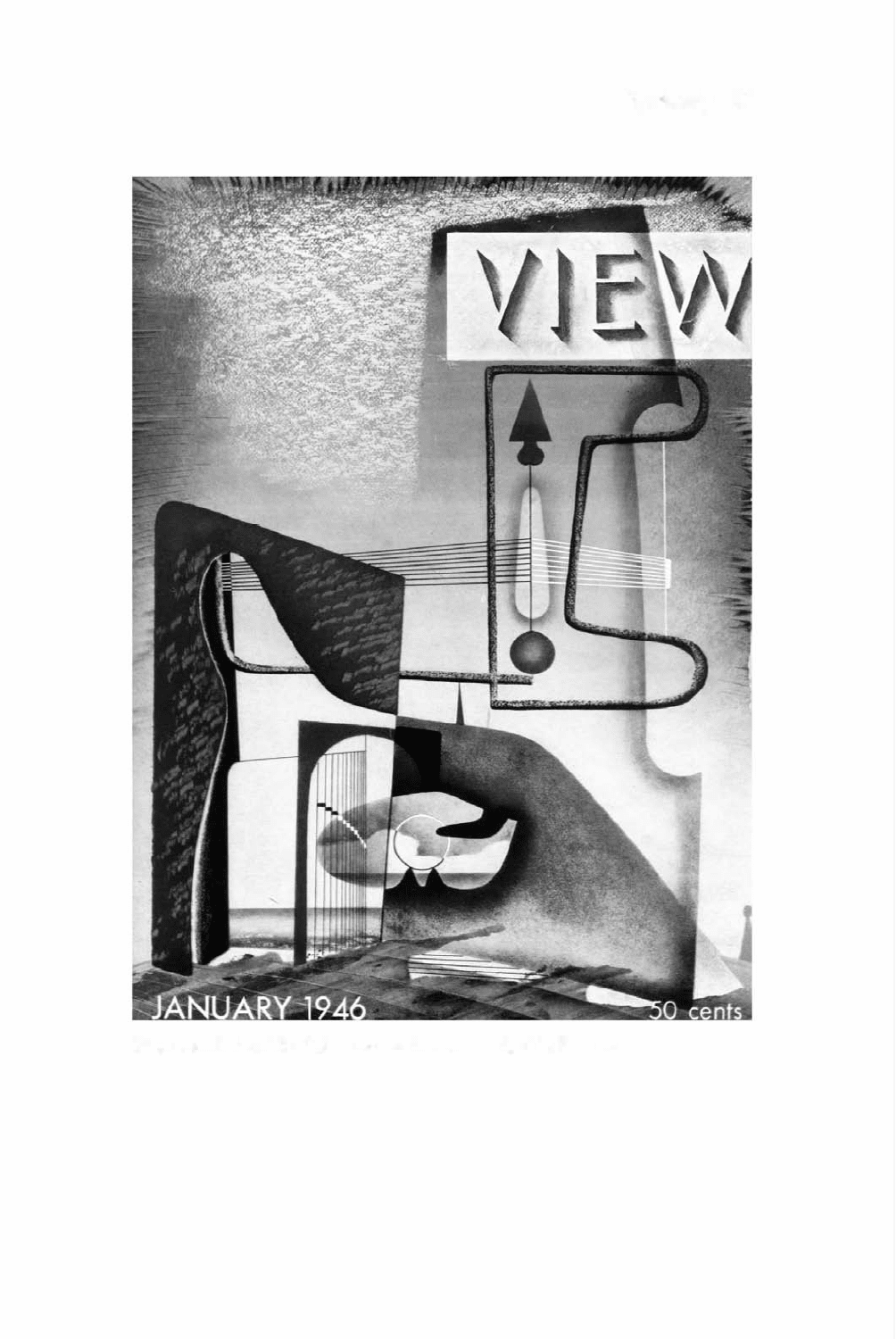
View, launched in September 1940 by Charles Henry Ford.
Ford was a poet and surrealist enthusiast of independent means

Antliff, Allan (Author). Anarchy and Art : From the Paris Commune to the Fall of the Berlin Wall.
Vancouver, BC, CAN: Arsenal Pulp Press, 2007. p cxviii.
http://site.ebrary.com/lib/dominicanuc/Doc?id=10308829&ppg=118
118 ANARCHY AND ART
who, like Duncan, was "out" among his friends as homosexuaLI1 He
ran the quarterly as an unabashedly commercial enterprise from a
New York penthouse ofce located above a chic nightclub not far from
the Museum of Modern Art. Each issue was linked to exhibitions in
the city's high-end galleries, which helped to nance the magazine
through advertis
i
ng (alongside pitches for perfumes and lotions),IR
Articles on surrealist theorists such as George Bataille jostled with
advertisements for publications by Andre Breton; reproductions of
artwork by Leonor Fini, Rene Magritte, and the sado-surrealist Hans
Bellmer ("creator of a moveable woman whose body, taken apart and
re-composed against the laws of nature ... revealed an acute sense of
the marvellous allied to a profound nostalgia for childhood and peri
olis uuminateli by femininity mixeli with spurts uf viulent erutil!ism");
View
art postcards for sale; (illustrated) essays on topics such as "The
Amcr1c;l11 M�hre," "Shrinking the HCds," �nd "GCtno Z\lmho
and Death"; and, last but not least, a repeat full-page advertisement
for Helena Rubinstein Galleries (New York-Paris-London), founded
by the cosmetics industrialist, announcing
"art knows no frontiers,
beau knows no limitations."19
The magazine was incorporated as a business
(View l11c.) and its of
ce doubled as a bookstore and commercial gallery; it also sponsored
jazz concerts and occasional select exhibitions. (Ford wrote about the
"brilliant and chic" crowd attending these events.) But View's reign
as the
"wodd's leadingjoll1'ual of aVflm-ganle O1·t and terat1'e" came to
an unexpected halt in the summer of 1947, when its editor abruptly
closed shop and departed for Europe.
W
In
the 1940s, Duncan knew Ford, having encountered him after
moving to the New York area in 1939 to pursue a love affair begun
during his undergraduate studies at Berkeley.21 The affair ended in
1940 and Duncan, at loose ends, relocated to Wo odstock, where for a
time he shared a house with James and Blanche Cooney, editors
of The
Phoenix (1938-1940). Ideologically, the Cooneys stood for:
Antliff, Allan (Author). Anarchy and Art : From the Paris Commune to the Fall of the Berlin Wall.
Vancouver, BC, CAN: Arsenal Pulp Press, 2007. p cxix.
http://site.ebrary.com/lib/dominicanuc/Doc?id=10308829&ppg=119
GayAarc"y 119
View
ver. Sries , 6. Ja/mary 196: ver ilagr by Jobll T1aro,