
Boults Е. Illustrated history of landscape design
Подождите немного. Документ загружается.

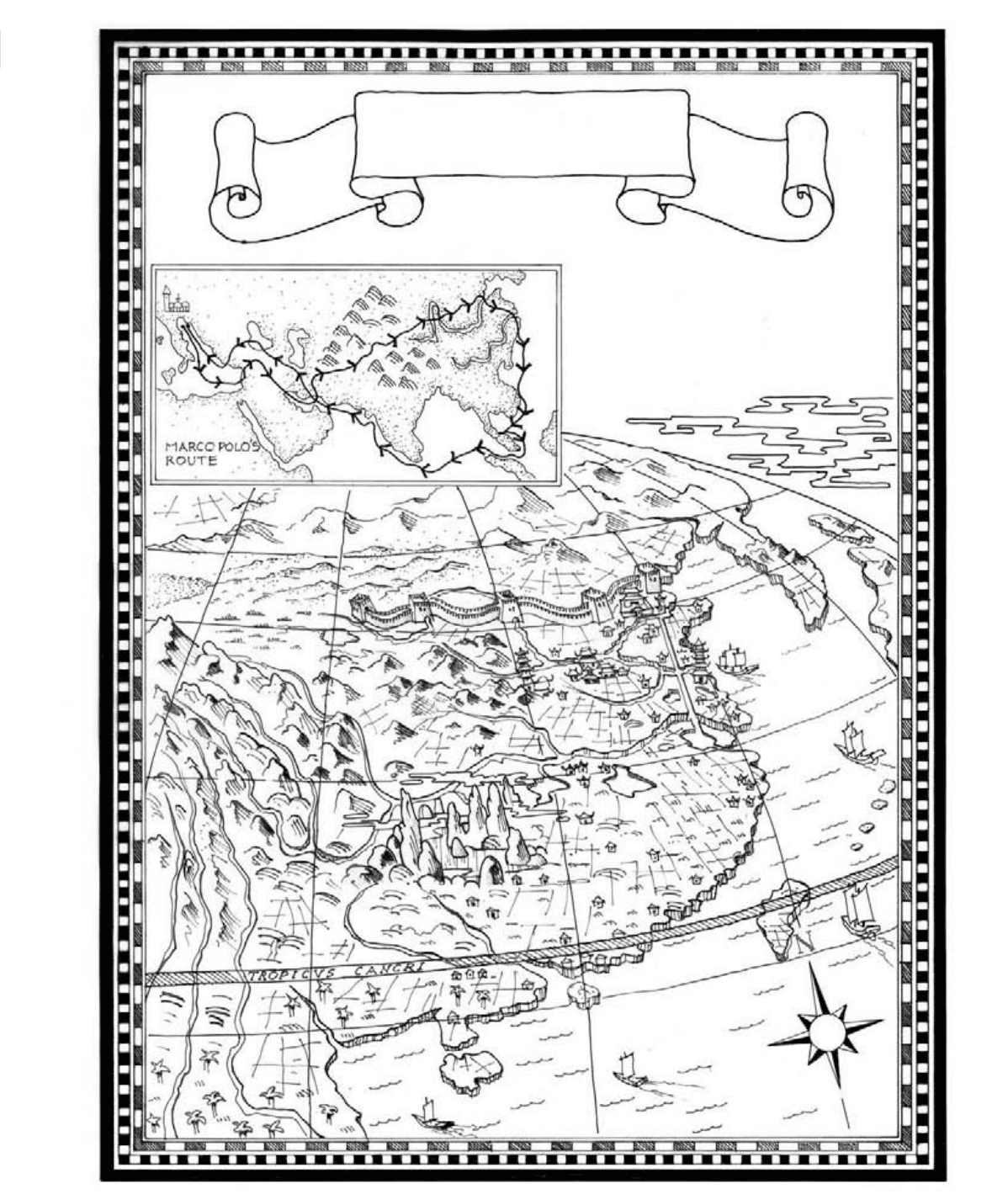
37
CHINA
38
MIDDLE AGES/ CHINA
NATURE’S SPLENDOR IN A GARDEN
As much as Moorish gardens provided a
respite from harsh nature, the gardens
of China and Japan provided an affi rma-
tion of nature’s largesse. The landscape
of China is characterized by steep
mountains, bountiful plains, peaceful
lakes, and dramatic waterfalls. Chinese
gardens reference all of the country’s
natural treasures.
The history of gardening in China
extends back to the ancient dynastic
emperors who built hunting parks and
pleasure gardens as expressions of royal
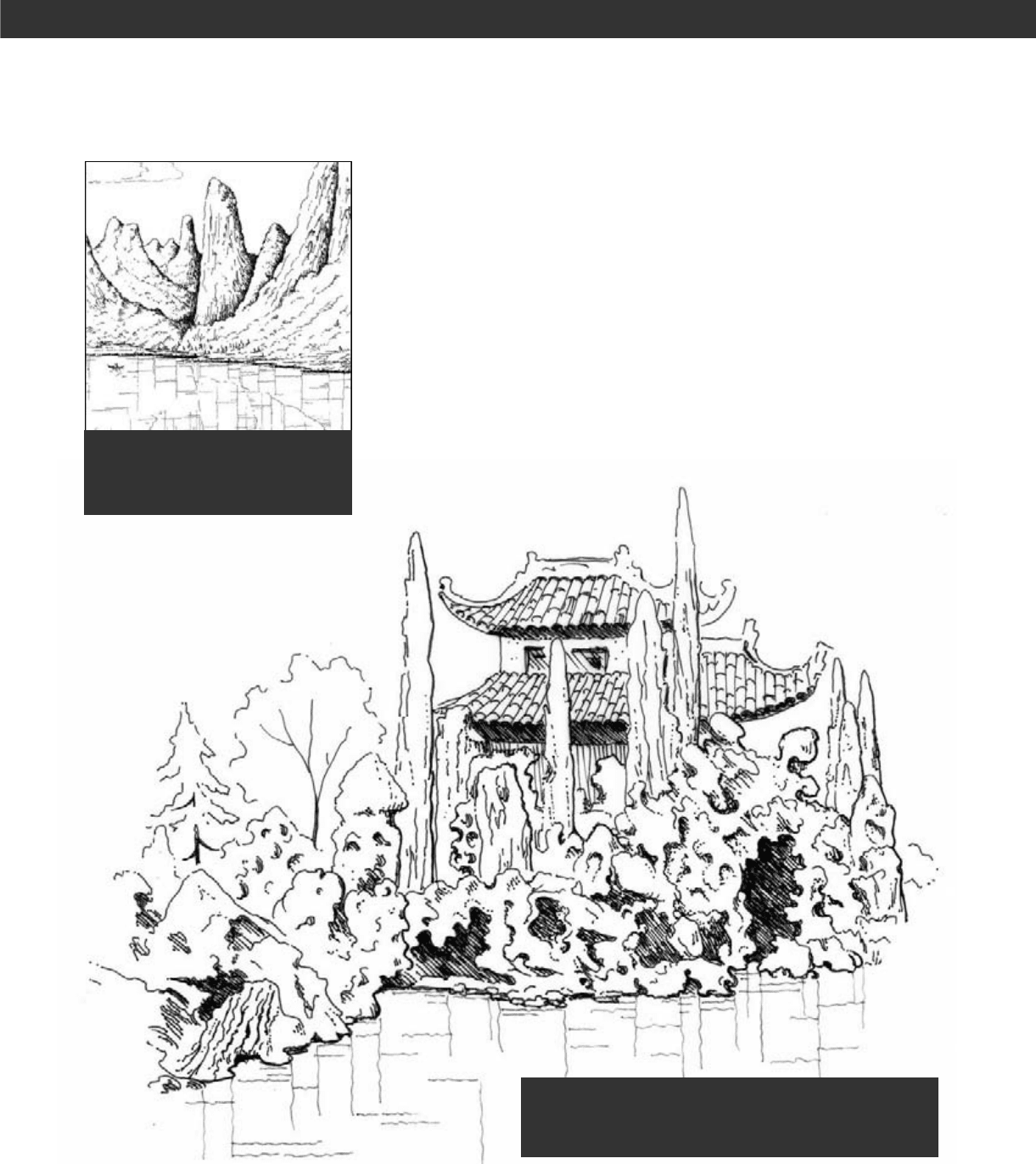
SHIH TZU LIN: The Lion Grove garden at Suzhou dates from
1342. The “mountain” shaped by the rockery is evocative of
the Lion Cliff at Tien Mu mountain.
power. Governments were often weakened
by excessive spending on lavish imperial
gardens. When Yangdi, heir to the Sui dy-
nasty (589–618), ascended the throne
in the late 6th century, he undertook
several large-scale public works projects,
including the construction of an extrava-
gant palace garden at Loyang. A fanta-
syland over 75 miles in circumference, the
garden reportedly contained mechanical
fi gures, mature trees that were artifi -
cially enhanced for seasonal effect, and
16 pavilions surrounding a man-made lake
6 miles long.
9
ROCKS AND WATER: The defi ning nat-
ural features of China—mountains
and lakes—are represented in its
gardens.
39
Lakeside Pavilion
A light boat greets the honored guests,
far, far, coming in over the lake.
On a balcony we face bowls of wine
and lotus fl owers bloom everywhere.
Chinese gardens expressed a cosmology
based on a fusion of Confucian, Dao-
ist, and Buddhist tenets. While each
religion advocated different strategies
for achieving spiritual freedom, all shared
a common respect for nature. Historic
Chinese gardens imitated the balance
of opposites found in nature, referred
to by Daoists as the forces of yin and
yang. Rock and water structured the
garden: rocks symbolized mountains, a
male force (yin), and water symbolized
yang, a female force. In fact, the word for
“landscape” was composed of words that
meant “mountain” and “water”—shan
shui. The principle of yin and yang can
also be seen in the contrast of the recti-
linear geometry of cities, structures, and
decorative elements (representing human
artifi ce) with the free-fl owing irregular
forms of gardens (representing nature).
Daoism advocated the idea of eternal life
through contact with mystical Immortals
who inhabited mountainous islands in an
eastern sea. Thus, gardens contained
lakes and rockery that imitated the
mountain dwellings of the Immortals.
These lake-and-island estates set a
precedent for garden form and had
particular infl uence on later Japanese
gardens. Rocks themselves had powerful
associative meanings in Chinese gar-
dens. Rock formations, fl owers, paving
patterns, and architectural features all
communicated the theme of a garden.
Confucian society was ordered by a
moral imperative for civil service and a
pursuit of the cultural arts. As a tradi-
tional art form, garden making in China
was studied along with painting, poetry,
and calligraphy by scholar-offi cials seek-
ing status. Confucian order can be read
in the urban form of imperial cities, such
as Chang-an (Xian, today). During the
Tang dynasty, Chang-an was home to
more than 1 million people and created a
metropolitan aesthetic that was later
adopted by the Japanese.
10
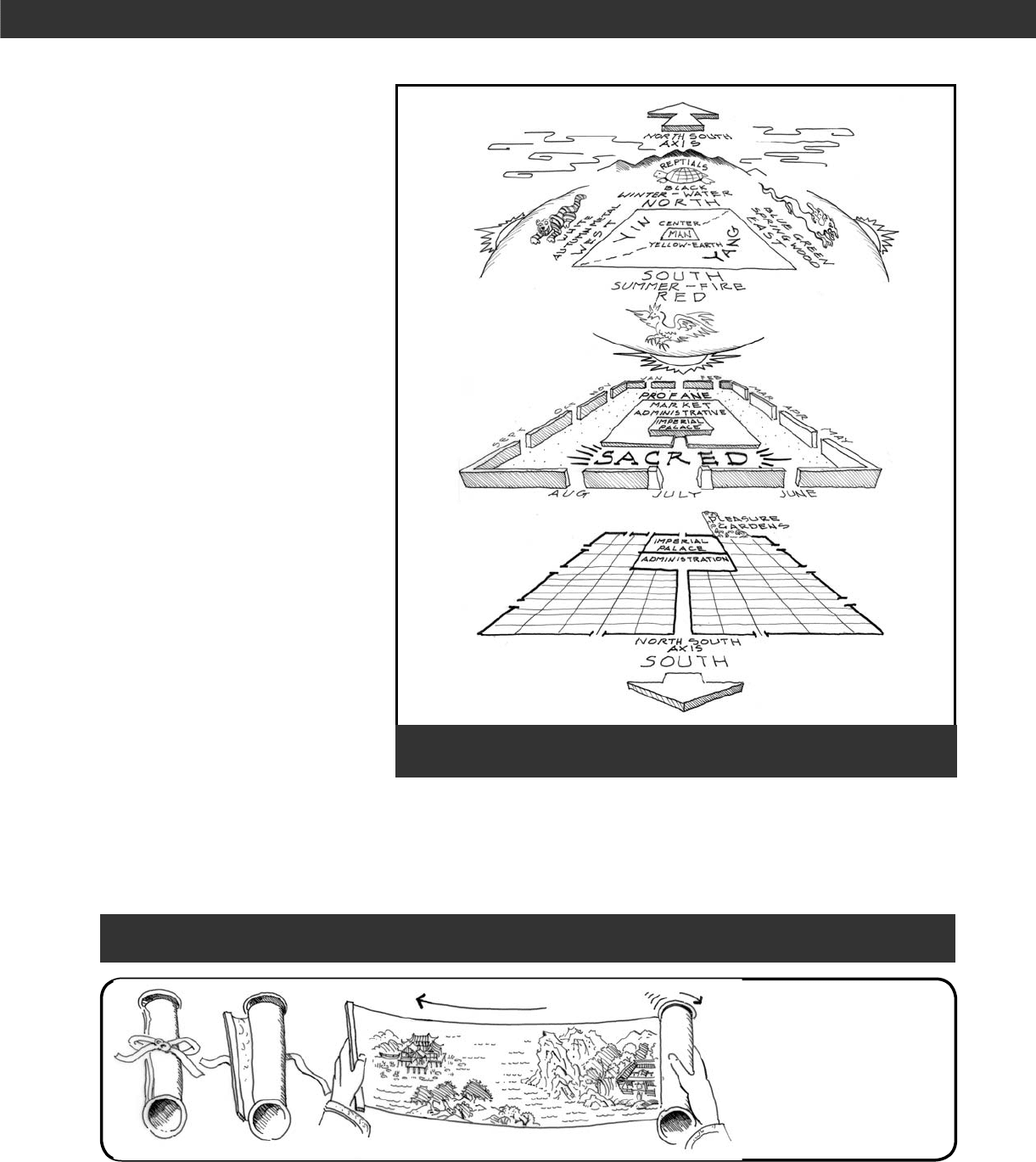
POETIC GARDENS: Like a hand scroll unrolls from right to left, revealing a succession of individual scenes, a Chinese garden is
experienced as a series of visual events. These three scenes represent Wang Wei’s villa and are combined with lines of his poetry.
12
MIDDLE AGES/ CHINA
COSMOLOGICAL AND FUNCTIONAL DIAGRAM: The 6th-century grid layout of
Chang-an was based on geomantic principles and refl ects Chinese political hierarchy.
11
40
MIDDLE AGES / CHINA / TANG DYNASTY
SCHOLAR GARDENS OF SUZHOU
During the Tang dynasty (618–907),
China was at its peak of national pow-
er. Trade and culture fl ourished. The
thriving city of Suzhou was located on
the great canal system that eventu-
ally linked the Yangzi River (Chang Ji-
ang) in the south with the Yellow River
(Huang He) in the north. Economi-
cally prosperous and rich in scenery,
Suzhou was known as the “Venice of
the East.”
13
Here, scholar-offi cials
retired from government service and
built rustic country estates, embrac-
ing an aesthetic of solitude, learning,
and poverty. “Scholar gardens” were
private retreats, places for self-devel-
opment and communion with intimate
friends, distinct from elaborate impe-
rial gardens. Suzhou itself remained a
haven for artists, particularly during
the Ming dynasty.
An example of a typical scholar’s gar-
den from the Tang era is the riverside
villa of Wang Wei, a painter, poet,
musician, and Buddhist scholar. Wang
Wei painted 20 views of his estate,
showing pavilions set amid the hills
of the scenic Wang Chuan valley, 30
miles from the capital at Chang-an.
Neither the garden nor the original
paintings survive, but extant cop-
ies illustrate how he composed the
garden as a series of individual views
set within the larger context of the
landscape.
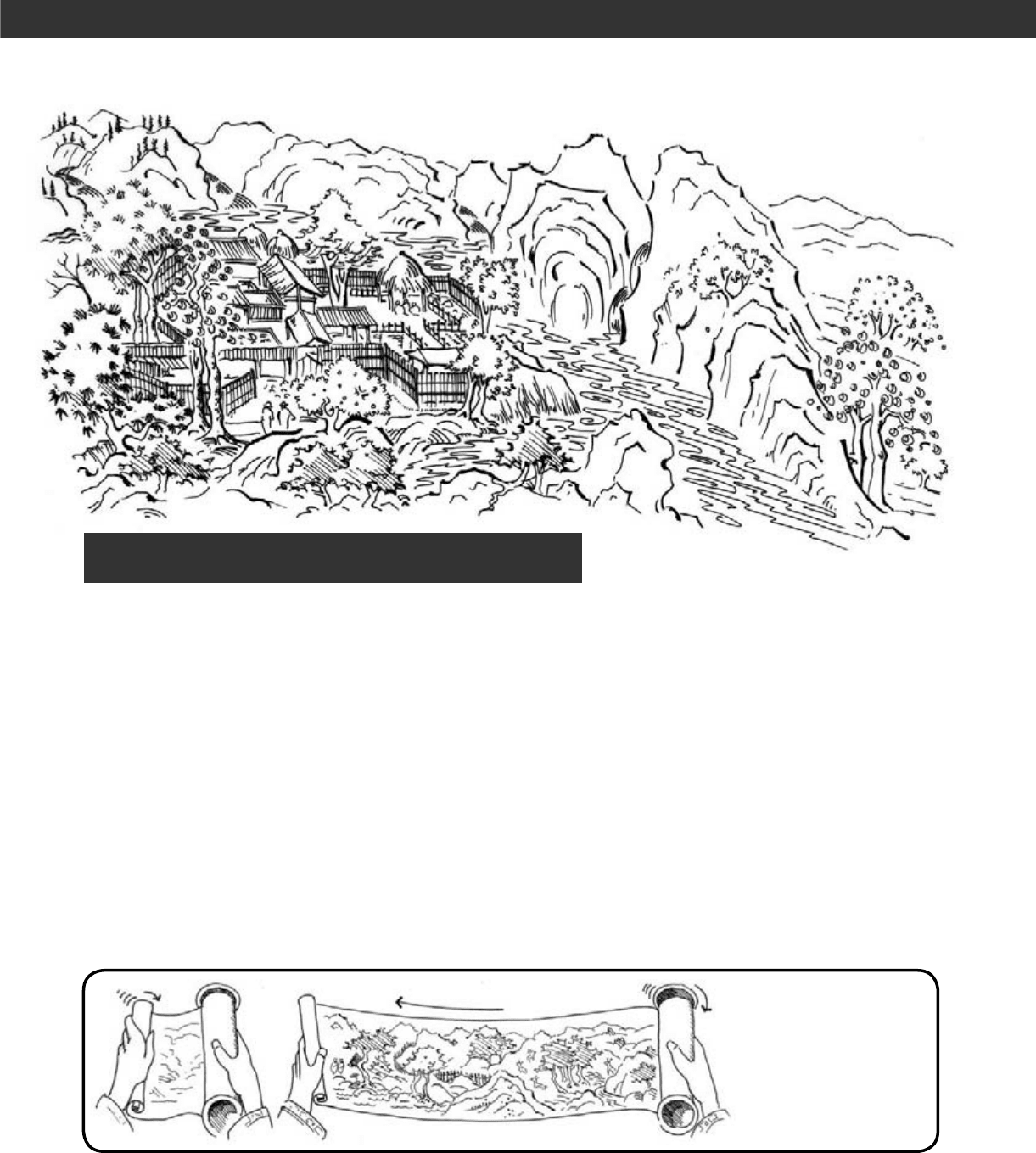
WANG CHUAN: The 8th-century villa designed by Wang Wei was a poetic
construction of hills, streams, and forests.
Deer Park
Nobody in sight on the empty mountain
but human voices are heard far off.
Low sun slips deep in the forest
and lights the green hanging moss.
41
PAINTING AND
GARDENING
MIDDLE AGES / CHINA / SONG DYNASTY
The height of landscape painting and
gardening occurred during the cul-
tural and economic prosperity of the
Song dynasty (960–1279). After 50
years of turmoil following the collapse
of the Tang dynasty, the first Song
emperor reunified the country and
established a capital in the northern
city of Kaifeng. The centralized power
of the Song emperors facilitated ur-
ban and economic growth, and made
possible extraordinary achievements
in technology, such as the invention
of movable type.
The Northern Song emperor Zhao Ji
(Song Huizong, ruled 1100–1125) was
a painter, patron of the arts, and avid
collector of rocks and trees. Built in
accordance with the geomantic prin-
ciples of feng shui, his palace garden,
Gen Yue, included an artifi cial mountain
over 200 feet high to block the evil
forces that he believed kept him from
producing a male heir.
14
When Kaifeng fell to a rival clan in
1126, the Songs were forced south
and eventually established a new cap-
ital at Hangzhou, on the picturesque
shores of the man-made West Lake.
Here, rugged peaks gave way to rolling
hills; the landscape was more gentle
and lyrical, as represented in the
poems and paintings of the period.
Daoism and Buddhism were stronger
influences in the south. The Daoist
belief in a universal flow of energy
can be seen in the mania for placing
rocks in the garden. Rocks formed the
skeleton of the garden like mountains
formed the skeleton of the earth.
Individual rocks were appreciated
and collected during the Tang dy-
nasty, but rock adulation reached
its ultimate expression in the Song
dynasty. To the Buddhist, rocks
represented the creative forces of
nature—the more weathered, the
more magical.
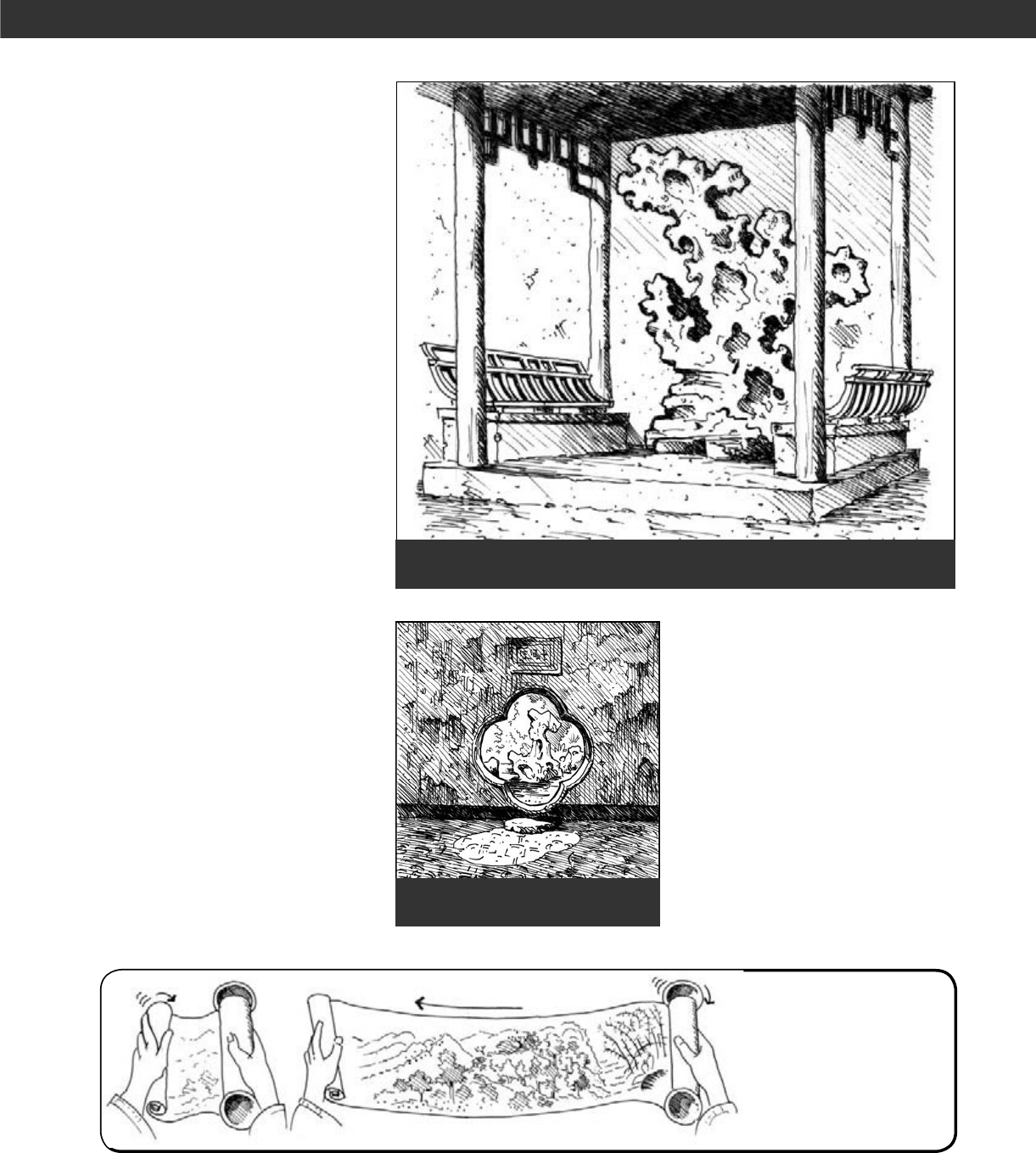
ROCK ROOM: The most valued rocks came from Lake Tai, where unique forces of
erosion created the characteristic apertures and shapes prized by Song collectors.
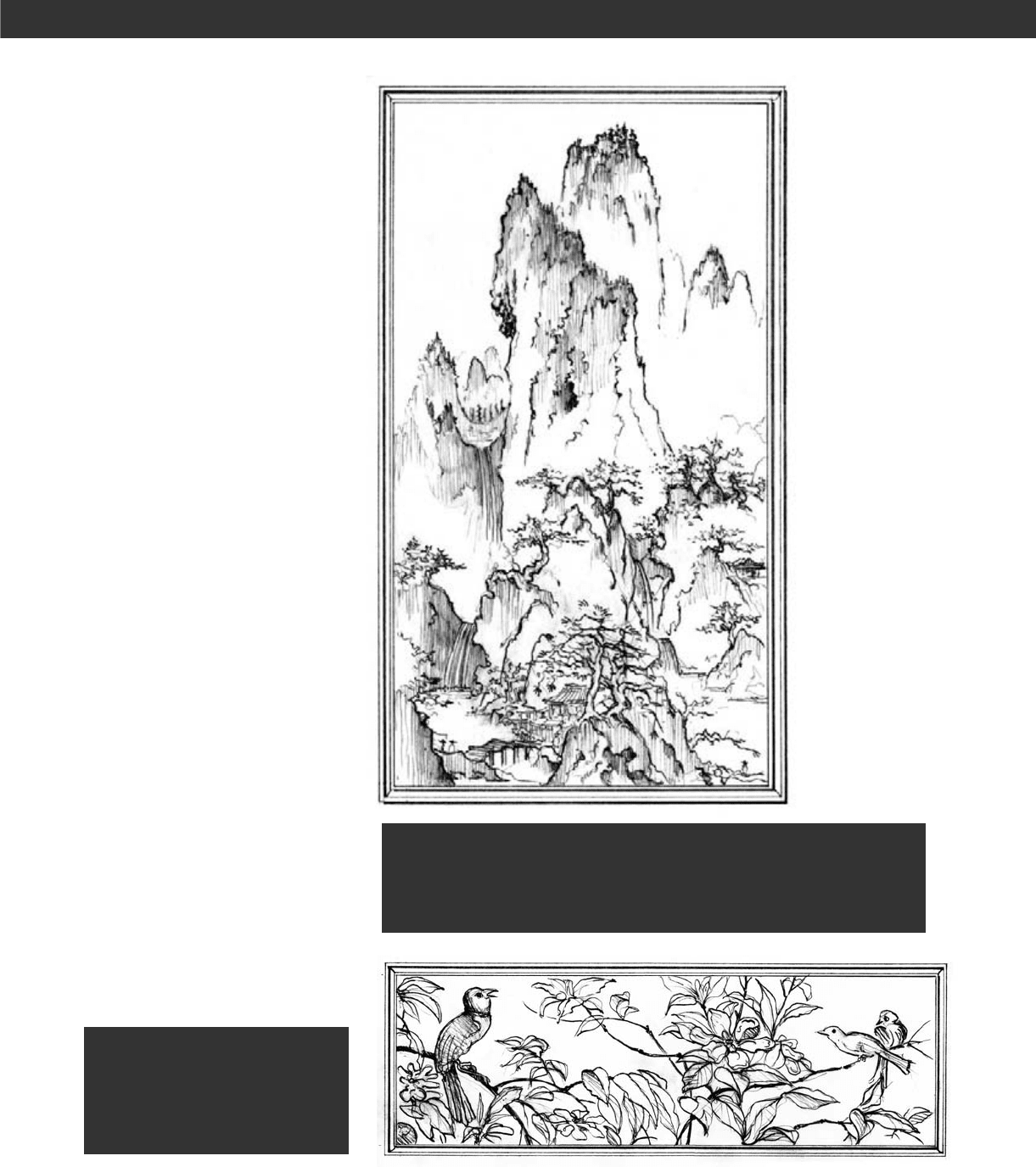
THE PLUM DOOR at Shih Tzu Lin
frames a view of the courtyard.
Magnolia Basin
On branch tips the hibiscus bloom.
The mountains show off red calices.
Nobody. A silent cottage in the valley.
One by one fl owers open, then fall.
42
MIDDLE AGES / CHINA / SONG DYNASTY
Garden design and landscape painting
shared a language of visual conven-
tions that was established during the
Song dynasty. Garden layouts were
inspired by compositional techniques
used by landscape painters. Land-
scape paintings of the Northern and
Southern Song dynasties expressed
different attitudes toward nature.
15
Northern Song paintings were in-
tended to be realistic portrayals of
nature’s awesomeness. Southern Song
paintings were more personal expres-
sions of nature, evoking mood. Artists
brought the subject matter closer to
the viewer. Unessential elements were
reduced; space was implied by large
voids in the composition. Song paint-
ings are referenced in medieval Japa-
nese literature and had a profound
infl uence on Japanese garden design.
The “Golden Age” of the Song dynasty
ended in the early 13th century. Genghis
Khan conquered territories in Persia,
Russia, and China, and over a period of
75 years the rest of China fell to the
Mongol rulers. Kublai Khan captured
Hangzhou in 1279 and formed the Yuan
dynasty. He moved the capital to Beijing
and built extravagant palace gardens
and hunting parks to rival those of any
former emperor. Literary accounts,
including those of Marco Polo, described
an artifi cial mountain covered with rare
trees and green stones.
During the successive Ming and Qing dy-
nasties, large-scale imperial parks were
again built by the emperors in Beijing.
As trade with the West resumed, a new
merchant class built impressive gardens
of their own; these are discussed in
subsequent chapters.
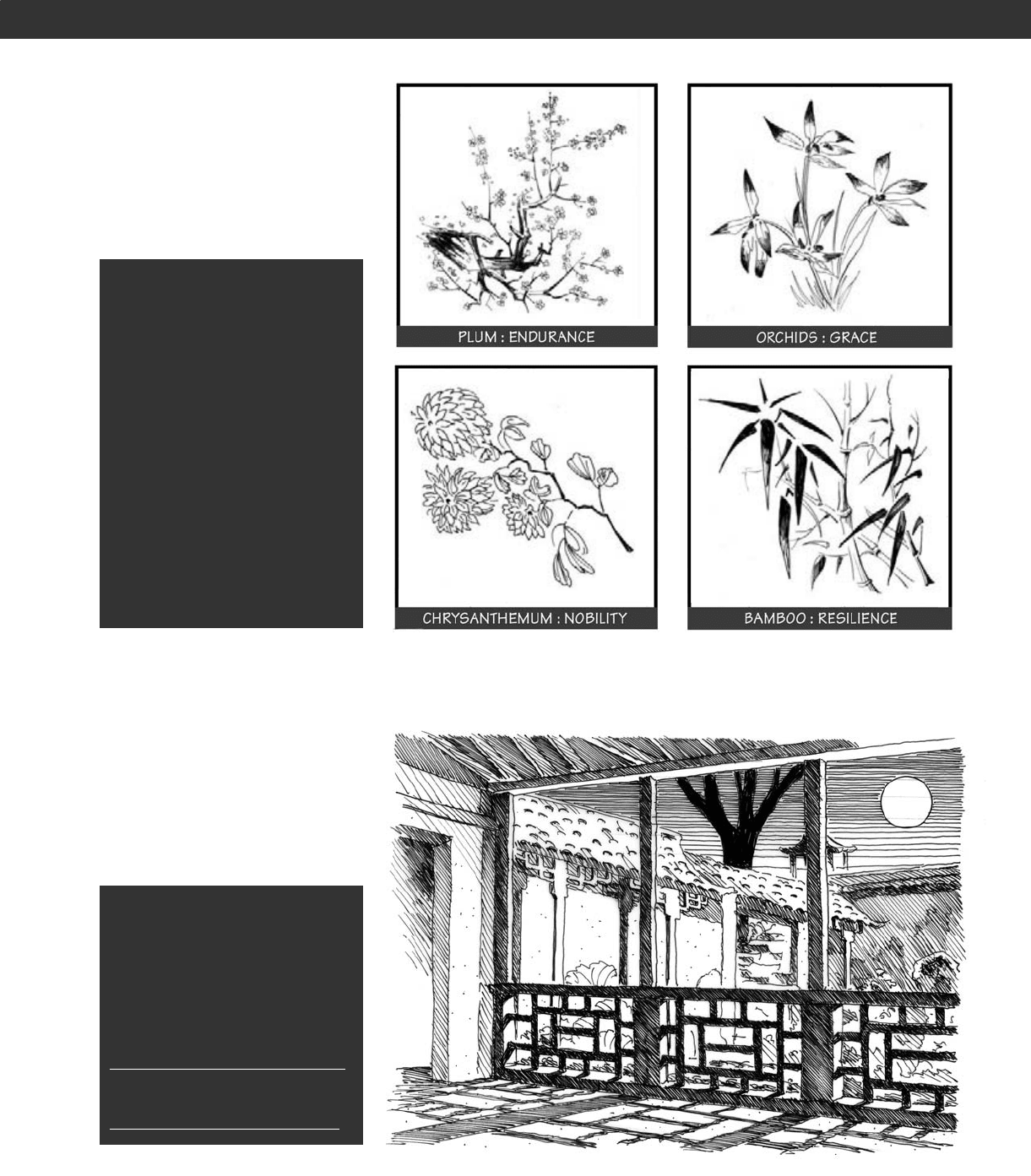
NORTHERN SONG: The “mountain scrolls” of Northern Song paintings often
show a diminutive human fi gure within a vast landscape dominated by natural
features. Atmospheric effects created a layering of vertical space—trees were
outlined against misty voids. Distance and spatial depth were captured through
the manipulation of foreground, midground, and background elements.
SOUTHERN SONG: Detailed por-
traits of birds and fl owers were com-
mon themes in Southern Song paint-
ings. The imperial painting academy
founded at Hangzhou focused on the
intimate observation of nature.
43
MIDDLE AGES / CHINA / SYMBOLISM
THE SYMBOLISM OF POETRY:
Poets, painters, and philosophers
found inspiration in nature and sym-
bolized the emotional relationship
between art, nature, and humans in
their work. The meaning of a Chinese
garden is diffi cult to comprehend
without understanding the literary
context in which it was produced.
The courtyard deserted, the moon rises over
the steps—shadows of the balustrade all
over the ground.
17
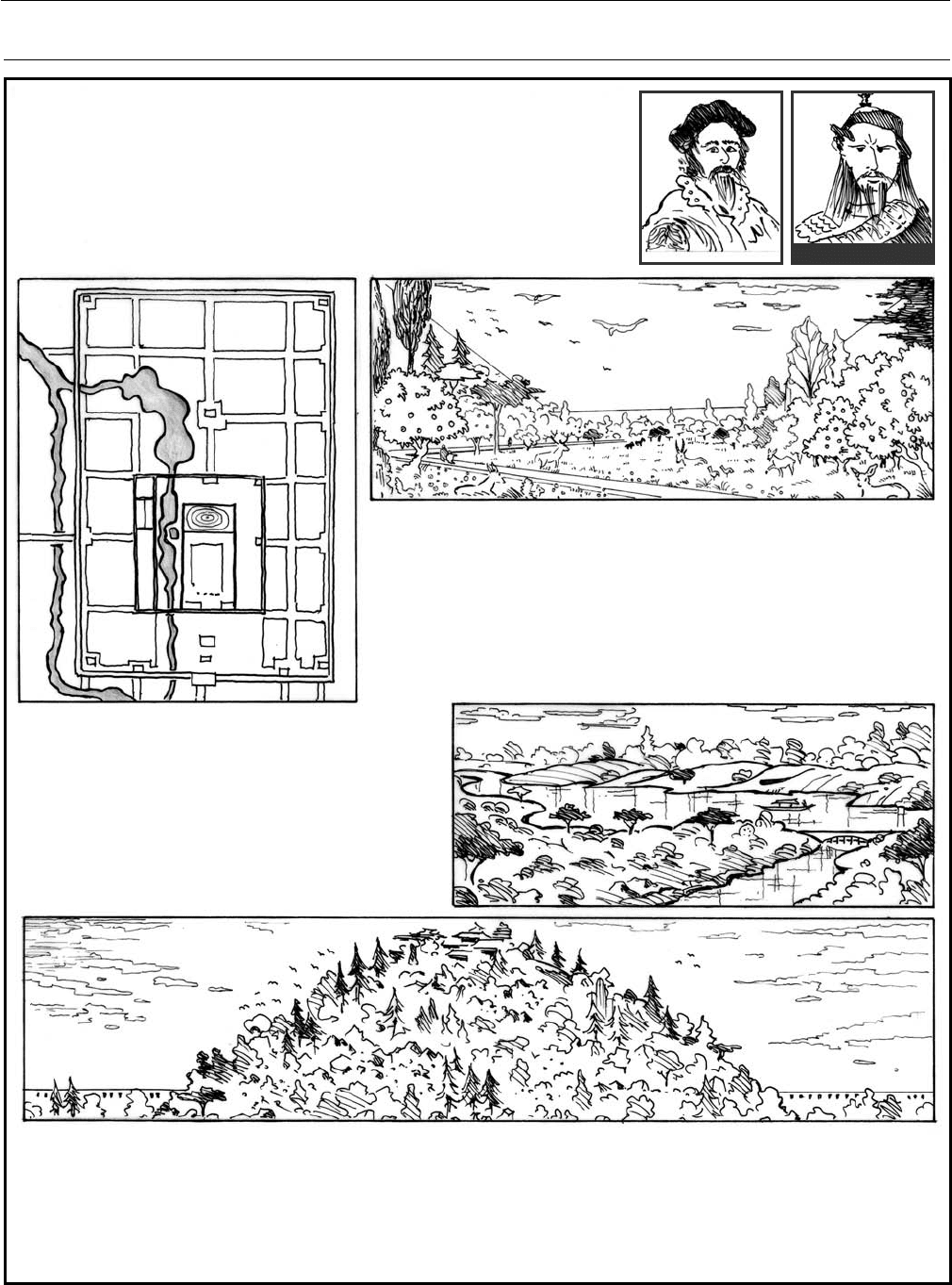
THE SYMBOLISM OF PLANTS:
To communicate the theme of a
Chinese garden, gardeners chose
plants more for their physical and
symbolic attributes than for their
sensual qualities. For example, the
lotus, whose roots thrive in the
muddy bottoms of ponds and whose
blossoms reach up to fl oat on the
surface of the water, represented
spiritual freedom. The “three friends
of winter”—the pine, plum, and bam-
boo—signifi ed longevity, endurance,
and resilience. Plants representative
of the four seasons—the orchid,
bamboo, chrysanthemum, and fl ow-
ering plum—also represented the
traits of an ideal gentleman: grace,
resiliency, nobility, and endurance.
16
44
MARCO POLO
KUBLAI KHAN
C
oncerning the Palace of the Great Khan in the capital city of Cathay, which
is called Cambaluc, stands his great palace. It is enclosed all around by a
great wall forming a square, each side of which is a mile in length. The great
wall has fi ve gates on its southern face. Inside of this wall there is a second,
enclosing a space that is somewhat greater in length than in breadth.
M
oreover on the north side of the palace, about a bow shot off, there is a hill which has been made by art from the earth
dug out of the lake; it is a good 100 paces in height and a mile in compass. This hill is entirely covered with trees that
never lose their leaves, but remain ever green. Wherever a beautiful tree may exist, it is transported bodily and planted on that
hill. In this way the emperor has got together the most beautiful collection of trees in all the world. He has also caused the
whole hill to be covered with the ore of azure, which is very green. And thus not only are the trees all green, but the hill itself is
all green; and hence it is called the Green Mount.
18
THE TRAVELS of MARCO POLO
F
rom that corner of the enclosure which is towards
the northwest there extends a fi ne lake, contain-
ing a foison of fi sh. A river enters this lake and issues
from it, but there is a grating of iron put up so that
the fi sh cannot escape that way.
B
etween the two walls of the enclosure which I have described, there are fi ne
parks and beautiful trees bearing a variety of fruits. There are beasts also
of sundry kinds, such as white stags, fallow deer, gazelles, roebucks, and fi ne
squirrels of various sorts. Parks are covered with abundant grass; the roads
through them being all paved, the rain fl ows off into the meadows, quickening
the soil and producing that abundance of herbage.
VISUAL NARRATIVE
45
46
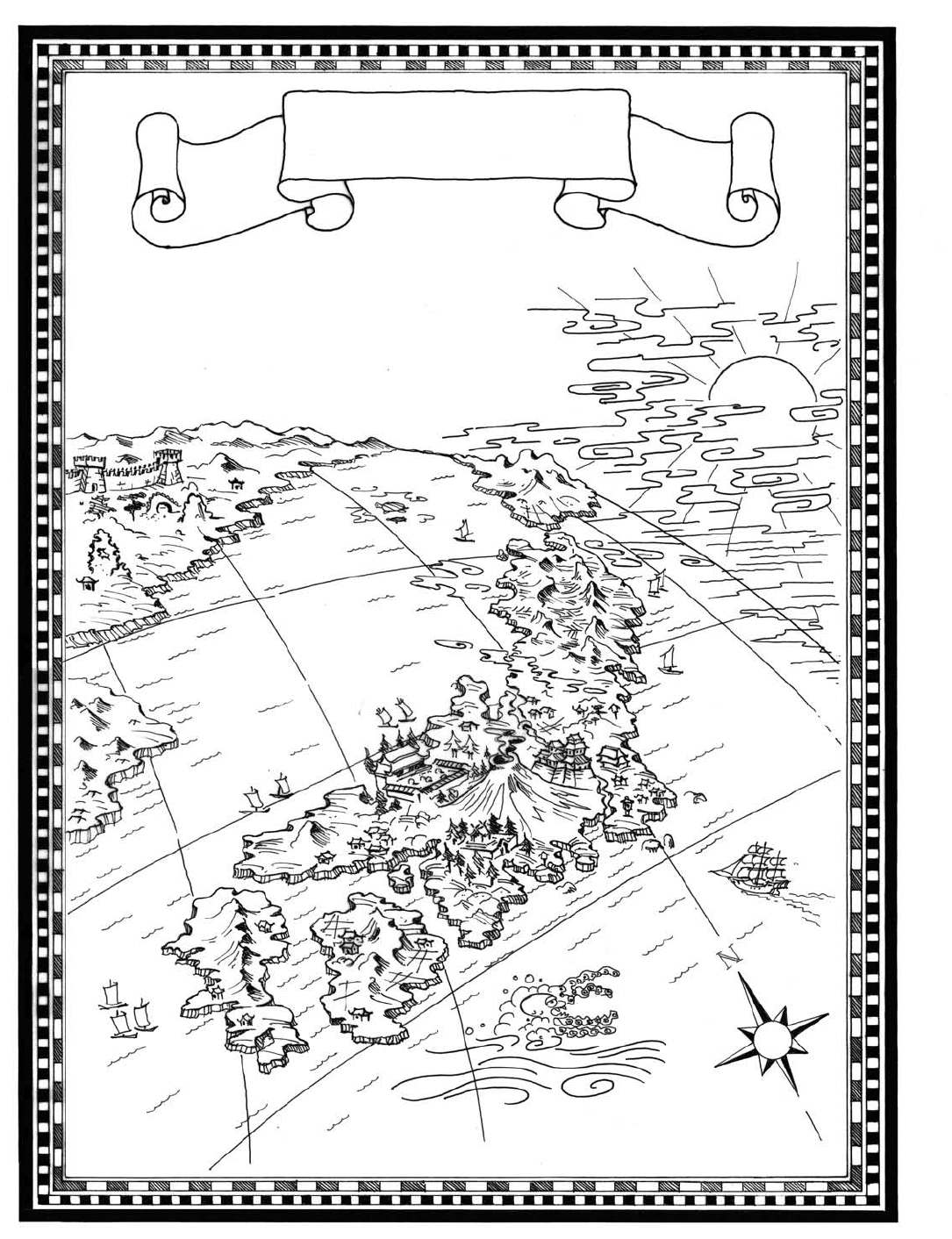
IN THE SPIRIT OF NATURE
A central spine of steep mountains
with dense forests rises from the ocean
to create the small islands and rocky
coastlines of Japan. Warm ocean cur-
rents foster a temperate climate with
hot summers and mostly mild winters.
Streams, waterfalls, and an abundance
of moisture in the atmosphere support
a wide variety of vegetation. An aware-
ness of natural patterns and seasonal
change is integral to Japanese culture.
19
VIEWS OF NATURE
Nature was perceived in the Japanese
imagination not as a harsh or hostile re-
ality, but as an expression of the divine.
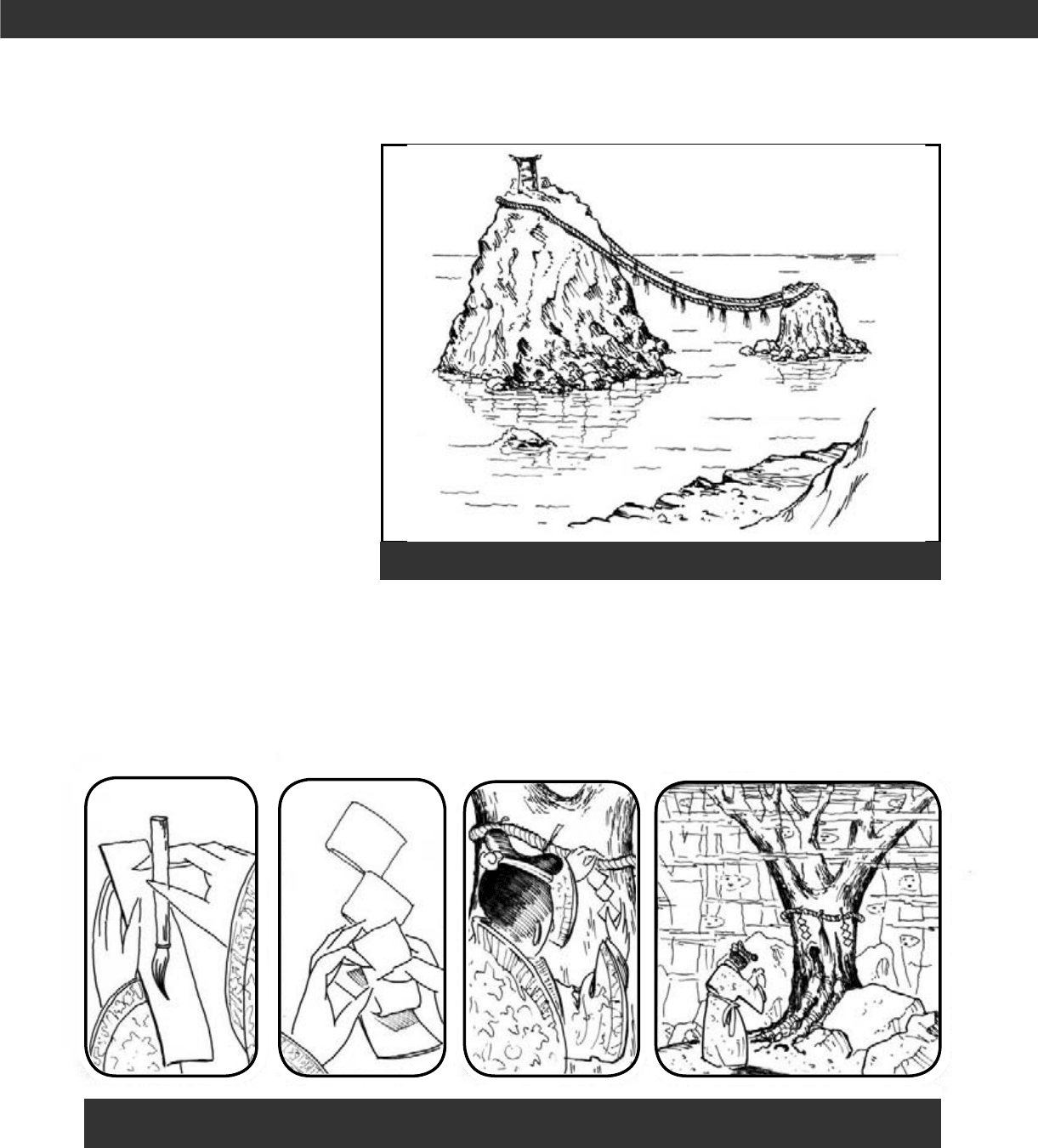
The Japanese recognized the sanctity
of a particular landscape by bind-
ing natural features with straw ropes
(shimenawa) or demarcating space with
torii gates. The ground plane in front of
a temple was often emphasized by an
apron of white sand or gravel and was
considered purifi ed ground. The form
persisted in later Japanese gardens as
a ceremonial and decorative forecourt.
20
The ephemeral qualities of nature ap-
peared as literary themes and sub-
TREE SPIRIT: Shinto religious traditions venerated natural formations such as rocks, trees, and mountains as domains of an-
cestral spirits, or kami. Prayer strips communicated mortal intentions to the divine.
jects of poems. Scenic descriptions of
idealized landscape features such as
“wild rocky coasts” or “deep mountains”
became embedded in the collective
imagination.
21
Garden designs were
inspired by these poetic concepts, fi rst
as subtle allusions to nature, and later
as more overt scenography. As a garden
could be a place to write poetry, the
infl uence was circular—iconic imagery
took form in the garden, and garden
scenery inspired poetry.
SHINTO SHRINE: The “wedded rocks” (meteo iwa) at Ise are joined by a shimenawa.
MIDDLE AGES / JAPAN