
Charles D. Maginnis. Pen Drawing. An Illustrated Treatise
Подождите немного. Документ загружается.

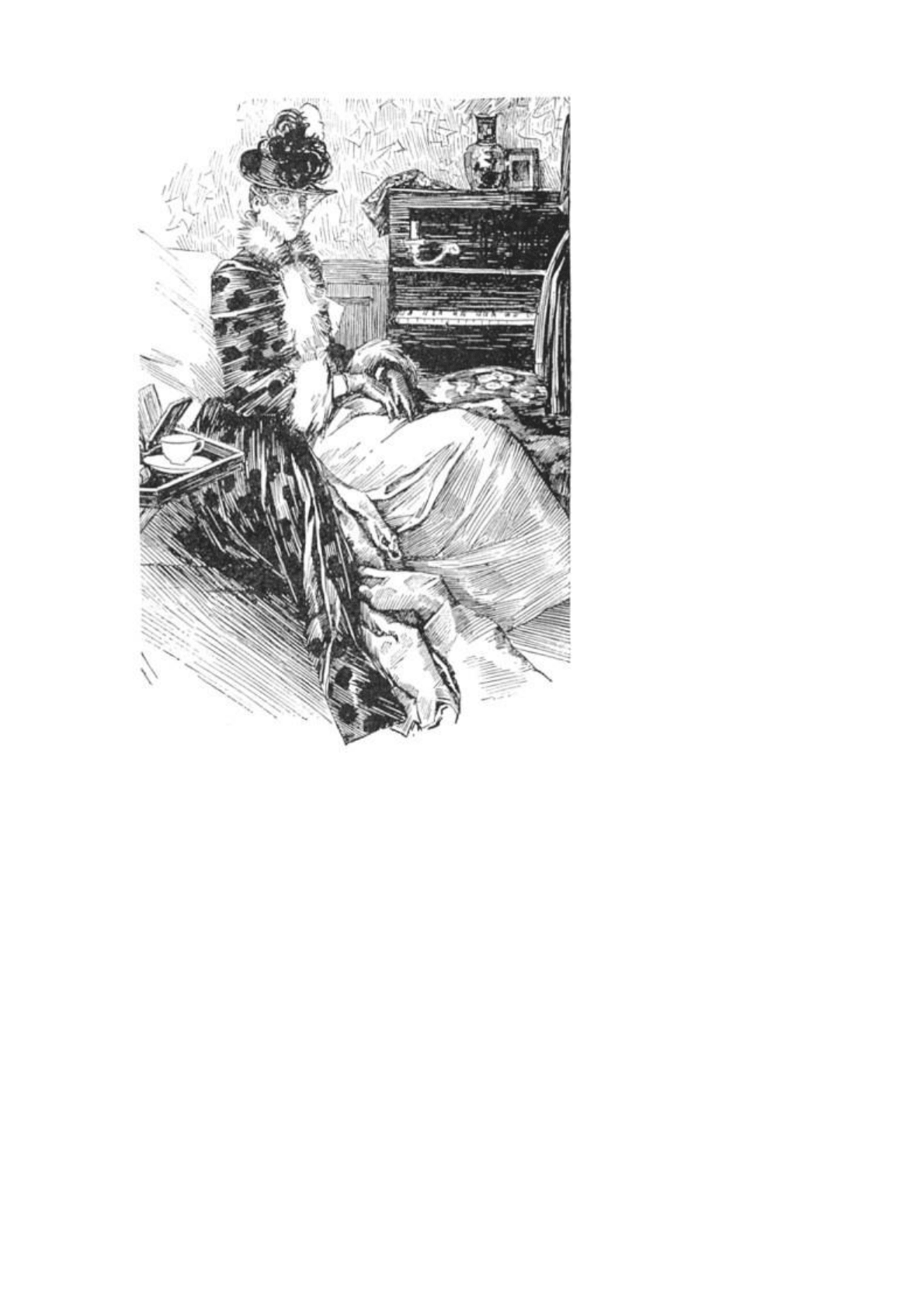
FIG. 16
LESLIE WILLSON
Outline I have invariably found that what presents the chief difficulty to the student of pen and
ink is the management of the Outline. When it is realized that, by mere outline, one may express
the texture of a coat or a tree or a wall without any rendering whatever, it will be seen that
nothing in pen drawing is really of so much importance. Notice, for example, the wonderful
drawing of the dog in Fig. 34. Again, if a connected line had been used to define the corners of
Railton's buttresses in Fig. 7 all the texture, would have been destroyed. Instead of this he has
used a broken outline, sometimes omitting it altogether for a considerable space. On the ledges,
too, the lines are broken. In Rico's drawing, Fig. 11, all the outlines may be observed to have a
break here and there. This broken line is particularly effective in out-door subjects, as it helps to
suggest sunlit atmosphere as well as texture.
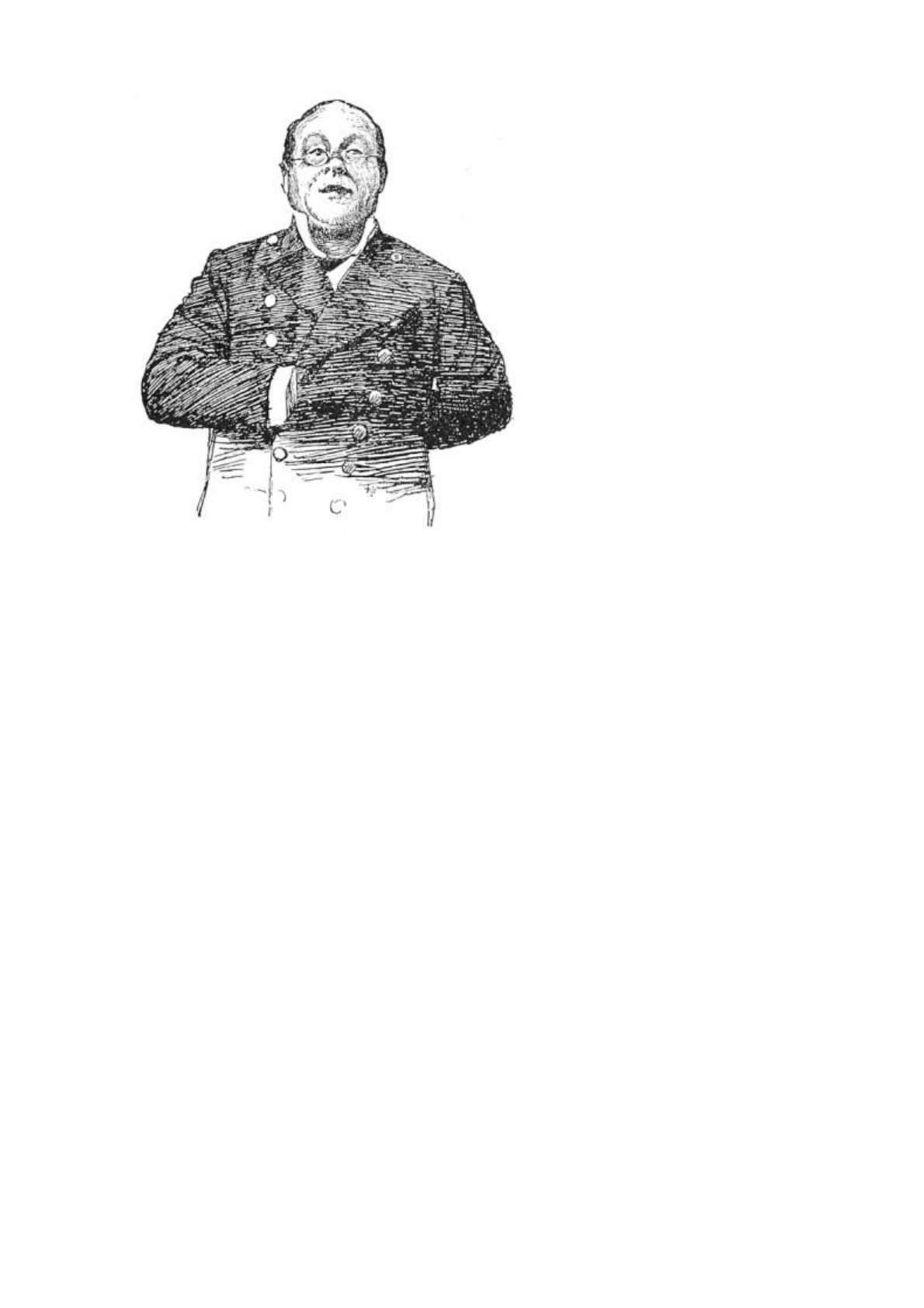
FIG. 17
DRAWING FROM A PHOTOGRAPH
Architectural outlines, however, are not particularly subtle; it is when we come to render
anything with vague boundaries, such as foliage or clouds for example, that the chief difficulties
are encountered. Foliage is an important element of landscape drawing and deserves more than
passing consideration. To make a successful rendering of a tree in pen and ink the tree must be
first well drawn in pencil. It is absolutely impossible to obtain such a charming effect of foliage
as that shown in Mr. Pennell's sketch, Fig. 18, without the most painstaking preparation in
pencil. The success of this result is not attributable merely to the difference in textures, nor to the
direction or character of the line; it is first of all a matter of good drawing. The outline should be
free and subtle so as to suggest the edges of leafage, and the holes near the edges should be
accented, otherwise they will be lost and the tree will look solid and characterless. Observe, in
the same drawing, how Mr. Pennell suggests the structure of the leafage by the irregular outlines
which he gives to the different series of lines, and which he emphasizes by bringing the lines to
an abrupt stop. Observe also how the stronger texture of the tree in Fig. 19 is obtained by
making the lines with greater abruptness. Compare both of these Figures with the foreground
trees by the same artist in Fig. 20. The last is a brilliant example of foliage drawing in pen and
ink.
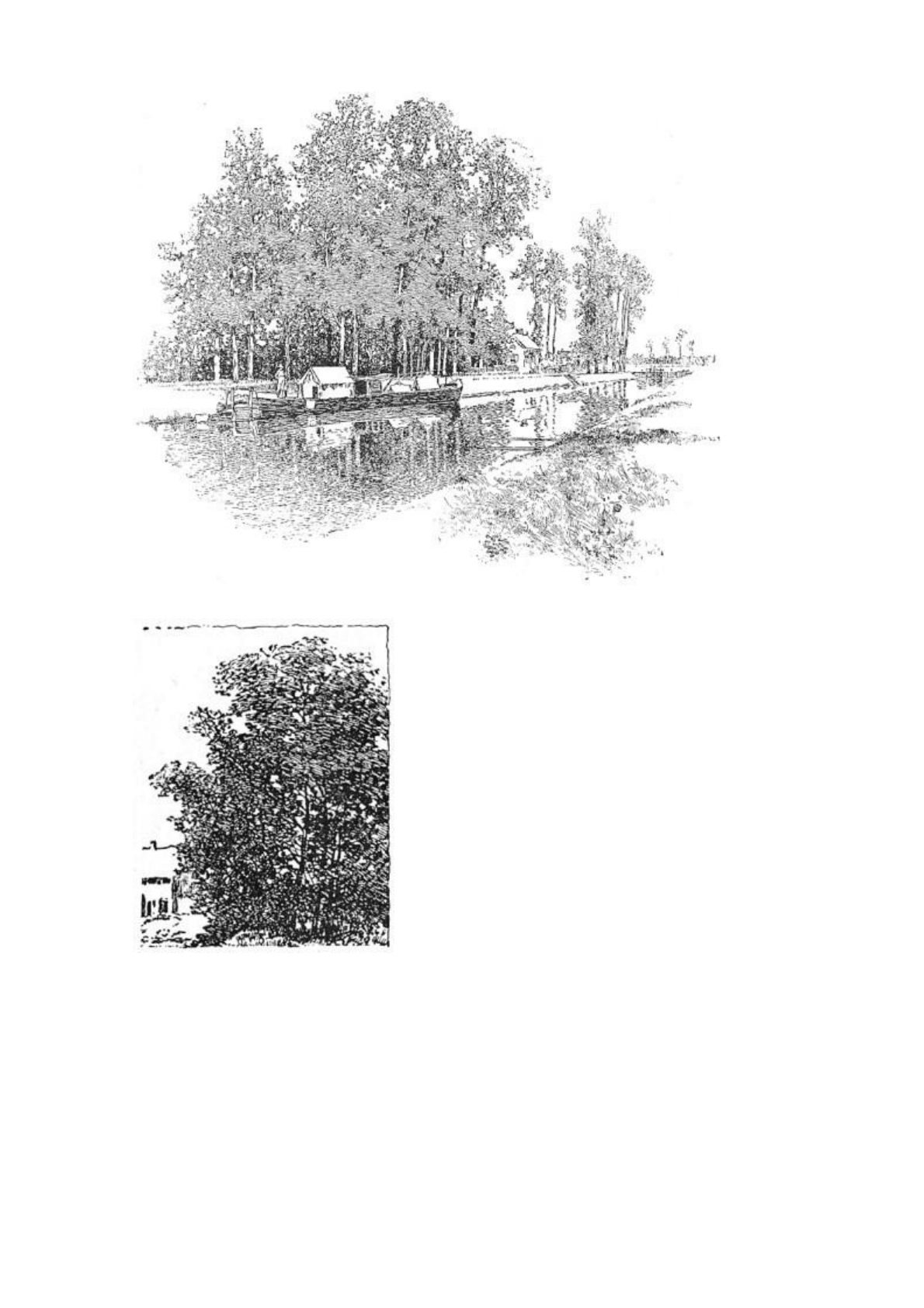
FIG. 18
JOSEPH PENNELL
FIG. 19
JOSEPH PENNELL
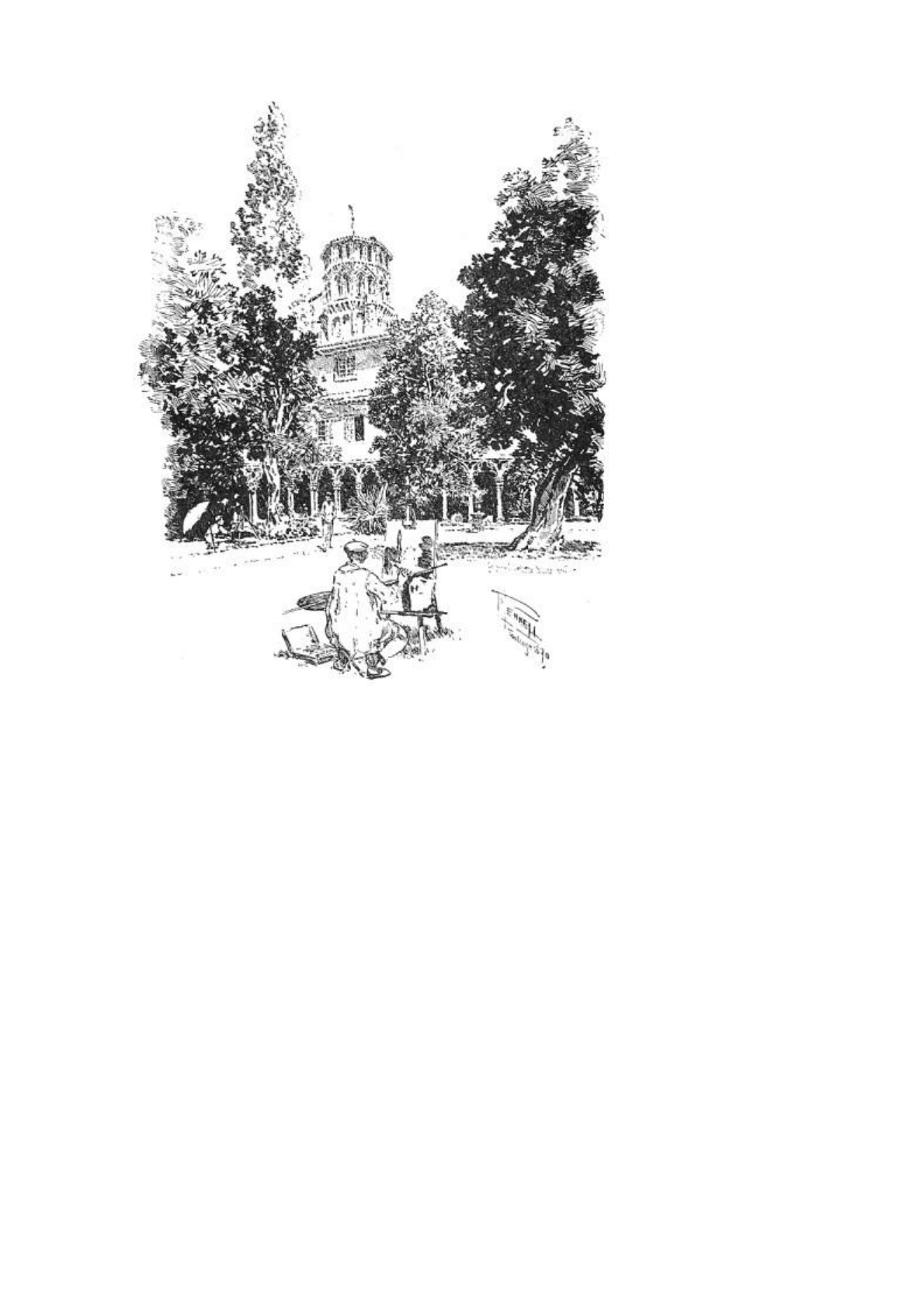
FIG. 20
JOSEPH PENNELL
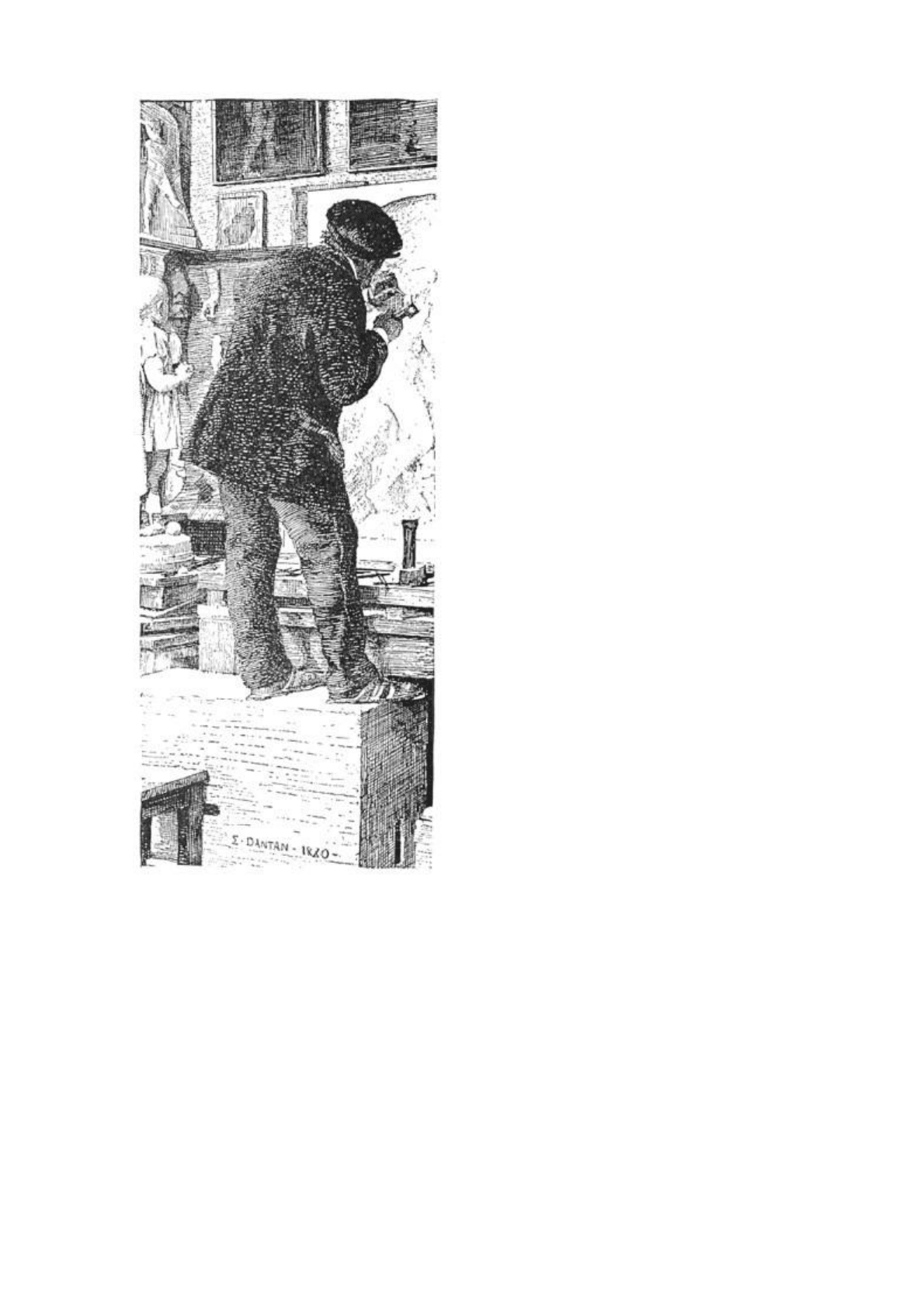
FIG. 21
E. DANTAN
Textures The matter of Textures is very important, and the student should learn to differentiate
them as much as possible. This is done, as I have already said, by differences in the size and
character of the line, and in the closeness or openness of the rendering. Observe the variety of
textures in the drawing of the sculptor by Dantan, Fig. 21. The coat is rendered by such a cross-
hatch as "N" in Fig. 10, made horizontally and with heavy lines. In the trousers the lines do not
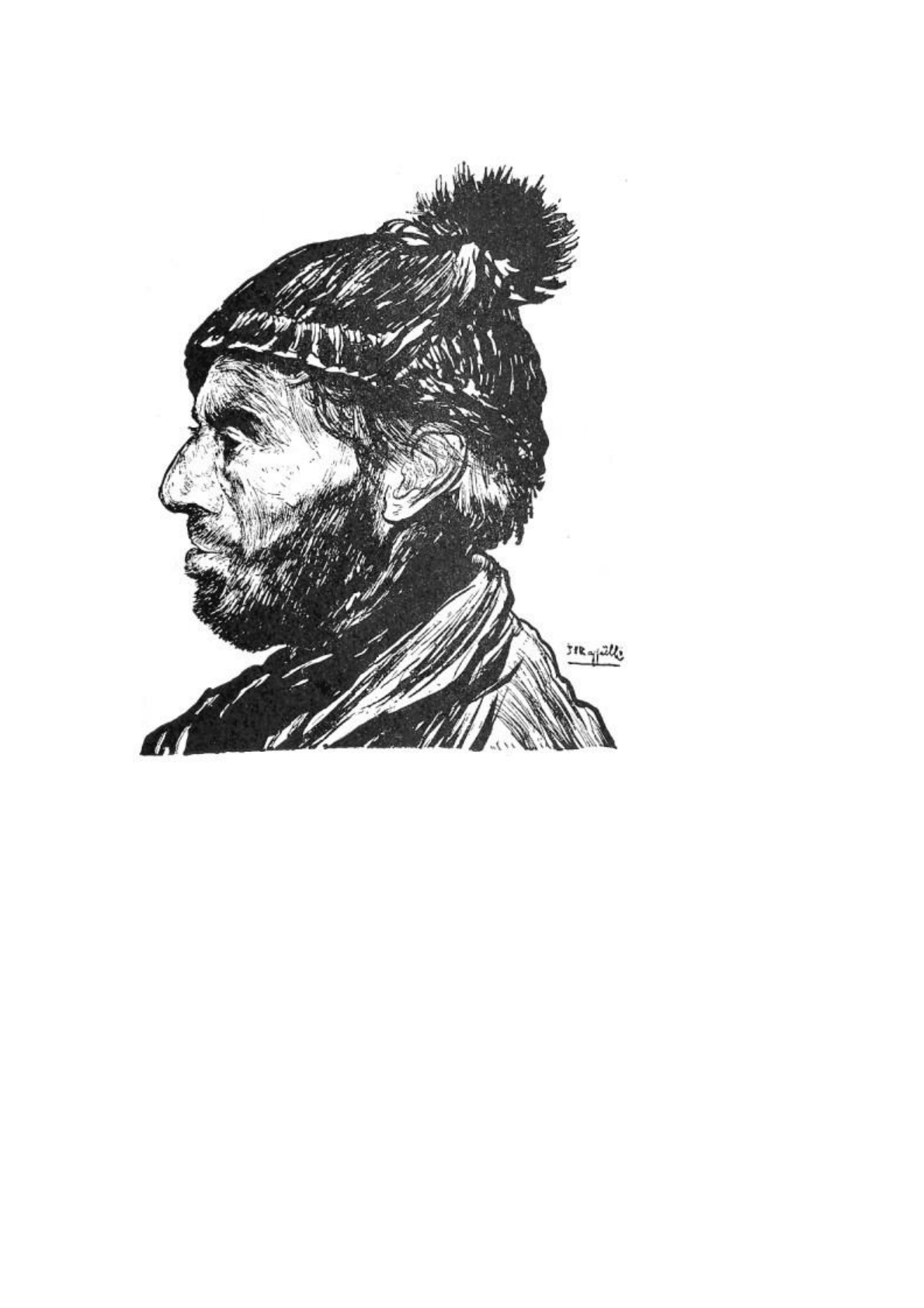
cross but fit in together. This is an excellent example for study, as is also the portrait by
Raffaëlli, Fig. 22. The textures in the latter drawing are wonderfully well conveved,—the hard,
bony face, the stubby beard, and the woolen cap with its tassel in silhouette. For the expression
of texture with the least effort the drawings of Vierge are incomparable. The architectural
drawing by Mr. Gregg in Fig. 50 is well worth careful study in this connection, as are all of
Herbert Railton's admirable drawings of old English houses. (I recommend the study of Mr.
Railton's work with a good deal of reservation, however. While it is admirable in respect of
textures and fascinating in its color, the values are likely to be most unreal, and the mannerisms
are so pronounced and so tiresome that I regard it as much inferior to that of Mr. Pennell, whose
architecture always appears, at least, to have been honestly drawn on the spot.)
FIG. 22
J. F. RAFFAËLLI
The hats in Fig. 10 are merely suggestions to the student in the study of elementary
combinations of line in expressing textures.
Drawing for Reproduction As the mechanical processes of Reproduction have much to do with
determining pen methods they become important factors for consideration. While their
waywardness and inflexibility are the cause of no little distress to the illustrator, the limitations
of processes cannot be said, on the whole, to make for inferior standards in drawing, as will be
seen by the following rules which they impose, and for which a strict regard will be found most
advisable.
First: Make each line clear and distinct. Do not patch up a weak line or leave one which has
been broken or blurred by rubbing, for however harmless or even interesting it may seem in your
original it will almost certainly be neither in the reproduction. When you make mistakes, erase
the offensive part completely, or, if you are working on Bristol-board and the area of
unsatisfactoriness be considerable, paste a fresh piece of paper over it and redraw.
Second: Keep your work open. Aim for economy of line. If a shadow can be rendered with
twenty strokes do not crowd in forty, as you will endanger its transparency. Remember that in

reproduction the lines tend to thicken and so to crowd out the light between them. This is so
distressingly true of newspaper reproduction that in drawings for this purpose the lines have to
be generally very thin, sharp, and well apart. The above rule should be particularly regarded in
all cases where the drawing is to be subject to much reduction. The degree of reduction of which
pen drawings are susceptible is not, as is commonly supposed, subject to rule. It all depends on
the scale of the technique.
Third: Have the values few and positive. It is necessary to keep the gray tones pretty distinct to
prevent the relation of values being injured, for while the gray tones darken in proportion to the
degree of reduction, the blacks cannot, of course, grow blacker. A gray tone which may be light
and delicate in the original, will, especially if it be closely knit, darken and thicken in the
printing. These rules are most strictly to be observed when drawing for the cheaper classes of
publications. For book and magazine work, however, where the plates are touched up by the
engraver, and the values in a measure restored, the third rule is not so arbitrary. Nevertheless, the
beginner who has ambitions in this direction will do well not to put difficulties in his own way
by submitting work not directly printable.
Some Fanciful Expedients There are a number of more or less fanciful expedients employed in
modern pen work which may be noted here, and which are illustrated in Fig. 10. The student is
advised, however, to resort to them as little as possible, not only because he is liable to make
injudicious use of them, but because it is wiser for him to cultivate the less meretricious
possibilities of the instrument.
"Spatter work" is a means of obtaining a delicate printable tone, consisting of innumerable
little dots of ink spattered on the paper. The process is as follows: Carefully cover with a sheet of
paper all the drawing except the portion which is to be spattered, then take a tooth-brush,
moisten the ends of the bristles consistently with ink, hold the brush, back downwards, in the left
hand, and with a wooden match or tooth-pick rub the bristles toward you so that the ink will
spray over the paper. Particular, care must be taken that the brush is not so loaded with ink that it
will spatter in blots. It is well, therefore, to try it first on a rough sheet of paper, to remove any
superfluous ink. If the spattering is well done, it gives a very delicate tone of interesting texture,
but if not cleverly employed, and especially if there be a large area of it, it is very likely to look
out of character with the line portions of the drawing.
A method sometimes employed to give a soft black effect is to moisten the lobe of the thumb
lightly with ink and press it upon the paper. The series of lines of the skin make an impression
that can be reproduced by the ordinary line processes. As in the case of spatter work, superfluous
ink must be looked after before making the impression so as to avoid leaving hard edges. Thumb
markings lend themselves to the rendering of dark smoke, and the like, where the edges require
to be soft and vague, and the free direction of the lines impart a feeling of movement.
Interesting effects of texture are sometimes introduced into pen drawings by obtaining the
impression of a canvas grain. To produce this, it is necessary that the drawing be made on fairly
thin paper. The modus operandi is as follows: Place the drawing over a piece of mounted canvas
of the desired coarseness of grain, and, holding it firmly, rub a lithographic crayon vigorously
over the surface of the paper. The grain of the canvas will be found to be clearly reproduced,
and, as the crayon is absolutely black, the effect is capable of reproduction by the ordinary
photographic processes.
CHAPTER IV
VALUES
The Color Scheme After the subject has been mapped out in pencil, and before beginning the
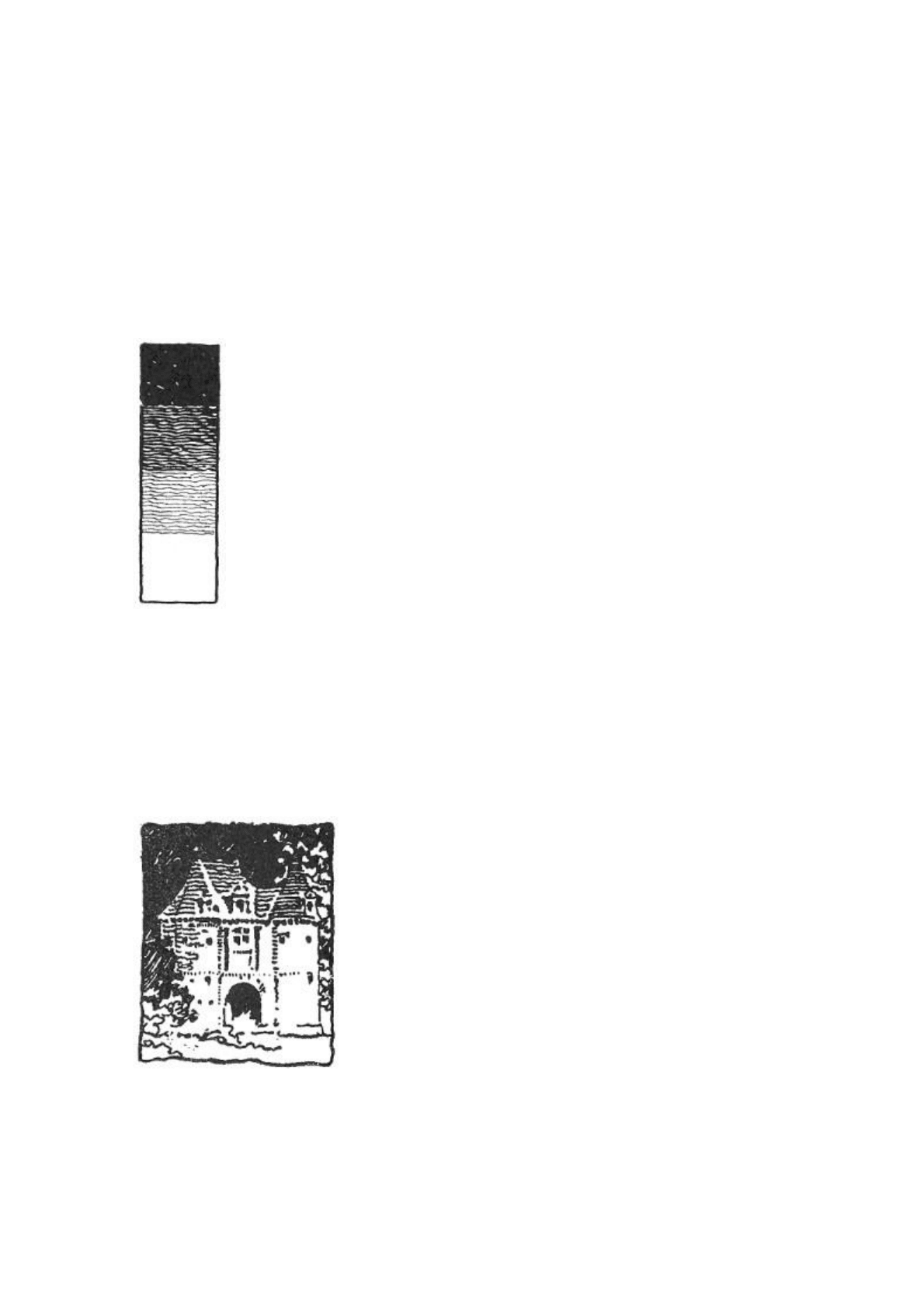
pen work, we have to consider and determine the proper disposition of the Color. By "color" is
meant, in this connection, the gamut of values from black to white, as indicated in Fig. 23. The
success or failure of the drawing will largely depend upon the disposition of these elements, the
quality of the technique being a matter of secondary concern. Beauty of line and texture will not
redeem a drawing in which the values are badly disposed, for upon them we depend for the
effect of unity, or the pictorial quality. If the values are scattered or patchy the drawing will not
focus to any central point of interest, and there will be no unity in the result.
FIG. 23
C. D. M.
There are certain general laws by which color may be pleasingly disposed, but it must be borne
in mind that it ought to be disposed naturally as well. By a "natural" scheme of color, I mean one
which is consistent with a natural effect of light and shade. Now the gradation from black to
white, for example, is a pleasing scheme, as may be observed in Fig. 24, yet the effect is
unnatural, since the sky is black. In a purely decorative illustration like this, however, such logic
need not be considered.
FIG. 24
D. A. GREGG
Principality in the Color-Scheme Since, as I said before, color is the factor which makes for
the unity of the result, the first principle to be regarded in its arrangement is that of
Principality,—there must be some dominant note in the rendering. There should not, for
instance, be two principal dark spots of equal value in the same drawing, nor two equally
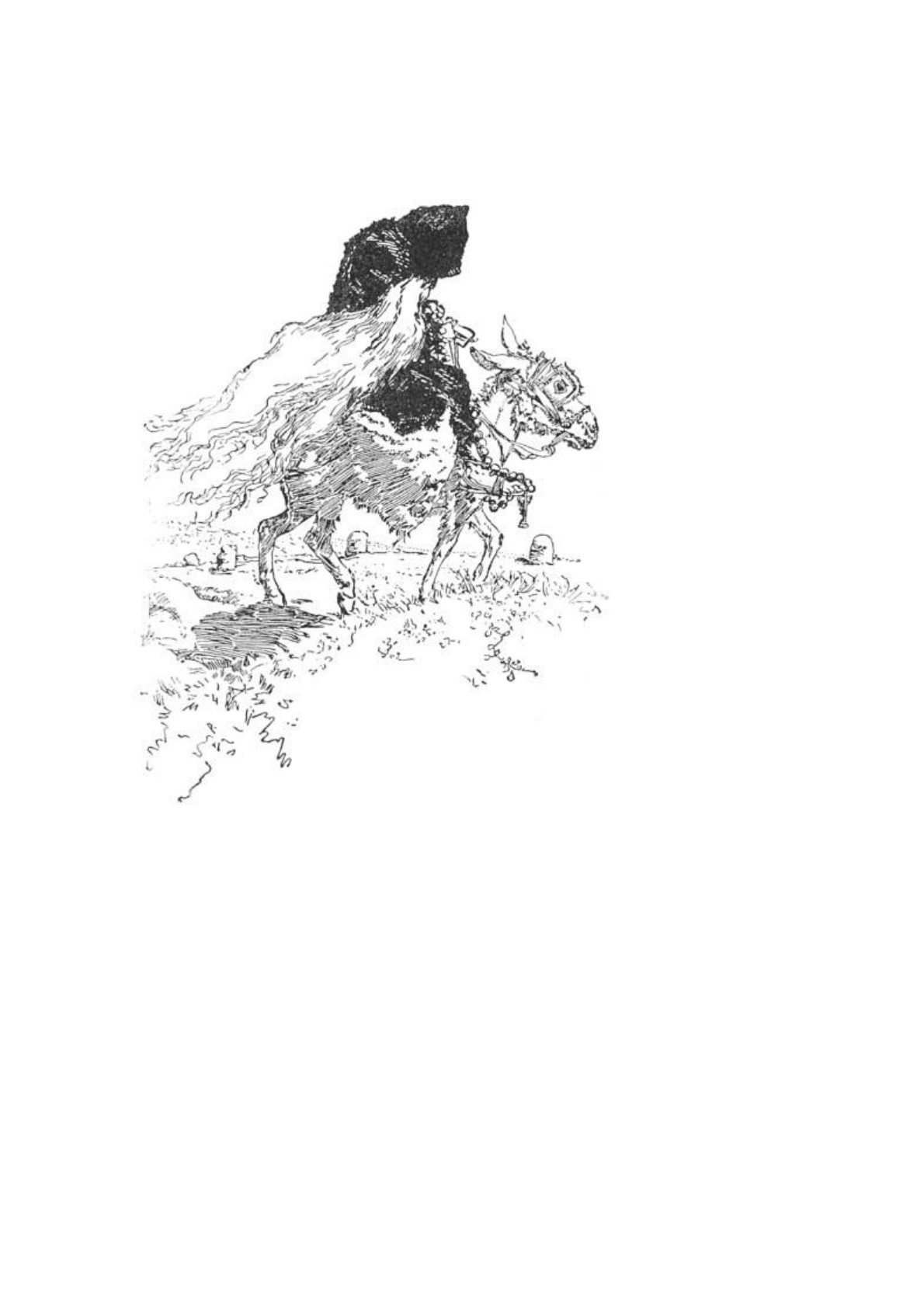
prominent areas of white. The Vierge drawing, Fig. 25, and that by Mr. Pennell, Fig. 5, are no
exceptions to this rule; the black figure of the old man counting as one note in the former, as do
the dark arches of the bridge in the latter. The work of both these artists is eminently worthy of
study for the knowing manner in which they dispose their values.
FIG. 25
DANIEL VIERGE
Variety The next thing to be sought is Variety. Too obvious or positive a scheme, while
possibly not unsuitable for a conventional decorative drawing, may not be well adapted to a
perspective subject. The large color areas should be echoed by smaller ones throughout the
picture. Take, for example, the Vierge drawing shown in Fig. 26. Observe how the mass of
shadow is relieved by the two light holes seen through the inn door. Without this repetition of
the white the drawing would lose much of its character. In Rico's drawing, Fig. 11, a tiny white
spot in the shadow cast over the street would, I venture to think, be helpful, beautifully clear as it
is; and the black area at the end of the wall seems a defect as it competes in value with the dark
figure.
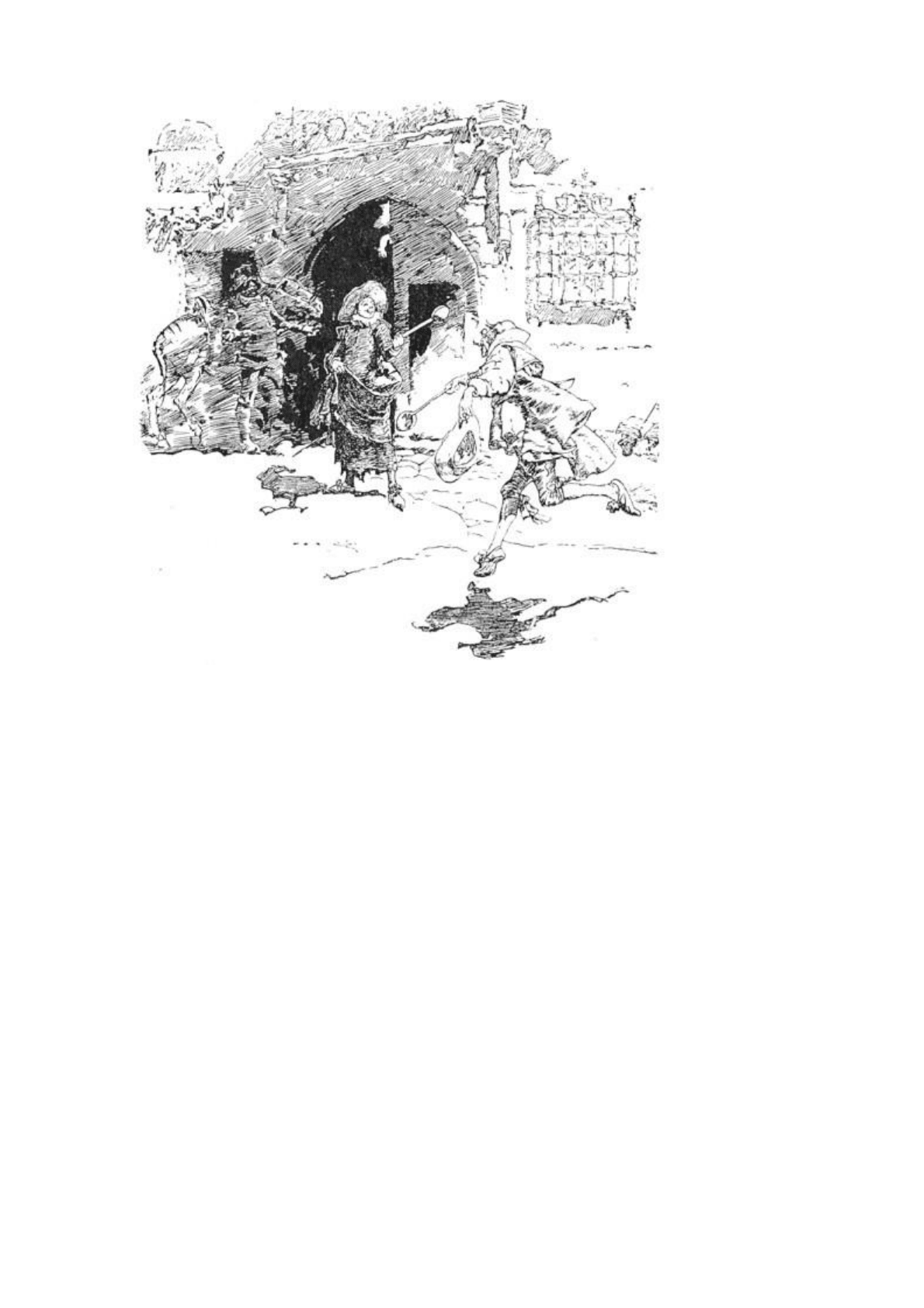
FIG. 26
DANIEL VIERGE
Breadth of Effect Lastly, Breadth of Effect has to be considered. It is requisite that, however
numerous the tones are (and they should not be too numerous), the general effect should be
simple and homogeneous. The color must count together broadly, and not be cut up into patches.