
Charles D. Maginnis. Pen Drawing. An Illustrated Treatise
Подождите немного. Документ загружается.

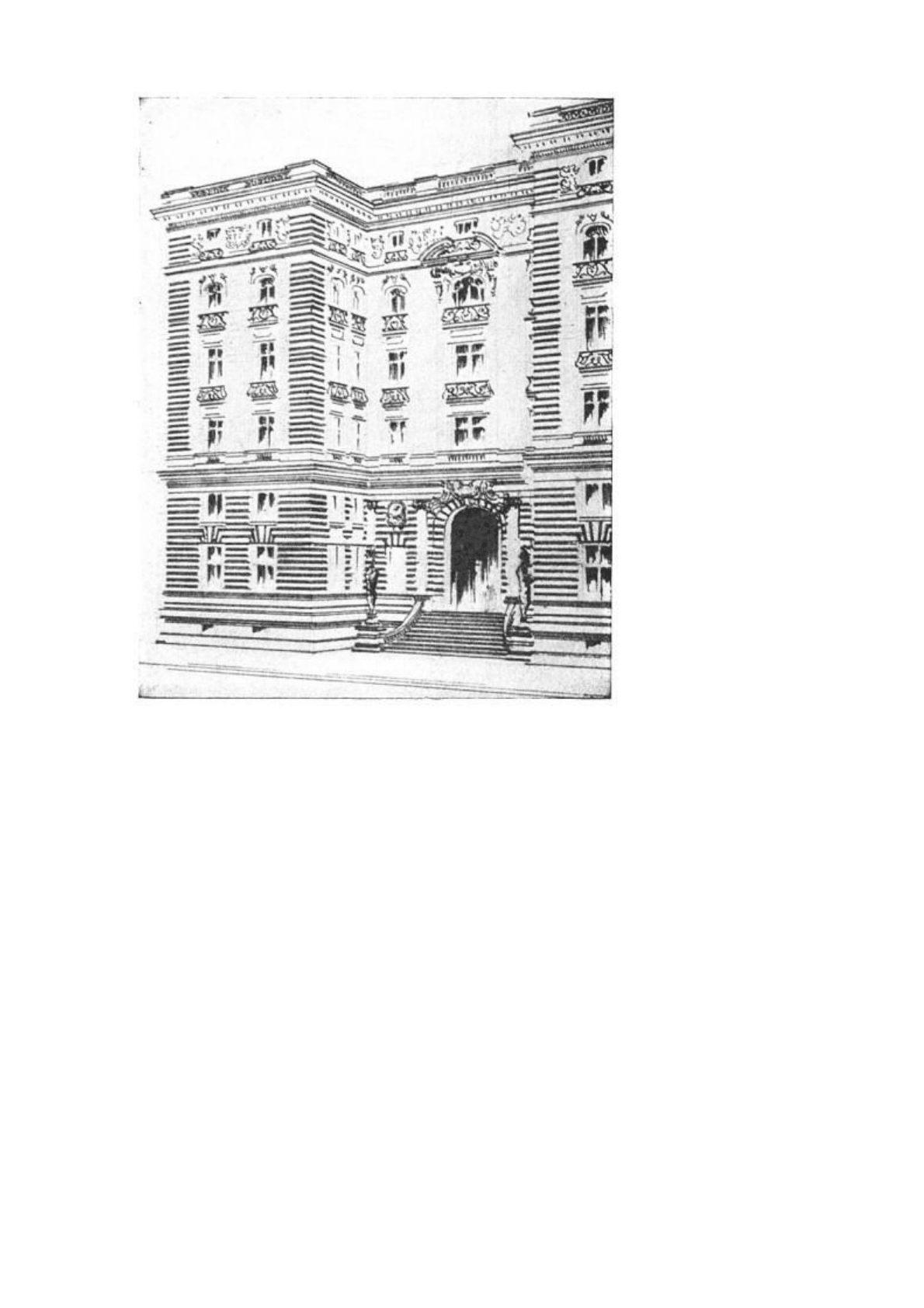
FIG. 46
HARRY ALLAN JACOBS
Unhappily for the beginner, no two illustrators consent to render foliage, or anything else for
that matter, in quite the same way, and so I cannot present any authoritative formula for doing
so. This subject has been treated, however, in a previous chapter, and nothing need be added
here except to call attention to an employment of foliage peculiar to architectural drawings. This
is the broad suggestive rendering of dark leafage at the sides of a building, to give it relief. The
example shown in Fig. 47 is from one of Mr. Gregg's drawings.
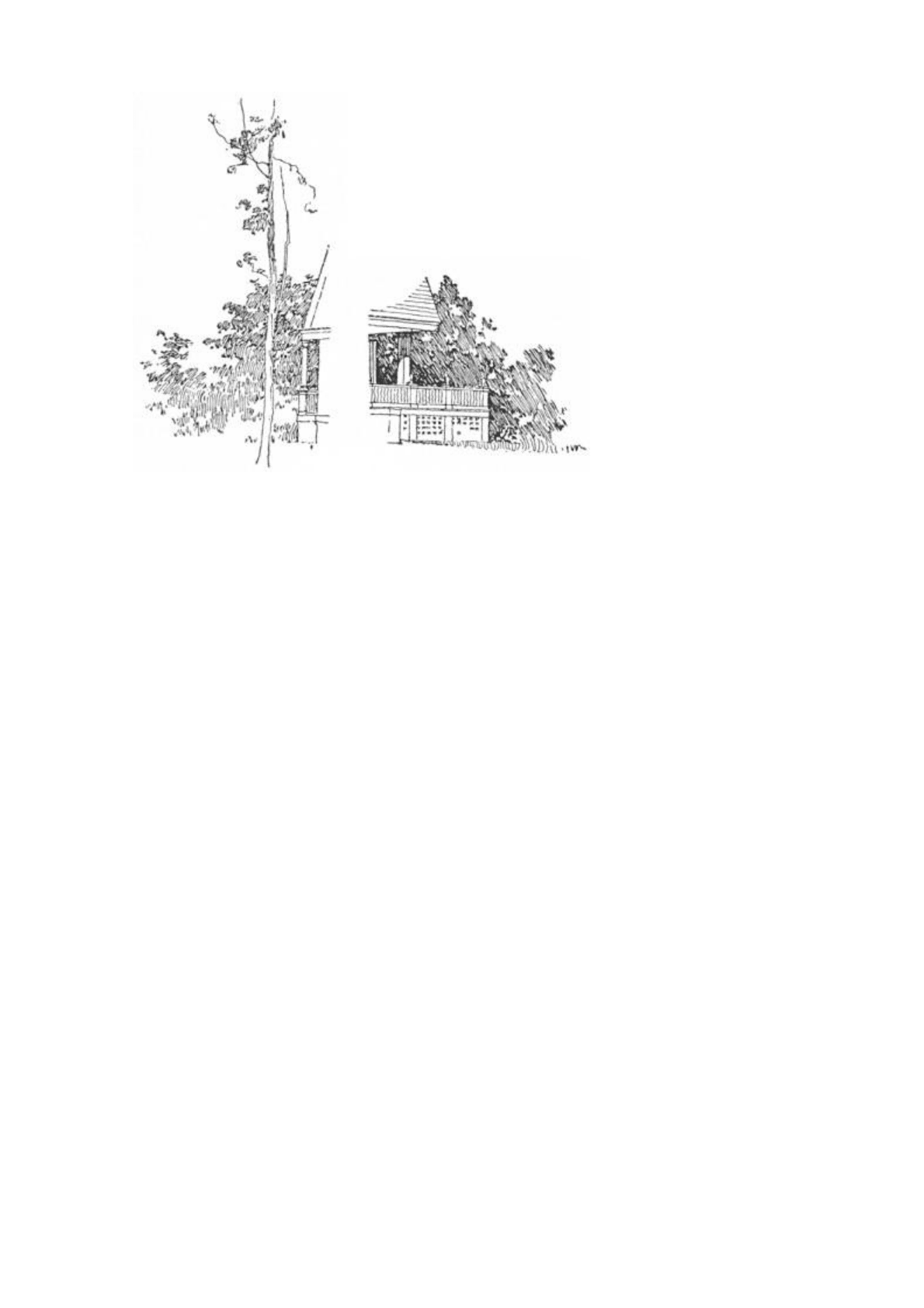
FIG. 47
D. A. GREGG
The rendering of the human figure need not be dealt with under this head, as figures in an
architectural subject are of necessity relatively small, and therefore have to be rendered very
broadly. Careful drawing is none the less essential, however, if their presence is to be justified;
and badly drawn figures furnish a tempting target for the critic of architectural pictures.
Certainly, it is only too evident that the people usually seen in such pictures are utterly incapable
of taking the slightest interest whatever in architecture, or in anything else; and not infrequently
they seem to be even more immovable objects than the buildings themselves, so fixed and
inflexible are they. Such figures as these only detract from the interest of the drawing, instead of
adding to it, and the draughtsman who has no special aptitude is wise in either omitting them
altogether, or in using very few, and is perhaps still wiser if he entrusts the drawing of these to
one of his associates more accomplished in this special direction.
The first thing to decide in the matter of figures is their arrangement and grouping, and when
this has been determined they should be sketched in lightly in pencil. In this connection a few
words by way of suggestion may be found useful. Be careful to avoid anything like an equal
spacing of the figures. Group the people interestingly. I have seen as many as thirty individuals
in a drawing, no two of whom seemed to be acquainted,—a very unhappy condition of affairs
even from a purely pictorial point of view. Do not over-emphasize the base of a building by
stringing all the figures along the sidewalks. The lines of the curbs would thus confine and frame
them in unpleasantly. Break the continuity of the street lines with figures or carriages in the
roadway, as in Fig. 55. After the figures have been satisfactorily arranged, they ought to be
carefully drawn as to outline. In doing so, take pains to vary the postures, giving them action,
and avoiding the stiff wooden, fashion-plate type of person so common to architectural
drawings. When the time comes to render these accessories with the pen (and this ought, by the
way, to be the last thing done) do not lose the freedom and breadth of the drawing by dwelling
too long on them. Rise superior to such details as the patterns of neckties.
We will now consider the application to architectural subjects of the remarks on technique and
color contained in the previous chapters.
Architectural Textures To learn to render the different textures of the materials used in
architecture, the student would do well to examine and study the methods of prominent
illustrators, and then proceed to forget them, developing meanwhile a method of his own. It will
be instructive for him, however, as showing the opportunity for play of individuality, to notice
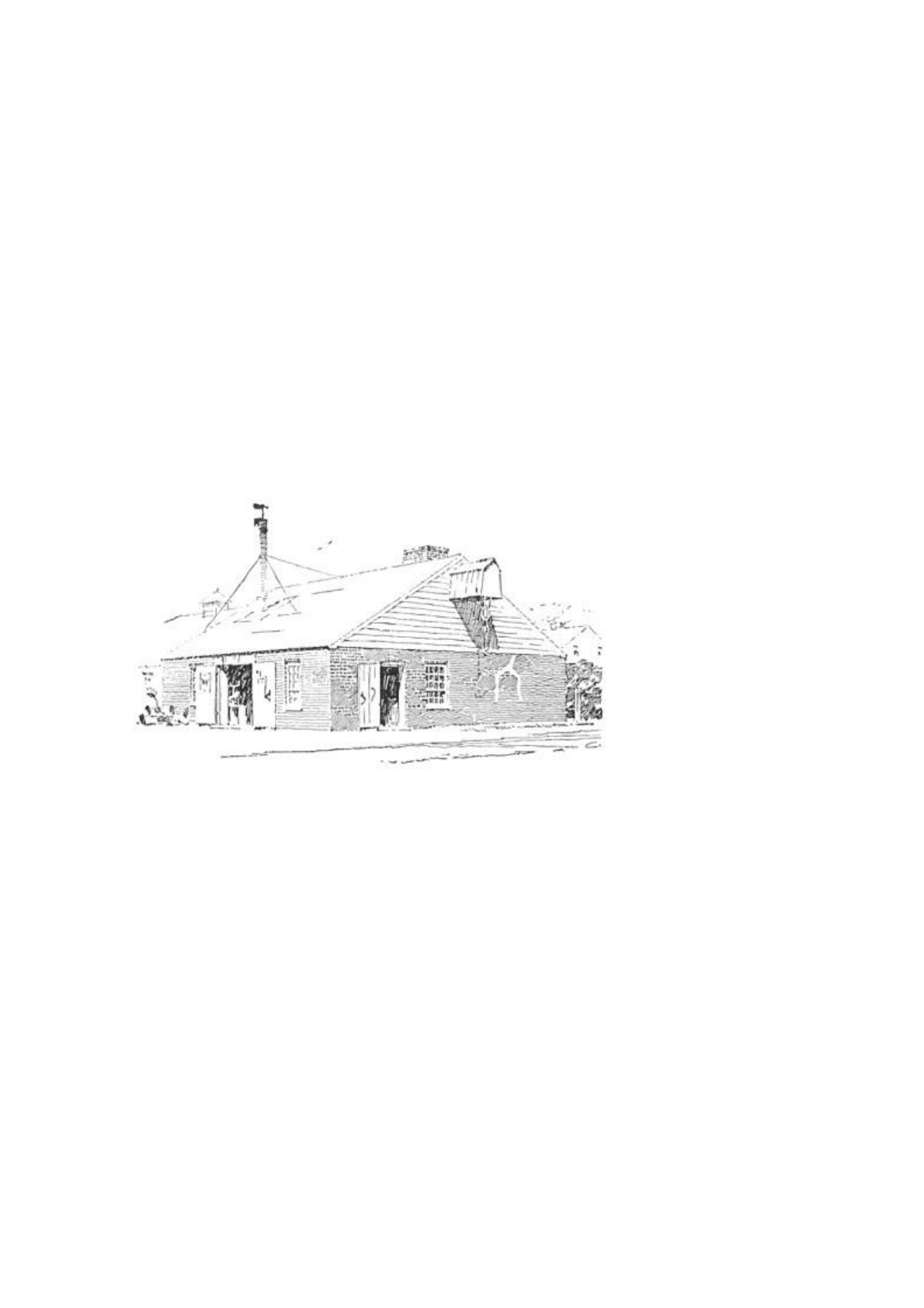
how very different, for instance, is Mr. Gregg's manner of rendering brick work to that of Mr.
Railton. Compare Figs. 48 and 49. One is splendidly broad,—almost decorative,—the other
intimate and picturesque. The work of both these men is eminently worthy of study. For the
sophisticated simplicity and directness of his method and the almost severe conscientiousness of
his drawing, no less than for his masterly knowledge of black and white, no safer guide could be
commended to the young architectural pen-man for the study of principles than Mr. Gregg.
Architectural illustration in America owes much to his influence and, indeed, he may be said to
have furnished it with a grammar. Take his drawing of the English cottages, Fig. 50. It is a
masterly piece of pen work. There is not a feeble or tentative stroke in the whole of it. The color
is brilliant and the textures are expressed with wonderful skill. The student ought to carefully
observe the rendering of the various roofs. Notice how the character of the thatch on the second
cottage differs from that on the first, and how radically the method of rendering of either varies
from that used on the shingle roof at the end of the picture. Compare also the two gable
chimneys with each other as well as with the old ruin seen over the tree-tops. Here is a drawing
by an architectural draughtsman of an architectural actuality and not of an artificial abstraction.
This is a fairer ground on which to meet the illustrators of the picturesque.
FIG. 48
D. A. GREGG
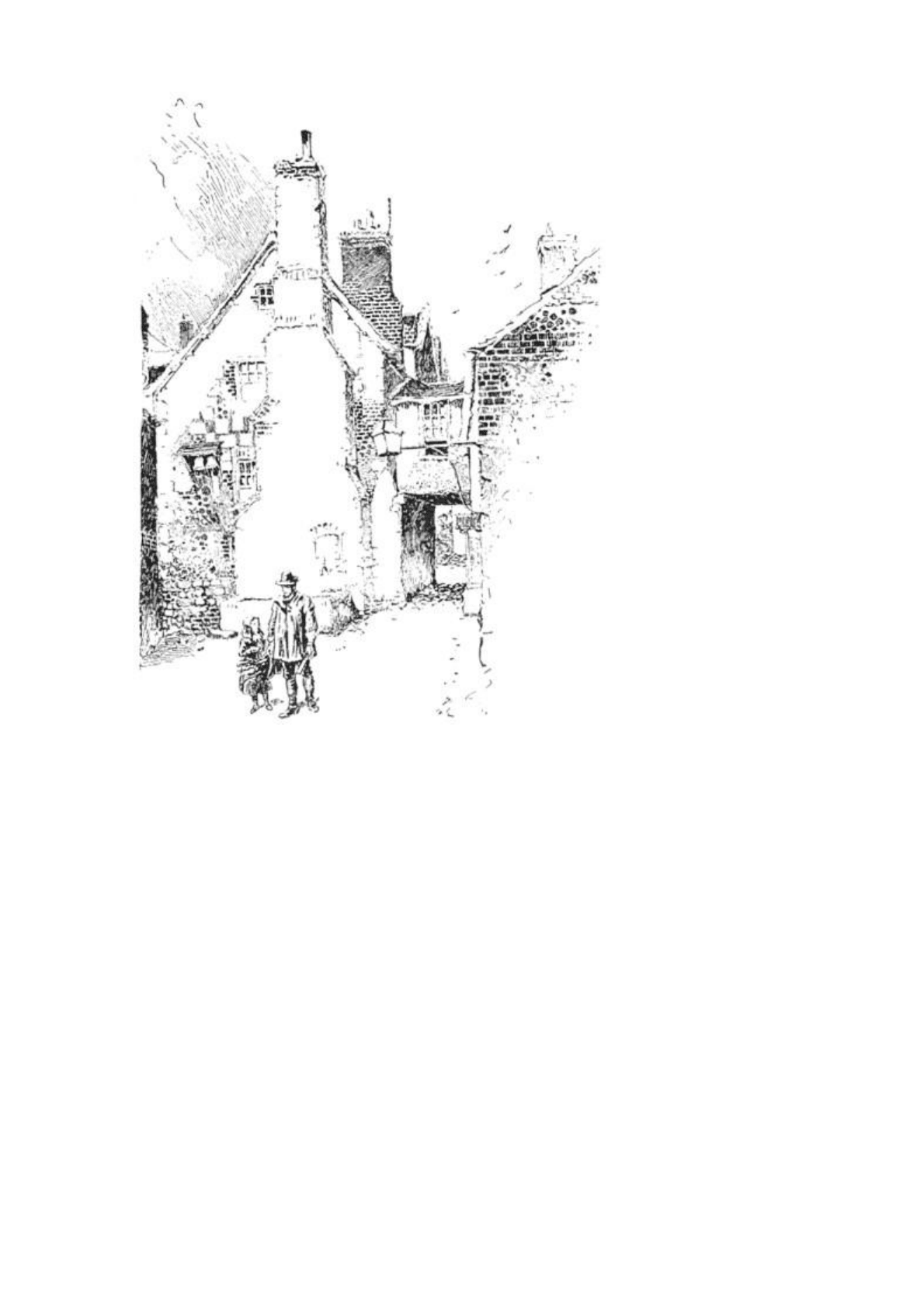
FIG. 49
HERBERT RAILTON
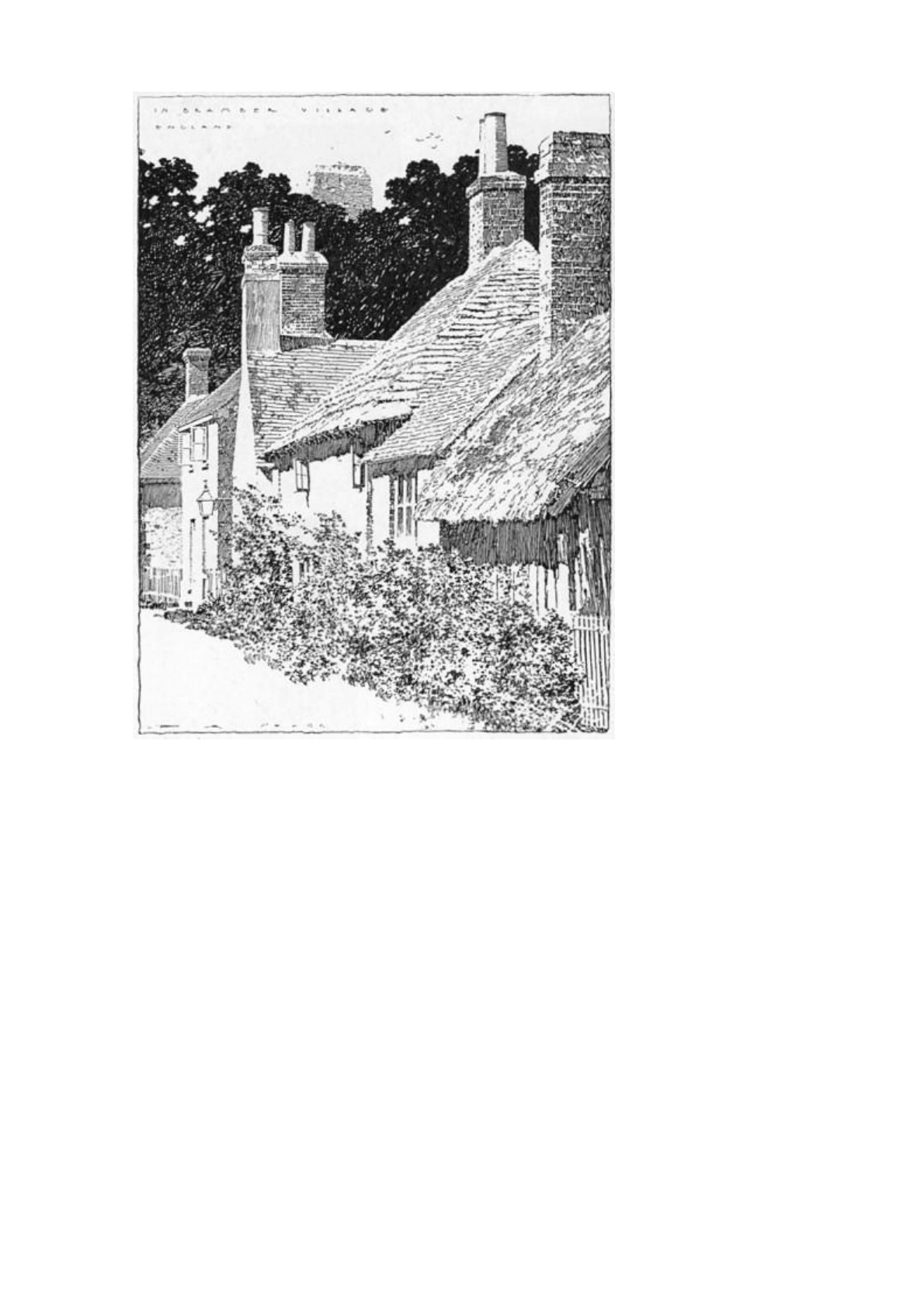
FIG. 50
D. A. GREGG
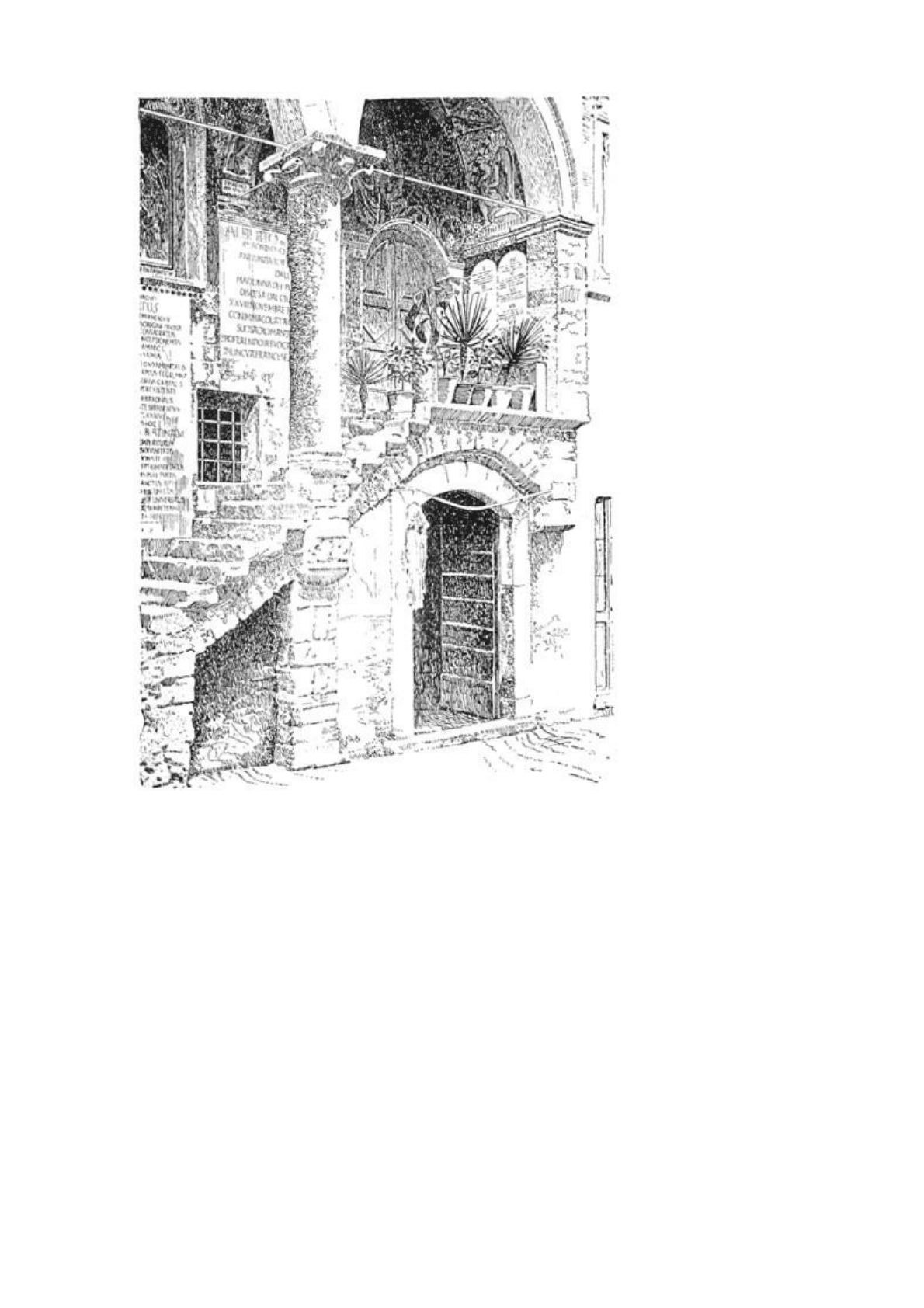
FIG. 51
WALTER M. CAMPBELL
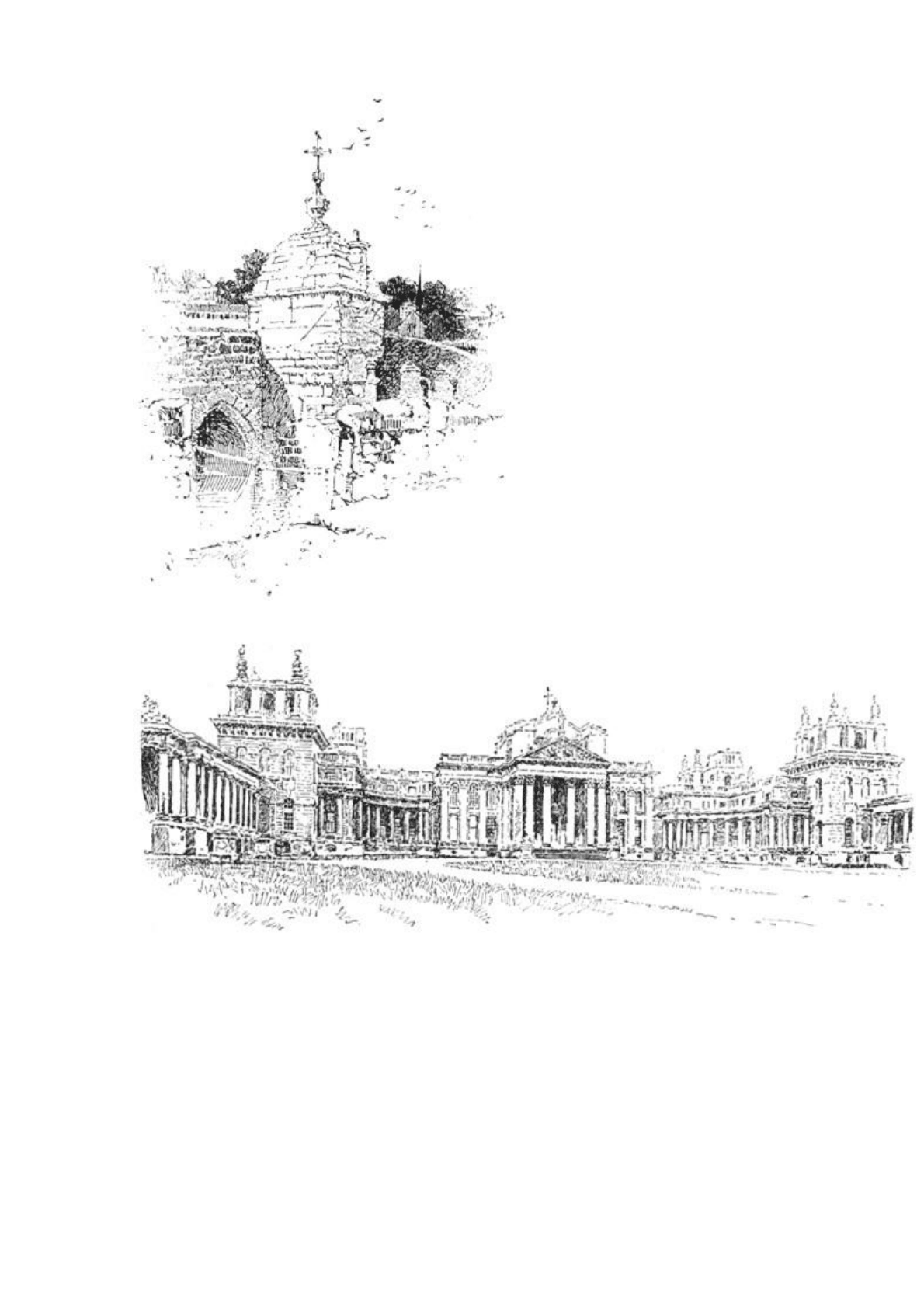
FIG. 52
HERBERT RAILTON
FIG. 53
A. F. JACCACI
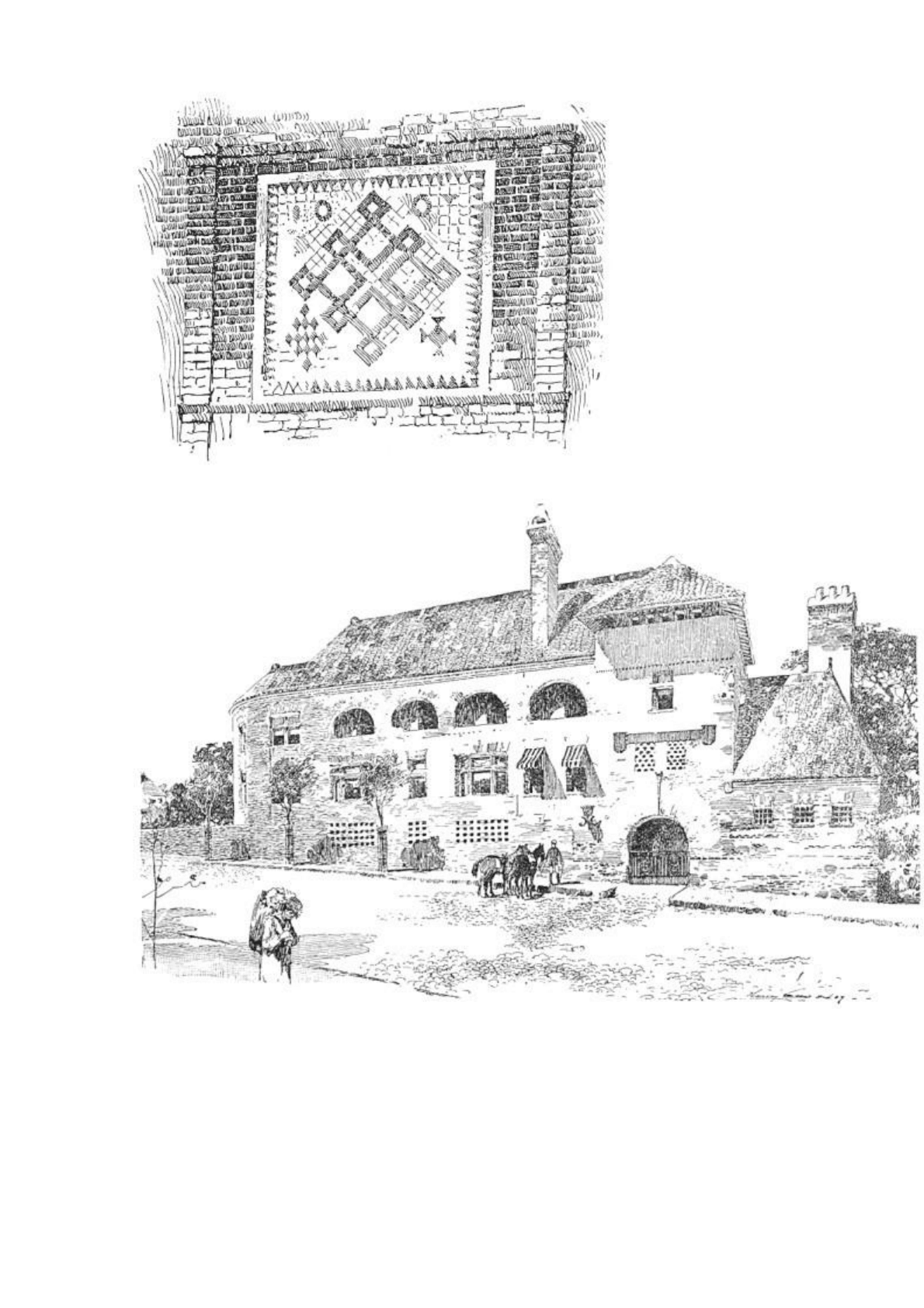
FIG. 54
C. F. BRAGDON
FIG. 55
HARVEY ELLIS
Examples Mr. Campbell's drawing, Fig. 51, is a very good example of the rendering of stone
textures. The old masonry is capitally expressed by the short irregular line. The student is
advised to select some portion of this, as well as of the preceding example to copy, using, no
matter how small the drawings he may make, a pen not smaller than number 303. I know of no
architectural illustrator who hits stonework off quite so cleverly as Mr. Goodhue. Notice, in his
drawing of the masonry, in Fig. 8, how the stones are picked out and rendered individually in
places and how this intimate treatment is confined to the top of the tower where it tells against
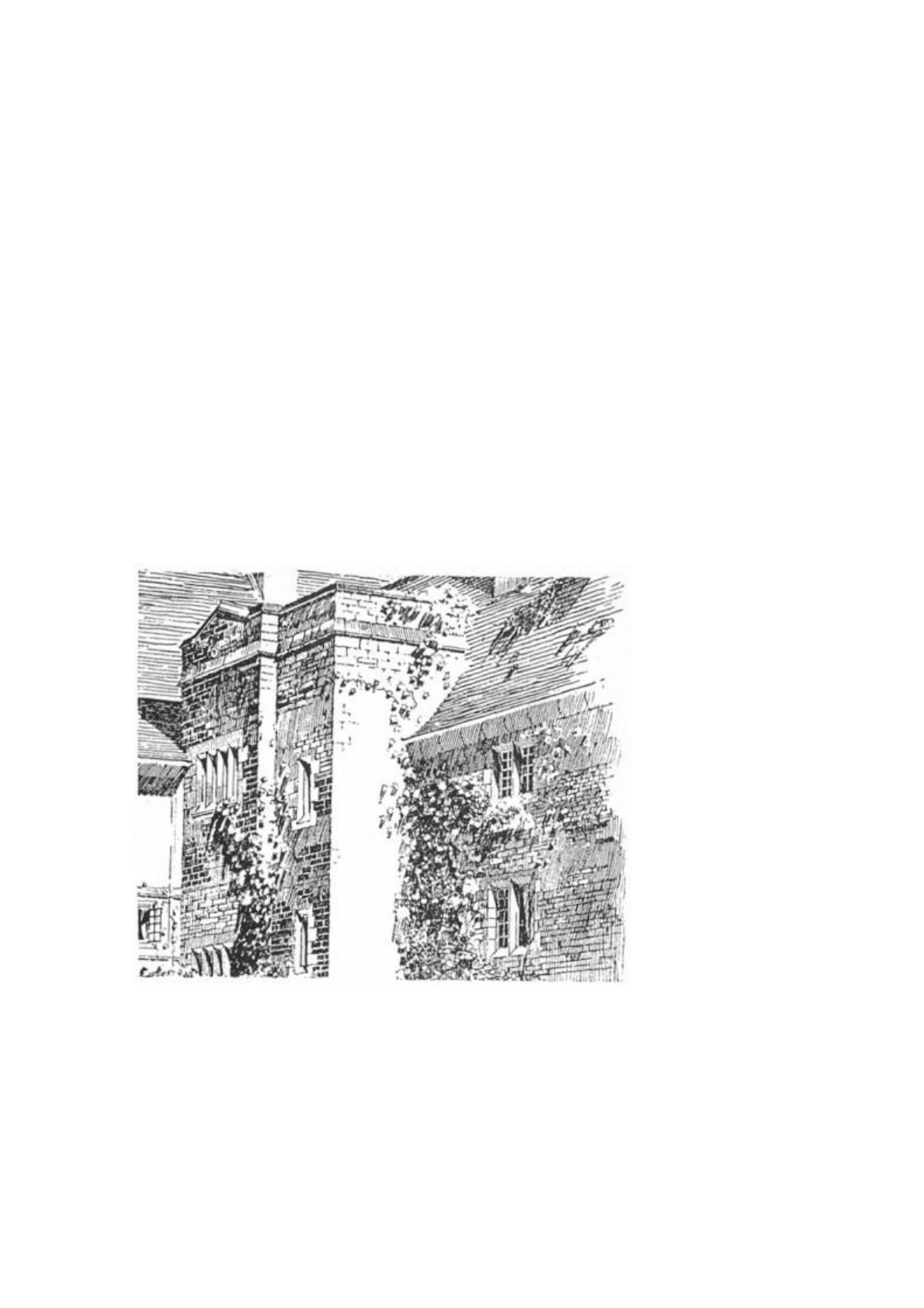
the textures of the various roofs and how it is then merged in a broad gray tone which is carried
to the street. Mr. Railton's sketches are full of clever suggestion for the architectural illustrator in
the way of texture. Figs. 7 and 52 show his free rendering of masonry. The latter is an especially
very good subject for study. Observe how well the texture tells in the high portion of the
abutment by reason of the thick, broken lines. For a distant effect of stone texture, the drawing
by Mr. Jaccaci, Fig. 53, is a fine example. In this the rendering is confined merely to the organic
lines of the architecture, and yet the texture is capitally expressed by the quality of the stroke,
which is loose and much broken. The general result is extremely crisp and pleasing. For broad
rendering of brick textures, perhaps there is no one who shows such a masterly method as Mr.
Gregg. As may be seen in his sketch of the blacksmith shop, Fig. 48, he employs an irregular
dragging line with a great deal of feeling. The brick panel by Mr. Bragdon, Fig. 54, is a neat
piece of work. There is excellent texture, too, in the picturesque drawing by Mr. Harvey Ellis,
Fig. 55:—observe the rendering of the rough brick surface at the left side of the building. A
more intimate treatment is that illustrated in the detail by Mr. C. E. Mallows, the English
draughts man, Fig. 56. In this drawing, however, the edges of the building are unpleasantly hard,
and are somewhat out of character with the quaint rendering of the surfaces. Mr. Goodhue uses a
similar treatment, and, I think, rather more successfully. On the whole, the broader method,
where the texture is carried out more uniformly, is more to be commended, at least for the study
of the beginner. Some examples of shingle and slate textures are illustrated by Fig. 57. It is
advisable to employ a larger pen for the shingle, so as to ensure the requisite coarseness of
effect.
FIG. 56
C. E. MALLOWS
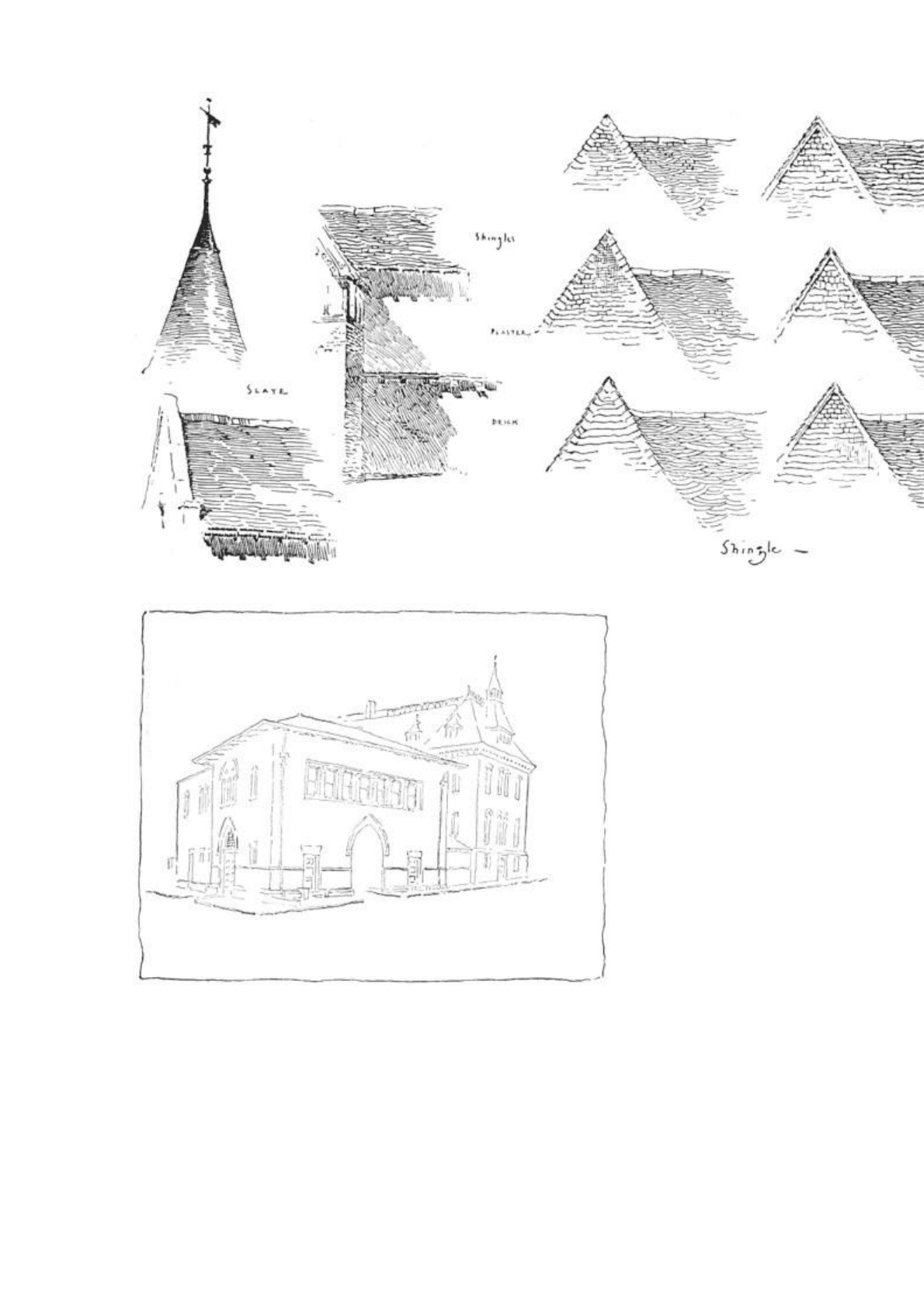
FIG. 57
C. D. M.
FIG. 58
C. D. M.
An Architectural Problem To favorably illustrate an architectural subject it will be found
generally expedient to give prominence to one particular elevation in the perspective, the other
being permitted to vanish sharply. Fig. 58 may be said to be a fairly typical problem for the
architectural penman. The old building on the right, it must be understood, is not a mere
accessory, but is an essential part of the picture. The matter of surroundings is the first we have
to decide upon, and these ought always to be disposed with reference to the particular form of
composition which the subject may suggest. Were we dealing with the foreground building
alone there would be no difficulty in adjusting the oval or the diamond form of composition to