
Floud R., Johnson P. The Cambridge Economic History of Modern Britain, Volume 1: Industrialisation, 1700-1860
Подождите немного. Документ загружается.


British population during the ‘long’ eighteenth century 71
Table 3.3 Long-term trends in birth intervals (months): thirty-year
overlapping periods
1670–99 32.11 1740–69 31.33
1680–1709 31.84 1750–79 30.85
1690–1719 31.61 1760–89 30.72
1700–29 31.69 1770–99 30.62
1710–39 31.65 1780–1809 30.85
1720–49 31.93 1790–1819 30.54
1730–59 31.44 1800–37 30.57
Notes:The number of birth intervals on which the averages shown in the table
were based was usually between 10,000 and 13,000. Intervals to first birth
and intervals following the death of the previous child when less than 1 year
old were excluded. Extensive tests showed that using all other classes of birth
interval produced no detectable bias in the results.
Source:Wrigley et al.1997: tab. 7.36, 447.
what might be thought ‘natural’ expec-
tation. The contrasts between the two
countries extend further, since prenup-
tial pregnancy became commoner in
England among young brides than in
older ones in the course of the long eigh-
teenth century, though in earlier peri-
ods the reverse was true, but inFrance
prenuptial pregnancy was always more
widespread among older brides, though
brides at all ages in France were less
likely to be pregnant on marriage than in
England. Space prevents further discus-
sion of this aspect of fertility behaviour,
which is both intriguing and potentially
illuminating (data and some further analysis may be found in Wrigley
1981:174–82).
The age-specific rates shown in Table 3.2 suggest rising marital fertility.
However, a firmer indication of marital fertility trends can be gained from
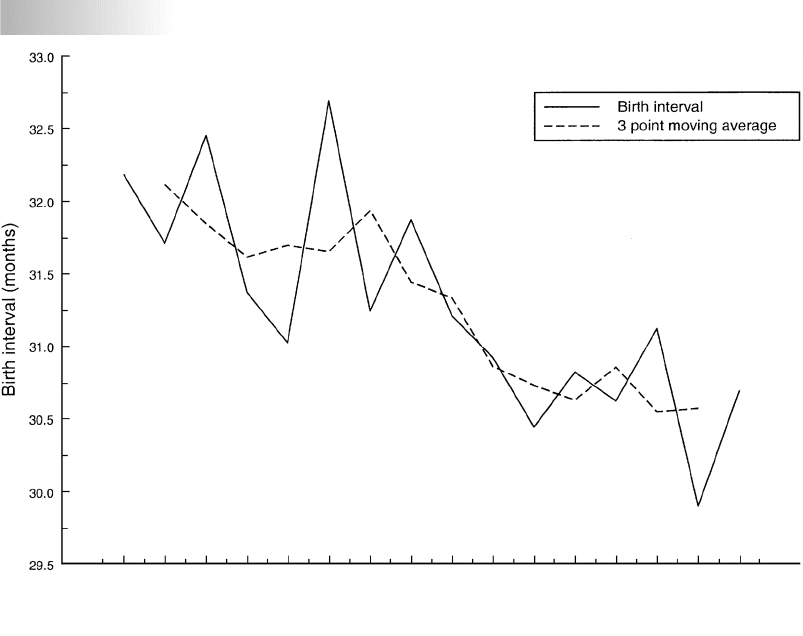
thebirth interval data set out in Table 3.3 and Figure 3.4. Birth intervals
provide a more reliable indication of fertility trends because they are
based on a far larger number of events than age-specific rates. Family
reconstitution forms which lack the date of birth of the wife and/or the
date of marriage can still yield useful data on birth intervals, whereas
both types of information are essential if marital fertility rates are to
be derived from them. Between 1670–99 and 1800–37 the mean birth
interval fell by 5 per cent, enough to have accounted for about a seventh
of the riseintheGRRovertheperiod.
There is good reason to suppose that the reduction in the mean birth
interval is attributable to a major decline in the stillbirth rate. By the
mid-nineteenth century the stillbirth rate in England was probably in
therange 40–50 per 1,000 total births whereas in the later seventeenth
century it was probably between 100 and 125 per 1,000 (Wrigley 1998:
447–52). Stillbirths were very rarely recorded in a systematic fashion in
English parish registers so that evidence of their prevalence is inevitably
largely indirect. However, deaths in the later stages of pregnancy and
deaths soon after birth are largely determined by the same factors, and
trends in the two mortality rates are usually closely similar. Indeed, the
widespread use of the perinatal mortality rate
11
as a measure of mor-
tality close to birth reflects this fact (the perinatal mortality rate mea-
sures the combined impact of stillbirths and neonatal mortality). The
11
Perinatal mortality is a measure of the combined impact of foetal mortality in the later
stages of pregnancy, or stillbirths, and of neonatal mortality. Stillbirths are commonly
defined as mortality after twenty-eight weeks of pregnancy. Neonatal mortality is defined
as the mortality of live-born children during the first four weeks of life.
Cambridge Histories Online © Cambridge University Press, 2008
72 E. A. Wrigley
1670-9
1680-9
1690-9
1700-9
1710-19
1720-9
1730-9
1740-9
1750-9
Period
1760-9
1770-9
1780-9
1790-9
1800-9
1810-19
1820-39
Figure 3.4 Long-term
trends in birth intervals
(all parities except
parity 0: earlier child of
pair survives infancy)
Source:Wrigley
et al. 1997:
tab. 7.36, 447.
stillbirth rate is also closely correlated with the endogenous infant mor-
tality rate.
12
Since both neonatal mortality and endogenous infant mor-
tality can be measured using family reconstitution data, indirect esti-
mates of the level and the trend of stillbirth mortality are possible for
the early modern period. If the stillbirth rate fell from 100 to 50 per 1,000
total births between the late seventeenth century and the early nine-
teenth century, the live birth rate would have risen by 5.6 per cent. The
change in the mean birth interval corresponds closely with this figure.
There are also other indications that a fall in the stillbirth rate under-
lies the rise in marital fertility, notably the disproportionate rise in age-
specific rates among older women. Since the incidence of stillbirth rises
markedly with age, a major fall in the incidence of stillbirths, other
things being equal, will cause fertility rates in the older age groups to
12
All infant mortality can in principle be divided under two heads, endogenous and exoge-
nous. The latter refers to deaths caused by the invasion of the body by external agents, for
example infections such as smallpox or scarlet fever. The former refers to the effects of
prematurity, the birth trauma itself, and inherited genetic defects. Almost all endogenous
deaths occur within the first month of life. The distinction is valuable in historical stud-
ies because estimates of the level of endogenous and exogenous mortality can be made
from any data source which enables the age distribution of deaths within the first year of
life to be determined, even in the absence of any information about cause of death. The
technique for making this estimation was devised by Bourgeois-Pichat (1951).
Cambridge Histories Online © Cambridge University Press, 2008

British population during the ‘long’ eighteenth century 73
Table 3.4 Mean age at marriage in bachelor/spinster marriages
Male Female Male Female
1680–9 27.7 25.8 1760–9 25.9 24.5
1690–9 27.1 25.9 1770–9 26.1 24.3
1700–9 27.4 26.0 1780–9 25.9 24.0
1710–19 27.3 26.3 1790–9 25.3 24.0
1720–9 27.0 25.9 1800–9 25.3 24.0
1730–9 26.9 25.5 1810–19 25.1 23.6
1740–9 26.5 24.8 1820–9 25.2 23.8
1750–9 26.1 25.0 1830–7 24.9 23.1
Source:Wrigley et al.1997: tab. 5.3, 134.
rise more than those among younger
women. A more refined analysis of the
changes in age-specific rates shows this
pattern clearly (Wrigley 1998: tab. 7, 455).
Analyses of the proximate determi-
nants of stillbirth rates consistently show
that by far the most important single fac-
torisbirth weight. Low birth weight ba-
bies, especially at full term, are subject
to very much higher perinatal mortality
rates than those close to the optimum
weight, usually taken to be in the range
3,500–3,900 grams. The stillbirth rate at an average birth weight of 2,500
grams (the conventional point for defining low birth weight) is between
ten and thirty times higher than the rate at an average of 3,500 grams
(Wrigley 1998: 442). Since low birth weight in turn is strongly conditioned
by maternal nutrition, the marked fall in the stillbirth rate during the
long eighteenth century is strong evidence against the supposition that
levels of nutrition deteriorated during this period. It is noteworthy that
endogenous infant mortality, which is subject to similar influences, fell
roughly in parallel with the fall in stillbirths, from almost 90 per 1,000
live births in the late seventeenth century to less than 40 per 1,000 in
theearly nineteenth century (Wrigley 1998: tab. 6).
Changes in nuptiality can exercise a powerful influence in raising
or lowering total fertility rates. In most societies in the past the scope
for suchchangeswas limited because convention required women to
be married at or soon after reaching sexual maturity, but marriage in
early modern England was strongly influenced by economic circumstance
as well as physiological maturation. Marriage was not mandatory for
either sex and a significant proportion of both sexes in each rising
generation remained single. Self-evidently if, say, the percentage never
marrying were to rise from 10 to 20 per cent, overall fertility, other
things being equal, would fall proportionately. But changes in the mean
age at marriage could be equally influential in altering fertility levels.
Forexample, at the age-specific fertility rates prevailing in 1730–79, a
mean age at marriage of 26 would result in the average woman who
survived in marriage to age 50 giving birth to a total of 5.08 children
(Table 3.2). If the mean age of marriage were to fall by one year to 25
the comparable figure would rise to 5.44 children, an increase of 7 per
cent, a substantial change. But this calculation understates the full im-
pact of such a change, since there would also be a slight fall in the
mean age at childbirth, and, with unchanged mortality, a higher propor-
tion of each cohort of women would reach the mean age at maternity,
thereby ensuring a small further increase in effective fertility.
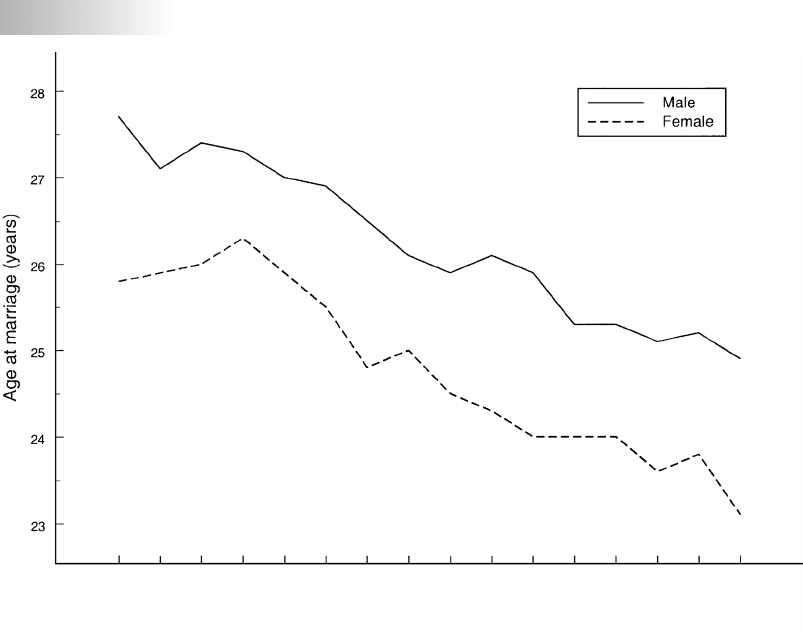
Table 3.4 and Figures 3.5 and 3.6 show the trend in the mean age at
marriage in bachelor/spinster marriages between the 1680s and the 1830s.
Cambridge Histories Online © Cambridge University Press, 2008
74 E. A. Wrigley
1680-9
1690-9
1700-9
1710-19
1720-9
1730-9
1740-9
1750-9
Period
1760-9
1770-9
1780-9
1790-9
1800-9
1810-19
1820-9
1830-7
Figure 3.5 Mean age
at marriage:
bachelor/spinster
marriages
Source:Wrigley et al.
1997:
tab. 5.3, 134.
This category of marriage comprised about 75 per cent of all marriages
at the beginning of the period, rising to about 82 per cent towards its
end, but bachelor/spinster marriages accounted for a far higher propor-
tion of all births, so that the trend in average age of such marriages is a
telling statistic in relation to marital fertility (Wrigley et al.1997: 164–5).
Between the first and last decades of the period, male marriage age
dropped by 2.8 years from 27.7 to 24.9, while female marriage age fell by
an almost identical amount, by 2.7 years from 25.8 to 23.1. Since the totals
of marriages from which the average ages for each decade were derived
are relatively modest (in the range 400–1,100 for women, increasing over
time, and about 80 per cent of these totals for men), it is perhaps safer to
measure change from thirty-year rather than ten-year periods. Between
1670–99 and 1810–37 the male average fell from 27.6 to 25.1, and the fe-
male average from 26.0 to 23.5, in both cases a fall of 2.5 years. Using the
method of estimation just described, the fall in marriage age for women
would produce a rise of 20 per cent in completed marital fertility. This is a
minimum figure since the associated fall in mean age at maternity would
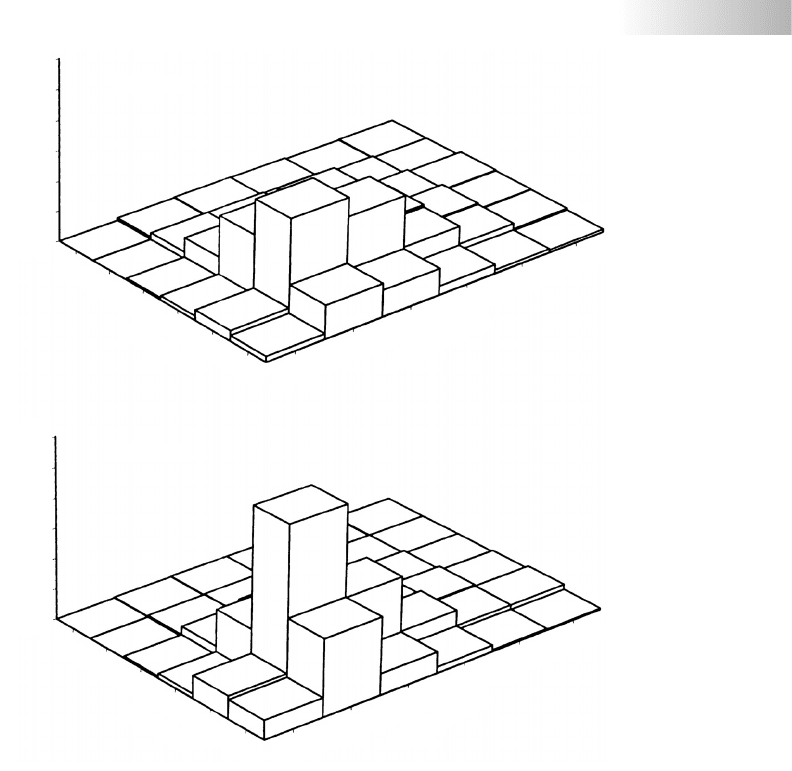
increase the pure fertility effect slightly. The three-dimensional represen-
tation of the change in marriage age shown in Figure 3.6 emphasises the
increasing degree to which marriage was becoming the preserve of the
Cambridge Histories Online © Cambridge University Press, 2008
British population during the ‘long’ eighteenth century 75
300
1600-1724
1775-1837
250
200
150
100
50
0
40-4
35-9
30-4
25-9
Wife's age
Husband's age
20-4
40-4
35-9
30-4
25-9
20-4
15-19
40-4
35-9
30-4
25-9
Wife's age
20-4
15-19
15-19
Husband's age
40-4
35-9
30-4
25-9
20-4
15-19
Frequency
300
250
200
150
100
50
0
Frequency
Figure 3.6 Marriage
age combinations:
bachelor/spinster
marriages (frequency
per 1,000 marriages)
Source:Wrigley
et al. 1997:
tab. 5.5, 142.
young. Marriages in which the groom was aged 20–4 and the bride was
either in the same age group or in her teens constituted 41 per cent of
all marriages in the period 1775–1837, whereas in 1600–1724 the corre-
sponding figure was only 22 per cent.
The combined effect of changes in stillbirth rates and of the fall in
themean age of marriage for women would have served to raise fertility
by 27 or 28 per cent. Since the GRR rose by 36 per cent in the course
of the long eighteenth century, these two changes alone account for at
least three-quarters of the rise in the GRR.
A further change which boosted fertility lay not in fertility within
marriage but in extra-marital fertility. In the last quarter of the seven-
teenth century 1.8 per cent of all births were illegitimate; in the first
quarter of the nineteenth century the comparable figure had risen to
6.2 per cent. Since the proportion of young women who were unmar-
ried fell sharply over this period as marriage age declined, the rise in
Cambridge Histories Online © Cambridge University Press, 2008

76 E. A. Wrigley
theage-specific illegitimate fertility rate was, of course, far greater than
might appear from the rise in the illegitimacy ratio (Wrigley 1981: 155–63;
Wrigley and Schofield 1989: tab. 6.2, 219). The increase in illegitimate fer-
tility would have increased overall fertility by about 4.7 per cent ((100 ×
(100/93.8)/(100/98.2)) = 104.7). Adding this rise to the rises attributable
to changes in marriage age and the stillbirth rate would have raised the
GRR by 33 or 34 per cent, thus accounting for the great bulk of its rise.
There remains the question of the proportion of each generation of
young men and women who never married. Before 1851, when the cen-
sus first provides reliable information about this topic, only indirect es-
timation of this variable is possible. It is essentially a residual derived
from other variables which can be estimated directly. The work of Weir
and Schofield has suggested that there were major changes in the pro-
portion never marrying in the sixteenth and seventeenth centuries, but
that, beginning with the birth cohort which married chiefly in the 1690s,
there was little subsequent change in this variable in the course of the
long eighteenth century. Throughout this period the proportion of each
cohort never marrying probably lay in the range between 10 and 15
per cent (Weir 1984; Schofield 1985; Schofield 1989: fig. 8.8, 297). It has
not proved possible to estimate the percentage separately for men and
women, though it is unlikely that they diverged widely. At the time of
the 1851 census the proportion of men above the age to marry who had
never married was 11.4 per cent, and of women 12.3 per cent.
13
That
there was little change in the proportion never marrying is, of course,
also an implication of the combined effect of changing marriage age, a
decreasing stillbirth rate and the sharp increase in illegitimate fertility in
accounting in full for the rise which took place in the GRR. The level and
trend of abstention from marriage, however, remains subject to greater
uncertainty than other aspects of marriage behaviour.
That economic circumstances exercised a powerful influence on mar-
riage decisions became clear when The Population History of England was
first published in 1981. It was difficult to resist the view that secular
economic and nuptiality trends were closely related, though the parallel
movement in the two series also appeared to pose a difficulty, since there
wasatimelag between the turning points in the two series (Wrigley and
Schofield 1989: fig. 10.9, 425). The question proved controversial (Wrigley
and Schofield 1989: xx–xxx and fig. 3.1, xxii). The accuracy of the real
wage series was questionable. Even if it were demonstrably accurate, be-
cause of its nature, changes in the proportion of family income provided
by women and children, or in the number of days worked during the
year, could play no part in influencing its level or trend (de Vries 1994;
Voth 2000). And there were other problems with both data series. But
13
The proportion never marrying was taken as the average of those single in the age groups
45–9 and 50–4. For the relevant statistics see Mitchell 1988: tab. I.5, 20–2.
Cambridge Histories Online © Cambridge University Press, 2008

British population during the ‘long’ eighteenth century 77
thebig issue proved to be the apparent time lag. In principle, at one ex-
treme, it might be argued that there should be no time lag: at the other
extreme, that, for example, random fluctuations in the real wage tied
to the fortunes of the annual harvest were so substantial that turning
points in the secular trend of the real wage could not be detected with
confidence until some time after they had occurred; that, in other words,
the‘signal’ was difficult to interpret since there was so much ‘noise’ in
the system.
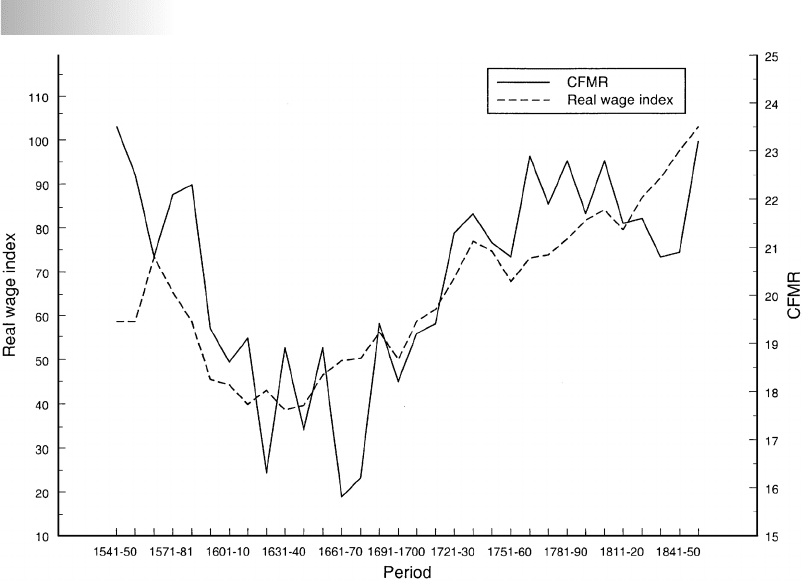
Figure 3.7 puts a different complexion on this question. There are a
number of differences between this and previous graphs of the variables.
The assumptions made in deriving the series totals are enumerated in
thenotes to the figure. They produce significant changes in some data
points in both series compared with earlier graphs. A further change,
however, also makes a substantial difference to the appearance of the
graph. The data are plotted as decennial averages rather than as twenty-
five-year moving averages as in earlier exercises. As a result it is clear
that mid-seventeenth-century lag in the turning points of the two series,
apparent when moving averages are employed, is absent if the 1660s and
1670s are ignored. Whether they should be ignored is debatable. The regis-
tration of marriages during the Civil War and the Commonwealth period
suffered very severely and remained poor following the Restoration until
the Marriage Duty Act of 1695. It is inherently easier to identify a period
when there is an abrupt or wide departure from a preceding pattern
than to do the same if the change is less marked or is gradual. Thus,
paradoxically, the radical disruptions of the 1640s and 1650s posed fewer
problems to the programme used to detect underregistration and intro-
duce replacement values than those associated with the prevalence of
clandestine marriage in the period following the Restoration. In this pe-
riod the replacement estimates suggested that 10.9 per cent of marriages
were not recorded, a figure which dropped to 3.3 per cent following the
passage of the Marriage Duty Act, but the true figure for the Restoration
period was probably higher, especially in the 1660s and 1670s (Wrigley
and Schofield 1989: tab. 1.5, 32 and app. 12, 687–704). It is possible, there-
fore, that the agreement between the trends in the real wage index and
the crude first marriage rate would be still closer if this problem did
not exist. In that case the two series might be said to follow very sim-
ilar paths during the first two and a half centuries of the period. Only
in the early decades of the nineteenth century was the relationship less
close.
It has long been known that in organic economies there was normally
astrong relationship between the fortunes of harvest, which had a ma-
jor impact on the economic well-being of a community, and fluctuations
in the marriage rate. The relationship was positive: years of bad harvest
severely reduced the number of marriages; good harvests brought many
more couples to the church porch. This was true of England in common
Cambridge Histories Online © Cambridge University Press, 2008
78 E. A. Wrigley
Figure 3.7 Crude first marriage rates and real wage trends
Notes:The crude first marriage rate was calculated by relating the decennial totals of first
marriages to the population aged 15–34 at the midpoint of the ten-year period. The
population totals for the four five-year age groups 15–19 to 30–4 were weighted 1:5:3:1 to
reflect approximately the distribution of marriages between the four age groups (previously
the simple total of population aged 15–34 had been used). First marriages were calculated
from the totals of all marriages using the assumptions set out in Wrigley and Schofield (1989:
426–7). The real wage index was calculated using the decadal real wage estimates of
Goldstone (1986) for the period down to 1691–1700; the Phelps Brown and Hopkins index
modified to include a ‘northern’ component as described in ibid.: 432–3 for the period
1701–10 to 1771–80; and Feinstein’s (1998a) estimates thereafter. The Goldstone and PBH
series were joined by treating the decadal value for 1691–1700 as 50 in both cases. The PBH
and Feinstein series were joined by indexing the Feinstein series to the value of the PBH
series for 1771–80.
Sources:Wrigley and Schofield 1989: tab. A9.2, 642–4; Wrigley et al. 1997: tab. A9.1,
614–15, and the related and more detailed Cambridge Group tabulations of the age structure
of the population at quinquennial intervals: Goldstone 1986: tab. A1, 32; Feinstein 1998a:
app. tab. 1, 652–3.
with other European countries (Galloway 1988; Wrigley and Schofield
1989: 348–53, 368–77). The foregoing shows that there was also a strong
link between economic circumstances and marriage trends in the longer
term. Intheabsence of any major change in age-specific marital fertility
rates, wide variations in nuptiality are certain to produce parallel move-
ments in overall fertility. The existence of a link between economic cir-
cumstances and marriage decisions, and the absence of any comparable
link with mortality, sustain the presumption that what Malthus termed
Cambridge Histories Online © Cambridge University Press, 2008

British population during the ‘long’ eighteenth century 79
the preventive check wasmuchmoreinfluential than the positive check
in early modern England (Wrigley and Schofield 1989: ch. 10). The is-
sue was much more doubtful in Scotland. The 1690s showed vividly how
vulnerable large tracts of the country remained to harvest failure. Ab-
erdeenshire was as cruelly affected as, say, the Beauvaisis in that decade.
In England, in contrast, even in the sixteenth century, crises de subsis-
tances had a greater impact on nuptiality and fertility than on mortality
(Goubert 1960; Tyson 1986; Wrigley and Schofield 1989: 320–42; Schofield
1994: 81–4; Houston 1996).
MORTALITY
Figure 3.3 showed that the fall in mortality was less influential than
the rise infertility in increasing the intrinsic growth rate during the
long eighteenth century, but the mortality history of the period is none
theless remarkably interesting. Perhaps the point of widest significance
which is brought to light is that the assumption that age-specific mor-
tality rates tend to move roughly in parallel with each other, which is
fundamental to the construction of model life tables, should not be ac-
cepted uncritically when considering populations in the past. Model life
tables are widely employed to extrapolate from the known to the un-
known, as, for example, when there is information about mortality in
the childhood age groups but none for the higher age groups. It may be
true in general that a major improvement or deterioration in childhood
mortality is likely to be paralleled by similar changes in adult mortal-
ity, and vice versa, but this rule is not universally valid. It did not hold
true for England in the long eighteenth century, when adult mortality
improved sharply while child mortality changed little. The mortality his-
tory of early modern England, therefore, suggests that it is unsafe to
make use of a knowledge of mortality rates in a particular age range to
infer rates in other age groups using model life tables. For example, it is
possible to calculate male e
20
for the monkslivinginCanterburyinthe
fifteenth century when it was about 27.6 years. Using the model North
Princeton life tables thisimplies an e
0
of only about 18 years, yet if the
relationship between adult and child rates in the fifteenth century were
the sameasintheseventeenth century e
0
would be much higher, prob-
ably more than 30 years (Wrigley et al.1997: 349; the Canterbury data
are from Hatcher 1986: tab. 2, 28). Family reconstitution data show that
in Stuart England adult mortality rates were radically higher relative to
those earlier in life than would be expected from the Princeton life tables,
yetthat in the course of the eighteenth century age-specific rates came
to conform quite closely to the model North pattern across their whole
range, a feature which remained apparent when William Farr produced
theinfluential third English life table, reflecting the mortality recorded
under the new civil registration system during the first seventeen years
Cambridge Histories Online © Cambridge University Press, 2008

80 E. A. Wrigley
Table 3.5 Adult mortality, sexes combined (1,000 q
x
)
Third English life
1640–89 1750–1809 table modified
25–9 75.9 53.6 47.8
30–4 82.0 54.1 52.6
35–9 97.4 62.3 58.4
40–4 92.8 68.1 66.2
45–9 115.0 89.0 76.8
50–4 142.5 101.1 94.3
55–9 204.9 124.1 123.3
60–4 226.1 172.1 170.7
65–9 295.5 237.7 242.8
70–4 431.4 375.8 350.7
75–9 514.5 439.0 480.9
80–4 627.4 607.5 618.9
e
25
30.4 35.4 36.3
20
e
25
17.0 17.8 18.0
20
e
45
14.9 16.2 16.5
20
e
65
9.1 10.2 10.2
Note:The original rates in the third English life table above the age of 50
understated the prevailing mortality rates because there was a marked
overstatement of age by the elderly in the censuses of 1841 and 1851. The
rates shown in the table have been corrected to offset this source of inaccuracy.
Wrigley and Schofield 1989: 709–12, esp. tab. A14.3, 711.
Source:Wrigley et al.1997: tab. 6.20, 291.
of its existence, 1838–54. For this reason
model North would appear to be a nat-
ural choice for use in making inferences
from partial data for an earlier period,
but doing so can demonstrably lead to
dubious results.
Table 3.5 shows adult mortality rates
at the beginning and the end of the
long eighteenth century. The periods are
relatively long to minimise the random
variability to be found in decennial es-
timates based on limited numbers of
events. Rates from the third English life
table are also shown to illustrate the
similarity between mortality towards the
end of the parish register era and that
revealed by national statistics for the
middle years of the nineteenth century.
In contrast, mortality rates in the late
seventeenth century were at a far higher
level. In the period 1640–89 e
25
was 30.4
years, roughly equivalent to level 5 of
model North. At this level, expectation of
life at birth for the two sexes combined
is only 28.5 years. When mortality was at its worst in the 1680s e
25
was
less than 28 years, which in model North terms is equivalent to an e
0
of less than 20 years. In contrast by the period 1750–1809 e
25
was 35.4
years, equivalent to level 9 in model North (Wrigley et al.1997:tab. 6.19,
290; the technicalities of deriving accurate estimates of adult mortality
preclude the estimation of rates based on parish register data later than
the decade 1800–9: ibid., app. 6, 581–600). Level 9 has a combined sex e
0
of 38.4 years. If, therefore, adult mortality data were the sole guide to
mortality change during the long eighteenth century, there would appear
to have been a pronounced rise in e
0
of at least ten years, and possibly ap-
proaching twenty years, depending on whether the estimate were based
on lengthy periods, or from the trough in the 1680s to the plateau in
the late eighteenth century. If this line of argument had been valid, the
increase in life expectancy between the two periods would have been as
great, measured in years of life gained, as over the equivalent period of
time separating the mid-nineteenth and early twentieth centuries. Mea-
sured as a percentage rise in life expectancy, the earlier period would
have the more impressive record.
Matters appear very different, however, when infant and child mortal-
ity is also taken into account. Here the picture is turned on its head, for
if estimates of e
0
were to based on mortality rates in the first fifteen years
of life, the conclusion would be virtual stasis rather than rapid change.
Cambridge Histories Online © Cambridge University Press, 2008