
Floud R., Johnson P. The Cambridge Economic History of Modern Britain, Volume 1: Industrialisation, 1700-1860
Подождите немного. Документ загружается.


Living standards and the urban environment 271
Table 10.1 Selected indicators of the standard of living, 1760–1850
decade Y W H1 H2 WK E M L R1 R2
1760 1,803 (109) 167.4 171.1 2,576 34.2 174 48.5 3 3
1780 1,787 100 168 164.6 2,952 34.7 173 49.5 3 3
1800 1,936 103 168.9 164.6 3,328 35.9 145 52.5 3 4
1820 2,099 113 170.7 167.2 3,342 39.2 154 54.5 3 4
1830 2,209 120 170.7 165.6 3,356 40.8 149 57.5 3 3
1850 2,846 135 165.3 164.7 3,185 39.5 156 61.5 3 1
% change 1760–1820 16.4 4.1 2.0 −0.9 29.7 14.6 −11.5 6 0.0 33.3
% change 1760–1850 57.8 23.9 −1.3 −1.3 23.6 15.5 −10.3 13 0.0 −66.7
Note:Percentage change relative to starting level for all variables except literacy, where the figure stated is the gain in percentage points.
Sources:Yincome per capita in 1992 ppp-adjusted US-$; Crafts 1997: 623.
W 1780 = 100; full-employment real earnings; Feinstein 1998a: 652–3 except for 1760, which is based on Lindert and Williamson 1983a, spliced
to the Feinstein series.
H1 Average height of recruits aged 20–3, by decade of birth; Floud et al.1990: 142–7.
H2 Average height of recruits aged 20–3, by decade of birth; Komlos 1993, 1998, pvt. comm.
WK Number of working hours per year; Voth 2001. Values for 1780 and 1820 based on linear interpolation.
E Life expectancy at birth; Wrigley et al.1997: 614.
M Infant mortality rate; Wrigley et al.1997: 224.
L Literacy rate; Schofield 1973.
R1 Political rights index (range from 1 to 7, with 1 being the best score); Crafts 1997.
R2 Civil rights index (range from 1 to 7, with 1 being the best score); Crafts 1997.
at the time, Britons enjoyed a relatively high degree of civil liberties. At
the sametime, political repression grew during the Napoleonic Wars and
thereafter, with the government using increasingly repressive measures
to crack down on Luddites and ‘Captain Swing’ riots. The tide turned
from the 1830s onwards. Greater press freedom and greater opportuni-
ties for forming civic organisations and assemblies did much to reverse
theearlier decline in civil liberties, and by 1850, most of the important
human rights in this regard were respected (Crafts 1997: 624).
In the context of numerous indicators that show gradual change, some-
times of varying tendency, only one variable stands out – demographic
growth.Population surged at an unprecedented rate during the classic
period of the industrial revolution (Wrigley and Schofield 1981; Wrigley
et al.1997; see also chapter 3 above). Few other variables show radical
discontinuities (Clark 2001b). The apparent lack of a clear, strong trend
in living standards is nothing short of remarkable in this context. Earlier
episodes of demographic expansion and contraction had strong effects
on economic well-being, as Malthus predicted. It can be argued that the
most remarkable feature of the period 1750–1850 was the absence of a
sharp collapse in per capita income (Mokyr 1999).
REAL WAGES
The oldest – and in some ways most narrow – of all the indicators
of the standard of living has been most important in changing our
Cambridge Histories Online © Cambridge University Press, 2008
272 Hans-Joachim Voth
60.0
80.0
100.0
120.0
140.0
160.0
180.0
200.0
1781 1791 1801 1811 1821 1831 1841 1851
1781= 100
Feinstein
Lindert and Williamson
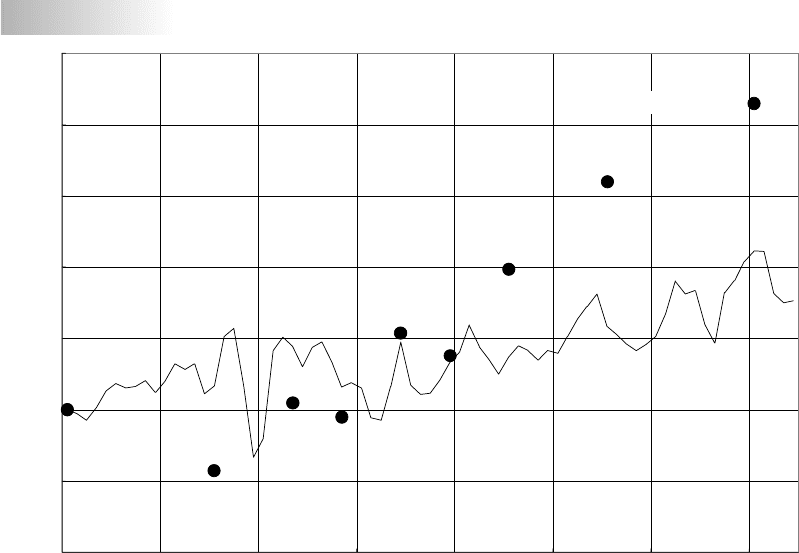
Figure 10.1 Real
earnings in Great
Britain, 1781–1855
Source:Feinstein
1998a: 643.
understanding of the industrial revolution. The quality of real wage in-
dices has improved markedly since the 1980s. Instead of reworking the
same old data, collected by Bowley and Wood at the end of the nineteenth
century, recent research has at last expanded the number of professions
covered in the nominal wage series (Feinstein 1998a). Even more impor-
tantly, a new cost of living index now includes information on a much
wider range of household items. This momentous effort in data collec-
tion has strongly reinforced pessimistic interpretations of the course of
living standards during the industrial revolution.
In the 1980s, optimists could point to the course of real wages as
their strongest piece of evidence, declaring confidently that ‘the debate
should be over’ (Lindert and Williamson 1983a). The most sanguine es-
timates implied that real wages for adult men increased by over 80 per
cent between 1820 and 1850. Some revisions by later authors reduced
this figure to 62 per cent (Crafts 1985b). Also, other authors found that
wages ofskilled workers surged between 1770 and 1815 (Botham and
Hunt 1987), and that the income of clerks in banks and the East India
Company increased drastically (Boot 1991, 1999). One of the first pieces
of evidence that contradicted these results was new information from
budget surveys. Horrell and Humphries (1992) showed that total family
income probably failed to keep up with prices over the period 1791–5 to
1816–20. Declining opportunities for female employment drove a wedge
between family budgets and the wage gains of males.
Cambridge Histories Online © Cambridge University Press, 2008

Living standards and the urban environment 273
What overturned the optimistic verdicts, however, was a fundamen-
tally new view not of trends in nominal wages, but of prices. While the
new Feinstein series differs from the Lindert and Williamson nominal
wage index in some respects, it follows a broadly similar trend over time.
Prices of consumer goods, however, fell markedly less after the end of the
Napoleonic Wars than earlier authors appreciated. The new consumer
price index contains information on twelve food items plus beer, as well
as data on candles, coal and clothing. It also uses a more accurate rent se-
ries. In addition to using improved and new series, Feinstein also changes
thebase year and expenditure weights in his index series. Every single
one of his corrections diminishes the extent of the price decline after
theend of the Napoleonic Wars. While most adjustments are relatively
small – adding series for potatoes, milk and cheese reduces the total fall
in prices by 3.2 per cent – the cumulative effect is substantial. Lindert
and Williamson had concluded that the cost of living declined by 51 per
cent between 1810/14 and 1849/51; the new figure is 37 per cent (Feinstein
1998a: 640–2). The new index covers most of the commodities bought by
working-class households. In particular, the new series on the price of
clothing – and evidence on its robustness – as well as the collection of
good data on rents strongly suggest that future revisions are likely to be
small.
As a result of these revisions, the overall increase in real full-time
earnings is reduced to a little over 30 per cent. Also, Feinstein was one
of the firsttoderiveconfidenceintervalsforhisestimatesofrealwage
increases. Consequently, the often invoked ‘uncertainty arising from in-
complete historical data’ can finally be quantified. He calculates that real
full-time money earnings may have increased by as little as 19 per cent
or by as much as 55 per cent between 1778/82 and 1848/52. This rules
out stagnation, but even the upper bound is markedly below the ear-
lier estimates by more optimistic authors. Further research has tended
to reinforce these conclusions by, for example, showing that Feinstein’s
estimates of real wages may be too optimistic for the period 1790–1820
(Clark 2001a). Taking unemployment and short-time work into account
further reduces real wage growth to a less than 30 per cent increase over
theperiod 1780 to 1850 as a whole. Since wages probably fell between
the1760s and 1780s, the overall gain in purchasing power was even more
limited. These figures may still convey too optimistic an image of living
standards once changes in a wider range of indicators is considered, as
thefollowing sections argue.
HEIGHTS AND PHYSICAL WELL-BEING
Over the last few decades, income as a measure of living standards has
been much criticised (Tobin and Nordhaus 1973). The main objection
is that it represents an input in the production of well-being, not an
Cambridge Histories Online © Cambridge University Press, 2008

274 Hans-Joachim Voth
output. To the extent that wages rise because they compensate for urban
disamenities or the riskiness of particular kinds of work, measuring in-
come may seriously overstate gains in the standard of living. Also, while
income at low levels of development is essential for purchasing additional
food, housing or health care, it is also often associated with the purchase
of products that harm physical well-being, such as alcohol and tobacco.
Fewresearch programmes created more enthusiasm at their incep-
tion than the use of body measurements to establish trends in living
standards. The stature of children and adults has become the focus of
numerous studies since the 1980s. Height is a measure of net nutritional
status from birth to age 25. In most populations today, growth ceases at
age 18 or even earlier. The amount of nutrients consumed, as well as their
composition, is crucial for growth. So are the claims on nutrient intake –
calories used up to cope with heat, cold or disease, or to withstand the
rigours of work. What matters is the net nutritional balance: the amount
of calories and protein available for growth. Children deprived of ad-
equate nutrition can experience ‘catch-up’ growth. If adequate food be-
comes available at some stage up to age 25, growth resumes. Height gains
at such relatively late stages in life can be dramatic: on American planta-
tions, slaves went from being severely stunted in childhood to terminal
heights that were an easy match for European populations (Steckel 1986).
Also, there is increasing evidence that the nutritional status of mothers
affects children for most of their lives.
Height seemed an attractive indicator of physical well-being because
it is not an ‘input’ measure, such as income. Instead, it captures net
outcomes (Fogel 1984; Komlos 1989). Despite the collection of enormous
amounts of data, however, firm conclusions from this research pro-
gramme are few and far between. The original intention was to cast light
on living standards for periods when data on incomes were scarce or un-
available. Indeed, some scholars tried to derive estimates of per capita
income based on the co-movement of heights and income in later peri-
ods (Brinkman et al.1988). However, it appears that height and income
are not highly correlated, at least during the eighteenth and nineteenth
centuries; some of the correlations used to extrapolate income per capita
backwards were spurious (Mandemakers and Van Zanden 1993; Crafts
1997). Anthropometric history abounds in examples showing that poorer
populations were often taller, and that economic development often pro-
ceeded side-by-side with falls in average heights (Steckel 1986; Nicholas
and Steckel 1991). The fact that military recruits from rural areas – which
often had relatively low per capita incomes – were markedly taller than
their urban peers strongly suggests that the disease environment and
the relative price of food may have been more important than total in-
come (Steckel 1995). The relationship is further complicated by the fact
that inequality has an impact on average stature that is several orders of
magnitude larger than that of GDP (Steckel 1983). Most scholars working
Cambridge Histories Online © Cambridge University Press, 2008

Living standards and the urban environment 275
in the field now accept that stature and per capita income may not be
highly correlated over significant periods of time and in cross-sections,
and that one cannot serve as a proxy for the other. Also, there appears
to be no systematic association between industrialisation and a decline
in heights (Steckel and Floud 1997).
Historians of height have tried to side-step the issue, arguing that
stature represents a more comprehensive indicator of the ‘biological stan-
dard of living’ (Komlos 1993; Baten and Komlos 1998). Deviations of trends
in height from those for income would then have to be indicative of
broader changes in physical well-being. This is because the direct benefits
of greater stature are extremely limited. While greater life expectancy
for adults and lower infant mortality rates are beneficial in themselves,
greater heights are not. Stature is useful only in so far as it has indicator
value for other characteristics that are associated with a higher standard
of living. More immediately useful measures of health outcomes include
life expectancy and mortality, as well as proxies for human capital such
as education and literacy that may facilitate better hygiene, etc.
Unfortunately, while more comprehensive indicators of living stan-
dards that incorporate information on infant mortality, life expectancy
and literacy appear highly correlated with stature in the twentieth cen-
tury as well as over the very long run, the same is not true during earlier
periods. Periods with increasing life expectancy and falling infant mor-
tality sometimes witnessed declining heights (Crafts 1997). This is all the
more surprising since modern cross-sectional data from Norway show
that gains in stature are normally associated with reductions in mor-
tality (Waaler 1984) – a pattern also found among Union army recruits
during the American Civil War (Costa 1993). It is because of divergent
trends in average heights and life expectancy that, during specific histor-
ical periods such as in Britain 1760–1850, changes in height can be poor
indicators of physical well-being.
Conceptual issues therefore often make it difficult to map from stature
to the standard of living in general (Crafts 1987b), especially when trends
over time are concerned. Even if these were resolved, heights would have
relatively little to say about the evolution of living standards in Britain
during the industrial revolution. This is for two reasons. First, the direc-
tion of change has proved difficult to establish. Second, the magnitude of
observed changes is too small to suggest meaningful differences in living
standards. The most commonly used data set contains information on
theheights of 108,000 recruits for the British Army and Royal Marines,
and of boys entering the Marine Society in London as well as Sandhurst.
While Floud et al.argue that heights increased over the period, Komlos
finds evidence of a decline in the same data (Floud et al.1990; Komlos
1993). The cause of this peculiar divergence of views is that all of the data
from military sources are affected by left-hand truncation of the under-
lying height distribution. Armies imposed minimum heights standards.
Cambridge Histories Online © Cambridge University Press, 2008

276 Hans-Joachim Voth
Recruits below a certain height were routinely rejected. To adjust to the
fluctuating demands of the armed forces, standards varied over time.
Also, they were enforced to a varying degree. While it is possible to cor-
rect these biases with quantitative techniques, few of the data actually
fulfil the requirements for their use (Wachter and Trussell 1982). Data on
thestature of transported convicts do not suffer from truncation, and
theresults obtained from this source appear more stable. They show a
decline in average heights (Nicholas and Steckel 1991).
Even if results were unambiguous in their direction, the magnitudes
involved are too small to inspire much confidence in any conclusions
based on anthropometric data. Floud et al.find that average heights in-
creased by 3.3 cm, from 167.4 cm to 170.7 cm, between 1760 and 1830, and
that they then fell to 165.3 cm. Even without the reversal since the 1780s,
increases of 0.47 cm per decade would hardly be sufficient as a basis for
strong claims about changes in living standards – overall, average heights
increased by 1.97 per cent between 1760 and 1830, according to Floud et al.
(or 0.28 per cent per decade). Komlos (1993) found a decline of 1.3 per
cent. Nicholas and Steckel (1991) also calculate that convict heights fell
between 1780 and 1815 by approximately 1 per cent of the starting level.
These are small differences, compared to changes in heights during
other periods. Between 1900 and 1950, average male heights in Britain
increased by 8 cm, or 1.6 cm per decade (Steckel 1995). This represents a
rate of change that is more than five times higher than the one observed
during the most favourable episode of the industrial revolution (using the
optimistic results from Floud et al.). Moreover, interpretation of trends in
heights – even if their direction could be established unambiguously –
is complicated by the considerable variability of estimates over short
periods. The overall decline between 1760 and 1850 according to Floud
et al.is2cm. However, estimated heights appear to change very markedly
within a few years. For example, the Floud data show a decline by 3.1 cm
over a five-year period from 1832 to 1837, followed by a 2.2 cm gain in the
next five years. Estimated heights change so much from decade to decade
that, over the period as a whole, 95 per cent of all observations lie within
a8cminterval between 164.6 cm and 172.6 cm – four times larger than
theoverall change between 1760 and 1850. Independent of the statistical
significance of these results, it would be hard to argue that a histori-
cally meaningful difference exists once sampling biases, problems with
truncation because of minimum height standards, and the deficiencies
of historical data in general are taken into account.
WORKING HOURS
Ever since the writings of William Blake and Karl Marx, the industrial
revolution has been synonymous with long hours of arduous toil, often
Cambridge Histories Online © Cambridge University Press, 2008

Living standards and the urban environment 277
by children and women, under dangerous and unhealthy conditions.
Europe’s ‘dark satanic mills’ producing cotton textiles saw the longest
working years recorded in human history – around sixty-five to seventy
hours per week, or some 3,500 hours per year. Compared to these figures,
the working week in the Third World today is relatively short, averag-
ing forty to fifty hours (Acemoglu et al. 2002). Did such long hours exist
before the industrial revolution? Or did the great shift of labour out of
agriculture and into industry coincide with a move towards much longer
working hours? Changes in the hours of work would have strong impli-
cations for the standard of living debate – if money incomes rose only
because of more work, it becomes much harder to argue that living stan-
dards improved (O’Brien and Engerman 1981). A comprehensive view of
welfare implications would have to take into account the value of leisure
lost (Usher 1980; Crafts 1985a). To do so would be particularly useful since
thepotential magnitudes of change involved are substantial.
Data on working hours before the industrial revolution are very rare.
What few there are can only shed light in an indirect way, and may be
of questionable reliability. A considerable degree of variation by region,
occupation, gender and age aggravates problems of representativeness for
any particular source. Despite the weaknesses of the data, many histori-
ans have argued that average working hours for males of prime working
age between 1750 and 1850 increased, by between 20 and 35 per cent
(Freudenberger and Cummins 1976; Tranter 1981; Crafts 1985a).
Research since the 1990s offers some qualified support for this be-
lief. Hours were probably already long in agriculture, and may not have
changed much during the industrial revolution (Clark and van der Werf
1998; Voth 2001). Outside agriculture, there is some evidence that peo-
ple in 1830 and 1850 worked longer than their great-grandparents did
in 1760. Using witnesses’ accounts from the courtroom, new estimates
of the length of the working year in London and in the industrialising
north of England have been compiled (Voth 1998, 2001). The main factor
responsible for longer hours, according to these results, was not a longer
working day. Instead, work was performed on many more days in the
year. What had curtailed total labour input in pre-industrial times was a
large number of festivals and holy days, both religious and political in
nature. Also, when workers set their own schedules, they were prone to
take Monday off – a practice know as ‘Saint Monday’ (Thompson 1967).
The courtroom evidence strongly suggests that Mondays and holy days
were indeed days of leisure during the middle of the eighteenth century,
and that they had become days of regular work by the first decades of the
nineteenth century. Yet the persistence of practices such as Saint Monday
is controversial (Reid 1976, 1996), and a considerable degree of regional
variation may make it more difficult to ascertain national trends (Hopkins
1982.) At the moment, it appears that the balance of evidence favours
increases in total workloads during the industrial revolution for males
Cambridge Histories Online © Cambridge University Press, 2008
278 Hans-Joachim Voth
0
500
1,000
1,500
2,000
2,500
3,000
3,500
4,000
1700 1750 1800 1850 1900 1950 2000
hours/year
Voth Maddison MFO
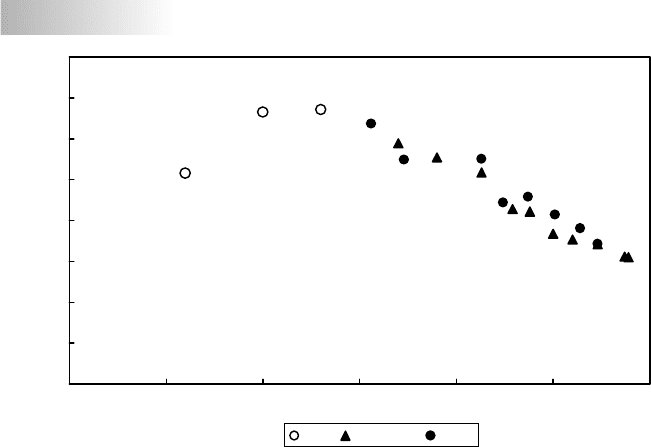
Figure 10.2 Working
hours in Britain in the
long run
Source: Matthews
et al.1982; Maddison
1991; Voth 2001.
of prime working age. The direction of change is much more clearly
established than the magnitudes involved. Despite numerous efforts since
the1980s, it appears unlikely that the quality of the data will match that
on wages, mortality or literacy in the near future.
Using witnesses’ data to construct tentative estimates of annual labour
input, we can compare total annual working hours before and after the
industrial revolution. They suggest a relatively rapid increase during the
second half of the eighteenth century, and then stagnation or a slight
decline from a peak around 1830. If the findings are even broadly correct –
and can be compared with the data derived from very different sources for
later periods – then total hours before the onset of full industrialisation
were approximately as ‘short’ as they were around 1900.
Increases in the length of the working year may have been mitigated by
declining work opportunities for women, and less child labour. Earnings
data show that females may have participated in paid work to a consider-
able extent. In the late eighteenth century, 65 per cent of married women
had either non-zero earnings or a recorded occupation. Household bud-
gets suggest that the earnings opportunities of women declined as indus-
trialisation spread. Many of the old cottage-shop industries were more
compatible with the skills of women and their preferred modes of work-
ing than the factory-based system of production (Horrell and Humphries
1995). The story differs somewhat for different occupations, and is compli-
cated by an apparent increase in female contributions to family income
in the second quarter of the nineteenth century. None the less by the
middle of the eighteenth century, women’s participation rates had fallen
to 45.3 per cent, and their share of total family earnings was often below
its peak (Horrell and Humphries 1995: 98–107; see also chapter 9 above).
Cambridge Histories Online © Cambridge University Press, 2008

Living standards and the urban environment 279
Child labour may have begun to decline during this period. It is pos-
sible that the reduction began before the Factory Acts (Nardinelli 1980),
over the period 1815–35. However, other scholars using the same sources
find that child labour was and remained high in many industries, in-
cluding cotton (Tuttle 1999). Therefore, the idea that child labour was a
necessary but transitory phase of industrial development that enabled the
formation of a disciplined workforce appears questionable (Galbi 1997).
What is also unclear is the extent to which an increase or a decline in the
prevalence of child labour occurred between 1750 and 1810. Child labour
was common enough in agriculture (Kussmaul 1981; Humphries 2001);
it is not obvious that increasing employment outside the primary sector
would have necessarily led to greater employment of children and ado-
lescents. The data from various enquiries reported to parliament do not
suggest a substantial decline in child labour before the 1830s. At the mo-
ment, the potentially more important issue of employment shares during
themiddle of the eighteenth century remains largely unresolved because
of substantial data problems.
Child labour matters because it is one of the key characteristics of
theBritish industrial revolution (Humphries 2001), and because the wel-
fare implications of changes are less ambiguous than, for example, in the
case of women. The increasing dependence of women on male earnings is
likely to have reinforced patriarchal patterns of behaviour, even if more
time spent in the home could also have been used for the production
of non-market goods. Less child labour may have led to a reduction in
family earnings, but would normally be seen as welfare improving none
the less. Early work, especially in mines and factories, often led to in-
juries and disabilities. Even children who were not maimed or afflicted
by debilitating disease as a result of early work – often from the age of 9
or earlier – were left permanently stunted (Humphries 1997). Also, their
chances to acquire greater skills, either through schooling or apprentice-
ships, were often reduced dramatically. The normal premises of utility
maximisation do not apply when economic agents cannot chose ‘freely’ –
as is the case with children (Humphries 2000). While the trend may or
may not have been downwards, the extent of child labour remained rel-
atively high throughout the industrial revolution. As late as 1851, the
census suggests that 36 per cent of children aged 10–14 worked, and the
ratesbased on autobiographies are even higher (Humphries 2001: 17).
This implies that child labour in industrialising Britain was broadly as
common as in Africa and Asia in 1950, and more frequent than in India
and Brazil at that time.
Evidence on working hours among children and women suggests that
theincreases in male hours may have been balanced to a certain ex-
tent by declining work for women and (possibly) children, at least in
classic paid employment. Magnitudes are hard to establish at the ag-
gregate level,sincemost of the evidence is highly concentrated at the
Cambridge Histories Online © Cambridge University Press, 2008

280 Hans-Joachim Voth
regional or sectoral level. To the extent that total hours worked in the
British economy grew net of these countervailing forces, estimates of
consumption and income growth need to be corrected. Calculating the
value of leisure lost is not straightforward. However, if the average wage
rate is used as the opportunity cost of leisure (Usher 1980), then most
of the relatively modest gains that traditional accounting methods used
to show disappear (Voth 2001). Instead of growing by 0.38 per cent per
year between 1760 and 1830 (equivalent to a total gain of 30 per cent),
consumption may only have increased by 0.04–0.05 per cent per year (a
total increase of 3 per cent).
This argument would be further reinforced if work intensity increased.
Evidence on this is very patchy indeed. What there is largely compares
piece-rates with weekly wages. Dividing the former by the latter yields
an index of physical output per week (Clark 1987, 1991a). Much of this
research reveals that levels of work effort in Britain during industriali-
sation were high, that the move to factories increased them, and that
they may have risen over time. Clark finds that workers in factories may
have worked up to one-third harder (Clark 1994). He also finds that work
intensity in English agriculture may have increased by 38–89 per cent
(Clark 1987: 427).
If some of the observed rise in output was bought not just by longer
hours, but by harder toil, the overall productivity gains would be even
less impressive than is currently thought. In welfare terms, however, the
implications may well be ambiguous. Clark (1994) argues that factory
discipline functioned as an effective pre-commitment device, enabling
workers to overcome short-sighted preferences for leisure. The underlying
assumption is that, in a competitive labour market, firms that do not
offer adequate compensation for extra work intensity would have found
themselves without workers eventually. Given that much of the recent
evidence, especially in terms of real wage trends, shows that the Lewis
model of surplus labour may describe the situation of industrialising
Britain more adequately (Feinstein 1998a), this interpretation will remain
highly controversial.
2
CONSUMPTION AND HOUSEHOLD BUDGETS
The old optimistic case quickly ran into one problem: if incomes grew,
what were they spent on? Further work on purchases of basic foodstuffs,
2
The Lewis model builds on the concept of a dual economy, composed of a traditional
and a modern sector. Because labour is abundant in the traditional sector (agriculture),
its reallocation to the modern sector does not cause a fall in agricultural output – the
marginal product of labour in the traditional sector is essentially zero. This implies that
wages may only rise above subsistence levels once the modern sector becomes sufficiently
large to affect agricultural wages.
Cambridge Histories Online © Cambridge University Press, 2008