
Kallen A. Understanding Biostatistics
Подождите немного. Документ загружается.

18 STATISTICS AND MEDICAL SCIENCE
0
0.1
0.2
0.3
0.4
0.5
0.6
0.7
0.8
0.9
1
Risk of at least one false positive, P
N
(α)
0.10 0.2 0.3 0.4 0.5 0.6 0.7 0.8 0.9 1
Individual significance level α
N =20 N =5 N =2 N =1
0
2
4
True level α (%)
7531
Number of variables
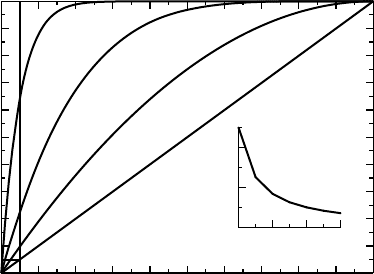
Figure 1.1 The graph of P
N
(α) for a few values of N. In the small inset graph we see the
significance level at which we need to do individual tests, in order to preserve the overall
significance level at 5%.
If we declare a person healthy precisely when all values fall within their respective ref-
erence range, and we do this in a nationwide screening program, the number P
N
(0.05) will
provide us with the percentage of healthy subjects who will wrongfully be found to be not
healthy. This number is given by the intersection between the vertical line in Figure 1.1 and
the curve describing the relevant function P
N
(α). If the whole population is healthy, this is
the fraction that will be declared sick. This number grows fast with N, which explains why
we should not adhere strictly to a decision rule like this. When used for general health test
purposes, the interpretation of data must be made with much more common sense. One looks
for patterns, or uses the observation for follow-up testing to confirm or reject a hypothesis
generated by the screening data.
Multiple p-values work in exactly the same way. In fact, it is more than an analogy,
it is the same math. The number P
N
(0.05) gives us the probability that we have at least
one statistically significant test when performing N independent tests at the significance
level α = 0.05. This is therefore the true significance level for the procedure, if you make
individual statistical tests at the 5% level. It follows that if we still want to do this panel of N
independent tests, but that our overall risk of being wrong must not exceed α, we must find
the number x that solves the equation α = 1 −(1 − x)
N
, namely x = 1 −(1 − α)
1/N
, which
is approximately α/N . Graphically this is the same as finding the α-value that corresponds
to the intersection of the curve with the line y = 0.05. These values are illustrated in the
small picture in Figure 1.1. In particular, if we make two experiments we need to compare
the p-value to the 2.5% level in order to draw our conclusion at the overall significance
level 5%.
This correction (which does not require independence to hold true) is called the Bonferroni
correction and is based on the assumption that we should compare all our tests to a common
significance level. It can be improved upon by distributing the risk α at our disposal unevenly
among the tests.
A natural follow-up question to the multiplicity problem is to ask how many tests one can
make. This is addressed in Box 1.7.

PRESPECIFICATION AND p-VALUE HISTORY 19
Box 1.7 How many tests can we do?
A natural follow-up question to the discussion on multiplicity is how many tests we can
do. There are two extreme answers. Either you can say that each test controls its own
error rate, and that multiple testing therefore is not a problem. Alternatively, you can
argue that the multiplicity issue is there as soon as more than one test, world-wide, has
been done. So only one test is allowed, and that was done ages ago.
Ultimately, this is another instance of using p-values to guide behavior. What matters
is what action the result triggers. If we use individual p-values in the inductive way
of mainly measuring how extreme the signal–noise ratio is, we do not need to adjust
significance level, because we do not really use it. When used in this way, p-values are
sometimes called exploratory p-values.
The need to adjust for multiplicity arises when we make a claim. It is here the whole
history must be accounted for in the computation. It is the validity of the claim that
must be addressed based on data. This means that we somehow need to restrict how
many claims we make per study, but statistics does not define the rules that should
govern this.
A standard way of settling the history problem is to prespecify what tests to do
and how the significance level is kept under control. Though a tool that solves one
aspect of the problem, it must be exercised with care. It is not legitimate to specify 200
hypotheses for a study and then report the successful ones as having been ‘prespecified’.
To mitigate this problem various multiplicity control procedures have been invented in
order to control the overall error rate. Though statistically sound, they are sometimes
hard to understand in a non-biostatistical world. Effectively they mean that if we walk
through the different p-values in a prespecified way, we are allowed to make a claim
from the final p-value, but if we walk through the same p-values in a different, not
prespecified way, that claim is not valid. The information about the particular variable
in question is fixed, it is how well we predicted the outcome of other variables that defines
the validity of the claim. Personally I have full sympathy with those who find it hard
to understand how the appropriate medical action can hinge on what some statistician
happened to prespecify.
1.8 Prespecification and p-value history
The multiplicity problem that we discussed in the previous section is one example that illus-
trates the need for a p-value to capture the full story. In the multiplicity case we need to say
that we did all N tests in order to find one that is statistically significant. If we report only the
significant p-values and omit to mention the others, we are cheating. The following example
is related to this.
Example 1.5 It was noted at a particular workplace that there was an unusually high frequency
of children with severe malformations born to women who had worked there during their
pregnancy. When this observation was made, workforce records over the previous 5 years
were collected, which showed that during that period 50 pregnant women had been employed
there and as many as 5 of their babies were born with a severe malformation.

20 STATISTICS AND MEDICAL SCIENCE
How likely is this result? It is known that in the general population about 2% of children
are born with a malformation of (at least) such severity. We can then compute the probability
of observing 5 or more such malformations among the 50 pregnancies. We simply have to list
all possibilities. If we denote a malformed child by M and a healthy one by H, we list all se-
quences of Ms and Hs of length 50. A particular sequence with precisely kMs has probability
p
k
(1 − p)
n−k
, where n = 50 and p = 0.02. If we therefore sum the probabilities for all such
sequences, we find that the probability of getting precisely k malformed babies is given by
n
k
p
k
(1 − p)
n−k
.
Here
n
k
, which is called a binomial coefficient, is the number of ways we can pick a set
of k elements from a bigger set of n elements. The distribution given by these probabilities
is called the binomial distribution and denoted by Bin(n, p). From this we can compute
the probability of getting an observation that is at least 5 for a Bin(50, 0.02) distribution. It
turns out to be very unlikely; it is 0.0032. Can we from this conclude that something in the
environment is harmful to pregnancies?
The validity of such a conclusion depends on how the workplace that was investigated was
chosen. Did we chose it at random, or did we first note the unusually high number and then
start the investigation? In the former case, we are correct in drawing the conclusion above.
However, as the situation is described it is most likely we have the second case. Also rare
events occur by chance, and if we look for one and then use the fact that what we have found
is rare to prove something, we are making a circular argument. In fact, for a Bin(50, 0.02)
distribution, we have the following probabilities for different outcomes that can occur:
Outcome 0 1 2 3 4 ≥ 5
Probability 0.364 0.372 0.186 0.0607 0.0145 0.00321
From this it follows that if we, for example, have 300 workplaces at which 50 women employ-
ees worked during their pregnancies, we expect 109 of these to have no malformed babies,
111 to have exactly one, 56, 18, 4 to have respectively 2, 3 and 4 and 1 to have at least 5
malformed babies, respectively. So, even though it is a rare event, we do expect this rare event
to occur in about one in 300 such workplaces.
The key point here is that we need to carefully plan the experiment in order to guarantee
that the statistical model we use is appropriate, so that we can draw valid conclusions. If, as in
the case above, we observe a rare event, we must put this observation into proper perspective.
By definition rare events do occur, though rarely, and we must ask ourselves why we came
to observe this rare event – what mechanism underlies its detection? Would we react in the
same way if it was another rare event that occurred? Is there a large number of rare events
such that if any one of them occurred, we would have hit the alarm bell? Such considerations
contribute to the appropriate probability model, and since we in general do not have control
over this, the simple solution is to avoid making claims from unplanned observations. Instead
the appropriate action in the case above would be to choose one or more similar workplaces
and assess the outcome at these. We would then use our observation only as a trigger for a
carefully planned experiment in which statistics can be used appropriately. If this is not a

ADAPTIVE DESIGNS: CONTROLLING THE RISKS IN AN EXPERIMENT 21
possible way forward, one has to find other means than statistics to prove the point that there
is some environmental hazard at that particular workplace.
How do we then make certain that a reported p-value really has followed the rules of the
game? The standard answer is: prespecify. This means that we should write a protocol before
we have collected and analyzed our data, outlining what we are going to do. If in this protocol
we specify the hypothesis we want to test, and the data to use, we are in a good position to
use statistics in a proper way.
We see the use of p-values in courts of law, albeit in a disguised form. A piece of evi-
dence, which is an event, is presented by the prosecutor together with a more or less explicit
calculation of the probability of this event occurring for an innocent person. If this probability
is small, it is used as evidence against the accused. This is in complete analogy with how
p-values are used in science, and therefore embeds the same problems. As an analogy to the
discussion above we have the following example.
Example 1.6 Assume that a match in two DNA profiles occurs only once in 10 000 instances.
Consider the following two situations.
1. A woman has been raped and foreign DNA has been obtained from her. Based on
witness statements, a man has been identified and arrested. A DNA test shows a match
to the sample from the woman and he is brought to trial.
2. A woman has been raped and foreign DNA has been obtained from her. The sample is
compared against a database consisting of DNA from 20 000 men. A match is found
and the man in question is brought to trial.
What is the value of the DNA test in these two situations? In the first case the probability
of a match for an innocent subject is 1 in 10 000. In the second case we can compute the
probability that at least one of the 20 000 in the database provides a match by chance alone.
The result is 1 − (1 −
1
10000
)
20000
≈ 1 − e
−2
= 0.86, which is considerably larger than the
first probability.
1.9 Adaptive designs: controlling the risks in an experiment
A classical way of destroying your significance level is to repeatedly look at your data,
and to decide to stop when you are ahead. Consider the following experiment: we want
to compare two treatments that are truly equal in all respects. We do not know that, and
decide to pick 40 subjects and randomly allocate half to one treatment and the other half
to the other treatment. However, we decide to randomize the study in such a way that
for each pair of patients included in the study, we assign one of them to each of the
two treatments. In order to be more efficient, we also decide to analyze our data after
each pair, and to stop the experiment if the p-value drops below 5%. What is now the proba-
bility that we falsely end up claiming that there is a difference between the two drugs?
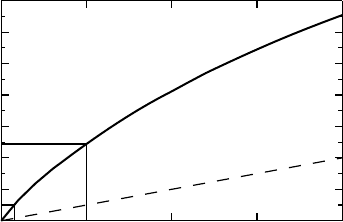
Figure 1.2 shows what the true significance level P(α) would be, if we make each individual
test at the significance level α. This corresponds to the N = 20 curve in Figure 1.1, except
that in this case there is a dependence between the 20 tests done; each new test adds the
observation from one new pair of subjects to the old data. In the graph two special observations
are illustrated:
22 STATISTICS AND MEDICAL SCIENCE
0
0.1
0.2
0.3
0.4
0.5
0.6
0.7
The true significance level P(α)
0.050 0.1 0.15 0.2
Nominal significance level α for each test
Figure 1.2 The true significance level P(α), as a function of the nominal significance level
α of the individual tests, for the procedure discussed in the text, in which we analyze after
each of the 40 pairs. The dashed line shows the corresponding function when we only look at
data only after study completion.
•
The value P(0.05) = 0.25, which gives the true significance level for an efficacy claim
when individual tests are done at the conventional 5% level.
•
The solution α = 0.007 to the equation P(α) = 0.05, which tells us at what level the
individual tests should be done in order to protect the overall significance level at 5%.
The latter observation illustrates that we can in fact look repeatedly at data, if we so wish. But
we need to be careful, so that we protect the overall significance level.
Adaptive designs for clinical trials are designs in which, on at least one occasion during
the study execution, we take a look at the data and make a decision on the further conduct
of the study. Depending on how this is done, it may or may not have consequences for how
we distribute our α, the significance level. The example just given is an extreme type, called
a sequential design. To be useful one must design decision rules in such a way that the total
amount of α one can spend is properly distributed between the different looks, and in the
process take into account the dependence between different tests.
A variation of this is called a group sequential design in which we only look a few
times before the final readout. The problem is the same, we need to distribute our α,but
more simply. However, we may not always like the end result, as the following real-life
example illustrates.
Example 1.7 The TORCH study was a 3-year study in chronic obstructive pulmonary disease
(COPD) patients with mortality as outcome. Even though there were four treatments in the
study, one comparison was of primary interest: that of a certain combination product versus
placebo. It had all the virtues of a good clinical design (double-blind, randomized, etc.) and
it was planned to recruit 1510 patients per arm.
To carry out a 3-year study on mortality in which one treatment may be effective poses an
ethical problem. If the effect is large, can we really wait for the study to come to completion?
This ethical consideration forced the study designers to include two interim analyses, the first
to be performed when 358 deaths had occurred in the study and the second when 680 had
occurred. On each occasion a test for efficacy was performed, and the study was to be stopped
THE ELUSIVE CONCEPT OF PROBABILITY 23
if a predefined significance level was reached, which depended on which interim analysis it
was. In order to preserve the overall significance level it was decided (these are not the exact
numbers used, but serve our purpose) to do the first test at significance level 0.0006 and the
second at level 0.012, so that the final test would be done at level 0.038. This preserves the
overall significance level, because
0.0006 +(1 − 0.0006)0.012 +(1 − 0.0006)(1 − 0.012)0.038 = 0.05.
As it happened, the study proceeded to completion, since neither of the interim analysis
passed the test. Taking the data at face value, the primary comparison produced a p-value
of 4.0%. However, it needed to be below 3.8% in order to preserve the overall significance
level at 5%, so the study missed its objective: there was not sufficient evidence in the study
to conclude that the mortality rate will be decreased if patients are treated with the combi-
nation product. In passing, we may note that the ‘true’ p-value, adjusted for the two interim
analysis, was
p = 0.0006 + (1 −0.0006)0.012 +(1 − 0.0006)(1 − 0.012)0.040 = 0.052,
very close to the conventional cut-off of 5%.
This example is really instructive on many levels. On the one hand, how can it be that the
5% level is so set in stone that a FDA Advisory Board can decide that 5.2% is not sufficient
evidence for an effect on mortality, when the logical expectation from effects previously
demonstrated by the combination treatment is that some benefit should be expected (the
present medical paradigm is that COPD worsens as patients get exacerbations, and if the drug
decreased the rate of these, it should really also prolong life). But accepting that, it takes some
deep thinking to understand why we should be punished for introducing interim analyses that
assure that if the effect is extremely obvious, we should not drag out the study unnecessarily
but instead make the drug available to, among others, the patients in the placebo group. It is
not hard to understand why some non-statisticians sometimes consider statistics to be more
mysticism than science.
1.10 The elusive concept of probability
The word ‘probability’, along with some of its synonyms such as ‘chance’ and ‘risk’, is part of
our everyday language. We have already had a first discussion around this concept, indicating
that it is not as trouble-free a concept as it may appear. But the nature of the problem is wider
than previously indicated, and lies at the heart of the difference between the two dominant
schools in statistics, the frequentist school and the Bayesian school.
Serious thinking about probabilities started in connection with games, in particular in
France in the seventeenth century, where playing games for money was one of the major
occupations of the nobility. In this situation many problems can find a solution by the type
of combinatorial argument that was used for the Monty Hall problem earlier. This means
that we define the probability of an event A to be P(A) = g/m, where m is the number of
possible outcomes of the game, and g the number of successful outcomes (satisfying the
specific criteria that define A). The underlying assumption is that all possible outcomes are

24 STATISTICS AND MEDICAL SCIENCE
equally likely, and what we do is make a list of all possible outcomes and count the proportion
of successful ones.
However, this combinatorial definition is only useful at the gambling table, if what we
compute is also what actually occurs. To determine if this is the case, we need to play a large
number of games, say n, and count the number of times the event A occurs, call it n
A
. We then
expect that the proportion n
A
/n, of occasions when the event A has occurred, approaches
P(A) as we increase the number of experiments. The frequentist school of statistics essentially
derives the concept of probability from this property. The problem with this definition is how
we determine P(A) if we cannot do infinitely many experiments.
Probability theory comes to the rescue. One of its key statements is the law of large
numbers which says that if you define how much error you can tolerate (defined by a small
number >0) and you increase the number of experiments, your observed frequency will
home in on the desired probability:
P
n
A
n
− P(A)
>
→ 0asn →∞.
Probability theory is a topic in mathematics. It does not concern itself with reality, but instead
needs a starting point to build the logic from – the premises or axioms. Many important results
in probability theory were derived without such a foundation, and it was not until the early
1930s that mathematicians decided how to define what a probability is. These were the axioms
of Kolmogorov which define a probability as something that measures events in such a way
that the total measures one and the probability of the sum (union) of exclusive events is the
sum of the individual probabilities.
But the mathematical definition of a probability is of no help when you want to assign
probabilities to everyday events. Here the frequentist approach is useful, but its real usefulness
is in the way it builds traditional (frequentist) statistics. Consider a coin, which may be biased.
Denote the probability that it falls heads by π. How do I determine π when I cannot toss the
coin infinitely many times? The frequentist statistician turns this question around and tells you
to toss it a finite number of times, say n. That does not allow you to give a definite answer as to
what π is, but you can make statements about what π almost certainly is not. Such statements
are made with a certain degree of confidence which represents your knowledge about π.You
may, for example, make a statement about whether you believe the coin is unbiased (which
means that π = 0.5), or not. Your confidence in this statement can then be expressed in the
p-value, which is a probability in the tradition of the frequentist definition above, namely the
number of experiments with an unbiased coin that will produce the outcome you observed
or ‘worse’. This p-value is used to express your confidence in the statement that the coin
is unbiased. Similarly, you can express confidence in the actual parameter value π using
confidence intervals, to be described in more detail in later chapters.
But confidence is not a probability. It lies between 0 and 1, and it is intimately related to
probabilities, but the relation is that my confidence in a particular statement about a parameter
is at least 30% if more than 30% of all experiments are expected to provide a point estimate
that fulfills that statement. The main problem is that any particular experiment we do is unique,
and we cannot determine true probabilities with any accuracy from a single experiment. What
do we do if an experiment cannot be repeated? The frequentist approach has problems with
assigning probabilities to non-repeatable events, and may therefore say there is no such thing.
Bayesian statisticians take a different view. They differ from the frequentists already in
their view of what a probability is and they acknowledge a wider use of the probability concept
THE ELUSIVE CONCEPT OF PROBABILITY 25
which includes what is usually called subjective probabilities. This leads to a very different
view on what one should be doing in statistics and science. Whereas the frequentist is someone
who is 100% focused on science as the process of falsifying hypotheses, the Bayesian views
science more as an inductive process.
To see the difference, take a simple example. Brazil and Argentine are about to play a
World Cup qualifying soccer game. What is the probability that Brazil will win? To estimate
this, the frequentist will need to find a sample of matches already played which is such that
the new game can be considered a random sample from this set. One way would be to look
at all previous games between the nations. But is such an estimate relevant? The new match
is not played with the same players as the previous matches, and the motivation for the two
teams on this particular occasion may differ for the two teams depending on table position,
whether it is a home game, etc. To account for such factors, the frequentist needs to make
a more elaborate model of the previous games. When he has done that, he will arrive at an
estimate of the probability that Brazil wins a game of this sort, accounting for factors such as
which is the home team, table positions, etc. But it will refer to some historical average and
some of the factors that matter cannot be taken care of, including the particular coaches and
players participating on this occasion.
Actually you may, as a frequentist, deny there is a relevant probability concept at all for this
situation because there is no relevant space to take a sample from. Alternatively you may say
that since I can construct a thought experiment in which this game is played simultaneously
in parallel universes, there should be a sensible probability, though its estimation still poses
unsurmountable problems.
The Bayesian takes a different view. He says that there is a probability that Brazil will
win, but it should not be calculated as a frequency. Instead each individual has a subjective
estimate of this probability. To get an overall probability we may take the average of these
subjective estimates, which is more or less what the betting companies do when they set the
odds. So the Bayesian can actually talk about the probability of sunny weather tomorrow,
even though that is not a repeatable experiment. Or the probability of a new Ice Age within
the next millennium.
The different views on the nature of probability between a frequentist and a Bayesian really
boil down to whether it is a real, physical tendency of the event to occur, or just a measure
of how strongly you believe it will occur. They do agree that whatever it is, it should follow
Kolmogorov’s axiom system, which is the starting point of all the mathematical calculations
in probability theory.
The mathematics of Bayesian statistics is the inductive (recursive) computation of new
probabilities from old ones, accounting for new data. It therefore needs a starting point, the
specification of an a priori probability, or prior for short. This is typically obtained from a
consideration of available data on the matter. The issue is that for a given problem, there are
in general multiple ways to assess such data, and choosing one is a matter of judgement;
different people may assign different prior probabilities.
This difference in point of view has many implications. When comparing two hypotheses
and using some data, frequency methods would typically result in the rejection or non-rejection
of the null hypothesis at a particular significance level, and frequentists would all agree (in
the best of all possible worlds) whether this hypothesis should be rejected or not at that level
of significance. Bayesian methods would suggest that one hypothesis was more probable
than another, but individual Bayesians might differ about which was the more probable and
by how much, if they use different a priori probabilities. Bayesians would argue that this
26 STATISTICS AND MEDICAL SCIENCE
is right and proper – if the contemporary knowledge is such that reasonable people can put
forward different, but plausible, priors and the data do not swamp the prior, then the issue is
not resolved unambiguously on available knowledge. They would argue that any approach
that aims at producing a single, definitive answer in these circumstances is flawed.
In the mainstream application of biostatistics the Bayesian view is seldom listened to.
Most experimenters want a clear-cut answer, in black and white, and the uncertainty imposed
by the use of p-values is at the limit of what they can take. To actually acknowledge that
there are different interpretations of the results, depending on your prior view of the matter,
is usually considered an unwelcome complication, best given a wide berth.
1.11 Comments and further reading
There are a number of great scientists mentioned in this book, who have contributed to the
science of clinical trials. I have in general avoided discussing these scientists, their lives, deeds
and the context they worked in. For such a treatise, see the book Dicing with Death (Senn,
2003), which also discusses much of what we address in our first three chapters.
Most books on philosophy probably have something to say about the philosophy of science.
In his autobiography (Popper, 1976), Karl Popper includes a chapter on the philosophy around
induction and falsification. The quote by Richard Feynman is taken from the last chapter of
what may be called his autobiography (Feynman and Leighton, 1992). Wootton (2007) gives
a historian’s view of the impact of physicians on people’s welfare in history. For more on the
suspicion of fraud indicated in Box 1.6, see Fisher (1936). (R. A. Fisher was not only the
inventor of modern statistics, but also a first rank geneticist.)
We have chosen to describe the statistical output in this chapter in terms of the p-value. This
is not necessarily a choice made because it is a very good summary, but because of its role in the
medical literature. There are a lot of ways in which p-values are misinterpreted (Gigerenzer,
2004), some (but not all) of which we have discussed in this chapter, and in the statistical
community there is often a very negative attitude (Royall, 1997) toward its use. Hopefully we
can explain what it means without entering into a debate on what the statistical summaries in
the medical literature should or should not be. The citations by Fisher in Box 1.2 were from
Fisher (1979, p. 80) and (Fisher, 1929), respectively.
The exact nature of the FDA rule discussed in the text is unclear, and our discussion may
not be fully valid. In fact, it is not clear that anyone knows what the rule really is; it is probably
somewhat flexible (Senn, 2007, Section 12.2.8). We know that the rule stems from the FDA
interpretation of the 1962 amendment to the Federal Food, Drug, and Cosmetics Act, which
required ‘adequate and well controlled investigations’. However, a further amendment in 1997
permits the FDA to require only one such study, as long as there is other substantial evidence
for the benefit of the drug. This seems to mean that, by law at least, approval is not only about
a low significance level. To what extent this has had any impact on the FDA approval process
is unclear (at least to me).
The comment about the non-inferiority study type may not go down well with every
statistician, because finding the non-inferiority margin has provided food for numerous
statistical publications, including regulatory guidelines from health authorities. The
non-inferiority study type was designed to solve one problem: that absence of statistical
significance was taken as proof of equality. However, the solution is almost as bad.
As far as I know the concept was introduced in connection with a wider attempt to
REFERENCES 27
harmonize the regulatory requirements all over the world, in a document labeled ICH
E10 (International Conference on Harmonisation, 2000).
There is much more to be said about the nature of probabilities and its implications for
a proper treatment of p-values. Often the need for a probabilistic discussion stems from
lack of information, as in the game show. If we only had complete information, we would
often not need probabilities, like if we only knew all the initial conditions when we toss
a coin, we can predict the outcome with certainty. In fact, you could argue that there are
few cases when there are pure random events. The notable exception are some deep aspects
of contemporary quantum physics. Deterministic processes may appear probabilistic to us,
simply because we cannot obtain sufficient knowledge to explore the deterministic nature of
the problem, a subject mathematicians discuss in chaos theory. Accepting that we need to
compute probabilities, it becomes important to understand the conditions under which the
computed probability is valid. A very rare event occurs, seen from a prospective vantage
point, with a very small probability. Retrospectively the probability is one. To compute that
probability when we know that it has occurred is basically meaningless. However, we should
not confuse that with what we do when we compute p-values. These are probabilities for the
outcome, computed under an assumption, and we use the p-value as indirect evidence for or
against that assumption. Note that the p-value computes the probability of the outcome given
that the null hypothesis is true, not the transposed conditional, the probability that the null
hypothesis is true given the outcome we have observed.
When it comes to error control with multiple testing, the original suggestion by Bonferroni
on how to allocate parts of the available α (significance level) to the different tests was
improved upon considerably by Sture Holm in 1979. He showed that the testing could be
done in a stepwise manner in the order of increasing individual p-values, where these p-values
were compared with successively larger fractions of α. After that it took another 28 years for
the next major step, made independently by Guilbaud and Strassburger-Bretz, which was the
development of confidence intervals corresponding to Holm’s and related testing procedures.
A modern review of this subject, by Dmitrienko et al. (2010), covers not only basic/traditional
approaches but also novel ones. In connection with the multiplicity problem we also touched
upon one of the present hypes in medical statistics, the adaptive designs. We will say no more
on this subject, and refer the reader who wants to learn more to the vast literature on the
subject (there are also plenty of conferences he or she can go to). Both Whitehead (1997)
and Chang (2008) offer useful starting points. The illustration in Example 1.7 is an adaptation
of the main result in Calverley et al. (2007).
References
Calverley, P.M., Anderson, J.A., Celli, B., Ferguson, G.T., Jenkins, C., Jones, P.W., Yates, J.C. and
Vestbo, J. (2007) Salmeterol and fluticasone propionate and survival in chronic obstructive pulmonary
disease. New England Journal of Medicine, 356(8), 775–789.
Chang, M. (2008) Adaptive Design Theory and Implementation Using SAS and R, CRC Biostatistics
Series. Boca Raton, FL: Chapman & Hall/CRC.
Dmitrienko, A., Tamhane, A.C. and Bretz, F. (2010) Multiple Testing Problems in Pharmaceutical
Statistics, CRC Biostatistics Series. Boca Raton, FL: Chapman & Hall/CRC.
Feynman, R.P. and Leighton, R. (1992) Surely You’re Joking Mr Feynman! Adventures of a Curious
Character. London: Vintage.