
Kenneth E. Gonsalves, Craig R. Halberstadt, Cato T. Laurencin, Lakshmi S. Nair. Biomedical Nanostructures
Подождите немного. Документ загружается.

autoimmune hepatitis, by injecting siRNA against the Fas gene [36]. siRNA was
injected into mice via the hydrodynamic tail vein injection. The mRNA and
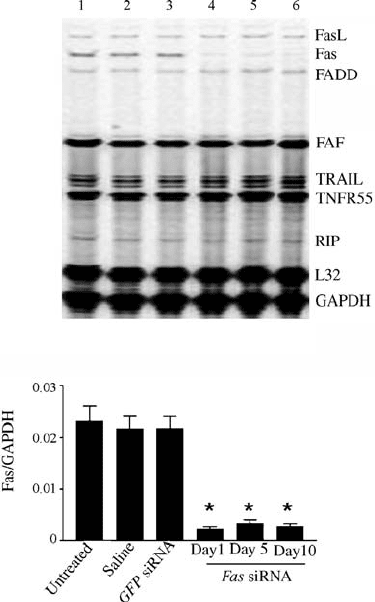
protein levels of Fas were significantly reduced in the hepatocytes of mouse and
the effects persisted for 10 days (Fig. 13.2). Fulminant hepatitis was induced in
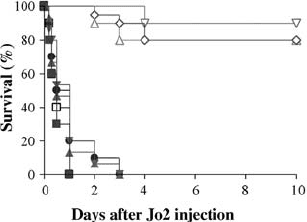
animals by injecting agonistic Fas-specific antibody; 82% of the animals treated
with siRNA silencing Fas survived for 10 days, as compared to control animals,
that died within 3 days (Fig.13.3). This shows that effective gene silencing can be
FIGURE 13.2 RPA for Fas mRNA expression in hepatocytes from mice that were
untreated (lane 1) or were injected 24 h earlier with saline (lane 2), GFP (sequence 1)
siRNA (lane 3) or Fas (sequence 1) siRNA (lane 4). Silencing of Fas expression in mice
treated with Fas siRNA is maintained 5 (lane 5) or 10 days (lane 6) later. Expression of
other genes involved in the Fas pathway and housekeeping genes (L32 and Gapd) were
unaffected (names of the corresponding proteins are listed at right). Similar results were
obtained in three independent experiments. The graph shows results of densitometric
quantification of the Fas/GAPDH ratios in three mice per condition. Fas mRNA
levels in hepatocytes are significantly lower (
P < 0.001) at all times in mice treated
with Fas siRNA mice than in control mice. (Reproduced with permission from
Reference 36.)
346
BIOMEDICAL NANOSTRUCTURES
achieved in hepatocytes via the hydrodynamic tail vein injection and silencing
effects are not diluted as the hepatocytes are mostly nondividing cells.
siRNA use can also potentiate/sensitize diseases to first line agents. Such
studies have been shown with siRNAs potentiating the effects of imatini b
(Ab1-kinase specific competitive inhibitor). siRNAs were used to decrease
the protein levels of Bcr/Ab1, thus potentiating the effects of imatinib [41]. The
major hurdle in cancer treatment with chemotherapeutic agents is the
development of drug resistance, owing to the expression of MDR1
(a multidrug transporter encoding P-glycoprotein). In vitro RNAi targeting
of MDR1 has been shown to overcome resistance to daunorubicin by over 90%
in pancreatic and gastric carcinomas [42]. Currently, there are numerous studies
with siRNA as a potential therapeutic in different stages of clinical studies.
13.5.3 RNA Transfection–Delivering siRNA Inside Cells
13.5.3.1 In vitro Efficient gene silencing can be achieved by trans fecting
the cells in vitro either using chemically synthesized siRNA or by transfecting
the cells with transcript encoding plasmid DNA. Either way, the molecules to
be introduced into cellssiRNA/plasmid DNAare hydrophilic and poly-
anionic, and need some kind of transfecting agent/vector to achieve sufficient
levels inside the cell. However, introducing chemically synthesized siRNA
molecules may be less complicated than transfecting cells with transcript
encoding plasmid DNA. The difference lies in the fact that siRNA molecules
require cytoplasmic delivery for gene silencing; however, intracellular produc-
tion of siRNA from plasmid DNA requires nuclear delivery of the plasmids.
FIGURE 13.3 Survival advantage of mice injected with Fas siRNA as compared to
saline or GFP siRNA after challenge by intraperitoneal injection with Fas-specific
antibody and observation for 10 day before sacrifice. Sequences that silenced Fas by
80% protected against fulminant hepatitis, whereas sequences that did not silence or
silenced inefficiently provided no protection.
P < 0.0001. &, GFP (dt) (n = 10); ~,
GFP (CU) (n = 15); !, saline (n = 15); ^, Fas (sequence 1) (n = 20); , Fas (sequence
2) (n = 10); &, Fas (sequence 4) (n = 10); ~ Fas (sequence 5) (n = 10);
~
, Fas
(sequence 6) (n = 10). (Reproduced with permission from Reference 36.)
CONTROLLING CELL BEHAVIOR VIA DNA AND RNA TRANSFECTIONS 347
Further, gene silencing achieved by transfecting mammalian cells with siRNA
duplexes is transient and depends on the number of siRNA molecules
transfected into the cells. The mammalian cell lacks the enzyme: RNA-
dependent RNA polymerases (which can amplify the siRNA molecules inside a
cell). Thus, the number of effective siRNA molecules present inside cells gets
diluted with each cell division. Omi et al. have shown that siRNA activity lasts
for 37 days in proliferating cells, but can persist for more than 3 weeks in
terminally differentiated cells (such as in neurons) [43]. Gene expression can be
knocked down in mammalian cell lines, primary cells, and even in embryonic
stem cells [44].
Elbashir et al. were the first to report the transfection of siRNA duplexes in
cultured mammalian cells [26]. siRNA duplexes were synthesized against the
luciferase gene and cotransfected with the plasmid encoding luciferase. The
transfections were performed with cationic liposomes in a variety of
mammalian cell linesNIH/3T3, COS-7, and HeLa S3 cells. Expression of
luciferase gene was monitored 20 h after the transfection, and it was found that
the siRNA duplexes can specifically inhibit the gene expression, but to a
different extent in different cell lines. Another important finding of these
experiments was that siRNAs are extraordinarily potent reagents for mediating
gene silencing as they were found to be effective at concentrations that are
several orders lower than that required for conventional antisense reagents.
siRNA can be transfected into mammalian cells using lipid-based
formulations, conjugating with peptides, or by electroporation. Membrane
permeant peptides (MPPs) are amphipathic peptides that can translocate
across the lipid bilayers of cells in an energy-independent manner. Thiol-
containing siRNAs were conjugated to MPPs (penetratin, transportan) v ia
disulfide bonds [45]. The peptides allowed efficient cytoplasmic delivery of
siRNAs, since upon entering the cells the disulfide bonds are reduced, releasing
the siRNA molecules. MPP-siRNAs successfully silenced the expression of
GFP and luciferase genes in stably transfected cell lines. Chinese hamster ovary
cells (CHO-AA8-Luc Tet-Off) that stably expressed luciferase gene were used
for the experiments to compare the transfection efficiency of MPP-siRNA and
lipofectamine-delivered siRNAs. Lipofectamine-siRNA transfected cells
showed a decrease in luciferase activity by 36%, 2 days after the transfection;
however, the luciferase levels returned to the basal levels on the third day. On
the contrary, penetratin-delivered siRNAs decreased the luciferase levels by
53% on second day after treatment and maintained these low levels of gene
expression on the third day as well. These results indicate that MPPs have
higher transfection efficiencies for siRNA as compared to lipofectamine in this
cell line.
13.5.3.2 In vivo The first method to successfully deliver siRNA in vivo was
the high pressure tail vein injection of siRNAs (in physiological solution) in
mice. This method of rapid hydrodynamic infusion delivers siRNA to the
highly vascularized organs, like liver, lung, kidney, spleen and pancreas.
348 BIOMEDICAL NANOSTRUCTURES
Almost 90% reduction in target gene expression was observed in the liver of
mice, though the effect was transient, lasting for about a week. Numerous
studies have used this method to introduce siRNA/shRNA into rodents,
achieving efficient delivery and silencing of target gene expression. Though
quite successful for introducing siRNA in rodents, this method is not a
clinically feasible option for humans.
Sorensen et al. were the first to show that cationic liposome-mediated
delivery of synthetic siRNA molecules can specifically inhibit the expression of
exogenous and endogenous gene in adult mice [38]. Cationic liposomes
(DOTAP based) complexed with a plasmid encoding green fluorescent protein
(GFP) and its cognate siRNA was injected intravenously into adult mice. GFP
gene express ion was found to be significantly inhibited with the siRNA in the
liver and spleen of mice, 3 days after the injection, as compared to the
mismatched/inactive siRNA as control. Furthermore, the therape utic efficacy
of synthetic siRNA molecules was investiga ted in vivo in a mouse model of
sepsis. BALB/c mice were intraperitoneally pretreated with anti-TNF-a
siRNA, prior to the injection of a lethal dose of lipopolysaccharide (LPS)
capable of inducing septic shock. A significant protective effect of siRNA was
found in terms of the number of mice surviving the septic shock, as compared
to the inactive siRNA. Further this effect was attributed to the decreased levels
of TNF-a as a result of the specific inhibition of TNF-a gene expression with
siRNA.
Since high concentrations of siRNA can induce the nonspecific immune
stimulation response, it is important that the vectors for in vivo delivery of
siRNA can deliver siRNA even at low concentrations to the target site. Such
an experiment was performed using a lipid-based vector for the delivery of
siRNA to mouse brain. JetSI
TM
(a mixture of cationic lipids) was used to
complex plasmid DNA encoding luciferase gene and picomolar concentrations
of siRNA against this gene [46]. These polyplexes were injected into the mouse
brain using stereotaxic intracerebr oventricular injections. A formulation of
JetSI
TM
with another fusogenic lipid dioleoylphosphatidylethanolamine
(DOPE) was found to efficiently inhibit the expression of target gene in vivo,
even at picomolar concentrations of siRNA. The gene silencing effect was
found to be dose dependent and specific.
Most of the in vivo studies have been performed with rodents, but one recent
study has demonstrated that RNAi-mediated gene silencing can be successfully
achieved in nonhuman primates as well, thus highlighting the potential of
siRNA as a therapeutic via systemic delivery in species higher than roden ts.
siRNA targeting the gene expressing apolipoprotein B (ApoB) was adminis-
tered, as a liposomal formu lation via a bolus intravenous injection into
cynomolgus monkeys [47]. mRNA levels of the target gene in the liver were
found to be reduced within 48 h of the injection. Significant reduction in the
levels of ApoB protein was observed as early as 24 h after siRNA injection with
the effects lasting for 11 days. Furthermore, there was no evidence of
complement activation, proinflammatory cytokine production, or toxicities in
CONTROLLING CELL BEHAVIOR VIA DNA AND RNA TRANSFECTIONS 349
the animals. The only detected changes in the primates as a result of siRNA
liposomal injections were the transient increase in the liver enzymes, which
normalized to the basal levels within 6 days of treatment.
siRNAs can be complexed with polycationic polymers to form polyplexes.
Self-assembling nanoparticles with siRNA were prepared with PEI that is
PEGylated with an ArgGlyAsp (RGD) peptide ligand attached at the distal
end of the PEG [48]. The use of RGD ligand allows targeting of integrins
expressed on tumor neovasculature, thus selectively delivering siRNA to the
tumor tissue. The polymer was prepared with three functio nalities in order to
obtain targeted self-assembling nanoplexes: (1) branched PEIas the cationic
complexing polymer, (2) PEGsteric protective surface layer, and (3) RGD
peptidetargeting ligand. The nanoplexes were used to successfully deliver
siRNA inhibiting the vascular endothelial grow th factor receptor-2 (VEGF
R2) expression, to the tumor neovasculature, and thereby inhibiting tumor
angiogenesis. siRNA carrying nanoplexes were injected every 3 days into mice
carrying subcutaneous tumor (developed by injec ting N2A cells) by tail vein
injection. There was a selective tumor uptake of the nanoplexes showing a
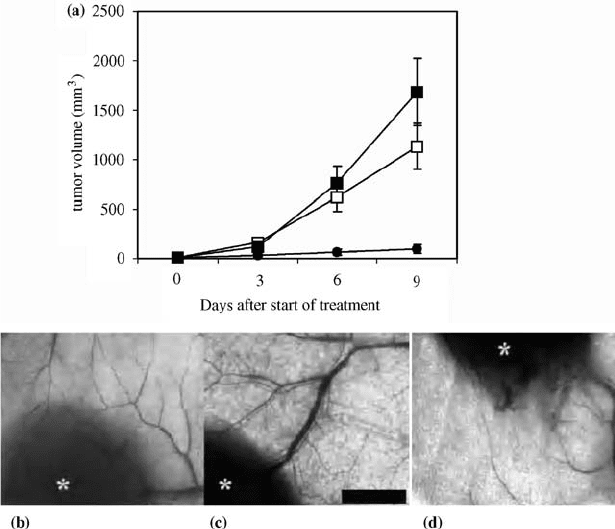
sequence-specific inhibition of VEGF R2 expression and inhibition of both
tumor angiogenesis and tumor growth (Fig.13.4).
Chemical modifications of siR NA have also been attempted to improve the
delivery of siRNA without using any other transfecting agents. Lipophilic
siRNAs were synthesized by covalently conjugating the 5
0
- ends of RNA with
derivatives of cholest erol, lithocholic acid, or lauric acid [49]. These constructs
were shown to improve the delivery of siRNA to liver cells and downregulate
the expression of a LacZ expression construct. In another study, the 3
0
-endof
siRNA was conjugated to cholesterol by means of a pyrrolidine linker.
This improved the resistance of siRNA to nuclease degradation, increased
its stability in blood circulation, and also, increased the uptake of siRNA
by liver.
Recombinant viral vectors, such as AAV, can mediate the delivery and long-
term silencing of a gene in both dividing and nondividing mammalian cells.
siRNA-producing lentivirus can transduce nondividing cells and has been used
to deliver siRNA into embryon ic stem cells to create knockdown mice. Kunath
et al. used viral constructs expressing shRNA for Ras GTPase-activating
protein to transfect mouse embryonic stem cells [50]. The resulting mice
showed defects similar to that of a knockout developed by the conventional
homologous recombination. Despite the advantage of viral vectors to deliver
siRNA to nontransfectable cell s, their potential for therapeutic applications is
reduced by the fact that this delivery method is more prone to nonspecific
interferon response, owing to high expression of shRNA. Viral vectors
expressing siRNA have been shown to markedly diminish the expression of
exogenous and endogenous genes in vitro and in vivo in brain and in liver [51].
Recombinant adenoviral vectors were generated for intracellular expression of
siRNA against GFP (siGFP) and b-glucouronidase. HeLa cells were infected
with the viral vectors expressing siRNA against b-glucouronidase, and lysed
350 BIOMEDICAL NANOSTRUCTURES
72 h after treatment. This resulted in a specific reduction of b-glucouronidas e
gene expression, leading to a 60% reduction in b-glucouronidase activity. For
in vivo studies, adenoviral vectors expressing siGFP were injected into the brain
striatal regions of transgenic mice expressing eGFP. Effective gene silencing for
up to 5 days was observed after a local injection of siRNA-producing AAV in
mouse brain.
FIGURE 13.4 Tumor growth inhibition by VEGF R2 siRNA nanoplexes. (a) Tumor
growth inhibition by siRNA RPP nanoplexes. Mice were inoculated with N2A tumor
cells and left untreated (open squares) or treated every 3 days by tail vein injection with
RPP-nanoplexes with siLacZ (filled squares) or siVEGF R2 (filled circles) at a dose of
40 mg per mouse. Treatment was started at the time point that the tumors became
palpable (20 mm
3
). Only VEGF R2-sequence-specific siRNA inhibited tumor growth,
whereas treatment with LacZ siRNA did not affect tumor growth rate as compared with
untreated controls (n = 5). (bd) Neovascularization in tumors treated with siRNA
RPP nanoplexes. Representative tumors excised at the end of the tumor growth
inhibition experiment (a) were examined using low magnification light microscopy.
Transillumination of tumor and surrounding skin tissue shows strong neovasculariza-
tion in mice left untreated (b) and mice treated with RPP nanoplexes with siRNA-LacZ
(c). In contrast, mice treated with RPP nanoplexes with VEGF R2 siRNA showed low
neovascularization and erratic branching of blood vessels (d). Asterisks indicate tumor
tissue. Bar = 2 mm. (Reproduced with permission from Reference 48.)
CONTROLLING CELL BEHAVIOR VIA DNA AND RNA TRANSFECTIONS 351
13.5.4 Issues
13.5.4.1 Specificity Nonspecific inhibition of gene expression is a
problem with the use of dsRNAs for RNAi. dsRNAs are known to activate
the dsRNA-dependent protein kinase (PKR), which results in a general
inhibition of total protein synthesis and the nons pecific degradation of mRNAs
present in the cells. However, the use of synthetic siRNA molecules is
capable of bypassing the activation of this nonspecific pathway. Still there
are numerous reports indicating the potential of siRNA molecules to produce
some nonspecific and off-target effects. This may be due to pa rtial homology
of the siRNA sequences to mRNA sequences, other than the target
mRNA [52,53]. Most nonspecific responses can be minimized with careful
design of siRNA sequences. The nonspecific effects of siRNA on gene
expression depend on the siRNA concentration, specific sequence, delivery
method, and the cell type [54]. High siRNA concentrations enhance nonspecific
effects.
13.5.4.2 Resistance Cells can develop resistance to the effect of siRNA
by loss of genes required for RISC complex formation or by selection of
suppressors that inhibit degradation [35]. Further, not all mRNA sequences
can be targeted by siRNAs, due to lack of accessibility of the target sequences
hidden by RNA-binding proteins or complex secondary structures. Recent
reports have indicated that siRNA-resistant viral strains (HIV) can emerge in
as few as 25 days [55]. To reduce the chances of such resistance, multiple
sequences per target and multiple targets per viral genome would be required.
On the contrary, so far there are no reports of resistance developing in
mammalian cells upon introduction of siRNA.
13.5.4.3 Stability For successful in vivo use, siRNA molecules must have
sufficient stability in systemic circulation and should have desirable pharma-
cokinetic properties. The molecules should bind blood proteins to an extent so
that immediate loss by excretion is prevented, but at the same time, this degree
of binding should not be toxic [56]. However, studies have shown that siRNA
degradation peaks 3648 h after introduction and diminishes around 96 h.
Biodistribution of radiolabeled siRNA was studied by intravenous and
intraperitoneal injections in mice [57]. siRNA primarily accumulated in the
liver and kidney and was also detected in the heart, spleen, and lung. These
biodistribution patterns demand an improvement in the pharmacokinetic
properties of siRNA for success ful in vivo gene silencing.
Chemical modifications are in pursuit for increasing the stability, of siRNA
while maintaining an adequate gene-silencing activity for therapeutic applica-
tions. Such chemical modifications can be made throughout the siRNA duplex
or at selected one or two bases, to alter the chemical properties of siRNA. This
can potentially help to increase the resistance of siRNA to nuclease enzymes,
impart serum stability, and also alter the biodistribution patterns. Further, by
352 BIOMEDICAL NANOSTRUCTURES
directing the biodistribution of siRNA to target tissues, the nonspecific effects
can also be effectively reduced. The introduction of phosphorothioate linkages
enhance nuclease resistance and improve serum stability [57]. However, the use
of such modifications often results in cellular and in vivo toxicity, also their
effect on in vivo potency of siRNA is yet to be established. Chemical
modifications to the sugar moiety of the siRNA sequence can also significantly
alter thermal stability, and, potentially affect the gene silencing activity of
siRNA. Jayasena and coworkers have demonstrated that functional and
nonfunctional siRNAs show distinct thermodynamic profiles. Several 2
0
modifications have been tested for their effects on gene expression in cultured
cells. Gene silencing activity is retained after partial substitution of bases with
2
0
-fluoro bases [58].
13.6 CONCLUSIONS
Advances in molecular biology and polymer chemistry have enabled
controlling cell behavior via DNA/RNA transfections. This has steered
research toward identifying new genes responsible for diseas e induction/
progression. DNA/RNA transfections have now become a routine research
tool, though its applications as a therapeutic intervention is limited by the
availability of safe and efficient transfection methods.
ACKNOWLEDGMENTS
Grant support from the National Institutes of Health (R01 EB003975) and a
predoctoral fellowship to JKV from the American Heart Association,
Heartland Affiliate (Award # 0515489Z).
REFERENCES
1. Li Z, et al. Murine leukemia induced by retroviral gene marking. Science 2002;
296:497.
2. Vasir JK and Labhasetwar V. Polymeric nanoparticles for gene delivery. Expert
Opin Drug Deliv 2006;3:325344.
3. Wiethoff CM and Middaugh CR. Barriers to nonviral gene delivery. J Pharm Sci
2003;92:203217.
4. Lechardeur D and Lukacs GL. Intracellular barriers to non-viral gene transfer.
Curr Gene Ther 2002;2:183194.
5. Pouton CW and Seymour LW. Key issues in non-viral gene delivery. Adv Drug
Deliv Rev 2001;46:187203.
6. Lee EJ and Jameson JL. Gene therapy of pituitary diseases. J Endocrinol 2005;
185:353362.
CONTROLLING CELL BEHAVIOR VIA DNA AND RNA TRANSFECTIONS 353
7. Ohno T, et al. Gene therapy for vascular smooth muscle cell proliferation after
arterial injury. Science 1994;265:781784.
8. Lee RJ, et al. VEGF gene delivery to myocardium: deleterious effects of
unregulated expression. Circulation 2000;102:898901.
9. Bettinger T, Carlisle RC, Read ML, Ogris M, Seymour LW. Peptide-mediated
RNA delivery: a novel approach for enhanced transfection of primary and post-
mitotic cells. Nucleic Acids Res 2001;29:38823891.
10. Sweeney P, et al. Efficient therapeutic gene delivery after systemic administration of
a novel polyethyleneimine/DNA vector in an orthotopic bladder cancer model.
Cancer Res 2003;63:40174020.
11. Vernejoul F, et al. Antitumor effect of in vivo somatostatin receptor subtype 2 gene
transfer in primary and metastatic pancreatic cancer models. Cancer Res 2002;
62:61246131.
12. Prabha S and Labhasetwar V. Nanoparticle-mediated wild-type p53 gene delivery
results in sustained antiproliferative activity in breast cancer cells. Mol Pharm
2004;1:211219.
13. Cohen H, et al. Sustained delivery and expression of DNA encapsulated in
polymeric nanoparticles. Gene Ther 2000;7:18961905.
14. Bernkop-Schnurch A and Krajicek ME. Mucoadhesive polymers as platforms for
peroral peptide delivery and absorption: synthesis and evaluation of different
chitosanEDTA conjugates. J Control Release 1998;50:215223.
15. Artursson P, Lindmark T, Davis SS, Illum L. Effect of chitosan on the permeability
of monolayers of intestinal epithelial cells (Caco-2). Pharm Res 1994;11:13581361.
16. Roy K, Mao HQ, Huang SK, Leong KW. Oral gene delivery with chitosanDNA
nanoparticles generates immunologic protection in a murine model of peanut
allergy. Nat Med 1999;5:387391.
17. Roman S, Lindeman R, O’Toole G, Poole MD. Gene therapy in plastic and
reconstructive surgery. Curr Gene Ther 2005;5:8199.
18. Baltzer AW and Lieberman JR. Regional gene therapy to enhance bone repair.
Gene Ther 2004;11:344350.
19. Madeddu P. Therapeutic angiogenesis and vasculogenesis for tissue regeneration.
Exp Physiol 2005;90:315326.
20. Kasahara H, et al. Biodegradable gelatin hydrogel potentiates the angiogenic effect
of fibroblast growth factor 4 plasmid in rabbit hindlimb ischemia. J Am Coll
Cardiol 2003;41:10561062.
21. Nagaya N, et al. Hybrid cellgene therapy for pulmonary hypertension based on
phagocytosing action of endothelial progenitor cells. Circulation 2003;108:889895.
22. Michiels F, et al. Arrayed adenoviral expression libraries for functional screening.
Nat Biotechnol 2002;20:1154 1157.
23. Ziauddin J and Sabatini DM. Microarrays of cells expressing defined cDNAs.
Nature 2001;411:107110.
24. Honma K, et al. Atelocollagen-based gene transfer in cells allows high-throughput
screening of gene functions. Biochem Biophys Res Commun 2001;289:10751081.
25. Fire A, et al. Potent and specific genetic interference by double-stranded RNA in
Caenorhabditis elegans. Nature 1998;391:806811.
354
BIOMEDICAL NANOSTRUCTURES
26. Elbashir SM, et al. Duplexes of 21-nucleotide RNAs mediate RNA interference in
cultured mammalian cells. Nature 2001;411:494498.
27. Reynolds A, et al. Rational siRNA design for RNA interference. Nat Biotechnol
2004;22:326330.
28. Couzin J. Breakthrough of the year. Small RNAs make big splash. Science
2002;298:22962297.
29. Paddison PJ, et al. A resource for large-scale RNA-interference-based screens in
mammals. Nature 2004;428:427431.
30. Berns K, et al. A large-scale RNAi screen in human cells identifies new components
of the p53 pathway. Nature 2004;428:431437.
31. Hemann MT, et al. An epi-allelic series of p53 hypomorphs created by stable RNAi
produces distinct tumor phenotypes in vivo. Nat Genet 2003;33:396400.
32. Dorsett Y and Tuschl T. siRNAs: applications in functional genomics and potential
as therapeutics. Nat Rev Drug Discov 2004;3:318329.
33. Wall NR and Shi Y. Small RNA: can RNA interference be exploited for therapy?
Lancet 2003;362:14011403.
34. Gupta S, Schoer RA, Egan JE, Hannon GJ, Mittal V. Inducible, reversible, and
stable RNA interference in mammalian cells. Proc Natl Acad Sci USA
2004;101:19271932.
35. Ryther RC, Flynt AS, Phillips JA, 3rd, Patton JG. siRNA therapeutics: big
potential from small RNAs. Gene Ther 2005;12:511.
36. Song E, et al. RNA interference targeting Fas protects mice from fulminant
hepatitis. Nat Med 2003;9:347351.
37. Song E, et al. Sustained small interfering RNA-mediated human immunodeficiency
virus type 1 inhibition in primary macrophages. J Virol 2003;77:71747181.
38. Sorensen DR, Leirdal M, Sioud M. Gene silencing by systemic delivery of synthetic
siRNAs in adult mice. J Mol Biol 2003;327:761766.
39. Yoshinouchi M, et al. In vitro and in vivo growth suppression of human
papillomavirus 16-positive cervical cancer cells by E6 siRNA. Mol Ther
2003;8:762768.
40. Reich SJ, et al. Small interfering RNA (siRNA) targeting VEGF effectively inhibits
ocular neovascularization in a mouse model. Mol Vis 2003;9:210216.
41. Wohlbold L, et al. Inhibition of bcrabl gene expression by small interfering RNA
sensitizes for imatinib mesylate (STI571). Blood 2003;102:22362239.
42. Wilda M, Fuchs U, Wossmann W, Borkhardt A. Killing of leukemic cells with
a BCR/ABL fusion gene by RNA interference (RNAi). Oncogene 2002;21:
57165724.
43. Omi K, Tokunaga K, Hohjoh H. Long-lasting RNAi activity in mammalian
neurons. FEBS Lett 2004;558:8995.
44. Leung RK and Whittaker PA. RNA interference: from gene silencing to gene-
specific therapeutics. Pharmacol Ther 2005;107:222239.
45. Muratovska A and Eccles MR. Conjugate for efficient delivery of short interfering
RNA (siRNA) into mammalian cells. FEBS Lett 2004;558:6368.
46. Hassani Z, et al. Lipid-mediated siRNA delivery down-regulates exogenous gene
expression in the mouse brain at picomolar levels. J Gene Med 2005;7:198207.
CONTROLLING CELL BEHAVIOR VIA DNA AND RNA TRANSFECTIONS 355