
Lehner G. Electromagnetic Field Theory for Engineers and Physicists
Подождите немного. Документ загружается.

594 Appendices
magnetic field, and thus, also describes the action of the field on the particle in the
sense of classical mechanics in a complete manner. This describes a local
interaction and not an action at a distance.
In quantum mechanics – for non-relativistic particles – Schrödinger’s
equation takes the place of the classical equation of motion. It results from the
Hamiltonian of classical mechanics. For an arbitrary system, the Hamiltonian is a
function of the canonical momentum and location coordinates and ,
.
(A.3.4)
The Hamiltonian is usually referenced by the letter H and should not be confused
with the magnetic field. In this terminology, the classical equation of motion is
expressed by Hamilton’s differential equations
(A.3.5)
. (A.3.6)
The Hamiltonian for a particle of mass m, located in a force field with the potential
is
,
(A.3.7)
where the
(A.3.8)
are the components of the momentum. Then
(A.3.9)
and
(A.3.10)
thus
,
(A.3.11)
i.e. the classical (Newton’s) equation of the motion.
For a particle in an electromagnetic field we have
,
(A.3.12)
where A and ϕ are the electromagnetic potentials which allow to calculate E and B:
(A.3.13)
p
k
q
k
HHp
k
q
k
,()=
dp
k
dt
--------
∂H
∂q
k
--------–=
dq
k
dt
--------
∂H
∂p
k
--------=
Ux
1
x
2
x
3
,,()
H
p
2
2m
------- U+
p
1
2
p
2
2
p
3
2
++
2m
------------------------------ Ux
1
x
2
x
3
,,()+==
p
i
mx
·
i
=
dp
i
dt
-------
∂U
i
∂x
i
---------–=
dx
i
dt
-------
p
i
m
----=
m
d
2
dt
2
-------
x
i
∂U
∂x
i
-------–=
H
p QA–()
2
2m
------------------------- Qϕ+=
E ∇ϕ–
∂A
∂t
-------–=
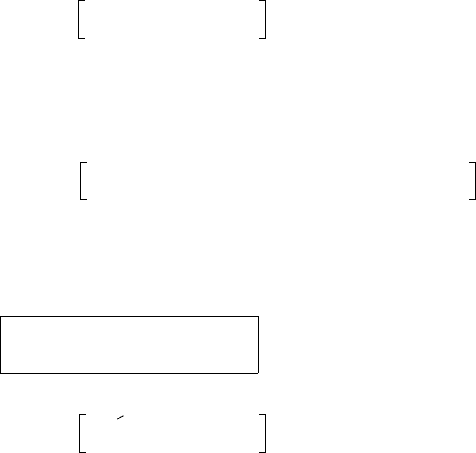
595
(A.3.14)
p is the canonical momentum,
,
(A.3.15)
which should not be confused with the ordinary momentum mv, into which it
transforms in the limit . In this case, Hamilton’s differential equations result
in the afore mentioned equation of motion (A.3.3), which we will not prove here.
Replacing the physical quantities by operators, as we have done before in
Sect. A.1, we obtain:
(A.3.16)
. (A.3.17)
This allows to write Schrödinger’s equation in the following form
.
(A.3.18)
In particular, for a particle in an electromagnetic field, we obtain from (A.3.12)
.
(A.3.19)
Particular care is advised when calculating the square because the momentum
operator and the location operator, or the location dependent quantities,
respectively (here ), do not commute. Written more explicitly, we
obtain:
.
(A.3.20)
A.3.2 The Role of Fields and Potentials
The equation of motion which applies to classical electromagnetic field theory is
.
(A.3.21)
Its counterpart in quantum mechanics is the Schrödinger equation
.
(A.3.22)
One equation contains the fields E and B, while the other uses the potentials A and
ϕ. Within the classical theory, the potentials were introduced formally as auxiliary
quantities, whose task was to simplify the solution of Maxwell’s equations, and
they live up to their task. Two of the four of Maxwell’s equations are automatically
solved by (A.3.13) and (A.3.14), while the other two result in the inhomogeneous
wave equations (7.187) and (7.188). It is easily possible to eliminate the fields from
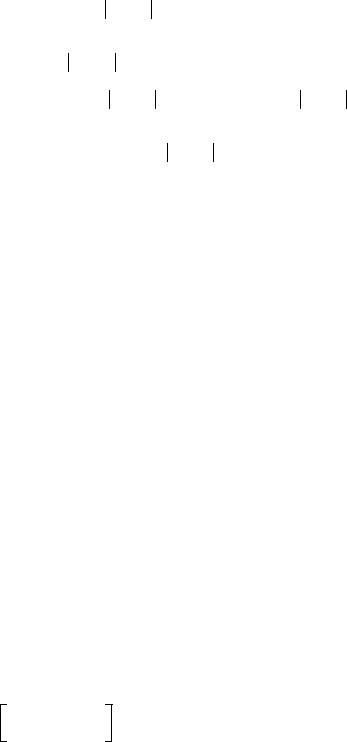
the equation of motion (A.3.21) and replace them with the potentials. The question
BA∇×=
p mv QA+=
A 0=
HH
ˆ
⇒ iÑ
∂
∂t
----
=
pp
ˆ
⇒ iÑ∇–=
iÑ
∂ψ
∂t
-------
H
ˆ
iÑ∇– q,()ψ=
iÑ
∂ψ
∂t
-------
iÑ∇– QA–()
2
2m
------------------------------------ Qϕ+ ψ=
AAr()=
iÑ
∂ψ
∂t
-------
Ñ
2
∇
2
– iÑQA ∇• iÑQ∇ A• Q
2
A
2
+++
2m
--------------------------------------------------------------------------------------------------- Qϕ+ ψ=
F m
d
2
r
dt
2
--------
QE QvB ×+==
iÑ
dψ
dt
-------
ih∇– QA–()
2
2m
------------------------------------ Qϕ+ ψ=
A.3 On the Significance of Electromagnetic Fields and Potentials
596 Appendices
arises, if it is also possible to eliminate the potentials in Schrödinger’s equation in
favor of the actual fields E and B. This is not possible, at least not without
difficulties. If one insists to do so, the best place to start are the inhomogeneous
wave equations (7.187) and (7.188). Their solutions are the retarded potentials
(7.195) and (7.196). Furthermore, one may express ρ and g by E and B.
and
.
This allows to write the retarded potentials (7.195), (7.196) in the following form
(A.3.23)
. (A.3.24)
It does not appear to be too beneficial to substitute these expressions into the
Schrödinger equation. The thereby emerging formula would be very complicated,
without carrying any particular benefit. Furthermore, they have the inconvenient
property that the wave function ψ(r) does not only depend on the fields E(r) and
B(r) at their respective location, but also on the integrals of these fields in the entire
space, that is, the advantage of the local interaction is lost. This would defeat the
original intent for introducing these potentials in the classical theory. In contrast,
the local interaction remains in place when we keep the potentials A and ϕ in the
Schrödinger equation and regard them as real, not replaceable fields (in contrast to
simply auxiliary quantities). Our subsequent discussion will show that this is also
necessary based on different, even more fundamental reasons.
For our later use, we will analyze two special cases of Schrödinger’s equation
(A.3.22).
a) The first case covers
.
(A.3.25)
If is a solution of the equation for ,
(A.3.26)
then
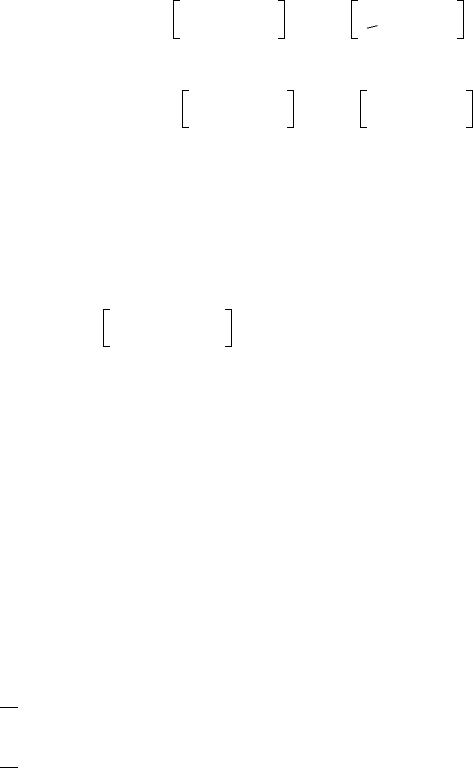
,
(A.3.27)
is a solution to (A.3.25) because
ρε
0
∇ E•=
g
1
µ
0
------
∇ B×ε
0
∂E
∂t
-------
–=
ϕ r t,()
∇ E• r' t
rr'–
c
---------------–,
4π rr'–
-------------------------------------------------
dτ'
∫
=
Art,()
∇ B× r' t
rr'–
c
---------------–,
1
c
2
-----
∂
∂t
----
Er' t
rr'–
c
---------------–,
–
4π rr'–
-----------------------------------------------------------------------------------------------------------
dτ'
∫
=
ϕ 0=
iÑ
∂ψ
∂t
-------
iÑ∇– QA–()
2
2m
------------------------------------
ψ=
ψ
0
A 0=
iÑ
∂ψ
0
∂t
----------
iÑ∇–()
2
2m
--------------------
ψ
0
=
ψψ
0
i
Q
Ñ
----
Asd•
r
0
r
∫
exp=
597
and
.
b) The second case covers and (i.e. ϕ is independent of the
location and thus, ):
.
(A.3.28)
If is a solution of equation (A.3.26), then a solution of eq. (A.3.28) is
.
(A.3.29)
The premise that is satisfied e.g., for a particle that moves inside a
Faraday cage whose surface has a time dependent potential.
The potentials cause, in both cases, an additional phase factor with the phase
shift of and , respectively.
A.3.3 The Ehrenfest Theorems
Despite the significant differences between classical mechanics and quantum
mechanics, they do not mutually contradict themselves. Stated somewhat
simplified, a result of quantum mechanics is that the averages of physical quantities
behave like classical mechanics predicts. This is expressed in Ehrenfest’s
Theorems. Using the notation to express the average of the physical quantity
g, allows to obtain the following relations from Schrödinger’s equation:
(A.3.30)
(A.3.31)
or when combining the two
.
(A.3.32)
This is the classical equation of motion, which occurs here as a consequence of
Schrödinger’s equation. Deviations from these averages are very improbable when
dealing with macroscopic systems, which renders the difference between (A.3.32)
and the classical results negligible. However, this is not true for microscopic
systems.
iÑ∇– QA–()ψ
0
i
Q
Ñ
----
Asd•
r
0
r
∫
exp i
Q
h
----
Asd•
r
0
r
∫
exp iÑ∇–()ψ
0
=
iÑ∇– QA–()
2
ψ
0
i
Q
Ñ
----
Asd•
r
0
r
∫
exp i
Q
Ñ
----
Asd•
r
0
r
∫
exp iÑ∇–()
2
ψ
0
=
A 0= ϕϕt()=
E 0=
iÑ
∂ψ
∂t
-------
Ñ
2
2m
-------
∇
2
– Qϕ+
ψ=
ψ
0
ψψ
0
i
Q
Ñ
----
ϕ t'()t'd
t
0
t
∫
–exp=
ϕϕt()=
Q Ñ⁄()Ard•
∫
Q Ñ⁄–()ϕt() td
∫
g〈〉
td
d
r〈〉
p〈〉
m
--------=
td
d
p〈〉 U r() ∇〈〉–=
m
d
2
dt
2
-------
r〈〉 U r() ∇〈〉–=
A.3 On the Significance of Electromagnetic Fields and Potentials
598 Appendices
Looking at the motion of a particle in an electromagnetic field, one obtains
from Schrödinger’s equation (A.3.32), after some tedious mathematics, Ehrenfest’s
theorem in the following form:
.
(A.3.33)
We conclude that quantum mechanics also permits to calculate the “mean” particle
trajectory by means of E and B, even in a form analogous to the classical equation
of the motion. This applies only to the average and does not describe the exact
motion of any particular particle in an electromagnetic field. The form of (A.3.33)
may initially look peculiar, but results from the fact that velocity in quantum
mechanics is an operator related with the momentum, what arises from (A.3.15)
and (A.3.17). This operator does not commute with the location operator or any of
the location dependent operators, e.g. or . The classical
expression is of course:
.
(A.3.34)
In quantum mechanics, these expressions may not be equated. However, one can
see that in the limit of classical mechanics, Ehrenfest’s theorem in the form
(A.3.33), just yields the Lorentz force.
A.3.4 Magnetic Field and Vector Potential in an infinitely long Coil
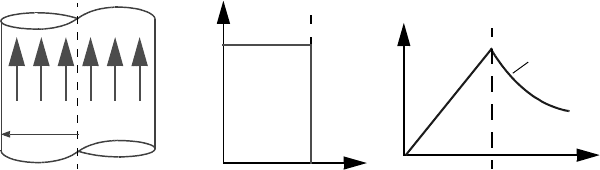
Consider an infinitely long coil as shown in Fig. A.3.1. Its magnetic field can be
expressed by the vector potential A, where
.
(A.3.35)
The magnetic flux through an arbitrary surface is:
.
(A.3.36)
B is gauge invariant, i.e., is not affected by a transition from one vector potential to
another of different gauge, where both vector potentials may only differ by the
gradient of an arbitrary function. This makes the flux gauge invariant as well, as
(A.3.36) makes obvious, because can not change in this case
( ). Fig. A.3.1 shows the graph of and . Under the
m
d
2
dt
2
-------
r〈〉 QE
Q
2
----
vB× Bv×–() +〈〉=
AAr()= BBr()=
1
2
---
vB× Bv×–()
1
2
---
vB× vB×+()vB×()==
Fig. A.3.1
r
B
0
A
ϕ
r()
1
r
---
∼
r∼
B
z
r()
r
r
0
B
z
B
0
=
B ∇ A×=
φ Bad•
a
∫
∇ A× ad•
a
∫
A ds•
∫
°
== =
φ
A ds•
∫
°
∇fds•
∫
°
0= B
z
r() A
ϕ
r()

599
currently assumed gauge, A possesses only a ϕ-component . Now, (see also
Sect. 5.2.3):
(A.3.37)
and
(A.3.38)
Interesting to realize is that the magnetic field outside of the coil vanishes, while
the vector potential does not. This fact will be of our interest next. We will discuss
the question whether the vector potential outside of the coil might influence, in any
way, charged particles whose behavior is described by Schrödinger’s equation. For
this purpose, we will study experiments where electron beams interfere at a double
slit, as was described by Bohm and Aharonov [34].
A.3.5 Interference of Electron Beams at Double Slit
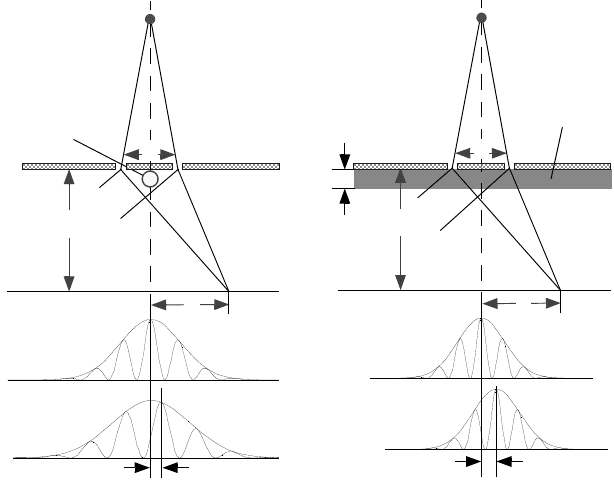
A double slit as illustrated in Fig. A.3.2 shall be used for interference experiments
with electron beams. Starting without a coil and its magnetic field behind the slit,
we obtain an interference pattern on the screen with intensity maxima and minima
due to the impinging electron rays. The quantities (a, d, L, r
1
, r
2
, x), defined in
Fig. A.3.2 allow to calculate the difference in the geometric path length.
.
(A.3.39)
If , then
.
(A.3.40)
This corresponds to a phase difference of
,
(A.3.41)
if denotes the wave length of matter associated with the electrons, which is a
result of the de Broglie relation
,
(A.3.42)
where p represents the momentum of the electron.
Repeating this experiment with the coil and its magnetic field in place, the
electrons from each of the interfering rays travel within the range of the vector
A
ϕ
r()
B
z
r()
B
0
for rr
0
≤
0 for rr
0
>
=
A
ϕ
r()
r
2
---
B
0
for rr
0
≤
r
0
2
2r
-----
B
0
for rr
0
.≥
=
ar
2
r
1
– L
2
x
d
2
---
+
2
+ L
2
x
d
2
---
–
2
+–==
xL«
a
xd
L
------
≈
α
2π
λ
------
xd
L
------
⋅=
λ
λ
h
p
---=
A.3 On the Significance of Electromagnetic Fields and Potentials
600 Appendices
potential created by the coil. The coil shall be assumed to be ideal, i.e. has no
fringing fields. The ray of electrons shall not be able to penetrate the inside of the
coil. Expressed differently, the wave function of the electrons and the magnetic
induction of the field inside the coil shall not overlap. This results in additional
phase differences between the rays along the paths C
1
and C
2
, respectively:
(A.3.43)
and
.
(A.3.44)
Material for the interference is the phase difference
,
(A.3.45)
where is the flux contained inside the coil. This result is very peculiar. As long
as we only regard the phase difference , then only the overall flux is relevant, not
the specific spatial distribution of the magnetic field which produces this flux. The
flux causes a shift of the maxima and minima of the interference picture on the
screen by the distance
,
(A.3.46)
r
1
C
1
r
2
C
2
d
L
a
x
∆x
w
uniform
field
B
1
magnetic
r
1
C
1
r
2
C
2
d
L
a
x
∆x
a
b
coil with
flux
φ
Fig. A.3.2 Fig. A.3.3
a
b
β
1
Q
Ñ
----
Asd•
C
1
∫
=
β
2
Q
Ñ
----
Asd•
C
2
∫
=
ββ
1
β
2
–
Q
Ñ
----
Asd•
∫
°
Q
Ñ
----
φ== =
φ
β
∆x
Lλ
2πd
----------
β⋅
Lλ
2πd
----------
Q
Ñ
----
φ⋅
LλQφ
hd
---------------== =
601
which results from (A.3.41) when replacing α by β and x by ∆x. Fig. A.3.2 shows
the interference pattern picture a) without and b) with magnetic field.
Precise measurements show [35], that although the maxima and minima shift
by ∆x as expressed by (A.3.36) and is depicted in Fig. A.3.2, the envelope remains
unchanged, however. This is the result predicted by Bohm and Aharonov and
meanwhile also verified experimentally, most recently and most clearly by [36].
This effect is not explainable by the B field alone. From the perspective of classical
mechanics, the coil should not influence those passing rays (at least under the
condition that the B field of the coil does not overlap with the wave function ,
which is not easy to achieve experimentally and gave rise to many controversies on
the validity of the Bohm-Aharonov effect).
Interesting is also to consider a variation of the experiment of Fig. A.3.2. This
is described by Fig. A.3.3. Here, the coil and its magnetic field is replaced by a
region, carrying a uniform field (perpendicular to the paper plane). The width of
this region is w. Of course, without magnetic field, the result is just as before. With
the magnetic field, we obtain a flux, which is what is relevant here. The flux is
approximately (i.e., if )
(A.3.47)
and the thereby caused shift of the maxima and minima of the interference pattern
is then with (A.3.36)
.
(A.3.48)
Fig. A.3.3 illustrates, just as Fig. A.3.2, the interference pattern a) without and b)
with a magnetic field. However, in contrast to the case of Fig. A.3.2, now the entire
interference pattern, including the envelope, shifts by in x-direction. This is
plausible and fits well with the classical understanding. For , the Lorentz
force causes
,
(A.3.49)
where represents the time which it takes for a particle to pass through the region
of the uniform magnetic field. If v is its velocity, then
.
(A.3.50)
Furthermore,
.
(A.3.51)
After multiplication by L, this gives exactly the previous result, eq. (A.3.48), which
we have derived there in a rather different way. All electrons are deflected by
exactly the same angle ( ), i.e., the entire interference pattern is shifted by
ψ
xL«
φ B
1
wd=
∆x
LλQ
hd
-----------
B
1
wd
LλQB
1
w
h
----------------------==
∆x
xL«
∆p
x
QvB
1
τ QvB
1
w
v
----
QB
1
w== =
τ
τ
w
v
----=
∆x
L
------
∆p
x
p
---------
≈
QB
1
w
h
λ
---
---------------
λQB
1
w
h
-------------------==
∆xL⁄≈
A.3 On the Significance of Electromagnetic Fields and Potentials
602 Appendices
the distance . Regarding the sign, we note that for electrons ( ) and for
magnetic fields which point out of the paper plane, the shift is to the right.
The difference between the two variants of the experiment (namely one where
the coil that has no outside magnetic field, and the other where a uniform magnetic
field is applied), is rather peculiar. Nevertheless, on the basis of Ehrenfest’s
theorems, on one hand, and the phase difference caused by the vector potential on
the other, it should be conceptually clear. In order to determine the root cause of the
maxima and minima, one knows that this only depends on the phase difference, and
this means it solely depends on the enclosed flux ( ). The average of a
particle trajectory is determined by the Lorentz force, and this means the magnetic
induction, whereby the particular form of the Lorentz force given in eq. (A.3.33)
has to be considered. All this is true from a quantum mechanical perspective as
well. Consequently, the center of mass of the particle trajectory remains unchanged
in the case of the coil without fringe field, and therefore, the envelope remains
unchanged as well. In contrast in the case of the uniform field, the electrons are
deflected both, classically and quantum mechanically by the same angle. The
averages shift accordingly. Therefore, in this case, both the envelope and the
interference pattern are shifted by the same distance . This corresponds to a
shift of the center of mass (of the average) by exactly this distance . With this,
we have gained a clear and easily understandable picture of the process.
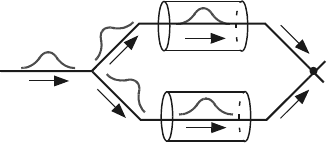
An entirely different, nevertheless related experiment (which also goes back
to the mentioned work of Bohm and Aharonov) is sketched in Fig. A.3.4.
Each of the two rays travels through a shielded cavity in form of a tube
and , respectively. Then the potentials and are applied to the pipes
during the time when the wave packets travel through a tube but are not too close to
the ends (where there may be fringe fields). This creates a phase difference
(A.3.52)
and
(A.3.53)
If , then an interference pattern with maxima and minima corresponding to
the difference
(A.3.54)
∆xQ0<
A ds•
∫
°
∆x
∆x
Fig. A.3.4
R
1
R
2
ϕ
1
t()
ϕ
2
t()
R
1
R
2
ϕ
1
t() ϕ
2
t()
β
1
Q
Ñ
----
ϕ
1
t()td
∫
–=
β
2
Q
Ñ
----
ϕ
2
t()td
∫
–=
β
1
β
2
≠
ββ
1
β
2
–=
A.4 Liénard-Wiechert Potentials 603
is visible at a screen, where as before, eq. (A.3.46) applies. This is as peculiar as
the previous experiment, involving the magnetic field of a coil. Even though inside
the pipes we have
,
(A.3.55)
the potential still influences the electrons which pass through it. Similarly to the
previous explanation, it is important to realize that the electric field is not sufficient
to describe the interaction. True also in this case is that the envelope of the
interference pattern (i.e., the “center of mass” of the incident electrons) does not
shift if . Merely the position of the maxima and minima is affected by the
potentials and . Conversely, when electrons pass through non-
vanishing electric fields, then with shift of the center of mass of the rays, the entire
pattern, including envelope shifts. Both obey the proposition of Ehrenfest’s
theorems.
A.3.6 Conclusions
We have found that quantum mechanics provides a new perspective on the reality
of the fields E and B, on one side, and the potentials A and ϕ on the other.
Maxwell’s equations are thereby unaffected. They can be accepted as correct even
in light of quantum mechanics. However, the interaction of charged particles with
electromagnetic fields exhibits effects which can not be explained classically by
the equation of the motion, and the fields of Maxwell’s equations can not
sufficiently describe these effects. Particularly, the potentials A and ϕ are
indispensable and one needs to consider them as separate fields. It would be easier
to dispense of the classical fields E and B because the potentials are, anyway, a
means within the classical theory to eliminate E and B, while the reverse in
quantum mechanics is not possible, at least not without major difficulties.
A.4 Liénard-Wiechert Potentials
A very interesting, special case of the retarded potentials as of eqs. (7.195) and
(7.196) results, if we consider a charged particle travelling on an arbitrarily
prescribed trajectory . This case is described by:
(A.4.1)
. (A.4.2)
Q represents the charge of the particle and
(A.4.3)
is its velocity. The potentials are
E ∇ϕ–0==
E 0=
ϕ
1
t() ϕ
2
t()
r
0
t()
ρ Qδ rr
0
t()–[]=
g Qr
·
0
δ rr
0
t()–[]=
Qv
0
δ rr
0
t()–[]=
r
·
0
t()
dr
0
t()
dt
--------------- v
0
t()==