
Lopes H.S., Cruz L.M. (eds.) Computational Biology and Applied Bioinformatics
Подождите немного. Документ загружается.


Laiq Hasan and Zaid Al-Ars
TU Delft
The Netherlands
1. Introduction
Efficient biological sequence (proteins or DNA) alignment is an important and challenging
task in bioinformatics. It is similar to string matching in the context of biological data and
is used to infer the evolutionary relationship between a set of protein or DNA sequences.
An accurate alignment can provide valuable information for experimentation on the newly
found sequences. It is indispensable in basic research as well as in practical applications such
as pharmaceutical development, drug discovery, disease prevention and criminal forensics.
Many algorithms and methods, such as, dot plot (Gibbs & McIntyre, 1970), Needleman-Wunsch
(N-W) (Needleman & Wunsch, 1970), Smith-Waterman (S-W) (Smith & Waterman, 1981),
FASTA (Pearson & Lipman, 1985), BLAST (Altschul et al., 1990), HMMER (Eddy, 1998) and
ClustalW (Thompson et al., 1994) have been proposed to perform and accelerate sequence
alignment activities. An overview of these methods is given in (Hasan et al., 2007). Out
of these, S-W algorithm is an optimal sequence alignment method, but its computational
cost makes it inappropriate for practical purposes. To develop efficient and optimal
sequence alignment solutions, the S-W algorithm has recently been implemented on emerging
accelerator platforms such as Field Programmable Gate Arrays (FPGAs), Cell Broadband Engine
(Cell/B.E.) and Graphics Processing Units (GPUs) (Buyukkur & Najjar, 2008; Hasan et al., 2010;
Liu et al., 2009; 2010; Lu et al., 2008). This chapter aims at providing a broad overview of
sequence alignment in general with particular emphasis on the classification and discussion
of available methods and their comparison. Further, it reviews in detail the acceleration
approaches based on implementations on different platforms and provides a comparison
considering different parameters. This chapter is organized as follows:
The remainder of this section gives a classification, discussion and comparison of the available
methods and their hardware acceleration. Section 2 introduces the S-W algorithm which is
the focus of discussion in the succeeding sections. Section 3 reviews CPU-based acceleration.
Section 4 provides a review of FPGA-based acceleration. Section 5 overviews GPU-based
acceleration. Section 6 presents a comparison of accelerations on different platforms, whereas
Section 7 concludes the chapter.
1.1 Classification
Sequence alignment aims at identifying regions of similarity between two DNA or protein
sequences (the query sequence and the subject or database sequence). Traditionally, the
methods of pairwise sequence alignment are classified as either global or local, where pairwise
means considering only two sequences at a time. Global methods attempt to match as many
An Overview of Hardware-Based Acceleration of
Biological Sequence Alignment
9
2 Will-be-set-by-IN-TECH
characters as possible, from end to end, whereas local methods aim at identifying short
stretches of similarity between two sequences. However, in some cases, it might also be
needed to investigate the similarities between a group of sequences, hence multiple sequence
alignment methods are introduced. Multiple sequence alignment is an extension of pairwise
alignment to incorporate more than two sequences at a time. Such methods try to align all of
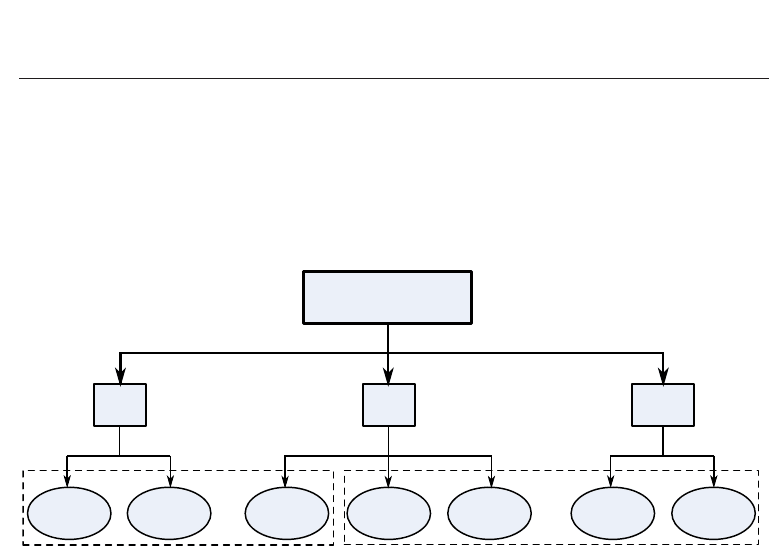
the sequences in a given query set simultaneously. Figure 1 gives a classification of various
available sequence alignment methods.
Global Local
BLAST
S-W
algorithm
N-W
algorithm
FASTA
Multiple
ClustalW
HMMER
Exact methods A
pp
roximate methods
Dot plot
Sequence Alignment
Methods
Fig. 1. Various methods for sequence alignment
These methods are categorized into three types, i.e. global, local and multiple, as shown in the
figure. Further, the figure also identifies the exact methods and approximate methods. The
methods shown in Figure 1 are discussed briefly in the following subsection.
1.2 Discussion of available methods
Following is a brief description of the available methods for sequence alignment.
Global methods
Global methods aim at matching as many characters as possible, from end to end between
two sequences i.e. the query sequence (Q) and the database sequence (D). Methods carrying out
global alignment include dot plot and N-W algorithm. Both are categorized as exact methods.
The difference is that dot plot is based on a basic search method, whereas N-W on dynamic
programming (DP) (Giegerich, 2000).
Local methods
In contrast to global methods, local methods attempt to identify short stretches of similarity
between two sequences i.e. Q and D. These include exact method like S-W and heuristics
based approximate methods like FASTA and BLAST.
Multiple alignment methods
It might be of interest in some cases to consider the similarities between a group of sequences.
Multiple sequence alignment methods like HMMER and ClustalW are introduced to handle
such cases.
188
Computational Biology and Applied Bioinformatics

An Overview of Hardware-based Acceleration of Biological Sequence Alignment 3
1.3 Comparison
The alignment methods can be compared on the basis of their temporal and spatial
complexities and parameters like alignment type and search procedure. A summary of the
comparison is shown in Table 1. It is interesting to note that all the global and local sequence
alignment methods essentially have the same computational complexity of O
(L
Q
L
D
),where
L
Q
and L
D
are the lengths of the query and database sequences, respectively. Yet despite this,
each of the algorithms has very different running times, with BLAST being the fastest and
dynamic programming algorithms being the slowest. In case of multiple sequence alignment
methods, ClustalW has the worst time complexity of O
(L
2
Q
L
2
D
), whereas HMMER has a
time complexity of O
(L
Q
L
2
D
). The space complexities of all the alignment methods are also
essentially identical, around O
(L
Q
L
D
) space, except BLAST, the space complexity of which
is O
(20
w
+ L
Q
L
D
). In the exact methods, dot plot uses a basic search method, whereas N-W
and S-W use DP. On the other hand, all the approximate methods are heuristic based. It
is also worthy to note that FASTA and BLAST have to make sacrifices on sensitivity to be
able to achieve higher speeds. Thus, a trade off exists between speed and sensitivity and we
must come to a compromise to be able to efficiently align sequences in a biologically relevant
manner in a reasonable amount of time.
Method Type Accuracy Search
Time Space
complexity complexity
Dot plot Global Exact Basic O(L
Q
L
D
) O(L
Q
L
D
)
N-W Global Exact DP O(L
Q
L
D
) O(L
Q
L
D
)
S-W Local Exact DP O(L
Q
L
D
) O(L
Q
L
D
)
FASTA Local Approximate Heuristic O(L
Q
L
D
) O(L
Q
L
D
)
BLAST Local Approximate Heuristic O(L
Q
L
D
) O(20
w
+ L
Q
L
D
)
HMMER Multiple Approximate Heuristic O(L
Q
L
2
D
) O(L
Q
L
D
)
ClustalW Multiple Approximate Heuristic O(L
2
Q
L
2
D
) O(L
Q
L
D
)
Table 1. Comparison of various sequence alignment methods
1.4 Hardware platforms
Work has been done on accelerating sequence alignment methods, by implementing them on
various available hardware platforms. Following is a brief discussion about such platforms.
CPUs
CPUs are well known, flexible and scalable architectures. By exploiting the Streaming
SIMD Extension (SSE) instruction set on modern CPUs, the running time of the analyses is
decreased significantly, thereby making analyses of data intensive problems like sequence
alignment feasible. Also emerging CPU technologies like multi-core combines two or more
independent processors into a single package. The Single Instruction Multiple Data-stream
(SIMD) paradigm is heavily utilized in this class of processors, making it appropriate for data
parallel applications like sequence alignment. SIMD describes CPUs with multiple processing
elements that perform the same operation on multiple data simultaneously. Thus, such
machines exploit data level parallelism. The SSE instruction set extension in modern CPUs
contains 70 new SIMD instructions. This extension greatly increases the performance when
exactly the same operations are to be performed on multiple data objects, making sequence
alignment a typical application.
189
An Overview of Hardware-Based Acceleration of Biological Sequence Alignment

4 Will-be-set-by-IN-TECH
FPGAs
FPGAs are reconfigurable data processing devices on which an algorithm is directly mapped
to basic processing logic elements. To take advantage of using an FPGA, one has to implement
massively parallel algorithms on this reconfigurable device. They are thus well suited for
certain classes of bioinformatics applications, such as sequence alignment. Methods like the
ones based on systolic arrays are used to accelerate such applications.
GPUs
Initially stimulated by the need for real time graphics in video gaming, GPUs have evolved
into powerful and flexible vector processors, ideal for accelerating a variety of data parallel
applications. GPUs have in the last couple of years developed themselves from a fixed
function graphics processing unit into a flexible platform that can be used for high performance
computing (HPC). Applications like bioinformatics sequence alignment can run very efficiently
on these architectures.
2. Smith-Waterman algorithm
In 1981, Smith and Waterman described a method, commonly known as the Smith-Waterman
(S-W) algorithm (Smith & Waterman, 1981), for finding common regions of local similarity.
S-W method has been used as the basis for many subsequent algorithms, and is often quoted
as a benchmark when comparing different alignment techniques. When obtaining the local
S-W alignment, a matrix H is constructed using the following equation.
H
i,j
= max
⎧
⎪
⎪
⎨
⎪
⎪
⎩
0
H
i−1,j−1
+ S
i,j
H
i−1,j
− d
H
i,j−1
− d
(1)
Where S
i,j
is the similarity score and d is the penalty for a mismatch. The algorithm can be
implemented using the following pseudo code.
Initialization:
H(0,j) = 0
H(i,0) = 0
Matrix Fill:
for each i,j = 1 to M,N
{
H(i,j) = max(0,
H(i-1,j-1) + S(i,j),
H(i-1,j) - d,
H(i,j-1) - d)
}
Traceback:
H(opt) = max(H(i,j))
traceback(H(opt))
190
Computational Biology and Applied Bioinformatics

An Overview of Hardware-based Acceleration of Biological Sequence Alignment 5
The H matrix is constructed with one sequence lined up against the rows of a matrix, and
another against the columns, with the first row and column initialized with a predefined value
(usually zero) i.e. if the sequences are of length M and N respectively, then the matrix for the
alignment algorithm will have
(M + 1) × (N + 1) dimensions. The matrix fill stage scores
each cell in the matrix. This score is based on whether the two intersecting elements of each
sequence are a match, and also on the score of the cell’s neighbors to the left, above, and
diagonally upper left. Three separate scores are calculated based on all three neighbors, and
the maximum of these three scores (or a zero if a negative value would result) is assigned
to the cell. This is done for each cell in the matrix resulting in O
(MN) complexity for the
matrix fill stage. Even though the computation for each cell usually only consists of additions,
subtractions, and comparisons of integers, the algorithm would nevertheless perform very
poorly if the lengths of the query sequences become large. The traceback step starts at the cell
with the highest score in the matrix and ends at a cell when the similarity score drops below a
certain predefined threshold. For doing this, the algorithm requires to find the maximum cell
which is done by traversing the entire matrix, making the time complexity for the traceback
O
(MN). It is also possible to keep track of the cell with the maximum score, during the
matrix filling segment of the algorithm, although this will not chang e the overall complexity.
Thus, the total time complexity of the S-W algorithm is O
(MN). The space complexity is also
O
(MN).
In order to reduce the O
(MN) complexity of the matrix fill stage, multiple entries of the
H matrix can be calculated in parallel. This is however complicated by data dependencies,
whereby each H
i,j
entry depends on the values of three neighboring entries H
i,j−1
, H
i−1,j
and
H
i−1,j−1
, with each of those entries in turn depending on the values of three neighboring
entries, which effectively means that this dependency extends to every other entry in the
region H
x,y
: x ≤ i, y ≤ j. This implies that it is possible to simultaneously compute all the
elements in each anti-diagonal, since they fall outside each other’s data dependency regions.
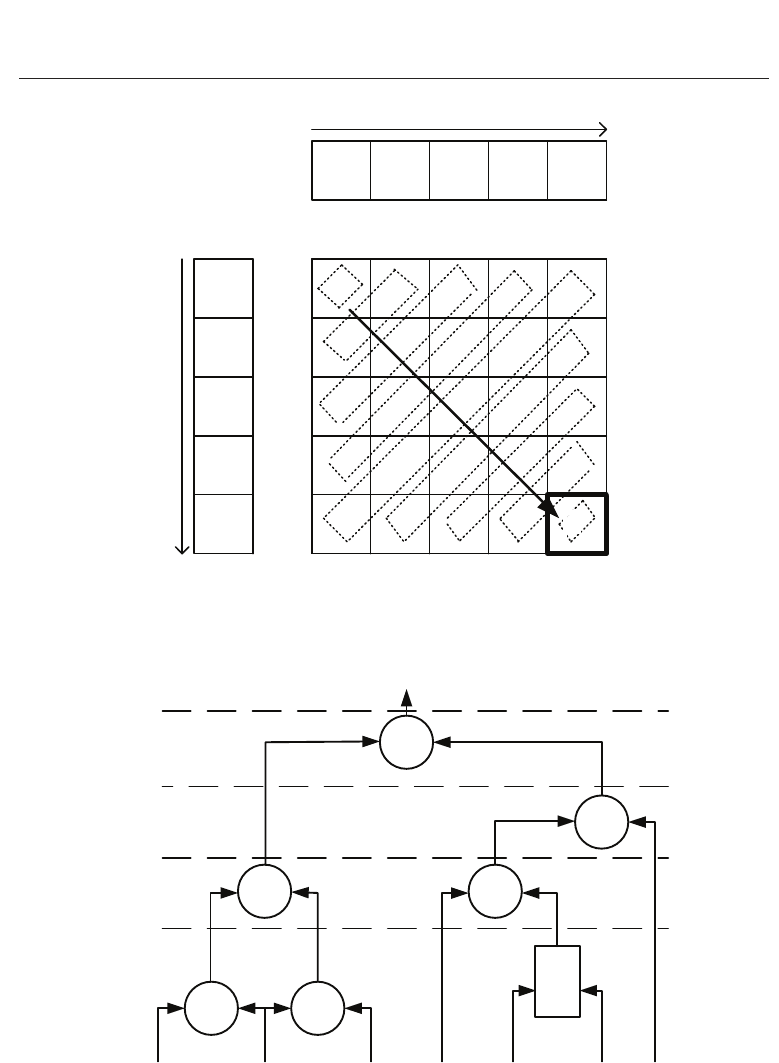
Figure 2 shows a sample H matrix for two sequences, with the bounding boxes indicating the
elements that can be computed in parallel. The bottom-right cell is highlighted to show that
its data dependency region is the entire remaining matrix. The dark diagonal arrow indicates
the direction in which the computation progresses. At least 9 cycles are required for this
computation, as there are 9 bounding boxes representing 9 anti-diagonals and a maximum of
5 cells may be computed in parallel.
The degree of parallelism is constrained to the number of elements in the anti-diagonal and
the maximum number of elements that can be computed in parallel are equal to the number
of elements in the longest anti-diagonal (l
d
), where,
l
d
= min(M, N) (2)
Theoretically, the lower bound to the number of steps required to calculate the entries of
the H matrix in a parallel implementation of the S-W algorithm is equal to the number of
anti-diagonals required to reach the bottom-right element, i.e. M
+ N − 1 (Liao et al., 2004).
Figure 3 shows the logic circuit to compute an element of the H matrix. The logic contains
three adders, a sequence comparator circuit (SeqCmp) and three max operators (MAX).The
sequence comparator compares the corresponding characters of two input sequences and
outputs a match/mismatch score, depending on whether the two characters are equal or not.
Each max operator finds the maximum of its two inputs. The time to compute an element is
4 cycles, assuming that the time for each cycle is equal to the latency of one add or compare
operation.
191
An Overview of Hardware-Based Acceleration of Biological Sequence Alignment
6 Will-be-set-by-IN-TECH
G A T T A
G
A
C
T
C
00
00
0
0
0
0
0
0
1 0 0 0 0
0
0
0
0
2
0
0
0
0
1
1
0
0
0
2
0
1
0
0
0
1
i
j
Fig. 2. Sample H matrix, where the dotted rectangles show the elements that can be
computed in parallel
MAX
MAX
+MAX
++
Seq
Cmp
H
i,j-1
dH
i-1,j
H
i-1,j-1
QD0
S
i,j
H
i,j
Cycle 1
Cycle 2
Cycle 3
Cycle 4
Fig. 3. Logic circuit to compute cells in the H matrix, where + is an adder, MAX is a max
operator and SeqCmp is the sequence comparator that generates match/mismatch scores
192
Computational Biology and Applied Bioinformatics

An Overview of Hardware-based Acceleration of Biological Sequence Alignment 7
3. CPU-based acceleration
In this section CPU-based acceleration of the S-W algorithm is reviewed. Furthermore, an
estimation of the performance for top-end and future systems is made (Vermij, 2011).
3.1 Recent implementations
The first CPU implementations used a sequential way of calculating all the matrix values.
These implementations were slow and therefore hardly used. In 2007, Farrar introduced
a SSE implementation for S-W (Farrar, 2007). His work used SSE2 instructions for an Intel
processor and was up to six times faster than existing S-W implementations. Two years later,
a Smith-Waterman implementation on Playstation 3 (SWPS3) was introduced (Szalkowski et al.,
2009), which was based on a minor adjustment to Farrar’s implementation. SWPS3 is a
vectorized implementation of the Smith-Waterman local alignment algorithm optimized for
both the IBM Cell/B.E. and Intel x86 architectures. A SWPS3 version optimized for multi
threading has been released recently (Aldinucci et al., 2010). The SSE implementations can
be viewed as being semi parallel, as they constantly calculate sixteen, eight or less values at
the same time, while discarding startup and finish time. Table 2 presents the performance
achieved by these implementations on various CPU platforms.
Implementation
Peak Benchmark Peak performance
performance hardware (per thread)
(Farrar, 2007) 2.9 GCUPS
2.0 GHz, Xeon
3.75 GCUPS
Core 2 Duo
single thread
(Szalkowski et al., 2009) 15.7 GCUPS
2.4 GHz
4.08 GCUPS
Core 2 Quad
Q6600, 4 threads
(Aldinucci et al., 2010) 35 GCUPS
2.5 GHz, 2x Xeon
4.38 GCUPS
Core Quad
E5420, 8 threads
Table 2. Performance achieved by various S-W CPU implementations
3.2 P erformance estimations for top-end and future CPUs
With the data from Table 2, we make an estimate of the performance on the current top-end
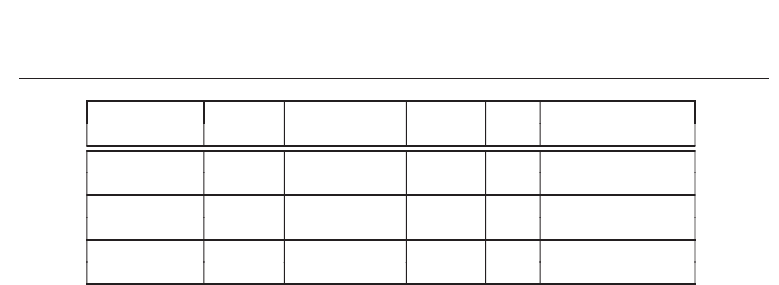
CPUs and take a look into the future. Table 3 gives the estimated peak performances based
on the SIMD register width, the number of cores, clock speed and the known speed per
core. We assumed linear scaling in the number of cores as suggested in Table 2, and the
given performances may therefore not be reliable. Non-ideal inter-core communication,
memory bandwidth limitations and shared caches could lead to a lower peak performance.
Furthermore, no distinction in performance is made between Intel and AMD processors.
Hence, Table 3 must be used as an indication to where the S-W performance could go on
in current and future CPUs.
4. FPGA-based acceleration
FPGAs are programmable logic devices. To map an application on flexible FPGA platforms,
a program is written in a hardware description language like VHDL. The flexibility, difficulty
193
An Overview of Hardware-Based Acceleration of Biological Sequence Alignment
8 Will-be-set-by-IN-TECH
System Released
SIMD Cores Clock Peak performance
register width (threads) speed (estimated)
Xeon
2010 128
8 2.26 32
Beckton (16) GHz GCUPS
Opteron
2010 128
12 2.3 48
Magny-Cours (12) GHz GCUPS
Opteron
2011 128
16 2.3 64
Interlagos (16) GHz GCUPS
Table 3. Estimated peak performance for current top-end and future CPUs
of design as well as the performance of FPGA implementations fall typically somewhere
between pure software running on a CPU and an Application Specific Integrated Circuit
(ASIC). FPGAs are widely used to accelerate applications like S-W based sequence alignment.
Implementations rely on the ability to create building blocks called processing elements (PEs)
that can update one matrix cell every clock cycle. Furthermore, multiple PEs can be linked
together in a two dimensional or linear systolic arrays to process huge data in parallel. This
section provides a brief description of traditional systolic arrays followed by a discussion of
existing and future FPGA-based S-W implementations.
4.1 Systolic arrays
Systolic array is an arrangement of processors in an array, where data flows synchronously
across the array between neighbors, usually with data flowing in a specific direction
(Kung & Leiserson, 1979), (Quinton & Robert, 1991). Each processor at each step takes in data
from one or more neighbors (e.g. North and West), processes it and, in the next step, outputs
results to the opposite neighbors (South and East). Systolic arrays can be implemented in
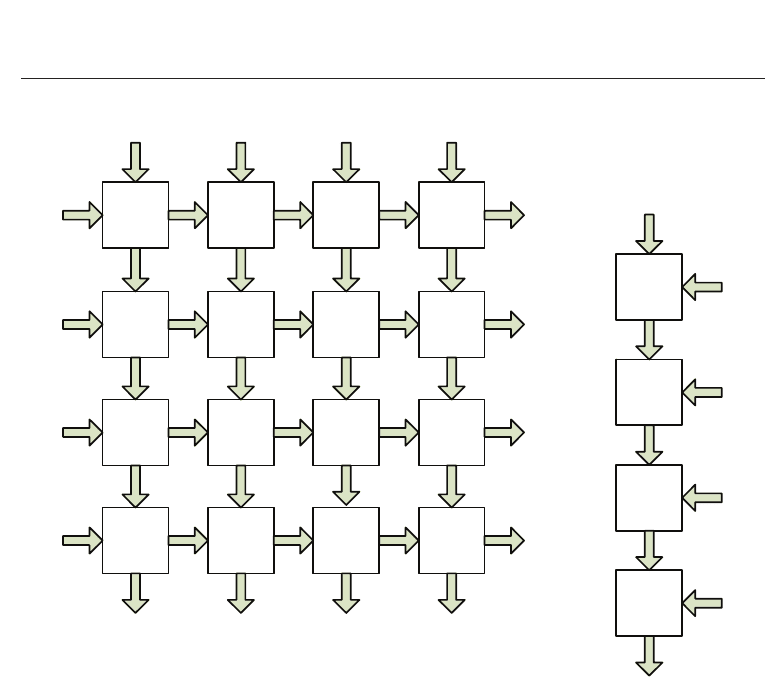
rectangular or 2-dimensional (2D) and linear or 1-dimensional (1D) fashion. Figure 4 gives a
pictorial view of both implementation types.
In these configurations, there are two vector array inputs, M and N. The processing cells have
avalue,U
ij
, that is usually a result due to a defined algorithm within the cells. Systolic array
based architectures are extremely fast, easily scalable and can do many tasks that traditional
architectures cannot attain. They best suit compute-intensive applications like biological
sequence alignment. The disadvantage is that being highly specialized processors type, they
are difficult to implement and build.
In (Pfeiffer et al., 2005), a concept to accelerate S-W algorithm on the basis of linear systolic
array is demonstrated. The reason for choosing this architecture is outlined by demonstrating
the efficiency and simplicity in combination with the algorithm. Nevertheless, there are two
key methodologies to speedup this massively parallel system. By turning the processing
from bit-parallel to bit-serial, the actual improvement is enabled. This change is performance
neutral, but in combination with the early maximum detection, a considerable speedup is
possible. Another effect of this improvement is a data dependant execution time of the
processing elements. Here, the second acceleration prevents idle times to exploit the hardware
and speeds up the computation. This can be accomplished by a globally asynchronous timing
representing a self-timed linear systolic array. The authors have provided no performance
estimation due to the initial stage of their work, that is why it cannot be compared with other
related work.
194
Computational Biology and Applied Bioinformatics
An Overview of Hardware-based Acceleration of Biological Sequence Alignment 9
U
11
U
43
U
33
U
42
U
32
U
23
U
41
U
31
U
22
U
21
U
34
U
24
U
44
U
14
U
13
U
12
N
1
N
2
N
3
N
4
M
1
M
2
M
3
M
4
U
11
U
14
U
13
U
12
N
1
N
2
N
3
N
4
M
4
M
3
M
2
M
1
(a) Rectangular (2D) systolic array
(b) Linear (1D) systolic array
Fig. 4. Pictorial view of systolic array architectures
In (Vermij, 2011), the working of a linear systolic array ( LSA) is explained. Such an array works
like the SSE unit in a modern CPU. But instead of having a fixed length of lets say 16, the
FPGA based array can have any length.
4.2 Existing FPGA implementations
In Section 3, we discussed some existing S-W implementations running on a CPU. A
comparable analysis for FPGAs is rather hard. There are very few real, complete
implementations that give usable results. Most research implementations only discuss
synthetic tests, giving very optimistic numbers for implementations that are hardly used in
practice. Furthermore, there is a great variety in the types of FPGAs used. Since every FPGA
series has a different way of implementing circuitry, it is hard to make a fair comparison.
In addition, the performance of the implementations relies heavily on the data widths used.
Smaller data widths lead to smaller PEs, which lead to faster implementations. These numbers
are not usually published. The first, third and fourth implementations shown in Table 4 make
this clear, where the performance is given in terms of Giga Cell Updates Per Second (GCUPS).
Using the same FPGA device, these three implementations differ significantly in performance.
The most reliable numbers are from Convey and SciEngines, as shown in the last two entries
195
An Overview of Hardware-Based Acceleration of Biological Sequence Alignment

10 Will-be-set-by-IN-TECH
of Table 4. These implementations work the same in practice for real cases and are build for
maximal performance.
Reference FPGA Frequency PEs
Performance Performance
(per FPGA) (per system)
(Puttegowda et al., 2003)
Virtex2 180
7000
1260
—
XC2V6000 MHz GCUPS
(Yu et al., 2003)
Virtex2
— 4032
742
—
XCV1000-6 GCUPS
(Oliver et al., 2005)
Virtex2 55
252
13.9
—
XC2V6000 MHz GCUPS
(Gok & Yilmaz, 2006)
Virtex2 112
482
54
—
XC2V6000 MHz GCUPS
(Altera, 2007)
Stratix2 66.7
384
25.6
—
EP2S180 MHz GCUPS
(Cray, 2010) Virtex4
200
120
24.1
—
MHz GCUPS
(Convey, 2010a)
Virtex5 150
1152
172.8 691.2
LX330 MHz GCUPS GCUPS
(Convey, 2010b)
Spartan6
— —
47 6046
LX150 GCUPS GCUPS
Table 4. Performance of various FPGA implementations
4.3 Future FPGA implementations
The performance of S-W implementations on FPGA can foremost be increased by using
larger and faster FPGAs. Larger FPGAs can contain more PEs and therefore deliver higher
performance in terms of GCUPS. The largest Xilinx Virtex 6 FPGA device has roughly 2.5
times more area than the largest Virtex 5 FPGA, so the peak performance of the former can be
estimated at 2.5
× 172.8 = 432 GCUPS (using the numbers from the Convey implementation).
5. GPU-based acceleration
The parallelization capabilities of GPUs can be best exploited for accelerating biological
sequence alignment applications. This section provides some brief background information
about GPUs. Furthermore, it presents the current GPU implementations for S-W based
sequence alignment.
5.1 GPU background
Compute Unified Device Architecture (CUDA) is the hardware and software architecture that
enables NVIDIA GPUs (Fermi™, 2009) to execute programs written in C, C++, Fortran,
OpenCL, DirectCompute and other languages. A CUDA program calls kernels that run on
the GPU. A kernel executes in parallel across a set of threads, where a thread is the basic
unit in the programming model that executes an instance of the kernel, and has access to
registers and per thread local memory. The programmer organizes these threads in grids
of thread blocks, where a thread block is a set of concurrently executing threads and has a
shared memory for communication between the threads. A grid is an array of thread blocks
that execute the same kernel, read inputs from and write outputs to global memory, and
synchronize between interdependent kernel calls. Figure 5 gives a block diagram description
of the GPU architecture.
196
Computational Biology and Applied Bioinformatics