
Lopes H.S., Cruz L.M. (eds.) Computational Biology and Applied Bioinformatics
Подождите немного. Документ загружается.

Acrylamide Binding to Its Cellular Targets: Insights from Computational Studies
437
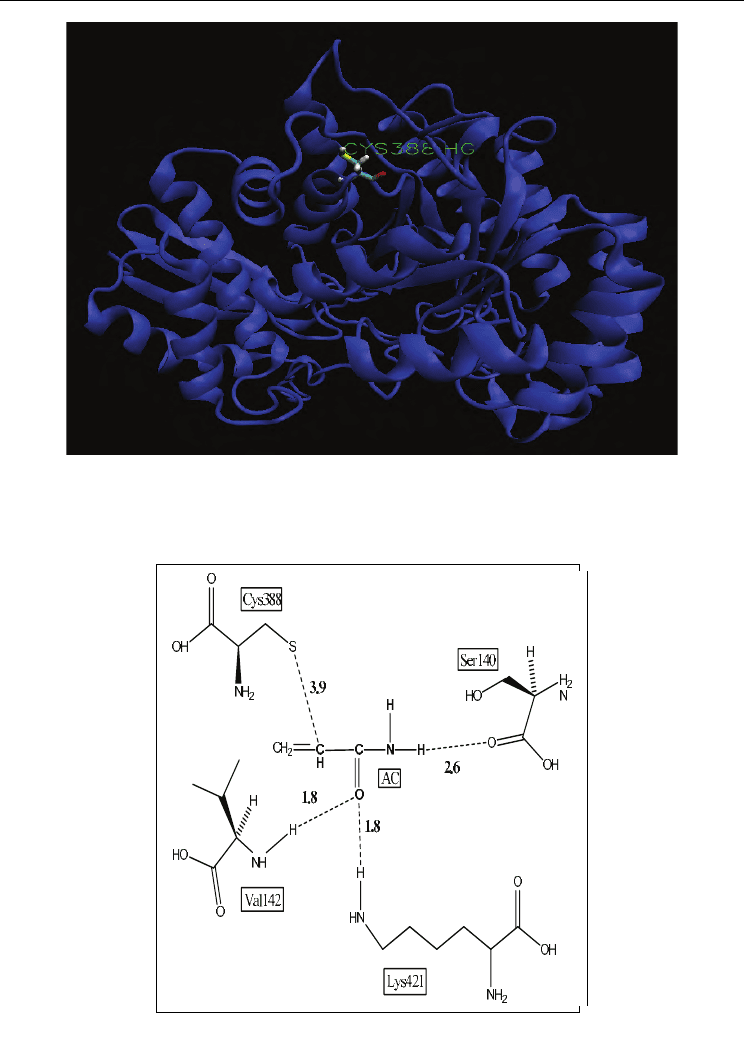
Fig. 6. 3D structure of enolase enzyme [Howland et. al., 1980]. The Cys388, which binds AC
is named and indicated in licorice representation.
Fig. 7. AC interactions with Val142, Lys421, Ser140 and Cys388 residues, inside enolase
enzyme.
Computational Biology and Applied Bioinformatics
438
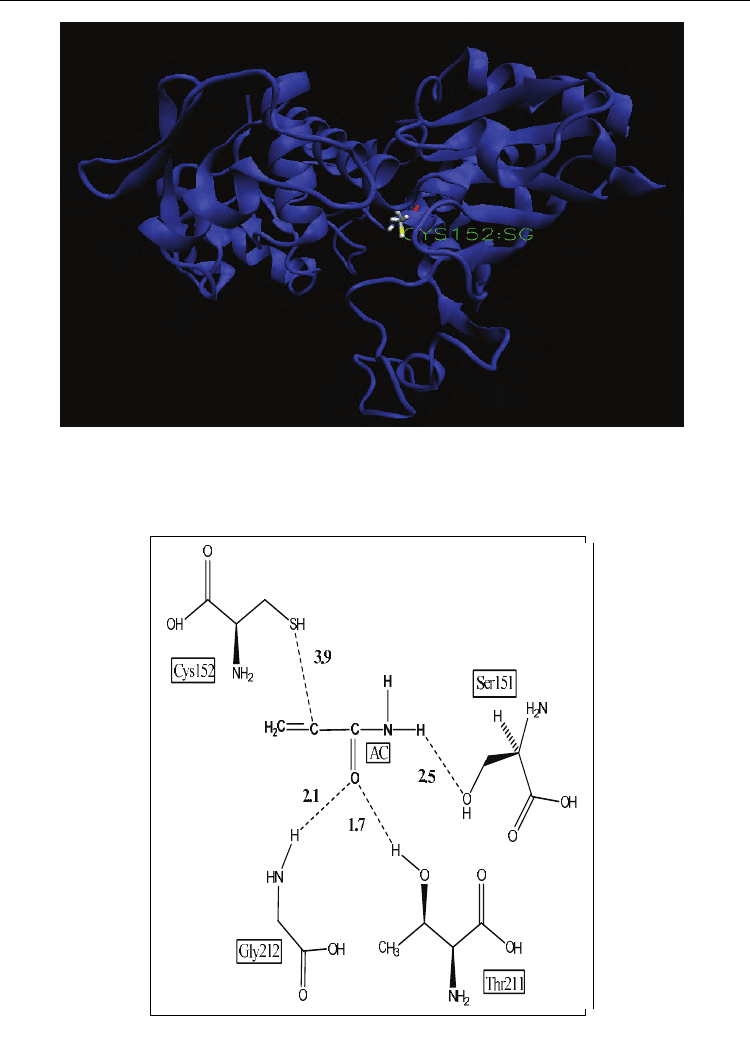
Fig. 8. 3D structure of GAPDH enzyme [Sakamoto & Hashimoto, 1985]. The Cys152, which
binds AC is named and indicated in licorice representation.
Fig. 9. AC interactions with Gly212, Thr211, Ser151 and Cys152 residues inside GAPDH
active site.
Acrylamide Binding to Its Cellular Targets: Insights from Computational Studies
439
is as high as 95%. This suggests similar consideration for this species. Instead, for mouse
serum albumin, SI = 72% (see Fig. S1, SI). In the structure of the mouse serum albumin,
which was built by homology modeling, there are two target cysteines (at position 58 and
603). Therefore, we may expect rather different binding in the two species. Because of the
limitations of the docking procedure with homology models, we did not proceed to
investigate AC binding poses to this protein [Leach, 2001; McGovern & Shoichet, 2003].
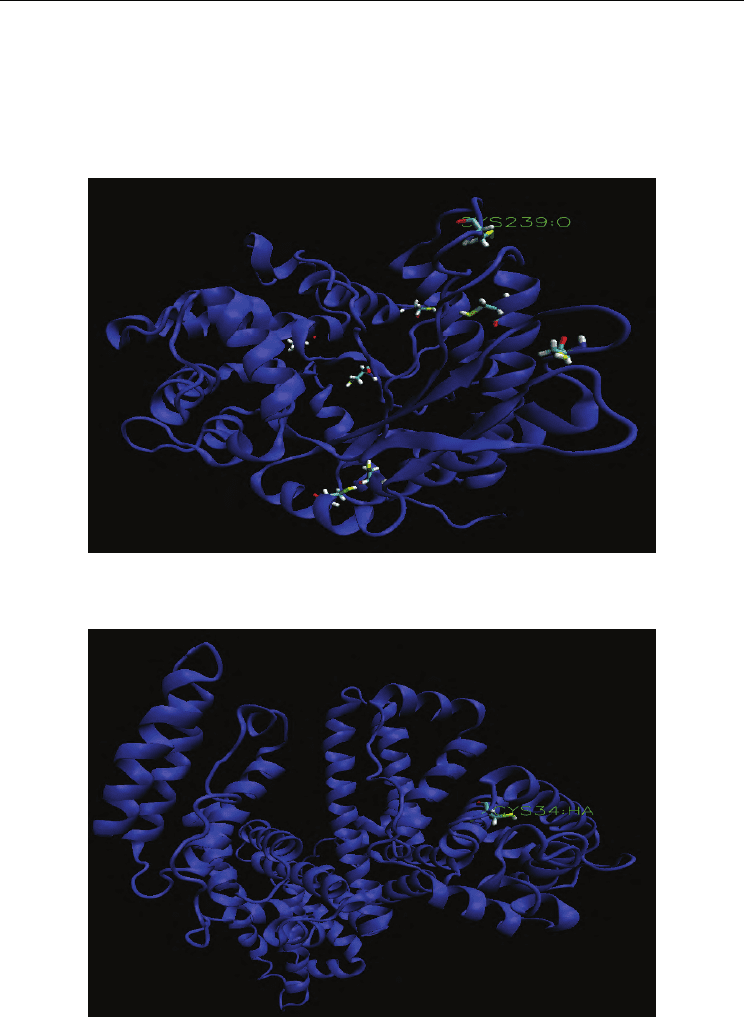
Fig. 10. 3D structure of aldolase enzyme [Dobryszycki et al., 1999a; 1999b]. All the cysteine
residues are in licorice representation with indication of the most reactive one, Cys239.
Fig. 11. 3D structure of serum albumin [Ferguson et al., 2010]. The only cysteine free to react,
Cys34 is indicated in licorice representation.

Computational Biology and Applied Bioinformatics
440
5. Conclusions
By means of molecular docking methodology, we have studied the interactions between AC
and its human targets. The investigation is complemented by a study of AC interactions
with the mouse protein, for which binding has not been reported so far. The calculations are
consistent with the available biochemical data and they provide novel information on
putative cysteines to which AC could be bound in both mouse and human protein. In the
case of one protein, serum albumin, binding is likely to occur at different locations in the
protein. Hence, this difference could contribute to the experimentally known differences in
toxic properties of AC in humans and mice.
6. Acknowledgment
One of the authors (Lima, EF) is recipient of a grant from the ‘Fondazione Ernesto Illy’,
Trieste-Italy.
7. References
Besaratinia, A., & Pfeifer, G. P. (2005). DNA adduction and mutagenic properties of
acrylamide. Mutatational Research, Vol. 580, pp. 31–40.
Besaratinia A., & Pfeifer G. P. (2007). A review of mechanisms of acrylamide carcinogenicity.
Carcinogenesis, Vol. 28, No. 3, pp. 519–528.
Campbell S. J., Gold N. D., Jackson R. M. & Westhead D. R. (2003). Ligand binding:
functional site location, similarity and docking, Current Opinion in Structural
Biology, Vol. 13, pp. 389–395.
Campian E. C., Cai J., & Benz F. W. (2002). Acrylonitrile irreversibly inactivates
glyceraldehyde-3-phosphate dehydrogenase by alkylating the catalytically active
cysteine 149. Chemico-Biological Interactions, Vol. 140, pp. 279–291.
Candiano G., Petretto A., Bruschi M., Santucci L., Dimuccio V., Prunotto M., Gusmano R.,
Urbani A., Ghiggeri G. M. (2009). (Review) The oxido-redox potential of albumin
Methodological approach and relevance to human diseases, journal of proteomics,
73, 188-195.
Carere A. (2006). Genotoxicity and carcinogenicity of acrylamide: a critical review, Annali
dell’Istituto Superiore di Sanità, Vol. 42, No. 2, pp. 144-155.
Dearfield K. L. , Douglas G. R., Ehling U. H., Moore M. M., Sega G. A., & Brusick D. J. (1995).
Acrylamide: a review of its genotoxicity and an assessment of heritable genetic risk.
Mutation Research, Vol. 330, pp. 71-99.
Dobryszycki P., Rymarczuk M., BuIaj G., & Kochman M. (1999a). Effect of acrylamide on
aldolase structure.I. Induction of intermediate states. Biochimica et Biophysica Acta,
Vol. 1431, pp. 338-350.
Dobryszycki P., Rymarczuk M., Gapinski J., & Kochman M. (1999b). Effect of acrylamide on
aldolase structure. II. Characterization of aldolase unfolding intermediates.
Biochimica et Biophysica Acta, Vol. 1431, pp. 351-362.
Ferguson S. A., Garey J., Smith M. E., Twaddle N. C., Doerge D. R., & Paule M. G. (2010).
Preweaning behaviors, developmental landmarks, and acrylamide and
glycidamide levels after pre- and postnatal acrylamide treatment in rats.
Neurotoxicology and Teratology, Vol. 32, pp. 373–382.

Acrylamide Binding to Its Cellular Targets: Insights from Computational Studies
441
Friedman M. (2003). Chemistry, Biochemistry, and Safety of Acrylamide. A Review. Journal
of Agricultural and Food Chemistry, Vol. 51, No. 16, pp. 4504-4526.
Ghanayem B. I., McDaniel L. P., Churchwell M. I., Twaddle N. C., Snyder R., Fennell T. R., &
Doerge D. R. (2005). Role of CYP2E1 in the Epoxidation of Acrylamide to
Glycidamide and Formation of DNA and Hemoglobin Adducts. Toxicological
Science, Vol. 88, No. 2, pp. 311–318.
Halperin I., Ma B., Wolfson H., & Nussinov R. (2002). Principles of Docking: An Overview
of Search Algorithms and a Guide to Scoring Functions. PROTEINS: Structure,
Function, and Genetics, Vol. 47, pp. 409-443.
Hendlich M., Rippmann F., & Barnickel G. (1997). LIGSITE: Automatic and efficient
detection of potential small molecule binding sites in proteins. Journal of Molecular
Graphics and Modelling, Vol. 15, No. 6, pp. 359-363.
Hildebrand A., Remmert M., Biegert A., & Soding J. (2009). Fast and accurate automatic
structure prediction with HHpred. Proteins, Vol. 77, pp. 128–132.
Howland R. D., Vyas I. L., Lowndes H. E., & Argentieri T. M. (1980). The etiology of toxic
peripheral neuropathies: in vitro effects of acrylamide and 2,5-hexanedione on
brain enolase and other glycolytic enzymes. Brain Research, Vol. 202, pp. 131-142.
Jones G., Willett P., & Glen R. C. (1995). Molecular recognition of receptor sites using a
genetic algorithm with a description of desolvation. Journal of Molecular Biology,
Vol. 245, pp. 43-53.
Jones G., Willett P., Glen R. C., Leach A. R., & Taylor R. (1997). Development and Validation
of a Genetic Algorithm for Flexible Docking. Journal of Molecular Biology, Vol. 267,
pp. 727-748.
Kawatkar S., Wang H., Czerminski R., & McCarthy D. J. (2009). Virtual fragment
screening: an exploration of various docking and scoring protocols for fragments
using Glide, Journal of Computer-Aided Molecular Design, Vol. 23, pp. 527–539.
Kitchen D. B., Decornez H., Furr J. R., & Bajorath J. (2004). Docking and scoring in
virtual screening for drug discovery: methods and applications, Nature
Reviews – Drug Discovery, Vol. 3, pp. 935.
Klaunig J. E. (2008). Acrylamide Carcinogenicity. Journal of Agricultural and Food Chemistry,
Vol. 56, pp. 5984–5988.
Kurebayashi H., & Ohno Y. (2006). Metabolism of acrylamide to glycidamide and their
cytotoxicity in isolated rat hepatocytes: protective effects of GSH precursors.
Archives of Toxicology, Vol. 80, pp. 820–828.
Leach, A. R. (2
nd
Edition). (2001). Molecular modelling, principles and applications, Harlow,
Essex Pearson Education Limited, ISBN 0-582-38210-6, Harlow, England.
Lü Z-R., Zou H-C., Jin P. S., Park D., Shi L., Ho O-S., Park Y-D., Bhak J., & Zou F. (2009). The
effects of acrylamide on brain creatine kinase: Inhibition kinetics and
computational docking simulation. International Journal of Biological Macromolecules,
Vol. 44, pp. 128–132.
Matsuoka M., Matsumura H., & Igisu H. (1996). Creatine kinase activities in brain and
blood: possible neurotoxic indicator of acrylamide intoxication. Occupational and
Environmental Medicine, Vol. 53, pp.468-471.
McGovern S. L. & Shoichet Brian K. (2003). Information decay in molecular docking screens
against Holo, Apo, and modeled conformations of enzymes. Journal of Medicinal
Chemistry, Vol. 46, pp. 2895-2907.

Computational Biology and Applied Bioinformatics
442
Meng F-G., Zhou H-W., & Zhou H-M. (2001). Effects of acrylamide on creatine kinase from
rabbit muscle. The International Journal of Biochemistry & Cell Biology, Vol. 33, pp.
1064–1070.
Rice, J. (2005). The carcinogenicity of acrylamide. Mutatational Research, Vol. 580, pp. 3–20.
Sakamoto J., & Hashimoto K. (1985). Effect of acrylamide and related compounds on
glycolytic enzymes in rat sciatic nerve in vivo. Archives of Toxicology, Vol. 57, pp.
282-284.
Sciandrello G., Mauro M., Caradonna F., Catanzaro I., Saverini M., & Barbata G. (2010).
Acrylamide catalytically inhibits topoisomerase II in V79 cells. Toxicology in Vitro,
Vol. 24, pp. 830–834.
Soding J. (2005). Protein homology detection by HMM–HMM comparison. Bioinformatics,
Vol. 21, No. 7, pp. 951–960.
Soding J., Biegert A., & Lupas A. N. (2005). The HHpred interactive server for protein
homology detection and structure prediction. Nucleic Acids Research, Vol. 33, pp.
W244–W248.
Sutherland J. J., Nandigam R. K., Erickson J. A., & Vieth M. (2007). Lessons in Molecular
Recognition. 2. Assessing and Improving Cross-Docking Accuracy, Journal of
Chemical Information and Modeling, Vol. 47, pp. 2293-2302.
Verdonk M. L., Cole J. C., Hartshorn M. J., Murray C. W., & Taylor R. D. (2003).
Improved Protein–Ligand Docking Using GOLD, Proteins: Structure, Function, and
Genetics, Vol. 52, pp. 609–623.
Wei H., Ruthenburg A. J., Bechis S. K., & Verdine G. L. (2005). Nucleotide-dependent
Domain Movement in the ATPase Domain of a Human Type IIA DNA
Topoisomerase. Journal of Biological Chemistry, Vol. 280, pp. 37041-37047.
Zhang Y., Ren Y., & Zhang Y. (2009). New Research Developments on Acrylamide:
Analytical Chemistry, Formation Mechanism, and Mitigation Recipes. Chemical
Reviews, Vol. 109, pp. 4375–4397.