
Manning Ch. D., Raghavan P., Sch?tze H. Introduction to Information Retrieval - Введение в информационный поиск
Подождите немного. Документ загружается.


Online edition (c)2009 Cambridge UP
196 10 XML retrieval
RDB search unstructured retrieval structured retrieval
objects records unstructured documents trees with text at leaves
model relational model vector space & others ?
main data structure
table inverted index ?
queries SQL free text queries ?
◮
Table 10.1 RDB (relational database) search, unstructured information retrieval
and structured information retrieval. There is no consensus yet as to which methods
work best for structured retrieval although many researchers believe that XQuery
(page 215) will become the standard for structured queries.
and that cite US patent 4,405,829 (patents), or give me articles about sightseeing
tours of the Vatican and the Coliseum (entity-tagged text). These three queries
are structured queries that cannot be answered well by an unranked retrieval
system. As we argued in Example
1.1 (page 15) unranked retrieval models
like the Boolean model suffer from low recall. For instance, an unranked
system would return a potentially large number of articles that mention the
Vatican, the Coliseum and sightseeing tours without ranking the ones that
are most relevant for the query first. Most users are also notoriously bad at
precisely stating structural constraints. For instance, users may not know
for which structured elements the search system supports search. In our ex-
ample, the user may be unsure whether to issue the query as sightseeing AND
(COUNTRY:Vatican OR LANDMARK:Coliseum) , as sightseeing AND (STATE:Vatican OR
BUILDING:Coliseum) or in some other form. Users may also be completely un-
familiar with structured search and advanced search interfaces or unwilling
to use them. In this chapter, we look at how ranked retrieval methods can be
adapted to structured documents to address these problems.
We will only look at one standard for encoding structured documents: Ex-
tensible Markup Language or XML, which is currently the most widely usedXML
such standard. We will not cover the specifics that distinguish XML from
other types of markup such as HTML and SGML. But most of what we say
in this chapter is applicable to markup languages in general.
In the context of information retrieval, we are only interested in XML as
a language for encoding text and documents. A perhaps more widespread
use of XML is to encode non-text data. For example, we may want to export
data in XML format from an enterprise resource planning system and then
read them into an analytics program to produce graphs for a presentation.
This type of application of XML is called data-centric because numerical andDATA-CENTRIC XML
non-text attribute-value data dominate and text is usually a small fraction of
the overall data. Most data-centric XML is stored in databases – in contrast
to the inverted index-based methods for text-centric XML that we present in
this chapter.

Online edition (c)2009 Cambridge UP
10.1 Basic XML concepts 197
We call XML retrieval structured retrieval in this chapter. Some researchers
prefer the term semistructured retrieval to distinguish XML retrieval from databaseSEMISTRUCTURED
RETRIEVAL
querying. We have adopted the terminology that is widespread in the XML
retrieval community. For instance, the standard way of referring to XML
queries is structured queries, not semistructured queries. The term structured
retrieval is rarely used for database querying and it always refers to XML
retrieval in this book.
There is a second type of information retrieval problem that is intermediate
between unstructured retrieval and querying a relational database: paramet-
ric and zone search, which we discussed in Section 6.1 (page 110). In the
data model of parametric and zone search, there are parametric fields (re-
lational attributes like date or file-size) and zones – text attributes that each
take a chunk of unstructured text as value, e.g., author and title in Figure
6.1
(page 111). The data model is flat, that is, there is no nesting of attributes.
The number of attributes is small. In contrast, XML documents have the
more complex tree structure that we see in Figure
10.2 in which attributes
are nested. The number of attributes and nodes is greater than in parametric
and zone search.
After presenting the basic concepts of XML in Section
10.1, this chapter
first discusses the challenges we face in XML retrieval (Section
10.2). Next we
describe a vector space model for XML retrieval (Section 10.3). Section 10.4
presents INEX, a shared task evaluation that has been held for a number of
years and currently is the most important venue for XML retrieval research.
We discuss the differences between data-centric and text-centric approaches
to XML in Section
10.5.
10.1 Basic XML concepts
An XML document is an ordered, labeled tree. Each node of the tree is an
XML element and is written with an opening and closing tag. An element canXML ELEMENT
have one or more XML attributes. In the XML document in Figure
10.1, theXML ATTRIBUTE
scene element is enclosed by the two tags <scene ...> and </scene>. It
has an attribute number with value vii and two child elements, title and verse.
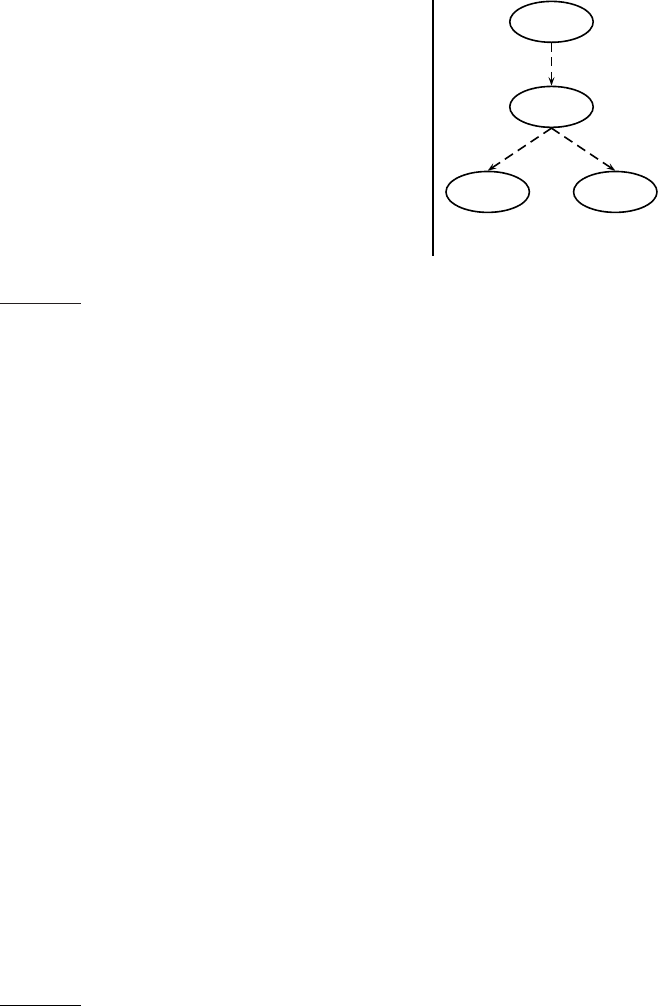
Figure
10.2 shows Figure 10.1 as a tree. The leaf nodes of the tree consist of
text, e.g., Shakespeare, Macbeth, and Macbeth’s castle. The tree’s internal nodes
encode either the structure of the document (title, act, and scene) or metadata
functions (author).
The standard for accessing and processing XML documents is the XML
Document Object Model or DOM. The DOM represents elements, attributesXML DOM
and text within elements as nodes in a tree. Figure
10.2 is a simplified DOM
representation of the XML document in Figure 10.1.
2
With a DOM API, we
2. The representation is simplified in a number of respects. For example, we do not show the
Online edition (c)2009 Cambridge UP
198 10 XML retrieval
<play>
<author>Shakespeare</author>
<title>Macbeth</title>
<act number="I">
<scene number="vii">
<title>Macbeth’s castle</title>
<verse>Will I with wine and wassail ...</verse>
</scene>
</act>
</play>
◮
Figure 10.1 An XML document.
root element
play
element
author
element
act
element
title
text
Shakespeare
text
Macbeth
attribute
number="I"
element
scene
attribute
number="vii"
element
verse
element
title
text
Will I with ...
text
Macbeth’s castle
◮
Figure 10.2 The XML document in Figure 10.1 as a simplified DOM object.
Online edition (c)2009 Cambridge UP
10.1 Basic XML concepts 199
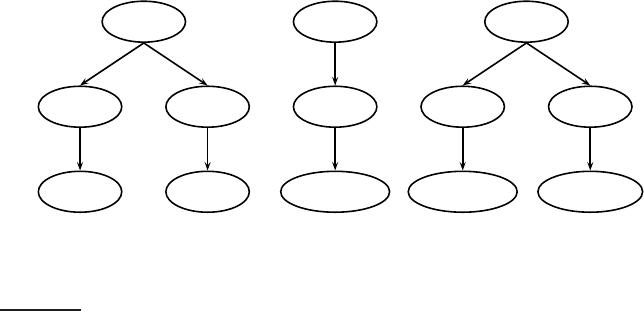
//article
[.//yr = 2001 or .//yr = 2002]
//section
[about(.,summer holidays)]
holidays
summer
section
article
◮
Figure 10.3 An XML query in NEXI format and its partial representation as a tree.
can process an XML document by starting at the root element and then de-
scending down the tree from parents to children.
XPath is a standard for enumerating paths in an XML document collection.XPATH
We will also refer to paths as XML contexts or simply contexts in this chapter.XML CONTEXT
Only a small subset of XPath is needed for our purposes. The XPath expres-
sion node selects all nodes of that name. Successive elements of a path are
separated by slashes, so act/scene selects all scene elements whose par-
ent is an act element. Double slashes indicate that an arbitrary number of
elements can intervene on a path: play//scene selects all scene elements
occurring in a play element. In Figure
10.2 this set consists of a single scene el-
ement, which is accessible via the path play, act, scene from the top. An initial
slash starts the path at the root element. /play/title selects the play’s ti-
tle in Figure
10.1, /play//title selects a set with two members (the play’s
title and the scene’s title), and /scene/title selects no elements. For no-
tational convenience, we allow the final element of a path to be a vocabulary
term and separate it from the element path by the symbol #, even though this
does not conform to the XPath standard. For example, title#"Macbeth"
selects all titles containing the term Macbeth.
We also need the concept of schema in this chapter. A schema puts con-SCHEMA
straints on the structure of allowable XML documents for a particular ap-
plication. A schema for Shakespeare’s plays may stipulate that scenes can
only occur as children of acts and that only acts and scenes have the num-
ber attribute. Two standards for schemas for XML documents are XML DTDXML DTD
(document type definition) and XML Schema. Users can only write structuredXML SCHEMA
queries for an XML retrieval system if they have some minimal knowledge
about the schema of the collection.
root node and text is not embedded in text nodes. See http://www.w3.org/DOM/.
Online edition (c)2009 Cambridge UP
200 10 XML retrieval
M’s castle
title
Will I ...
verse
scene
Julius Caesar
title
book
Gallic war
title
Julius Caesar
author
book
d
1
q
1
q
2
◮
Figure 10.4 Tree representation of XML documents and queries.
A common format for XML queries is NEXI (Narrowed Extended XPathNEXI
I). We give an example in Figure 10.3. We display the query on four lines for
typographical convenience, but it is intended to be read as one unit without
line breaks. In particular, //section is embedded under //article.
The query in Figure
10.3 specifies a search for sections about the sum-
mer holidays that are part of articles from 2001 or 2002. As in XPath dou-
ble slashes indicate that an arbitrary number of elements can intervene on
a path. The dot in a clause in square brackets refers to the element the
clause modifies. The clause [.//yr = 2001 or .//yr = 2002] mod-
ifies //article. Thus, the dot refers to //article in this case. Similarly,
the dot in [about(., summer holidays)] refers to the section that the
clause modifies.
The two yr conditions are relational attribute constraints. Only articles
whose yr attribute is 2001 or 2002 (or that contain an element whose yr
attribute is 2001 or 2002) are to be considered. The about clause is a ranking
constraint: Sections that occur in the right type of article are to be ranked
according to how relevant they are to the topic summer holidays.
We usually handle relational attribute constraints by prefiltering or post-
filtering: We simply exclude all elements from the result set that do not meet
the relational attribute constraints. In this chapter, we will not address how
to do this efficiently and instead focus on the core information retrieval prob-
lem in XML retrieval, namely how to rank documents according to the rele-
vance criteria expressed in the about conditions of the NEXI query.
If we discard relational attributes, we can represent documents as trees
with only one type of node: element nodes. In other words, we remove
all attribute nodes from the XML document, such as the number attribute in
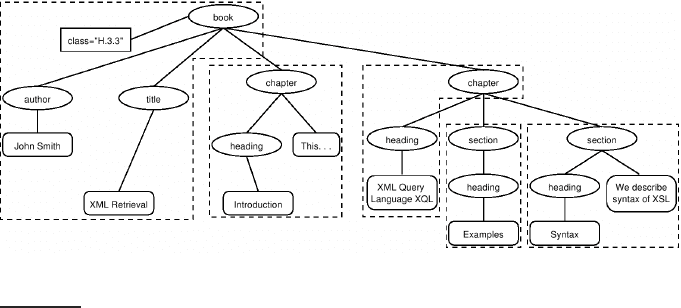
Figure 10.1. Figure 10.4 shows a subtree of the document in Figure 10.1 as an
element-node tree (labeled d
1
).

Online edition (c)2009 Cambridge UP
10.2 Challenges in XML retrieval 201
We can represent queries as trees in the same way. This is a query-by-
example approach to query language design because users pose queries by
creating objects that satisfy the same formal description as documents. In
Figure
10.4, q
1
is a search for books whose titles score highly for the keywords
Julius Caesar. q
2
is a search for books whose author elements score highly for
Julius Caesar and whose title elements score highly for Gallic war.
3
10.2 Challenges in XML retrieval
In this section, we discuss a number of challenges that make structured re-
trieval more difficult than unstructured retrieval. Recall from page
195 the
basic setting we assume in structured retrieval: the collection consists of
structured documents and queries are either structured (as in Figure 10.3)
or unstructured (e.g., summer holidays).
The first challenge in structured retrieval is that users want us to return
parts of documents (i.e., XML elements), not entire documents as IR systems
usually do in unstructured retrieval. If we query Shakespeare’s plays for
Macbeth’s castle, should we return the scene, the act or the entire play in Fig-
ure
10.2? In this case, the user is probably looking for the scene. On the other
hand, an otherwise unspecified search for Macbeth should return the play of
this name, not a subunit.
One criterion for selecting the most appropriate part of a document is the
structured d o cument retrieval principle:STRUCTURED
DOCUMENT RETRIEVAL
PRINCIPLE
Structured document retrieval princi ple. A system should always re-
trieve the most specific part of a document answering the query.
This principle motivates a retrieval strategy that returns the smallest unit
that contains the information sought, but does not go below this level. How-
ever, it can be hard to implement this principle algorithmically. Consider the
query title#"Macbeth" applied to Figure
10.2. The title of the tragedy,
Macbeth, and the title of Act I, Scene vii, Macbeth ’s castle, are both good hits
because they contain the matching term Macbeth. But in this case, the title of
the tragedy, the higher node, is preferred. Deciding which level of the tree is
right for answering a query is difficult.
Parallel to the issue of which parts of a document to return to the user is
the issue of which parts of a document to index. In Section
2.1.2 (page 20), we
discussed the need for a document unit or indexing unit in indexing and re-INDEXING UNIT
trieval. In unstructured retrieval, it is usually clear what the right document
3. To represent the semantics of NEXI queries fully we would also need to designate one node
in the tree as a “target node”, for example, the section in the tree in Figure 10.3. Without the
designation of a target node, the tree in Figure 10.3 is not a search for sections embedded in
articles (as specified by NEXI), but a search for articles that contain sections.
Online edition (c)2009 Cambridge UP
202 10 XML retrieval
◮
Figure 10.5 Partitioning an XML document into non-overlapping indexing units.
unit is: files on your desktop, email messages, web pages on the web etc. In
structured retrieval, there are a number of different approaches to defining
the indexing unit.
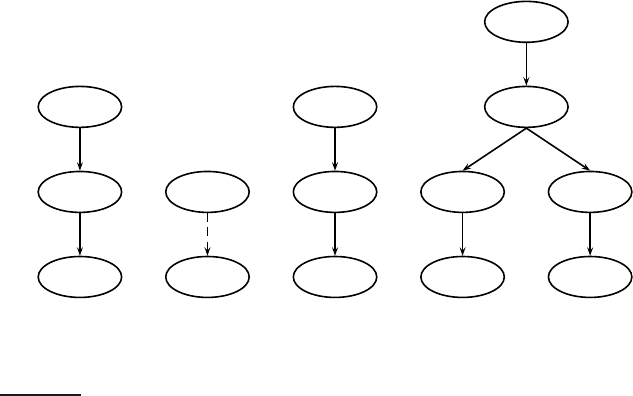
One approach is to group nodes into non-overlapping pseudodocuments
as shown in Figure
10.5. In the example, books, chapters and sections have
been designated to be indexing units, but without overlap. For example, the
leftmost dashed indexing unit contains only those parts of the tree domi-
nated by book that are not already part of other indexing units. The disad-
vantage of this approach is that pseudodocuments may not make sense to
the user because they are not coherent units. For instance, the leftmost in-
dexing unit in Figure
10.5 merges three disparate elements, the class, author
and title elements.
We can also use one of the largest elements as the indexing unit, for exam-
ple, the book element in a collection of books or the play element for Shake-
speare’s works. We can then postprocess search results to find for each book
or play the subelement that is the best hit. For example, the query Macbeth’s
castle may return the play Macbeth, which we can then postprocess to identify
act I, scene vii as the best-matching subelement. Unfortunately, this two-
stage retrieval process fails to return the best subelement for many queries
because the relevance of a whole book is often not a good predictor of the
relevance of small subelements within it.
Instead of retrieving large units and identifying subelements (top down),
we can also search all leaves, select the most relevant ones and then extend
them to larger units in postprocessing (bottom up). For the query Macbeth’s
castle in Figure
10.1, we would retrieve the title Macbeth’s castle in the first
pass and then decide in a postprocessing step whether to return the title, the
scene, the act or the play. This approach has a similar problem as the last one:
The relevance of a leaf element is often not a good predictor of the relevance
Online edition (c)2009 Cambridge UP
10.2 Challenges in XML retrieval 203
of elements it is contained in.
The least restrictive approach is to index all elements. This is also prob-
lematic. Many XML elements are not meaningful search results, e.g., typo-
graphical elements like <b>definitely</b> or an ISBN number which
cannot be interpreted without context. Also, indexing all elements means
that search results will be highly redundant. For the query Macbeth’s castle
and the document in Figure
10.1, we would return all of the play, act, scene
and title elements on the path between the root node and Macbeth’s castle.
The leaf node would then occur four times in the result set, once directly and
three times as part of other elements. We call elements that are contained
within each other nested. Returning redundant nested elements in a list ofNESTED ELEMENTS
returned hits is not very user-friendly.
Because of the redundancy caused by nested elements it is common to re-
strict the set of elements that are eligible to be returned. Restriction strategies
include:
• discard all small elements
• discard all element types that users do not look at (this requires a working
XML retrieval system that logs this information)
• discard all element types that assessors generally do not judge to be rele-
vant (if relevance assessments are available)
• only keep element types that a system designer or librarian has deemed
to be useful search results
In most of these approaches, result sets will still contain nested elements.
Thus, we may want to remove some elements in a postprocessing step to re-
duce redundancy. Alternatively, we can collapse several nested elements in
the results list and use highlighting of query terms to draw the user’s atten-
tion to the relevant passages. If query terms are highlighted, then scanning a
medium-sized element (e.g., a section) takes little more time than scanning a
small subelement (e.g., a paragraph). Thus, if the section and the paragraph
both occur in the results list, it is sufficient to show the section. An additional
advantage of this approach is that the paragraph is presented together with
its context (i.e., the embedding section). This context may be helpful in in-
terpreting the paragraph (e.g., the source of the information reported) even
if the paragraph on its own satisfies the query.
If the user knows the schema of the collection and is able to specify the
desired type of element, then the problem of redundancy is alleviated as few
nested elements have the same type. But as we discussed in the introduction,
users often don’t know what the name of an element in the collection is (Is the
Vatican a country or a city?) or they may not know how to compose structured
queries at all.
Online edition (c)2009 Cambridge UP
204 10 XML retrieval
Gates
book
Gates
author
book
Gates
creator
book
Gates
lastname
Bill
firstname
author
book
q
3
q
4
d
2
d
3
◮
Figure 10.6 Schema heterogeneity: intervening nodes and mismatched names.
A challenge in XML retrieval related to nesting is that we may need to
distinguish different contexts of a term when we compute term statistics for
ranking, in particular inverse document frequency (idf) statistics as defined
in Section
6.2.1 (page 117). For example, the term Gates under the node author
is unrelated to an occurrence under a content node like section if used to refer
to the plural of gate. It makes little sense to compute a single document
frequency for Gates in this example.
One solution is to compute idf for XML-context/term pairs, e.g., to com-
pute different idf weights for author#"Gates" and section#"Gates".
Unfortunately, this scheme will run into sparse data problems – that is, many
XML-context pairs occur too rarely to reliably estimate df (see Section
13.2,
page
260, for a discussion of sparseness). A compromise is only to con-
sider the parent node x of the term and not the rest of the path from the
root to x to distinguish contexts. There are still conflations of contexts that
are harmful in this scheme. For instance, we do not distinguish names of
authors and names of corporations if both have the parent node name. But
most important distinctions, like the example contrast author#"Gates"vs.
section#"Gates", will be respected.
In many cases, several different XML schemas occur in a collection since
the XML documents in an IR application often come from more than one
source. This phenomenon is called schema heterogeneity or schema div ersitySCHEMA
HETEROGENEITY
and presents yet another challenge. As illustrated in Figure
10.6 comparable
elements may have different names: creator in d
2
vs. author in d
3
. In other
cases, the structural organization of the schemas may be different: Author
Online edition (c)2009 Cambridge UP
10.2 Challenges in XML retrieval 205
names are direct descendants of the node author in q
3
, but there are the in-
tervening nodes firstname and lastname in d
3
. If we employ strict matching
of trees, then q
3
will retrieve neither d
2
nor d
3
although both documents are
relevant. Some form of approximate matching of element names in combina-
tion with semi-automatic matching of different document structures can help
here. Human editing of correspondences of elements in different schemas
will usually do better than automatic methods.
Schema heterogeneity is one reason for query-document mismatches like
q
3
/d
2
and q
3
/d
3
. Another reason is that users often are not familiar with the
element names and the structure of the schemas of collections they search
as mentioned. This poses a challenge for interface design in XML retrieval.
Ideally, the user interface should expose the tree structure of the collection
and allow users to specify the elements they are querying. If we take this
approach, then designing the query interface in structured retrieval is more
complex than a search box for keyword queries in unstructured retrieval.
We can also support the user by interpreting all parent-child relationships
in queries as descendant relationships with any number of intervening nodes
allowed. We call such queries extended queries. The tree in Figure
10.3 and q
4
EXTENDED QUERY
in Figure 10.6 are examples of extended queries. We show edges that are
interpreted as descendant relationships as dashed arrows. In q
4
, a dashed
arrow connects book and Gates. As a pseudo-XPath notation for q
4
, we adopt
book//#"Gates": a book that somewhere in its structure contains the word
Gates where the path from the book node to Gates can be arbitrarily long.
The pseudo-XPath notation for the extended query that in addition specifies
that Gates occurs in a section of the book is book//section//#"Gates".
It is convenient for users to be able to issue such extended queries without
having to specify the exact structural configuration in which a query term
should occur – either because they do not care about the exact configuration
or because they do not know enough about the schema of the collection to be
able to specify it.
In Figure
10.7, the user is looking for a chapter entitled FFT (q
5
). Sup-
pose there is no such chapter in the collection, but that there are references to
books on FFT (d
4
). A reference to a book on FFT is not exactly what the user
is looking for, but it is better than returning nothing. Extended queries do not
help here. The extended query q
6
also returns nothing. This is a case where
we may want to interpret the structural constraints specified in the query as
hints as opposed to as strict conditions. As we will discuss in Section
10.4,
users prefer a relaxed interpretation of structural constraints: Elements that
do not meet structural constraints perfectly should be ranked lower, but they
should not be omitted from search results.