
Manning Ch. D., Raghavan P., Sch?tze H. Introduction to Information Retrieval - Введение в информационный поиск
Подождите немного. Документ загружается.

Online edition (c)2009 Cambridge UP
446 20 Web crawling and indexes
www
Fetch
DNS
Parse
URL Frontier
Content
Seen?
Doc
FP’s
robots
templates
URL
set
URL
Filter
Dup
URL
Elim
-
-
6
-
?
6
- - -
6
?
6
?
6
?
◮
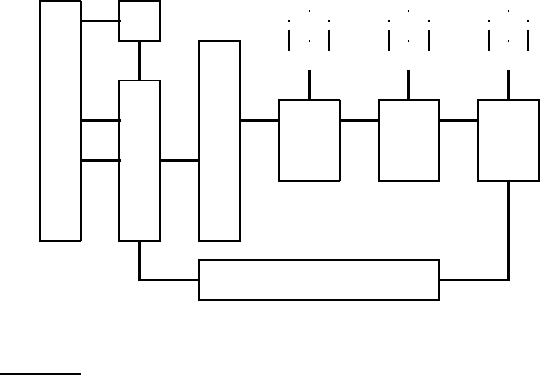
Figure 20.1 The basic crawler architecture.
Crawling is performed by anywhere from one to potentially hundreds of
threads, each of which loops through the logical cycle in Figure
20.1. These
threads may be run in a single process, or be partitioned amongst multiple
processes running at different nodes of a distributed system. We begin by
assuming that the URL frontier is in place and non-empty and defer our de-
scription of the implementation of the URL frontier to Section
20.2.3. We
follow the progress of a single URL through the cycle of being fetched, pass-
ing through various checks and filters, then finally (for continuous crawling)
being returned to the URL frontier.
A crawler thread begins by taking a URL from the frontier and fetching
the web page at that URL, generally using the http protocol. The fetched
page is then written into a temporary store, where a number of operations
are performed on it. Next, the page is parsed and the text as well as the
links in it are extracted. The text (with any tag information – e.g., terms in
boldface) is passed on to the indexer. Link information including anchor text
is also passed on to the indexer for use in ranking in ways that are described
in Chapter 21. In addition, each extracted link goes through a series of tests
to determine whether the link should be added to the URL frontier.
First, the thread tests whether a web page with the same content has al-
ready been seen at another URL. The simplest implementation for this would
use a simple fingerprint such as a checksum (placed in a store labeled "Doc
FP’s" in Figure
20.1). A more sophisticated test would use shingles instead
Online edition (c)2009 Cambridge UP
20.2 Crawling 447
of fingerprints, as described in Chapter 19.
Next, a URL filter is used to determine whether the extracted URL should
be excluded from the frontier based on one of several tests. For instance, the
crawl may seek to exclude certain domains (say, all .com URLs) – in this case
the test would simply filter out the URL if it were from the .com domain.
A similar test could be inclusive rather than exclusive. Many hosts on the
Web place certain portions of their websites off-limits to crawling, under a
standard known as the Robots Exclusion Protocol. This is done by placing aROBOTS EXCLUSION
PROTOCOL
file with the name robots.txt at the root of the URL hierarchy at the site. Here
is an example robots.txt file that specifies that no robot should visit any URL
whose position in the file hierarchy starts with /yoursite/temp/, except for the
robot called “searchengine”.
User-agent:
*
Disallow: /yoursite/temp/
User-agent: searchengine
Disallow:
The robots.txt file must be fetched from a website in order to test whether
the URL under consideration passes the robot restrictions, and can there-
fore be added to the URL frontier. Rather than fetch it afresh for testing on
each URL to be added to the frontier, a cache can be used to obtain a re-
cently fetched copy of the file for the host. This is especially important since
many of the links extracted from a page fall within the host from which the
page was fetched and therefore can be tested against the host’s robots.txt
file. Thus, by performing the filtering during the link extraction process, we
would have especially high locality in the stream of hosts that we need to test
for robots.txt files, leading to high cache hit rates. Unfortunately, this runs
afoul of webmasters’ politeness expectations. A URL (particularly one refer-
ring to a low-quality or rarely changing document) may be in the frontier for
days or even weeks. If we were to perform the robots filtering before adding
such a URL to the frontier, its robots.txt file could have changed by the time
the URL is dequeued from the frontier and fetched. We must consequently
perform robots-filtering immediately before attempting to fetch a web page.
As it turns out, maintaining a cache of robots.txt files is still highly effective;
there is sufficient locality even in the stream of URLs dequeued from the URL
frontier.
Next, a URL should be normalized in the following sense: often the HTMLURL NORMALIZATION
encoding of a link from a web page p indicates the target of that link relative
to the page p. Thus, there is a relative link encoded thus in the HTML of the
page en.wikipedia.org/wiki/Main_Page:
Online edition (c)2009 Cambridge UP
448 20 Web crawling and indexes
<a href="/wiki/Wikipedia:General_disclaimer" title="Wikipedia:General
disclaimer">Disclaimers</a>
points to the URL http://en.wikipedia.org/wiki/Wikipedia:General_disclaimer.
Finally, the URL is checked for duplicate elimination: if the URL is already
in the frontier or (in the case of a non-continuous crawl) already crawled,
we do not add it to the frontier. When the URL is added to the frontier, it is
assigned a priority based on which it is eventually removed from the frontier
for fetching. The details of this priority queuing are in Section
20.2.3.
Certain housekeeping tasks are typically performed by a dedicated thread.
This thread is generally quiescent except that it wakes up once every few
seconds to log crawl progress statistics (URLs crawled, frontier size, etc.),
decide whether to terminate the crawl, or (once every few hours of crawling)
checkpoint the crawl. In checkpointing, a snapshot of the crawler’s state (say,
the URL frontier) is committed to disk. In the event of a catastrophic crawler
failure, the crawl is restarted from the most recent checkpoint.
Distributing the crawler
We have mentioned that the threads in a crawler could run under different
processes, each at a different node of a distributed crawling system. Such
distribution is essential for scaling; it can also be of use in a geographically
distributed crawler system where each node crawls hosts “near” it. Parti-
tioning the hosts being crawled amongst the crawler nodes can be done by
a hash function, or by some more specifically tailored policy. For instance,
we may locate a crawler node in Europe to focus on European domains, al-
though this is not dependable for several reasons – the routes that packets
take through the internet do not always reflect geographic proximity, and in
any case the domain of a host does not always reflect its physical location.
How do the various nodes of a distributed crawler communicate and share
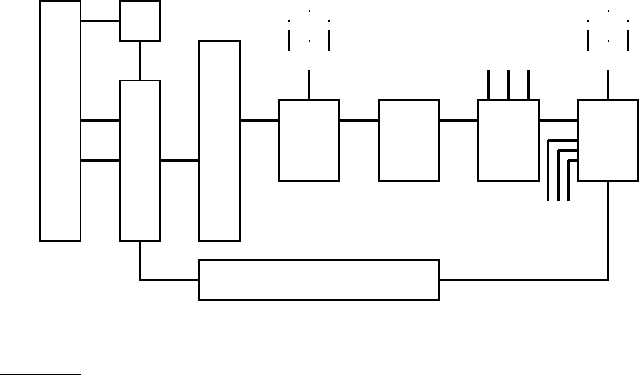
URLs? The idea is to replicate the flow of Figure
20.1 at each node, with one
essential difference: following the URL filter, we use a host sp litter to dispatch
each surviving URL to the crawler node responsible for the URL; thus the set
of hosts being crawled is partitioned among the nodes. This modified flow is
shown in Figure
20.2. The output of the host splitter goes into the Duplicate
URL Eliminator block of each other node in the distributed system.
The “Content Seen?” module in the distributed architecture of Figure
20.2
is, however, complicated by several factors:
1. Unlike the URL frontier and the duplicate elimination module, document
fingerprints/shingles cannot be partitioned based on host name. There is
nothing preventing the same (or highly similar) content from appearing
on different web servers. Consequently, the set of fingerprints/shingles
must be partitioned across the nodes based on some property of the fin-
Online edition (c)2009 Cambridge UP
20.2 Crawling 449
www
Fetch
DNS
Parse
URL Frontier
Content
Seen?
Doc
FP’s
URL
set
URL
Filter
Host
splitter
To
other
nodes
From
other
nodes
Dup
URL
Elim
-
-
6
-
?
6
- - - -
6
?
6
?
666
-
-
-
◮
Figure 20.2 Distributing the basic crawl architecture.
gerprint/shingle (say by taking the fingerprint modulo the number of
nodes). The result of this locality-mismatch is that most “Content Seen?”
tests result in a remote procedure call (although it is possible to batch
lookup requests).
2. There is very little locality in the stream of document fingerprints/shingles.
Thus, caching popular fingerprints does not help (since there are no pop-
ular fingerprints).
3. Documents change over time and so, in the context of continuous crawl-
ing, we must be able to delete their outdated fingerprints/shingles from
the content-seen set(s). In order to do so, it is necessary to save the finger-
print/shingle of the document in the URL frontier, along with the URL
itself.
20.2.2 DNS resolution
Each web server (and indeed any host connected to the internet) has a unique
IP a ddress: a sequence of four bytes generally represented as four integersIP ADDRESS
separated by dots; for instance 207.142.131.248is the numerical IP address as-
sociated with the host www.wikipedia.org. Given a URL such as www.wikipedia.org
in textual form, translating it to an IP address (in this case, 207.142.131.248) is
Online edition (c)2009 Cambridge UP
450 20 Web crawling and indexes
a process known as DNS resolution or DNS lookup; here DNS stands for Do-DNS RESOLUTION
main Name Service. During DNS resolution, the program that wishes to per-
form this translation (in our case, a component of the web crawler) contacts a
DNS server that returns the translated IP address. (In practice the entire trans-DNS SERVER
lation may not occur at a single DNS server; rather, the DNS server contacted
initially may recursively call upon other DNS servers to complete the transla-
tion.) For a more complex URL such as en.wikipedia.org/wiki/Domain_Name_System,
the crawler component responsible for DNS resolution extracts the host name
– in this case en.wikipedia.org – and looks up the IP address for the host
en.wikipedia.org.
DNS resolution is a well-known bottleneck in web crawling. Due to the
distributed nature of the Domain Name Service, DNS resolution may entail
multiple requests and round-trips across the internet, requiring seconds and
sometimes even longer. Right away, this puts in jeopardy our goal of fetching
several hundred documents a second. A standard remedy is to introduce
caching: URLs for which we have recently performed DNS lookups are likely
to be found in the DNS cache, avoiding the need to go to the DNS servers
on the internet. However, obeying politeness constraints (see Section
20.2.3)
limits the of cache hit rate.
There is another important difficulty in DNS resolution; the lookup imple-
mentations in standard libraries (likely to be used by anyone developing a
crawler) are generally synchronous. This means that once a request is made
to the Domain Name Service, other crawler threads at that node are blocked
until the first request is completed. To circumvent this, most web crawlers
implement their own DNS resolver as a component of the crawler. Thread
i executing the resolver code sends a message to the DNS server and then
performs a timed wait: it resumes either when being signaled by another
thread or when a set time quantum expires. A single, separate DNS thread
listens on the standard DNS port (port 53) for incoming response packets
from the name service. Upon receiving a response, it signals the appropriate
crawler thread (in this case, i) and hands it the response packet if i has not
yet resumed because its time quantum has expired. A crawler thread that re-
sumes because its wait time quantum has expired retries for a fixed number
of attempts, sending out a new message to the DNS server and performing
a timed wait each time; the designers of Mercator recommend of the order
of five attempts. The time quantum of the wait increases exponentially with
each of these attempts; Mercator started with one second and ended with
roughly 90 seconds, in consideration of the fact that there are host names
that take tens of seconds to resolve.

Online edition (c)2009 Cambridge UP
20.2 Crawling 451
20.2.3 T he URL frontier
The URL frontier at a node is given a URL by its crawl process (or by the
host splitter of another crawl process). It maintains the URLs in the frontier
and regurgitates them in some order whenever a crawler thread seeks a URL.
Two important considerations govern the order in which URLs are returned
by the frontier. First, high-quality pages that change frequently should be
prioritized for frequent crawling. Thus, the priority of a page should be a
function of both its change rate and its quality (using some reasonable quality
estimate). The combination is necessary because a large number of spam
pages change completely on every fetch.
The second consideration is politeness: we must avoid repeated fetch re-
quests to a host within a short time span. The likelihood of this is exacerbated
because of a form of locality of reference: many URLs link to other URLs at
the same host. As a result, a URL frontier implemented as a simple priority
queue might result in a burst of fetch requests to a host. This might occur
even if we were to constrain the crawler so that at most one thread could
fetch from any single host at any time. A common heuristic is to insert a
gap between successive fetch requests to a host that is an order of magnitude
larger than the time taken for the most recent fetch from that host.
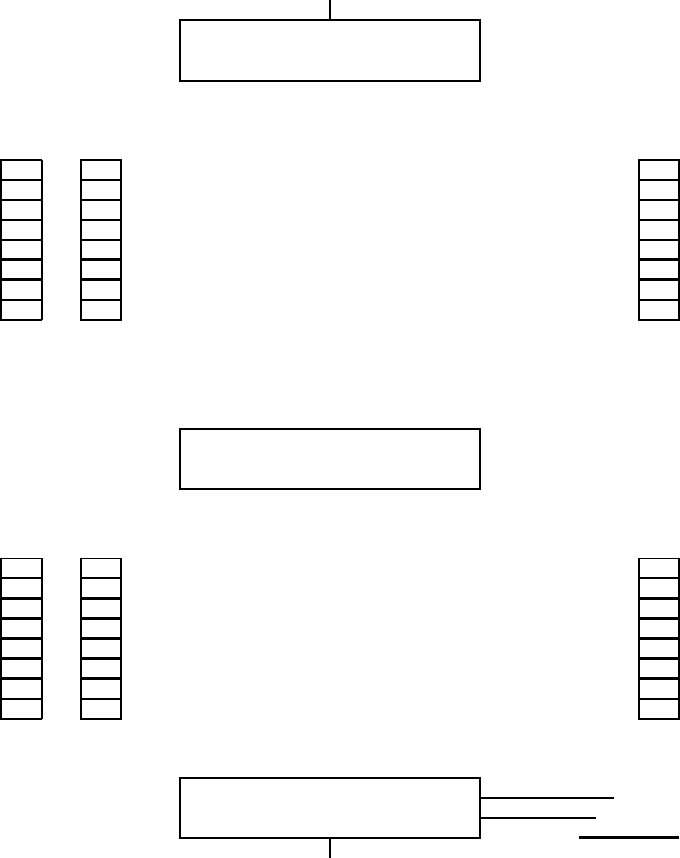
Figure
20.3 shows a polite and prioritizing implementation of a URL fron-
tier. Its goals are to ensure that (i) only one connection is open at a time to any
host; (ii) a waiting time of a few seconds occurs between successive requests
to a host and (iii) high-priority pages are crawled preferentially.
The two major sub-modules are a set of F front queues in the upper por-
tion of the figure, and a set of B back queues in the lower part; all of these are
FIFO queues. The front queues implement the prioritization, while the back
queues implement politeness. In the flow of a URL added to the frontier as
it makes its way through the front and back queues, a prioritizer first assigns
to the URL an integer priority i between 1 and F based on its fetch history
(taking into account the rate at which the web page at this URL has changed
between previous crawls). For instance, a document that has exhibited fre-
quent change would be assigned a higher priority. Other heuristics could be
application-dependent and explicit – for instance, URLs from news services
may always be assigned the highest priority. Now that it has been assigned
priority i, the URL is now appended to the ith of the front queues.
Each of the B back queues maintains the following invariants: (i) it is non-
empty while the crawl is in progress and (ii) it only contains URLs from a
single host
1
. An auxiliary table T (Figure
20.4) is used to maintain the map-
ping from hosts to back queues. Whenever a back-queue is empty and is
being re-filled from a front-queue, table T must be updated accordingly.
1. The number of hosts is assumed to far exceed B.
Online edition (c)2009 Cambridge UP
452 20 Web crawling and indexes
Back queue
selector
-
Biased front queue selector
Back queue router
Prioritizer
r r r r
B back queues
Single host on each
r r r
r
r
F front queues
1 2 F
1 2 B
?
X
X
X
X
X
X
X
X
X
X
X
Xz
X
X
X
X
X
X
X
X
X
X
X
Xz
9
9
9
X
X
X
X
X
X
X
X
X
X
X
X
X
Xz
)
)
P
P
P
P
P
P
P
P
P
P
Pq
?
H
H
H
H
H
H
H
H
H
H
Hj
H
H
H
H
H
H
H
H
H
H
Hj
@
@
@
Heap
◮
Figure 20.3 The URL frontier. URLs extracted from already crawled pages flow in
at the top of the figure. A crawl thread requesting a URL extracts it from the bottom of
the figure. En route, a URL flows through one of several front queues that manage its
priority for crawling, followed by one of several back queues that manage the crawler’s
politeness.

Online edition (c)2009 Cambridge UP
20.2 Crawling 453
Host Back queue
stanford.edu 23
microsoft.com 47
acm.org 12
◮
Figure 20.4 Example of an auxiliary hosts-to-back queues table.
In addition, we maintain a heap with one entry for each back queue, the
entry being the earliest time t
e
at which the host corresponding to that queue
can be contacted again.
A crawler thread requesting a URL from the frontier extracts the root of
this heap and (if necessary) waits until the corresponding time entry t
e
. It
then takes the URL u at the head of the back queue j corresponding to the
extracted heap root, and proceeds to fetch the URL u. After fetching u, the
calling thread checks whether j is empty. If so, it picks a front queue and
extracts from its head a URL v. The choice of front queue is biased (usually
by a random process) towards queues of higher priority, ensuring that URLs
of high priority flow more quickly into the back queues. We examine v to
check whether there is already a back queue holding URLs from its host.
If so, v is added to that queue and we reach back to the front queues to
find another candidate URL for insertion into the now-empty queue j. This
process continues until j is non-empty again. In any case, the thread inserts
a heap entry for j with a new earliest time t
e
based on the properties of the
URL in j that was last fetched (such as when its host was last contacted as
well as the time taken for the last fetch), then continues with its processing.
For instance, the new entry t
e
could be the current time plus ten times the
last fetch time.
The number of front queues, together with the policy of assigning priori-
ties and picking queues, determines the priority properties we wish to build
into the system. The number of back queues governs the extent to which we
can keep all crawl threads busy while respecting politeness. The designers
of Mercator recommend a rough rule of three times as many back queues as
crawler threads.
On a Web-scale crawl, the URL frontier may grow to the point where it
demands more memory at a node than is available. The solution is to let
most of the URL frontier reside on disk. A portion of each queue is kept in
memory, with more brought in from disk as it is drained in memory.
?
Exercise 20.1
Why is it better to partition hosts (rather than individual URLs) between the nodes of
a distributed crawl system?
Exercise 20.2
Why should the host splitter precede the Duplicate URL Eliminator?

Online edition (c)2009 Cambridge UP
454 20 Web crawling and indexes
Exercise 20.3
[⋆ ⋆ ⋆]
In the preceding discussion we encountered two recommended “hard constants” –
the increment on t
e
being ten times the last fetch time, and the number of back
queues being three times the number of crawl threads. How are these two constants
related?
20.3 Distributing indexes
In Section
4.4 we described distributed indexing. We now consider the distri-
bution of the index across a large computer cluster
2
that supports querying.
Two obvious alternative index implementations suggest themselves: parti-TERM PARTITIONING
tioning by terms, also known as global index organization, and partitioning byDOCUMENT
PARTITIONING
documents, also know as local index organization. In the former, the diction-
ary of index terms is partitioned into subsets, each subset residing at a node.
Along with the terms at a node, we keep the postings for those terms. A
query is routed to the nodes corresponding to its query terms. In principle,
this allows greater concurrency since a stream of queries with different query
terms would hit different sets of machines.
In practice, partitioning indexes by vocabulary terms turns out to be non-
trivial. Multi-word queries require the sending of long postings lists between
sets of nodes for merging, and the cost of this can outweigh the greater con-
currency. Load balancing the partition is governed not by an a priori analysis
of relative term frequencies, but rather by the distribution of query terms
and their co-occurrences, which can drift with time or exhibit sudden bursts.
Achieving good partitions is a function of the co-occurrences of query terms
and entails the clustering of terms to optimize objectives that are not easy to
quantify. Finally, this strategy makes implementation of dynamic indexing
more difficult.
A more common implementation is to partition by documents: each node
contains the index for a subset of all documents. Each query is distributed to
all nodes, with the results from various nodes being merged before presenta-
tion to the user. This strategy trades more local disk seeks for less inter-node
communication. One difficulty in this approach is that global statistics used
in scoring – such as idf – must be computed across the entire document col-
lection even though the index at any single node only contains a subset of
the documents. These are computed by distributed “background” processes
that periodically refresh the node indexes with fresh global statistics.
How do we decide the partition of documents to nodes? Based on our de-
velopment of the crawler architecture in Section
20.2.1, one simple approach
would be to assign all pages from a host to a single node. This partitioning
2. Please note the different usage of “clusters” elsewhere in this book, in the sense of Chapters
16 and 17.
Online edition (c)2009 Cambridge UP
20.4 Connectivity servers 455
could follow the partitioning of hosts to crawler nodes. A danger of such
partitioning is that on many queries, a preponderance of the results would
come from documents at a small number of hosts (and hence a small number
of index nodes).
A hash of each URL into the space of index nodes results in a more uni-
form distribution of query-time computation across nodes. At query time,
the query is broadcast to each of the nodes, with the top k results from each
node being merged to find the top k documents for the query. A common
implementation heuristic is to partition the document collection into indexes
of documents that are more likely to score highly on most queries (using,
for instance, techniques in Chapter 21) and low-scoring indexes with the re-
maining documents. We only search the low-scoring indexes when there are
too few matches in the high-scoring indexes, as described in Section
7.2.1.
20.4 Connectivity servers
For reasons to become clearer in Chapter 21, web search engines require a
connectivity server that supports fast connectivity queries on the web graph.CONNECTIVITY SERVER
CONNECTIVITY
QUERIES
Typical connectivity queries are which URLs link to a given URL? and w hich
URLs does a given URL link to? To this end, we wish to store mappings in
memory from URL to out-links, and from URL to in-links. Applications in-
clude crawl control, web graph analysis, sophisticated crawl optimization
and link analysis (to be covered in Chapter
21).
Suppose that the Web had four billion pages, each with ten links to other
pages. In the simplest form, we would require 32 bits or 4 bytes to specify
each end (source and destination) of each link, requiring a total of
4 ×10
9
×10 ×8 = 3.2 × 10
11
bytes of memory. Some basic properties of the web graph can be exploited to
use well under 10% of this memory requirement. At first sight, we appear to
have a data compression problem – which is amenable to a variety of stan-
dard solutions. However, our goal is not to simply compress the web graph
to fit into memory; we must do so in a way that efficiently supports connec-
tivity queries; this challenge is reminiscent of index compression (Chapter
5).
We assume that each web page is represented by a unique integer; the
specific scheme used to assign these integers is described below. We build
an adjacency table that resembles an inverted index: it has a row for each web
page, with the rows ordered by the corresponding integers. The row for any
page p contains a sorted list of integers, each corresponding to a web page
that links to p. This table permits us to respond to queries of the form which
pages link to p? In similar fashion we build a table whose entries are the pages
linked to by p.