
Molina-Par?s C., Lythe G. (editors) Mathematical Models and Immune Cell Biology
Подождите немного. Документ загружается.


15 IL-2, Helper and Regulatory CD4
C
T Cells 313
Table 15.2 Description of parameters
Parameters Description Value
E
,
R
Influx rate of new resting E and R cells from the
thymus
10
2
;10
2
A; s Number of antigen presenting cells (APCs) and
conjugations sites for T cells on them
10
5
;6
K
E
A
;K
R
A
Activation rate for resting E and R cells conjugated
to APCs
0:69 h
1
;0:09h
1
K
E
P
;K
R
P
Division rate for cycling E and R cells 0.17 h
1
K
E
S
;K
R
S
Deactivation rate for activated E and R cells 0.69 h
1
K
E
d
;K
R
d
Death rate for free resting E and R cells 0.004 h
1
˛ Fraction of activated E and R cells that return to the
resting state without receiving successfully the
IL-2 related signal
0.95
Il˛ Level of homeostatic cytokine, additional to IL-2,
that the activated E cells, but not the R cells, can
use to become cycling cells
250
S
E
;S
R
Sensitivities thresholds for E and R cells to
cytokines signal
500
Switch parameter that determines the existence
( D 1) or not ( D 0) of direct regulation by
the R cells of the activation of E cells
0, 1
i
External influx of IL-2, typically used to simulate
treatments
0.002
K
i
P
Rate of IL-2 production by helper cells upon
activation
45.38 h
1
K
i
d
Degradation rate of IL-2 not conjugated to its
receptor
0.138 h
1
K
E
in
;K
R
in
Internalization/degradation rate of IL-2 by E and R
cells
610
10
min
1
RI
E
N
;RI
E
A
, RI
E
C
Number of IL-2 receptors in each resting, activated
or cycling E cells
0, 10
3
;10
3
RI
R
N
;RI
R
A
, RI
R
C
Number of IL-2 receptors in each resting, activated
or cycling R cells
10
3
;10
4
;10
3
(15.4)]; and they become activated following conjugation to APCs [second term
in (15.1)and(15.4), and their complementary terms in (15.2)and(15.5)]. The
activation process can be inhibited for a helper T cell (model case D1)ifa
regulatory T cell is conjugated on the same APC. Note the factor inversely pro-
portional to the total number of R cells bound to APCs (R
B
T
) which is included
on the activation terms for the helper cells. The mathematical form of this factor
follows the formalism developed in [60].
(b) The activated E and R cells require enough cytokine-derived signals to become
cycling cells [first terms on (15.3)and(15.6)]. The activated R cells receive this
signal only from IL-2, while the E cells could also use an unknown homeostatic
cytokines referred as IL-˛. In the absence of enough cytokine derived signal a
fraction ˛ of the activated cells revert to the resting state [see the fourth terms
314 K. Le´on and K. Garc´ıa-Mart´ınez
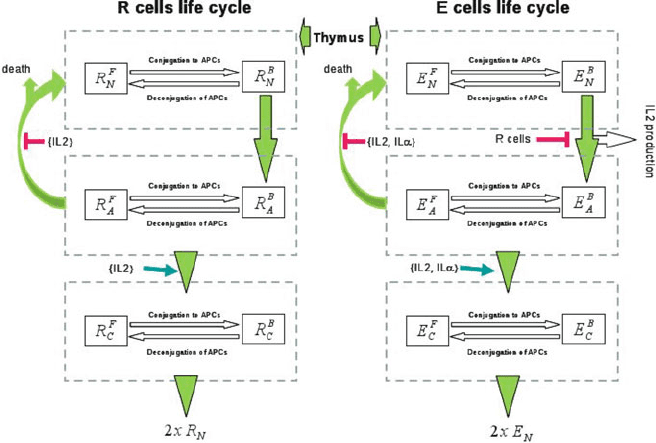
Fig. 15.1 Diagram of helper (E) and regulatory (R) T cells life cycle in the model. New resting E
(E
N
)andR (R
N
) cells are constantly generated by the thymus. These resting T cells are activated
by interaction with their cognate APCs (upon conjugation to APCs). During activation the E cells
produce IL-2, although the whole process can be inhibited by the presence of co-localized R cells.
Activated E (E
A
)andR (R
A
) enter cell cycle (becoming cycling cells) when receiving enough
signal from IL-2, or another external cytokine (IL-˛) in the case of E cells. In the absence of
enough cytokines, activated T cells become deactivated, a fraction ˛ return back to the resting
state an the fraction (1-˛) simply die. Cycling E (E
C
)andR (R
C
) cells divide at a constant rate
generating two new resting E or R cell respectively. The process related to T cell conjugation and
deconjugation to APCs (processes inside dashed squares) are assumed to be fast and are modelled
in quasi-steady state equilibrium
of (15.1)and(15.4)] and the remaining fraction (1-˛) simply die. The fraction
of activated T cells getting enough cytokine derived signal to proceed with the
cell cycle at any given time is computed with a sigmoid function of the mean
number of bound IL-2 receptors per activated cell. This sigmoid function con-
tains parameters S
E
and S
R
to set different sensitivities thresholds, respectively
for E and R cells, to the delivered signal. The cycling E and R cells divide pro-
ducing two new resting cells with constant rate [last terms of (15.3)and(15.6)
and third terms in (15.1)and(15.4)].
The numbers of helper and regulatory T cells conjugated to APCs (E
B
N
;E
B
A
;E
B
C
;
R
B
N
;R
B
A
;R
B
C
) are computed in quasi-steady state equilibrium following postulate 8.
Briefly [28] equations for the conjugation and deconjugation of T cells to APCs
(see Fig. 15.1) are formulated, assuming these individual processes obey first-order
kinetics events with characteristic association and dissociation rates. Then, in virtue

15 IL-2, Helper and Regulatory CD4
C
T Cells 315
of the fast time scale of these processes, the equations are taken to equilibrium, for
a fixed number of T cells of each given type at time t, obtaining the following set of
equations:
K
E
V
LN
D
E
B
l
E
F
l
F
K
R
V
LN
D
R
B
l
R
F
l
F
F D sA
X
l
E
B
l
X
l
R
B
l
;
where the label l takes values denoting the functional states of the T cells: lDN rest-
ing state, lDA activated state and lDC cycling state; K
E
, K
R
are the equilibrium
conjugation constant to APC sites for helper and regulatory T cells .K
E
D K
R
D
10
9
L cell
1
/IV
LN
is the volume of the lymph node. This set of algebraic equa-
tions is solved numerically to obtain the number of conjugated T cells of each type
as a function of model parameters and independent variables.
Model Equations for the Dynamics of IL-2 in the Lymph Node
The dynamics for IL-2 molecules is given by the following equation:
dIL2
dt
D
i
C K
i
p
E
B
N
1
R
B
T
sA
!
.s1/
K
i
d
IL2
K
E
in
IL2
E
A
B
E
A
C IL2
E
C
B
E
C
K
R
in
IL2
R
N
B
R
N
C IL2
R
A
B
R
A
C IL2
R
C
B
R
C
I
Variables and parameters are defined in Tables 15.1 and 15.2. This equation consi-
ders that (see Fig. 15.2):
1. IL-2 is produced by helper T cells upon activation (second term). This IL-2 pro-
duction can be inhibited by the co-localized activation of regulatory T cells (note:
the part of this term, which is inversely proportional to the total number of regu-
latory cells bound to APCs in the system, R
B
T
);
2. That IL-2 is degraded spontaneously most likely because of unspecific consump-
tion by non-T cells or because of migration out of the lymph node and renal
elimination (third term in the equation);
3. IL-2 is also degraded by E and R cells, after being internalized in the form of
complexes with its receptor (fourth and fifth terms).
The mean number of IL-2 molecules bound to the receptors per cell in each cell
type is computed in quasi steady-state equilibrium. For this, the parameter RI
X
l
is defined as the number of IL-2 receptors a cell of type X in the state l has on
316 K. Le´on and K. Garc´ıa-Mart´ınez
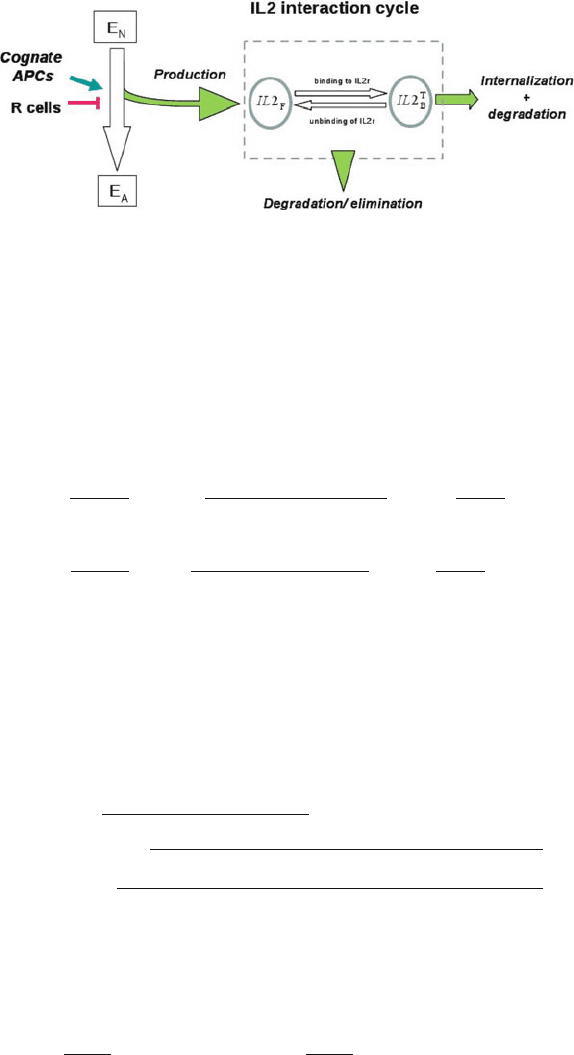
Fig. 15.2 IL-2 interaction cycle in the model. IL-2 is produced as a burst upon E cells activation
on cognate APCs. This production of IL-2 can be inhibited by the presence of co-localized R cells.
IL-2 is conjugated to the receptor (IL2r) at the E or R cell’s surface, being subsequently inter-
nalized and degraded. IL-2 is further degraded in model because of renal elimination or because
of internalization/degradations by non-T cells. The processes of IL-2 association and dissociation
from IL-2 receptors (processes inside dashed squares) are assumed to be fast and are modelled in
quasi-steady state equilibrium
its surface. Then the following equations are written down, for the formation and
dissociation of IL-2/IL-2-receptor complexes:
dIL2
F
dt
Dk
I
on
IL2
F
RI
T
IL2
T
B
.V
LN
/
2
C k
I
of f
IL2
T
B
V
LN
dIL2
T
B
dt
D k
I
on
IL2
F
RI
T
IL2
T
B
.V
LN
/
2
k
I
of f
IL2
T
B
V
LN
and
RI
T
D RI
E
A
E
A
C RI
E
C
E
C
C RI
R
N
R
N
C RI
R
A
R
A
C RI
R
C
R
C
:
Where, imposing the condition of equilibrium, the total amount of bound IL-2
(IL2
T
B
) is computed as:
IL2
T
B
D
K
I
.IL2 C RI
T
/ CV
LN
q
K
I
.IL2 C RI
T
/ C V
LN
2
4.K
I
/
2
IL2RI
T
2K
I
;
where K
I
D k
I
on
/k
I
of f
is the affinity of IL-2 for its receptor .K
I
D 10
11
M
1
/ and
V
LN
is the volume of the lymph node. Finally, the mean number of IL-2 receptors
bound to IL-2 per cell for each cell type is obtained as:
IL2
E
l
B
D
RI
E
l
RI
T
IL2
T
B
IL2
R
l
B
D
RI
R
l
RI
T
IL2
T
B
8l 2fN; A;C g:
15 IL-2, Helper and Regulatory CD4
C
T Cells 317
Parameter Values Used in Simulations
The analyses performed in this chapter are mostly qualitative and therefore describe
properties of the models which do not rely on particular parameter values. However
in order to minimally test the realism of our model behaviour, and to provide figures
with values for the different variables with have a clear biological meaning, we have
used the parameter set provided in Table 15.2. This particular set of parameter values
was estimated using the experimental data and biologically reasonable assumptions
as explained on [29]. All simulations were performed using software Mathematica
4.1 from Wolfram Research Inc.
Dynamical Properties of the Models
The models in this chapter are primarily used to study the dynamics of polyclonal
CD4
C
CD25
C
FoxP3
C
(Regulatory) and CD4
C
CD25
FoxP3
(Helper) T cells
populations which interact, in the lymph node, where multiple self-antigens are
presented to the T cells, by a constant population of antigen presenting cells
(APCs). They study the dynamics of the immune system in the absence of in-
vading pathogens, when the CD4
C
T cells interact with normal body components
(self-antigens). The goal is to understand how the immune system is dynamically
organized, structured by this interaction with self antigens, and how such organi-
zation might determine its overall function. We focus on CD4
C
T cell dynamics
assuming, on the one hand, that the expansion of helper CD4 T cells implies an
increase of immune effectors functions, which are mediated by the CD4 T cells
themselves as well as B cells and CD8 T cells that cooperate with them. The expan-
sion of regulatory T cells, on the other hand, is assumed to induce tolerance with no
expansion of immune effectors.
In the following subsection, the main dynamical properties of the formulated
models are analyzed. The biological implications, of these properties, are discussed.
In particular, we pinpoint, how these models conserve the most relevant dynamical
properties of the crossregulation model [28], further gaining new interesting fea-
tures, which derives from the explicit introduction of IL-2 dynamics.
Steady State Analysis: Searching for Bi-Stability
A key dynamical property of the models is the existence of a parameter regime of
bi-stable behaviour, with two stable steady states of clear biological interpretation
(Fig. 15.3). That is:
– a steady state, which is interpreted as an immune/autoimmune state (Fig. 15.3a),
label IS), because the helper T cells (E) are substantially expanded out-competing
the regulatory T cells (R) from the system; and
318 K. Le´on and K. Garc´ıa-Mart´ınez
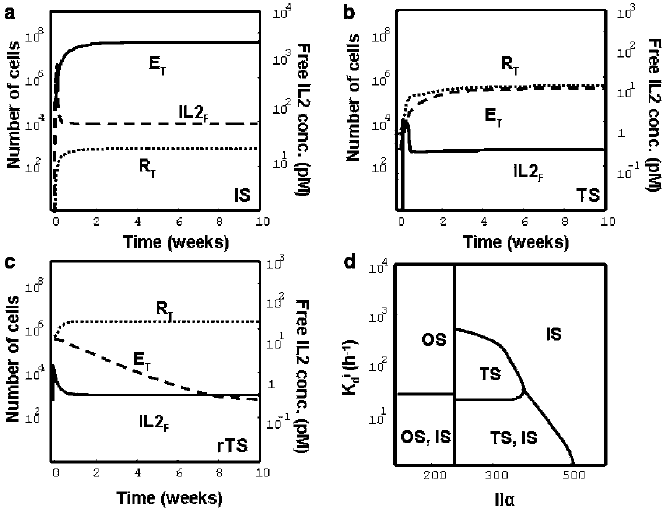
Fig. 15.3 Steady states obtained in numerical simulations of the model and their dependence on
nondimensional parameters. The graphs (a)–(c) show examples of kinetic evolution of the total
number of effectors T cells (E
T
D E
N
C E
A
C E
C
), the total number of regulatory T cells
(R
T
D R
N
C R
A
C R
C
) and the free IL-2 concentration (IL2
F
), where the system evolves
into: (a) the immune/autoimmune steady state (IS), (b) the tolerant steady state (TS), and (c)the
reinforced tolerant steady state (rTS). The graph in (d) show five regions delimiting parameter
values of K
i
d
and IL-˛, at which the system can evolve into the indicated types of steady states,
depending on the initial condition chosen in the simulation. The most relevant parameter region
is the bistable region (lower right region) where both the tolerant (TS) and the immune (IS) states
coexist in the system. The particular simulations in (a)–(c)usedvaluesofK
i
d
and IL-˛ inside
this bistable region (K
i
d
D 0:138 h
1
,IL-˛ D 250), but differ in the initial number of resting
regulatory T cells and the size of the external source of IL-2 ((a) R
N
.0/ D 50;
i
D 10
6
;
(b) R
N
.0/ D 2500;
i
D 10
6
;(c) R
N
.0/ D 2500;
i
D 10
5
). Other parameter values were
taken from Table 15.2. The remaining initial conditions were taken as E
N
.0/ D 500; E
A
.0/ D 0;
E
C
.0/ D 0; R
A
.0/ D 0; R
C
.0/ D 0; IL2.0/ D 80pM
– a second steady state, which is interpreted as tolerance (Fig. 15.3b), label TS),
because the helper and regulatory T cells coexist at low amounts, being the
expansion of the helper T cells actively controlled by the interaction with the
regulatory cells.
The existence of such a bistable parameter regime is one of the properties inherited
from the original crossregulation model [27, 28]. Two other types of stable steady
states are possible in the models, but in other parameter regimes. These states are: a
trivial steady state (label OS), where both helper and regulatory population collapse

15 IL-2, Helper and Regulatory CD4
C
T Cells 319
to very small values, which are proportional to the size of the external source term
of new resting T cells (the size of thymic output); and a steady state interpreted
as reinforced tolerance (Fig. 15.3c), label rTS), because the helper T cells collapse
to very small values dictated by thymic output, while the regulatory T cells are
expanded and sustained in the system by the influence of an external source of IL-2.
The existence of the bistable regime of parameters referred above is essential,
in these models, to properly explain the phenomenology of dominant tolerance,
particularly the results of in vivo adoptive transfer experiments. In these experiments
[61] the adoptive transference of different proportions of helper and regulatory
T cells, extracted from the lymph node of normal healthy mice, into immune de-
ficient mice (those primarily lacking T cells, i.e. Rag
=
or Nu
=
), results either
in the reconstitution of a normal immune system (tolerant to the self-body com-
ponents), containing both helper and regulatory T cells, or in the development of
autoimmune diseases which are mediated by the uncontrolled expansion of the
transferred helper T cells and the absence of the counteracting regulatory popu-
lations. Note that to simulate adoptive transfer experiment in the models, one will
have to start the system with no T cells (neither E nor R), but with a fixed popu-
lation of APCs. Then different proportions of the E and R populations have to be
introduced and the outcome of the system has to be simulated numerically. In other
to obtain as results that the system could either go to the autoimmune steady state
or to the tolerant steady state, such states have to exist and to be stable for the same
set of parameter values. That is the system have to be bistable.
Parameter Constraints for Biologically Reasonable Model
Behaviour
Only those parameter values leading to the bistable behaviour (lower right region
in Fig. 15.3d), will be compatible with the results of adoptive transfer experiments.
This argument can be then used to derive parameter constraints with interesting
biological meaning. Three of these parameter constraints, analytically derived in
[29]are:
S
E
RI
E
A
>
S
R
RI
R
A
Il˛ > 0 and K
E
K
E
A
K
E
d
>K
R
K
R
A
K
R
d
:
The first of these parameter constraints means that regulatory T cells have to be
more efficient using IL-2 at low concentrations than helper T cells. This can be
either because the regulatory cells have a larger sensitivity to IL-2 signal (low value
of S
R
) or a higher number of IL-2 receptors (large RI
R
A
). This constraint is strictly
required in the first model variant ( D 0), but it is dispensable in the second one
( D 1). However, current experimental data would most likely support its validity.
The main argument favoring that indeed regulatory T cells use IL-2 more efficiently
than helper T cells, is that they naturally over express the alpha chain of the high
320 K. Le´on and K. Garc´ıa-Mart´ınez
affinity receptor for this cytokine [62]. Interestingly, upon activation the helper cells
also up regulate this alpha chain of the receptor, but always to a lessser extent than
their activated regulatory counterparts [62]. Moreover, in vitro studies have shown
that regulatory T cells can capture, internalizes and degrades IL-2 more efficiently
than helper T cells [63], supporting that indeed this over expression of the receptor
can result in a more efficient capture of the IL-2.
The second parameter constraint expresses the need for a cytokine, alternative
to IL-2, that can promote helper T cell proliferation and survival. This constraint
is strictly required for both the first model variant ( D 0) and the second model
variant ( D 1), if the regulatory T cells are assumed equal or more sensitive to IL-2
than the helper T cells. Experimental support for the existence of such alternative
cytokines comes, indirectly, from the observation both in vivo (IL-2
=
[38, 39];
IL-2R˛
=
[64]; IL-2Rˇ
=
[65])andinvitro([66–69]) of significant proliferation
and survival of IL-2
=
or IL-2R˛
=
or IL-2Rˇ
=
helper CD4
C
T cells. This
alternative cytokine has been proposed to belong to the chain family of cytokine
[70], with candidates including IL-7, IL-15 and IL-21. In the models, however, the
absence of this cytokine prevents the existence of a tolerant equilibrium (lower left
region Fig. 15.3d). That is, for low values of IL-˛ only the immune or the trivial
immune state could exist, predicting a severe effect of knocking out this cytokine
in the peripheral CD4 T cell compartment. Actually the KO animal is expected to
be either autoimmune (falling into the autoimmune steady state) or to have few
T cells in the peripheral lymph nodes (falling into the trivial immune state). Of
the candidate cytokines, only IL-7 has been shown to have an important role in
peripheral CD4
C
T cell dynamics. IL-7 knockout mice have no peripheral T cells
[41, 42], and moreover prevent the homeostatic proliferation and accumulations of
freshly-transferred na¨ıve CD4
C
T cells [42]. Therefore, the models strongly suggest
IL-7 as the likely chain family cytokine that supports the proliferation and survival
of peripheral helper CD4
C
T cells in conditions of IL-2 limitation. Other chain
related cytokines might contribute, as well, to helper T cell proliferation, but perhaps
in more specific situations or in more specific CD4
C
T cells subsets.
The third and last parameter constraint means, on biological grounds, that helper
T cells must expand faster than their regulatory counterpart on conditions of IL-2
excess, either because helper T cells have a faster activation rate (large K
E
A
); or a
larger capacity to E conjugate to the APCs (large K
E
), or a larger live spans (low
K
E
d
). This parameter condition is strictly required by the first model variant ( D0)
and is most likely required in the second model variant ( D1), if the regulatory T
cells are assumed equal or more sensitive to IL-2 than the helper T cells. To our
knowledge there are no direct experimental observations supporting or invalidating
this parameter constraint. An indirect observation suggesting, perhaps, that helper
T cells might indeed expands faster in vivo than regulatory T cells is that, in typical
adoptive transfer experiments, regulatory and helper T cells are mixed in 50 W 50
ratio to recover a final tolerant animal (an autoimmune disease free animal). The
ratio of this mixture is heavily biased in favor of regulatory T cells, compared to
the 10 W 90 ratio (R W E) in the normal or reconstituted tolerant mice. A simple
explanation for the necessity of such a bias is that one has to give advantage to the
15 IL-2, Helper and Regulatory CD4
C
T Cells 321
regulatory T cells to compensate the larger expansion capacity of the helper T cells
if autoimmunity is to be prevented. Nevertheless, a simple direct experiment can
be designed to test some aspects of this constraint. For instance, the kinetics of
proliferation of mouse CD4
C
CD25
FoxP3
and CD4
C
CD25
C
FoxP3
C
T cells can
be compared, stimulating them in vitro with anti-CD3
C
APCs and supplementing
different concentrations of human IL-2, while blocking endogenous mouse IL-2
with commercial mAbs S4B6.
Model Dependence on the Level of Cognate APC Stimulation
Other key properties of the models in this chapter, inherited from the crossregula-
tion model [27], rely on their peculiar dependencies on the level of cognate APC
stimulation in the system, via the number of cognate APC in the lymph node, model
parameter A.
The first important component on this dependence is that the bifurcation diagram
of model steady states, with the value of parameter A, shows three qualitatively
different regions (Fig. 15.4a):
– There is an initial region of low values of parameter A (region I), where neither
the immune nor the tolerant state can exist
– There is an intermediate range of values of A (region II) where the immune but
not the tolerant state can exist
– There is a final range for higher number of APCs (region III) where the system
is bistable and both the tolerant and immune state can exist
Time (weeks)
Number of cells
Number of cells
Free IL2 conc. (pM)
Free IL2 conc. (pM)
# of T cells (E
T
+R
T
)
APCs number
Time (weeks)
1
III
III
50
02468
1
A
A
10
2
1
10
2
Time
1357
Time
1357
10
0246810
IS
US
TS
150 500
10
7
10
10
10
8
10
6
10
4
10
2
10
3
10
1
10
−1
10
3
10
1
10
−1
10
10
10
8
10
6
10
4
10
2
10
5
10
3
E
T
E
T
R
T
R
T
IL2
F
IL2
F
ab c
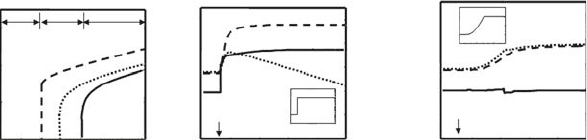
Fig. 15.4 Dependence on APC numbers. The graph (a) shows bifurcations diagram of model
steady states with the number of APCs in the system. Dashed line indicates the total number of
T cells (E
T
C R
T
) in the immune state (IS); the solid line indicate the total T cell number in
the stable tolerant state TS;andthedotted line give the total T cell number in an unstable saddle
node state US. The regions I, II and II indicated in the graph exhibit different model dynamics as
discussed in the main text. The graphs (b)and(c) show kinetic evolution of the total number of
effectors (E
T
) and regulatory (R
T
) cells and the free IL-2 concentration (IL2
F
), when starting
in the tolerant steady state reached in Fig. 15.3b. The number of APCs is increased 100 times.
(b) Illustrate the effect of an abrupt increase that break the pre-existent tolerance and take the
system into an immune steady state. (c) Illustrate the effect of a slow increase where T cells are
expanded but tolerance is always preserved. Vertical arrows indicate the starting-point of the APCs
increase in the simulation and the inserted graphs show the particular kinetics of the APCs number
322 K. Le´on and K. Garc´ıa-Mart´ınez
Such bifurcation structure is critical to argue an impact of these models [27]in
dynamically partitioning T cell repertoires based on the interaction with different
self-antigens, which might reach different levels of presentations by the APCs.
Briefly, the models, like the crossregulation model, proposes that the composition
of peripheral T cell repertoire, in terms of the proportions of regulatory and helper
T cells, for each particular T cell clone (TCR specificities, recognizing the same
antigens), is determined both by the initial proportion of regulatory to helper T cells
from the thymus and the peripheral selection mediated by their interactions with
cognate APCs (those ones presenting self-body components). Only for those T cell
clones recognizing a sufficiently large number of cognate APCs, a tolerant steady
state can be attained in the periphery, sustaining a large number of regulatory T cells.
Therefore the peripheral T cell repertoire will be dynamically partitioned [27]by
these interactions, into at least two subsets of clones: Those T cell clones recog-
nizing high level of self-antigen in the APCs, which will contain many regulatory
T cells and therefore enforce tolerance to self-body-components, and those clones
recognizing lower levels of self-antigens in the APCs, which will be enriched of
helper T cells and could them be used for mounting effective immune reactions to
newly incoming antigens (those from pathogens).
The second important aspect of the dependence of the models with parameter
A, is that, in these models, an abrupt (Fig. 15.4b), but not a slow (Fig. 15.4c), in-
crease in the number of APCs, in simulations which have being parameterized inside
the bistable parameter regime and have been initialized in the tolerant steady state,
can drive the system into the immune steady state. This property is relevant to ar-
gue [27, 71] a cooperative dynamic interplay between the innate and the adaptive
immune system components in the T cell response to incoming pathogens or well-
adjuvated vaccines. Briefly, innate immune system is composed of several subsets
of immune cells (non T cells) that have receptors detecting specific pathogens com-
ponents and triggering the fast maturation of precursor of the antigen presenting
cell, which process and present the specific antigens of the pathogens to the T cells.
Therefore, in the models, as in the crossregulation model, the fast increase in the
number of APCs induced by the activation of innate immune system (inflammation)
facilitate the induction of the immune response by helper T cells, since it weaken the
activity of any possible pre-existent regulatory T cells. Interestingly, this property
of the models, also explains a phenomena known as adjuvant induced autoimmu-
nity [71], where in some animal models the injection of adjuvant or the infection
with some specific pathogens, which contain many substance able to activate in-
nate immune system, causes the induction of autoimmune disorders as arthritis. In
contrast, other natural variations in the level of antigen presentation (driving slow
variations on APCs numbers), like those induced by developmental chains in self
component concentrations (i.e. the expression of some hormones in the puberty),
which do not involve inflammation and are gradual (slow kinetics) will not facilitate
immunity.