
Muga G. Time in Quantum Mechanics - Vol. 2
Подождите немного. Документ загружается.

378 R. Wynands
Frequency detuning (Hz)
Transition probability
–50 0 50
0.5
1.0
0.5
0.0
0.5
Rabi pedestal
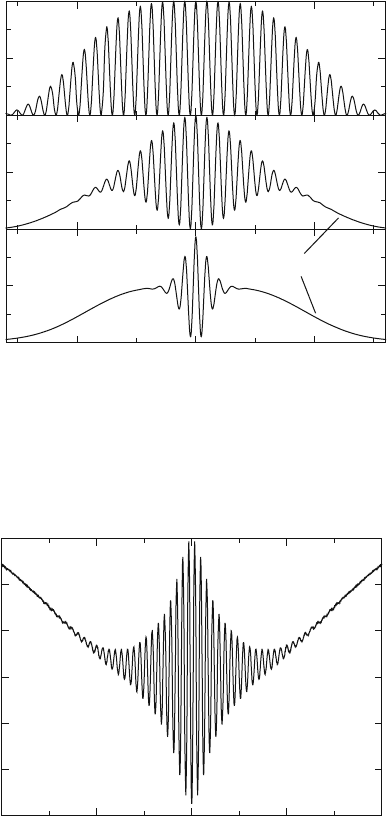
Fig. 13.8 Calculated Ramsey interference fringes as a function of frequency detuning δ/2π for
Gaussian velocity distributions of different standard deviations σ
v
centred at a mean velocity of
¯v = 2.5 m/s (other parameters as in Fig. 13.7). Top: monokinetic beam. Centre: σ
v
= 0.1m/s.
Bottom: σ
v
= 0.4 m/s. The fringes wash out to the Rabi pedestal, which is one-half of the envelope
of the fringe pattern for monokinetic atoms
0.4
0.5
0.6
0.7
0.8
0.9
1.0
Frequency detuning (kHz)
Transition probability
–4 –2 0 42
Fig. 13.9 Measured Ramsey fringe pattern for PTB’s CS1 thermal-beam clock
linewidth of a single microwave excitation in one of the zones, so it is much wider
than a fringe of the Ramsey curve.
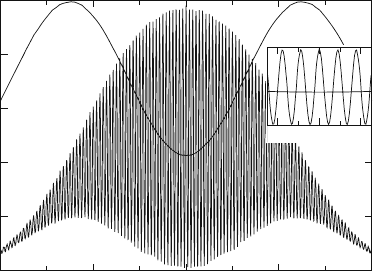
A typical example of a measured Ramsey fringe pattern is shown in Fig. 13.9
for the case of PTB-CS1. The curve appears upside down compared to Fig. 13.8
because PTB-CS1 is operated in the so-called flop-out configuration, so that the
signal at the detector is at its minimum exactly on resonance. The thermal velocity
13 Atomic Clocks 379
spread is small enough that more than a dozen fringes can be seen on either side of
the maximum. The contrast of the Ramsey fringe is only 55% because the magnetic
state selection mostly selects for |F only, more or less regardless of the magnetic
quantum number m
F
. Therefore, there is always a background of |F = 4, m
F
= 0
atoms present at the detector.
The lowest relative uncertainty achieved for thermal-beam clocks with magnetic
state selection is 8 ×10
−15
in PTB-CS1, using a 73.6-cm separation of the Ramsey
zones [21]. Longer zones are not practical, in particular because of the increasing
influence of the exact shape of the atomic velocity distribution on potential fre-
quency biases. Some improvement can be obtained by replacing state selection and
detection by laser optical pumping and laser-induced fluorescence [24–26]. Two
such clocks still are in operation today, SYRTE-JPO [24] and NICT-O1 [26], with
relative uncertainties of 6.4 and 6.8 parts in 10
15
, respectively.
13.7 Atomic Fountain Clocks
New developments in quantum optics, in particular the advent of laser-cooling tech-
niques [27–30], opened the door to a radically new approach to the interaction time
problem. Using a suitable arrangement of laser beams and magnetic fields one can
capture caesium atoms from a thermal vapour and at the same time cool them down
to just a few microkelvin above absolute zero temperature. Typically, in a few tenths
of a second one can trap 10 million caesium atoms in a cloud a few millimetres
in diameter and at a temperature of a microkelvin. At this temperature, the average
thermal velocity of the caesium atoms is of the order of 1 cm/s, so the cloud of atoms
stays together for a relatively long time. This cloud can be launched against gravity
using laser light. Typically, the launch velocity is chosen such that the atoms reach
a height of about 1 m above the trapping region before they turn back and fall down
the same path they came up. Operation of a fountain clock typically proceeds in a
pulsed mode, with the trapping–launching–detecting cycle taking a time T
cycle
∼ 1s.
The motion of the cloud resembles that of the water in a pulsed fountain, hence the
name “fountain clock”.
On the way up and on the way down the atoms pass through the same microwave
cavity. The two spatially separated Ramsey interactions of the thermal-beam clock
are thus replaced by two interactions in the same position but with reversed direction
of travel. The microwave power is chosen such that on each pass a π/2 pulse is
experienced by the atoms. Ideally, therefore, after the first microwave interaction
the atoms are in a quantum-mechanical, coherent superposition of both clock states
with equal weight for each state. After the second passage through the cavity the
transition from one clock state to the other is “completed” (in the fully resonant
case).
Following the second interaction the state of the atom can be probed by laser-
induced fluorescence. For a typical launch height around half a metre above the
microwave interaction zone it is possible to achieve effective interaction times of
380 R. Wynands
–100 –50 0 50 100
0.0
0.2
0.4
0.6
0.8
1.0
Frequenc
y
detunin
g
(Hz)
Transition probability
–4 0 4
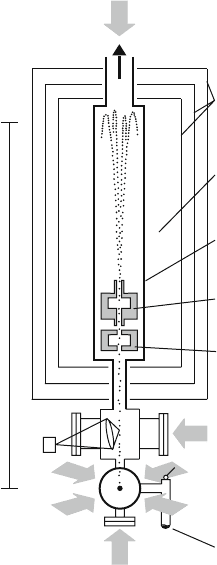
Fig. 13.10 Measured Ramsey fringe pattern for PTB’s CSF2 fountain clock. Inset: the central part
enlarged. The slowly oscillating curve is the Ramsey fringe pattern of the thermal-beam clock
PTB-CS1 already shown in Fig. 13.9; its curvature is so small near detuning zero that the curve
appears almost flat in the inset
more than half a second. The resulting 100-fold reduction in microwave resonance
linewidth (Fig. 13.10) is the most obvious advantage of a fountain clock over a
thermal-beam clock. Note also that the contrast of the resonance is approaching
100% because the atomic cloud can be prepared such that it consists of |m
F
= 0
atoms only.
Equally important is a reduction in the influence of certain systematic effects
because the atoms are so slow. Furthermore, the trajectory reversal eliminates the
frequency bias that might exist due to a small and all but unavoidable manufacture-
related phase difference between the microwave fields in the two interaction zones.
It also greatly reduces the influence of any transverse or longitudinal phase gradients
of the microwave field inside the cavity.
Employing a laser-cooled sample is essential for a fountain clock because in
thermal samples the number of slow atoms is too small to obtain a sufficient signal
strength [31] and because one would need a vacuum apparatus of several metres
in height in order for some of the slower atoms to come to a stand-still in it and
fall back [32]. The first considerations [33] and successful realizations [34] of the
fountain principle were followed by the first metrological fountain, FO1, at the
Observatoire de Paris/France [35]. Its design [36] became a standard for almost
all subsequently constructed fountain clocks, with some variations of course. In
the late 1990s the fountains NIST-F1 at the National Institute of Standards and
Technology (NIST) in Boulder/USA [37, 38] and CSF1 at Physikalisch-Technische
Bundesanstalt (PTB) in Braunschweig/Germany [39–41] became operational as pri-
mary standards. Recently, they were joined by the caesium fountain clocks CsF1
at the Istituto Elettrotecnico Nazionale (IEN) in Torino/Italy [42], CsF1 at the
National Physical Laboratory (NPL) in Teddington/GB [43], F1 at National Metrol-
ogy Institute of Japan (NMIJ) [44] and CsF1 at National Institute of Information and
13 Atomic Clocks 381
Communication Technology Laboratory (NICT) also in Japan [45]. With FO2 and
FOM [46] the Observatoire de Paris (SYRTE) is operating two more primary foun-
tain clocks. A number of other laboratories are currently developing fountain clocks
(see [47–54] for an incomplete list of examples). Most of these are employing cae-
sium as the active element.
Because fountain clocks currently constitute mankind’s best way to realize the
unit of time we will now discuss those clocks a little further. Many more details can
be found in a review [55] and the specific references therein.
13.7.1 Operation of a Fountain Clock
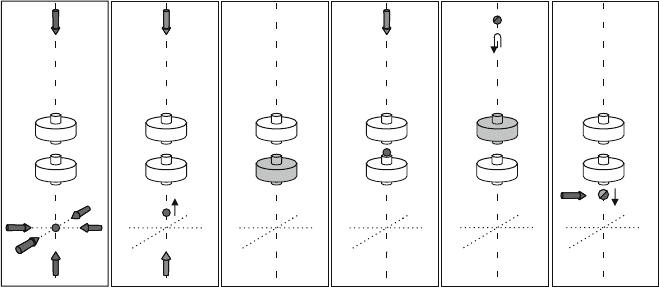
Figure 13.11 shows a simplified set-up of the vacuum subsystem of a fountain clock.
Six laser beams cross in the centre of the preparation zone, where the cold atom
cloud is produced. Above that follows the detection zone which is traversed by laser
beams for fluorescence detection of the falling cloud. The microwave interactions
take place inside a magnetic shield in the presence of a well-defined internal lon-
gitudinal magnetic field (the “C-field”). The clock is operated in a pulsed fashion,
with a cycle typically lasting about 1 s (Fig. 13.12).
Magnetic
shields
C-field coil
Vacuum tank
1 m
Ramsey cavity
State-selection
cavity
Caesium
reservoir
to pump
and window
Detection zone
Preparation
of cold atoms
.............................
.............................
Fig. 13.11 Simplified set-up of the atomic fountain clock PTB-CSF1
382 R. Wynands
(f)(c)
State-
selection
cavity
(d) (e)(a) (b)
Detection
lasers
Ramsey
cavity
Fig. 13.12 Principle of operation of the atomic fountain clock (simplified). The full cycle
(a)–(g) takes about T
cycle
≈ 1s.(a) A cloud of cold atoms in states |F = 4, m
F
is trapped in the
intersection region of six laser beams. (b) The cloud is launched by frequency detuning of the ver-
tical lasers. (c) Inside the state-selection cavity certain atoms are transferred to |F = 3, m
F
= 0.
(d) When the cloud exits the state-selection cavity a laser pulse pushes away all atoms not in
|F = 3, m
F
= 0.(e) The cloud slowly expands during its ballistic flight in the dark.Ontheway
up and on the way down it passes through the main microwave cavity, the Ramsey cavity, where
the transition to |F = 4, m
F
= 0 is driven. (f) Detection lasers are switched on; they probe the
population distribution by laser-induced fluorescence
The source of caesium atoms traditionally consists of a temperature-controlled
caesium reservoir held at a suitable temperature near room temperature in order
to obtain a caesium partial pressure in the order of 10
−6
Pa in the cooling cham-
ber. Alternatively, a laser-cooled atomic beam can be directed at the main trap-
ping region, thus shortening the trapping time from a few hundred to a few tens
of milliseconds; chirp-slowed [46], LVIS [56] and 2D-MOT [57] beams have been
used.
To obtain the required low temperatures of the atom samples in an atomic foun-
tain the atoms are cooled in a magneto-optical trap (“MOT”) [58] and/or an optical
molasses (“OM”) [59, 60]. Key to both configurations is a set-up consisting of three
mutually orthogonal pairs of counter-propagating laser beams. There are either two
vertical and four horizontal beams (the (0,0,1) geometry, Fig. 13.11) or there are
three beams, arranged symmetrically around the vertical, coming from below and
the other three from above (called the (1,1,1) geometry).
Two laser frequencies are needed for efficient cooling (Fig. 13.5). The main
power in the six beams is provided by light tuned slightly to the red (low-frequency)
side of the cyclic |F = 4→|F
= 5 caesium transition in order to scatter a large
number of photons in a short time. Small polarization imperfections in connection
with off-resonant excitation to the excited state |F
= 4can lead to optical pumping
into the |F = 3 state. A repumping laser beam tuned to the caesium transition
|F = 3→|F
= 4 is therefore superimposed on at least one of the six cooling
laser beams. It depletes the |F = 3level so that all atoms can continue to participate
in the cooling process. Additional laser-cooling steps are typically applied before
13 Atomic Clocks 383
and/or after the cloud has been launched towards the cavities. More details on this
are presented in [55].
Typically 10
7
,...,10
8
atoms are trapped and cooled. This atom number is
mainly limited by the available laser power and laser beam diameters. For reasons
of compactness, low power consumption, reliability and ease of use, most optical
set-ups use exclusively laser diode systems. Their light powers and frequencies need
to be controlled precisely in order to properly cool, launch and detect the atoms.
Furthermore, all laser light has to be blocked completely during the interaction of
the atoms with the microwave field so that the atomic transition frequency is not
shifted by the ac Stark effect [61].
After trapping, the atoms are launched by the “moving molasses” technique
(Fig. 13.12b). The pattern formed by the interference of the vertical trapping beams
can be made to move at a velocity cδν/ν
c
when the upward-directed laser beam is
tuned to a frequency ν
c
+δν and the downward-directed laser beam to ν
c
−δν.Inthis
upward-moving interference pattern the atoms are accelerated within milliseconds
to velocities of several metres per second. At this stage in the fountain cycle the
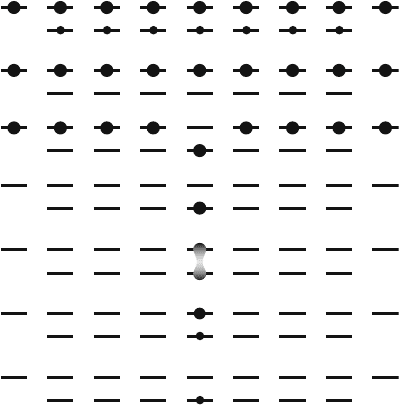
atomic population is distributed across all ground state sublevels, mostly those with
|F = 4 (Fig. 13.13a).
The last cooling stage consists of a sub-Doppler laser-cooling phase, as described
in [55]. When the lasers are finally switched off altogether the caesium atom
(a)
(b)
(c)
(d)
(e)
(f)
(g)
Fig. 13.13 Qualitative population of the Zeeman sublevels in the caesium ground state during key
phases of the fountain cycle. (a) After trapping and launching. (b) After post-cooling. (c)After
passage through the state-selection cavity. (d) After the laser blow-away pulse. (e) After the first
passage through the Ramsey cavity. (f) After the second passage through the Ramsey cavity. Here
is assumed that the microwave frequency is slightly detuned from exact atomic resonance. (g)Just
before the atoms in |F = 3 are detected
384 R. Wynands
temperature is about 1 μK, corresponding to a thermal velocity of less than 1 cm/s.
When the repumping laser is switched off slightly later than the cooling laser all
atoms end up in an |F = 4 level (Fig. 13.13b).
As the next step a further state-selection process can be applied to the atoms in
order to reduce the background signal and the collisional shift due to atoms in states
with m
F
= 0 which do not take part in the “clock transition” between the states with
m
F
= 0. This removal of atoms with m
F
= 0 is a big advantage of fountain clocks
over thermal-beam clocks also because it reduces effects like Rabi and Ramsey
pulling and frequency shifts due to Majorana transitions [62], apart from improving
the contrast of the Ramsey pattern (Fig. 13.10). For the state selection the |F =
4, m
F
= 0 atoms are first transferred by a microwave π pulse using the clock
transition to the state |F = 3, m
F
= 0. This can be done in a microwave state-
selection cavity in which the atoms pass before they enter the Ramsey cavity for the
first time (Figs. 13.12c and 13.13c). Afterwards all the atoms which remained in the
|F = 4 state are pushed away by the strong spontaneous light force exerted by a
laser beam tuned to resonance with the |F = 4→|F
= 5 transition. This results
in a pure atomic sample of atoms all in state |F = 3, m
F
= 0 entering the Ramsey
cavity (Fig. 13.13d), where subsequently the clock transition |F = 3, m
F
= 0→
|F = 4, m
F
= 0 is excited.
Let us note here that this extreme nonequilibrium distribution of atomic pop-
ulation is attractive not only for time keeping. It can be used to perform precise
spectroscopic experiments with a state-selected, monokinetic, cold sample of atoms,
which can still be manipulated by laser light, microwaves or electric fields for an
observation time of about half a second. This single-populated state need not be the
|F = 3, m
F
= 0 state but can be almost any other of the 16 sublevels when the
microwave frequency in the state-selection cavity is tuned to a different transition.
Examples for planned or completed experiments include the measurement of the
black-body radiation shift of the clock transition when the vacuum tube is heated
[63], the investigation of state-dependent Feshbach resonances in the collisional
cross sections between cold caesium atoms [64] or the proposed search for parity
violation in atoms [65]. The fountain principle can also be used to determine the
gravitational constant G [66], the local gravitational acceleration g [67] or the fine
structure constant α [68].
One of the most critical parts of a fountain clock is the microwave cavity for
the Ramsey interaction. Much work has been done on different realizations of these
delicate devices (see [55] for more details and references). Most fountain clocks
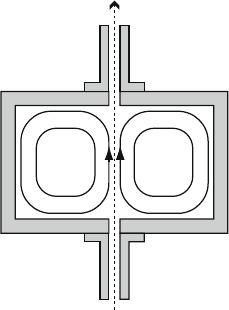
use a cylindrical microwave cavity with the field oscillating in the TE
011
mode.
This mode (indicated in Fig. 13.14) exhibits particularly low losses which results
in a particularly small running-wave component in the cavity. The dependence of
the microwave phase on the transverse position of the atomic trajectory is therefore
small, as well. The oscillating microwave magnetic field inside the cavity is directed
primarily along the vertical, the same direction as the static magnetic C-field of
typically 100 nT flux density. Selection rules therefore favour the Δm = 0 transi-
tions. The static field in addition detunes all other transitions, so that even the small
curvature of the microwave field lines near the end caps of the cavity does not lead
13 Atomic Clocks 385
Fig. 13.14 Sketch of the
microwave field geometry
inside a typical TE
011
cylindrical microwave cavity.
Dotted line: trajectory of the
atoms
to a substantial amount of parasitic Δm
F
=±1 transitions. As a result, the clock
transition |F = 3, m
F
= 0→|F = 4, m
F
= 0 dominates.
After the first passage through the Ramsey cavity the atomic population looks
like as indicated in Fig. 13.13e: a coherent superposition of the two clock states.
This atomic coherence precesses at its intrinsic rate, and during the second cavity
passage, on the way down, its phase is probed with the microwave again. In the
case of exact resonance, for instance, the microwave phase relative to that of the
atomic coherence is still the same, so the transition is completed and all atoms end
up in the upper state |F = 4, m
F
= 0. Figure 13.13f depicts the situation when
the microwave frequency is slightly detuned so that the transition probability is not
100%.
In a fountain clock the atoms arriving in |F = 4 and those in |F = 3 are
detected separately via laser-induced fluorescence. When the falling atoms pass
through a first transverse standing-wave light field tuned to the |F = 4→|F
= 5
transition the fluorescence light emitted by the atoms in |F = 4 is detected with
a photodiode. The time-integrated photodetector signal, N
4
, is proportional to the
number of atoms in the state |F = 4. From the shape of the time-dependent pho-
todetector signal one can infer the axial velocity spread of the atoms in the cloud,
which indicates the corresponding kinetic temperature. The |F = 4 atoms are
then pushed away by a second beam slightly below, a transverse travelling-wave
laser field tuned to the |F = 4→|F
= 5 transition. Only the atoms in state
|F = 3 remain (Fig. 13.13g). These are then pumped to the state |F = 4 by
a third horizontal detection laser beam, positioned lower again and tuned to the
|F = 3→|F
= 4 transition. Superposed or slightly below another laser beam
is present, which is again tuned to the |F = 4→|F
= 5 transition. In effect,
the atoms in |F = 3 are first pumped to the state |F = 4 and then detected
by their fluorescence on the |F = 4→|F
= 5 transition with the help of a
second photodetector, giving a measure N
3
for the number of atoms that arrived in
the detection zone in the state |F = 3.
386 R. Wynands
In the servo system the ratio N = N
4
/(N
3
+ N
4
) is calculated. This ratio is
independent of the shot-to-shot fluctuations in atom number, which typically lies
in the percent range, and is used as the input signal to the microwave-frequency
servo loop. As in thermal-beam clocks, the interrogation microwave is square-wave
frequency modulated, here with a period of 2T
cycle
, so that alternate “shots” are taken
at the left and the right sides of the central Ramsey fringe. From the difference of
N
left
and N
right
the correction signal for the microwave carrier frequency is derived.
13.7.2 Uncertainty Budget
For a precise frequency standard a detailed knowledge of all sources of uncertainty
is absolutely essential. Here we will present a rather complete list of such contri-
butions for the case of a primary fountain clock. We are choosing this clock as an
example because of its great importance today. For the optical clocks of the future
the list will be very similar in principle, but of course with some modifications in the
details. For example, the role of the cavity-related shifts in a microwave clock, dis-
cussed on Page 389, will be played by the wavefront curvature of the interrogation
laser beam(s) in an optical clock. Similarly, the Dick effect (explained below) in an
optical clock is due to the frequency noise on the interrogation laser rather than on
the noise of a microwave oscillator.
Two types of uncertainties have to be considered. Statistical uncertainties in gen-
eral decrease with longer averaging time, whereas systematic uncertainties reflect
our imperfect knowledge of potential frequency biases and, with the exception of
drifts of operating parameters, are independent of averaging time.
13.7.2.1 Statistical (Type A) Uncertainties
In a well-designed fountain clock the following noise contributions to the total insta-
bility have to be considered [69]:
(a) Quantum Projection Noise [70]: resulting from the fact that a fountain clock is
operated alternatingly at the left and the right sides of the central Ramsey fringe
where the transition probability is neither 0 nor 1.
(b) Photon Shot Noise: resulting from the statistical detection of a large number of
photons per atom.
(c) Electronic Detection Noise: resulting from the electronic detection process by
typically a photodiode followed by a transimpedance amplifier.
(d) Local Oscillator Noise: resulting from a downconversion process of local oscil-
lator frequency noise components because of the noncontinuous probing of
the atomic transition frequency in a pulsed fountain (“Dick effect”). Basically,
phase excursions of the local oscillator while no atoms are in or above the
microwave cavity will go undetected and therefore add some of the phase noise
of the local oscillator to the output of the clock.

13 Atomic Clocks 387
When assuming a white frequency spectrum of the noise sources Eq. (13.7) takes
the following form [69]:
σ
y
(τ ) =
Δν
πν
0
T
cycle
τ
1
N
at
+
1
N
at
ε
c
n
ph
+
2σ
2
δN
N
2
at
+γ
1/2
. (13.9)
The terms in the brackets of (13.9) quantify the four processes (a)–(d) listed
above. N
at
is the number of detected atoms, n
ph
the average number of photons
scattered per atom at the detection and ε
c
is the photon collection efficiency. σ
2
δN
is
the uncorrelated rms fluctuation of the atom number per detection channel.
With sufficiently high numbers of photons detected per atom and using state-
of-the-art low-noise electronic components, the noise contributions (a), (b) and (c)
can be reduced to such a level that the frequency instability is determined by the
Dick effect (d). A quantitative description of the Dick effect is beyond the scope of
this chapter; it can be found in [71–74]. With the best currently available voltage-
controlled oscillators (VCOs) the relative frequency instability is limited to the order
of 10
−13
(τ/s)
−1/2
.
In order to improve on that one can use a better local oscillator or reduce the
dead time of the fountain, i.e. the fraction of the fountain cycle where no atoms
are in or above the microwave cavity. However, some dead time is unavoidable
in the standard pulsed fountain described so far because one has to wait until the
detection process is finished before the next cloud can be launched. A continuous-
beam fountain clock, however, would be practically immune from the Dick effect.
Conceptually the easiest way to reduce the influence of the Dick effect on the
short-term instability is to use a more stable local oscillator. Using a cryogenic sap-
phire oscillator developed at the University of Western Australia [75] and a specially
designed low-noise microwave synthesis chain the group at SYRTE was able to
reach a fractional frequency instability of only 1.6 × 10
−14
(τ/s)
−1/2
[76], which
was only limited by quantum projection noise [69].
The additional effort of liquid-helium refrigeration required for low-noise cryo-
genic sapphire oscillators can be avoided when using a laser frequency comb (see
Sect. 13.9.2 below) to transfer the superior short-term stability of a laser stabilized
to a high-finesse optical cavity down into the microwave regime and then deriving
the 9.2-GHz interrogation signal from that phase-stable microwave. Initial results of
the phase stability of such a signal have been reported recently [77].
To speed up the loading and preparation of the cold atomic cloud the atoms can
be collected not from the residual background vapour but from a slow atomic beam
instead, as was discussed above in Sect. 13.7.1.
Loading from a slow beam is indispensable when implementing a multi-toss
scheme. The idea is to have more than one ball of atoms travelling inside the appa-
ratus simultaneously. For instance, the same number of atoms as in a single-ball
fountain can be distributed over several balls. In each of them the atomic density is
lower, and the collisional shift reduced in proportion. One implementation scheme
is to launch several balls (up to 10 or so) in quick succession but with successively