
Scheffler Immo E. Mitochondria
Подождите немного. Документ загружается.

ORFs have not yet been identifi ed from comparisons or homologies with
genes in other organisms (plants or bacteria).
Among the “ standard genes ” for complexes I – V, some contrasting observa-
tions between plants and animals can be made. In the mustard, liverwort, and
a green alga, Prototheca wickerhami , there are two additional mitochondrial
genes for complex I (nad7 and nad9); plant mtDNAs encode three complex
V genes (atp1, atp6, atp9), compared to two in human mtDNA (atp6, atp8),
and in the liverwort but not the mustard the genes for the two membrane
anchor proteins of complex II (succinate dehydrogenase) are found on mtDNA.
The comparison of mustard, liverwort, and green alga suggests that plant
mtDNAs encode ribosomal proteins, but their number may be different in
different plants. Genes are encoded by both strands with no extreme strand
bias.
Although the fi nding of 22 tRNAs may not raise any eyebrows at fi rst, a
more detailed examination has established that these 22 tRNAs are not
capable of decoding all the codons found in the ORFs and that tRNA genes
for six amino acids are missing. Previous results from the liverwort and the
potato had alerted the fi eld that the import of select tRNAs into plant mito-
chondria is required. Again, it is not possible to give a fi xed number for plants,
because it varies from two in the liverwort to 11 in the potato.
The summation of the sizes of the identifi ed genes in Arabidopsis thaliana
mtDNA leaves a large amount of sequence unaccounted for. There are 23
identifi ed introns; eighteen of those are cis - splicing and comprise 30,764 nucle-
otides, or 8.4% of the genome. Their size ranges from 485 nucleotides to 4000
nucleotides. Five trans - splicing introns cover at least another 4500 nucleotides
of the genome. One group II intron appears to contain an ORF that may
encode a maturase gene. Contrasting these data with those from the liverwort,
one fi nds a total of 8 ORFs in type II introns (out of a total of 25) and 2 ORFs
in type I introns (out of a total of 7). The intron locations are different between
the two plants, and this is likely to be another highly variable situation differ-
entiating higher fl owering plants from lower plants, and possibly even fl ower-
ing plants from each other.
The availability of several cDNA clones for protein genes in Arabidopsis
mitochondria provides evidence for RNA editing, but the analyses are incom-
plete to verify all editing sites precisely.
There are numerous regions where short fragments from the chloroplast
DNA have been integrated, amounting to approximately 1% of the mt genome.
These fragments (30 – 930 nt) are unlikely to be functional, and the mechanism
of their transfer from one organelle to the other is still obscure. Similarly, about
4% of the mt genome is of nuclear origin and identifi able as fragments of
retrotransposons.
A general feature of most plant mtDNAs, the presence of repeats involved
in recombination, was also found in the Arabidopsis thaliana mtDNA,
and from previous physical mapping and cosmid clones there is evidence for
THE MITOCHONDRIAL GENOME 71
72 BIOGENESIS OF MITOCHONDRIA
circular molecules of 233 kb and 134 kb, which represent subgenomic circles
arising from recombination. The fi nding and localization of two large repeated
sequences of 6.5 kb and 4.2 kb is fully consistent with their participation in
recombination to generate the smaller circles. The repeats have sequences
conserved over their entire lengths. One of them extends into the atp6 gene.
One hundred forty - four duplications of repeats in the 30 - to 560 - nucleotide
size range were found, contributing 14 kb to the genome. Repeats are > 90%
identical, and they are not implicated in any recombinational events so far.
Finally, 62% of the Arabidopsis mt genome is comprised of DNA sequences
with no obvious informational content. In contrast to what is found in fungal
mtDNAs, this spacer DNA exhibits no particular nucleotide bias, and its origin
and biological relevance are completely obscure at this time.
4.1.4 The Mitochondrial Genome in Fungi
An extensive compilation of data for different fungi is compiled in an authori-
tative review by Clark - Walker (31) . The reader is referred to this article for
details on many individual representatives of this large group of organisms. At
this point, one should not be surprised to fi nd again signifi cant variability, but
there are also some features that distinguish this group from the metazoa and
higher plants. The size of the mitochondrial genomes is typically between 40
and 60 kb, with extremes of ∼ 20 kb for Schizosaccharomyces pombe (an asco-
mycetous fi ssion yeast) and ∼ 170 kb for Agaricus bitorquis (a fi lamentous
basidiomycete). The average reader will be familiar with Asperigillus nidulans
(33 – 40 kb), Neurospora crassa (60 – 73 kb), Saccharomyces cerevisiae ( ∼ 85 kb),
Ustilago cynodontis (a rust) (76.5 kb), and others. The size of these genomes
is, on average, three to four times larger than that of animals, but signifi cantly
smaller than that of plants.
The evolution and possible polyphyletic origins of fungi have been described
and interpreted from morphological and biochemical studies, and a detailed
analysis of their mt genomes, their sequence organization, and nucleotide
sequence comparisons of individual genes such as rRNA genes can shed much
additional light on this subject and confi rm or refi ne the evolutionary relation-
ships. The intent here, however, is to focus on common characteristics, as well
as on novel aspects of genome organization and fl uidity unique to fungi. These
organisms form a large group with many taxonomic groups and subgroups, but
at this level they must be lumped together to avoid drowning the reader in
molecular taxonomy. The budding yeast Saccharomyces cerevisiae mtDNA will
serve as a useful reference point, since this organism has also become one of
the best - known model systems (32 – 34) .
Among the expected genes present are the genes for the small and large
ribosomal subunits, 24 tRNAs, cytochrome b in complex III, and three subunits
of complex V (atp6, atp8, atp9). Notably absent are the genes (nad) for complex
I, and it appears that Saccharomyces cerevisiae mitochondria do not even have
a typical complex I with the extraordinary number of > 40 subunits, that is
found in most other organisms. On the other hand, the lack of nad genes is
not characteristic of all fungi. A single ribosomal protein encoded by a gene
called VAR1 is present, and there are several unidentifi ed or open reading
frames whose signifi cance is still unclear. Strains of Saccharomyces cerevisiae
exist in which one or the other of these ORFs have been deleted, without any
effect on growth on nonfermentable carbon sources, and they may not be
expressed at all. There are also “ optional introns ” in S. cerevisiae mtDNA
within which ORFs have been found. Examples are the COXI and the CYB
genes, and it appears that the product encoded by these ORFs functions in the
production of mature mRNAs by intron excision and splicing. In other words,
the intron encodes an activity for its own removal, but when the intron is
absent, the activity is not required for anything else. Optional introns account
for a substantial part of the size variations in mtDNAs seen even within a
single strain of yeast — for example, lengths of 68 – 85 kb found in S. cerevisiae
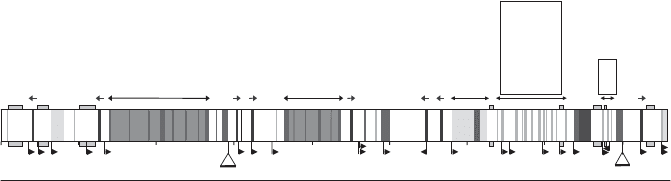
(Figure 4.3 ). The complete sequence for Saccharomyces cerevisiae mtDNA
can be found at http://www.genome.ad.jp/dbget - bin/www_bget?refseq+NC_
001224 . The corresponding genetic map has been published by Foury et al.
(35)
The existence of introns, as well as the existence of “ optional ” introns,
raises several questions. The mechanism for removal of introns from RNA
transcripts is appropriately discussed in the chapter on transcription and
RNA processing in mitochondria. The acquisition and mobility of introns
within the genome is a subject for the present context (see reference 36 for
a review).
Saccharomyces cerevisiae strains exist which differ in the presence or
absence of a 1132 - bp group I intron in the large rRNA gene at the so - called
omega ( ω
+
) locus of mtDNA. The ω genetic system was discovered indepen-
dently of the discovery of introns, but pioneering studies very rapidly related
Figure 4.3 Schematic representation of the yeast mitochondrial genome map, strain
FY1679, presented as a linearized map (35) . Exons of protein coding genes are indi-
cated in red (cox1, cox2, cox3, cob, atp9, var1), introns are gray; tRNA genes (green)
are labeled with the corresponding amino acid, 9S, 15S, and 21S RNA (yellow) are
labeled. Two signifi cant deletions are found in this strain, and fl ags indicate transcrip-
tion initiation sites. For details the original paper (35) should be consulted. (Repro-
duced from reference 35 , with permission.) See color plates.
Thr2 Asp
Cys Ser2
His Arg2
Leu Ala
Gln Ile
Lys Tyr
Arg1 Asn
Gly Met
1,7 kb
f-Met
21S RNA
ori5
cox1
atp8
atp6
ori7
orf5
Glu
ori2
cob
atp9
Ser1
var1
ori8
ori6
Pro
ori1
15 S RNA
ori3
ori4
cox2
cox3
70
60
80
0
10
20
30
40
50
Trp
1,6 kb
9S RNA
orf1
SceI
Phe
Thr
Val
THE MITOCHONDRIAL GENOME 73
74 BIOGENESIS OF MITOCHONDRIA
it to introns, and understanding its behavior has been a major guide in the
understanding of group I intron mobility in general. When crosses between ω
+
and ω
−
strains are made, the intron can move into the genome in which it was
previously absent ( ω
−
), since in the progeny mt genomes with this intron are
preferentially recovered. There is evidence that the intron has an ORF (235 nt)
encoding the ω transposase later characterized as a site - specifi c, double -
stranded endonuclease that is targeted to a specifi c sequence within the
intron - free allele. It is speculated that site - specifi c cleavage initiates DNA
recombination and conversion (see references 37 and 38 , for reviews). The ω
+
intron in yeast was initially considered a rare oddity, but eventually similar
introns were found in other organisms and at other loci in the yeast mt genome
(36) . The a14 α intron in the COXI subunit gene can serve as another example
(39, 40) . It emerged that each intron - associated endonuclease was unique, with
a different recognition site suffi ciently complex to make it relatively infre-
quent in the genome. A plausible hypothesis proposed by Lambowitz (36) is
that introns of group I (and group II) may initially have been self - splicing,
with the involvement of a specifi c secondary structure. They can function only
when inserted at sites where fl anking exon sequences are compatible with
splicing. ORFs were acquired later in evolution and adapted as endonucleases
to facilitate transposition, or as maturases that assist in splicing by stabilizing
the RNA in the catalytically active secondary structure. Endonuclease and
maturase functions may even be combined in a single protein as suggested for
the a14 α intron.
The mechanism may be different for group II introns, and here speculation
is driven by the fi nding that such introns may have ORFs encoding a protein
related to retroviral reverse transcriptases. Mobility of the intron is therefore
related to the RNA splicing reaction, where the RNA excision product could
be reverse - transcribed to yield DNA that in turn is postulated to recombine
with the intron - less gene (41) . Alternative mechanisms proposed include a
reversal of the splicing reaction into a compatible location of a different RNA,
or even integration into a single - stranded DNA at a replication fork (36) .
If introns can be mobilized during intraspecies crosses, the problem of
whether and how introns may spread between species is still in the realm of
speculation, fi red by observations that some introns in different species show
higher sequence similarity than the fl anking sequences. As in all discussions
about intron evolution, one may have to distinguish between early and late
introns and establish clear phylogenetic relationships before horizontal intron
transmission can be proved.
A second source of interspecifi c and intergeneric size variation has been
determined from sequencing the regions between genes of several mt genomes
of fungi including S. cerevisiae (32 – 34) . They account for > 60% of the S. cere-
visiae genome and consist of sequences extremely rich in A + T ( > 90%), but
there are also ∼ 200 clusters of 20 – 50 bp which are rich in G + C. Circumstantial
evidence (e.g., two nucleotide duplications in fl anking positions) has been
interpreted to mean that these G + C clusters are mobile by an as yet unknown
mechanism. Transposition of such elements would also be consistent with the
observed polymorphism of mt genomes with respect to these G + C clusters
(42) . Similar data from other fungi indicate that the phenomenon is wide-
spread. A second element in S. cerevisiae mtDNA intergenic regions has been
termed ori or rep , and there are still confl icting interpretations about its rela-
tionship to the mobile elements as opposed to an origin from mitochondrial
promoters.
The expansion of (A + T) - rich intergenic sequences can be explained by
several plausible mechanisms. Slippage during replication or DNA repair
could create tandem repeats, and subsequently unequal crossing over could
lead to further expansion or contraction. From experiments in the laboratory
of Clark - Walker (reviewed in reference 31 ) it has been shown that relatively
large deletions (3 – 5 kb) in intergenic regions have no consequences for mito-
chondrial gene expression and the ability of such strains to grow on nonfer-
mentable substrates, and such regions may indeed be dispensable “ junk ”
DNA.
An observation that was puzzling for a long time was that strains of S.
cerevisiae produce spontaneous petite mutants at the high rate of approxi-
mately 1% per generation. The phenotype “ petite ” is caused by respiration
defi ciency that was shown to be due to deletions in the yeast mtDNA. It
appears that these internal deletions are created by excisions occurring at
directly repeated G + C clusters. This inference was made primarily from the
comparison of the spontaneous generation of petites in S. cerevisiae and in
Candida glabrata . The latter has no such G + C clusters to destabilize the mt
genome, and as a result the spontaneous rate of petite formation in C. glabrata
is four orders of magnitude lower (31) .
Linkages between genes (e.g., COXI – atp8 – atp6) have been preserved in
many species, but evidence for rearrangements is abundant, and, most surpris-
ingly, translocations have been found between interbreeding strains, calling
into question the use of gene order in taxonomic classifi cations. Again direct
repeats and recombination involving these repeats at distal sites may be
responsible for the overall mechanism, and evidence for this “ subgenomic
pathway ” has been accumulated by Clark - Walker (31) . In these experiments,
rearranged but complete genomes were deliberately produced, and no obvious
deleterious effects on growth rates were observed. Such results could be
explained if individual genes were expressed from individual promoters that
are scrambled with the genes. As will be discussed later, there are multiple
promoters on yeast mtDNA, and there are no recognized transcription termi-
nation sites, allowing constant levels of transcripts from rearranged genomes.
4.1.5 The Mitochondrial Genome in Kinetoplastid Protozoa
In organisms of the Protozoan order Kinetoplastida a particularly unusual
structure of mtDNA is found (43) . These “ mitochondria ” were detected by
cytologists of the last century, but their unique morphology, cellular location,
THE MITOCHONDRIAL GENOME 75
76 BIOGENESIS OF MITOCHONDRIA
and assumed function caused them to be given a distinct name, kinetoplasts.
The discovery of DNA in these organelles preceded the recognition that all
mitochondria contained DNA, because kDNA constitutes about 7% of the
total cellular DNA and hence is easily detectable by specifi c staining. Subse-
quently kinetoplasts were recognized to be highly specialized regions within
the mitochondria which were colocalized with the basal body of the fl agella
of these highly motile unicellular organisms. Representatives of this group of
organisms are the well - known human pathogens Trypanosoma cruzi, Trypano-
soma brucei , and a related organism, Leishmania tarentolae , isolated from the
gecko (Figure 4.4 ).
The kDNA exists of a network of ∼ 40 – 50 maxicircles and 5000 – 10,000
minicircles that are topologically linked by catenation. There appears to be
some hierarchical order in the catenation of clusters of minicircles, the catena-
tion of these clusters, and the catenation of the maxicircles into the entire
network. Basket - shaped structures have been recognized, and the packing
within the mitochondrion is by stacking and alignment of DNA fi brils, most
likely with the help of specifi c proteins bound at regular sites. A combination
of the activities of topoisomerases and restriction enzymes is employed to
maintain order and to segregate these structures after DNA replication.
Numerous reviews on the topology, packaging, and fractionation of these
DNA circles are available (44, 45) .
The size range of the maxicircles extends from less than 20 kb in the African
trypanosomes to about 35 kb in Leishmania, while the minicircles range from
645 pb in T. lewisi to 2500 bp in Crithidia fasciculata . Analysis of renaturation
kinetics ( C
0
T analysis) with T. brucei DNA has indicated that kDNA has a
total complexity of ∼ 350 kb (the highest complexity observed among kineto-
plastids), and this result immediately suggested that these circles must be quite
heterogeneous. However, the gene content and even the gene order in the
maxicircles in several species was shown to be identical. Size variation among
species can be largely accounted for by the change in repeat number of a
simple repeat in one variable region (45) . Thus, heterogeneity must be sought
among the minicircles, and indeed there are an estimated 400 different minicir-
cles in T. brucei kDNA. The analysis is complicated by the fact that they are
not found in equal copy numbers, and for two examples the copy numbers
were found to be about 60 and 500, respectively. In Leishmania tarentolae the
complexity is lower and 17 minicircles make up all of the total amount of
minicircle DNA in the UC strain, whereas approximately 80 minicircle
sequence classes are found in the LEM125 strain. Recombination may con-
tribute to the generation of minicircles, and at this time it seems impossible to
give precise descriptions of their distribution in T. brucei . Another complica-
tion in the interpretation of renaturation kinetics is that all the minicircles
have one conserved sequence of ∼ 120 bp and three conserved pairs of 18 - bp
inverted repeats.
The network of catenated maxi - and minicircles is highly sensitive to per-
turbations by intercalating molecules such as ethidium bromide or acridines.
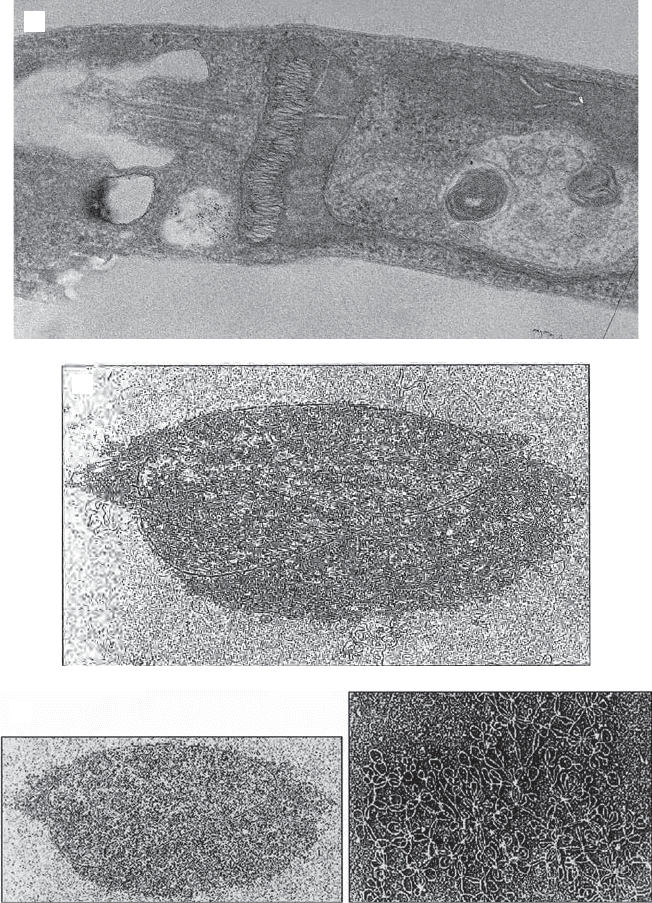
Figure 4.4 (A) Electron micrograph showing a thin section through Leishmania taren-
tolae . The basal body and axoneme extend to the left. (B) Kinetoplast DNA. The maxi
circle and many minicircles appear associated in an aggregate. (C) Higher magnifi ca-
tion view of many minicircles in various toplogical linkages. (Photographs provided by
L. Simpson, UCLA.)
A
B
C
THE MITOCHONDRIAL GENOME
77
78 BIOGENESIS OF MITOCHONDRIA
Treatment with such drugs causes loss of kDNA and ultimately the loss of the
capability to carry out mitochondrial respiration. Since respiration is required
at least during part of the life cycle of these parasites — for example, in the
insect host for the African trypanosome — the usefulness of such drugs in treat-
ment and prevention of these tropical diseases has been explored extensively.
It is also obvious that the replication of this network of DNA is intimidating
to contemplate.
By now the complete sequences of the maxicircles of several species have
been determined, and the genes present have been identifi ed by homology
with genes on mtDNA, some nuclear genes, and even chloroplast DNA. The
challenge was not trivial, because there is extensive RNA editing in these
species. The discovery of this process, not as a relatively rare oddity but as a
widespread phenomenon in the kinetoplasts, was one of the great surprises in
molecular genetics in the 1980s, and the elucidation of its mechanism repre-
sents a major achievement ( 46 ; see Section 4.4.6 for a further discussion).
What genes were found? Not unexpectedly, kDNA maxicircles encode fi ve
subunits of NADH - CoQ reductase (complex I), cyt b of CoQ - cytochrome c
reductase (complex III), three subunits of cytochrome oxidase (complex IV),
one presumed subunit of ATPsynthase (complex V), and seven or eight uniden-
tifi ed reading frames. Two ribosomal RNA genes yield rRNAs of 1150 and
610 nt (12S and 9S, respectively), which are exceptionally small but still capable
of forming secondary structures resembling the characteristic structures found
in E. coli rRNAs. One would also expect to fi nd tRNA genes, but RNA editing
may obscure their identifi cation by routine genome sequencing.
The maxicircles of some species have clearly been shown to encode some
guide RNA (gRNA) genes, but many more gRNA genes can be found on the
minicircles (see below).
Gene order is preserved between species where the analysis is complete,
but sequence homology between species is recognizable (by computer and by
cross - hybridization) only for genes whose transcripts are not heavily edited,
while genes encoding heavily edited RNAs show little or no homology. A
fertile fi eld exists here for molecular taxonomists and evolutionary biologists,
but the discussion exceeds the scope of this treatise.
The variable regions on the maxicircle between the ND5 gene and the 12S
rRNA gene differ in size and sequence between species and even between
stocks of T. brucei . It is unlikely to encode a functional protein, and speculation
about its function centers around a role as replication origin.
The information or gene content of minicircles can be summarized only in
very general terms, since their size, organization, and complexity are all vari-
ables among species. However, all minicircles have a conserved sequence (at
about the 90% level) of ∼ 120 nt. Within this sequence a 13 - nt sequence is rec-
ognized as a small gap in replicating minicircles, possibly in association with a
small RNA. Hence its function in DNA replication is plausible. The presence
of several stop codons and the lack of a start codon argue against any coding
function within this region. A second common feature of minicircles is a
number of runs of adenines at regular intervals, which give rise to a “ bend ” or
“ kink ” in the DNA and cause such a molecule to have an abnormal electro-
phoretic mobility compared to a normal DNA molecule of identical size. The
position can only be related to the position of the conserved 120 - nt sequence,
and where it has been examined, it appears to be at no particular distance
from this landmark in different species. The binding of a protein at this loca-
tion has been hypothesized to be related to the stacking of the circles within
the kinetoplast.
The major class of transcripts from the minicircles are the small ( < 100 nt)
guide RNAs. In some species (e.g., African trypanosomes) the gRNAs are
from within an ∼ 100 - bp region fl anked by 18 - nt inverted repeats, a so - called
coding cassette, but such cassettes are not recognizable in T. cruzi or Leish-
mania tarentolae . The role played by these gRNA in RNA editing will be dis-
cussed in Section 4.4.6 .
4.1.6 Mitochondrial Plasmids
In a previous section, reference has been made to mobile introns in the yeast
mt genome. Additional genetic elements found in the mitochondria of numer-
ous fungi, protozoa, and plants are small circular or linear plasmids. They have
origins of DNA replication, replicate independently of the much larger
mtDNA, and may even encode some of their own replication machinery such
as DNA polymerase. Some of these may become integrated into the mt
genome, disrupting genes and making their presence felt by causing a recogniz-
able phenotype. A listing of over 50 such plasmids in various fungi and higher
plants can be found in a recent review on sexuality in mitochondria by Kawano
et al. (47) . In some organisms such as Neurospora they may be the rule rather
than the exception (48) .
A number of these plasmids have been sequenced, but no signifi cant insights
about their biological function have become apparent. They range in size from
∼ 1.5 to ∼ 10 kb, with a few exceptions, the largest being the linear mF plasmid
of Physarum polycephalum ( ∼ 16 kb). They may be true molecular parasites
adapted for autonomous replication and transmission with the mitochondrial
genome. Thus, ORFs encoding DNA polymerase are commonly found, and
RNA polymerases are also encoded by many plasmid genomes. When biologi-
cal effects are observed, they may be incidental in most cases, since loss of the
plasmid does not affect the organism ’ s viability. The mF plasmid in P. poly-
cephalum has been shown to encode a function required for developmentally
regulated mitochondrial fusions during the life cycle of the slime mold, but
strains missing the mF plasmid appear to be equally capable of sporulating or
of forming a plasmodium.
The linear plasmids share several properties related to the mechanism of
their replication, most notably the presence of terminal inverted repeats
(TIRs) with proteins bound to their 5 ′ ends. A replication mechanism resem-
bling that of linear DNA viruses has been proposed, and further speculation
THE MITOCHONDRIAL GENOME 79
80 BIOGENESIS OF MITOCHONDRIA
centers around their origin as bacteriophages that have degenerated in the
course of evolution. Since they are stable in the absence of selective pressure
and have a high copy number, their use as vectors in yeasts has been proposed
(49) . Transformation protocols using microprojectiles have been developed
yielding transformants with useful effi ciencies (50) .
The replication of the circular plasmids has also been mostly speculated on,
using information from bacterial systems as a guide. Replication intermediates
described as θ and σ (51) have been looked for in a few plants, and a rolling
circle type of mechanism was found for the mp1 plasmid in the higher plant
Chenopodium album (L.) (52) . In its most simplifi ed formulation, the rolling
circle mechanism of replication of circular genomes requires the following
steps, fi rst elucidated for bacteriophages such as X RFI (51) : (1) Site - specifi c
nicking within the origin creates a free 3 ′ - OH group; (2) displacement of the
5′ end from the circular template by a helicase, and complex formation with
single - strand binding proteins; (3) extension of the 3 ′ - OH end by DNA poly-
merase displaces more 5 ′ single strand, and at this stage the molecule has the
appearance of a “ σ ” when viewed by electron microscopy; (4) when continu-
ous synthesis around the circular template has reached the origin, another
cleavage of the displaced single strand creates a linear molecule which has to
be circularized by ligation; and (5) discontinuous synthesis converts the single -
stranded circle into another double - stranded circle. The cycle can repeat itself.
In contrast, two replication forks moving in opposite directions on a circular
DNA will create an intermediate with the appearance of a “ θ ” in the electron
microscope.
Three signifi cant biological effects have been associated with the presence
of plasmids in mitochondria of fungi or plants:
4.1.6.1 Fungal Senescence Among the natural Hawaiian isolates of Neu-
rospora intermedia the phenomenon of senescence was discovered, in contrast
to the immortal nature of most laboratory and fi eld - derived strains of Neuros-
pora (see references 48 and 53 for reviews). A mitochondrial linear plasmid
named kalilo ( ∼ 9 kb) was found to be responsible. In juvenile strains, kalilo
DNA is harmless even at high copy number, but insertion into mtDNA appears
to initiate the senescence process, and eventually almost all mtDNAs contain
inserts at death. A systematic search uncovered a Neurospora crassa strain in
India carrying a linear plasmid (maranhar) which also causes senescence by
inserting into mtDNA, but kalilo DNA and maranhar DNA do not share any
sequence homology. The investigation of 171 natural isolates of N. crassa and
N. intermedia yielded another 28 senescing strains. Most strains, senescent or
nonsenescent, carried plasmids; the plasmids were linear or circular; some
strains had more than one plasmid, even mixtures of linear and crcular plas-
mids. A cross - homology study established sequence relatedness between plas-
mids from geographically distant origins, but a generalizable relationship of
plasmids or sequences to senescence has not yet emerged. Thus, the current
idea is that the plasmids act as insertional mutagens causing an abnormal